Category

News

Sharing experiences on building City Funds

By CORC, FEDUP, ISN, News, uTshani Fund No Comments

20140902_103814

By Walter Fieuw (on behalf of CORC)

African cities are characterised by informality, as the rapid urbanisation from rural areas are transforming cities. Within informal settlements, residents are investing incrementally in their households, despite the lack of tenure security in many cases. A large gap exists between household investment and government spending on infrastructure and social support. Government expenditure is often times locked into medium term budgets which might or might not be adjusted on an annual basis, and procurement of goods and services follow time consuming processes. There are also various interests competing for government spending, and low income groups’ influence over the direction of spending is often times weak. Slum dwellers often times do not have access to loans from financial institutions, even considering the popular held belief of an emerging African middle class, which is still highly speculative. Hence new instruments are needed to build on and support the incremental upgrading of informal settlements and support for livelihoods and small income generating loans.

Shack / Slum Dwellers International supports the notion of creating local “city funds” which acts as a mechanism for building city-wide agglomerations and networks of the poor, creates partnerships between organisations of the poor and city governments, and gives voice and power to the urban poor. Following a meeting of country Federations on various experiences in building city funds in January 2014, SDI reported that,

Flexible citywide urban poor funds need to change existing systems of exclusionary finance.  Local government is a change vector that cannot be dismissed and their inclusion in these funds has the potential to create citywide political impact. Organized communities, who can clearly articulate their demands and the rationale for their financial decisions, can negotiate this space ensuring that funds remain relevant to the poor.

Between 1 and 3 September 2014, the Slum Dwellers Federation of Uganda (NSDFU) and support organisation Actogether hosted a meeting on city funds bringing together three African cities: Kampala (Uganda), Lusaka (Zambia) and Cape Town (South Africa). These cities have in common grant funding agreements with British donor Comic Relief, part of the “People Living in Urban Slums Programme”, which is also supported by the DFiD AidMatch initiative. Freetown (Sierra Leone) is forth city in the Comic Relief initiative, but were unable to travel due to the Ebola epidemic.

Comic Relief’s funding strategy of bringing together organisations and communities in city-wide partnerships have been lauded by participating grantees. In this way, according to Triple Line Consulting, who has been supporting Comic Relief in developing responsive city-level Monitoring and Evaluation (M&E) frameworks, the impact of the grants could possible achieve: a) a deeper understanding of the context than it might normally have b) a complementary portfolio of grants across the city c) improved collaboration between the grantees within a city d) a city level monitoring and evaluation framework and e) identified areas of learning across the 4 cities that can be shared with the broader sector.

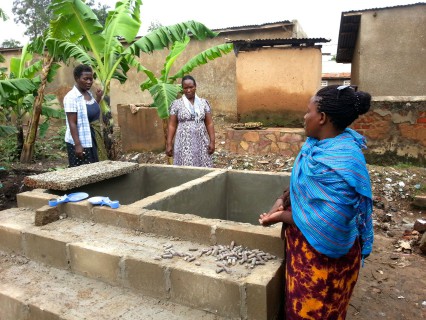
20140902_101323

Katana Goretti, a Federation leader, demonstrates the construction phases of the eco-san toilet being constructed in Kampala

Reporting on country experiences to date:

Kampala, Uganda

The joint work to which NSDFU and Actogether are a part of is called KASTI, Kampala Slum Transformation Initiative. The Ugandan Federation will be actively engaging local government counterparts in five districts of Kampala, with dedicated settlement forums which feed into municipal forums, and ultimately city forums, to which the guests were exposed to on 3 September (more on this later). Such forums have proved tremendously useful in the past, as this blog article indicates. The Federation’s primary data collection of “settlement profiles”, which are captured on Geographic Information Systems (GIS), will be used to collaborative design a slum upgrading strategy. Comparisons with existing data from Kampala Capital City Authority and the National Water Department has revealed many informal settlements that were not on government’s databases. This is where the city fund becomes important, and seed finances both capital projects, especially innovations in sanitation, and livelihoods projects.

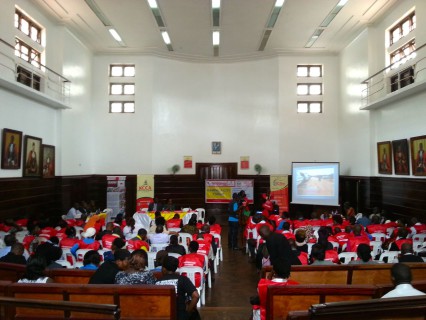
20140903_105337

On 3 September, NSDFU and Actogether hosted the first City Forum with Kampala Capital City Authority, which was lauded as a success

Lusaka, Zambia

In Lusaka there are 30 slums known as Improvement Areas, home to about 70% of the population. In 1996 the Government’s Housing Code allows for participatory approaches to slum upgrading, and the Housing Statutory Bill gives the minister power to declare and upgrade slums. However, there is a policy disjuncture in the sense that the Urban and Regional Planning Act does not have the right policies and instruments to recognise and upgrade slums. Tiyende Pamodzi, which means “working together” in local vanacular Nyanja, is the working title of the Comic Relief funded initiative in Lusaka, of which the Zambian Homeless People’s Federation and support organisation People’s Process on Housing and Poverty in Zambia are a part of. According to PPHPZ, Tiyende Pamodzi’s

main aim of the project is to gather accurate and reliable information of all the slums in Lusaka in order to inform participatory slum upgrading strategies which will see the regularization of slums and improved service delivery. Lusaka City Council (LCC) as the responsible authority for slum upgrading in the city cannot go it alone and as such will bank on the strength of the federation to mobilize their fellow slum dwellers to enumerate and map their settlements and use this as a basis for planning for the upgrading.

The Federation and PPHPZ has a strong working partnership with the University of Zambia, and in the programme will develop GIS courses to improve spatial mapping and profiling data as a basis. The city fund has not yet been defined, and the Federation and PPHPZ with the University as partner is still looking for the appropriate partners to serve on the board and advisory committee.

Cape Town, South Africa

In Cape Town, CORC secured a donor funding arrangement with Comic Relief, with community partners ISN and FEDUP. At the heart of the proposal is the setting up of a city fund, which is currently still being developed and constituted. The initiative is called Khayalethu, and joins the Alliance with Isandla Institute and Violence Prevention through Urban Upgrading (VPUU). At the Kampala meeting, community leaders Thozama, Tamara and Nozuko reflected on the current work in Khayelitsha, where Khayalethu is focused. In the first year, communities have profiled 47 settlements, enumerated 7 settlements, and developed community capacity to plan projects. However, challenges have been experienced in getting project approvals for community-identified settlement upgrading projects from the City of Cape Town. Livelihoods is also a primary focus, and experiences were shared around issuing short term loans for livelihoods development.

The South African delegation to Uganda (left to right): Thozama, Tamara, Walter Fieuw (CORC), Nozuko, Michael Krause (VPUU - Comic Relief partner)

The South African delegation to Uganda (left to right): Thozama Nomnga, Tamara Hela (both FEDUP/ISN), Walter Fieuw (CORC), Nozuko Fulani (FEDUP/ISN), Michael Krause (VPUU – Comic Relief partner)

The common experiences, opportunities and challenges experienced by the three cities in the first year of the Comic Relief funded initiative is instructive in developing locally responsive and appropriate city funds, which can enable and support communities in united networks to design, manage and upgrade their settlements. Moreover, building financial partnerships between city government, organisations of the urban poor and other stakeholders can lead demonstrating that people-centred urban planning and development, based on flexible finance, is vital to the creation of inclusive, pro-poor cities.

Upgrading Flamingo Informal Settlement

By CORC, ISN, News No Comments

By Yolande Hendler (on behalf of CORC)

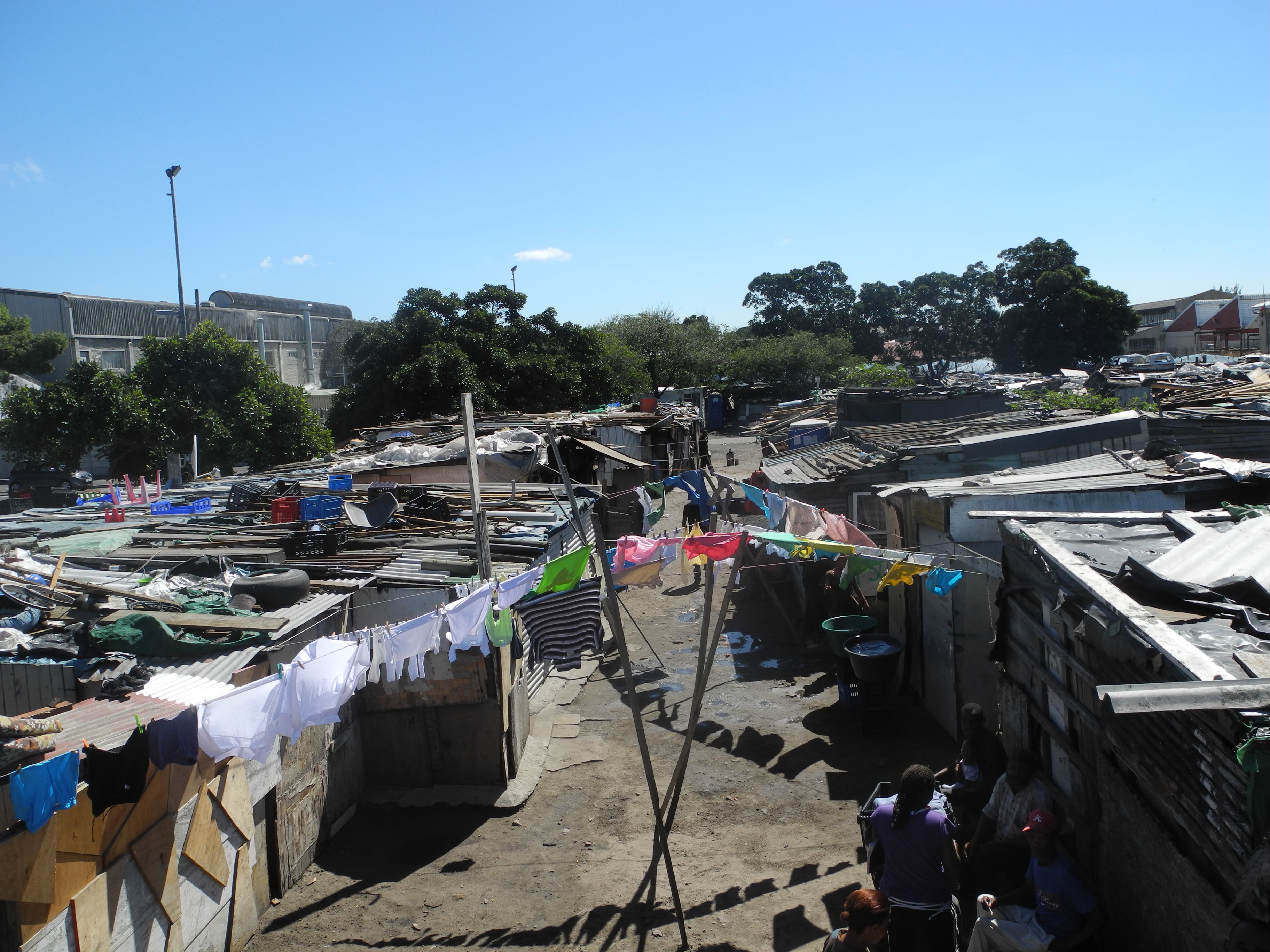
Tucked between Lansdowne’s industrial warehouses and timber depots lies Flamingo Crescent, an informal settlement situated on a street by the same name. On a walkabout through its smoke and dust-filled pathways, community leaders would tell you that Flamingo is home to about 450 people who reside in 104 structures. The entire settlement makes use of only 2 taps and 14 chemical toilets that are emptied three times a week. You would come across contained fires in tin-drums – because the absence of electricity means that fire is a central source for cooking and warmth.  Most structures – consisting of old cardboard, zinc, timber and plastic pieces – are roughly situated around a broad u-shaped pathway that is intersected by smaller, narrow footpaths.

This picture is about to change as Flamingo community goes about upgrading its settlement. Since its first engagement with the Informal Settlement Network (ISN) in 2012, the community has been preparing for re-blocking and – in partnership with the City of Cape Town – is set to receive one-on-one water, sanitation and electricity services.

1. Overview 2

Aerial view of Flamingo


Fire used for cooking

Fire is used for warmth and cooking

Mobilising the community

The community steering committee recounts how the first people arrived in Flamingo in 1992. Many had previously resided around the M5 motorway in Cape Town. Others had been living under Lansdowne Bridge. During the first meetings with the community, ISN introduced the ideas of informal settlement upgrading and re-blocking. It explained how communities could drive their own development processes through making savings contributions, joint planning and implementation. ISN representative, Terence Johnson, emphasises the importance of the community-led process, particularly in Flamingo, where “people had given up hope”.

“When we met with ISN it was the first time we got a partner to help us change our circumstances. After we linked up with ISN and CORC the community decided to elect a new steering committee so we could get better organised and get a better life for ourselves”

(Mark Solomons and Chirne Arnold, Steering Committee Members)

General Community Meeting in Flamingo

General community meeting in Flamingo

Savings, Exchanges

During a general community meeting the steering committee shared the ideas of upgrading and re-blocking with the community and explained that every community member needed to make a 20% contribution to their own re-blocked and upgraded structure.  The community’s response was initially skeptical because they had expected to receive government-subsidized housing.

“But through going on exchanges the community slowly changed its mind. We saw examples of a re-blocked settlement with upgraded zinc aluminum structures in Sheffield Road and Mtshini Wam as well as the one-on-one services for every upgraded structure in Kuku Town”

(Chirne Arnold, Flamingo Steering Committee Member)

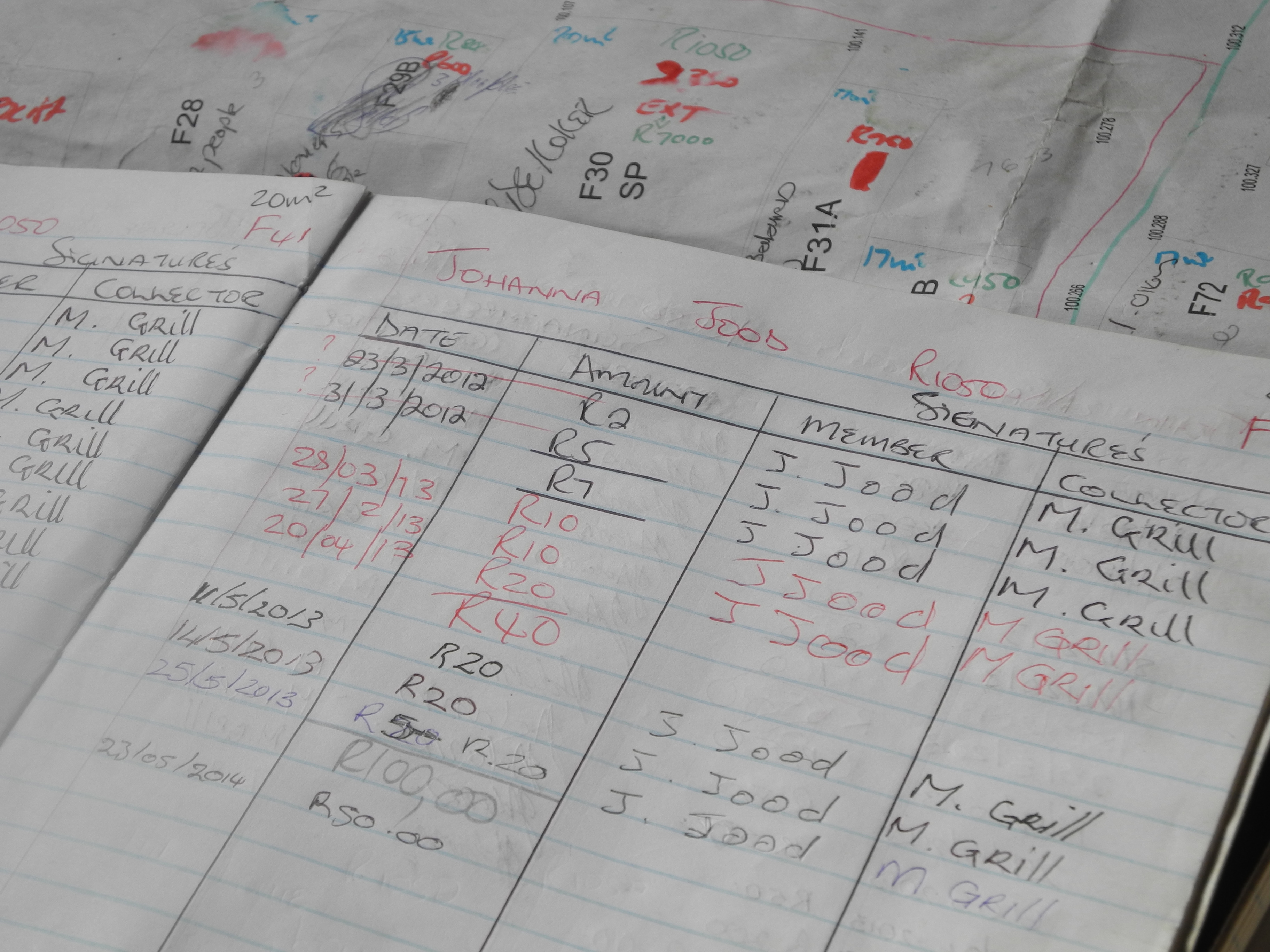
The community began saving in 2012 and to date has saved about R42 000. Each payment was made to the treasurer of the steering committee who recorded each transaction in the community savings book and counter signed the community member’s personal savings book.  As the majority of Flamingo’s population is old and unemployed (50%) the collection of daily savings proved to be a challenge. Nevertheless,

“Some community members like Ouma Sarie have almost managed to save the entire amount. She started with one packet of cigarettes and sold each cigarette one by one. She has saved R860 to date and only has another R200 to go.”

(Elizabeth Rantoetse, Flamingo Steering Committee)

Other community members saved some money through working. Those that were not able to save anything are set to receive short-term employment during the construction process through the City’s Expanded Public Works Programme (EPWP).

DSCN5756

Flamingo Steering Committee and ISN Representatives. From front left to right: Melanie Manuel (ISN), Elizabeth Rantoetse, Jasmine Louw, Lenrika de Koker, Chirne Arnold, Terence Johnson (ISN), Mark Solomons

DSCN7127

Community documented savings

Enumeration, Planning and Partnership

Flamingo’s enumeration took place in April 2012. Over a period of one week, community members, supported by the Alliance, gathered social and demographic data about their settlement. This enabled the community to gather information about Flamingo’s population, the number of structures and the exact extent of water and sanitation amenities. The enumeration also gathered details on the extent and spread of employment as well as the reasons for moving to Flamingo. During a planning studio with students from the Cape Peninsula University of Technology (CPUT) and CORC technical staff in 2013 the community surveyed the site, designed its re-blocked layout and verified its enumeration results. Later that year the community was joined by students from Worcester Polytechnic Institute (USA) who assisted in conceptualising plans for a crèche and a play park.

Flamingo is one of several pilot projects supported by the City as part of a broader commitment the City made in 2012 to support the upgrading of 22 partnership projects. For more background click here. Following the 2012 agreement, the City, Alliance and Flamingo community met in a number of partnership meetings. The enumeration acted as a powerful entry point to negotiating an improved layout and one-on-one service provision. So far, the main sewer lines have been laid and two clusters of structures have been cleared and are ready to be re-blocked. As implementation continues, Flamingo community continues on-site meetings with City officials to discuss details and project developments.

Auntie Marie, Flamingo community leader, reflects on the road thus far:

 “If it wasn’t for ISN, I don’t know where we would be. Through ISN we were introduced to the City and we got a partnership. We started thinking, ‘Now something is going to happen’. Flamingo is going to be re-blocked!”

CORC will continue to document project developments in future posts.

DSCN6554

City of Cape Town site meeting with steering committee

DSCN6124

Ground markings for laying pipes

2014-04-24 10.53.58

Earth works begin

DSCN7079

First clusters are cleared. Preparation for paving central pathways.

DSCN6143

First upgraded structure

DSCN6546

Auntie Marie (Flamingo Community Leader) and Nkokheli Ncambele (ISN Regional Leader)

Designing with Communities: CPUT – Manenberg Studio 2014

By CORC, ISN, News No Comments

By Yolande Hendler (on behalf of CORC)

Manenberg community leaders and architectural students from the Cape Peninsula University of Technology (CPUT) recently collaborated on a six-week long planning studio in Cape Town (March-May 2014). The studio aimed to generate ideas around alternative housing design and delivery options that would address the needs of Manenberg residents within their existing challenges and ‘urban’ conditions.

DSCN6957

CPUT students with Manenberg community leaders Terence Johnson, Melanie Manuel, Na-eema Schwartz & Errol Snippers (left to right)

Manenberg

Manenberg was established in 1966, during a time of forced removals when the apartheid government relocated low-income coloured families from District Six and other parts of the city to an area known as the Cape Flats, 20km away from Cape Town city centre.  During Manenberg’s construction phase in the late 1960s it was classified as a ‘sub-economic housing development area’. Although the design and structures of these semi-detached houses and project-like flats differed, this term indicates that most did not have ceilings, inside water or doors to their rooms (Reference). As construction continued into the mid 1980s, other buildings and social amenities sprang up. Many people currently live in backyard dwellings. Along with experiencing overcrowded living conditions Manenberg’s communities are continuously exposed to high crime and gangsterism.

Screen Shot 2014-05-20 at 4.20.36 PM

The studio brought together about 40 students from CPUT’s Department of Architectural Technology and Manenberg community leaders who represented the Manenberg Slum Dwellers, the Movement for Change, the Backyarders Network, the Federation of the Urban Poor (FEDUP) and the Informal Settlement Network (ISN). The studio was facilitated by ISN and supported by the technical team of the Community Organisation Resource Centre (CORC).  For more background on ISN-affiliated communities in Manenberg and backyard dwellings click here.

ISN representative and Manenberg community leader, Melanie Manuel, explained that the studio offered an opportunity for Manenberg residents to come up with a better proposal to address overcrowded conditions and inadequate basic services. For the students the studio offered valuable exposure to inclusive planning practice. They were tasked to assist the community in the design and planning of housing and the related community ‘place’ layout.  This required students to work closely alongside community leaders to explore innovative and relevant concepts that would generate flexible solutions. Mizan Rambhoros, Senior Lecturer at CPUT, explained that

“Traditionally, architectural students work on hypothetical projects. This makes working with a community in a studio and involving a community in the design process a completely different scenario. In a ‘live’ project it’s not possible to follow a rigid process – this really opened the student’s eyes.”

IMG-20140520-WA0012

Sharing planning concepts with community leaders

The studio began with a site visit to Manenberg in which community leaders highlighted their primary concerns to the students – recurring floods, fires and security issues. Together, they identified the site they would engage with – the block between Red River Street and Red River Walk that experiences a high prevalence of crime and overcrowding. Students continued to meet with community leaders on a weekly basis, altering and adjusting their housing design and concepts according to the communities’ feedback.

“By working together with the students we could share our experiences and give them more in-depth input on what would work and what wouldn’t – especially because they were honest and open to criticism”

(Melanie Manuel, Manenberg community leader and ISN representative)

‘Incremental Growth’ and Final Presentations

On 9 May, the students presented their final design and concepts. Each group presented their understanding of the contextual and conceptual issues they encountered, designs of a detailed layout and a model of proposed housing units.  The idea of ‘incremental growth’ presented a common strand through all presentations. Several groups highlighted how external circumstances influence mind-sets and subsequently how people interact with each other. This caused them to ask: how can space facilitate a change in mind-set and interaction with people?”

DSCN6931

In responding to the presentations, Na-eema Schwartz from the Manenberg Backyarders Network, commended the students for addressing aspects that were highly relevant to community members – such as idle time and space, fire, flooding and security. In reflecting on the studio, Errol Snippers (Manenberg’s Movement for Change) shared his experience:

“These youngsters have opened my eyes to the way I look at buildings and safety features. Maybe they’ve learnt from us, but I’ve learnt from them too. In this short time we’ve gotten to know each other. I love their passion and drive and would love the kids in Manenberg to have the same passion”

DSCN6942

Errol Snippers (Manenberg Movement for Change)

By the end of the studio it was evident that ‘incremental growth’ was not only reflected in architectural concepts and designs. Even more so it was reflected in both community leaders’ and students’ reflections.

“The studio presented our first opportunity to work on a ‘live’ project in which we needed to feed back our ideas to the community and think about what would be relevant to them.  At the beginning, some of us had quite a stereotyped mind-set. Working together with community leaders in the studio was a learning curve for us all. We now design and accommodate for people’s social situations because we understand them.  How do you design with communities? You have to become ‘part’ them”

(Nomfundo Dlamini, CPUT student)

The next step will see community leaders share the students’ work with the rest of their communities and establish how to use and implement the concepts and design. Such community-based, participatory planning practices contribute to harnessing local knowledge and packaging it into an action plan. In this way communities become key agents in their own development plans.

SDI President Jockin Arputham in Cape Town

By FEDUP, ISN, News, SDI No Comments

Jockin Arputham, president of Shack / Slum Dwellers International (SDI) received a warm welcome from the South African Alliance in Cape Town yesterday on the last of his four-day visit. As a long-standing, much-valued friend of the Alliance he spent the day with community leaders in Khayelitsha and with representatives of the City of Cape Town and Western Cape Province.  Jockin spoke about the power of savings and the Indian Alliance’s partnership with the Municipality of Greater Mumbai. In this context, Jockin was accompanied by Rajiv Jalota, the Additional Municipal Commissioner for Projects in Greater Mumbai Municipality.

SDI President Jockin Arputham (Right) & Rajiv Jalota (Additional Municipal Commissioner for Greater Mumbai Municipality)

SDI President Jockin Arputham (Right) & Rajiv Jalota (Additional Municipal Commissioner for Greater Mumbai Municipality)

The Informal Settlement Network (ISN) has mobilised and profiled several settlements in Khayelitsha that are set to proceed on water, sanitation, drainage, re-blocking and community facility projects.  Jockin’s visit linked Khayelitsha’s community leaders – many of whom are fairly new to ISN and SDI processes – to the broader context of the South African Alliance and SDI as a global network.

Community Leaders greet Jockin

Community leaders welcome Jockin

Word of welcome by Tamara Hela, Community Leader from UT Gardens Khayelitsha

An official word of welcome by Tamara Hela, Community Leader from UT Gardens Khayelitsha

National coordinators of the South African Alliance’s two social movements, Patrick Maghebhula (ISN) and Rose Molokoane (FEDUP) welcomed Jockin by speaking about the Alliance’s history with the Indian Alliance. They referred to the South African slogan – Amandla Imali Nolwazi: Power is Money and Knowledge – and its roots in the relationship with India.

“This slogan started influencing me after we went to India (in 1991). We shared ideas around democracy with the Indians. We saw that after 40 years of democracy millions of people in India were extremely poor. We realized that if you sit around and wait for democracy it will come…but it will come with its own laws that might not cater for you. We need to do something to translate these laws to our own life. And so we learnt the experience of self-reliance from the Indians. We need to drive our own lives – and we do that with savings. This is how relationships with government were formed in India. Our savings and our information give us power to influence laws. We know, that yes, we may be poor, but we are not hopeless“

(Rose Molokoane, National FEDUP co-ordinator)

Rose Molokoane (National FEDUP co-ordinator)

Rose Molokoane (National FEDUP co-ordinator)


In the keynote address, Jockin emphasised that

“Savings are a life line. We talk about savings the whole time because money is what speaks.  But when you collect money – door to door – you also collect information. When you have information you can plan action and if you act, something will happen. This is why money and information guarantee us power.  We need to think about how to support ourselves”

As 40 – 50 % of Mumbai’s population – 19 million people – lives in slums, many millions do not have access to toilets. In fact, the ratio translates to about 1 toilet for every 800 people.  The NSDF has therefore been working together with Mr Jalota and the Municipality to construct community planned and -owned toilet facilities. This experience, Mr Jalota explained, would help to develop more policies for Greater Mumbai.

Jockin founded the National Slum Dwellers Federation of India (NSDF) in the 1970s. Often referred to as the “grandfather” of the global slum dwellers movement, Jockin was educated by the slums, living on the streets for much of his childhood with no formal education. For more than 30 years, Jockin has worked in slums and shantytowns throughout India and around the world. After working as a carpenter in Mumbai, he became involved in organising the community where he lived and worked (Reference). He helped found SDI and has been awarded many prestigious global awards, most recently the Skoll Foundation award for social entrepreneurship. On behalf of SDI Jockin has also been nominated for the Nobel Peace Prize.

Jockin Arputham, SDI President

Jockin Arputham, SDI President

Official Handover of Kuku Town Re-blocking

By CORC, ISN, News, uTshani Fund No Comments

By Walter Fieuw and Yolande Hendler (on behalf of CORC)

Kuku Town before re-blocking

Kuku Town before re-blocking

Kuku Town after re-blocking

Kuku Town after re-blocking

There is a growing recognition that services need to be delivered to informal settlements in new ways. Such new approaches should aim at building community capacity through participatory planning, design and service implementation. Informal settlements are characterised by very different shapes and sizes, ranging from smaller inner city settlements located in residential neighborhoods to large sprawling settlements on the periphery of cities. Different approaches are needed to effectively transform these settlements into more dignified living spaces.  Working with communities is paramount to succeeding in upgrading initiatives. The re-blocking of Kuku Town is an example of an alternative approach to thinking through aspects of place, safety and security through improved settlement layouts, and better located services.

The South African Alliance and Kuku Town community celebrated the official completion of re-blocking on 29 April 2014. Community leaders welcomed delegates from ISN and FEDUP, NGOs such as CORC, iKhayalami and Habitat for Humanity South Africa (HFHSA), City of Cape Town officials from the Department of Human Settlements and the Councillor of Ward 32, Cllr. Derrick America to the hand over last Tuesday.

DSCN6393

ISN & FEDUP co-ordinators speak at handover

Verona Joseph, Kuku Town community leader, opened the ceremony by welcoming guests and sharing some of Kuku Town’s history and the process of community mobilisation. Diverse partners involved in the upgrading process held a variety of speeches that gave thanks, recognised and acknowledged the community’s achievement after three years of negotiations and preparations. ISN and FEDUP community representatives, Mzwanele Zulu & Thozama Nomnga, voiced the importance of continuing the relationships and partnerships, beyond the completion of re-blocking.  Cllr America echoed this sentiment and emphasised that upgrading a settlement is about restoring dignity. Every community member received a personalised ID card containing demographic information  – a symbol of having taken one step closer to reaching security of tenure. The ceremony therefore marked an important milestone for the community, who founded the settlement in 1985.

Cllr Derrick America (right) hands over ID card to community leader Verona Joseph (centre) with Salisha Lauton (left, Habitat for Humanity SA)

Cllr Derrick America (right) hands over ID card to community leader Verona Joseph (centre) with Salisha Lauton (left, Habitat for Humanity SA)

In the meantime, the City of Cape Town has formally adopted re-blocking as an informal settlement upgrading strategy. It is included in the City’s IDP and Urban Settlement Development Grant (USDG) budgets for the next five years. The strength of re-blocking stems from the central participation of community members in the planning, design and implementation of their settlement upgrade. Unless community members are seen as central participants in the design of their settlement, the exercise remains futile, and not responsive to local conditions. 

Invalid Displayed Gallery

CORC Architect receives honourable mention by CA-ASI

By CORC, ISN, News, Press No Comments

visuel_projet8A young architect working with CORC, Mr. Olwethu Jack, was awarded one of nine “honourable mentions” in the most recent international architectural competition hosted by CA’ASI Association, an international ” “club” open to all those who love contemporary architecture and design“. In a press release dated 2 April from CA’ASI Paris headquarters, the international jury, after having reviewed 194 projects submitted, announced the winners of Young Architects in Africa competition which aims to highlight African project creativity, and help a rising generation of young architects achieve worldwide recognition. This follows the successful previous editions of the awards of New Chinese Architecture in 2010 and Young Arab Architects in 2012.

The CA’ASI Association has been established to promote the dialogue between architecture, contemporary art, and the Biennale visitors. For the 14th International Architecture Biennale, the CA’ASI has opened the doors of Palazzo Santa Maria Nova to emerging African architects in order to emphasise the creativity and originality of new African architecture, and to help it gain world-wide recognition.

Mshini Wam profile

In Mr. Olwethu Jack’s submission form, primarily citing his supportive work with the communities of Mtshini Wam and Langrug, he writes

Personally as a designer working for CORC I value the opportunity of designing with community members whereby I am able to use my architectural background to fulfil the community’s developmental vision. This process is informed by the community’s vision of their settlement and after discussing the vision, we, together with the community assist in putting that vision on paper sometimes through models, which is 3D visual to assist the community to understand the context better. The most important thing for me is building a model together with the community because sometimes it is hard for the community members to understand the terminology, scale and space thus the models helps eliminate some of the language barriers.

The Wash Facility

The Wash Facility

The Young Architects in Africa competition recognizes and concerns architecture in a broad sense, and “there is no particular type of project to submit. You can submit either built or unbuilt projects. The program, category or size are not imposed. All types of projects are welcome.” (Project Information FAQ). AS.Architecture-Studio defines architecture as “an art which is socially committed and engaged in the construction of mankind’s living environment”. It is based on team work and shared knowledge.

These projects will be exhibited at the CA’ASI, AS.Architecture-Studio’s Common House in Venice, as part of the 14th Architecture Biennale’s Collateral Events (June 5th – August 30th 2014), then at arc en rêve centre for architecture in Bordeaux, the Academy of Architecture in Paris, and several other cultural institutions across Africa. All projects from the candidates to the YAA competition will be published in a widely distributed bilingual catalog.


Building Partnerships: Comic Relief vice chair and film director Richard Curtis visits SA Alliance

By CORC, News No Comments

By Yolande Hendler (on behalf of CORC)

DSCN5524 - Kopie

Richard Curtis, Melanie Manuel (ISN), Emma Freud, Bunita Kohler (Director of CORC), Marlene Don (FEDUP) and Bukiwe Marawu (CORC)

Last week, the South African Shack Dwellers Alliance welcomed Comic Relief vice-chair and film director/producer/writer Richard Curtis with his wife, Emma Freud, and family at the Cape Town office. Before arriving he told his children,

“Today I’m meeting the people I work for”.

As a renowned film-maker, Curtis is also co-founder of the UK based charity Comic Relief which has been one of the alliance’s principal development partners since 2011. Together, they spent a morning meeting the alliance partners, visiting Mtshini Wam informal settlement where community members explained the process of re-blocking and showed Curtis and his family what a re-blocked settlement can look like. They also visited the Solid Waste Network, one of the alliance’s income generation initiatives.

DSCN5533

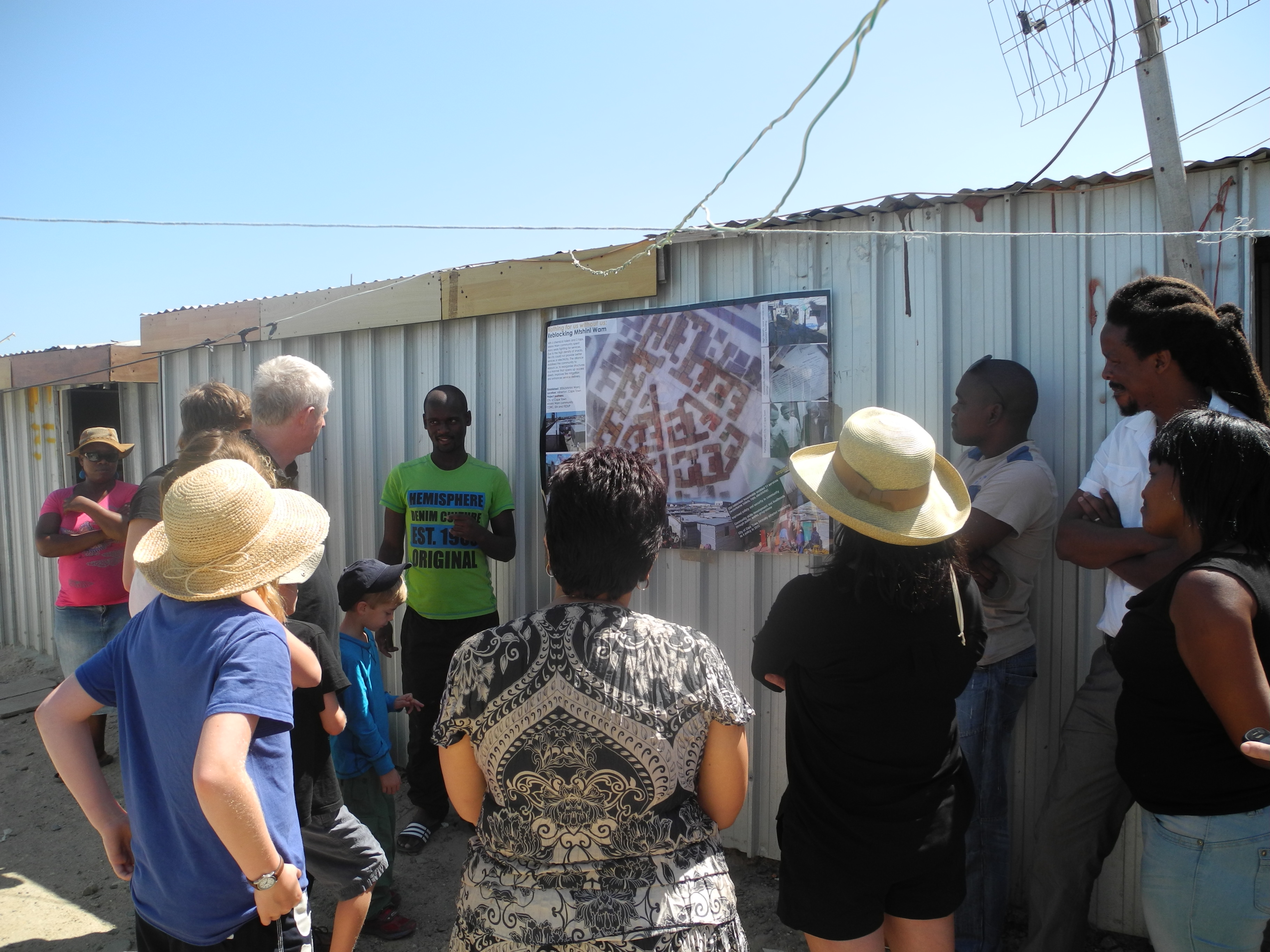
Mthsini Wam community members explain reblockingDSCN5542

Building Partnerships

To achieve the vision of more inclusive and pro poor cities it is critical to build partnerships with urban development actors who support this vision. The alliance’s association with Comic Relief as a development partner is a platform for organised communities to be at the core of building such cities. Communities are best positioned to contribute to design and to plan development solutions that have greater impact and sustainability than external development interventions. The alliance’s partnerships not only include the network of SDI affiliated countries or partnerships with government but also focus on partnerships with international aid agencies and donors, such as Comic Relief.

Founded in 1985, Comic Relief’s vision is of a “just world, free from poverty” (Reference). By raising funds through campaigns such as Red Nose Day and Sport Relief, Comic Relief spends these on projects that tackle the “root causes of poverty and social injustice in the UK and across the world” (Ibid). In particular Comic Relief supports projects “on the ground”, giving people a “leg up, not a hand out” (Ibid). Comic Relief displays a long term view of achieving this vision and therefore forms lasting partnerships with local organisations. Some projects are supported for up to six years whereby the progress of projects is tracked and funds are paid in phases.

Comic Relief and the South African Alliance

Comic Relief has been a core funding partner of the Alliance’s work since 2011 when uTshani Fund secured a grant for supporting the core activities of FEDUP housing development process. The grant is in its second year of operations and aims to support community lead projects in housing development and informal settlement upgrading (via the uTshani Fund housed funding facility Community Upgrading Finance Facility). uTshani Fund and CORC have formed a close working relationship in addressing the challenges of homelessness, landlessness and urban poverty.

The Community Organisation Resource Centre (CORC) has also been successful in applying to Comic Relief for grant funding. As part of its UK Aid Match scheme, Comic Relief formed a partnership with the Department for International Development (DFID). In December 2011 DFID agreed to provide a further £10m of funding for Comic Relief’s Urban Slums work. This sum would be matched by Comic Relief through funds raised during Sport Relief 2012, thereby totaling £20m. This new fund is intended to transform the lives of a million slum dwellers in a limited number of African cities through the strategic collaboration of agencies. The funding spans five years in total.

CORC and the South African alliance partners responded to the call for proposals and were successful in their application. The core of the funding proposal focussed on setting up a local city fund which will deliver informal settlement upgrading projects in the area of Khayelitsha in the City of Cape Town. The city fund is a responsive mechanism that aims to achieve a long term sustainable fund which could be replicated and/or recapitalised by City and Provincial government.

The beginning of Comic Relief funded projects in Khayelitsha

DSCN5045

Community leaders plan and design in KhayelitshaDSCN5063

As part of the Comic Relief grant, the alliance has been engaging with several neighbouring communities in Khayelitsha that live in UT, TT and BT sections, Litha Park and UT Gardens. Since mid 2012 these communities have been forming a horizontal relationship with ISN structures. After community members living in UT Gardens profiled and enumerated their section, they expressed the need for a crèche / multi-purpose centre for the community on a nearby open field.  Since the start of 2014 community leaders have continuously met with each other and CORC’s technical support team.

The meetings have had two aspects: On the one hand the community leaders expressed some key issues to address such as drainage and managing waste disposal. On the other, they co-designed and co-conceptualised the first drafts of the crèche / multi-purpose centre and identified existing footpaths and transit spaces. As the discussions continue, community leaders are eager to see this project lift off the ground.

This, then, is one of the projects that the Comic Relief grant supports. On the surface, it looks entirely different from Mtshini Wam or the Solid Waste Network which Curtis and his family visited. Yet the similarity lies in the tools that each community uses to organise itself. It lies in communities who lead their own design and planning. The SA SDI Alliance values long term funding agreements with international development partners such as Comic Relief (and its associations and members) that recognise the imperatives of informal settlement upgrading, housing and land, and livelihoods development.


A Decade after BNG: Does UISP work?

By CORC, FEDUP, ISN, News, uTshani Fund No Comments

delport + marathon_lr2

By Walter Fieuw (on behalf of CORC/uTshani Fund)

South Africa celebrates two decades of independence this year. It is also a decade after the then-Department of Housing issued its guiding framework document, Breaking New Ground (BNG): A Comprehensive Plan for the Development of Sustainable Human Settlements. Since 2004, when BNG was introduced and all subsequent National Housing Codes were amended to give meaning to the concepts and principles contained therein, we have experienced escalated protests in informal settlements around the country. These “service delivery protests” are often in response to lack of basic services. Politicians claim to have radically improved access to water and sanitation, but these claims can not be validated, and the devil lies in the detail. Its a critical time to reflect on housing praxis ten years after Breaking New Ground, and in this blog post we consider Part 3 of the National Housing Code: the Upgrading of Informal Settlements Programme (UISP).

Never before has civil society, urban sector NGOs and new state institutions been as interested in the upgrading agenda. An example of this was the Isandla Institute and African Centre for Cities conference in 15 and 16 October 2013 titled ‘Partnership-Based Incremental Upgrading of Informal Settlements in South Africa’. ISN and CORC, as part of the South African Alliance linked to SDI, have made strides in upgrading and have received a number of awards for its work in Langrug, Stellenbosch Municipality (UISP Phase 3) and Mtshini Wam (incremental upgrading). Other social movements such as Abahlali baseMjondolo traditionally lobbying only for housing and land have also called for alternatives, of which settlement upgrading and governance reform are primary.

MW 2

UISP in retrospect

UISP has been through various iterations since 2004, with major amendments in 2007 and 2009. Academics such as Marie Huchzermeyer has called attention to various progressive elements of the policy being removed. Part 3 of the National Housing Code (2009) argues that informal settlement upgrading is ‘one of the Government’s prime development initiatives and that upgrading projects should be dealt with on a priority basis’ (DHS 2009:25). However, the application of UISP before the establishment of National Upgrading Support Programme (NUSP)[1], Outcome 8 of the Presidency, and perhaps to a lesser extent Chapter 8 of the National Development Plan has been extremely weak.

There has also been varied interpretations on how UISP should be applied to different types of informal settlements. Cape Town, as an example, illustrates this point, and two examples – one quite bottom-up, participatory and empowering, and the other top-down and “modernist” – are worth considering. Hangberg in Houtbay was one of the City’s first UISP projects. It had all the right elements to make it a successful upgrading: strong and transparent community leadership and structures, mediation and capacity building by an urban sector NGO Development Action Group, and a strong political will by the City’s mayor and line departments. After moving through Phases 1 and 2, the project broke down in draconian police violence in 2010. Ever since, there has been little progress. The other example is the N2 Gateway Project, which was also packaged as a UISP. Here government departments eradicated the Joe Slovo informal settlement in 2004, moving many residents to Temporary Relocation Areas (TRA), to stabilise and rehabilitate the land. The project was challenged in the Constitutional Court, and the state was forced to house the relocated families. Needless to say, many still remain in the TRAs.

Often times its not so much about the “What?”, but about the “How?”. The UISP does not yet solve many of the complex issues that informal settlements represent, since it falls back on very linear logics. If the UISP were to be restructured, it needs to consider the following themes, which is followed by more practical recommendations for restructuring the programme.

Ramaphosa panorama

Themes to be addressed by the UISP

Theme 1: Partnership approach: Most Metros, where the majority of informal settlements are located, have been accredited as housing developers. The City’s role as the developer is essential, but local democratic structures need to be create to facilitate effective upgrading. There should be a stated recognition and budgetary allocation to allow for intermediary support, such as NGOs, community networks, organisational development consultants and mediators (in conflict cases). Without intermediation, the ideals and goals of developing partnerships will remain rhetoric with no execution power.

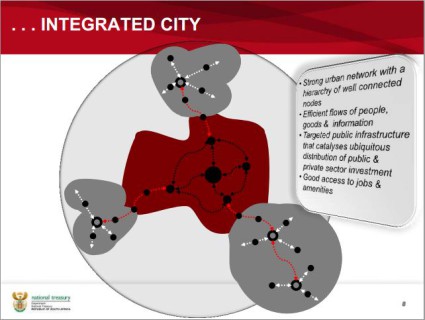
Theme 2: Area-based planning. Upgrading (brownfields development) is not the same as housing (greenfields development). Grants need to be available for communities to work closely alongside experienced urban designers, planners, architects, surveyors, engineers, transport planners to plan at the neighbourhood scale, and not individual sites for housing consolidation. At the neighbourhood scale, the metro needs to demonstrate how the UISP project will interact with other public investments in the built/urban fabric, which is guided by the Integrated Development Plan, Spatial Development Framework, the Built Environment Performance Plan (BEPP), and a number of other grants such as the Integrated City Development Grant (Treasury) and the Urban Settlements Development Grant (USDG). This also connects with Treasury’s new Urban Network Strategy, which understands the remaking of the apartheid city by means of prioritised investment in new nodes and development corridors.

Capture 2

National Treasury’s Integrated City Development Grant utilises the “Urban Network Strategy”

Theme 3: New tenure arrangements: The UISP is currently locked into a reverse greenfields development trajectory: people have occupied the land, they should be removed, trunk services to be installed, houses to be built, and the community needs to move back onto the land. The reality is that informal settlement upgrading is brownfields development, and the phasing of development needs to be planned in partnership with the community. Incremental upgrading means that more allocations for temporary accommodation is required. Design proposals by Cape Town based architecture firm ARG Design in respect to very dense informal settlement upgrading point to the need for “roll-over” accommodation in disruptive times of infrastructure development. The work of ISN and CORC, with partners University of Johannesburg and 26’10 South Architects on Marlboro in Johannesburg, also make proposals for upgrading in industrial areas. This also means that alternative tenure arrangements other than individual ownership needs to be further developed and local municipal officials needs training and capacity development to apply these new tenure arrangements.

Theme 4: New kinds of consolidation housing: The provision of Community Residential Units (CRU) is an option under phase 4 (housing consolidation) of the UISP and falls under Social and Rental Interventions of the National Housing Code (DHS 2009). Higher density and social and rental housing needs to be provided for, and government needs to prioritise a move away from the 40x40x40 housing paradigm: 40sqm house, 40km outside the city, where you spend 40% of your income to get to work.

Theme 5: Analysis of patterns of informality in a metro region: By having strong local design and implementation plans for individual informal settlements, patterns in metropolitan areas can be analysed. This is important to transport apartheid spatialities. It might become clear that in one metro, informal settlements are concentrated along prominent transport corridors, which might be core informants to a metro’s Transit-Orientated Development (TOD) strategies. Other areas, such as mining town, will have a very different needs and requirements for upgrading informal settlements. The link between individual settlements are the city-region might not be a UISP function, but a clear link between settlement grants (UISP, Access to Basic Services) and city restructuring grants (ICDG, USDG, Transport Grants, etc) needs to be clearly articulated for UISP is have maximum impact.

DSC_0067

A community plan presented by Umlazi community, eThekwini

Capture

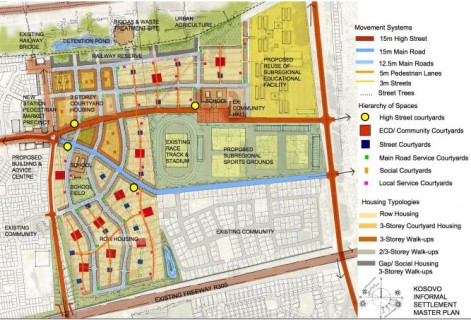
Professional layout plan design by ARG Design, Kosovo informal settlement, Cape Town

Practical recommendations:

We agree that the phased approach to upgrading is essential, and the logic and structure that the four phases of the UISP is sensible and binds the metro to a progressive and forward looking programme of action. Recommendations are made for each of the four phases:

Phase 1: Application

In addition to the listed activities:

  • Increase community participation grants from 5% to 12% of subsidy quantum
  • Options for new governance arrangements between communities and city officials/departments facilitated by intermediary players (e.g. NGOs)
  • In their business plan, Metros need to demonstrate how UISP plans fit into public investment into the region, citing the IDP, SDF, District and Local Spatial Plans, BEPP, Integration Zones of the ICDG, and sectoral plans (e.g. Transport, Economic Development, Industrial Action Plans, etc)
  • Research into the informal market for demand and supply factors of informal housing including intra- and inter “push and pull” factors

Phase 2: Project Initiation

In addition to the prioritisation of rapid delivery of interim basic services, studies commissioned, and other priorities already mentioned (typically water taps and toilets):

  • Structuring of tenure arrangements (multiple options that ties back into major Land Use Management and Planning)
  • Allocations for interim housing and intra-settlement relocation (ensure zero displacement)
  • Set up block committees that drive local needs assessment through enumeration, profiling, spatial mapping and action planning
  • Representatives of block committees serve on project steering committee

Phase 3: Project Implementation

In addition to the prioritisation of full services (trunk infrastructure, roads, amenities, etc):

  • Project steering committee (read: a special task team) mandated, constituted and multi-party planning and project managing
  • Line departments and formal IDP and public participation processes of the Metro needs to be aligned to the Project Steering Committee’s workplan
  • Consultants appointed by the Metro to be accountable to the Steering Committee

Phase 4: Housing Consolidation 

See recommendations under themes 3 and 4

 In conclusion

UISP remains government’s formal response to the progressive and forward looking ideas contained in the Breaking New Ground framework document. The recommendations presented in this blog is based on a partnership approach, and recognises that structures and delegated authority and tasks are required for upgrading projects to be successful. Only when people living, using and dreaming about the future of their settlements are made to be central actors in the development process, can upgrading truly succeed.


[1] The NUSP has four main activity streams: 1) policy promotion and refinement (raise the profile of UISP and refine and improve implementation); 2) networks and forums (fill the knowledge gap and improve information flows by establishing ‘community of practice’); 3) tools and information (furnish practitioners with good practice and shared experiences over and above the guiding framework of the National Housing Code (DHS 2009)); and 4) technical assistance (help provinces and municipalities develop upgrading programmes at project level) (DPME 2010b:48).


SA SDI Alliance 2013 in Review

By CORC, FEDUP, ISN, News, uTshani Fund No Comments

Ayanda 20120209 212

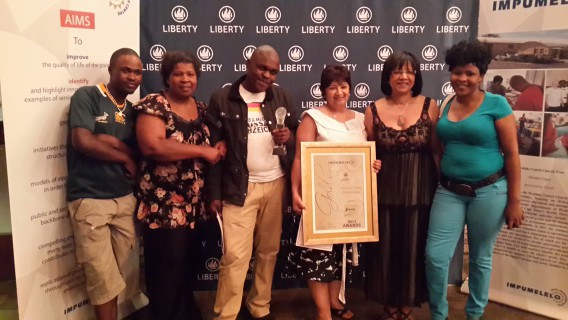
Its that time of the year when we, the SA SDI Alliance, reflect on our achievements and work in progress. 2013 was a year of growth, maturation, and sharing knowledge and experiences. On the housing front, FEDUP was awarded with the Gauteng Provincial Goven Mbeki awards (runner up in North West), when the re-blocking of Mtshini Wam earned ISN and the community a Gold Impumelelo social innovation award.

The City of Cape Town’s adoption of the re-blocking policy has surpassed recognition and honor of the alliances work to realizing one of its main goals, which is creating precedent setting projects that have the ability to change policy and influence resource flows. Although the importance of upgrading of informal settlements has been recognised in the National Development Plan and actioned by the National Upgrading Support Programme (Department of Human Settlements), more needs to be done to promote community participation.

Creating partnerships with Government is one of the alliance’s aims of increasing the reach and impact of participatory development, and in this year we have spread our wings through sharing of knowledge and experiences by partnering with a number of stakeholders. These include the Santa Fe Institute, Habitat for Humanity, Touching the Earth Lightly and local and international universities (Worcester Polytechnic Institute, University of Cape Town and the University of Melbourne).

This year also marked a much closer working relationship between FEDUP and ISN, resulting in the signing of a joint charter. Such a review happens once in four years, and this year at the national forum the ISN/FEDUP charter was launched to strengthen and clarify the roles of each network. In 2014 we are looking forward to showcasing four of the Alliances projects that have been acknowledged by the World Design Capital 2014 committee and we will continue working with different stakeholders to make the voices of the poor heard.

We look back on the year past, and in anticipation, look forward to the coming year.

1: Policy transformation at the local government level

On the 5th of November 2013, Thandeka Gqada, Mayoral Committee Member for Human Settlements, City of Cape Town announced the adoption of the reblocking policy by The City of Cape Town. This policy has been influenced by the Mtshini Wam reblocking project, which is one of 22 pilot projects scheduled for re-blocking in the 2014.

Mtshini Wam before and after

Blocking-out” and “re-blocking” are interchangeable terms the South African SDI Alliance uses to refer to the reconfiguration and repositioning of shacks in very dense informal settlements in accordance to a community-drafted spatial framework. The aim is to better utilize the spaces in informal settlements to allow for better service provision. Moreover, re-blocking is done in “clusters” identified by the community, and after implementation, “courtyard” are created to ensure a safer environment for woman and children via neighborhood watches (all shacks face the courtyard), productive places (such as washing lines, food gardens), and generally provides space for local government to install better services. Read more on the City of Cape Town Adopts Reblocking policy.

2: Innovative projects nationally recognised

Dududza Project Wins Govan Mbeki award

On the 11th of April, FEDUP was nominated in the Gauteng Provincial Govan Mbeki awards. The award ceremony aims to showcase and demonstrate the partnerships with the department at both tiers and promotes best practices in meeting the delivery mandate of the Presidency’s Outcome 8, which is aligned with the vision of building sustainable human settlements and meeting the Millennium Development Goals. The Federation of the Urban and Rural Poor (FEDUP) has been transforming the housing policy from the bottom up for the past two decades. Premised on the notions of social and political change through community savings. The Federation has built more than 12,000 houses since 1994, and continues to set a precedent in women’s led leadership and collaboration with government. The MEC of Human Settlements at the Provincial tier nominated projects in four specified categories 1) which displays exceptional quality 2) promotes best practice 3) collaboration of stakeholders 4) improving the quality of life for the beneficiary-partners. Read more: Duduza Wins Gauteng Govan Mbeki Award for ePHP and Mafikeng in the North West with the runner up prize

Mtshini Wam Reblocking Project Wins Impumelelo Award

Mtshni Wam was one of the 33 finalists that have been selected out of the 80 shortlisted projects. The finalist are from all over South Africa in a wide range of sectors such as Health, HIV/AIDS, ECD, Education, Skills Training, Environment, Agriculture, Infrastructure, Social Welfare, Community Development, Food Security, Job Creation, and Animal Welfare.  This project showcases community led planning and design, the use of innovative material and layout design to decrease the level of disasters such as fires, flooding and food security, and the collaboration of stakeholders.  Read more  on Mtshini Wam Reblocking Project wins a Gold Impumelelo award.
20131201_205542_LLS_resized

3:  Collaboration and Partnerships

SDI- Santa Fe Institute Partnership

SDI has collaboratively partnered with the Santa Fe Institute in testing new techniques in profiling informal settlements with the quest of improving data capture processes. The importance of this collaboration is to develop theoretical insights about cities that can inform quantitative analyses of their long-term sustainability in terms of the interplay between innovation and resource appropriation. At the grassroots level, the data helps communities understand their settlements better and use it as an engagement tool with government. Read more on the profiling of UT Section, Khayelitsha, Cape Town

Habitat for Humanity South Africa

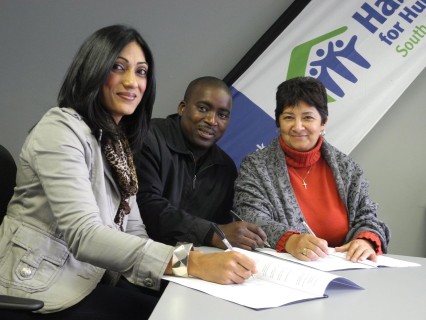
The partnership between CORC/ISN and Habitat for Humanity South Africa centrally recognises that if a vision of change is not community centred, it will most likely yield less impact. Moreover, development, which is conceptualised and implemented by an external agency, will most likely not be able to scale up and reach a citywide impact. For this reason, the Alliance signed a partnership agreement with Habitat for Humanity South Africa around two key around: 1) collaboration around a to-be-determined schedule of projects, and 2) setting up a city-fund. Read more about this collaboration on: Alliance Signs MOU with Habitat for Humanity.
DSCN4071Touching the Earth Lightly

The partnership with Stephen Lamb and Andrew Lord of Touching the Earth Lightly resulted in a first pilot of the Green Shack, which drew a lot of attention at Design Indaba 2o13. This showcase of innovative and cost effective solutions for shack upgrading addressing the problems of fire, flooding and food security was well received.

The aim of growing food vertically is to use the limited spaces that communities have to decrease poverty and hunger in informal settlements. Due to the shift of poverty from rural areas to urban areas, food gardening is an alternative to providing food security in informal settlements, with the high unemployment rate in informal settlements it is difficult for households to provide nutritious meals for their families because food security in urban areas is tied to purchasing power.

The initiative to start a food gardening projects in communities in realizing food provision at a cheaper price in order to decrease household spending on food, increasing food security for poor households and creating livelihood opportunities. The broader idea is to have most of the community members growing gardens either for consumption at a household level or selling to the community to increase the household’s income. Touching the Earth lightly provides innovative ways of growing food in limited spaces such as the creation of vertical gardens, using crates and tyres.

4. SA SDI collaboration with Universities

University of Cape Town (Europe Community Studio)

Tanja Winkler, senior lecturer in Urban and Regional Planning, University of Cape Town, joined CORC staff and the Europe informal settlement leadership on a planning session at Europe, an informal settlement located in Gugulethu, just of the N2 national highway in Cape Town.  The purpose of the planning meeting was to align the 2014 UCT Urban Planning practical learnership with that of the Europe community leaderships’s agendas in a “planning studio”. This studio will form part of the Master Students in Urban and Regional Planning curriculum, and have direct interactions with the community.  The aim of the studio is to expose the students to alternative planning approaches when considering one of the most pressing challenges of our post-apartheid cities: urban informality in its various expressions. Moreover, the nature of the studio also means that technical support is given to the community’s plans for upgrading the settlements, and hence a two-way beneficial relationship is established from where new tools of engagement with the state can be created.  Read more on Community Studio|2014 UCT-Europe Studio’The Planning Session’ . 

IMG00285-20131129-1144

Worcester Polytechnic Institute, USA (Langrug WASH facility)

The construction of the WASH facility is a precedent setting partnership outlining that the provision of water and sanitation services in communities should be executed in a manner that does not simply add-up to the statistics of facilities, or a mere provision of basic utility services as a basic constitutional right. The government is currently the primary entity responsible for sanitation facilities provision in South Africa. However, too often, its top-down and subsidized approach has not been successful in meeting the imperatives of socio-economic sustainability. The facilities are typically undignified and mostly located in the peripherals where residents often find inconvenient to access and more so the facilities are poorly maintained. In addition, residents regularly vandalize them. The dilemma of how, where and which type of service level to provide in informal settlements is far off a challenge too great for the government to solve alone. In that regard, multi stakeholder approaches, with urban poor communities at the core, are needed. This is to enhance dignity-associated with the use of a communal toilet, contribute towards place making in communities, and create job opportunities in asset management, as well as impact policy and practice towards meaningful participatory urban development.

This innovative design, implementation and management of the WASH facility in Langrug is a ‘precedent’ setting for a multi-stakeholder co-production of infrastructure services, which triggered meaningful community engagement and consequently creating a sense of entitlement and redefining government-community relations. Read More on  The Langrug Wash Facility A new Common Space for the Community.

University of Melbourne (Planning studios in Mtshini Wam, Shuku Shukuma and Ruo Emoh)

In February a planning studio was organised between the communities of Mtshini Wam, Shuku Shukuma and Ruo Emoh and architecture and planning students from the University of Melbourne to investigate new solutions for informal settlement upgrading and housing development. In Shuku Shukuma, 80sqm plot size placeholders were cut to scale and laid out on an aerial photograph. The location of visible infrastrcuture was mapped, such as electricity poles, toilet blocks and water taps. The Mtshini Wam group looked at alternative typologies for densification and formalisation after re-blocking projects. A visual fly through model was created, building on the new layout of re-blocked settlement.

We also hosted Tim Budge, a PhD student at Deakin University in Melbourne, Australia. The PhD is focused on the topic of “The Legacy of Paulo Freire and Saul Alinsky for communities seeking change in sub-Saharan Africa”. As part of his studies, he is doing field research in Zambia and South Africa. The research is deliberatively focused on case studies, narratives of change and an appreciation of local context and of the way local people learn and act in their own worlds. In August he gave three communities (Siyahlala, Busasa and Langrug) cameras and diaries where they can record community stories /activities that relate to change.

5: Projects

CORC and Alliance partners was proud to present the publication Masikhase: The Community Upgrading Finance Facility. This publication articulates the spaces created by communities and local government to make decisions and work together towards the incremental improvement of informal settlements.  These new participatory spaces often create conditions for informal settlement upgrading to be more effective and sustainable. The Community Upgrading Finance Facility (CUFF) aims to enhance the agencies and practices of the organized poor by providing a platform and institutional support for communities to engage government more effectively around collaborative upgrading and livelihood projects. Please download the booklet here: CUFF Booklet.

6: World Capital Design Projects

World Design Capital Yellow Logo

The prestigious accolade of World Design Capital is awarded by the International Council of Societies of Industrial Design every two years. It recognises that “the future success of each city is therefore largely reliant on those who plan, design and manage the shared spaces and functions of their city”.

The Alliance of community organisations and social networks Informal Settlement Network (ISN) andFederation of the Urban and Rural Poor (FEDUP) and support organisations CORC, uTshani Fund and iKhayalami saw this as an opportunity to display, on a global stage, how communities go about designing, inhabiting and reproducing spaces that increase accessibility and productivity of poor people in the city. The WCD committee selected four of the Alliances projects namely Mtshini wam reblocking project, Langrug informal settlement upgrading project, Solid Waste management and Community led spatial design and reconfiguration of informal settlements both pre and post disaster. Read More on: Four Alliance Projects Recognised by World Design Capital 2014 Committee.

7: SA SDI Alliance national forum

This year national forum started from the 11th-14th November 2013, more than 200 members of the ISN and FEDUP regional facilitators from all the provinces of South Africa were present. They discussed and shared experiences on income generation programs, savings, enumeration, profiling, informal settlement upgrading, land ownership and partnerships.   The forum is an event where the alliance reports on its past achievements and challenges while the supporting NGO CORC (Community Organization Resource Center) uses this platform to understand the challenges faced by all regions on the ground.  The event also included the launch of the ISN/FEDUP charter. Read More on SA SDI National Forum and Charter Launch. 

IMG_6034

Conclusion:
2013 was a year marked by local and national recognition of the power and possibilities of collaboratively partnering with communities organisations. By building local community capacity, communities have built a bridge to local government officials. Partnerships are pending with the Nelson Mandela Bay Metropolitan Municipality after the profiling and mapping of Midrand informal settlement and also in Moeggesukkel informal settlement. The power of exchanges were visible, considering the role of Gauteng ISN played in strenthening the emerging Eastern Cape ISN . In Midrand municipality, the community of Sicelo showcased alternative options when they demonstrated the effectiveness of community based enumeration. There are also a pending partnership in this local government.

These loose threads will be pursued next year, while implementation in the mature partnerships with City of Cape Town and Stellenbosch Municipality will be stepped up. We want to thank our partners, especially international donors Bill and Melinda Gates Foundation, Comic Relief, Ford Foundation, Charles Stewart Mott Foundation, and Misereor for funding these operations. Early next year our 2013/14 annual report will be ready, expounding on these experiences.

Mtshini Wam’ reblocking project wins a ‘GOLD’ Impumelelo award

By CORC, FEDUP, ISN, News No Comments

20131201_205542_LLS_resized

“The projects awarded have been selected according to the country’s needs” Rhoda Kadalie

Mtshini Wam Reblocking project was one of the 33 finalists that have been selected out of the 80 shortlisted projects. The finalist are from all over South Africa in a wide range of sectors such as Health, HIV/AIDS, ECD, Education, Skills Training, Environment, Agriculture, Infrastructure, Social Welfare, Community Development, Food Security, Job Creation, and Animal Welfare.

“The awards are seen as a break away from prevalent bad stories in our country (South Africa) to sharing positive inspiring stories.  The social innovators are people that have realized that the government cannot act alone but needs a strong civil society to achieve resilient communities and innovation is core. They have changed someone’s reality through innovative ideas and technical solutions, models that have impacted positively on people’s lives to achieve better livelihood results”  Derek Hanekom,  Minister of Science and Technology.

20131201_203612_resized

The Mshini Wam project is an action-orientated partnership between the community of Mtshini Wam, Informal Settlement Network (ISN), Ikhayalami, Community Organisation Resource Centre (CORC) and the City of Cape Town, which resulted in the incremental and in-situ upgrading of Mtshini Wam informal settlement. This project illustrates active and capacitated citizenship, innovative bottom-up community based planning, an improved governance relationship between the community and the City of Cape Town and a new model for delivering services in informal settlements.

With support from CORC and ISN, the community is networked to groups of informal settlements in the city, and has been sharing their lessons and methodologies with other groups. Mtshini Wam has become a “learning center” for a rich dialogue on possibilities for upgrading in South African informal settlements.

Impact of the project:

The project has been hailed as a success by multiple stakeholders such as the National Department of Human Settlements (Ms. Zoe Kota-Fredericks’ visit in March 2012), delegates at the Isandla Institute’s National Dialogue on Informal Settlement Upgrading (attended by the National Upgrading Support Programme), the Mayor of Cape Town Ms. Patricia de Lille, a visit by five African cities via the Shack / Slum Dwellers International (SDI) in March 2013, and other influential figures in the City of Cape Town, such as Mayco members and executive directors.

Based on the work of ISN and CORC, the  City of Cape Town adopted the re-blocking policy on 5 November 2013 after an announcement by Councillor Thandeka Gqada, Mayoral Committee Member for Human Settlements, City of Cape Town. Reblocking is now in the public sphere. The policy space now exists and the City can, after more than three years of lobbying and demonstrating innovative alternatives, commit resources to the projects and ensure departmental alignment.

 [vimeo]http://vimeo.com/52466961[/vimeo] Gold Sponsorship

The Gold Prize from the Impumelelo innovation center will assists to further build the case of a people-centred approach in informal settlement upgrading. Such recognition will go a long way in supporting the case for such an empowering approach to informal settlement upgrading and improved governance.

Professor Jonathan Jansen said that the award winners are seen as givers to the nation and people give because:

a) There are many takers in the country – stealing in the country has manifested from the highest level of leadership to ordinary people, they steal what belongs to the poor b) others give because they have been given gifts and usually people who give are not rich but they are ordinary people c) some are consequential who believe that there is a true blessing in giving.

The Impumelelo Social Innovation Center is a body of knowledge that assist in celebrating ‘good things that have happen and continue to happen’, it unearths innovative projects that 1) assist in service delivery 2) influence government and private sector mindset 3) assist in raising funds for award winners to continue pushing the developmental agenda.

photo 3