Category

News

SA SDI Alliance Learning Space ‘The Effectiveness of the Movement’

By News No Comments

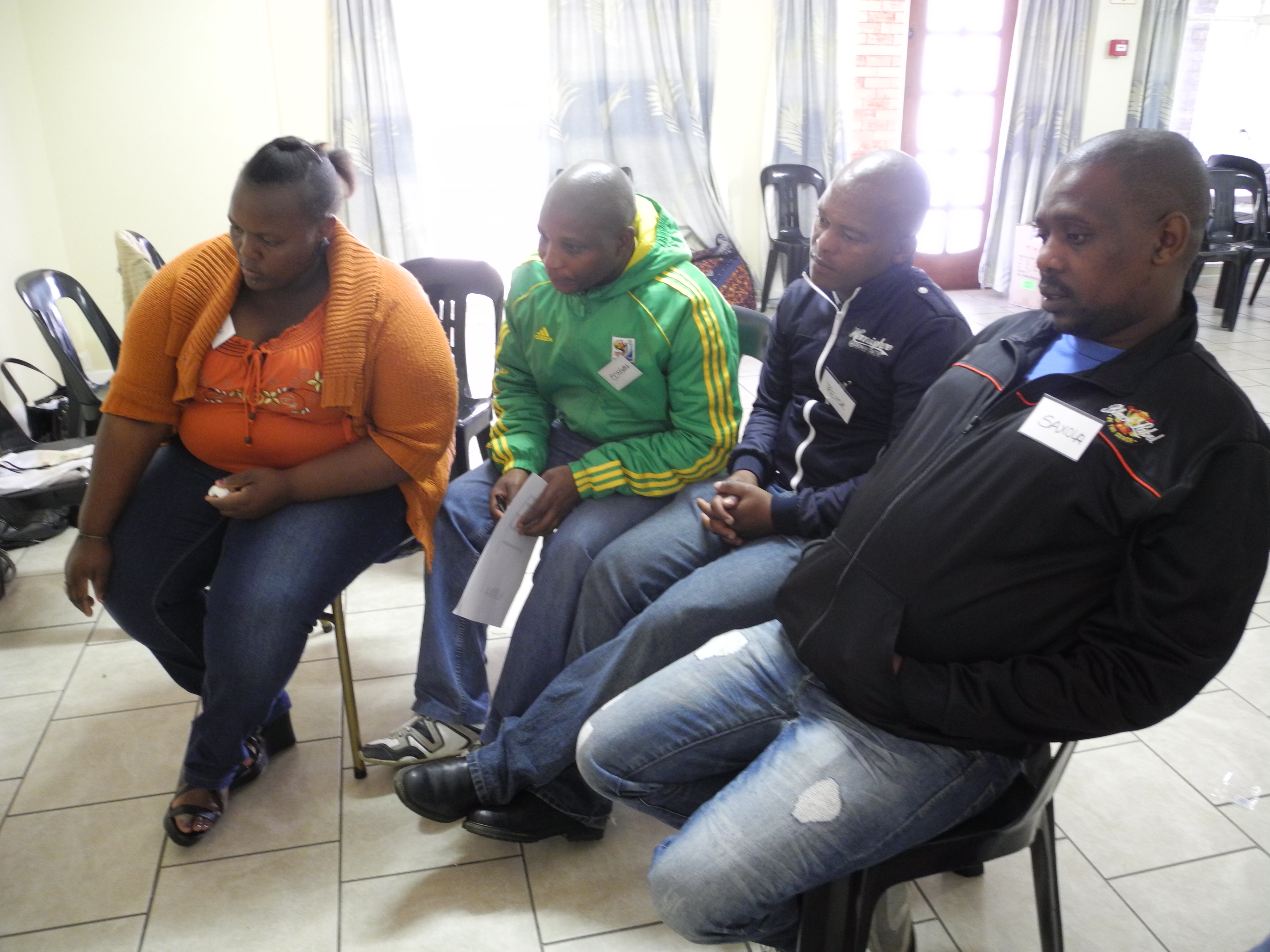
By : Baraka Mwau & ThandekaTshabalala (on Behalf of CORC) Phase 1: Forum 4 learn 2 As we advance towards the close of Phase one of the Learning Space series, once again the SA SDI Alliance converged for a session to brainstorm its work. This is the platform where the SA SDI Alliance engages in critical reflections of its work; within and with other stakeholders. This time around (October the 18th) the debate was located at the epicentre of the alliance work-building an authentic social movement. The forum kicked off with the moderator asking the audience to reflect on how the SA SDI Alliance should reinforce its struggle in building voices for the urban poor. This was just to revisit on the fundamentals that propel activities of strong social movements. Daunting as the challenge may sound, the urgency is inescapable. To aid in building a lens through which the SA SDI alliance can reflect on its efforts on building transformative social movements, Fr. Jorge Anzerona was in attendance. His wealth of experience in working with social movements and organised urban poor communities in several Asian cities provided vital and relevant lessons, for consideration in the SA context.  To start with, Fr. Jorge categorically stated that social movements are different; their course and organisation determines their life cycle.

“Some are powerful enough to achieve and sustain the change they struggle for, some meet their goal and ‘die’ thereafter, while others just rise and fall”- Fr. Jorge

Based on that statement, the first reflection was to consider relevance of the struggle that the SA SDI Alliance advances. It is evident that the struggle: against urban poverty and urban inequalities is still relevant in contemporary South African cities. Fr. Jorge presented the activities organised communities and that of the Assembly of the Poor, a social movement in Thailand that was formed from common struggles by the urban poor-urban poverty and agitation to create a collective voice. The movement multiplied in months (10,000 in 2 months after its initiation in 1996). Meanwhile, NGOs came in support, to aid the movement in coordinating activities, including facilitating enumerations and providing technical support to communities’ upgrading projects. This was purposively to advance a collective voice, recognition of the urban poor and to mobilise for a common course. Although the movement is currently not as powerful, it has managed to make urban poor communities ‘visible’, and influenced change in cities. Such include:

  • Leveraging community and government resources for development projects
  • Organising communities with specific struggles e.g. squatter communities, under bridge communities, railway line reserve communities, women-centred projects etc.

Throughout his presentation, he emphasised that community driven projects catalyse the building of strong social movements. After all, the purpose of this kind of movements is to improve the lives of the urban poor, thus without the tangible improvements to living conditions, authenticity of such movements remains questionable. This led to his affirmation that community projects drive social movements. Such remark was echoed by reactions from various participants.

“Through the Projects Grows the Self-confidence of the People”-Fr. Jorge

However, relating this to the South African context, it emerged that the various perspectives of conceptualising a ‘community project’ was an area of contestation or determined the nature of emergent social movements. This squarely refers to how support NGOs and social movements interpret as the benefits of such projects.  In his remark Nkokheli, an ISN coordinator posed a critical point of reflection, by questioning whether it is the NGOs or the urban poor in the cities who need projects.  This was echoed by several contributors who seemed to concede that the harsh reality that indeed there are cases where NGOs ‘run’ turban poor settlements, seeking to implement projects. Against that predicament, Fr. Jorge indicated that depending on how projects by the urban poor are conceived, such projects contribute can or may not contribute towards building a strong social movement. In most cases, projects borne out of self-initiatives by communities have higher chances of sustaining activities of ‘real’ social movement as opposed to NGOs taking the lead. At this point the fundamental question was: how have the projects undertaken by the SA SDI Alliance advanced the struggles of the social movements? For example such community centred approaches in Thailand have resulted to the establishment of community institutions e.g. Community Development Funds (CDF) where communities pool together resources, leverage state and other external funds. The Community Upgrading Fund Facility (CUFF) is equivalent of this within the SA SDI Alliance. According to Fr. Jorge, such funds should be managed and appropriated by community institutions. They inspire confidence in communities as well as doubling as a tool for bargaining with the state. Otherwise, without such pooled resources and capacity to manage them, social movements end-up being over reliant on NGOs or the state.

Together: they discuss, look for solutions, negotiate with the government and implement”-Fr. Jorge

Important as it sounds, the reality of achieving such in welfare dominated state like South Africa was another point of debate in the forum.  In that regard, reflections on the nature of social movements needed in such a state dominated the forum at this point. Although not conclusive, it seemed that the audience resonated with calls for a paradigm shift in South Africa, where social movements and support NGOs need to agitate for pooling local resources as leverage to engage the state. The catchphrase: “The Government Will Deliver” perhaps may never guarantee the desired change, but through meaningful engagement between the state and the organised urban poor, such efforts can be realised. The role of the professionals in supporting activities of social movements and urban poor communities was another key ingredient determining the success of social movements for the urban poor. The Asian context clearly indicated that practitioners in NGOs have a key role to play in building the voice of the urban poor. Fr. Jorge was categorical that practitioners should focus on transferring skills to communities (planning, architecture, engineering, accounting and finance etc). Their role is to train communities, while at the same time learning from communities. Basically this stresses mutual learning (exchange of knowledge) as the driver of this work, in addition to the importance of nurturing precise mandates among the actors. Other than the role of practitioners and the support NGO, the nature of leadership in social movements emerged as another determinant factor. Based on his experience in coordinating ISN activities, Nkokheli observed that organising and mobilisation communities is not a problem as such, but dealing with the various factions of leaderships that exist in many informal settlements is the daunting challenge. The observation was that in such cases, if unchecked, the interests of individual leaders tend to override collective interests of the urban poor communities. The counter measure was observed to be tasking communities-through development projects to shift focus from mere politics to debates on issues affecting communities. Nevertheless, such tasking necessitates stewardship and strong community leadership and sound facilitation by the support NGOs. 2013-09-11 14.45.54 Also, the nature in which mobilisation tools are applied is crucial in sustaining the activities of the SA SDI Alliance. Such tools include savings schemes, enumerations and mapping. It was observed that organising communities into savings schemes without a purpose does not necessarily guarantee sustained efforts to build a social movement. Although saving collectives creates a platform to discuss and build social cohesion, the urgency of improving living conditions has to be an integral activity of these saving schemes. Enumerations and mapping has to inform projects, community leadership has to be accountable to communities (and not to support NGOs), and so on. Simply put, ‘purpose’-for realizing meaningful change, emerged as an underpinning principle for organising the urban poor. Towards concluding the day’s forum, it was agreeable that the common struggles of the SA SDI Alliance are far from being confronted, at the desired level. Indeed urban poverty and urban inequalities in South African cases still remain the major hindrance towards urban inclusivity and a ‘just city’. However, the need for strong social movements, driven by a broader collective vision of social change was emphasised. The anchor of this being grounded on unleashing the potential within communities- from receptors to actors: to undertake own development, while marshalling local resources to leverage government resources. Notably, more coordination among the stakeholders (including government) is needed. It is undeniable that the desired change will not be achieved overnight, considering the fact that the status quo is a product of systems perpetuated for decades, if not centuries.  But at the same time, the change is urgent; hence potential avenues for negotiating this change are equally urgent to optimise. So:
Where are we, in building the social movements?

Are we building the right social movements?”
 

CUFF Project Report 2013

By Archive, CORC, FEDUP, ISN, News, Publications, uTshani Fund No Comments

By Thandeka Tshabalala (on behalf of CORC)

We live in the urban age where, for the first time the majority of the world population lives in cities.  Despite the overwhelming challenges encountered by the urban poor, the aspiration towards altering state-civil society relations, inclusive and integrated pro poor cities lies on the roles of networks organizations and agencies of the poor in bringing about social and political change. The national department of Human settlements aims to upgrade 400,000 well located households in-situ by 2014 and the National Development Plan “vision 2030” calls on government to stop building houses on poorly located land and shift more resources to upgrading informal settlements, provided that the areas are in great proximity to jobs.

 This publication articulates the spaces created by communities and local government to make decisions and work together towards the incremental improvement of informal settlements.  These new participatory spaces often create conditions for informal settlement upgrading to be more effective and sustainable.The Community Upgrading Finance Facility (CUFF) –Masikase- aims to enhance the agencies and practices of the organized poor by providing a platform and institutional support for communities to engage government more effectively around collaborative upgrading and livelihood projects.

https://sasdialliance.org.za/wp-content/uploads/2013/10/CUFF-Project-Report_Masikhase_Web-Version-2013.pdf

Father Jorge Visits Langrug

By News No Comments

Father Jorge Anzorena,  is an Argentinian by birth and entered the Jesuit (Society of Jesus) order in his early thirties when he was ordained as a priest. He completed a PhD in Architecture from the University of Tokyo and has received numerous accolades such as the prestigious Ramon Magsaysay Award for International Understanding in 1994. Prior to his retirement around several years ago, Fr. Jorge taught at Sofia University in Tokyo six months of every year. The remaining six months he literally traveled around the world visiting low-income housing activities and building coalitions and networks of the urban poor.

When receiving the Ramon Magsaysay award, it was said of Father Jorge,

Given Anzorena’s nonstop networking over the years, it was probably inevitable that his many friends would also become friends with each other. Among the consequences of this networking, in 1988, was the creation of the Asian Coalition for Housing Rights (ACHR). Founded in Thailand by several of Anzorena’s longtime associates in the world of housing, its goals reflect the interests and commitments he shares with them. In the words of its founding declaration, these are: “to articulate and promote the conception of people’s laws and rights to housing; to put an end to evictions and displacements of people; and to define and achieve the housing rights of all.”

The coalition now links nearly a thousand like-minded organizations and individuals throughout Asia. Anzorena’s newsletter and annual pilgrimages constitute essential ties that bind the members together. Characteristically, however, Anzorena says the credit for ACHR should not be accorded to him. “They are just friends of mine,” he says. And it is true that the coalition has developed a life of its own. But Anzorena’s philosophy guides its efforts. Among ACHR’s fundamental principles, for example, indeed its operating credo, is that the contribution of the people themselves is essential both to identifying the true needs of the poor as well as to developing strategies to meet those needs. This is Anzorena to the core.

Father Jorge visits the South African alliance associated with SDI once a year. This is really a time of reflection and recasting ideas and visions of ways and means of building networks of the urban and rural poor.

On the 15th October 2013, Father Jorge Anzorena made a visit to the community of Langrug and the waste pickers network during his visit he spoke about social business, he highlighted that he saw the waste pickers network as a businesses that is dedicated to solving social issues. The Network strives to make a profit and its payment model has adapted to peoples needs by paying the pickers cash upon delivery , the network is seen to be working  informally because it realises that  poor people need money urgently and putting their money in the bank will delay access to it. The pickers strives to make profit and by using business principles and strategies, it creates a sustainable business model to eradicate the social issues. Social issues are those that relate to poverty, health, education and human rights.

Community Drainage Cleaning Project in Europe

By CORC, News No Comments

Europe is an informal settlement located in Gugulethu Township; it is situated along N2 road bordered by Barcelona and Kanana informal settlemnent. The enumeration exercise, which ended on 10 October 2010, showed that 80% of the families in Europe experienced regular flooding.  Due to lack of trash containers, unpaved roads and waste disposal the drainage system clogs causing it to ineffectively channel water out of the settlement. With the help from CORC technical team the community took the initiative to clean the drainage system to avoid flooding.

Beyond Safety : The Plight Of Backyarders In Manenberg

By CORC, News No Comments

front n

It is frequently acknowledged that urban residents living in dire poverty are socially excluded and are in need of more interventions from Government, but the plight of the Backyard Dwellers in Cape Town is often entirely forgotten. They are neither heard nor seen by the broader Cape Town populace or even by the powers that be. After a fight that started around 1998 it  is only in 2013 that the government  has drafted a policy document that recognises backyard dwellers and the policy seems to acknowledge the difficulties that they are faced with.  These difficulties include continuous infringement of backyarders’ rights, illegal evictions, constantly negotiating access to services through landlords (which can be revoked at any time) and sharing infrastructure designed for a single household, leading to problems of over-consumption (e.g. high electricity bills, low water pressure and sewerage blockages).

Housing policies that focus on upgrading and/or eradicating informal settlements have historically overlooked backyard dwellings. The Manenberg government rental stock upgrading  gives an insightful evidence , that even today the housing policies fail to accommodate backyarders. When will the city acknowledge the existence of backyarders and in turn recognise them as part of the city fabric? Till when will they backyarders wait to be included in housing policies such as the upgrading taking place in Manenberg?

After a long period of neglect and poor maintenance the Metropolitan Municipality of Cape Town has begun to upgrade its rental stock in areas of  the city commonly known as the ‘Cape Flats.’ The upgrade includes plumbing overhauls, painting, windows and door refitting, and rewiring of electrical circuits.

r

Despite the fact that the community of Manenberg has laid complaints to the city about the poor quality of the upgrading, lack of community consultation and the inability of the upgrading exercise to employ local labor to absorb the high unemployment rate in the area. Melanie Manuel, a leader of the Informal Settlement Network (ISN) and Backyarders Network in Cape Town, during a recent public meeting held (on the 19th September 2013) in the Manenberg ‘peoples center emphasised her concerns towards the lack of safety during the upgrading.  She says “even though the city has provided temporary housing to its tenants during the period of the upgrading, it has failed to house backyarders in the process, nonetheless they have been left vulnerable to danger”.


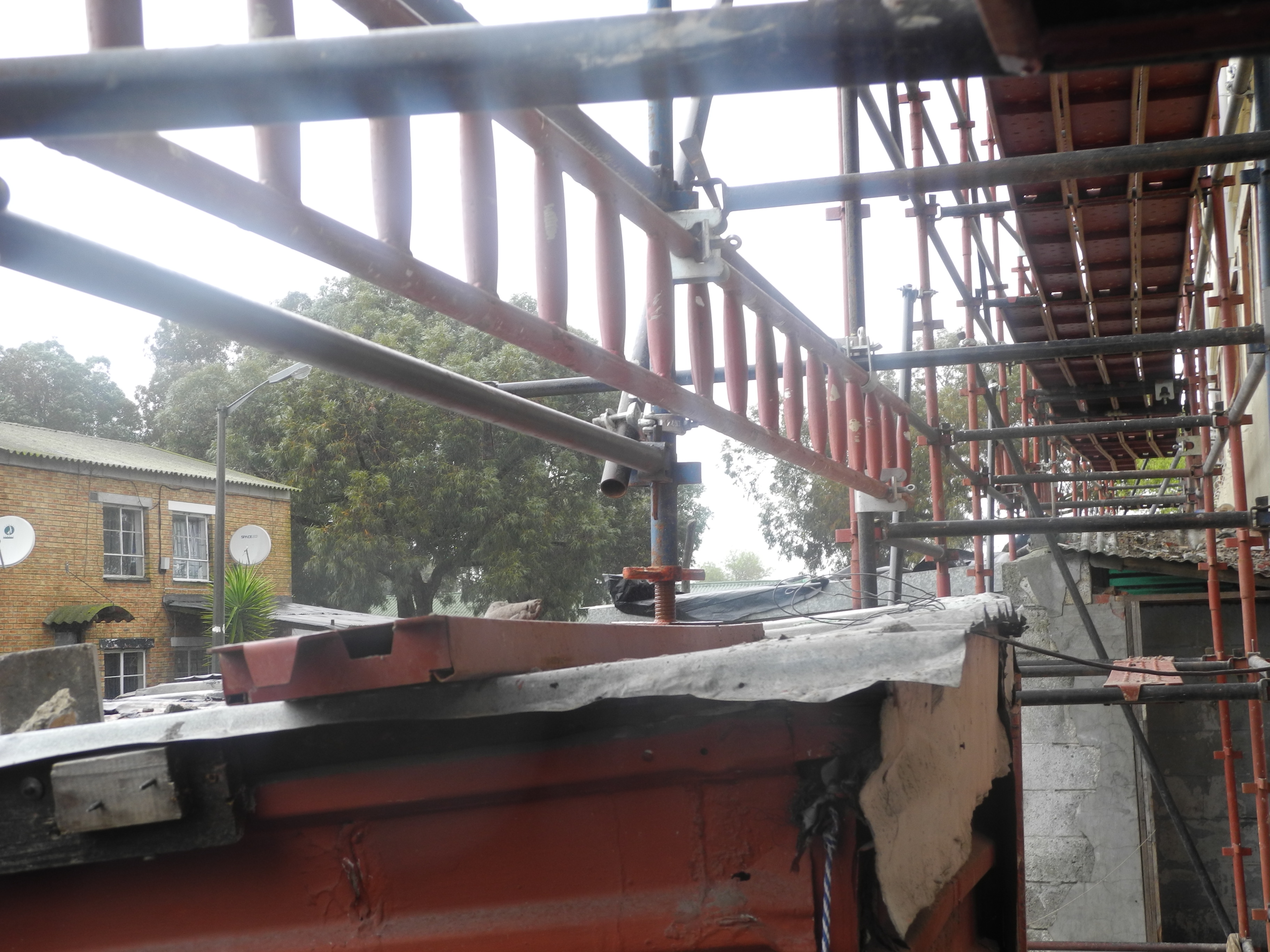
The community’s concern is the scaffolds that have been placed around the shacks of the backyarders. Residents feel that the contractor’s choice to leave heavy construction equipment nearby while there are people residing on site has left children and the elderly more vulnerable to danger. In some instances the scaffolding has been put on top of the shacks causing damage and leaks to the shacks, seemingly without considering these shacks that are being damaged is somebody’s home and that the household has invested on the structure both emotionally and financially to protect them from vulnerabilities such as the wet weather of Cape Town.  “Not only have the backyarders been left without sanitation, electricity and water but the contractors are continuously damaging their homes,” Manuel said.  She further complained about the amount of dust that is produced during the construction saying that with the high TB rate in Manenberg several backyarders’ health has been compromised during the upgrade.

backyarders

She says it has taken too long for them as backyarders to be recognised by the government and after all the fights; she believes that the government should have made an effort to temporarily house the backyarders. “Seemingly the city said that it would only provide temporary housing to its tenants and because backyarders do not pay rent to the city, therefore they are not its concern”.  This approach, she says, demonstrates that the city has not fully recognised the backyarders and will undoubtedly not protect them against the possible increase in rent after the upgrade; their landlords will take advantage of the upgraded structure to increase the rent. She further argued that the upgrading was not strategically planned because  the city has recently started discussing a long term plan to house backyarders she thus believes that the two plans should have been executed simultaneously.

The community of backyarders in Manenburg did an enumeration exercise in 2011 and as a result of this exercise organisations in the housing sector of the MDCS  searched for approaches to improve the living conditions of the backyarders. The first approach is to upgrade the structures,  put in services such as water, sanitation and electricity  , and give temporary tenure to backyarders to avoid high rents.  the second approach is to demolish some of the existing flats and build new flats that will accommodate more people.  Read more on https://sasdialliance.org.za/we-want-to-do-what-we-can-with-what-we-have-where-we-are/


Growing Food in Limited Spaces Through Vertical gardens

By CORC, News, Press No Comments

By Thandeka Tshabalala (on behalf of CORC)

Planting the vertical food garden, Langa, 3rd Sept 2013, Gege creche 2

Source of photographs : (Stephen Lamb, 2013)

On a learning exchange the community of Langrug went to Gege crèche located in Langa to see a demonstration by Touching the Earth Lightly on how to grow food in vertical gardens. The aim of growing food vertically is to use the limited spaces that communities have to decrease poverty and hunger in informal settlements. Due to the shift of poverty from rural areas to urban areas, food gardening is an alternative to providing food security in informal settlements, with the high unemployment rate in informal settlements it is difficult for households to provide nutritious meals for their families because food security in urban areas is tied to purchasing power.

The initiative to start a food gardening projects in communities is linked to providing a food at a cheaper price in turn decreasing household spending on food. The broader idea is to have most of the community members growing gardens either for consumption at a household level or selling to the community to increase the household’s income. The community was introduced to different ways in which they can grow gardens in limited spaces; this includes vertical gardens and growing food in crates where they can easily transport their gardens in and out of their shack to avoid theft.

Planting the vertical food garden, Langa, 3rd Sept 2013, Gege creche 3

Source of photographs : (Stephen Lamb, 2013)

Watch the learning exchange of the langrug community to Gege creche on [youtube]http://www.youtube.com/watch?v=pIraFwXKm2s[/youtube]

The Langrug Wash Facility a New Common Space for the Community

By CORC, News No Comments

IMG_30352-1024x768

By Thandeka Tshabalala on behalf of CORC

Langrug is an effervescent informal settlement that was illegally formed in 1993; this settlement is located in the most affluent farm area called Franschhoek, outside of Stellenbosch. Beyond the lavish hills and wine lands lies Langrug providing affordable housing to seasonal farm workers who work on the vineyards surrounding Stellenbosch.  The settlement is characterised by extreme poverty, poor housing and sanitation. In spite of all these challenges, the community of Langrug have placed its hope on the partnership formed with the Municipality of Stellenbosch. It is through this innovative collaboration that forge the community’s inclusion and participation to shape a successful in situ upgrading process.

In November 2010, the SDI Alliance and Municipality introduced the partnership to the Mayor and Council. In 2011 a formal Memorandum of Understanding (MOU) was signed, clearly stating the joint objectives. The partnership aims at upgrading 7,000 households. This engagement aligns with the National Upgrading Support Program (NUSP) and the presidency-driven national programme delivery agreement to upgrade a total of 400,000 households by 2014. CORC has been helping the community of Langrug to participate in a comprehensive process of informal settlement upgrading.

Langrug’s Demographics

In March 2011 Langrug’s leadership created a dedicated profiling team to work side by side with its enumerators. The aim of the project was to map the settlement’s existing infrastructure by identifying on a scaled aerial photograph the location and conditions of all toilets, water taps, drains, drainage gullies, electricity boxes, and street lights. An enumeration was later conducted and it was found that the ratio of people to toilets was 49:1, and that of people to water points was 72: 1, with such services being sporadically dispersed through the settlement, access unequal, and service location inconsistent. Without a doubt, the need for an upgrade of sanitation facilities within the settlement was a priority.

 The partnership with WPI

In 2011, two teams from Worcester Polytechnic Institute formed a partnership with the Langrug community with the hope of upgrading and maintaining the existing facilities and understanding the social interaction with these essential services. The project ultimately demonstrated how communities have the ability to interact with public infrastructure, and partner with planners to develop innovative means of providing more appropriate services.

The need for a grey-water project within Langrug was undeniably evident. Years of accumulated household grey water that was stagnating in the settlement resulted in numerous negative health effects for all settlement dwellers, and particularly for those living next to the water source, or for the children playing around it. A WPI grey-water team allied with community researchers with the aim of setting a precedent for community grey-water interventions, encouraging the community as a whole to participate in grey-water implementations and maintenance, develop grey-water systems that will service as sustainable long-term solutions, and equipping the co-researchers to continue aiding future grey-water projects.

In October 2012, through the upgrading partnership in Langrug, the community, CORC, Worcester Polytechnic Institute (WPI) and the Stellenbosch Municipality had an idea of an integrated community centre. The Initial idea of the project was to provide a multi-purpose Centre. Community hall, as a place for community gatherings, where groups can have a space to work, do business and learn. This would be complemented with a Water and Sanitation Hygiene area with unlimited use, for the whole community.

The idea was shared with the wider community and a site was proposed. The identified site was highly underutilized, it was overgrown with weeds and littered with solid waste. Two broken toilets stood on the space due to frequent vandalism. This site posed a growing health hazard for the Langrug Settlement, carrying the risk of transmittable disease, particularly to vulnerable groups such as children who often convert the space into a playground.

The wash facility

Even though the Municipality had been working to improve the ratio of toilets provided per household, but it was still far from South Africa’s standard of five families per toilet.  The GE Foundation provided WPI with a grant to spend on an innovative, community-driven sanitation project. See http://wp.wpi.edu/capetown/homepage/projects/p2012/langrug/

The final wash design goes beyond the standard in sanitation by incorporating community-driven aspects with innovative sanitation services. The facility includes five hand-washing sinks, two of which are lowered for children, four laundry basins in a central area so mothers can watch their children while washing laundry, urinals, two showers, and a total of nine toilet stalls – three each for men and women, two for children, and one unisex handicapped stall. During operating hours, a caretaker responsible for cleaning, maintaining, and distributing toilet paper and soap monitors the facility. The wash facility is well lit and secured at night with the possibility of a toilet and tap to be accessible after hours. The facility is multifunctional and includes a children’s learning area, a hair salon and benches. These characteristics provide a more welcoming and dynamic communal space, an approach that has proven to increase the longevity and sense of community ownership of such a facility.

408374_473659002672070_7023413_n

Technical design

The outer structure consists primarily of poles, timber and zinc sheets; these materials were chosen because they were easy to work with, obtainable at a relatively low cost, and were familiar to the community. The toilets, hand sinks, and laundry basins are made of a composite material that is both durable and aesthetically pleasing. The toilets use a push button design reducing the risk of vandalism by concealing the plumbing behind the walls. The facility has been designed with the intention of introducing sustainable sanitation options in the future such as:

  • Rainwater collection for hand washing sinks
  • Grey water collection and recycling for toilet flushing
  • Urine divergent toilets

 DSC02722

The Construction Process

The construction of the facility was a true multi-stakeholder process that all agreed had strengthened the Langrug partnership by bringing everyone together to work toward a common goal. Trevor and Alfred, Langrug community leaders, rose to the occasion and presented themselves as a key force throughout construction. Their building expertise and drive was inspirational and critical for the completion of the facility. A municipal field worker supported the working team every step of the way, especially with logistics and design recommendations. The CORC technical team was instrumental to the design process and to fostering effective working relationships.

 552490_473657009338936_87590149_n

Implementation challenges

Throughout the construction process, the team faced many challenges. During the second week of construction, farm worker riots prevented the team from reaching the build site for two full days, and when they could finally return to the site, they discovered that most of the building tools had been stolen. Though these obstacles challenged the construction process timeframe, everyone showed their resilience and pushed to keep the project moving forward.

DSC02713

The wash facility is currently fully functional and the community is using it to its full capacity. It operates between 6Am – 10Pm and the municipality of Stellenbosch has contracted two community members to clean and monitor the use of the facility.  The community is glad with the development of the facility because they feel that it was a long awaited and needed facility, especially because it is not only limited to the community’s use, but football clubs also use it when they have come to play with the local teams and they are hoping that the local churches will use it when they are hosting religious festivals. This innovative structure is the beginning to a new and improved way of providing sanitation services to communities with a meaning and the community of Langrug is hoping that the municipality will implement more structures of this kind within the settlement.

‘Peoples Driven Development – The Duduza Pledge Project’

By News No Comments

By  Kwanele Sibanda (on behalf  of CORC)

For more than twenty years, the Federation of the Urban Poor (FEDUP) has pioneered a collaborative solution that can transform our cities: empowering poor people to help themselves. FEDUP has empowered hundreds of communities to start saving schemes, develop their own knowledge and capacities, build houses, and acquire land. FEDUP has been the driving force behind the internationally recognised global alliance of 38 country-level federations, Shack / Slum Dwellers International (SDI). In the South African context, Vukuzenzele Mbokodo Saving Scheme is one amongst hundreds of FEDUP’s organized groups that have a story to tell about the successful methodologies designed by the poor themselves to tackle their challenges.

History of vukuzenzele Mbokodo Saving Scheme

The saving scheme members started as backyarders in the 1980s in a location called Duduza. Unpleasant living conditions defined by exorbitant rentals and strict rules from landlords forced them to seek land of their own, hence they invaded Dunusa (Nearby piece of land owned by the municipality). They allocated sites for each other using white stones. The name Dunusa means bend-over and it was given to them by Municipality officials who found them bending over, busy pegging their sites. Shacks were put up and an informal settlement was established. As one challenge was addressed, another emerged, said ‘Thandi Nthlapho’ one of the invaders. “We no longer had to pay rent to anyone, but we now found ourselves in a water locked area”, she explained. In 1990, the municipality of Ekurhuleni allocated serviced stands for the Dunusa residents in Blue-Gum. In 1996, a saving scheme was established after a group of women were mobilized by a group of Federation members led by Richman Mbobo from Siphamandla community (Kopanang Saving Scheme). ‘The mobilization came at a time when we had lost all hope of ever getting houses’, she continued. With assistance from Utshani Fund, the group managed to build its first 56 houses between 1998 and 2000 under the 1025 project. The project formed part of the 10million pledge that had been given by the then Minister of Housing; Joe Slovo.

Federation Land Component
The former support organization ‘People’s Dialogue’ was established to focus on landlessness and homelessness. The leaders that came together to establish the federation came from informal settlements that mainly had land tenure challenges and often faced eviction threats. With a vision of building houses, it was apparent that land had to be acquired first. The land unit had to be setup as one of the major components after savings. After the country’s liberation, the first government departments to support the initiatives of the federation were: The department of Housing and The Department of Land Affairs. The Land Affairs support was in line with purchase of land in areas such as Joe Slovo in the Eastern Cape and Derrick Hannekom in Cape Town. The federation continued to strengthen savings for land as well as negotiations. The federation has also been negotiating with land owners and purchasing land from its own savings with support from Utshani Fund. The federation also has an M.O.U on land with the Methodist Church of Southern Africa.

Duduza pledge project
In 2006, an M.O.U was signed between the National Department of Housing, the Federation and SDI. Gauteng pledged R50 million and out of that amount amongst other activities three housing projects were identified by the federation namely: Duduza, Doornkop and Orange Farm. The subsidy allocation for the federation members was 150, 250 and 180 respectively.

Federation Members testimonies 
Gogo Betty Nkonyana was born on the 15th of May in 1930. Besides the federation’s key principles of prioritizing the elderly in development, it was Gogo Betty’s commitment to attend meetings and save regularly that made her to be amongst the first ten to get a house out of a total of 150 beneficiaries. As part of her contribution towards the development of her house she used part of her savings to buy burglar bars, lentils, window seals and the electrification of the house.

5

Gogo Christina Motloung
Gogo Christina Motloung is 95 years old. In the 80s she was employed as a maid at a farm in Piet Van Wyk (Nigel). When she heard about site allocation, she decided to move to Duduza where she got a stand and started to seek new employment. She built herself a shack and immediately started saving some money to build herself a house. She slowly started building her house when it was at window level she lost her job and could not complete it. As Vukuzenzele Mbokodo saving scheme members were mobilizing more community members, she liked the idea and immediately joined. “Ngiyayithanda leFederation yethu ” (I love our federation) said Gogo Christina as she was being interviewed. Whenever she had an emergency, she would withdraw money from her savings under the saving scheme and in other instances; she took loans from the savings scheme. When the Duduza pledge project started, she was amongst the first ten beneficiaries to get a house.
Untitled

Exchange Report: ISN Gauteng strengthens Eastern Cape network

By CORC, FEDUP, ISN, News, uTshani Fund No Comments

By Evelyn Benekane (FEDUP), Mohau Melani (ISN) and Motebang Matsela (CORC)

DSC01924

In May 2013, we traveled to informal settlements in and around Port Elizabeth in the Eastern Cape to support the communities who are planning to upgrade their settlements. The purpose of this exchange is related to re-blocking, like the projects of Ruimsig, Mtshini Wam and Sheffield Road. The delegates from the represented settlements in Gauteng have also experienced situations of fire outbreaks and congestion of shacks, therefore calling for support around the broad idea of re-blocking. The settlements in Port Elizabeth are also different from the other cases because of the low-densities. Here are the people who traveled with us to Port Elizabeth, and we met Evelyn Benekane there.

Name Gender Organization (Fed/NGO) Why Chosen?
Mohau  Melani Male ISN CUFF
Motebang Matsela Male CORC Technical
Albert Masibigiri Male ISN Technical
Zandisile Lena Male ISN From affected settlement
Phillip Mnomyiya Male ISN From a congested settlement
Xoliswa Ngwanqa Female ISN From a congested settlement
Yoliswa Jozana Female ISN From a settlement with fire outbreaks

First Visit: Moeggesukkel 

The Gauteng delegation first visited the settlement of Moeggesukkel.  They have been working proactively to prepare plans for their settlement. Read this report published by the SA SDI Alliance a while ago. We had a meeting in the morning after breakfast, where we identified challenges that the leadership is facing in the settlement. One of the key issues that was identified is that the two divisions in the community, those for re-blocking and those against. On arrival, the community committee and technical team identified four of those who are against re-blocking. We talked through the planning processes. The community committee came together with the technical team and we discussed all the processes of re-blocking. The Gauteng delegates from informal settlements Makause, Joe Slovo, Holomisa and Nancefield demonstrated how to measure sites.

DSC01916 IMAG0152

The community of Moegesukkel have organised themselves around the common practices of  enumeration, savings and community based planning. Savings have in part been spent on materials for the re-blocking process. In the community meetings we learnt that there is a buy-in for the project. There are also a few politicians and councillors who want to influence the community against the project as they deem this a threat to their vote base. Therefore the team has agreed to informally influence those who are against the process starting at the household level. Households plan together around incrementally securing access to tenure rights. In many cases, re-blocking has already started organically.

DSC01926

DSC01897

Here are some photos on the reblocking project in progress

no images were found

Second Visit: Midrand

In June we presented the mapping process the Midrand community has undergone. This is reported on in this article. What follows are some observations on our engagement with the community in their process of establishing community steering committees and other governance aspects. 

In a general community meeting, the ISN Gauteng delegation made it clear that the ISN is not a political party. ISN Gauteng argued that it pushes community-based savings and upgrading as key building blocks of strengthening the network. The engagement with the City remains key to changing the lives of the poor. ISN commended the Midrand community on their partnership with the Nelson Mandela Bay Metro. The perceived process will lead to incremental security of tenure, servicing of the sites and in the future ownership. These are important factors outlined to the community. For now the community needs to focus on what they want to achieve, as the majority of the community are contributing, use that money to set the terms of their upgrade. We encouraged the community to sign an MoU with the office of the Mayor and the Human Settlements Doctorate around the progressive upgrading of informal settlements.

no images were found

Meeting 3: Enkanini, Ward 13

Before we left Port Elizabeth, we also had a chance to make contact with Enkanini, a settlement in Ward 13. We set up a meeting with the councillor to express the intentions of the Network, and to indicate the partnership-in-the-making with Nelson Mandela Bay Metro. We will continue to engage the settlement and the councillor.

DSC01957

DSC01946


The Midrand community in Port Elizabeth maps out settlement

By CORC, FEDUP, ISN, News, uTshani Fund No Comments

By Thandeka Tshabalala (on behalf of CORC)

In the past there has been an ongoing notion that poor people are helpless and are generally considered to be passive recipients of services and development. In many ways poverty-reduction and housing delivery has created unsustainable solutions that have discouraged an active involvement of the poor people in the improvement of their living conditions. These plans are drafted and carried out by contractors, appointed on behalf of the municipality, who are sometimes out of touch with what the people want. A need exists to incorporate the needs and aspirations of poor people into the planning process.

DSC02602

But if we consider the situations of landlessness, poor housing and inaccessibility to basic services which define the reality for so many South Africans living in informal settlements, helplessness is the last word you would use to describe the innovative ways that informal settlers have used to house, feed and access services without the help from almost anyone. In reality poor people are the creators and implementers of most comprehensive and far reaching systems for solving problems of poverty, housing and basic services. Poor people build cities from the bottom up, and informal settlements are cheap and accessible to gain access to social and economic opportunities – because their system covers more ground and benefits more lives than any other institutionalised development program.

DSC02583


An example of community- based initiatives can be found in a community called ‘Midrand’ located on the North Western periphery of Port Elizabeth. The informal settlement of Midrand consists of 47 enumerated households with a total population of 191. The settlement is located on municipal land and as yet the settlement has not been included on the metro’s Integrated Development Plan or informal settlement data base as receiving services in the near future. In the absence of municipal priorities, the communities of Port Elizabeth have started to build capacity at the grassroots level.

DSC02595

It is not included in the municipal systems map of the Nelson Mandela municipality – Through an exchange program, a technical team from Moeggusukkel informal settlement assisted in the mapping out process this included the measuring out of each shack dimensions. Shack measurement data allows the community design team to plan the layout of the settlement more accurately. The CORC technical staff supported the community to consider other type of services and the community prioritized on access to clean water and clearly marked roads within the settlement.


no images were found

The community then started saving towards the installation of temporally taps to access clean water, they then asked the councilor and the Nelson Mandela Bay Municipality (NMBM) to connect to the municipal water pipes. The NMBM installed Two temporally taps in the settlement.