Tag

FEDUP Archives - Page 4 of 6 - SASDI Alliance

Launch of Upgrading at Flamingo Crescent with Cape Town Mayor Patricia de Lille

By CORC, FEDUP, iKhayalami, ISN, Press No Comments

Authored by CORC

“People said Flamingo Crescent [Upgrading] will never happen. But today is here and this is the proof that it has happened – one cannot do it alone we need to work as a collective!”

Melanie Manuel, Informal Settlement Network (ISN) Co-ordinator

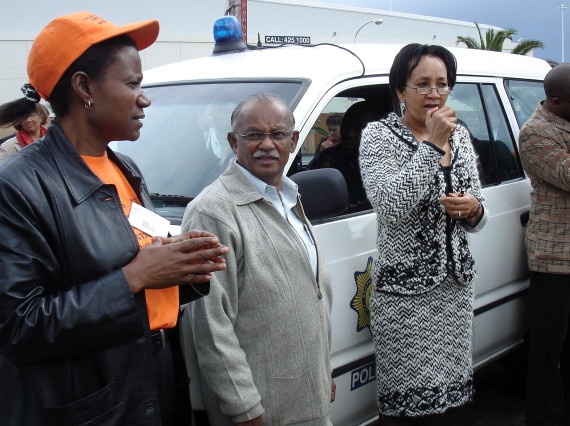
Mayor of Cape Town, Patricia de Lille, with Flamingo Crescent Community Members, SA SDI Alliance, PFO's and City Officials

Mayor of Cape Town, Patricia de Lille, with Flamingo Crescent Community Members, SA SDI Alliance, PFO’s and City Officials

Last week’s upgrading launch at Flamingo Crescent informal settlement celebrated the completion of re-blocking, installation of water, sanitation and electricity services for each of Flamingo’s 104 households, the unveiling of Flamingo’s first formal street names and opening of the settlement’s own crèche, Little Paradise. Moreover it marked a milestone in an ongoing upgrading process, showcasing what is possible when communities, intermediaries, governments and stakeholders form partnerships.

Delegates from community organisations and networks, the Mayor of the City of Cape Town, delegates from various government departments, ward and sub-council politicians, NGOs and support organisations gathered in the Lansdowne Civic Centre from 11:00 on Monday 10 February.

The re-blocking project is lauded as a successful demonstration of community-led, participatory planning, collaborative implementation and improvement of informal settlements. The uniqueness of the project was that despite the settlement’s density no one was displaced and grossly inconvenienced during the implementation of upgrading 104 structures.
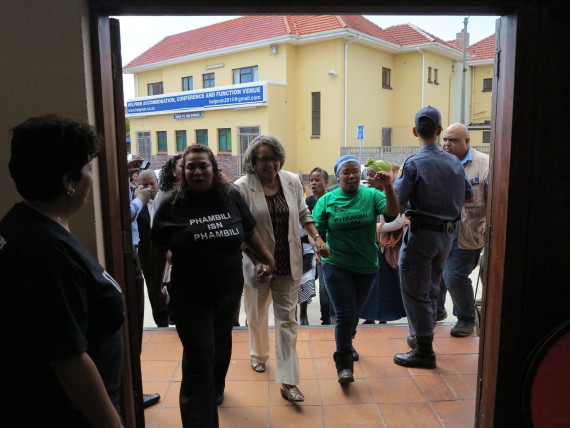
ISN & FEDUP welcome the Mayor to the launch at Lansdowne Civic Centre

ISN & FEDUP welcome the Mayor to the launch at Lansdowne Civic Centre

First engagements around Flamingo Crescent 

First engagements began in 2012 after the City of Cape Town signed a Memorandum of Understanding with the SA SDI Alliance around joint community-led upgrading of 22 informal settlements, of which Flamingo Crescent is the third, having built on the experiences of Mtshini Wam and Kuku Town. It differs from the previous two in the severity of its socio-economic challenges – high levels of crime, unemployment, violence and poverty. Given these circumstances the Alliance’s Informal Settlement Network (ISN) facilitated implementation and engagement between the City and the community.

Melanie Manuel (Flamingo Crescent ISN facilitator) shared,

“When we started the partnership with the City of Cape Town in 2011 in Vygieskraal it was a day of celebration and no one knew the hardships that would lie ahead. As time went on we realised we fundamentally believe in community participation, a bottom up approach because we know communities understand their settlements best.”

Read more background here.

Flamingo Before Upgrading

Flamingo Before Upgrading

The Launch: Messages on Upgrading and Inclusion in Services

At the launch, the first speaker, Councillor Anthea Green shared,

“Since 2012 I have said that we need to upgrade Flamingo Crescent, despite resistance from the rate payers and residents’ groups. We were committed to work with the community, and now this is a transformed settlement”.

Informal settlements not only face substandard basic services like water, sanitation and electricity but are also cut off from functions of city administration such as receiving a residential address. The re-blocking project allowed the City and the Post Office to give Flamingo Crescent street names and addresses, after the community made this requirement upfront in their development plan.

Gerald Blankenberg, regional director of the Post Office, said that the Post Office Act and other regulations require the post office to expand addresses to underserviced communities.

“Informal communities are often times socially and economically disconnected from basic administrative functions, and therefore a residential address will give the Post Office an opportunity to serve the community with dignity”, he said.

In the keynote address, Mayor Patricia de Lille emphasised the significant role of Flamingo community’s steering committee, the Alliance’s ISN and Community Organisation Resource Centre (CORC) in the success of the project. She, however, expressed concern about the slow pace of project implementation, emphasizing the need to boost municipal and community capacity to ensure the roll out of more projects in the City’s 200 informal settlements.

“The aim of re-blocking is the improvement of informal settlements while people wait for a housing opportunity”, she observed.

In closing of the ceremony, the Mayor handed over certificates of tenure to community members, ensuring formal recognition of residence and tenure security.

Mayor, Patricia de Lille with Flamingo Community Leader, Maria Matthews

Mayor, Patricia de Lille with Flamingo Community Leader, Maria Matthews

The Impact of Upgrading : Before and After

Before re-blocking, the community of 405 residents had access to only 14 chemical toilets (of which 7 were serviced) and 2 water taps. There was no electricity so that contained fires in tin drums dotted the settlement’s dusty pathways. The community was especially concerned about the safety of its children playing in the busy street.

Re-blocking restructured space in the settlement, opening courtyard areas and clearly designated access roads, enabling the City of Cape Town to install individual water, sanitation and electricity services per household. What sets Flamingo apart from previous projects are its paved pathways, with official road names as well as the construction of a crèche.

The community contributed 20% to the cost of its structures through community-based daily savings. During the implementation phase, 20 jobs were created through the Expanded Public Works Programme.
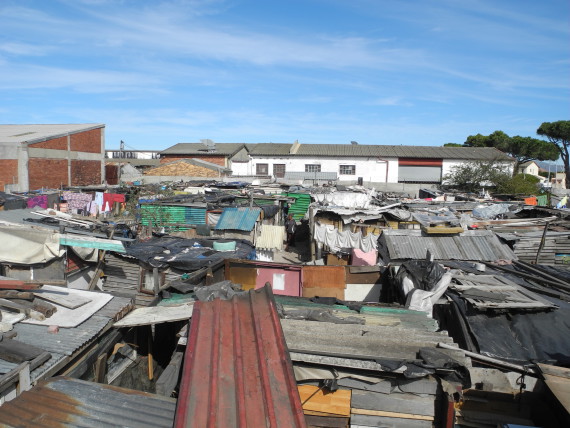
Before upgrading
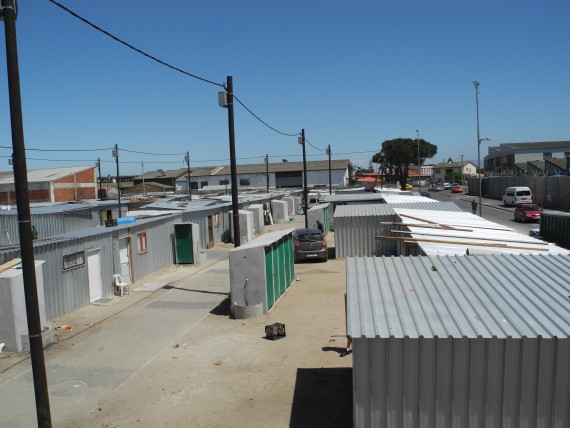
Before upgrading

After upgrading

After upgrading

Into the Future: Community voices on Partnership and City Fund

“Since 2010 we have been thinking about improvements in our settlement. This is when we got in touch with ISN, who introduced us to CORC, and we then made a partnership with the City [of Cape Town] We explained what we wanted from the city – our own taps, toilets and electricity. But we needed to come together and draft our own plans”.

(Maria Matthews, Flamingo Community Leader)

Through the SA SDI Alliance the community additionally partnered with several organisations. iKhayalami supported the community, ISN/FEDUP and CORC around training community members and top structure construction. The community established the re-blocked layout and community-based maps in partnership with students from Cape Peninsula University of Technology and support staff from CORC. With the support of Worcester Polytechnic Institute (WPI, USA) the community drew up plans for the crèche. Habitat for Humanity South Africa contributed to construction by supplying the roof sheets and windows. The Centre for Early Childhood Development (CECD) donated funds to build the crèche. CECD will also support around the training and registration of the crèche.

From Melanie’s speech it was clear,

“This project is successful because of the methodologies we use. We allow communities to do their own designs. The community also made a [financial] contribution [in a settlement] where 95% of community members were unemployed. How do we change the mind-sets of people who are still waiting for adequate housing? Let’s change the way we are living now while we are waiting for housing to come.”

(Melanie Manuel, ISN Facilitator)

Melanie Manuel, ISN Co-ordinator in Flamingo

Melanie Manuel, ISN Co-ordinator in Flamingo

As important as settlement improvement is in itself, the methodology is just as significant. Moreover, Flamingo Crescent serves as a precedent for informal settlement upgrading on a larger scale. The day ended with the community leading the Mayor through their settlement, unveiling Flamingo’s new street names and officially opening the Little Paradise crèche together. It is Melanie Manuel’s closing words that speak of the future:

 “We need to look at a holistic plan for the metro. Let’s look at how we can reach basic services much quicker and how we can scale up. The Alliance projects do not only focus on reblocking but on basic services in every form. The Alliance has designed a City Fund with which communities can directly access money for upgrading in Cape Town. In Flamingo the Aliance’s Community Upgrading Finance Facility (CUFF) helped us match the 20% that each community member contributed to their structure. This kind of facility on a city-level will go a long way – we challenge the City to continue partnering with us and match our contributions in the City Fund!”
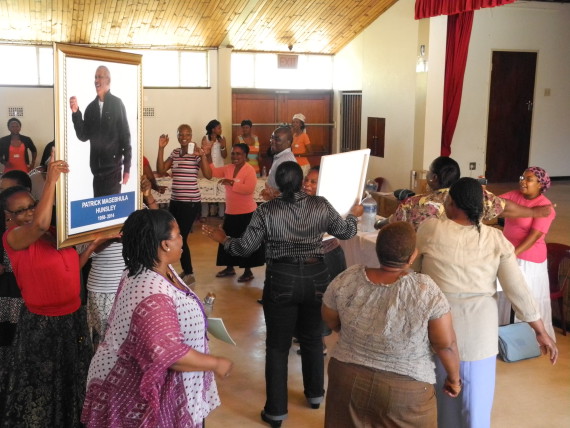


Savings Symposium: Strong Savings Make Us Alive

By CORC, FEDUP, ISN, SDI No Comments

By Yolande Hendler (on behalf of CORC)

From 23-29 November 2014 the SA SDI Alliance and SDI affiliates from Malawi, Zambia & Zimbabwe gathered for a weeklong savings symposium in Cape Town to strengthen the Alliance’s savings practices. The group of 80 community and youth leaders discussed the power of savings for organising communities, leveraging municipal resources and opening a space to address individual, group and community needs.

Opening Greetings of Symposium

Opening Greetings of Symposium

Na-eema Swartz, Symposium Co-organiser, counts savings collection taken during first day.

Na-eema Swartz, Symposium Co-organiser, counts savings collection taken during first day.

Symposium overview: field visits and discussions

Discussions assessed the Alliance’s current savings patterns, locally and nationally. They clarified what roles and responsibilities exist within savings groups, identified existing challenges and developed solutions for these. Visiting affiliates shared their savings practices, systems and strategies, supporting the SA alliance through the exchange of alternatives ideas and opportunities.

Throughout the week the group based these discussions on field visits to savings groups and upgraded informal settlement communities like Flamingo Crescent, who contributed 20% of the cost of each upgraded structure. These visits enabled a hands-on space for the symposium members to accompany local treasurers and collectors and learn how to complete saving record forms during door-to-door savings collections in Khayelitsha, Philippi and Samora. During other visits symposium members supported network meetings in Samora and Mfuleni in Cape Town, where four or five savings groups in a particular area regularly report back to each other on a network level.

Field visit in Flamingo Informal Settlement

Field visit in Flamingo Informal Settlement

Understanding savings in the SA Alliance

FEDUP national co-ordinators, Rose Molokoane and Marlene Don, opened the savings symposium by exploring the purpose for the gathering, revisiting the history of savings in the SA Alliance and its significance as a core methodology of the broader SDI network. Rose therefore reminded the gathering of the SA alliance’s history as rooted in its first exchange in the early 1990s with urban poor federations in India who were practicing daily savings.

Rose and Marlene revisited the main aims of FEDUP and ISN, namely

  • Encourage self reliance
  • Organising communities
  • Use savings and other methodologies as a tool to leverage external resources

These are underpinned by FEDUP and ISN’s 5 core principles:

  • Love
  • Trust
  • Accountability
  • Transparency
  • Commitment

Examining Alliance savings and looking forward

The purpose of the symposium was therefore to retrospect and understand the foundation on which the Alliance has built its savings, examine current savings patterns and look forward in terms of how these can be strengthened and developed. Based on impressions from the field, symposium members split into six groups, discussing questions, documenting suggestions and opinions in order to reach tangible outcomes. The questions under discussion were:

  1. What is a saver?
  2. Who is a collector?
  3. Who is a treasurer?
  4. What kind of savings do we have?
  5. Which kind is best for our organisation?
  6. How do we collect savings?
  7. How often do we collect savings?
  8. How do we record?
  9. How do we do reconciliation & savings?
  10. How & when do we do audits of our savings?
  11. How did you become a collector / treasurer?
  12. How do we run savings meetings?
  13. How should we deal with inconsistencies?

Each group presented its responses to the larger gathering, thereby mapping out a foundation on which to continue building the SA Alliance’s savings. The responses and group discussions will be used to develop a guiding framework for savings patterns in the Alliance. Communities thereby use savings not only as a tool to meet identified needs but to enable constructive negotiation with governmental tiers for resources and participatory development.

As members of each province reflected on the experiences gained during the week, it became evident that it was indeed a rich time of learning, exchange and building strong savings patterns.

“I learnt how to record in savings books, and I learnt the strength of being part of a group like this. I realised we can do it together. You made me feel so welcome” (Wendy, FEDUP Youth, Free State)

“I learnt the purpose of savings and how to motivate my community to save when I return home” (Sifiso, KwaZulu-Natal)

“Our federation belongs to us and we are the ones who will make it alive through strong savings!” (Rose Molokoane, FEDUP National Co-ordinator)

Presenting Group responses

Presenting Group responses

FEDUP launches livelihood programs: solar lights, funeral scheme & income generation

By FEDUP, uTshani Fund No Comments

By Walter Monyela and Yolande Hendler (on behalf of CORC)

IMG_1230

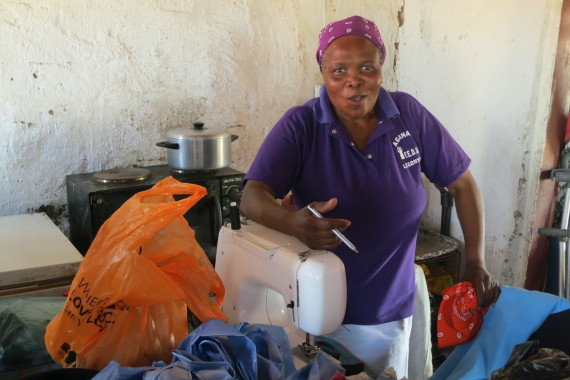
Sarah Makgopela of Aganang savings scheme in Legonyane (North West province) has started a small business selling hats, water boilers, sweets and other small goods through the income generation program


If about 25% of South Africans are unemployed, this percentage is even higher for communities living in informal settlements – a reality that is no different for the members of the South African Federation of the Urban and Rural Poor (FEDUP). Since the early 1990s, FEDUP members have identified their own development needs especially around accessing well-located land, security of tenure, improved shelter, housing and basic services. Through the practice of daily savings and other community organisation tools, FEDUP has built partnerships with government on all tiers and has negotiated access to many of these needs. Yet the lack of income generation has posed continuous instability and hardship on a day-to-day basis.

Over the last years, therefore, FEDUP has identified the need to strengthen the income generation opportunities of its members and in 2014 launched several livelihood programs. While these programs assist members to start their own small businesses and the movement as a whole to generate its own income and build its own assets, they are at the same time initiatives that reinforce the importance of the rituals of Shack/ Slum Dwellers International, such as daily savings.

The livelihoods programs underway are

  • Total Solar Lamps by Awango
  • Funeral Policy known as South African FEDUP Funeral Scheme (SAFFS)
  • Loan Program known as the Federation Income Generation Program (FIGP)

Total Solar Lamps by Awango

IMG_1158

A member of Aganang savings scheme in Legonyane (North West) reselling Awango solar lights by Total South Africa

Total South Africa (TSL) introduced solar lamps by Awango and entered a contractual partnership with uTshani Fund to provide FEDUP members with economic opportunities of buying Awango solar lights from uTshani Fund and selling them to potential buyers e.g informal settlement communities and businesses. Although the emphasis is on FEDUP members this opportunity is also open to non-FEDUP members who are keen to do sales. This year a total of 314 people (307 FEDUP members) in seven provinces were trained as resellers.

Training includes a presentation on the available products, how they operate, durability and logistical aspects of the business. After training each reseller ideally buys at least one of each type of solar light (3 in total). The solar lights business is aimed at members who already run an income generation initiative and are seeking to diversify their products – this would provide the financial platform for securing the first stock.

Amidst successes, the program experienced challenges in terms of sellers lacking sufficient start-up capital as well as insufficient sales experience. In response FEDUP members are devising strategies to support the growth of businesses and sellers’ capacities such as exposing sellers to more in-depth training in sales skills and exploring the potential of connecting with the Small Enterprise Finance Agency (SEFA) around increased support for start-up loans.

Funeral Policy (SAFFS)

The South African FEDUP Funeral Scheme (SAFFS) grew out of a desire expressed by FEDUP to bury its members with dignity and honour. SAFFS started its full operations in March 2014 and operates as an understudy to Imbalenhle Burial Society (IBS). It is underwritten by TransAfrica Life Funeral Policies, who are registered with the Financial Services Board of South Africa (FSB).SAFFS currently works in association with IBS to learn how to administer a funeral scheme with the intention of going solo. FEDUP members sell the funeral scheme to own members as well as the public and have sold an estimated 600 schemes to date. Sellers are compensated per policy sold.

Loan Program (Federation Income Generation Program – FIGP)

IMG_1268

“I have used the Federation Income Generation Program to sew graduation gowns as a business. This helps me support my family”


The loan program is a formalisation of the loans that FEDUP members access at individual savings scheme level. While this practice will continue, the FIGP is an initiative to expand the scope of these loans to support FEDUP members in income generation activities of their choice.

FEDUP has therefore registered with the relevant financial bodies (via uTshani Fund) and has started up a legal and formalised microfinance institution through which members can access group loans from their own Urban Poor Fund, instead of external financial institutions.The criteria for accessing a loan is:

  • Formal FEDUP membership (complete UPF payment)
  • Active member of a FEDUP savings scheme
  • Experience as small business entrepreneur for at least 6 months
  • Be part of a group of 5 to access a loan

These criteria ensure that members continue saving and support one another in the development of their respective businesses because individuals can only receive loans when they are in a group of five. The whole group must also make repayments as one overall sum. Therefore individual success depends on group success.

In this way FEDUP broadens the scope of its livelihood programs, strengthens its membership base and positions itself toward financial sustainability within the next five years. The year 2015 will definitely mark FEDUP as another recognised, fully registered and compliant microfinance in South Africa. Through this initiative FEDUP will also be able to approach funders and private organisations to leverage further resources.

IMG_1379

” I have used the FIGP to buy shwe shwe material and sew dresses” – Elizabeth Motaung, FEDUP members in Orange Farm Gauteng

At the heart of the matter

What lies behind these varying income generation initiatives? On the one hand, FEDUP’s step towards financial sustainability to ensure continued existence in the case of decreased donor-funding. On the other hand, and at the heart of the matter, lies savings, the engine of FEDUP that enables poor women to come together, share their experiences – struggles and triumphs – and find solutions.

Sarah Mulaudzi, North West co-ordinator for FEDUP recently shared that

“In our savings groups we have R300 000 worth of savings from our members who are doing income generation programs. Through the income generation program our savings are really growing!”

As the income generation programs require savings and start up capital they strengthen FEDUP’s savings practices. Strong savings in turn build a strong group and a strong community, which widens opportunities within the income generation programs themselves.

The small business of Sarah Makgopela and Elizabeth Moletese of Aganang savings scheme in Legonyane, North West province.

The small business of Sarah Makgopela and Elizabeth Moletese of Aganang savings scheme in Legonyane, North West province.


Putting K2 and Green Park on the Map – Mapping Exchange in Cape Town

By FEDUP, ISN, SDI No Comments

By Julia Stricker (on behalf of SDI Secretariat)

***Cross-posted from SDI Blog***

During a very successful learning exchange focused around settlement level data visualisation and mapping, community members from K2 and Green Park, two informal settlements in Cape Town, created digital maps of their neighbourhoods. 

img_0105_medium

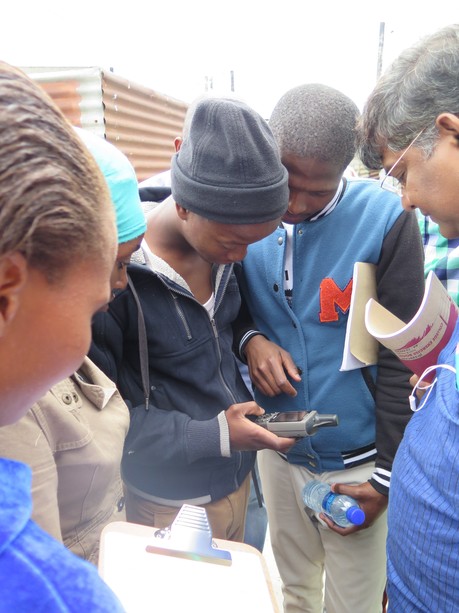
Siyaunya puts his head over the GPS device and enters the code for water tap, WT 001. Next he records the geographic coordinates of the location: -34.0289, 18.6731. He and his team repeat this process for every water tap and toilet in K2, the informal settlement in Khayelitsha that Siyaunya calls home. Different codes are used for each type of facility and with regards to their functional status. A broken toilet, for example, gets an N added to its code. These codes together with the coordinates form the raw data for the maps. Apart from the team mapping the basic services there are two other teams on the go to map the settlement boundaries and other interesting features like shops, taverns, and restaurants. Each of the three teams consists of community members, Informal Settlement Network (ISN) and Federation of the Urban Poor (FEDUP) members from across South Africa, and SDI federation members from India, Uganda and Ghana. The latter travelled to Cape Town to support the South African SDI Alliance in refining their digital mapping skills – skills that will help take SDI’s community mapping process to another level, making it easier and quicker, and increasing impact.

Through a hands-on, learning-by-doing approach Siyaunya and his fellow community members, most holding a GPS device for the first time that day, used these devices with confidence by the end of the day. They also understand that the need to stand next to the service or feature you are mapping is about more than getting an accurate reading on the GPS device. It is about the process of gaining intimate knowledge and understanding of one’s settlement and being able to share this knowledge with authority.

img_0104_medium

A geographic profile of the settlement consisting of the boundaries and the basic services, at a minimum, is a crucial part of the standardised profile. It is not enough to know the number of toilets – one also has to know their spatial distribution. If all the toilets of a settlement are located on one corner, the numbers alone are a bad indicator for the reality a woman from the other end of the settlement experiences when going to the toilet at night. The spatial dimension adds value to the data and is highly relevant for planning upgrading projects. To put it in a nutshell: Numbers are good – but maps make the numbers come alive. In addition to that John Samuel, from NSDF/SPARC India and part of the data team at SDI, points out that maps are more intuitive to understand than plain numbers and respond better to the variable literacy level of slum dwellers.

There is no perfect map and there never will be one. Maps are by nature abstractions and only a limited inventory of the reality on the ground, a complement of both objectively observable phenomena, as well as the subjective relationships to these. Bearing this in mind they remain highly important as a means to communicate our location in the world and our view on the world. The data used to generate maps of informal settlements must therefore be gathered by the slum dwellers themselves. Maps generated from community-collected data naturally put the emphasis on issues that matter to the community. This in turn is critical for the successful planning and implementation of slum upgrading projects

img_0102_medium

When speaking about Know Your City, Sumaya, a young delegate from the National Slum Dwellers Federation of Uganda (NSDFU) puts it like this:

“First you have to know what you have, then you can decide what you need, and only then you can tell somebody what you want. This is what Know(ing) Your City is all about.”

She was part of the team that profiled and mapped 62 settlements in the city of Kampala. The comprehensive report with the maps generated was handed over to the Kampala City Authority in September this year and is a good example how the data can be used to drive communities’ dialogues with government for slum upgrading and development at the city-wide scale. The profiling and mapping of settlements is a powerful tool for promoting active citizenship in communities of the urban poor.

SDI’s focus for the coming years will be to routinize and consolidate the learning around city-wide profiling and mapping for the cities it works with. Concretely, the idea of going city-wide is to push the federations to think beyond their existing network so as to include the voices of other settlements in the city, meet new leaders and together create concrete alternative plans with which they can begin to talk to their cities. Community mobilisation and mobilising city-wide federations are then also among the first goals Celine D’Cruz, SDI co-ordinator anchoring and supporting the data collection process for the SDI network, mentions when she talks about the Know Your City process. It is about the creation of a momentum of inclusion and of identity making for the community of the urban poor. Furthermore, the data collected supports the development of alternative participatory plans for slum upgrading strategies based on prioritised needs; it offers federations and communities at large the ability to monitor their own settlements and, last but not least, grounded and consolidated data at the local level, once aggregated, opens up the space for advocacy at the national and global level.

The maps of K2 and Green Park were visualised the same weekend and brought back to the respective settlements. They are as different as the settlements themselves are. Spread out Green Park contrasts with dense K2. In the latter, all the toilets are located on one site, leading to a situation mentioned above, where a map paints a clearer picture of reality then just numbers.

The learning exchange made clear that settlement profiling and mapping is an essential tool to leverage upgrading, monitor settlements and for regional and global advocacy. The young leaders from K2 and Green Park definitely seemed eager to continue the work and make the realities and needs of the city’s urban poor majority visible through maps.

k2_service_map_medium

green_parkmap1_medium

FEM

SA Alliance supports Swaziland to engage Government Around Upgrading Policy

By CORC, FEDUP, SDI No Comments

By Kwanele Sibanda (on behalf of CORC)

From 29 October – 2 November 2014 the South African Alliance travelled to Swaziland to support communities in their work with government around a national upgrading policy currently under review. The exchange aimed at looking into Swaziland’s draft policy on land allocations and procedure that is likely to cause evictions. The engagements were between municipality officials, Zone leaders and the local federation.

Group photo of Mayors, Councillors, SLIPO & FEDUP members

Group photo of Mayors, Councillors, SLIPO & FEDUP members

The Kingdom of Swaziland

The Kingdom of Swaziland is located in Southern Africa and is land locked . The Swazi Nation Land, which is communal, is held in trust by the King and parts of it are allocated by Chiefs to individual Swazi families for their use. Swaziland has four administrative regions which are further divided into 55 Tinkhundla Centres (Local Administration) these form the basic unit of political administration. Political parties were banned from the constitution promulgated on 13 October 1978.

The local federation

The federation of Swaziland is known as SLIPO (Swaziland Low Income People’s Organization). No local support NGO has been established as yet.The federation activities are currently being anchored by John Dlamini who has supported the federation from its revival in 2011.In 2008 an exchange was held to Zambia and it was attended by municipal officials and zone leaders. Upon their return, they established the federation with a lot of support from the municipality.An MOU was submitted to the national government in 2012; however no formal feedback was given back to the federation.Out of Swaziland’s total of four regions, the federation is in two regions namely: Manzini and Hhohho.The other two regions that have not yet been mobilized are Lubombo and Shiselweni.SLIPO’s membership is currently at 429 and they have R498 333.00 in savings.The federation is currently in the process of building a federation office that is being funded by SDI.

SLIPO Federation Office Near Completion

SLIPO Federation Office Near Completion

Challenges posed by Swaziland’s draft policy on upgrading

In 2008, residents of Mbabane were informed that the government is working on a policy around upgrading; however it is asserted that no further consultation was held with the respective communities. Without much knowledge about the implications of the policy; the communities remained relaxed. As SLIPO intensified its engagements with the state in 2014, it came to light that the policy had reached an advanced stage and if it is not attended; its implementation may come with more harm than good for the poor communities. To start off the process, the policy shall be implemented with an intention of upgrading 9 areas around Mbabane and that will affect Ward 1, 2, 3, part of 7, 11 and 12. Each Ward is divided into Zones.The Land Allocations Policy and Procedure went through council and passed. It was recommended that it be forwarded to the Minister and it is currently with him for approval before it is forwarded to cabinet. The first and direct negative implication of the policy especially to the poor is that; he who cannot afford a site estimated at R42 000 shall be required to seek a new place of residence (in a form that can be described as eviction). According to the state, the aim of selling the sites is that of raising funds for service installation. As SLIPO grows to another stage within the SDI alliance; it encountered a challenge that requested support; hence the request for the South African alliance to go and support. .

Day 1: Preparatory Meeting 

As SLIPO and South African delegates met in preparation for the meeting with the Mayor, they explained the background,origins and implications of the problematic draft policy to the South African visitors and requested them to focus their presentation on how the Federation of the Urban Poor (FEDUP) partnered with government and what they have achieved. SLIPO further explained that:

  • mobilizes and organises members in informal and formal wards because there is a great percentage that is struggling to pay rates and taxes and run at a risk of having their properties seized.
  • SLIPO would like to mobilise and organize communities, use SDI tools and be able to influence policies and the manner in which they are drafted
  • its challenge within the Municipality is a lack of proper handover of information

Meeting the Mayors and the councillors

Four councillors, seven SLIPO representatives and four SASDI alliance delegates attended the meeting. These included the Mayor of Mbabane, the Mayor of Manzini, the Representing Mayor of Ngwenya and the Mayor of Piggs Peak. SLIPO first presented its background, aims and objectives, member, savings UPF, loans, projects as well as areas covered. The SASDI alliance’s presentation gave an overview of SDI, tools, S.A partnerships with the state and other formal institutions as well as achievements. The various representatives explained how working closely with saving and organized communities results in meaningful development.

In his response, the Mayor indicated that he is impressed with the presentations and approach taken.He enlightened delegates about the differences between S.A and Swaziland: While South Africa has three spheres of government (national, provincial and local), Swaziland only has national and local. In addition to the above, the local municipalities rely on rates and taxes payment as funds for development; hence the need to sell plots and install infrastructure. The municipalities have a serious budget constraint because they do not get a budget allocation from national for service installation and maintenance. Funds received from national are for subsidizing service provision that is made to areas that do not pay rates and taxes.The Mayor furthermore emphasized that if there are such communities that are taking a stand in development; the state and SLIPO have to jointly have a model that clearly states how the process is going to be undertaken. Lastly, it was indicated that for SLIPO to be recognized as a national structure, it has to cover all the four regions of Swaziland.

Patrick Matsemela from North West FEDUP presenting to Zone leaders

Patrick Matsemela from North West FEDUP presenting to Zone leaders

Day 2: Meeting with Zone Leaders 

On day two of the exchange, a meeting was held between SLIPO saving scheme leaders, Zone leaders and the SASDI delegates. Zone leaders are equivalent to community leaders in the South African context. The aim of meeting them was that of: sharing the SDI concept with them, reporting on what SLIPO has been doing in form of saving schemes, share report back from meeting with the Mayors and Councillors and also requesting their support in establishing more saving schemes in their respective Zones.

The zone leaders were informed about the upgrading policy and also reminded that it is everyone’s challenge therefore a joint effort is required in finding a better solution. The estimated cost of each plot is around R42 000 and that will require at least a R600 contribution per member per month for at least five years. It was mentioned that the majority of residents are unemployed and for those that are employed they hardly earn R3 000 per month.

The leaders basically denounced the displacement of residents in the name of development and furthermore pledged to support SLIPO in mobilizing communities and engaging the government in a workable solution to the challenge.

Day 3: Meeting with Saving Scheme Leaders 

On day three the saving scheme leaders met to report back the previous days’ engagements, share savings reports, discuss mobilization and establish more saving schemes. Some of the outcomes were:

  • SLIPO would request monthly joint meetings to share its work and request participation from relevant officials
  • SLIPO saving scheme leaders to discuss and agree on a reasonable affordable amount of savings contributions
  • Leaders have a task of drafting an MOU directed to the Municipality of Mbabane as recommended

Some Lessons Learnt 

  • Swaziland has a different governing system (only national and local government)
  • SLIPO’s savings figures with limited support from the state and other institutions reflect a great commitment level
  • The lesson on the importance of savings as practiced in Swaziland can be of great use if taken seriously in South Africa. In Swaziland Saving scheme with as few members as 15 have more than 25 000 in savings and these are savings that started in 2011. The statistics show a great level of commitment.
  • SLIPO is a fairly new federation without much of projects or formal partnerships established, but the unity amongst members and moral is a great starting point for success.
Leaders of different saving schemes gather after meeting with  SASDI delegates

Leaders of different saving schemes gather after meeting with SASDI delegates

Moegsien

SA Alliance at National Human Settlements Indaba 2014

By CORC, FEDUP, ISN, News, Press, SDI, uTshani Fund No Comments

By Yolande Hendler (on behalf of CORC)

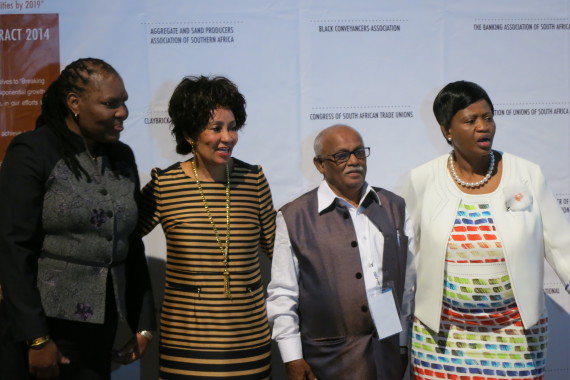
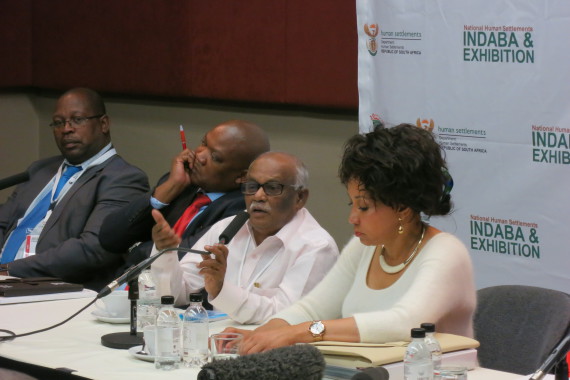
FEDUP members welcome Minister Lindiwe Sisulu and Deputy Minister Zoe Kota-Fredericks at the SDI Exhibition booth

FEDUP members welcome Minister Lindiwe Sisulu and Deputy Minister Zoe Kota-Fredericks at the SDI Exhibition booth

Twenty years after Joe Slovo’s historic Botshabelo Housing Accord, Lindiwe Sisulu, incumbent minister of Human Settlements, invited stakeholders in the human settlements sector to the National Human Settlements Indaba and Exhibition, which was held at the Sandton Convention Centre in Johannesburg from 16-17 October 2014. This included the Federation of the Urban Poor (FEDUP) on behalf of the SA SDI Alliance and Shack/Slum Dwellers International (SDI),

Aims of the Indaba

The Indaba not only marked twenty years of South African democracy but also ten years after the first social contract was signed in 2004 during Sisulu’s first term as Minister of Housing from 2004-2009. The first social contract, similarly, brought together a number of stakeholders in the housing field to discuss and sign an agreement regarding co-operative and collaborative housing practice which would pursue the aims of the then newly launched housing policy: Breaking New Ground (BNG): A framework for Sustainable Housing Development. BNG largely focuses on “promoting the achievement of a non-racial, integrated society through the development of sustainable human settlements and quality housing”. Click here for more on BNG policy. Ten years later, however, the implementation of BNG has been only partially successful.

Against this backdrop, the 2014 Indaba aimed to:

  • Review progress in the implementation of BNG
  • Review the impact of the Social Contract for Rapid Housing signed in 2005
  • Commit stakeholders to a second social contract towards 1.5million housing opportunities by 2019.
Rose Molokoane and SDI delegates from Uganda, Tanzania and Zimbabwe

Rose Molokoane and SDI delegates from Uganda, Tanzania and Zimbabwe

South African and International SDI delegates at Exhibition booth

South African and International SDI delegates at Exhibition booth

Day 1: Pledges towards a second social contract

Amidst actors such as the South African Banking Association, the Chamber of Mines, construction companies and trade union representatives (to mention but a few), SDI and the SA Alliance voiced the interests of the urban poor and advocated for an inclusion of the urban poor in planning, decision-making and implementation.

During the first day’s introductions, Jockin Arputham, SDI President and Nobel Peace Prize Nominee, shared a message of support ahead of the minister’s keynote address which is outlined here. In the afternoon contributors pledged their commitments to the second social contract.

SDI President Jockin Arputham with Minister Lindiwe Sisulu and Deputy Minister Zoe Kota-Fredericks

SDI President Jockin Arputham with Minister Lindiwe Sisulu and Deputy Minister Zoe Kota-Fredericks

Jockin Arputham speaks at Press Briefing

Jockin Arputham speaks at Press Briefing with Minister Sisulu and Director General Zulu

The SA SDI Alliance Pledge

In response to the Department’s larger orientation, Rose Molokoane, national co-ordinator of FEDUP, powerfully shared the pledge of the SA SDI Alliance:

FEDUP pledges to work with national, provincial and local government to deliver 1000 housing actions every month, improving the life of 1000 households. These actions will include

1)   Organising communities through savings

2)   Upgrading services such as water, sanitation, drainage, energy and roads

3)   Building bigger and better houses

4)   Advising the ministry on how to work with communities and organise them to be full stakeholders

We also commit to draw other organisations of the urban poor into the pledge as equal partners. We cannot do this alone. You cannot do this alone. You need our help. “We know the minister is serious about supporting us. What about the MEC’s? What about the local authorities? Are you?

View Rose Molokoane’s speech here:

[vimeo]https://vimeo.com/110123793[/vimeo]

Day 2: Reviewing BNG projects & the second social contract

The second day of the Indaba concluded with presentations by several MECs on the successes and challenges of implementing BNG projects in four provinces, followed by the reading and signing of the second social contract. The specifc commitments of the second social contract are documented here.

Rose & Jockin sign the second social contract on behalf of SA SDI Alliance and SDI

Rose & Jockin sign the second social contract on behalf of SA SDI Alliance and SDI

IMG_0949

Throughout the Indaba the minister repeatedly referred to the value and experience of SDI and the South African Alliance’s work in forming an inclusive atmosphere that engages the urban poor around their own housing development.

Over the last twenty years the SA SDI Alliance has developed an ongoing partnership with the Department which spans from the signing of the Botshabelo accord in 1994, participating in the 2005 national housing accord, the signing of the first social contract in 2005, the 2006 MoU pledge with the Department for subsidies of R285million with which FEDUP has built over 2000 houses to the Department’s most recent pledge of R10million in August 2014.

Throughout FEDUP’s partnership with the Department its core vision has always been: “Nothing for us without Us”. This message is also at the heart of FEDUP’s pledge. As the second social contract is implemented in the next five years, it is the collective vision, experience and practice of the urban poor that is crucial to a truly inclusive implementation not only of housing but also of incremental, in-situ informal settlement upgrading as a vital step towards attaining housing and tenure security.

“We cannot do this alone. You cannot do this alone. You need our help.”

(Rose Molokoane)

SA and Zim Federations reach out to Botswana

By CORC, FEDUP, ISN, uTshani Fund No Comments

By Kwanele Sibanda (on behalf of CORC)

The Republic of Botswana is a landlocked country located in Southern Africa. It is bordered by South Africa, Namibia and Zimbabwe. It is a mid-sized country of just over two million people. Environmentally, Botswana faces two major problems: drought and desertification. Despite its middle-income status, Botswana continues to grapple with significant social challenges including unequal distribution of wealth, high levels of poverty, unemployment and HIV/AIDS prevalence. On health issues, the prevalence of HIV/AIDS was estimated at 24% for adults in 2006. In the fight against the disease the government of Botswana solicited outside help in fighting HIV/AIDS and received early support from the Bill and Melinda Gates Foundation.

The Minister purchasing some of the federation's income generating productsBetween 16 – 19 October, South African and Zimbabwean federations associated to Shack / Slum Dwellers International (SDI) reached out to the young and emerging Botswana federation. The federation of Botswana was initially mobilized by the Zimbabwean federation and established in 2011 in Francistown as a community based organisation, which has since expanded to Gaborone, Selibe, Maun and Phikwe. The NGO called Trust for Community Initiatives (TFCI) was registered on the 31st of May 2012 as a non profit trust. The NGO is currently staffed 2 full time staff members and 3 board members oversee governance.
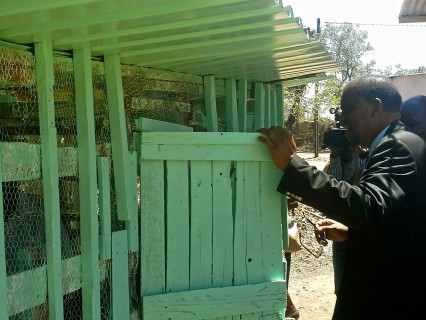
This exchange was in the making for a few months. Following the nomination in Francistown where the Botswana federation was mentioned for best practices in fighting poverty in June 2014, the Minister of Local Government and Rural Development (Peter L. Siele) requested a meeting with the federation in Francistown on 17 October 2014. Since the Botswana federation is still at its early stages of development, it requested the support of the Zimbabwean and the South African federations. The Minister witnessed three projects that the federation members do: traditional attires and baskets, poultry and a cool drink making business. The minister and his team were taken around while the project leaders explained how the businesses are conducted.


Minister visits poultry project

On the morning of the 17th, prior to the commencement of the meeting with the Honourable Minister, a brief planning session was held with the hosts to look into the program and also strategize on key objectives intended to be achieved from the exchange. During the planning session the Zimbabwean and South African delegates were encouraged to focus their presentation more on savings, partnerships and projects. The meeting on 17 October was attended by:

  • Botswana
    • Federation of Botswana – Francistown, Maun, Gaborone, Selibe and Phikwe
    • Trust for Community Initiatives – Goitsemang B. Maano and Mark
    • Officials: Minister of Local Government and Rural Development – Peter L. Siele, Town Clerk – L. Israel, Office of the District Commissioner – Opelo, Head of Community Development – Mrs Phama, Deputy Mayor of Francistown – Mrs Phama
  • Zimbabwa
    • Zimbabwe Homeless People’s Federation– Sekai Catherine Chiremba, Sazini Ndlovu, R. Ncube.
    • Dialogue on Shelter– Beth Chitekwe and Givemore Nyamaponda
  • South Africa
    • FEDUP– Maureen, Sophy and Sarah
    • CORC– Kwanele Sibanda

The federation welcomes the Minister

The Botswana Federation outlined the growth of the movement over the past three years, expanding their reach from Francistown to Selibe, Phikwe, Gaborone and Maun. 42 saving schemes have been established and the total number of active members is 1,126 (1036 females and 90 males). Their total daily savings to date is P (Botswana pula) 257 807.91 (ZAR310,000) and the balance of their Urban Poor Fund is P20 834.85 (ZAR 25,000). Public health is a major focus area for the Federation, and projects have included installation of water taps, electricity and flush toilets. They also have income generating projects such as poultry and catering.

The Zimbabwe federation followed and outlined the work of SDI in Southern Africa. They challenged the minister to meet the Botswana federation’s savings and enter into a partnership agreement. The South African federation spoke about their “pledge” agreement / MoU with the Department of Human Settlements as tool for long term engagement. they argued that to enhance their work so as to support more communities, the government- community partnerships different level to build more than 15 000 quality houses by ourselves for ourselves. In working with the government we always emphasize that the Batho Pele (People First) principle must be applied.

When the Minister of Local Government and Rural Development replied, he addressed the needs of the Botswana federation by outlining some of the programs that different government departments are offering in line with what the federation is doing. He furthermore encouraged them to take advantage of funds such as those offered by the Ministry of Labour and Home Affairs (MLHA). The Women’s Affairs Department is mandated to facilitate mainstreaming of Gender Issues in the development process. As a way of empowering women’s CBOs, the Government of Botswana allocates funds to the Women’s Affairs Department annually in order to assist the organisations.

On 18 October, the Zimbabwean, South African and Botswana Federations exchanged ideas on community-centred development.

  • We are savings for land, to build houses as well as other projects.
  • We are contributing UPF so that we can give each other loans
  • We had an incident were some group members contributed towards UPF, but the treasure did not deposit the money.
  • It is difficult for me to distinguish between daily savings and UPF
  • We started the UPF contributions after an exchange to Gwanda in Zimbabwe; however after report back and starting not many members understood the concept.

Botswana federation during the UPF group discussion

One member of the exchange reported that,

I am so grateful for the exchange has enlightened me on many federation issues especially the Urban Poor Fund.

Another said that

We feel motivated by the presentations made by the federations that have been doing the work for many years and we are inspired to grow our federation the same way.

Ongoing support to the Botswana Federation will be focused on getting the Urban Poor Fund up and running. In group sessions, discussions from delegates from Zimbabwe and South Africa were advising on writing key points that relate to UPF in their respective countries. Botswana was on the other hand listing what they have so far been using as principles around UPF. As a way forward it was agreed that a final decision of principles around UPF cannot be taken in the particular meeting because consultation first has to be made from a savings scheme level; however an agreement was reached on what the respective saving schemes have to input towards a final national UPF policy.

Minister Sisulu speaks about Partnership with SA Alliance

By Archive, FEDUP, Resources, uTshani Fund No Comments
DSC03915

2006 Pledge Conference with Minister Lindiwe Sisulu

In anticipation of The National Human Settlements Indaba and Exhibition (16-17 October 2014) we share a speech made by Lindiwe Sisulu, Minister of Human Settlements in 2006 about the Department’s partnership with Shack/Slum Dwellers International (SDI) and the Federation of the Urban Poor (FEDUP).

During this event the minister recognised the inherent value of partnership with the Alliance and of promoting community-led development processes:  she signed an MoU binding Provincial MECs to pledging 1,000 subsidies per Province per annum to FEDUP.  Since 1994 the Alliance has partnered with national, provincial and local government, pioneering new methodologies of community organisation. This year’s Indaba will be held in Johannesburg and focuses on the theme of “Building partnerships for accelerated delivery of human settlements”.  Both SDI and the South African Alliance have been invited as partners who reflect and voice the interest of the urban poor.

KEYNOTE ADDRESS BY LN SISULU MINISTER OF HOUSING AT THE CONFERENCE OF SHACK/ SLUM DWELLERS INTERNATIONAL AND THE FEDERATION OF THE URBAN POOR 

19 May 2006 
International Convention Centre
 , Cape Town 

Chairperson;

President of the Slum Dwellers International,

President of the Federation of the Urban Poor,

Representatives of other different community based organisations present here
,

Comrades
,

Invited Guests,

Ladies and Gentlemen:

I accepted the honour to open this Conference with a great deal of humility. Humility because I, who represents those who are seen to have plenty, have to stand here in front of you who represent the poorest of the poor and pretend that I have some words of wisdom to impart to you. But I stand here with pride, and I am proud too, because you have chosen my government as a partner in a cause that goes right to the heart of what we are and what we fought for all those years. For me this can only mean an endorsement of your confidence in us, that with us, through us, your ideals can be achieved.

I welcome your confidence in us for we, in turn, will use it to spur ourselves on to ensure that our common goals are realised. It is an honour for us to be counted as one of the champions of the poorest of the poor.

The great revolutions of modern times have, apart from the influences of technological advances and progress, been the result often of the kind of progressive action that had found its source from the grassroots. Such has been the influence and the power of the grassroots in the present time that none who held political power could on their own define and occupy the political space that is critical to issues of sustainable development.

We are all one human force, inexorably drawn to the ideal that until all are free, free from the shackles of poverty, none of us is free. Because by some strange reason we are bound to this universe together. There is some logic in this contradiction. If we are to move forward – progress, our collective pace will be determined by the slowest, in this case the lowest. The great irony of our time! The future of our civilisation rests on how we determine our way forward. We shall not be identified as the civilisation of great poverty, that cannot defines us, we who are proud inventors of everything that has culminated into our launching into space to seek answers about what lies beyond. Perhaps, this is a justifiable deflection as we remain unable to solve problems that lie at our feet. Intellectually, one of the best periods of recorded history, but morally very wanting. The consciousness of the rich closed to the poverty that surrounds them.

In convening this Conference, the Slum Dwellers International and the Federation of the Urban Poor, give us reason to have greater confidence that the common struggle we share against homelessness will indeed achieve its greater results during our own lifetime. No moment in the history of human society has landed itself to this possibility other than ours.

Minister Lindiwe Sisulu, with Jockin Arputham (President of SDI) and Rose Molokoane, National Co-ordinator of FEDUP, 2006

Minister Lindiwe Sisulu, with Jockin Arputham (President of SDI) and Rose Molokoane, National Co-ordinator of FEDUP, 2006

I have just retuned from a trip to India – a most valuable learning experience it was. I did not get to see the Taj Mahal but what I experienced was more valuable than the Taj. I went out to see the pavement dwellers of Mumbai living in the most shocking conditions on the edge of society – having lived that way for all their lives. But a people with hope. An entrepreneurial people taught me the value of saving and the spirit that drives them to ensure that they do provide a house for their families. A people determined that they will do their bit to restore their dignity.

I yearn for that spirit here. A spirit that says this is our government – how can we help it in this huge challenge to provide housing? What can I – sitting in a shack house – do to help ensure that I too have a house? We need to infuse this in our people. We were once a proud people that moved heaven and earth and did do the impossible. The present challenge is within our power to resolve.

In India, I also had a tour of projects that had been undertaken by slum dwellers, projects that demonstrated resourcefulness, originality and innovation. They vindicated the belief I had always had that if government was to accelerate the delivery of housing then the complete involvement of the poor needed to receive full support.

I then began to reflect on the 2005 World Summit Outcome that committed governments to specific actions in relation to slum prevention and slum upgrading. Key among the resolutions was the commitment to increase resources for housing and the related infrastructure.

Ghandi believed that there was an innate goodness in human nature which at all times is able to perceive the truth as though by instinct.

We are a people with a very proud history, proud of what we can do for ourselves. My worry right now is that this proud heritage is dissipating now that we have our own government, the government of the poorest of the poor, the disadvantaged. And we have ourselves to believe that the government will provide.

I have been very attracted by the founding ethos of Shack Dwellers International: that no matter how disadvantaged, we can still do it ourselves, that in fact it is nobler if we do it ourselves. Help me plant this into the heart of every disadvantaged South African. Help me inspire them to stand up.

At the Special Ministerial Conference of the African Ministerial Conference on Housing and Urban Development (AMCHUD), that we held a month ago, in Nairobi, resolutions had been passed to effect these outcomes of the World Summit by focusing governments on the resourcefulness of the poor.

Having ourselves placed the issue of slum prevention and slum upgrading at the top of the international agenda we resolved not only to prevent new slum formations but to also look into the existing policies, legal, institutional and regulatory frameworks that hinder our abilities to deal with slum formation in ways that affirmed and strengthened our relationship with the poor.  We therefore resolved to review the frameworks that exist to enable an environment where the full capacities of community organisations and non-governmental organisations were utilised. In practice, amongst other things, this will mean the promotion of community-led development processes in slum prevention and slum upgrading and the identification of ways to assist initiatives relating to savings.  

I am gratified that the relation we have cultivated with yourselves has enabled us to implement some of these resolutions already. The Homeless People’s Federation, that we had interactions with in 2004, enabled us to make this start.

The Conference cements the relationship by now enabling us to act together at the international level. It is my hope that such collaboration will help encourage a fundamental rethinking of issues connected with sustainable development and the achievement, specifically, of the Millennium Development Goals. It is a great contradiction of our times, in my view, that whilst on the one hand we correctly extol the virtues of economic progress and political stability, on the other hand, we remain unable to expend and invest sufficient resources to achieve those outcomes.

I have had occasion to look back and assess the damage done to all of us in this country by the policies of inequality. It has cost us dearly. If eighty years ago we had all progressed along the same path, I leave you to imagine where this country would be today. We held back on the development of a segment of our society and we live with those consequences.

The steps that we have taken to support and assist initiatives from the Slum Dwellers International and Federation of the Urban Poor recognizes this singular truth. As government we recognize that apart from the market mechanism other initiatives and ways that have their origins in the people who make up our cities and towns, exist.

Minister Lindiwe Sisulu and President of SDI, Jockin Arputham

Minister Lindiwe Sisulu and President of SDI, Jockin Arputham

This is the experience that yet again I was exposed to when again I visited Thailand last year. I was exposed to a unique programs that forms partnerships between communities, government, and other stakeholders in identifying and developing suitable land for housing. This was a partnership to ensure that communities were located in the most opportune locations where their actual needs could be addressed in a sustainable manner.

We are thus committed to learn through practical experience and to enhance our programs to ensure that community needs are achieved. And I thus welcome the proposed structured cooperation arrangement that will be established during the Conference for the implementation of projects linked to policy and strategy enhancement.

The Conference is a unique opportunity for all of us to learn how partnerships with civil society are formed and should operate.

I would like to congratulate all of you for the achievements that both individually and collectively you have made in advancing the cause of slum dwellers.

Finally, Jockin, I do not know what to say to you. You remind me so much of my own father. You are beautiful in every single way!

I thank you most sincerely.

Reflections on the Southern African HUB Meeting: Lusaka, Zambia

By CORC, FEDUP, ISN, SDI No Comments

**Cross-posted from the SDI blog**

By Noah Schermbrucker (on behalf of SDI Secretariat)

SDI Southern African Hub Countries

SDI Southern African Hub Countries

HUB meetings are gatherings that bring affiliates together to collectively set the agenda for the region. They are used as a mechanism to share collective learning, devise targeted support strategies (e.g. exchanges) for individual countries and concretize planning, on a regional scale, for the next period. The Southern African HUB recently took place in Lusaka, Zambia from 12-14 September 2014. Delegations from South Africa, Namibia, Zimbabwe, Swaziland, Botswana and Malawi attended the 3-day meeting. A team from Uganda, who had recently hosted the East African HUB, participated in order to promote continuity. Ghana was also invited as the West African HUB has been indefinitely postponed due to the Ebola outbreak.

Below find my reflections on the meeting. I hope that they provide some insights not only into SDI processes at a regional level but also the “nuts and bolts” of which this process is comprised. This is hence not an exhaustive description of the meeting but aims to give the reader a “practical flavor” of SDI’s work as it plays out in the interactions between slum dwellers, support professionals and government.

Day 1: Engagement with Ministry of Local Government, field visit to Garden Park community under threat of eviction (only some delegates) and meeting at Lusaka City Council (LCC).

The Zambians were clear that the first day’s agenda was about taking their process forward, especially in terms of achieving tangible outputs from government. South Africa, Namibia, Zimbabwe, Uganda, Malawi and Ghana all stressed the actual outputs of their relationship with government to both the Ministry of Local Government and LCC. As was noted, “ An M.o.U with government is just a piece of paper unless it has actual tangible outputs attached”.

Making the first day about taking the Zambian process really orientated us within local challenges and used the HUB as an instrument to open space with government for the Zambians (which they are now following up on). The Southern African HUB has previously been very “talk” orientated and not substantively relevant to the local process so this shift was refreshing to see. A trick that we missed out on was not inviting government officials from the countries attending as the Zambians felt that this would have deepened the impact in these engagements with government. As a federation member noted “governments like to talk to other governments”.

Through the site visit to Garden Park, evictions were placed on the table as a key issue with the HUB committing (on the final day) that each federation will draft guidelines on evictions sharing their experiences and strategies used (this emerged out of a separate federation only session)

Women from Garden Park meet to discuss eviction threat

Women from Garden Park meet to discuss eviction threat

Day 2: New Secretariat systems (L,M&E, New Secretariat structures)

Day 2 was spent at the Zambian federation’s resource center in George compound with significant participation from the Zambian federation. Mara (from the SDI Secretariat) and Muturi (from the Core Team) did a fantastic job in taking everyone through some of the new systems developed by The Secretariat including the L, M &E worksheet and call for support. There was a vibrant discussion about these new systems and some very important suggestions made as to how they could be refined (e.g. definitions of certain terms such as “secure tenure” need to be clarified). These issues were noted and will be shared with the secretariat team.

A very critical issue was raised around the learning center and its role within the HUB, a number of people felt that the HUB itself was serving as the learning center. We need to think carefully about how the learning center fits into the HUB-especially in the case of Southern Africa were conditions and experiences in Cape Town are quite different to the rest of the countries. People felt strongly that different countries had different strengths (e.g. Namibia and Zimbabwe around collection of their savings number & indicators).

"Carrying" water home in Chazanga, Lusaka

“Carrying” water home in Chazanga, Lusaka

Day 3: HUB Business

The day was focused on collecting country reports that were compiled previously by each country. These will be used to aggregate a set of Southern African HUB figures that can be taken to the Board & Council (B&C) meeting. Each country handed in their reports but then spoke about the “burning issues” and what support was needed. This led to suggestions for further exchanges that have been noted. The HUB also discussed progress made on exchanges decided at the B&C. In general this approach was well received as countries did not use up time providing long lists of figures but rather focused on the key issues that they wished to raise. The exact role and nature of the CORE team was also explained at length.

Throughout the meeting the participation of members from Kenya, Uganda and Ghana was extremely helpful. Their insights were valuable and contributed to the discussions with government. The continuity between the East African HUB and this HUB was definitely beneficial and something that we could take forward.

An issue that emerged from some was how we can include more “voices” in the HUB and encourage everyone to participate and speak more fully. It seemed that when we broke into country teams it allowed for more even discussion and participation as opposed to just a few people speaking in the bigger forum.

A HUB report is currently being drafted by Zambia and will be shared shortly.

Building the Siphumelele WaSH facility / Innovation Centre in Langrug, Stellenbosch

By CORC, FEDUP, ISN No Comments

By Aditya Kumar and Yolande Hendler (on behalf of CORC)

Zwelitsha is a section of Langrug informal settlement, located on the rocky ground of a mountain slope that overlooks the lush valleys and nearby town of Franschoek in Stellenbosch Municipality. Zwelitsha’s residents make up 604 people who reside in 318 structures. Langrug as a whole is home to 4700 people who live in 2118 structures. While Langrug’s other sections have access to water and sanitation facilities – including the Langrug Water Sanitation and Hygiene (WaSH) facility – Zwelitsha’s steep incline and rocky terrain have made it extremely difficult to build water and sanitation points. To this end, Zwelitsha currently has only one tap and no toilets.

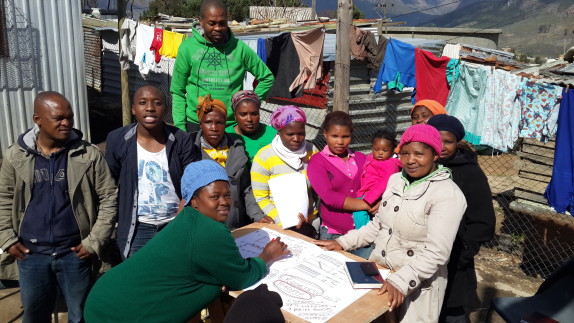
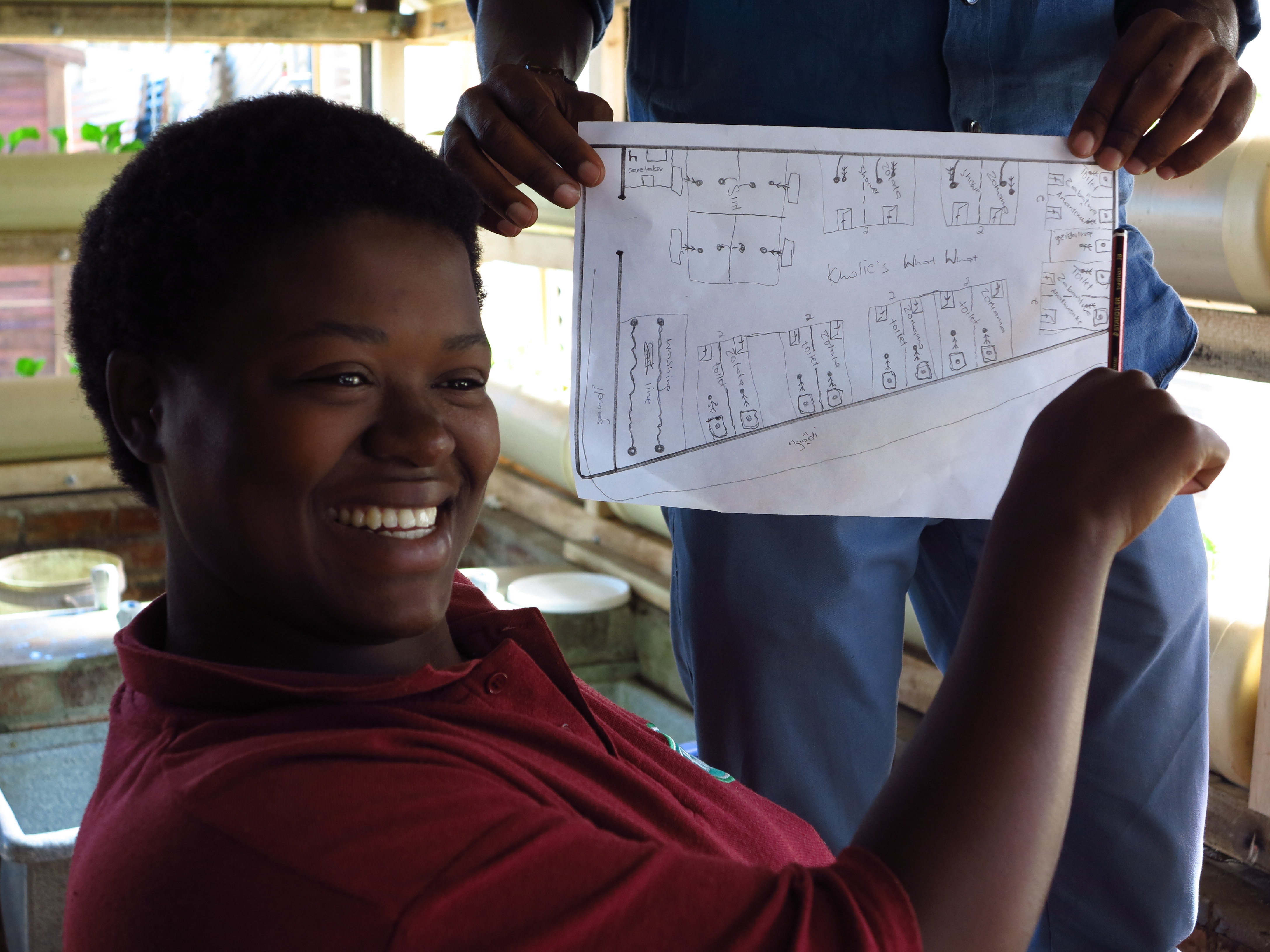
Zwelitsha community members developing plans for the Siphumelele WaSH facility

Zwelitsha community members developing plans for the Siphumelele WaSH facility

Yet this situation is about to change, as community members began work on the foundations of the Siphumelele WaSH Facility and Innovation Centre last week in partnership with the Informal Settlement Network (ISN), Federation of the Urban Poor (FEDUP), Community Organisation Resource Centre (CORC), Touching the Earth Lightly (TEL), Sculpt the Future Foundation, Stellenbosch Municipality, Worcester Polytechnic Institute (WPI) and Enviro Loo (a waterless sanitation provider).

Site of Siphumelele WaSH facility in Zwelitsha section of Langrug informal settlement

Site of Siphumelele WaSH facility in Zwelitsha section of Langrug informal settlement

Building on Experience: Learning from the Langrug WaSH facility

Based on the monitoring, evaluation and learning around the existing WaSH facility (read more here) in Langrug, Zwelitsha’s residents initiated a discussion about the possibility of a second WaSH facility. They approached ISN and CORC, WPI and Stellenbosch Municipality, all of whom had partnered with the community in building the existing WaSH facility in 2011.

Learning from the existing WaSH facility in Langrug

Learning from the existing WaSH facility in Langrug

The discussion related to the outcomes of a sample survey that was conducted over 12 days in July and August 2013. This survey looked at the benefits of data collection, the various uses of the existing WaSH facility (economic and small enterprise, health and food security, educational, organisational meeting point) and its upkeep and maintenance.

More specifically the outcomes of the survey of the Langrug WaSH facility included:

  • The collection of inception data for Siphumelele WaSH facility
  • Current data collection for usage at both WaSH facilities from July 2014
  • Increased use of the Langrug facility by crèches in Langrug. (An estimated 40 children served per day at the facility around issues related to basic hygiene)
  • A fully functioning post-office hosted in the Langrug WaSH facility, based on previously collected enumeration (socio-demographic) data
  • Support for HIV / AIDS awareness in Langrug WaSH facility
  • Potential for small businesses selling health and hygiene products in Langrug facility
  • Increased food security through the greening of the existing facility in partnership with Touching the Earth Lightly
  • Langrug WaSH facility as a space for youth education, workshops and meetings
  • Dramatic increase in usage of Langrug facility due to consistent cleanliness and ancillary functions within the facility
  • Comparatively low maintenance and upkeep of Langrug facility
  • Success in preventing vandalism
  • Significantly, the community expressed a higher degree of ownership in relation to the Langrug WaSH facility as it was community designed, built and maintained

The challenges that emerged around the facility enhanced the monitoring, evaluation and learning around the delivery and maintenance of services, and assisted in conceptualising the Siphumelele WaSH facility.

Some of these challenges and learning points related to:

  • The low usage of communal showers
  • The slow inception of the hair salon

Building the Concept: Co-Designing the Siphumelele WaSH facility

Given the cost of maintenance and operations, the community and partners involved explored the idea of a livelihood-linked wash facility where a portion of the facility would generate revenue (through a kiosk, crèche, health and educational programme) to reduce the burden on municipal funds for maintenance. Given the community’s experience of struggling for a space of safety and dignity, the Zwelitsha design and construction team named the wash facility “Siphumelele” – “We have achieved it”.

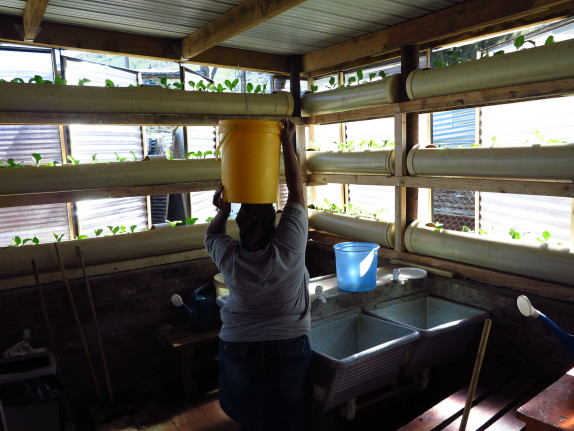
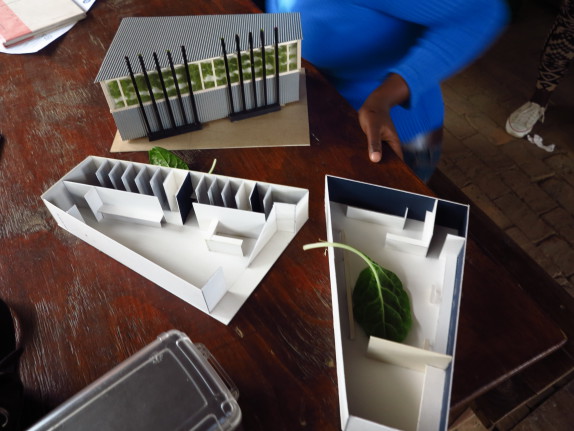
From March to April 2014 the community, together with TEL, began co-designing the facility. The designs include toilets for men and women, a wash area and a kiosk on the ground floor. The second floor will contain a crèche and soup kitchen that will be managed by the community. After conducting a survey with Zwelitsha’s families about amenities to be included in the facility, community leaders chose to exclude showers due to their infrequent use in the Langrug WaSH facility. The community also chose to make use of Enviro Loo toilets after they visited Enviro Loo in November 2013 and received detailed explanations on how the toilets are maintained and operated. The Enviro Loo is a waterless toilet system that provides a safe, non-polluting, cost-effective solution to sanitation.

Co-designing with Touching the Earth Lightly

Co-designing with Touching the Earth Lightly

IMG_6272

Co-designing the WaSH facility

Model of Siphumelele WaSH facility

Model of Siphumelele WaSH facility

Building the Team: Community-led Implementation

Apart from the partners already mentioned, the community has put together different teams to lead the implementation process. These include a leadership committee, a savings group and an Informal Settlement Upgrading Team (ISUT). This team is led by 8 women and includes a Community Liaison Officer, a storekeeper and a project manager who spearhead the construction process. After an exchange to a savings scheme linked to the Federation of the Urban Poor (FEDUP), the community set up their own savings group in July 2014 so as to manage finances to maintain and operate Siphumelele WaSH facility.

Building a voice of the urban poor in Langrug

The foundations for both WaSH facilities were laid when Stellenbosch Municipality signed a Memorandum of Understanding (MoU) with the community and ISN / CORC in 2011. Since this date Langrug’s community leaders have been developing a formal relationship with the Municipality and are making a strong case for how urban poor communities successfully organise themselves to lead their own upgrading processes, and how co-design and co-planning is a step towards a more tangible ‘inclusive city’.

(Photographs: Stephen Lamb, TEL)

Phase 1 of construction

Phase 1 of construction

The construction team

The construction team