Tag

Community Planning Archives - Page 4 of 5 - SASDI Alliance

Building the Siphumelele WaSH facility / Innovation Centre in Langrug, Stellenbosch

By CORC, FEDUP, ISN No Comments

By Aditya Kumar and Yolande Hendler (on behalf of CORC)

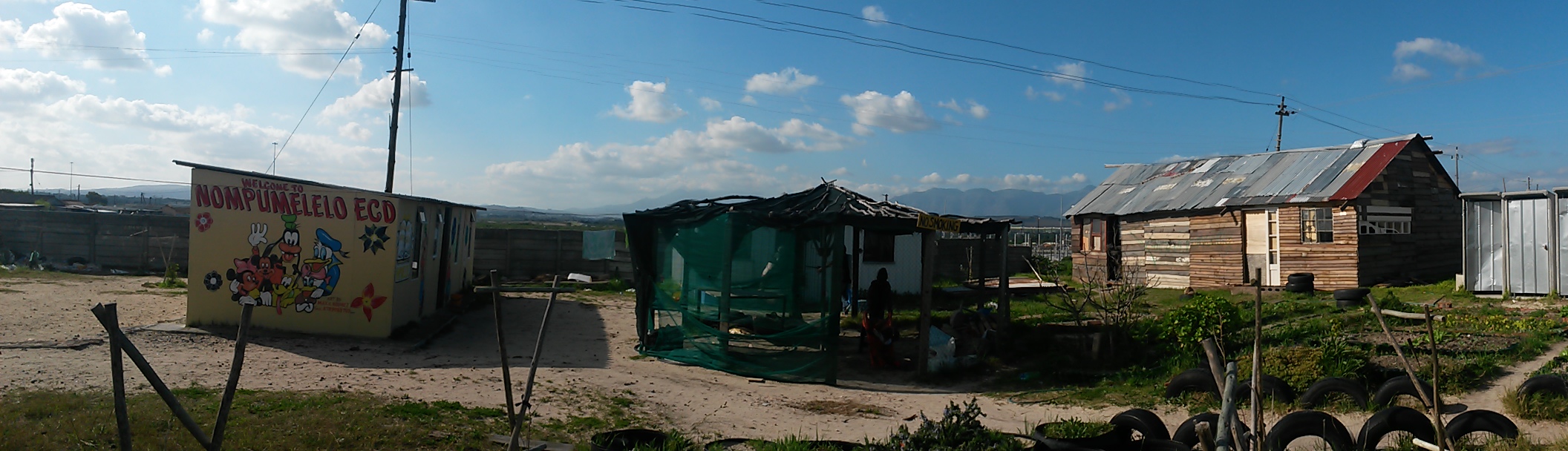
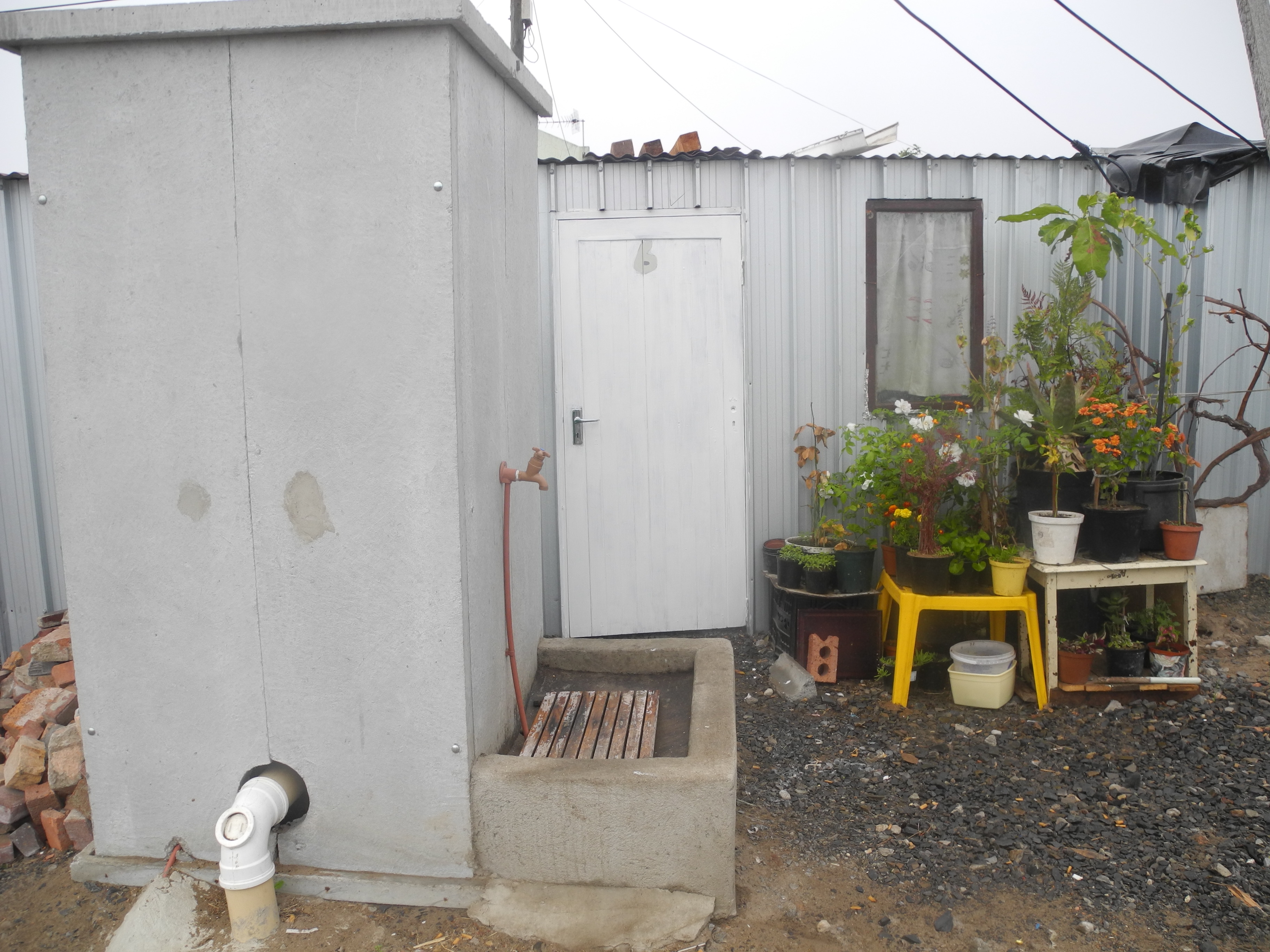
Zwelitsha is a section of Langrug informal settlement, located on the rocky ground of a mountain slope that overlooks the lush valleys and nearby town of Franschoek in Stellenbosch Municipality. Zwelitsha’s residents make up 604 people who reside in 318 structures. Langrug as a whole is home to 4700 people who live in 2118 structures. While Langrug’s other sections have access to water and sanitation facilities – including the Langrug Water Sanitation and Hygiene (WaSH) facility – Zwelitsha’s steep incline and rocky terrain have made it extremely difficult to build water and sanitation points. To this end, Zwelitsha currently has only one tap and no toilets.
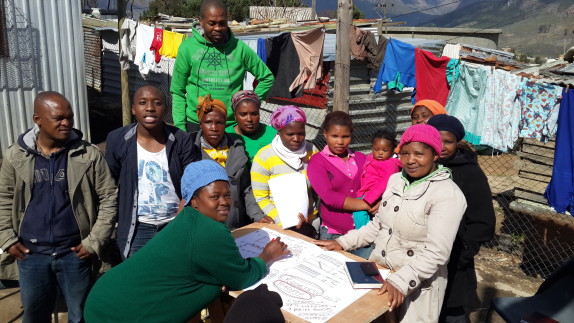
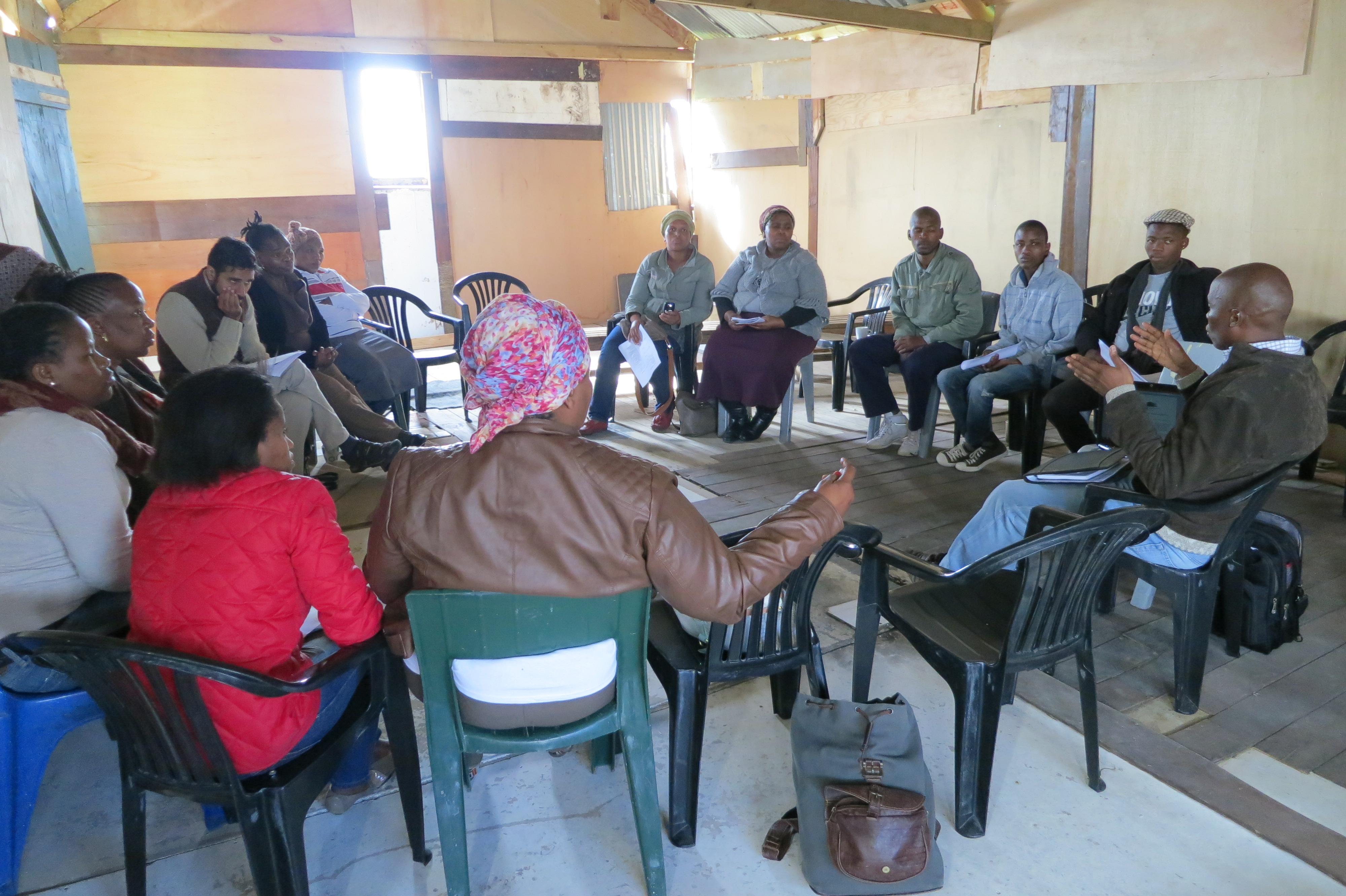
Zwelitsha community members developing plans for the Siphumelele WaSH facility

Zwelitsha community members developing plans for the Siphumelele WaSH facility

Yet this situation is about to change, as community members began work on the foundations of the Siphumelele WaSH Facility and Innovation Centre last week in partnership with the Informal Settlement Network (ISN), Federation of the Urban Poor (FEDUP), Community Organisation Resource Centre (CORC), Touching the Earth Lightly (TEL), Sculpt the Future Foundation, Stellenbosch Municipality, Worcester Polytechnic Institute (WPI) and Enviro Loo (a waterless sanitation provider).

Site of Siphumelele WaSH facility in Zwelitsha section of Langrug informal settlement

Site of Siphumelele WaSH facility in Zwelitsha section of Langrug informal settlement

Building on Experience: Learning from the Langrug WaSH facility

Based on the monitoring, evaluation and learning around the existing WaSH facility (read more here) in Langrug, Zwelitsha’s residents initiated a discussion about the possibility of a second WaSH facility. They approached ISN and CORC, WPI and Stellenbosch Municipality, all of whom had partnered with the community in building the existing WaSH facility in 2011.
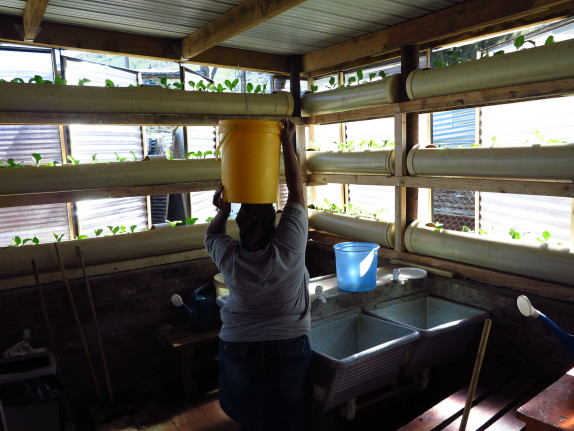
Learning from the existing WaSH facility in Langrug

Learning from the existing WaSH facility in Langrug

The discussion related to the outcomes of a sample survey that was conducted over 12 days in July and August 2013. This survey looked at the benefits of data collection, the various uses of the existing WaSH facility (economic and small enterprise, health and food security, educational, organisational meeting point) and its upkeep and maintenance.

More specifically the outcomes of the survey of the Langrug WaSH facility included:

  • The collection of inception data for Siphumelele WaSH facility
  • Current data collection for usage at both WaSH facilities from July 2014
  • Increased use of the Langrug facility by crèches in Langrug. (An estimated 40 children served per day at the facility around issues related to basic hygiene)
  • A fully functioning post-office hosted in the Langrug WaSH facility, based on previously collected enumeration (socio-demographic) data
  • Support for HIV / AIDS awareness in Langrug WaSH facility
  • Potential for small businesses selling health and hygiene products in Langrug facility
  • Increased food security through the greening of the existing facility in partnership with Touching the Earth Lightly
  • Langrug WaSH facility as a space for youth education, workshops and meetings
  • Dramatic increase in usage of Langrug facility due to consistent cleanliness and ancillary functions within the facility
  • Comparatively low maintenance and upkeep of Langrug facility
  • Success in preventing vandalism
  • Significantly, the community expressed a higher degree of ownership in relation to the Langrug WaSH facility as it was community designed, built and maintained

The challenges that emerged around the facility enhanced the monitoring, evaluation and learning around the delivery and maintenance of services, and assisted in conceptualising the Siphumelele WaSH facility.

Some of these challenges and learning points related to:

  • The low usage of communal showers
  • The slow inception of the hair salon

Building the Concept: Co-Designing the Siphumelele WaSH facility

Given the cost of maintenance and operations, the community and partners involved explored the idea of a livelihood-linked wash facility where a portion of the facility would generate revenue (through a kiosk, crèche, health and educational programme) to reduce the burden on municipal funds for maintenance. Given the community’s experience of struggling for a space of safety and dignity, the Zwelitsha design and construction team named the wash facility “Siphumelele” – “We have achieved it”.

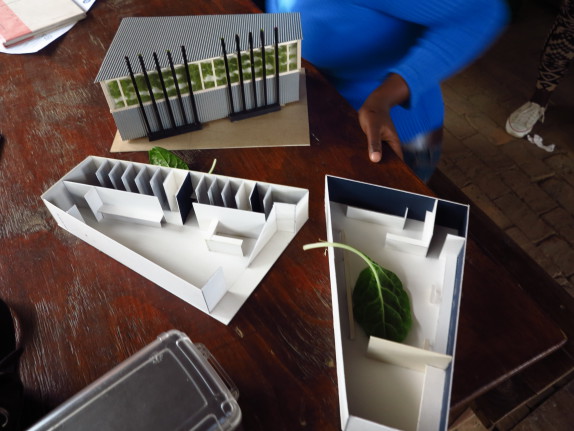
From March to April 2014 the community, together with TEL, began co-designing the facility. The designs include toilets for men and women, a wash area and a kiosk on the ground floor. The second floor will contain a crèche and soup kitchen that will be managed by the community. After conducting a survey with Zwelitsha’s families about amenities to be included in the facility, community leaders chose to exclude showers due to their infrequent use in the Langrug WaSH facility. The community also chose to make use of Enviro Loo toilets after they visited Enviro Loo in November 2013 and received detailed explanations on how the toilets are maintained and operated. The Enviro Loo is a waterless toilet system that provides a safe, non-polluting, cost-effective solution to sanitation.

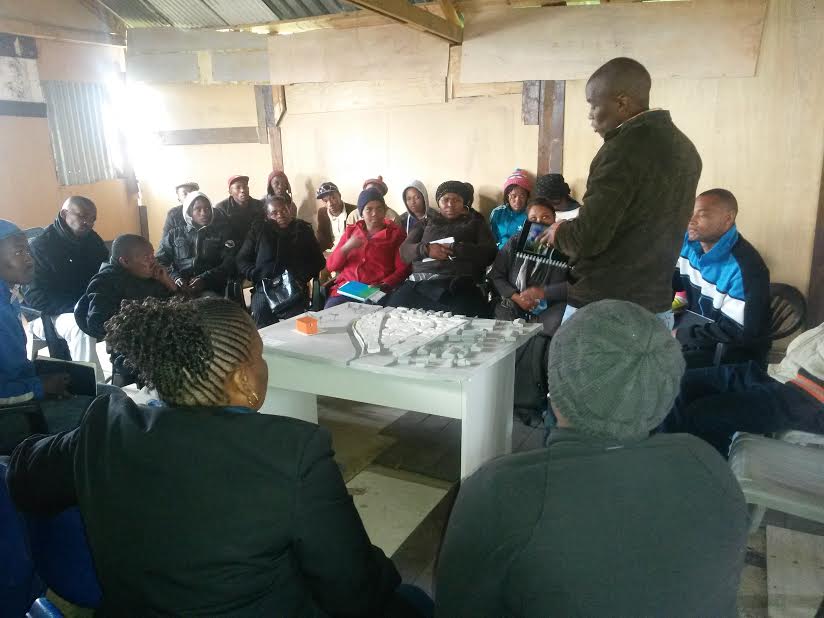
Co-designing with Touching the Earth Lightly
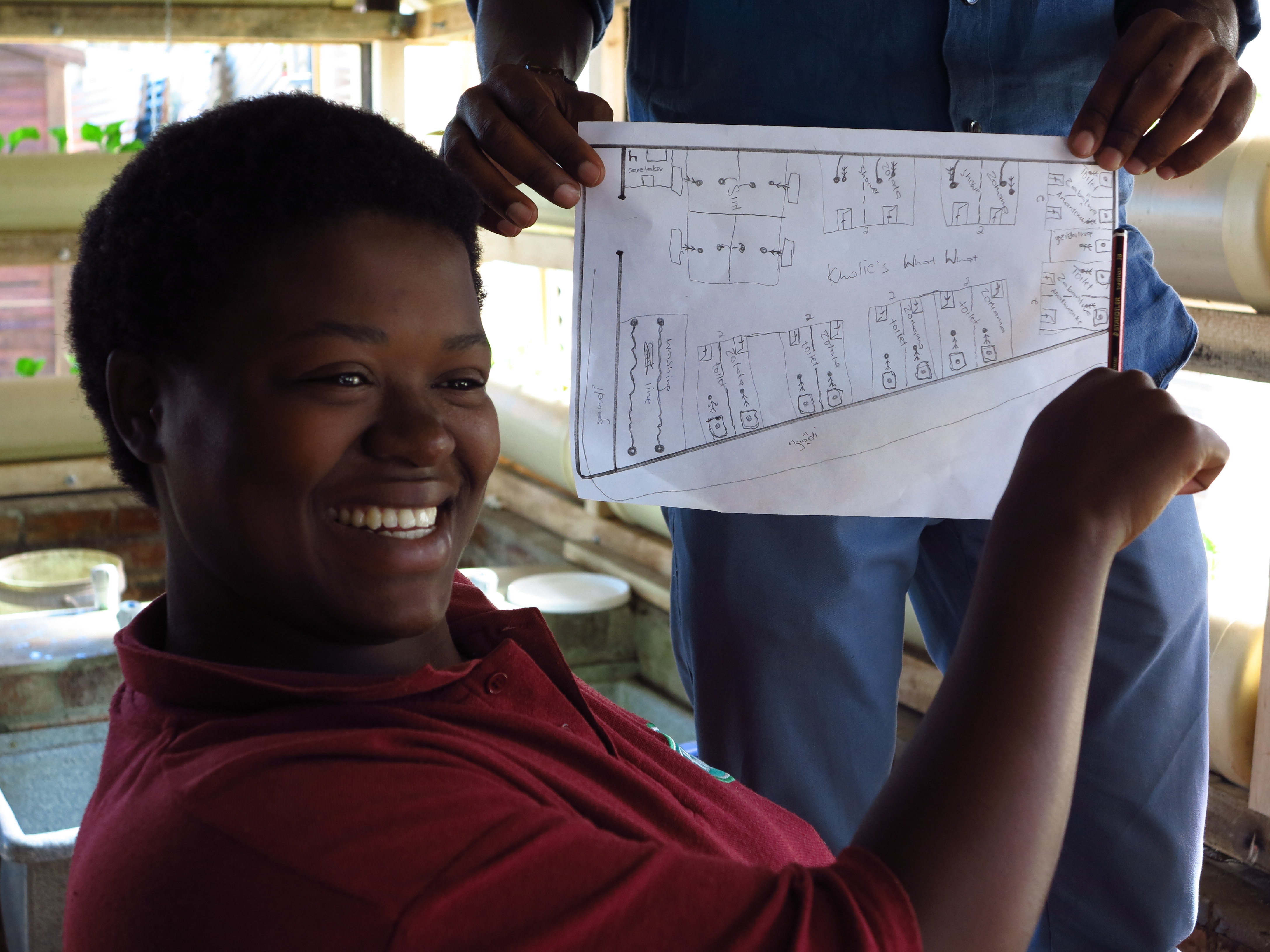
Co-designing with Touching the Earth Lightly

IMG_6272

Co-designing the WaSH facility

Model of Siphumelele WaSH facility

Model of Siphumelele WaSH facility

Building the Team: Community-led Implementation

Apart from the partners already mentioned, the community has put together different teams to lead the implementation process. These include a leadership committee, a savings group and an Informal Settlement Upgrading Team (ISUT). This team is led by 8 women and includes a Community Liaison Officer, a storekeeper and a project manager who spearhead the construction process. After an exchange to a savings scheme linked to the Federation of the Urban Poor (FEDUP), the community set up their own savings group in July 2014 so as to manage finances to maintain and operate Siphumelele WaSH facility.

Building a voice of the urban poor in Langrug

The foundations for both WaSH facilities were laid when Stellenbosch Municipality signed a Memorandum of Understanding (MoU) with the community and ISN / CORC in 2011. Since this date Langrug’s community leaders have been developing a formal relationship with the Municipality and are making a strong case for how urban poor communities successfully organise themselves to lead their own upgrading processes, and how co-design and co-planning is a step towards a more tangible ‘inclusive city’.

(Photographs: Stephen Lamb, TEL)

Phase 1 of construction

Phase 1 of construction

The construction team

The construction team
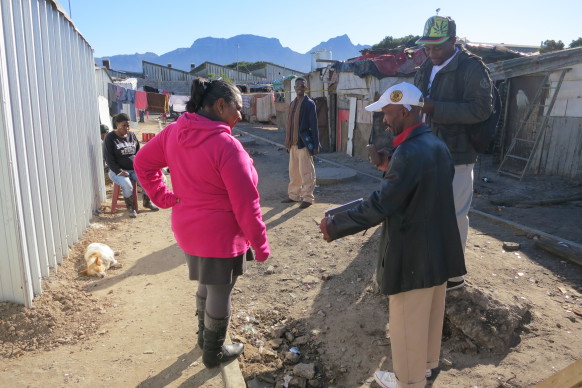
FEDUP and ISN Leadership Retreat 2014

By CORC, FEDUP, ISN No Comments

By Yolande Hendler (on behalf of CORC)

Leadership Retreat in KZN, Durban

Leadership Retreat in KZN, Durban

From 20 – 25 June 2014 national leaders from both FEDUP and ISN met in Durban, Kwa-Zulu Natal, for a leadership retreat. The aim of the retreat was to open up a space for leaders to reflect and reassess the different methods and tools they have been using to mobilise their communities.

These tools – mobilization and savings, exchanges, enumerations, mapping, and community-led implementation – are a shared set of rituals that all federations affiliated to Shack / Sum Dwellers International (SDI) practice. The retreat was not only a time of reflection, reorientation and discussion. It was also one of practical learning, especially in mapping, enumeration and savings practices, in which leaders refocused on the strength of these tools to mobilise new informal settlements and savings schemes.

The retreat

At the beginning of the retreat, Rose Molokoane, national co-ordinator of FEDUP explained,

“The last time we were here in Durban was for the march [to eThewkini Municipality] on 24 March 2014. We realized then that we need to continue building our leadership to make our work and these kind of events successful because an organisation is not a project, but a process. This is when the idea developed to call most if not all our leaders to a retreat”

This went hand in hand with developing and discussing a joint focus for the retreat. In thinking about the nature of a retreat, the group responded that it viewed the retreat as a time of reflection, co-operation, re-affirming vision, working together and a reminder of the Alliance’s current position. The group also highlighted that it wanted to achieve this focus by better understanding the Alliance’s vision and background as well as getting practically involved in community activities.

Rose Molokoane facilitates a discussion at the Leadership Retreat

Rose Molokoane facilitates a discussion at the Leadership Retreat

While the first day of the retreat looked back at the history and foundation of the Alliance, the other days focused on building the capacity of Alliance leaders for current and future activities. On the first day therefore the group focused on the Alliance’s founding gathering at Broederstroom and reminded each other of five pillars: love, availability, transparency, trust and commitment.

On the remaining four days Alliance leaders split into teams to do enumeration and mapping exercises in Boxwood and Johanna Road settlements in Kenville and to collect savings in Kwa Bestar. This meant that FEDUP and ISN members, some for the first time, became actively involved in one another’s tools of enumeration and savings.

These days also included training with the CORC enumeration team and workshops on the organisational roles and structure of the SA Alliance (ISN, FEDUP, CORC & uTshani Fund).

Rose Molokoane (National Co-ordinator of FEDUP) and Charlton Ziervogel (CORC Programme Officer)

Rose Molokoane (National Co-ordinator of FEDUP) and Charlton Ziervogel (CORC Programme Officer)

Enumerations and mapping

The enumeration activities in Boxwood and Johanna Rd introduced FEDUP members to the practice of numbering, shack measuring, data collection and capturing, and settlement mapping. For Rose, it was clear that celebrating information is vital. This is why enumerations are so powerful – the socio-demographic questionnaires collect valuable information that communities can use to better organize themselves and lobby local government. Ma Mkhabela, from FEDUP KZN agreed that,

“It’s important that leaders are present at enumerations so that they can be in touch with community issues. Enumerations help to give people a space to relate to each other”

(Ma Mkhabela, FEDUP KZN)

Similarly, mapping and measuring give community members a further tool for planning and lobbying. By knowing the number of pathways in one’s settlement, or the incline of gradients, communities can contribute to developing a plan for their settlement.

Right: MaMkhabela (FEDUP KZN)

Right: MaMkhabela (FEDUP KZN)

Savings

During the savings collection in Durban’s Kwa Bestar, ISN members received a direct insight to the power of savings. They saw how savings can strongly connect communities through regular savings collection visits that also offer a personal opportunity to enquire about the welfare of a fellow savings scheme member.

Ndodeni Dengo ,Durban’s ISN co-ordinator, reflected,

“It was my first time collecting door-to-door savings. We need to take this back to our communities”

ISN National Co-ordinators Front: Ndodeni Dengo

ISN National Co-ordinators Front: Ndodeni Dengo

Looking back and moving forward

During the feedback session many groups expressed the value they saw in working together as a team and emphasized the need to continue sharing ideas and establishing a good working relationship between ISN & FEDUP.

“This retreat has revived me. I’m now able to remember things I had forgotten. I learned how things should be done in our organisation. Our pillars are there to grow the organisation. In our region, we now also know about the power or enumerations”

(Rosina Mufumadi, FEDUP Limpopo)

Rosina Mufamadi (FEDUP Limpopo)

Rosina Mufumadi (FEDUP Limpopo)

How Community Construction Management Teams (CCMT) can lead upgrading projects

By CORC, FEDUP, ISN, uTshani Fund No Comments

By Yolande Hendler (on behalf of CORC)

20140722_141359

The venue : Makhaza Day Care Centre in Khayelitsha Cape Town

If designing and planning with communities are key aspects of people-led projects then people-led implementation and -construction are too. The SA Alliance – through the Federation of the Urban Poor (FEDUP) – has pioneered this people-led approach since 1994. By lobbying government, FEDUP strongly influenced low-income housing policy that came to be known as “the People’s Housing Process” (PHP), a special housing subsidy that allowed for much greater involvement of communities in the construction of their houses. Since then, FEDUP members have successfully implemented the construction of their houses through Community Construction Management Teams (CCMTs).

Although CCMTs have for the most part been linked to housing projects in the Alliance, setting them up is just as relevant to the Alliance’s more recent involvement in informal settlement upgrading. During this week’s three day CCMT workshop, experienced CCMT members introduced Cape Town community leaders to the CCMT model of community-led construction and explored how it could function in informal settlement upgrading.

The Exchange

Over three days Hasane Khoza (Abi) and Maureen Skepu from Gauteng shared their experiences in community construction with about 30 leaders from 6 settlements in Cape Town. With a background in construction management, Abi has helped to train and set up CCMTs and monitor housing projects. Maureen has a rich experience in CCMTs – she became a member of FEDUP in the early 2000s, accepted a volunteer position with a local CCMT five years later, and in 2011, moved into her own CCMT constructed house in Orange Farm, Gauteng. Read more about Maureen’s story here.

IMG_1730

Day 1 of exchange: background and formation of CCMTs

During the exchange, Abi and Maureen provided some background on the formation and strcuture of CCMTs, roles and responsibilities of each CCMT member and how to introduce the model of CCMTs to informal settlement upgrading.

The group also spent an afternoon in Flamingo informal settlement, which is currently upgrading and re-blocking. The visit offered an ideal opportunity for Flamingo’s steering committee to explain the way in which they have organised themselves so far and to explore the potential for them to form a CCMT to further streamline and ease the overall management of re-blocking. For the other communities present the site visit offered a first hand impression of what to consider for managing an upgrading project.

Terence Johnson, who has been involved in Flamingo from the outset on behalf of the Informal Settlement Network (ISN) explained,

“There are so many challenges and things you need to consider during upgrading. Some people don’t want to be moved, the rain causes flooding and leakages…. but we need to see these things not as a problem but as a challenge. And we can overcome challenges, especially if we work in a group like a CCMT. ”

Flamingo steering committee putting during on-site construction

Flamingo steering committee putting during on-site construction

How CCMTs work

On the first day Maureen explained,

 “The idea behind CCMTs is that communities oversee and implement projects themselves. In this way the community can make sure that the job is done properly. Because of this you need dedicated and thorough people on the team. The benefit of CCMTs compared to general steering committees are that each member has clear roles and responsibilities”

(Maureen Skepu, FEDUP housing project coordinator, Gauteng)

Within FEDUP, the CCMT process includes all the stages of house building: from drawing plans (which are formalised by qualified architects and engineers) to the construction process, which is contracted out to community members. The construction team consists of five members who each have a specific task: the technical officer requests specific items and provides quality control, the bookkeeper sources the best and cheapest materials, the storekeeper controls the inflow and outflow of stock, the loan and savings officer looks after the community’s finances, and the project manager oversees the whole process. And, unlike in the private and public building sector, most of the construction team’s members are women.

“The idea is to capacitate a community to move from being just employed in a project to driving the project themselves. Project management is a skill that can be learnt. Everyone can be taught and everything we know we have learnt. Managing a project leads to empowering a community.”

(Abi / Hasane Khoza, CCMT Construction Manager)

IMG_1731

Abi answering questions about CCMTs

Community Questions, Discussions and Insights

The workshop was a space of many questions and lively discussions. These were about how to break down the budget at community level so each person knows exact quantities and costs of materials to expect, at what stage in a project process a CCMT could be formed, or that women’s strength, resilience and thoroughness are good qualities for CCMT members. The communities present also liked the idea that CCMTs share the overall responsibility of an upgrading project – a shift from one person to a team of people.

In reflecting on the three days that passed, the community members expressed their value for exploring how the CCMT process can work in informal settings and upgrading projects. The suggested next steps are to establish guiding templates for establishing CCMTs as well as monitoring and documenting project processes on the ground, so that these can be shared with others as well.

“What we can learn from the CCMT workshop is that we need to continue learning, especially from the mistakes we make. Let’s not only make a habit of learning but actually do something with what we learn”

(Lindiwe Ralarala, Masilunge community leader)

Discussing the role of slopes and gradients on the upgrading site.

A discussion on the role of slopes and gradients on the upgrading site.

Durban and Port Elizabeth Leaders on Sanitation Exchange

By CORC, iKhayalami, ISN, SDI No Comments

By Stefanie Holzwarth and Yolande Hendler (on behalf of CORC)

Over the past years, the communities of Midrand in Port Elizabeth and Havelock in Durban have been upgrading their settlements, step by step. Last week’s exchange (8-11 July 2014) – in which community leaders visited Cape Town settlements – formed the next step in activating solutions to their specific needs for water and sanitation upgrading.

Site visit in Kuku Town

Site visit in Kuku Town


Midrand and Havelock

Midrand is located on municipal land but is not yet listed on the municipality’s database and therefore experiences great difficulty in accessing services. The community consistently experiences severe flooding. Havelock, on the other hand, is built on privately owned land and has been earmarked for “interim services” by eThekwini Municipality, indicating a willingness to deliver basic services in the short term and habitation in the long term. It is built against a hill with high shack densities that have led to shack fires, flooding and torrents of water flushes in the rainy seasons. Read more background on Havelock and Midrand.

The exchange

During the four-day exchange about ten community leaders visited five settlements in and around Cape Town. The exchange was linked to the SHARE Program (Sanitation and Hygiene Applied Research for Equity) linked to Shack Dwellers International (SDI). Read more about SHARE here. It was facilitated by the Informal Settlement Network (ISN), Community Organisation Resource Centre (CORC) and iKhayalami. It centrally focussed on how communities can use sanitation as a tool for upgrading and mobilisation, particularly in response to ever present and severe flooding.

Midrand community leaders, for example, spent time investigating the most suitable and relevant options for sanitation upgrading in their settlement:

  • Communal toilets and wash facility at the edge of the settlement (ablution blocks) without re-blocking
  • Sanitation and wash facility in the centre of the settlement with partial re-blocking
  • Individual sanitation facilities in courtyard (one-on-one sanitation) with settlement wide re-blocking

These would all require engagement with local government institutions.

Havelock’s central challenge is drainage. The settlement has already engaged with local government about constructing a sanitation unit as well as providing more sanitation units in the centre of the settlement. This would coincide with the communities’ already existing plans to re-block its settlement. Midrand and Havelock’s leaders therefore visited upgrading sites that provided an example of different options available to them.

DSCN7284

Example of sanitation in a community-run Water, Sanitation and Hygiene (WaSH) facility

One-on-One Sanitation in Kuku Town

The visitors spent the first day in Kuku Town where the community recently completed re-blocking with individual sanitation per upgraded structure. They were particularly interested in how Kuku Town managed to re-block without having to relocate people to other areas. Other questions focused on why the community chose individual toilets. Kuku Town’s leaders explained that

“single toilets are manageable because the owner is responsible for their own toilet and because there are no conflicts within the community with regards to hygiene.”

The leaders also reflected on Kuku Town’s successes and challenges throughout planning and implementation. The visitors learned how Kuku Town approached the municipality for support in terms of infrastructure services. Both Midrand and Havelock were impressed by the Council´s successful involvement in providing water and sanitation.

6. After reblocking 3

Sanitation and water services per upgraded structure in Kuku Town

Sanitation facility in Langrug, Stellenbosch & BM Section, Khayelitsha

In Langrug, Franschoek. the visitors saw an example of upgrading that included relocating 16 families, the construction of a second access road and grey-water and drainage channels, and a community designed, multi-purpose Water, Sanitation and Hygiene (WaSH) Facility. The visit offered insight into the WaSH facility, the drainage project and the local playground. The subsequent discussion facilitated an exciting learning environment with questions about the maintenance of the WaSH facility and funding. They also discovered the opportunity of hot water provision via solar heating systems in summer. The afternoon centred on projects in BM section, Khayelitsha. Its similarity (due to an uneven slope) to Havelock made it an ideal site for the exchange and delivered an essential input for its visitors.

DSCN7392

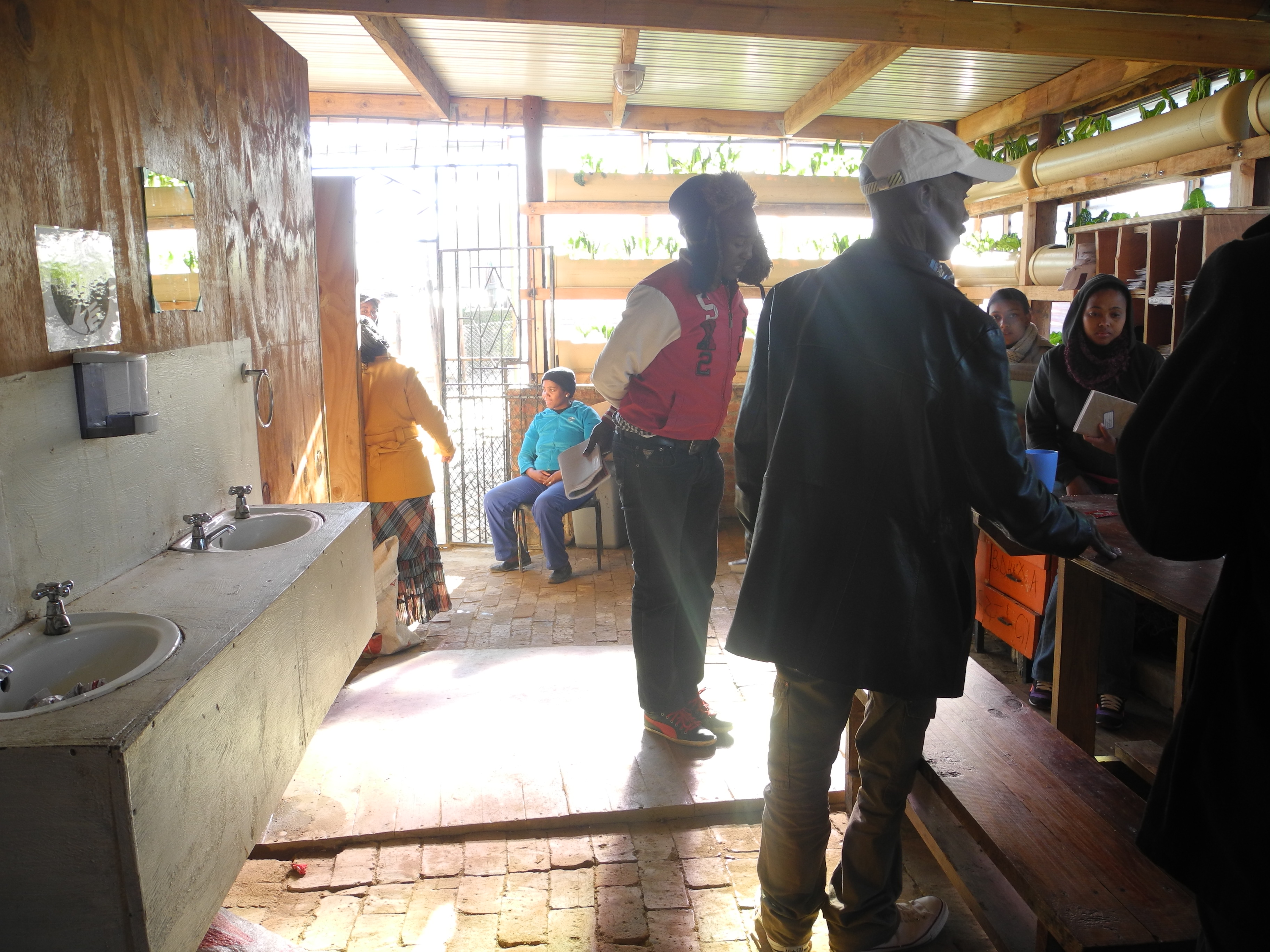
Interior view of Langrug’s WaSH facility


DSCN7455

Courtyard in BM section

Shared Sanitation in Mtshini Wam & ongoing re-blocking in Flamingo

The visit to Mshini Wam provided valuable lessons for the visitors – particularly in the field of funding and engaging the local authority. The visitors took special interest in understanding how Mtshini Wam managed to convince some residents to share toilets on a cluster basis while others had single toilets. The challenges relating to communal toilets were thoroughly discussed.

“The main idea was to have single toilets but due to the number of shacks and the limited space, the plan was diverted in order to accommodate communal toilets. The maintenance and cleaning of the toilets depends on the cluster groups.”

The visitors concluded their site visits in Flamingo Crescent, an ongoing re-blocking project. During a walkabout the visitors observed how shacks were broken down, how ground works were installed and how the new structures were erected.

Site visit in Flamingo during re-blocking

Site visit in Flamingo during re-blocking

Midrand community discusses the way forward

On the last day, Midrand leaders and iKhayalami discussed the sanitation options available to the community and the future steps each would imply. Community leaders agreed that re-blocking with one-on-one services would be the most realistic and feasible option.

“The ablution block won´t work for us because there is lots of friction. No one wants to wait for a long time when using the facility. Community blocks won´t work because some of the people are not responsible. They leave it without taking care.” (Community Leader, Midrand)

Midrand’s leaders agreed to start saving to upgrade their structures instead of solely blocking out. They hoped to convince the municipality to come on board. Re-blocking would be conducted in phases – identifying clusters for incremental re-blocking.

One major challenge in Midrand is the lack of space. Part of the settlement land is still in private hands – which causes major tenure insecurity. Together with iKhayalami the leaders discussed various solutions. While the community leaders resolved their questions, the next step is to share these with the rest of their communities when they return.

The exchange not only offered a learning space but also enabled leaders to grow their ability in community-driven upgrading,

“I have learned a lot by being a community leader and by being part of this exchange. It has built up my confidence and my professional experience. I was a very shy person before – now I can stand up and work for our development goals.” (Midrand community leader)

Midrand Consultation

Andy Bolnick (iKhayalami) discusses sanitation options with Midrand community leaders

“We Build Ourselves” – FEDUP Permaculture Exchange 2014

By CORC, FEDUP, uTshani Fund No Comments

By Nozuko Fulani (on behalf of FEDUP)*

We are Siyazakha Savings Group. We are a group of 26 members and first started to meet in 2010 in Siyahlala informal settlement in Philippi, Cape Town, where I live. We decided to form the savings group when we got introduced to the Federation of the Urban Poor (FEDUP). It was during a time that we were stuck on private land and did not know how to start organising ourselves. The savings group was a good way for us to improve conditions for ourselves and for our settlement. We chose the name ‘Siyazakha’ because it means ‘to build ourselves’. The name was my idea – it reminds us that we are the only ones who can build our families and ourselves. This is why we save.

P1020034

Visiting permaculture gardens at Makhaza Day Care Centre

DSCN6618

Nozuko Fulani

Over the years we have been saving towards different things. Some savings are long term and others are short term. This winter, for example, we are saving for paraffin heaters. Every member is going to save R150 from which we want to buy 3 heaters every month. We use long-term savings for things like school uniforms and groceries. This is a strong support because we don’t have to worry about taking loans. At the moment we have 15 active members and many new members joining, especially older mamas who are the most energetic.

As a savings group we also have a permaculture garden in my yard. I helped to develop this garden after I became a permaculture trainer in 2013 through uTshani Fund and FEDUP. At this time FEDUP and uTshani Fund introduced Project Permaculture as a new income generation and skills programme into the Alliance. Project Permaculture taught us the skills we need to grow fruit and vegetables. By growing our own food and reselling it, the permaculture gardens help us to make sure that we have enough food and can even make an income.  Many gardens are in crèches and day care centres. (Read this blog for more background on Project Permaculture.)

P1020056

Mama Darkie from Makhaza hosts the first day of the exchange

P1020048

Clearing the Grass

P1020018

Preparing the Soil

Three of us from Siyazakha savings group decided to do a permaculture exchange at Masizame savings group in Makhaza (Cape Town) from 24-26 May 2014. We chose Masizame savings group because we heard that many members were no longer active.  Mama Jim, Thembiso and I went around door-to-door and managed to collect 5 women from Masizame savings group for the exchange.

On the first day we explained that permaculture is about using all available materials and that there is no need to use chemicals or to buy anything. Permaculture believes that before you start with the garden you must design it and check up on things like rainfall and wind direction. Permaculture also uses the idea of mixing the vegetables we plant. This means that we plant onions and garlic next to spinach – because these plants chase away insects. It is also important to alternate the seeds between plants that grow above and below the ground.

On day two we went straight to the vegetable gardens at Makhaza Day Care Centre. As we were gardening I showed the women how to prepare the soil by using old grass called mulch and layering it with water and old food. This makes the soil fertile. We also cleaned some vegetable beds and replanted seedlings. We learnt by using what we can see and touch.

On the last day the women said that they were very excited because permaculture gardening is a method that they know from home. Through the permaculture exchange they could see how alive a savings group can be. If you see that something is happening and that a group is active, it is very motivating. The ladies were so excited that they collected some money to buy spinach, cabbage and herb seedlings for their own garden. They decided that now they wanted to meet as a savings group every Tuesday to catch up on the meetings they had missed.

*Photos taken by Nozuko Fulani, blog compiled by Yolande Hendler (on behalf of CORC)

P1020020

Day Care Centre in Makhaza


Upgrading Flamingo Informal Settlement

By CORC, ISN, News No Comments

By Yolande Hendler (on behalf of CORC)

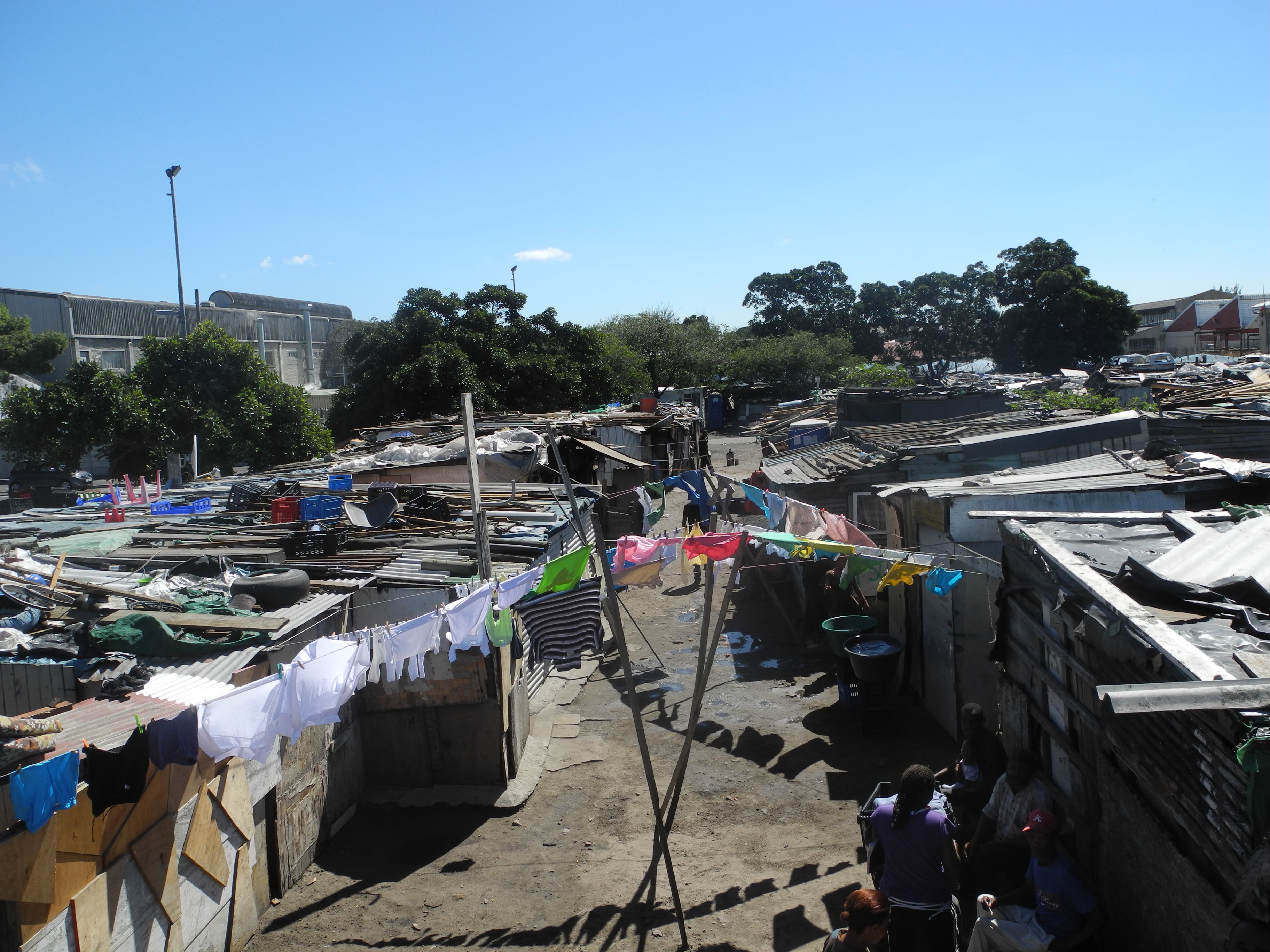
Tucked between Lansdowne’s industrial warehouses and timber depots lies Flamingo Crescent, an informal settlement situated on a street by the same name. On a walkabout through its smoke and dust-filled pathways, community leaders would tell you that Flamingo is home to about 450 people who reside in 104 structures. The entire settlement makes use of only 2 taps and 14 chemical toilets that are emptied three times a week. You would come across contained fires in tin-drums – because the absence of electricity means that fire is a central source for cooking and warmth.  Most structures – consisting of old cardboard, zinc, timber and plastic pieces – are roughly situated around a broad u-shaped pathway that is intersected by smaller, narrow footpaths.

This picture is about to change as Flamingo community goes about upgrading its settlement. Since its first engagement with the Informal Settlement Network (ISN) in 2012, the community has been preparing for re-blocking and – in partnership with the City of Cape Town – is set to receive one-on-one water, sanitation and electricity services.

1. Overview 2

Aerial view of Flamingo


Fire used for cooking

Fire is used for warmth and cooking

Mobilising the community

The community steering committee recounts how the first people arrived in Flamingo in 1992. Many had previously resided around the M5 motorway in Cape Town. Others had been living under Lansdowne Bridge. During the first meetings with the community, ISN introduced the ideas of informal settlement upgrading and re-blocking. It explained how communities could drive their own development processes through making savings contributions, joint planning and implementation. ISN representative, Terence Johnson, emphasises the importance of the community-led process, particularly in Flamingo, where “people had given up hope”.

“When we met with ISN it was the first time we got a partner to help us change our circumstances. After we linked up with ISN and CORC the community decided to elect a new steering committee so we could get better organised and get a better life for ourselves”

(Mark Solomons and Chirne Arnold, Steering Committee Members)

General Community Meeting in Flamingo

General community meeting in Flamingo

Savings, Exchanges

During a general community meeting the steering committee shared the ideas of upgrading and re-blocking with the community and explained that every community member needed to make a 20% contribution to their own re-blocked and upgraded structure.  The community’s response was initially skeptical because they had expected to receive government-subsidized housing.

“But through going on exchanges the community slowly changed its mind. We saw examples of a re-blocked settlement with upgraded zinc aluminum structures in Sheffield Road and Mtshini Wam as well as the one-on-one services for every upgraded structure in Kuku Town”

(Chirne Arnold, Flamingo Steering Committee Member)

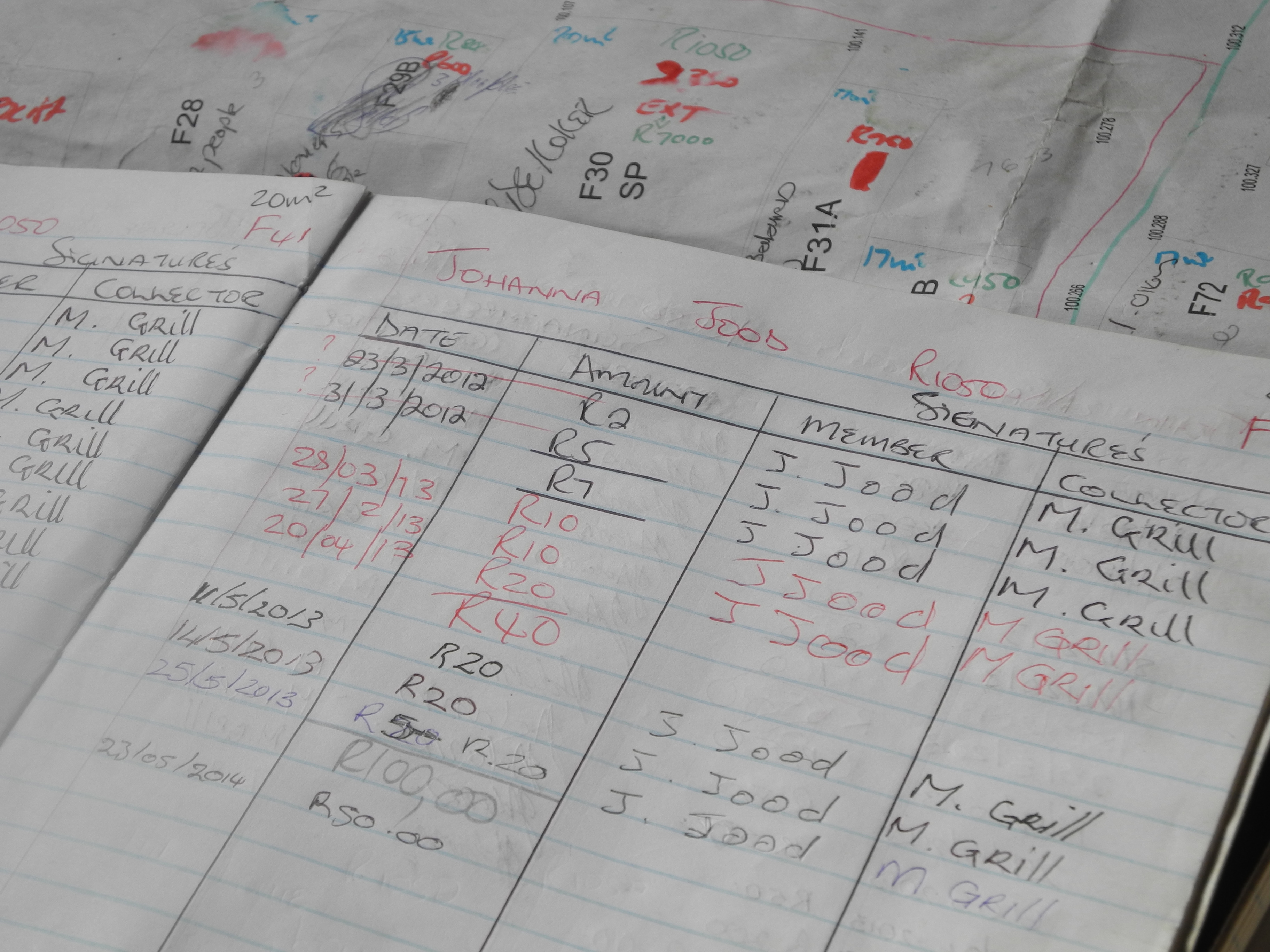
The community began saving in 2012 and to date has saved about R42 000. Each payment was made to the treasurer of the steering committee who recorded each transaction in the community savings book and counter signed the community member’s personal savings book.  As the majority of Flamingo’s population is old and unemployed (50%) the collection of daily savings proved to be a challenge. Nevertheless,

“Some community members like Ouma Sarie have almost managed to save the entire amount. She started with one packet of cigarettes and sold each cigarette one by one. She has saved R860 to date and only has another R200 to go.”

(Elizabeth Rantoetse, Flamingo Steering Committee)

Other community members saved some money through working. Those that were not able to save anything are set to receive short-term employment during the construction process through the City’s Expanded Public Works Programme (EPWP).

DSCN5756

Flamingo Steering Committee and ISN Representatives. From front left to right: Melanie Manuel (ISN), Elizabeth Rantoetse, Jasmine Louw, Lenrika de Koker, Chirne Arnold, Terence Johnson (ISN), Mark Solomons

DSCN7127

Community documented savings

Enumeration, Planning and Partnership

Flamingo’s enumeration took place in April 2012. Over a period of one week, community members, supported by the Alliance, gathered social and demographic data about their settlement. This enabled the community to gather information about Flamingo’s population, the number of structures and the exact extent of water and sanitation amenities. The enumeration also gathered details on the extent and spread of employment as well as the reasons for moving to Flamingo. During a planning studio with students from the Cape Peninsula University of Technology (CPUT) and CORC technical staff in 2013 the community surveyed the site, designed its re-blocked layout and verified its enumeration results. Later that year the community was joined by students from Worcester Polytechnic Institute (USA) who assisted in conceptualising plans for a crèche and a play park.

Flamingo is one of several pilot projects supported by the City as part of a broader commitment the City made in 2012 to support the upgrading of 22 partnership projects. For more background click here. Following the 2012 agreement, the City, Alliance and Flamingo community met in a number of partnership meetings. The enumeration acted as a powerful entry point to negotiating an improved layout and one-on-one service provision. So far, the main sewer lines have been laid and two clusters of structures have been cleared and are ready to be re-blocked. As implementation continues, Flamingo community continues on-site meetings with City officials to discuss details and project developments.

Auntie Marie, Flamingo community leader, reflects on the road thus far:

 “If it wasn’t for ISN, I don’t know where we would be. Through ISN we were introduced to the City and we got a partnership. We started thinking, ‘Now something is going to happen’. Flamingo is going to be re-blocked!”

CORC will continue to document project developments in future posts.

DSCN6554

City of Cape Town site meeting with steering committee

DSCN6124

Ground markings for laying pipes

2014-04-24 10.53.58

Earth works begin

DSCN7079

First clusters are cleared. Preparation for paving central pathways.

DSCN6143

First upgraded structure

DSCN6546

Auntie Marie (Flamingo Community Leader) and Nkokheli Ncambele (ISN Regional Leader)

2014 UCT – Europe Community Studio: Spatial Development Framework

By Academic, CORC, ISN No Comments

By Thandeka Tshabalala (on behalf of CORC)

Over the last four months Europe community members and Masters students of Urban and Regional Planning at the University of Cape Town (UCT) collaborated on a joint planning studio to address some of the community’s most pressing concerns. Together, they began by conducting a site analysis and researching the opportunities and constraints presented in Europe. This research and site analysis led to developing concepts for in-situ, incremental upgrading projects. Read more about the concepts and the first developments of the studio here. The students then split into three groups and used these concepts to produce spatial development frameworks (SDFs), which act as a guiding document on the future development of Europe and surrounds.

Together with Europe residents the students recently presented their proposed SDF’s to their classmates and to City of Cape Town officials.  All three SDF’s had underlining themes, which were

1) Maximising the use of existing infrastructure

2) Developing activity nodes linked to existing major business and transport nodes whilst maintaining the transit character of the main spine (Klipfontein Road)

3) Increasing socio economic opportunities in Europe.

These proposals fittingly introduced the concept of incremental settlement upgrading.

SDF1SDF2

The SDF in summary

1. Creating cultural and ecological nodes

  • The site analysis revealed the presence of several aquifers and wetlands on the site and along Klipfontein Road. In order to protect and enhance Europe’s scenery this natural biodiversity could be joined with pedestrian routes to attract different users to the site.
  • The area around Europe contains several sites of recent South African history that could increase the area’s potential as a cultural node. By connecting to sites such as the Gugulethu Memorial 7 and cemetery and cultural tours to the Cape Flats, residents could increase their access to economic opportunities.

2. Property sales

  • Although residents in Europe do not have tenure security, Europe’s leadership has recorded an enormous amount of property transfer in the settlement due to the high demand for well located affordable housing. During a transaction, the leadership keeps certified identity documents of both parties. These serve as a proof of sale of one’s property. Even in their derelict state most shacks have sold between R10 000 to R15 000.
  • Through their engagement, the students picked up on the importance of location – in terms of one’s own shack and in terms of the settlement location as a whole. They therefore introduced the concept of re-blocking as an incremental approach to housing which would decrease the level of flooding, open spaces for the provision of basic services, communal spaces and spaces of interaction. Moreover, it would improve the quality of life in the whole settlement.
  • Many groups viewed re-blocking as a short-term strategy that could be implemented easily without displacing people. It would also provide residents with the opportunity to access short-term housing structures.

20140528_SDF3

3. Creating activity nodes

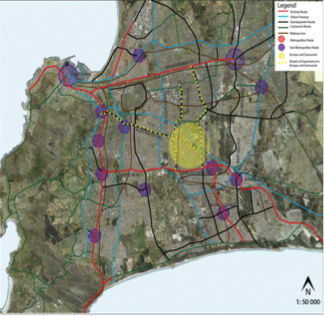
  • The Cape Town SDF sets out a hierarchy of different movement routes across the metropolitan area. It focuses on North – South and East – West accessibility. Europe’s location between an urban freeway (N2) and a development route (Klipfontein RD) means that Klipfontein Road presents a greater potential for activity nodes than the impenetrable N2.
  • Heideveld station also provides a critical link between the road and rail network, making this an important node for future development.
  • The analysis uncovered that the Golden Arrow bus route bypasses an important section of Klipfontein Road. This means that the residents of Europe and surrounds, who are already earn a low-income, need to pay for additional taxi transport to reach the closest bus and train station. Some residents also use the local transport ‘Amaphela ‘ due to the area’s high crime levels, which make walking unsafe.
  • As a MyCiti bus station will soon be implemented in Mitchell’s Plain, the intersection between Bocherds Quarry and Klipfontein Roads will in all likelihood grow as a transit node. It therefore has potential to develop into a transport interchange with supporting activities.

Throughout this discussion it was crucial to see Europe as a functional settlement in its own terms and thus limit the distance travelled to access jobs and other socio –economic opportunities.

4. Maximising existing neighbouring corridors

  • Much developmental activity has focussed on improving upcoming North-South corridors such as Parklands and Mitchell’s Plain. There is a need therefore to establish linkages to upcoming opportunities.
  • There is also a need to increase vertical connections to the settlement such as access to Voortrekker Road, which is one of the busiest roads connecting Bellville and Cape Town.

SDF5

5. Short term interventions – livelihoods and food security

  •  After several discussions with the community, the importance of access to employment and food security was clear. Residents felt that they needed to be able to support their households in order for them to start looking at broader issues such as upgrading.
  • After this discussion the community came together and collected their names and livelihood interests on a piece of paper. Those with common interests were then grouped together to begin discussing how they could start livelihoods programs. These included hair dressing, carpentry, gardening etc.  The students put together a pamphlet in isiXhosa with a list of organisations that assist in skills development such as Abalimi Basekhaya and The Carpentry Shop.

In the next phase of the studio the students will develop precinct designs of the settlement and write a short reflection of the studio as a whole. 

Designing with Communities: CPUT – Manenberg Studio 2014

By CORC, ISN, News No Comments

By Yolande Hendler (on behalf of CORC)

Manenberg community leaders and architectural students from the Cape Peninsula University of Technology (CPUT) recently collaborated on a six-week long planning studio in Cape Town (March-May 2014). The studio aimed to generate ideas around alternative housing design and delivery options that would address the needs of Manenberg residents within their existing challenges and ‘urban’ conditions.

DSCN6957

CPUT students with Manenberg community leaders Terence Johnson, Melanie Manuel, Na-eema Schwartz & Errol Snippers (left to right)

Manenberg

Manenberg was established in 1966, during a time of forced removals when the apartheid government relocated low-income coloured families from District Six and other parts of the city to an area known as the Cape Flats, 20km away from Cape Town city centre.  During Manenberg’s construction phase in the late 1960s it was classified as a ‘sub-economic housing development area’. Although the design and structures of these semi-detached houses and project-like flats differed, this term indicates that most did not have ceilings, inside water or doors to their rooms (Reference). As construction continued into the mid 1980s, other buildings and social amenities sprang up. Many people currently live in backyard dwellings. Along with experiencing overcrowded living conditions Manenberg’s communities are continuously exposed to high crime and gangsterism.

Screen Shot 2014-05-20 at 4.20.36 PM

The studio brought together about 40 students from CPUT’s Department of Architectural Technology and Manenberg community leaders who represented the Manenberg Slum Dwellers, the Movement for Change, the Backyarders Network, the Federation of the Urban Poor (FEDUP) and the Informal Settlement Network (ISN). The studio was facilitated by ISN and supported by the technical team of the Community Organisation Resource Centre (CORC).  For more background on ISN-affiliated communities in Manenberg and backyard dwellings click here.
ISN representative and Manenberg community leader, Melanie Manuel, explained that the studio offered an opportunity for Manenberg residents to come up with a better proposal to address overcrowded conditions and inadequate basic services. For the students the studio offered valuable exposure to inclusive planning practice. They were tasked to assist the community in the design and planning of housing and the related community ‘place’ layout.  This required students to work closely alongside community leaders to explore innovative and relevant concepts that would generate flexible solutions. Mizan Rambhoros, Senior Lecturer at CPUT, explained that

“Traditionally, architectural students work on hypothetical projects. This makes working with a community in a studio and involving a community in the design process a completely different scenario. In a ‘live’ project it’s not possible to follow a rigid process – this really opened the student’s eyes.”

IMG-20140520-WA0012

Sharing planning concepts with community leaders

The studio began with a site visit to Manenberg in which community leaders highlighted their primary concerns to the students – recurring floods, fires and security issues. Together, they identified the site they would engage with – the block between Red River Street and Red River Walk that experiences a high prevalence of crime and overcrowding. Students continued to meet with community leaders on a weekly basis, altering and adjusting their housing design and concepts according to the communities’ feedback.

“By working together with the students we could share our experiences and give them more in-depth input on what would work and what wouldn’t – especially because they were honest and open to criticism”

(Melanie Manuel, Manenberg community leader and ISN representative)

‘Incremental Growth’ and Final Presentations

On 9 May, the students presented their final design and concepts. Each group presented their understanding of the contextual and conceptual issues they encountered, designs of a detailed layout and a model of proposed housing units.  The idea of ‘incremental growth’ presented a common strand through all presentations. Several groups highlighted how external circumstances influence mind-sets and subsequently how people interact with each other. This caused them to ask: how can space facilitate a change in mind-set and interaction with people?”

DSCN6931

In responding to the presentations, Na-eema Schwartz from the Manenberg Backyarders Network, commended the students for addressing aspects that were highly relevant to community members – such as idle time and space, fire, flooding and security. In reflecting on the studio, Errol Snippers (Manenberg’s Movement for Change) shared his experience:

“These youngsters have opened my eyes to the way I look at buildings and safety features. Maybe they’ve learnt from us, but I’ve learnt from them too. In this short time we’ve gotten to know each other. I love their passion and drive and would love the kids in Manenberg to have the same passion”

DSCN6942

Errol Snippers (Manenberg Movement for Change)

By the end of the studio it was evident that ‘incremental growth’ was not only reflected in architectural concepts and designs. Even more so it was reflected in both community leaders’ and students’ reflections.

“The studio presented our first opportunity to work on a ‘live’ project in which we needed to feed back our ideas to the community and think about what would be relevant to them.  At the beginning, some of us had quite a stereotyped mind-set. Working together with community leaders in the studio was a learning curve for us all. We now design and accommodate for people’s social situations because we understand them.  How do you design with communities? You have to become ‘part’ them”

(Nomfundo Dlamini, CPUT student)

The next step will see community leaders share the students’ work with the rest of their communities and establish how to use and implement the concepts and design. Such community-based, participatory planning practices contribute to harnessing local knowledge and packaging it into an action plan. In this way communities become key agents in their own development plans.

Official Handover of Kuku Town Re-blocking

By CORC, ISN, News, uTshani Fund No Comments

By Walter Fieuw and Yolande Hendler (on behalf of CORC)

Kuku Town before re-blocking

Kuku Town before re-blocking

Kuku Town after re-blocking

Kuku Town after re-blocking

There is a growing recognition that services need to be delivered to informal settlements in new ways. Such new approaches should aim at building community capacity through participatory planning, design and service implementation. Informal settlements are characterised by very different shapes and sizes, ranging from smaller inner city settlements located in residential neighborhoods to large sprawling settlements on the periphery of cities. Different approaches are needed to effectively transform these settlements into more dignified living spaces.  Working with communities is paramount to succeeding in upgrading initiatives. The re-blocking of Kuku Town is an example of an alternative approach to thinking through aspects of place, safety and security through improved settlement layouts, and better located services.

The South African Alliance and Kuku Town community celebrated the official completion of re-blocking on 29 April 2014. Community leaders welcomed delegates from ISN and FEDUP, NGOs such as CORC, iKhayalami and Habitat for Humanity South Africa (HFHSA), City of Cape Town officials from the Department of Human Settlements and the Councillor of Ward 32, Cllr. Derrick America to the hand over last Tuesday.

DSCN6393

ISN & FEDUP co-ordinators speak at handover

Verona Joseph, Kuku Town community leader, opened the ceremony by welcoming guests and sharing some of Kuku Town’s history and the process of community mobilisation. Diverse partners involved in the upgrading process held a variety of speeches that gave thanks, recognised and acknowledged the community’s achievement after three years of negotiations and preparations. ISN and FEDUP community representatives, Mzwanele Zulu & Thozama Nomnga, voiced the importance of continuing the relationships and partnerships, beyond the completion of re-blocking.  Cllr America echoed this sentiment and emphasised that upgrading a settlement is about restoring dignity. Every community member received a personalised ID card containing demographic information  – a symbol of having taken one step closer to reaching security of tenure. The ceremony therefore marked an important milestone for the community, who founded the settlement in 1985.

Cllr Derrick America (right) hands over ID card to community leader Verona Joseph (centre) with Salisha Lauton (left, Habitat for Humanity SA)

Cllr Derrick America (right) hands over ID card to community leader Verona Joseph (centre) with Salisha Lauton (left, Habitat for Humanity SA)

In the meantime, the City of Cape Town has formally adopted re-blocking as an informal settlement upgrading strategy. It is included in the City’s IDP and Urban Settlement Development Grant (USDG) budgets for the next five years. The strength of re-blocking stems from the central participation of community members in the planning, design and implementation of their settlement upgrade. Unless community members are seen as central participants in the design of their settlement, the exercise remains futile, and not responsive to local conditions. 

Invalid Displayed Gallery

2014 UCT – Europe Community Studio “The Beginning”

By CORC, ISN No Comments

By Thandeka Tshabalala and Yolande Hendler (on behalf of CORC)

Community members and students locate structures and amenities in Europe informal settlement.

Community members and students locate structures and amenities in Europe informal settlement.

On 19 February 2014, Europe community members welcomed about thirty masters students of Urban and Regional Planning from the University of Cape Town (UCT) to their informal settlement, which is located in Gugulethu, Cape Town. This first gathering kicked off a four month long ‘planning studio’ in which community members and students will work together to address some of the community’s most pressing concerns. The studio also aims to expose students to alternative planning approaches to urban informality. The Informal Settlement Network (ISN) facilitates and supports the community leadership while CORC offers technical support as the community and students develop plans for upgrading. Read more on the background leading up to the 2014 studio.

First meeting in Europe

Community members and students gathered in Europe’s community hall where ISN and CORC shared opening insights on the importance of community participation, mobilization and capacitation. Such an approach forms a solid foundation for planning community-relevant issues such as access to basic services and housing. Situated close to employment opportunities at the Airport Industria and the N2 corridor, Europe’s location is ideal for its residents. For this reason students and community members decided that it would be ideal to look at in-situ, incremental upgrading projects. In order to give students a more concrete idea of ‘life in Europe’ community members showed them around their settlement. This opened up a platform for both community members and students to reflect and share their expectations for the studio ahead.

Students' first visit to Europe.

Students’ first visit to Europe.

The purpose of the studio is two-fold: For the community, technical support around housing and upgrading are advantageous for engaging government. For the students it is advantageous to gain valuable experience in working in a highly collaborative and participatory environment around some of the most pressing issues in the city.

After the visit, CORC’s technical team joined the students at UCT in order to reflect before the next joint planning session with community members. Based on the students many impressions – for some it was the first visit to an informal settlement – a variety of ideas, concerns and suggestions arose. Some students related Europe to studies of urban informality in the global South, others explored how the meaning of boundaries in communities impacts opportunities and community interaction.  Some concerns related to the lack of public interaction spaces, lack of socio-economic activity and the need to value recycling as a source of income. Other students emphasized the importance of collaborative and participatory planning methods.  Towards the end, one of the students seemed to capture the general sentiment that

“We need to develop new sets of eyes to understand the logic systems, local assets and already present ways of doing things in Europe. We need to identify local systems. The community needs to identify its own opportunities”

Joint planning for action

The next session was an interactive one with a printed map of Europe. It was marked with some reference points, landmarks and amenities that would serve as a collaborative working document to gather information about the settlement from community members.  This meeting focused on sharing expectations and establishing specific issues the community wanted to address. Furthermore, it established where students’ interests and abilities aligned with community priorities.  With great excitement, students and community members located their homes on the map, marked off the boundaries of Europe and identified central spaces. Community members also expressed that they would like the studio’s incremental projects to support their long-term vision of attaining housing. This focus is linked to the question: “how permanent is our temporary?” As communities wait for permanent housing, there is a need of assisting well located settlements such as Europe to upgrade, but not lose sight of the long term vision.

DSCN5652

Interactive mapping at UCT

After several visits to Europe, students expressed the significance they perceived in planners moving away from physical planning to focus on the people they are planning with, i.e. understanding their background and socio-economic context within the larger context and potential of the city. The students thus based their analysis of Europe community on reinforcing socio-economic opportunities.

Through engaging with residents’ already present coping mechanisms students researched opportunities, constraints and concepts for future action. The opportunities they presented included access to employment, recreational spaces, spaces of interaction, education and small businesses. The identified constraints comprised flooding, crime, physical and social barriers, pollution and poor soil quality affecting food production. Together, community members and students developed working groups that respectively looked at socio-economic issues, transport, housing / land / tenure issues and water, sanitation and storm water services.

Working Groups 2

A working group in Europe

The working groups then identified more concrete concepts:

  • Socio-economic opportunities around Klipfontein Road

Klipfontein Road was presented as a main artery of opportunity as Europe’s main entry point and connecting point to other neighbourhoods. The industrial area at the airport was presented as a potential source of employment. A further point related to taking advantage of existing business that represent high activity nodes.

  • Easing access to public transport routes

This was particularly relevant due to the community’s reliance on pubic transport.

  • Potential upgrading and re-blocking
  • Strengthening food production

The focus would lie in increasing food security whilst decreasing poverty levels.

  • Overcoming barriers to neighboring communities

This would facilitate greater interaction between communities.

During the presentation students emphasized the knowledge they had gained from the community in developing these concepts,

“ We regard the community as experts, they have all along been able to use their human architecture to deal with the physical constraints of the space they live in.”

The next phase of the studio will comprise developing a spatial development framework. CORC and ISN will continue to share the studio’s upcoming developments.