Tag

SDI Archives - Page 3 of 4 - SASDI Alliance

Launch of Upgrading at Flamingo Crescent with Cape Town Mayor Patricia de Lille

By CORC, FEDUP, iKhayalami, ISN, Press No Comments

Authored by CORC

“People said Flamingo Crescent [Upgrading] will never happen. But today is here and this is the proof that it has happened – one cannot do it alone we need to work as a collective!”

Melanie Manuel, Informal Settlement Network (ISN) Co-ordinator

Mayor of Cape Town, Patricia de Lille, with Flamingo Crescent Community Members, SA SDI Alliance, PFO's and City Officials

Mayor of Cape Town, Patricia de Lille, with Flamingo Crescent Community Members, SA SDI Alliance, PFO’s and City Officials

Last week’s upgrading launch at Flamingo Crescent informal settlement celebrated the completion of re-blocking, installation of water, sanitation and electricity services for each of Flamingo’s 104 households, the unveiling of Flamingo’s first formal street names and opening of the settlement’s own crèche, Little Paradise. Moreover it marked a milestone in an ongoing upgrading process, showcasing what is possible when communities, intermediaries, governments and stakeholders form partnerships.

Delegates from community organisations and networks, the Mayor of the City of Cape Town, delegates from various government departments, ward and sub-council politicians, NGOs and support organisations gathered in the Lansdowne Civic Centre from 11:00 on Monday 10 February.

The re-blocking project is lauded as a successful demonstration of community-led, participatory planning, collaborative implementation and improvement of informal settlements. The uniqueness of the project was that despite the settlement’s density no one was displaced and grossly inconvenienced during the implementation of upgrading 104 structures.
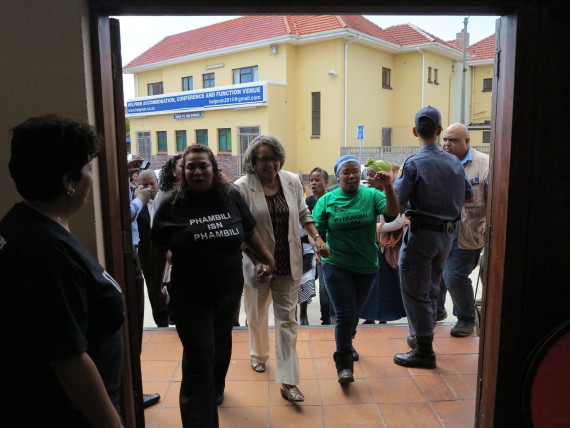
ISN & FEDUP welcome the Mayor to the launch at Lansdowne Civic Centre

ISN & FEDUP welcome the Mayor to the launch at Lansdowne Civic Centre

First engagements around Flamingo Crescent 

First engagements began in 2012 after the City of Cape Town signed a Memorandum of Understanding with the SA SDI Alliance around joint community-led upgrading of 22 informal settlements, of which Flamingo Crescent is the third, having built on the experiences of Mtshini Wam and Kuku Town. It differs from the previous two in the severity of its socio-economic challenges – high levels of crime, unemployment, violence and poverty. Given these circumstances the Alliance’s Informal Settlement Network (ISN) facilitated implementation and engagement between the City and the community.

Melanie Manuel (Flamingo Crescent ISN facilitator) shared,

“When we started the partnership with the City of Cape Town in 2011 in Vygieskraal it was a day of celebration and no one knew the hardships that would lie ahead. As time went on we realised we fundamentally believe in community participation, a bottom up approach because we know communities understand their settlements best.”

Read more background here.

Flamingo Before Upgrading

Flamingo Before Upgrading

The Launch: Messages on Upgrading and Inclusion in Services

At the launch, the first speaker, Councillor Anthea Green shared,

“Since 2012 I have said that we need to upgrade Flamingo Crescent, despite resistance from the rate payers and residents’ groups. We were committed to work with the community, and now this is a transformed settlement”.

Informal settlements not only face substandard basic services like water, sanitation and electricity but are also cut off from functions of city administration such as receiving a residential address. The re-blocking project allowed the City and the Post Office to give Flamingo Crescent street names and addresses, after the community made this requirement upfront in their development plan.

Gerald Blankenberg, regional director of the Post Office, said that the Post Office Act and other regulations require the post office to expand addresses to underserviced communities.

“Informal communities are often times socially and economically disconnected from basic administrative functions, and therefore a residential address will give the Post Office an opportunity to serve the community with dignity”, he said.

In the keynote address, Mayor Patricia de Lille emphasised the significant role of Flamingo community’s steering committee, the Alliance’s ISN and Community Organisation Resource Centre (CORC) in the success of the project. She, however, expressed concern about the slow pace of project implementation, emphasizing the need to boost municipal and community capacity to ensure the roll out of more projects in the City’s 200 informal settlements.

“The aim of re-blocking is the improvement of informal settlements while people wait for a housing opportunity”, she observed.

In closing of the ceremony, the Mayor handed over certificates of tenure to community members, ensuring formal recognition of residence and tenure security.

Mayor, Patricia de Lille with Flamingo Community Leader, Maria Matthews

Mayor, Patricia de Lille with Flamingo Community Leader, Maria Matthews

The Impact of Upgrading : Before and After

Before re-blocking, the community of 405 residents had access to only 14 chemical toilets (of which 7 were serviced) and 2 water taps. There was no electricity so that contained fires in tin drums dotted the settlement’s dusty pathways. The community was especially concerned about the safety of its children playing in the busy street.

Re-blocking restructured space in the settlement, opening courtyard areas and clearly designated access roads, enabling the City of Cape Town to install individual water, sanitation and electricity services per household. What sets Flamingo apart from previous projects are its paved pathways, with official road names as well as the construction of a crèche.

The community contributed 20% to the cost of its structures through community-based daily savings. During the implementation phase, 20 jobs were created through the Expanded Public Works Programme.
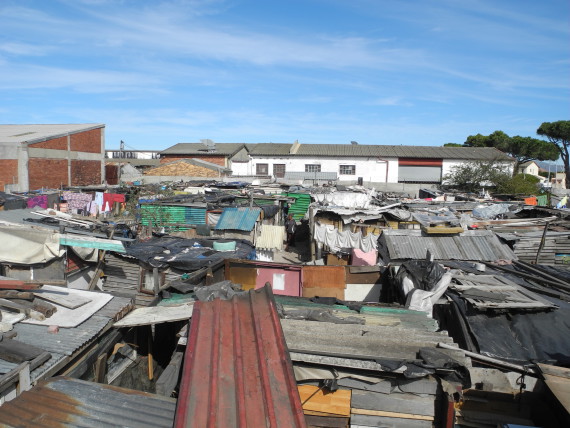
Before upgrading
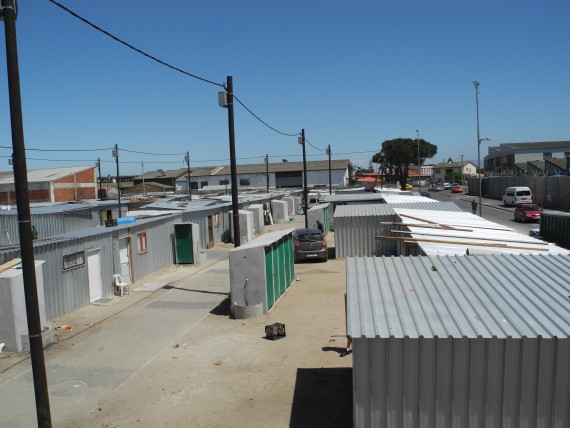
Before upgrading

After upgrading

After upgrading

Into the Future: Community voices on Partnership and City Fund

“Since 2010 we have been thinking about improvements in our settlement. This is when we got in touch with ISN, who introduced us to CORC, and we then made a partnership with the City [of Cape Town] We explained what we wanted from the city – our own taps, toilets and electricity. But we needed to come together and draft our own plans”.

(Maria Matthews, Flamingo Community Leader)

Through the SA SDI Alliance the community additionally partnered with several organisations. iKhayalami supported the community, ISN/FEDUP and CORC around training community members and top structure construction. The community established the re-blocked layout and community-based maps in partnership with students from Cape Peninsula University of Technology and support staff from CORC. With the support of Worcester Polytechnic Institute (WPI, USA) the community drew up plans for the crèche. Habitat for Humanity South Africa contributed to construction by supplying the roof sheets and windows. The Centre for Early Childhood Development (CECD) donated funds to build the crèche. CECD will also support around the training and registration of the crèche.

From Melanie’s speech it was clear,

“This project is successful because of the methodologies we use. We allow communities to do their own designs. The community also made a [financial] contribution [in a settlement] where 95% of community members were unemployed. How do we change the mind-sets of people who are still waiting for adequate housing? Let’s change the way we are living now while we are waiting for housing to come.”

(Melanie Manuel, ISN Facilitator)

Melanie Manuel, ISN Co-ordinator in Flamingo

Melanie Manuel, ISN Co-ordinator in Flamingo

As important as settlement improvement is in itself, the methodology is just as significant. Moreover, Flamingo Crescent serves as a precedent for informal settlement upgrading on a larger scale. The day ended with the community leading the Mayor through their settlement, unveiling Flamingo’s new street names and officially opening the Little Paradise crèche together. It is Melanie Manuel’s closing words that speak of the future:

 “We need to look at a holistic plan for the metro. Let’s look at how we can reach basic services much quicker and how we can scale up. The Alliance projects do not only focus on reblocking but on basic services in every form. The Alliance has designed a City Fund with which communities can directly access money for upgrading in Cape Town. In Flamingo the Aliance’s Community Upgrading Finance Facility (CUFF) helped us match the 20% that each community member contributed to their structure. This kind of facility on a city-level will go a long way – we challenge the City to continue partnering with us and match our contributions in the City Fund!”


YOUTH: Young. Organised. United. Talented. Hardworking.

By News 2 Comments

By Skye Dobson [Cross posted from SDI Secretariat]

beach3_big

“Poor people have me. Rich people don’t need me. If you eat me you’ll die. I am worse than a demon. Who am I?” 

This was the riddle Rogers, a youth member of the South African SDI Alliance posed to youth from across South Africa, Uganda, Kenya and India at the opening of a peer-to-peer exchange held in Cape Town, South Africa for youth activists last week. He put his phone on the table and said that whoever solved the riddle in 3 minutes would get the phone. To honor the riddle, I will tell you the answer at the end of the blog. 

Unfortunately the phone deal has expired.

“As a girl, I’m always told things happen because of fate. But it’s the things I do, not luck, that determine my fate. So we must forget about fate, and move forward.”

Shikha, India

prayasam_big

The exchange was inspired by the youth activism of Prayasam, an Indian organization founded in 1999 to enable children to participate in the decisions that affect their lives. When Shack/Slum Dwellers International (SDI), an international network of slum dweller federations in 33 countries, learned of Prayasam’s work and the shared strategies used to organize communities to profile and map their settlements as a starting point for negotiations with authorities, it was agreed that the two organizations would do well to promote peer-to-peer learning between youth members and other youth groups trying to make change in their settlements. With support from Sundance Films, SDI, Prayasam, The Community Organization Resource Centre (COURC), and SDI hosted a 6-day learning exchange for youth from informal settlements in Uganda, Kenya, South Africa, and India.

“I taught myself how to share and how to love. The River of Life showed me you can solve your problems as a group.”

Lucky, South Africa

riveroflife_big

A River of Life exercise on the first day – led by the Prayasam youth – kicked off the exchange and supported reflection by the youth on the highs and lows of their lives and their goals for the next three years. The youth drew and presented their personal rivers to the group. The stories were touching, referencing hardships such as the death of family and friends, early pregnancies, gang membership, and lost opportunities owing to a lack of financial resources. On the high points of their rivers, however, they explained the pride experienced when they got into or performed well at school, found spiritual direction, became members of youth groups, and took part in exchanges with other youth both locally and abroad. While their highs and lows were described in individual terms, it was fascinating to note that their aspirations for the future were almost entirely group-centered. The youth spoke of wishing to bring their communities together, of wanting to empower their peers, about increasing the membership and impact of their youth groups, of setting a good example to children, and of advocating for the rights of the young and the disadvantaged. This exercise set the stage for the youth to engage each other more openly. Instead of the standard introductions of formally structured peer-to-peer learning, these introductions stripped the process down to authentic fundamentals: Who am I? Why am I here? How did I get here? It was clear that the process was as much about answering these questions for oneself as it was about sharing it with others.

“The film showed that you’re never too young to make change.”

Sefiso, South Africa

A key inspiration for the youth exchange was a film called The Revolutionary Optimists, which follows Amlan (founder and Director of Prayasam) and three of the children he works with, as they become agents of change in their communities. The film not only captures the incredible work of Prayasm’s children, but the realities of life in Indian slums. On the second day the youth were able to see the film at a community center in Langa as well another from Uganda, The Boda Boda Thieves, which captures some of the realities of life in Uganda’s slums. The feedback from the youth was thoughtful and insightful. They were quick with their praise for the Indian youth and concluded that one is never to young to make change in his/her community. They expressed the similarities they saw between conditions in India and their own countries – particularly related to poor sanitation, teenage pregnancy, and child labor. They joked of the celebrities in their midst! From The Boda Boda Thieves film they concluded youth must be very careful when it comes to peer pressure and a desire to get money quickly. They all had stories about youth who had succumbed to peer pressure and “gangsterism” and they made references to the contributing factors. They discussed the importance of reaching out to parents so that they can support their children to join youth groups and take part in productive afterschool activities as an alternative.

“Statistics might be different from experiences.”

Sibo, South Africa (Sizakuyenza)

IMG_2104

IMG_2106

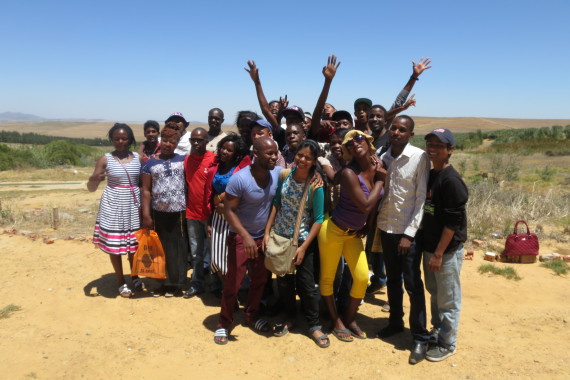
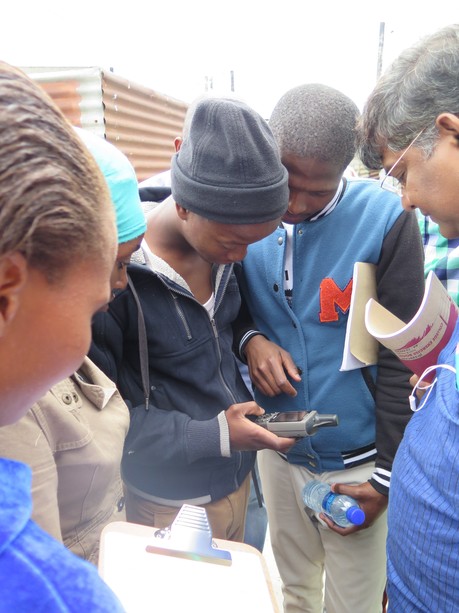
A unifying strategy across many of the groups is the collection of data by youth in order to plan for change and negotiate with other actors – often the State – to implement solutions. Both Prayasam and SDI affiliates profile slum settlements, but their approaches are slightly different and the youth were able to share and reflect on each others strategies, achievements, and challenges. In the spirit of Learning-by-Doing, the youth went to a settlement in Nginalendlovu in Khayelitsha anda settlement profiling exercise which was facilitated by community members and supporting professionals in the South African SDI Alliance. Half the group used GPS devices to map the boundary of the settlement, while the other half conducted the socio-economic profile with the local community, while trying to squeeze into all available shade under the awnings of shacks. Rogers, a youth member from Kwazulu Natal administered the questionnaire with infectious enthusiasm and finesse.

Community members were guided to discuss and generate information on their settlement, from the origin of its name, to issues of tenure security and services, to the biggest challenges facing the community. They expressed major concerns with water supply, flooding, and crime, but they were unanimous that the biggest threat to their community at present comes from rats. One gentleman explained that his cat was eaten by a rat and that children are attacked and one child’s hand was bitten off. It is important to note that a problem with rats was not amongst the check boxes on the questionnaire. This highlighted Rogers’ skill as a profiler and the need to allow sufficient time for communities to make less structured contributions throughout the profiling process. The community was eager for the compiled information to be returned to them and the discussion about their issues to continue so that they can begin to generate solutions.

“…everything in nature has its own reason.”

Rogers, South Africa

IMG_2271

IMG_2248

The reflections from one of the youth on his visit to Path Out of Poverty (POP) on Goedgedacht Farm visit were so poignant. Through a long term, holistic, programme, POP builds confidence and skills in rural youth and offers opportunities for self advancement and for making a real contribution to their own communities. Rogers said he was “blown away by POP” and that he learned “everything in nature has its own reason. You can learn from nature if you’re patient. If you watch it, it will teach you.” One could argue the same is true for these youth, who clearly have so much to teach the world about their realities and how they believe change is possible. Within them, like nature, the solutions can be found for many of the world’s ills. Salim, one of the Indian youth, said the way poems and song are used to “manage the kids” at the Goedgedacht Farm will really help him to strengthen his leadership at the preschool in his community, while Kamalika from Saldanha was inspired to go back to her community and work with small children.

“They come in wrecked and leave as a piece of art”

Sibo, South Africa

img_0256_big

On Wednesday the youth visited Sizakuyenza to see youth projects, including a recycling project, health services, and a women’s home called House of Smiles. The local federation designed Sizakuyenza to serve as a basket of services for the federation saving groups and their wider communities. The recycling initiative (Solid Waste Network) provides employment for youth and supports the municipality to keep the area clean. Many of the youth from South Africa and the youth from India were particularly interested in the waste project, as they have plans to operate waste management businesses of their own.

At House of Smiles the youth asked many questions about the women who live in the shelter and whether they were safe from their husbands once inside. They were interested to hear about the close relationship the center maintains with the police and the confidence they place in them. Many of the youth harbor suspicions about police, but the House of Smiles team has developed a close working relationship with them, which makes their premises and inhabitants feel secure.

IMG_2377

In the afternoon a youth choir by Ubuhle Bendalo, a youth group of about 90 members based in Makhaza, Khayelitsha. The group meets most days after school and uses the performing arts to develop each other’s artistic skills and address challenges in their community. The song, dance, and poetry were moving and had a number in the audience trying to blink away tears. The youth in Makhaza work hand-in-hand with the local police to fight crime and youth participation in gangs. A police officer gave testimony that the settlement has been transformed by the presence of the group. For Shikha, from Prayasam, the afternoon with Ubuhle Bendalo was the highlight of the week – she was infected by the group’s vibrancy and wanted to take that energy and vibrancy back home.

“At first I was not about to swim. I don’t know how to. But when I heard those guys explaining, I decided to try.”

Allan, Uganda

Thursday was a day of physical exertion! The day began with some training at the Future Champs Boxing Gym in Philippi and ended with surfing in Muizenberg. The two events highlighted the powerful role sports can play in the process of team and community building, the humbling and unifying effects of learning something new, and the power of fun in managing some of the stresses of daily life. Manish, from Prayasam, was inspired to take some of the tools of the Future Champs (boxing) and Waves of Change (surfing) programs back to the Sports Academy he is part of in India. Many of the youth had not seen the ocean before. Many could not swim. Yet, they surfed! They laughed in the “salty water” with their faces plastered with white sunscreen and fearlessly took on the challenge.

IMG_2458

IMG_2513


“And to those who sent me here: I will make you proud.”

Sifiso, South Africa

On the final day of the exchange the youth had a reflection on the week and all agreed they had become family. With sincerity they told each other how much they would miss being together and pledged to stay in touch and provide continuous support via social media as much as they can.

And the answer to the riddle? It’s “nothing”. Poor people have me. Rich people don’t need me. If you eat me you’ll die. I am worse than a demon. Nothing.

Though the riddle was a whole lot of fun, the week’s exchange made it very clear that poor people don’t have “nothing” at all. Though poor, the youth showed they have authenticity, compassion, innovation, and commitment to improving their own lives and those of their communities. Exchanges such as these will inspire changes within individuals and communities in ways we cannot possibly predict. But, this is the exact strategy (as much as it sits at odds with increasingly logframe and indicator obsessed NGOs): Bring the people together and let them create new knowledge, develop their own insights, reaffirm their own value, develop new strategies, and then figure out how to implement.

“I am not the same person I was before I came here.”

Patrick, Kenya

Urban Livelihoods in Cape Town

By CORC, ISN, SDI, Youth No Comments

By Ariana K. MacPherson (cross posted from SDI blog)

A different approach to livelihoods 

A national industry which offers public-sector employment to 50,000 economically disadvantaged beneficiaries should have a profound impact on the livelihoods of poor informal settlement dwellers. The Department of Environmental Affairs Working for Water Program (WfW) is therefore a primary target for Community Organisation Resource Centre’s (CORC) engagement of the state. In 2002, CORC managed 25 teams in all nine provinces to work at a staffing model which sustainably supports employees. However, due to the under-budgeted nature of the program, the majority of these teams disintegrated. The only remaining teams were privately led rather than collective in structure, with profits directed primarily to the supervisory contractor, rather than the labourers. Currently, most WfW teams operate under this model, under which the vast majority of beneficiaries earn minimal wages and secondary benefits of social development and training opportunities.

Nandipha & Noziphiwo team up to expand the community garden at the Masiphumelele Soup Kitchen

Nandipha & Noziphiwo team up to expand the community garden at the Masiphumelele Soup Kitchen

This year, CORC assembled a new team in the Western Cape based on an ambitious project: to clear neglected private areas on demanding terrain bordering the Province’s most-visited nature reserve. This effort in collaboration with nearby private landowners attracted the attention of WfW once more. Affected communities near the reserve have limited employment opportunities due to their isolation and have minimal collaboration with the Informal Settlement Network (ISN) and Federation of the Urban Poor (FEDUP).

With the help of existing contacts at Non-Profit organisations in the settlements of Masiphumelele, team leaders were drawn from youth SDI-employees from Phillipi. Young women from Masiphumelele in the South Cape Peninsula were hired as general workers with the potential for promotion conditional with training. This report follows their story.

Meet the team: youth from Masiphumelele and Philippi 

Ayanda The seeds of this project started when Ayanda Magqaza was a sprightly fifteen-year-old. He would leave his home in Phillipi to stay and work in the South Peninsula for the weekend. Agile and flexible, Ayanda quickly learned to clamber over the boulders and climb the gum trees at Castle Rock. Local landowners would hire him, first to help in the garden, and eventually to man a chainsaw alone in the depths of the forest all day long. As a CORC employee, Ayanda was the first person the project leaders called to begin working on the mountain, with the hopes that he would soon be able to lead an entire team to assist him. Within a few months the imagined team materialized, largely due to his illustrative, personal and persuasive communication abilities. When project management was absent for two months in mid-winter, Ayanda took the helm and continued to recruit new team members, coordinate logistics for certified training sessions, and lead the team to clear vegetation on the mountain slopes.

Anela All roads in Masiphumelele lead past the Pink House, a community services center managed by Catholic Welfare Development (CWD). While CORC was recruiting for the team, CWD opened their doors and provided a number of applicants. Most were men, with some construction experience; the women seemed to be looking for a desk or service job, something with a roof. But Anela Dlulane stood out, highly recommended by CWD as a lead volunteer there. During the first trial on the mountain, when the slackers stayed back to chat and move slowly, Anela kept pace with the young guys as they stacked body-length branches along the hillside. It was hard work compared to her previous job as a typist at the Department of Transport, but Anela stuck with it, with the hopes of one day fulfilling an administrative role for the CORC team.

Anela was an unpaid volunteer at the Masiphumelele Pink House when she started with CORC in June. Now she earns a wage on the CORC team, partly to help restore the Pink House community garden.

Anela was an unpaid volunteer at the Masiphumelele Pink House when she started with CORC in June. Now she earns a wage on the CORC team, partly to help restore the Pink House community garden.


Roger Prior to joining the team, most of Roger Janse’s days were indoors at the Slum Dweller International (SDI) offices. The office valued his polyglot fluency in Cape Town’s three main languages, but his studies were at a standstill and he was not sure how to advance his career. He aspired to obtain his Driver’s License and begin work as a driver for SDI, but despite repeated courses, he did not pass the test. Roger had helped Ayanda in the South Peninsula before and decided to try it again. The mountain revealed itself to be an exciting place, satisfying his interest in wildlife like puff adders and cape cobras. Roger began work as a stacker, but by the end of winter had attained his Chainaw Operator’s certificate, and qualified for three other courses. Just two months later he held his long-awaited Driver’s License in his hands, then doggedly pursued an additional commercial license. Due to his determination, the team now depends on Roger in his role of back-up driver to transport them and their equipment from home to work.

Determined to expand his skill set, Roger exceeded available WfW courses and attained his commercial Driving License

Determined to expand his skill set, Roger exceeded available WfW courses and attained his commercial Driving License

Sinjuvo She came prepared. She brought with her a record of several years of herbicide applicator experience, a list of contacts from her old team, and even wore here official yellow WfW shirt to work. At some point she had left her previous WfW team and her skills and training were left idle until she crossed paths with the SA SDI Alliance in Masiphumelele. Gudiswa Mathu may be older than the average worker, but her experience helps her know how best to contribute. When the team was still in its early stages, struggling to find women who were prepared to do labour-intensive tasks day in and day out, Gudiswa knew who to call. Within two weeks, the team ratio was balanced in favor of the better gender, 7 to 4, surpassing WfW national standards for female-to-male hiring ratios.

Sakhe With only his secondary school certificate in hand, he set out for Cape Town from the Eastern Cape. After growing up there and doing his schooling there, Sakhekile Nkohli contacted the few family members and friends he had in Cape Town and moved into Masiphumelele. He found infrequent work, mostly occasional construction jobs. But as a young worker his resume and contacts were not competitive. When given the chance on the mountain, Sakhe demonstrated what made him stand out. His fearlessness and drive earned him the position as the only team member without a previous relationship with SDI to receive and qualify for chainsaw training. With Siya or Ayanda present, Sakhe is a dependable assistant and when a more experienced manager is unavailable, he takes the helm.

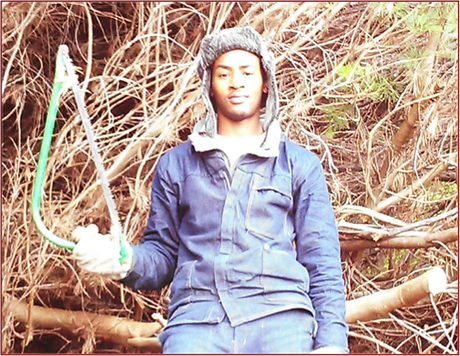
Bracing himself on the steep slopes, Sakhe clears an area for the Chainsaw Operator to work, a role for which he now is also qualified as a result of training on the team

Bracing himself on the steep slopes, Sakhe clears an area for the Chainsaw Operator to work, a role for which he now is also qualified as a result of training on the team

Liso She may have the smallest shoe size, but in many ways she makes the biggest contribution. After 6 years of working on alien clearing teams, Liso Jentile offers the most insight and thoughtfulness of any team member. Her years of experience include training as chainsaw operator, which offsets the gender balance of mostly men leading with chainsaws and women following while stacking branches. Most of the time, she is quiet, and does not participate in the teatime chatter. But when the team reaches a new situation and is uncertain how to proceed, people turn to Liso for well-seasoned advice. Her thinking abilities make her a role model for other women on the team and a prime candidate for promotion to a leadership role.

Siya Initially, he was busy in the office and didn’t take the offer. Afterall, his family was in Philippi, including his newborn son. Weekdays in isolated Castle Rock sounded lonesome. And after more than a decade of chainsaw work without any career prospects, the idea of working on the mountain did not excite him. But when the opportunity to join Ayanda at a chainsaw operator training arose, Siyasanga Hermanus got involved. Within three weeks he had a team working to help him stack – a luxury after the years of working on the mountain alone. With his firm manner and steadfast approach, Siya earned his team’s trust. Now he, like Ayanda, is building up skills to eventually contract his own team. But while most WfW contractors supervise from the sidelines, Siya will remain right where he is. The only way to make sure the work gets done, he says, is to be part of the team. He won’t be letting go of his chainsaw anytime soon.

Workers are tasked with removing dense alien forest from steep mountain slopes

Workers are tasked with removing dense alien forest from steep mountain slopes

Outlook: Transitioning from labourers to leaders 

It is a fragile system, but it holds together – a web of life that benefits from its interdependent nature as much as it is defrayed by internal competition. Like the risk of wildfire on the mountain, our team confronts challenges to their health and safety every day. Competition is no stranger, and they confront one another when they disagree on an approach to an issue. Like the heat of summer, they feel it on their table at home when funding dries up and bonuses are no longer available. And when in need of assistance, if it is not offered with personal consideration, some team members may be flooded with advantages while others fail to gain ground.

Despite these challenges, the team is resilient. They depend on one another because they know that they can fell more trees working together than alone. A communicator like Ayanda can help advocate for more contracts together than the others could do alone. A veteran like Liso can help plan savings for their future together better than the others could do alone. And with perseverance, they can build a collective company with the full contribution of each team member.

While one person cleans a chainsaw, another takes inventory of the day’s supplies. A Health and Safety Officer takes note of the appearance of the deforested slopes after a day’s work while a First Aid Officer records that day’s participation of each individual. One person measures herbicide concentrations, while another speaks publicly about the value to biodiversity of their work. Each worker has their role and is valued as an essential member of the team. 

Over 35,000 South Africans are funded by the Department of Environmental Affairs to clear invasive alien vegetation in South Africa. The vast majority of them work under a private contractor. While project funds should be directed to workers, this system incentivizes the contractor to increase staff productivity to their own benefit. CORC’s team structure provides a new model, one that serves the poor populations that it is meant to support. Through this program, CORC has the opportunity to affect livelihoods across the country. It begins with the collective.

This collective has a new opportunity. In the South Cape Peninsula, a few mountain slopes dipping into the sea appear too difficult, too costly to clear. Without professional training for mountain slopes, this team has confronted Castle Rock. In doing so, they have proven their worth as recipients of intermediate training required to clear such lands safely. As an intermediate team in high demand, they may prove financially sustainable while maintaining the collective structure that can help negotiate the team members into more established careers. As a self-sustaining collective they may be able to operate independently throughout the Western Cape, and can train other teams in other provinces. A handful of youth from the South Peninsula has the chance to transition from labourers to leaders, not only in their industry, but in their communities.

Savings Symposium: Strong Savings Make Us Alive

By CORC, FEDUP, ISN, SDI No Comments

By Yolande Hendler (on behalf of CORC)

From 23-29 November 2014 the SA SDI Alliance and SDI affiliates from Malawi, Zambia & Zimbabwe gathered for a weeklong savings symposium in Cape Town to strengthen the Alliance’s savings practices. The group of 80 community and youth leaders discussed the power of savings for organising communities, leveraging municipal resources and opening a space to address individual, group and community needs.

Opening Greetings of Symposium

Opening Greetings of Symposium

Na-eema Swartz, Symposium Co-organiser, counts savings collection taken during first day.

Na-eema Swartz, Symposium Co-organiser, counts savings collection taken during first day.

Symposium overview: field visits and discussions

Discussions assessed the Alliance’s current savings patterns, locally and nationally. They clarified what roles and responsibilities exist within savings groups, identified existing challenges and developed solutions for these. Visiting affiliates shared their savings practices, systems and strategies, supporting the SA alliance through the exchange of alternatives ideas and opportunities.

Throughout the week the group based these discussions on field visits to savings groups and upgraded informal settlement communities like Flamingo Crescent, who contributed 20% of the cost of each upgraded structure. These visits enabled a hands-on space for the symposium members to accompany local treasurers and collectors and learn how to complete saving record forms during door-to-door savings collections in Khayelitsha, Philippi and Samora. During other visits symposium members supported network meetings in Samora and Mfuleni in Cape Town, where four or five savings groups in a particular area regularly report back to each other on a network level.

Field visit in Flamingo Informal Settlement

Field visit in Flamingo Informal Settlement

Understanding savings in the SA Alliance

FEDUP national co-ordinators, Rose Molokoane and Marlene Don, opened the savings symposium by exploring the purpose for the gathering, revisiting the history of savings in the SA Alliance and its significance as a core methodology of the broader SDI network. Rose therefore reminded the gathering of the SA alliance’s history as rooted in its first exchange in the early 1990s with urban poor federations in India who were practicing daily savings.

Rose and Marlene revisited the main aims of FEDUP and ISN, namely

  • Encourage self reliance
  • Organising communities
  • Use savings and other methodologies as a tool to leverage external resources

These are underpinned by FEDUP and ISN’s 5 core principles:

  • Love
  • Trust
  • Accountability
  • Transparency
  • Commitment

Examining Alliance savings and looking forward

The purpose of the symposium was therefore to retrospect and understand the foundation on which the Alliance has built its savings, examine current savings patterns and look forward in terms of how these can be strengthened and developed. Based on impressions from the field, symposium members split into six groups, discussing questions, documenting suggestions and opinions in order to reach tangible outcomes. The questions under discussion were:

  1. What is a saver?
  2. Who is a collector?
  3. Who is a treasurer?
  4. What kind of savings do we have?
  5. Which kind is best for our organisation?
  6. How do we collect savings?
  7. How often do we collect savings?
  8. How do we record?
  9. How do we do reconciliation & savings?
  10. How & when do we do audits of our savings?
  11. How did you become a collector / treasurer?
  12. How do we run savings meetings?
  13. How should we deal with inconsistencies?

Each group presented its responses to the larger gathering, thereby mapping out a foundation on which to continue building the SA Alliance’s savings. The responses and group discussions will be used to develop a guiding framework for savings patterns in the Alliance. Communities thereby use savings not only as a tool to meet identified needs but to enable constructive negotiation with governmental tiers for resources and participatory development.

As members of each province reflected on the experiences gained during the week, it became evident that it was indeed a rich time of learning, exchange and building strong savings patterns.

“I learnt how to record in savings books, and I learnt the strength of being part of a group like this. I realised we can do it together. You made me feel so welcome” (Wendy, FEDUP Youth, Free State)

“I learnt the purpose of savings and how to motivate my community to save when I return home” (Sifiso, KwaZulu-Natal)

“Our federation belongs to us and we are the ones who will make it alive through strong savings!” (Rose Molokoane, FEDUP National Co-ordinator)

Presenting Group responses

Presenting Group responses

A month with Father Jorge – His reflections on South Africa, Zambia & Namibia

By CORC, SDI No Comments

By Yolande Hendler (on behalf of SA SDI Alliance)

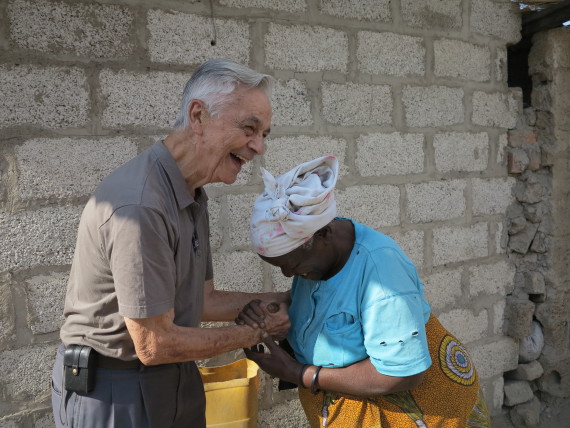
Father Jorge is one of the longest-standing friends and a much-valued mentor not only of the SA SDI Alliance but also of the broader Shack/ Slum Dwellers International (SDI) family. He has been visiting South Africa for the last 25 years, joining us for his most recent visit from October to November 2014.

IMG_2755

From Argentina to Japan to the World

Born in Argentina in 1930 Father Jorge Anzorena, has been living in Tokyo, Japan for more than 50 years as a Jesuit priest, an architect and a professor, leading a remarkable life (read more here). His attentive ear for people, listening, understanding and documenting the organisation processes of poor communities throughout the world draws a common thread through his experiences.

As part of an initiative in 1976 by the Catholic church and Jesuit order to understand how poor people organised themselves around land and housing Father Jorge began travelling between numerous poor people’s movements and communities in Asia, ranging from Philippines to Korea, Thailand, Indonesia, India and Sri Lanka. About a decade later, Father Jorge visited South Africa and became part of the first dialogues between urban poor communities from Asia, Africa and Latin America. Father Jorge has visited South Africa regularly ever since.

Reflections on South Africa

This year Father Jorge spent time in Cape Town, Johannesburg and Durban– visiting many communities, attending meetings and gatherings such as the National Human Settlements Indaba and reflecting on changes, challenges and points of progress:

“Over the years that I have visited I have witnessed three upgrading projects, in Sheffield Road, Mtshini Wam and Flamingo Crescent. When we first started upgrading in Sheffield Road it took a long time, and few people were enthusiastic because they didn’t know what to expect. Now in Mtshini Wam, we are looking at the next phase after upgrading, which is densification together with a team of professionals that was interested in building on the wishes of the community in order to be as inclusive as possible. Very rarely do you find professional teams that are considerate of the community’s wishes and plans. In Flamingo Crescent you can see developments in the upgrading projects: it was completed after just 5 months of construction, where Mtshini Wam took one year. There is also a transformation in the community. People are really thinking about how they can develop themselves.”
“I have also seen a change in how the alliance relates to government (and vice versa) in two meetings I attended with officials of the City of Cape Town and the Department of Water and Sanitation where FEDUP/ISN, CORC and students were presenting alternative models to the Department. It seems that government is taking more notice of the alliance and considering its capacity to present the projects and plans of the community”

Father Jorge at National Human Settlements Indaba in Johannesburg

Father Jorge at National Human Settlements Indaba in Johannesburg

Reflections on Zambia

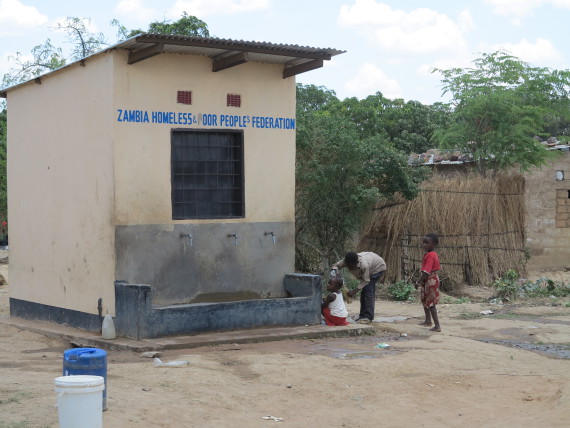
During October and November Father Jorge was warmly welcomed by the Zambian and Namibian Alliances. The Zambian federation shared its work on water kiosks that the community of Kalunduville settlement near Kafue had built to ensure their first ever access to water in the settlement.

“The water kiosks are important because they require community effort and connect people to each other. Sometimes with individual benefit projects a community can be separated but when everyone contributes (like digging the trenches) this can really change the mentality of a community and build solidarity which is very important for slum dwellers”

At a savings scheme meeting in George Compound in Lusaka, which gathered Federation leaders from all over Zambia, the Federation spoke about the projects it is undertaking through using community savings such as eco-san toilets, home-improvement loans, the building of resource centres and drainage systems.

“This Federation is unique because it doesn’t live on hand-outs – please, wherever you go, tell them that the Federation in Zambia is alive!”

(Cecelia, Zambian Federation, Ndola)

Visiting Kalunduville settlement near Kafue, Zambia

Visiting Kalunduville settlement near Kafue, Zambia

Water Kiosk in Kalunduville settlement, Kafue, Zambia

Water Kiosk in Kalunduville settlement, Kafue, Zambia

With the Zambian Federation in George Compound, Lusaka

With the Zambian Federation in George Compound, Lusaka

Reflections on Namibia

The Namibian Federation invited Father Jorge to Etuyeni savings group in Havana settlement just outside Windhoek and to a group meeting of various savings schemes’ bookkeepers in Gobabis. Etuyeni savings group shared its challenges around accessing municipal land and its plans to build houses through using savings to make its own bricks. In Gobabis the Federation’s bookkeepers shared insights on the strong savings and financial system it has established in managing its own funds.

“In Namibia I noticed the change of responsibility. It’s not the NGO that is responsible for the finances but it is the community. In many other places the NGO pushes the community to return the money – but when the community controls the money they take much more responsibility to use it. Often it is difficult for poor people to think long term because the focus is on surviving in the moment. But the change that comes with savings is that people can start thinking about the near future. ”

Meeting with Etuyeni Savings group

Meeting with Etuyeni Savings group

Etuyeni savings group makes bricks in Havana settlement, Windhoek

Etuyeni savings group makes bricks in Havana settlement, Windhoek

IMG_2889

Old friends reunite in Windhoek

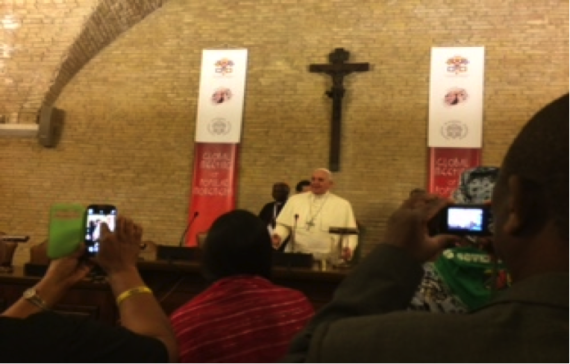
SDI and SA SDI Alliance meets Pope Francis at World Meeting of Popular Movements in Rome

By News, SDI No Comments

By Bunita Kohler (on behalf of SA SDI Alliance)

From 27 – 29 October 2014 the World Meeting of Popular Movements was held in Rome. It was initiated by the Pontifical Council of Justice and Peace together with the Pontifical Academy of Social Sciences along with a number of social movements.

The meeting was largely aimed at organisations and movements of excluded and marginalised communities. The event brought together over one hundred delegates from different backgrounds. Delegates represented precarious workers, temporary workers, migrant workers, the landless, homeless and people most at risk. Many bishops and other church workers also participated in the event.

WMPopular Movements Rome1

The theme of the meeting was defined as: Terra, Domus and Labor (Land, Housing and Labour). Shack/Slum Dwellers International (SDI) was among those invited and was privileged to send ten delegates to the event.

The first day of the conference focused on popular movements sharing their realities, struggles and thoughts on the lack of decent work opportunities , decent shelter and adequate land. On Day 2 Pope Francis addressed the conference and thanked everyone for accepting the invitation to discuss serious social issues.  He described the meeting of popular movements as a positive sign, a sign that the poor are no longer satisfied with mere promises.

“The poor are no longer waiting, they are organized. They put solidarity into action. Solidarity is not just a few sporadic acts of generosity. It means struggling against the structural causes of inequality”.

”You smell of your neighbourhoods and you are a gale of hope for your communities.   Love of the poor is at the heart of the Gospel and the social teaching of the church. God entrusted land to humans to protect and cultivate the land. Land reform he said is not just a necessity but a moral obligation.  Every family should have a home. We must build neighbourhoods and live together with our neighbours.The lack of job opportunities is an outcome of a social option that considers profit more than human beings, a system that views people as disposable objects which demonstrates the worst form of exploitation and a “waste culture”.What we see today is a “Globalisation of indifference” – the world has become an orphan as God has been forgotten.”

WmPopMovements3

The Pope called for a revolutionary programme and a social structure that once again put people at the centre.

Pope Francis was positive that Popular Movements could be the revolutionary force to create a new order and give new energies to society. Popular movements should encourage new forms of participation and leadership that would include rather than exclude. They should create leaders that are subservient and humble and that gives space to the youth, a leadership that is noble and gentle and leaders who are truthful and who will lead by example.

In his final remarks to the delegation the Pope committed to walk side by side with the Popular Movements.

“My wish”, he said, “Is to accompany you on your journey. We will make our way together”

In summary, day two was indeed a historic and emotional day for all the delegates. The Pope treated us like brothers and sisters, was cheerful and very clearly expressed his beliefs and views on the disorder that reigns in our world today. He expressed solidarity with the causes of TERRA, DOMUS and LABOR. He said that the poor needed to be the protagonists, not the “ones being helped”. The poor are able to help themselves when they defend their right to land, housing and jobs.

Day two was a day that spoke to the hearts and minds of us all, an emotional time in which the Pope entered into our “homes”.   We experienced the Pope speak from the heart and we witnessed his respect for human life and his deep love and respect for human beings.

The third and final day was devoted to concrete commitments for continued interaction among the popular movements and their collaboration with the church.  The discussions on day three focused on finding solutions and alternatives to ensure a house for everyone, land for everyone and a job for everyone.

For our movement, Shack Dwellers International, this was an opportune moment to build links, to create greater solidarity and to commit to on-going coordination with other landless, homeless and jobless movements in order to strengthen the voice of the poor internationally.

South African delegates attending mass at the Vatican. Left to Right: Wilma Adams (SDI), Rose Molokoane (SDI & FEDUP), Bunita Kohler (CORC)

South African delegates attending mass at the Vatican. Left to Right: Wilma Adams (SDI), Rose Molokoane (SDI & FEDUP), Bunita Kohler (CORC)


Putting K2 and Green Park on the Map – Mapping Exchange in Cape Town

By FEDUP, ISN, SDI No Comments

By Julia Stricker (on behalf of SDI Secretariat)

***Cross-posted from SDI Blog***

During a very successful learning exchange focused around settlement level data visualisation and mapping, community members from K2 and Green Park, two informal settlements in Cape Town, created digital maps of their neighbourhoods. 

img_0105_medium

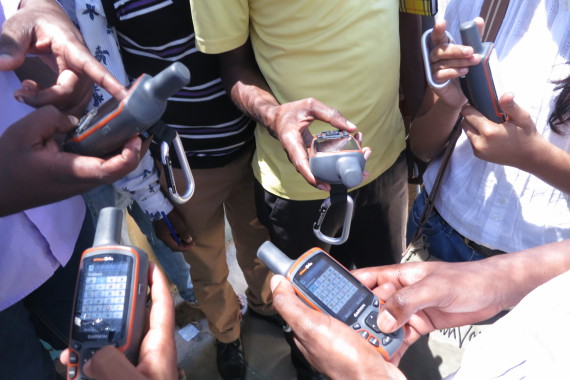
Siyaunya puts his head over the GPS device and enters the code for water tap, WT 001. Next he records the geographic coordinates of the location: -34.0289, 18.6731. He and his team repeat this process for every water tap and toilet in K2, the informal settlement in Khayelitsha that Siyaunya calls home. Different codes are used for each type of facility and with regards to their functional status. A broken toilet, for example, gets an N added to its code. These codes together with the coordinates form the raw data for the maps. Apart from the team mapping the basic services there are two other teams on the go to map the settlement boundaries and other interesting features like shops, taverns, and restaurants. Each of the three teams consists of community members, Informal Settlement Network (ISN) and Federation of the Urban Poor (FEDUP) members from across South Africa, and SDI federation members from India, Uganda and Ghana. The latter travelled to Cape Town to support the South African SDI Alliance in refining their digital mapping skills – skills that will help take SDI’s community mapping process to another level, making it easier and quicker, and increasing impact.

Through a hands-on, learning-by-doing approach Siyaunya and his fellow community members, most holding a GPS device for the first time that day, used these devices with confidence by the end of the day. They also understand that the need to stand next to the service or feature you are mapping is about more than getting an accurate reading on the GPS device. It is about the process of gaining intimate knowledge and understanding of one’s settlement and being able to share this knowledge with authority.

img_0104_medium

A geographic profile of the settlement consisting of the boundaries and the basic services, at a minimum, is a crucial part of the standardised profile. It is not enough to know the number of toilets – one also has to know their spatial distribution. If all the toilets of a settlement are located on one corner, the numbers alone are a bad indicator for the reality a woman from the other end of the settlement experiences when going to the toilet at night. The spatial dimension adds value to the data and is highly relevant for planning upgrading projects. To put it in a nutshell: Numbers are good – but maps make the numbers come alive. In addition to that John Samuel, from NSDF/SPARC India and part of the data team at SDI, points out that maps are more intuitive to understand than plain numbers and respond better to the variable literacy level of slum dwellers.

There is no perfect map and there never will be one. Maps are by nature abstractions and only a limited inventory of the reality on the ground, a complement of both objectively observable phenomena, as well as the subjective relationships to these. Bearing this in mind they remain highly important as a means to communicate our location in the world and our view on the world. The data used to generate maps of informal settlements must therefore be gathered by the slum dwellers themselves. Maps generated from community-collected data naturally put the emphasis on issues that matter to the community. This in turn is critical for the successful planning and implementation of slum upgrading projects

img_0102_medium

When speaking about Know Your City, Sumaya, a young delegate from the National Slum Dwellers Federation of Uganda (NSDFU) puts it like this:

“First you have to know what you have, then you can decide what you need, and only then you can tell somebody what you want. This is what Know(ing) Your City is all about.”

She was part of the team that profiled and mapped 62 settlements in the city of Kampala. The comprehensive report with the maps generated was handed over to the Kampala City Authority in September this year and is a good example how the data can be used to drive communities’ dialogues with government for slum upgrading and development at the city-wide scale. The profiling and mapping of settlements is a powerful tool for promoting active citizenship in communities of the urban poor.

SDI’s focus for the coming years will be to routinize and consolidate the learning around city-wide profiling and mapping for the cities it works with. Concretely, the idea of going city-wide is to push the federations to think beyond their existing network so as to include the voices of other settlements in the city, meet new leaders and together create concrete alternative plans with which they can begin to talk to their cities. Community mobilisation and mobilising city-wide federations are then also among the first goals Celine D’Cruz, SDI co-ordinator anchoring and supporting the data collection process for the SDI network, mentions when she talks about the Know Your City process. It is about the creation of a momentum of inclusion and of identity making for the community of the urban poor. Furthermore, the data collected supports the development of alternative participatory plans for slum upgrading strategies based on prioritised needs; it offers federations and communities at large the ability to monitor their own settlements and, last but not least, grounded and consolidated data at the local level, once aggregated, opens up the space for advocacy at the national and global level.

The maps of K2 and Green Park were visualised the same weekend and brought back to the respective settlements. They are as different as the settlements themselves are. Spread out Green Park contrasts with dense K2. In the latter, all the toilets are located on one site, leading to a situation mentioned above, where a map paints a clearer picture of reality then just numbers.

The learning exchange made clear that settlement profiling and mapping is an essential tool to leverage upgrading, monitor settlements and for regional and global advocacy. The young leaders from K2 and Green Park definitely seemed eager to continue the work and make the realities and needs of the city’s urban poor majority visible through maps.

k2_service_map_medium

green_parkmap1_medium

FEM

SA Alliance supports Swaziland to engage Government Around Upgrading Policy

By CORC, FEDUP, SDI No Comments

By Kwanele Sibanda (on behalf of CORC)

From 29 October – 2 November 2014 the South African Alliance travelled to Swaziland to support communities in their work with government around a national upgrading policy currently under review. The exchange aimed at looking into Swaziland’s draft policy on land allocations and procedure that is likely to cause evictions. The engagements were between municipality officials, Zone leaders and the local federation.

Group photo of Mayors, Councillors, SLIPO & FEDUP members

Group photo of Mayors, Councillors, SLIPO & FEDUP members

The Kingdom of Swaziland

The Kingdom of Swaziland is located in Southern Africa and is land locked . The Swazi Nation Land, which is communal, is held in trust by the King and parts of it are allocated by Chiefs to individual Swazi families for their use. Swaziland has four administrative regions which are further divided into 55 Tinkhundla Centres (Local Administration) these form the basic unit of political administration. Political parties were banned from the constitution promulgated on 13 October 1978.

The local federation

The federation of Swaziland is known as SLIPO (Swaziland Low Income People’s Organization). No local support NGO has been established as yet.The federation activities are currently being anchored by John Dlamini who has supported the federation from its revival in 2011.In 2008 an exchange was held to Zambia and it was attended by municipal officials and zone leaders. Upon their return, they established the federation with a lot of support from the municipality.An MOU was submitted to the national government in 2012; however no formal feedback was given back to the federation.Out of Swaziland’s total of four regions, the federation is in two regions namely: Manzini and Hhohho.The other two regions that have not yet been mobilized are Lubombo and Shiselweni.SLIPO’s membership is currently at 429 and they have R498 333.00 in savings.The federation is currently in the process of building a federation office that is being funded by SDI.

SLIPO Federation Office Near Completion

SLIPO Federation Office Near Completion

Challenges posed by Swaziland’s draft policy on upgrading

In 2008, residents of Mbabane were informed that the government is working on a policy around upgrading; however it is asserted that no further consultation was held with the respective communities. Without much knowledge about the implications of the policy; the communities remained relaxed. As SLIPO intensified its engagements with the state in 2014, it came to light that the policy had reached an advanced stage and if it is not attended; its implementation may come with more harm than good for the poor communities. To start off the process, the policy shall be implemented with an intention of upgrading 9 areas around Mbabane and that will affect Ward 1, 2, 3, part of 7, 11 and 12. Each Ward is divided into Zones.The Land Allocations Policy and Procedure went through council and passed. It was recommended that it be forwarded to the Minister and it is currently with him for approval before it is forwarded to cabinet. The first and direct negative implication of the policy especially to the poor is that; he who cannot afford a site estimated at R42 000 shall be required to seek a new place of residence (in a form that can be described as eviction). According to the state, the aim of selling the sites is that of raising funds for service installation. As SLIPO grows to another stage within the SDI alliance; it encountered a challenge that requested support; hence the request for the South African alliance to go and support. .

Day 1: Preparatory Meeting 

As SLIPO and South African delegates met in preparation for the meeting with the Mayor, they explained the background,origins and implications of the problematic draft policy to the South African visitors and requested them to focus their presentation on how the Federation of the Urban Poor (FEDUP) partnered with government and what they have achieved. SLIPO further explained that:

  • mobilizes and organises members in informal and formal wards because there is a great percentage that is struggling to pay rates and taxes and run at a risk of having their properties seized.
  • SLIPO would like to mobilise and organize communities, use SDI tools and be able to influence policies and the manner in which they are drafted
  • its challenge within the Municipality is a lack of proper handover of information

Meeting the Mayors and the councillors

Four councillors, seven SLIPO representatives and four SASDI alliance delegates attended the meeting. These included the Mayor of Mbabane, the Mayor of Manzini, the Representing Mayor of Ngwenya and the Mayor of Piggs Peak. SLIPO first presented its background, aims and objectives, member, savings UPF, loans, projects as well as areas covered. The SASDI alliance’s presentation gave an overview of SDI, tools, S.A partnerships with the state and other formal institutions as well as achievements. The various representatives explained how working closely with saving and organized communities results in meaningful development.

In his response, the Mayor indicated that he is impressed with the presentations and approach taken.He enlightened delegates about the differences between S.A and Swaziland: While South Africa has three spheres of government (national, provincial and local), Swaziland only has national and local. In addition to the above, the local municipalities rely on rates and taxes payment as funds for development; hence the need to sell plots and install infrastructure. The municipalities have a serious budget constraint because they do not get a budget allocation from national for service installation and maintenance. Funds received from national are for subsidizing service provision that is made to areas that do not pay rates and taxes.The Mayor furthermore emphasized that if there are such communities that are taking a stand in development; the state and SLIPO have to jointly have a model that clearly states how the process is going to be undertaken. Lastly, it was indicated that for SLIPO to be recognized as a national structure, it has to cover all the four regions of Swaziland.

Patrick Matsemela from North West FEDUP presenting to Zone leaders

Patrick Matsemela from North West FEDUP presenting to Zone leaders

Day 2: Meeting with Zone Leaders 

On day two of the exchange, a meeting was held between SLIPO saving scheme leaders, Zone leaders and the SASDI delegates. Zone leaders are equivalent to community leaders in the South African context. The aim of meeting them was that of: sharing the SDI concept with them, reporting on what SLIPO has been doing in form of saving schemes, share report back from meeting with the Mayors and Councillors and also requesting their support in establishing more saving schemes in their respective Zones.

The zone leaders were informed about the upgrading policy and also reminded that it is everyone’s challenge therefore a joint effort is required in finding a better solution. The estimated cost of each plot is around R42 000 and that will require at least a R600 contribution per member per month for at least five years. It was mentioned that the majority of residents are unemployed and for those that are employed they hardly earn R3 000 per month.

The leaders basically denounced the displacement of residents in the name of development and furthermore pledged to support SLIPO in mobilizing communities and engaging the government in a workable solution to the challenge.

Day 3: Meeting with Saving Scheme Leaders 

On day three the saving scheme leaders met to report back the previous days’ engagements, share savings reports, discuss mobilization and establish more saving schemes. Some of the outcomes were:

  • SLIPO would request monthly joint meetings to share its work and request participation from relevant officials
  • SLIPO saving scheme leaders to discuss and agree on a reasonable affordable amount of savings contributions
  • Leaders have a task of drafting an MOU directed to the Municipality of Mbabane as recommended

Some Lessons Learnt 

  • Swaziland has a different governing system (only national and local government)
  • SLIPO’s savings figures with limited support from the state and other institutions reflect a great commitment level
  • The lesson on the importance of savings as practiced in Swaziland can be of great use if taken seriously in South Africa. In Swaziland Saving scheme with as few members as 15 have more than 25 000 in savings and these are savings that started in 2011. The statistics show a great level of commitment.
  • SLIPO is a fairly new federation without much of projects or formal partnerships established, but the unity amongst members and moral is a great starting point for success.
Leaders of different saving schemes gather after meeting with  SASDI delegates

Leaders of different saving schemes gather after meeting with SASDI delegates

Moegsien

SA Alliance at National Human Settlements Indaba 2014

By CORC, FEDUP, ISN, News, Press, SDI, uTshani Fund No Comments

By Yolande Hendler (on behalf of CORC)

FEDUP members welcome Minister Lindiwe Sisulu and Deputy Minister Zoe Kota-Fredericks at the SDI Exhibition booth

FEDUP members welcome Minister Lindiwe Sisulu and Deputy Minister Zoe Kota-Fredericks at the SDI Exhibition booth

Twenty years after Joe Slovo’s historic Botshabelo Housing Accord, Lindiwe Sisulu, incumbent minister of Human Settlements, invited stakeholders in the human settlements sector to the National Human Settlements Indaba and Exhibition, which was held at the Sandton Convention Centre in Johannesburg from 16-17 October 2014. This included the Federation of the Urban Poor (FEDUP) on behalf of the SA SDI Alliance and Shack/Slum Dwellers International (SDI),

Aims of the Indaba

The Indaba not only marked twenty years of South African democracy but also ten years after the first social contract was signed in 2004 during Sisulu’s first term as Minister of Housing from 2004-2009. The first social contract, similarly, brought together a number of stakeholders in the housing field to discuss and sign an agreement regarding co-operative and collaborative housing practice which would pursue the aims of the then newly launched housing policy: Breaking New Ground (BNG): A framework for Sustainable Housing Development. BNG largely focuses on “promoting the achievement of a non-racial, integrated society through the development of sustainable human settlements and quality housing”. Click here for more on BNG policy. Ten years later, however, the implementation of BNG has been only partially successful.

Against this backdrop, the 2014 Indaba aimed to:

  • Review progress in the implementation of BNG
  • Review the impact of the Social Contract for Rapid Housing signed in 2005
  • Commit stakeholders to a second social contract towards 1.5million housing opportunities by 2019.
Rose Molokoane and SDI delegates from Uganda, Tanzania and Zimbabwe

Rose Molokoane and SDI delegates from Uganda, Tanzania and Zimbabwe

South African and International SDI delegates at Exhibition booth

South African and International SDI delegates at Exhibition booth

Day 1: Pledges towards a second social contract

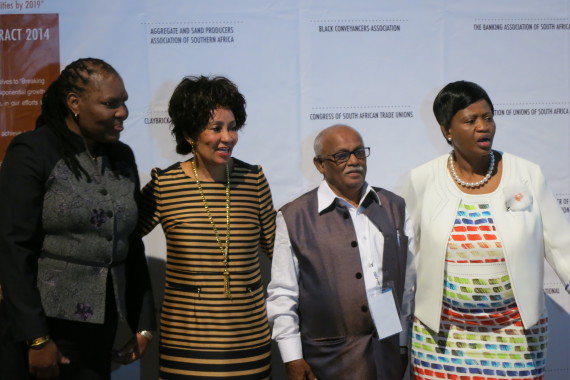
Amidst actors such as the South African Banking Association, the Chamber of Mines, construction companies and trade union representatives (to mention but a few), SDI and the SA Alliance voiced the interests of the urban poor and advocated for an inclusion of the urban poor in planning, decision-making and implementation.

During the first day’s introductions, Jockin Arputham, SDI President and Nobel Peace Prize Nominee, shared a message of support ahead of the minister’s keynote address which is outlined here. In the afternoon contributors pledged their commitments to the second social contract.

SDI President Jockin Arputham with Minister Lindiwe Sisulu and Deputy Minister Zoe Kota-Fredericks

SDI President Jockin Arputham with Minister Lindiwe Sisulu and Deputy Minister Zoe Kota-Fredericks

Jockin Arputham speaks at Press Briefing

Jockin Arputham speaks at Press Briefing with Minister Sisulu and Director General Zulu

The SA SDI Alliance Pledge

In response to the Department’s larger orientation, Rose Molokoane, national co-ordinator of FEDUP, powerfully shared the pledge of the SA SDI Alliance:

FEDUP pledges to work with national, provincial and local government to deliver 1000 housing actions every month, improving the life of 1000 households. These actions will include

1)   Organising communities through savings

2)   Upgrading services such as water, sanitation, drainage, energy and roads

3)   Building bigger and better houses

4)   Advising the ministry on how to work with communities and organise them to be full stakeholders

We also commit to draw other organisations of the urban poor into the pledge as equal partners. We cannot do this alone. You cannot do this alone. You need our help. “We know the minister is serious about supporting us. What about the MEC’s? What about the local authorities? Are you?

View Rose Molokoane’s speech here:

[vimeo]https://vimeo.com/110123793[/vimeo]

Day 2: Reviewing BNG projects & the second social contract

The second day of the Indaba concluded with presentations by several MECs on the successes and challenges of implementing BNG projects in four provinces, followed by the reading and signing of the second social contract. The specifc commitments of the second social contract are documented here.

Rose & Jockin sign the second social contract on behalf of SA SDI Alliance and SDI

Rose & Jockin sign the second social contract on behalf of SA SDI Alliance and SDI

IMG_0949

Throughout the Indaba the minister repeatedly referred to the value and experience of SDI and the South African Alliance’s work in forming an inclusive atmosphere that engages the urban poor around their own housing development.

Over the last twenty years the SA SDI Alliance has developed an ongoing partnership with the Department which spans from the signing of the Botshabelo accord in 1994, participating in the 2005 national housing accord, the signing of the first social contract in 2005, the 2006 MoU pledge with the Department for subsidies of R285million with which FEDUP has built over 2000 houses to the Department’s most recent pledge of R10million in August 2014.

Throughout FEDUP’s partnership with the Department its core vision has always been: “Nothing for us without Us”. This message is also at the heart of FEDUP’s pledge. As the second social contract is implemented in the next five years, it is the collective vision, experience and practice of the urban poor that is crucial to a truly inclusive implementation not only of housing but also of incremental, in-situ informal settlement upgrading as a vital step towards attaining housing and tenure security.

“We cannot do this alone. You cannot do this alone. You need our help.”

(Rose Molokoane)

SA and Zim Federations reach out to Botswana

By CORC, FEDUP, ISN, uTshani Fund No Comments

By Kwanele Sibanda (on behalf of CORC)

The Republic of Botswana is a landlocked country located in Southern Africa. It is bordered by South Africa, Namibia and Zimbabwe. It is a mid-sized country of just over two million people. Environmentally, Botswana faces two major problems: drought and desertification. Despite its middle-income status, Botswana continues to grapple with significant social challenges including unequal distribution of wealth, high levels of poverty, unemployment and HIV/AIDS prevalence. On health issues, the prevalence of HIV/AIDS was estimated at 24% for adults in 2006. In the fight against the disease the government of Botswana solicited outside help in fighting HIV/AIDS and received early support from the Bill and Melinda Gates Foundation.

The Minister purchasing some of the federation's income generating productsBetween 16 – 19 October, South African and Zimbabwean federations associated to Shack / Slum Dwellers International (SDI) reached out to the young and emerging Botswana federation. The federation of Botswana was initially mobilized by the Zimbabwean federation and established in 2011 in Francistown as a community based organisation, which has since expanded to Gaborone, Selibe, Maun and Phikwe. The NGO called Trust for Community Initiatives (TFCI) was registered on the 31st of May 2012 as a non profit trust. The NGO is currently staffed 2 full time staff members and 3 board members oversee governance.
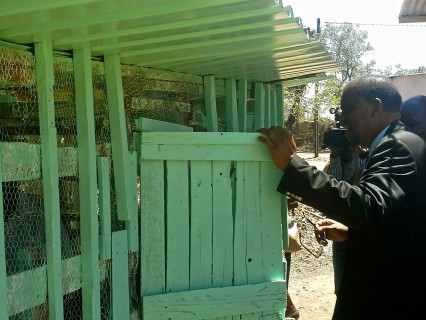
This exchange was in the making for a few months. Following the nomination in Francistown where the Botswana federation was mentioned for best practices in fighting poverty in June 2014, the Minister of Local Government and Rural Development (Peter L. Siele) requested a meeting with the federation in Francistown on 17 October 2014. Since the Botswana federation is still at its early stages of development, it requested the support of the Zimbabwean and the South African federations. The Minister witnessed three projects that the federation members do: traditional attires and baskets, poultry and a cool drink making business. The minister and his team were taken around while the project leaders explained how the businesses are conducted.


Minister visits poultry project

On the morning of the 17th, prior to the commencement of the meeting with the Honourable Minister, a brief planning session was held with the hosts to look into the program and also strategize on key objectives intended to be achieved from the exchange. During the planning session the Zimbabwean and South African delegates were encouraged to focus their presentation more on savings, partnerships and projects. The meeting on 17 October was attended by:

  • Botswana
    • Federation of Botswana – Francistown, Maun, Gaborone, Selibe and Phikwe
    • Trust for Community Initiatives – Goitsemang B. Maano and Mark
    • Officials: Minister of Local Government and Rural Development – Peter L. Siele, Town Clerk – L. Israel, Office of the District Commissioner – Opelo, Head of Community Development – Mrs Phama, Deputy Mayor of Francistown – Mrs Phama
  • Zimbabwa
    • Zimbabwe Homeless People’s Federation– Sekai Catherine Chiremba, Sazini Ndlovu, R. Ncube.
    • Dialogue on Shelter– Beth Chitekwe and Givemore Nyamaponda
  • South Africa
    • FEDUP– Maureen, Sophy and Sarah
    • CORC– Kwanele Sibanda

The federation welcomes the Minister

The Botswana Federation outlined the growth of the movement over the past three years, expanding their reach from Francistown to Selibe, Phikwe, Gaborone and Maun. 42 saving schemes have been established and the total number of active members is 1,126 (1036 females and 90 males). Their total daily savings to date is P (Botswana pula) 257 807.91 (ZAR310,000) and the balance of their Urban Poor Fund is P20 834.85 (ZAR 25,000). Public health is a major focus area for the Federation, and projects have included installation of water taps, electricity and flush toilets. They also have income generating projects such as poultry and catering.

The Zimbabwe federation followed and outlined the work of SDI in Southern Africa. They challenged the minister to meet the Botswana federation’s savings and enter into a partnership agreement. The South African federation spoke about their “pledge” agreement / MoU with the Department of Human Settlements as tool for long term engagement. they argued that to enhance their work so as to support more communities, the government- community partnerships different level to build more than 15 000 quality houses by ourselves for ourselves. In working with the government we always emphasize that the Batho Pele (People First) principle must be applied.

When the Minister of Local Government and Rural Development replied, he addressed the needs of the Botswana federation by outlining some of the programs that different government departments are offering in line with what the federation is doing. He furthermore encouraged them to take advantage of funds such as those offered by the Ministry of Labour and Home Affairs (MLHA). The Women’s Affairs Department is mandated to facilitate mainstreaming of Gender Issues in the development process. As a way of empowering women’s CBOs, the Government of Botswana allocates funds to the Women’s Affairs Department annually in order to assist the organisations.

On 18 October, the Zimbabwean, South African and Botswana Federations exchanged ideas on community-centred development.

  • We are savings for land, to build houses as well as other projects.
  • We are contributing UPF so that we can give each other loans
  • We had an incident were some group members contributed towards UPF, but the treasure did not deposit the money.
  • It is difficult for me to distinguish between daily savings and UPF
  • We started the UPF contributions after an exchange to Gwanda in Zimbabwe; however after report back and starting not many members understood the concept.

Botswana federation during the UPF group discussion

One member of the exchange reported that,

I am so grateful for the exchange has enlightened me on many federation issues especially the Urban Poor Fund.

Another said that

We feel motivated by the presentations made by the federations that have been doing the work for many years and we are inspired to grow our federation the same way.

Ongoing support to the Botswana Federation will be focused on getting the Urban Poor Fund up and running. In group sessions, discussions from delegates from Zimbabwe and South Africa were advising on writing key points that relate to UPF in their respective countries. Botswana was on the other hand listing what they have so far been using as principles around UPF. As a way forward it was agreed that a final decision of principles around UPF cannot be taken in the particular meeting because consultation first has to be made from a savings scheme level; however an agreement was reached on what the respective saving schemes have to input towards a final national UPF policy.