Category

FEDUP

Minister Sisulu speaks about Partnership with SA Alliance

By Archive, FEDUP, Resources, uTshani Fund No Comments
DSC03915

2006 Pledge Conference with Minister Lindiwe Sisulu

In anticipation of The National Human Settlements Indaba and Exhibition (16-17 October 2014) we share a speech made by Lindiwe Sisulu, Minister of Human Settlements in 2006 about the Department’s partnership with Shack/Slum Dwellers International (SDI) and the Federation of the Urban Poor (FEDUP).

During this event the minister recognised the inherent value of partnership with the Alliance and of promoting community-led development processes:  she signed an MoU binding Provincial MECs to pledging 1,000 subsidies per Province per annum to FEDUP.  Since 1994 the Alliance has partnered with national, provincial and local government, pioneering new methodologies of community organisation. This year’s Indaba will be held in Johannesburg and focuses on the theme of “Building partnerships for accelerated delivery of human settlements”.  Both SDI and the South African Alliance have been invited as partners who reflect and voice the interest of the urban poor.

KEYNOTE ADDRESS BY LN SISULU MINISTER OF HOUSING AT THE CONFERENCE OF SHACK/ SLUM DWELLERS INTERNATIONAL AND THE FEDERATION OF THE URBAN POOR 

19 May 2006 
International Convention Centre
 , Cape Town 

Chairperson;

President of the Slum Dwellers International,

President of the Federation of the Urban Poor,

Representatives of other different community based organisations present here
,

Comrades
,

Invited Guests,

Ladies and Gentlemen:

I accepted the honour to open this Conference with a great deal of humility. Humility because I, who represents those who are seen to have plenty, have to stand here in front of you who represent the poorest of the poor and pretend that I have some words of wisdom to impart to you. But I stand here with pride, and I am proud too, because you have chosen my government as a partner in a cause that goes right to the heart of what we are and what we fought for all those years. For me this can only mean an endorsement of your confidence in us, that with us, through us, your ideals can be achieved.

I welcome your confidence in us for we, in turn, will use it to spur ourselves on to ensure that our common goals are realised. It is an honour for us to be counted as one of the champions of the poorest of the poor.

The great revolutions of modern times have, apart from the influences of technological advances and progress, been the result often of the kind of progressive action that had found its source from the grassroots. Such has been the influence and the power of the grassroots in the present time that none who held political power could on their own define and occupy the political space that is critical to issues of sustainable development.

We are all one human force, inexorably drawn to the ideal that until all are free, free from the shackles of poverty, none of us is free. Because by some strange reason we are bound to this universe together. There is some logic in this contradiction. If we are to move forward – progress, our collective pace will be determined by the slowest, in this case the lowest. The great irony of our time! The future of our civilisation rests on how we determine our way forward. We shall not be identified as the civilisation of great poverty, that cannot defines us, we who are proud inventors of everything that has culminated into our launching into space to seek answers about what lies beyond. Perhaps, this is a justifiable deflection as we remain unable to solve problems that lie at our feet. Intellectually, one of the best periods of recorded history, but morally very wanting. The consciousness of the rich closed to the poverty that surrounds them.

In convening this Conference, the Slum Dwellers International and the Federation of the Urban Poor, give us reason to have greater confidence that the common struggle we share against homelessness will indeed achieve its greater results during our own lifetime. No moment in the history of human society has landed itself to this possibility other than ours.
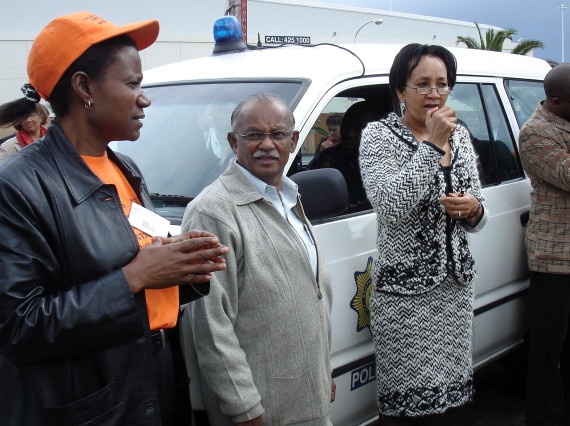
Minister Lindiwe Sisulu, with Jockin Arputham (President of SDI) and Rose Molokoane, National Co-ordinator of FEDUP, 2006

Minister Lindiwe Sisulu, with Jockin Arputham (President of SDI) and Rose Molokoane, National Co-ordinator of FEDUP, 2006

I have just retuned from a trip to India – a most valuable learning experience it was. I did not get to see the Taj Mahal but what I experienced was more valuable than the Taj. I went out to see the pavement dwellers of Mumbai living in the most shocking conditions on the edge of society – having lived that way for all their lives. But a people with hope. An entrepreneurial people taught me the value of saving and the spirit that drives them to ensure that they do provide a house for their families. A people determined that they will do their bit to restore their dignity.

I yearn for that spirit here. A spirit that says this is our government – how can we help it in this huge challenge to provide housing? What can I – sitting in a shack house – do to help ensure that I too have a house? We need to infuse this in our people. We were once a proud people that moved heaven and earth and did do the impossible. The present challenge is within our power to resolve.

In India, I also had a tour of projects that had been undertaken by slum dwellers, projects that demonstrated resourcefulness, originality and innovation. They vindicated the belief I had always had that if government was to accelerate the delivery of housing then the complete involvement of the poor needed to receive full support.

I then began to reflect on the 2005 World Summit Outcome that committed governments to specific actions in relation to slum prevention and slum upgrading. Key among the resolutions was the commitment to increase resources for housing and the related infrastructure.

Ghandi believed that there was an innate goodness in human nature which at all times is able to perceive the truth as though by instinct.

We are a people with a very proud history, proud of what we can do for ourselves. My worry right now is that this proud heritage is dissipating now that we have our own government, the government of the poorest of the poor, the disadvantaged. And we have ourselves to believe that the government will provide.

I have been very attracted by the founding ethos of Shack Dwellers International: that no matter how disadvantaged, we can still do it ourselves, that in fact it is nobler if we do it ourselves. Help me plant this into the heart of every disadvantaged South African. Help me inspire them to stand up.

At the Special Ministerial Conference of the African Ministerial Conference on Housing and Urban Development (AMCHUD), that we held a month ago, in Nairobi, resolutions had been passed to effect these outcomes of the World Summit by focusing governments on the resourcefulness of the poor.

Having ourselves placed the issue of slum prevention and slum upgrading at the top of the international agenda we resolved not only to prevent new slum formations but to also look into the existing policies, legal, institutional and regulatory frameworks that hinder our abilities to deal with slum formation in ways that affirmed and strengthened our relationship with the poor.  We therefore resolved to review the frameworks that exist to enable an environment where the full capacities of community organisations and non-governmental organisations were utilised. In practice, amongst other things, this will mean the promotion of community-led development processes in slum prevention and slum upgrading and the identification of ways to assist initiatives relating to savings.  

I am gratified that the relation we have cultivated with yourselves has enabled us to implement some of these resolutions already. The Homeless People’s Federation, that we had interactions with in 2004, enabled us to make this start.

The Conference cements the relationship by now enabling us to act together at the international level. It is my hope that such collaboration will help encourage a fundamental rethinking of issues connected with sustainable development and the achievement, specifically, of the Millennium Development Goals. It is a great contradiction of our times, in my view, that whilst on the one hand we correctly extol the virtues of economic progress and political stability, on the other hand, we remain unable to expend and invest sufficient resources to achieve those outcomes.

I have had occasion to look back and assess the damage done to all of us in this country by the policies of inequality. It has cost us dearly. If eighty years ago we had all progressed along the same path, I leave you to imagine where this country would be today. We held back on the development of a segment of our society and we live with those consequences.

The steps that we have taken to support and assist initiatives from the Slum Dwellers International and Federation of the Urban Poor recognizes this singular truth. As government we recognize that apart from the market mechanism other initiatives and ways that have their origins in the people who make up our cities and towns, exist.

Minister Lindiwe Sisulu and President of SDI, Jockin Arputham

Minister Lindiwe Sisulu and President of SDI, Jockin Arputham

This is the experience that yet again I was exposed to when again I visited Thailand last year. I was exposed to a unique programs that forms partnerships between communities, government, and other stakeholders in identifying and developing suitable land for housing. This was a partnership to ensure that communities were located in the most opportune locations where their actual needs could be addressed in a sustainable manner.

We are thus committed to learn through practical experience and to enhance our programs to ensure that community needs are achieved. And I thus welcome the proposed structured cooperation arrangement that will be established during the Conference for the implementation of projects linked to policy and strategy enhancement.

The Conference is a unique opportunity for all of us to learn how partnerships with civil society are formed and should operate.

I would like to congratulate all of you for the achievements that both individually and collectively you have made in advancing the cause of slum dwellers.

Finally, Jockin, I do not know what to say to you. You remind me so much of my own father. You are beautiful in every single way!

I thank you most sincerely.

Reflections on the Southern African HUB Meeting: Lusaka, Zambia

By CORC, FEDUP, ISN, SDI No Comments

**Cross-posted from the SDI blog**

By Noah Schermbrucker (on behalf of SDI Secretariat)

SDI Southern African Hub Countries

SDI Southern African Hub Countries

HUB meetings are gatherings that bring affiliates together to collectively set the agenda for the region. They are used as a mechanism to share collective learning, devise targeted support strategies (e.g. exchanges) for individual countries and concretize planning, on a regional scale, for the next period. The Southern African HUB recently took place in Lusaka, Zambia from 12-14 September 2014. Delegations from South Africa, Namibia, Zimbabwe, Swaziland, Botswana and Malawi attended the 3-day meeting. A team from Uganda, who had recently hosted the East African HUB, participated in order to promote continuity. Ghana was also invited as the West African HUB has been indefinitely postponed due to the Ebola outbreak.

Below find my reflections on the meeting. I hope that they provide some insights not only into SDI processes at a regional level but also the “nuts and bolts” of which this process is comprised. This is hence not an exhaustive description of the meeting but aims to give the reader a “practical flavor” of SDI’s work as it plays out in the interactions between slum dwellers, support professionals and government.

Day 1: Engagement with Ministry of Local Government, field visit to Garden Park community under threat of eviction (only some delegates) and meeting at Lusaka City Council (LCC).

The Zambians were clear that the first day’s agenda was about taking their process forward, especially in terms of achieving tangible outputs from government. South Africa, Namibia, Zimbabwe, Uganda, Malawi and Ghana all stressed the actual outputs of their relationship with government to both the Ministry of Local Government and LCC. As was noted, “ An M.o.U with government is just a piece of paper unless it has actual tangible outputs attached”.

Making the first day about taking the Zambian process really orientated us within local challenges and used the HUB as an instrument to open space with government for the Zambians (which they are now following up on). The Southern African HUB has previously been very “talk” orientated and not substantively relevant to the local process so this shift was refreshing to see. A trick that we missed out on was not inviting government officials from the countries attending as the Zambians felt that this would have deepened the impact in these engagements with government. As a federation member noted “governments like to talk to other governments”.

Through the site visit to Garden Park, evictions were placed on the table as a key issue with the HUB committing (on the final day) that each federation will draft guidelines on evictions sharing their experiences and strategies used (this emerged out of a separate federation only session)

Women from Garden Park meet to discuss eviction threat

Women from Garden Park meet to discuss eviction threat

Day 2: New Secretariat systems (L,M&E, New Secretariat structures)

Day 2 was spent at the Zambian federation’s resource center in George compound with significant participation from the Zambian federation. Mara (from the SDI Secretariat) and Muturi (from the Core Team) did a fantastic job in taking everyone through some of the new systems developed by The Secretariat including the L, M &E worksheet and call for support. There was a vibrant discussion about these new systems and some very important suggestions made as to how they could be refined (e.g. definitions of certain terms such as “secure tenure” need to be clarified). These issues were noted and will be shared with the secretariat team.

A very critical issue was raised around the learning center and its role within the HUB, a number of people felt that the HUB itself was serving as the learning center. We need to think carefully about how the learning center fits into the HUB-especially in the case of Southern Africa were conditions and experiences in Cape Town are quite different to the rest of the countries. People felt strongly that different countries had different strengths (e.g. Namibia and Zimbabwe around collection of their savings number & indicators).

"Carrying" water home in Chazanga, Lusaka

“Carrying” water home in Chazanga, Lusaka

Day 3: HUB Business

The day was focused on collecting country reports that were compiled previously by each country. These will be used to aggregate a set of Southern African HUB figures that can be taken to the Board & Council (B&C) meeting. Each country handed in their reports but then spoke about the “burning issues” and what support was needed. This led to suggestions for further exchanges that have been noted. The HUB also discussed progress made on exchanges decided at the B&C. In general this approach was well received as countries did not use up time providing long lists of figures but rather focused on the key issues that they wished to raise. The exact role and nature of the CORE team was also explained at length.

Throughout the meeting the participation of members from Kenya, Uganda and Ghana was extremely helpful. Their insights were valuable and contributed to the discussions with government. The continuity between the East African HUB and this HUB was definitely beneficial and something that we could take forward.

An issue that emerged from some was how we can include more “voices” in the HUB and encourage everyone to participate and speak more fully. It seemed that when we broke into country teams it allowed for more even discussion and participation as opposed to just a few people speaking in the bigger forum.

A HUB report is currently being drafted by Zambia and will be shared shortly.

Sharing experiences on building City Funds

By CORC, FEDUP, ISN, News, uTshani Fund No Comments

20140902_103814

By Walter Fieuw (on behalf of CORC)

African cities are characterised by informality, as the rapid urbanisation from rural areas are transforming cities. Within informal settlements, residents are investing incrementally in their households, despite the lack of tenure security in many cases. A large gap exists between household investment and government spending on infrastructure and social support. Government expenditure is often times locked into medium term budgets which might or might not be adjusted on an annual basis, and procurement of goods and services follow time consuming processes. There are also various interests competing for government spending, and low income groups’ influence over the direction of spending is often times weak. Slum dwellers often times do not have access to loans from financial institutions, even considering the popular held belief of an emerging African middle class, which is still highly speculative. Hence new instruments are needed to build on and support the incremental upgrading of informal settlements and support for livelihoods and small income generating loans.

Shack / Slum Dwellers International supports the notion of creating local “city funds” which acts as a mechanism for building city-wide agglomerations and networks of the poor, creates partnerships between organisations of the poor and city governments, and gives voice and power to the urban poor. Following a meeting of country Federations on various experiences in building city funds in January 2014, SDI reported that,

Flexible citywide urban poor funds need to change existing systems of exclusionary finance.  Local government is a change vector that cannot be dismissed and their inclusion in these funds has the potential to create citywide political impact. Organized communities, who can clearly articulate their demands and the rationale for their financial decisions, can negotiate this space ensuring that funds remain relevant to the poor.

Between 1 and 3 September 2014, the Slum Dwellers Federation of Uganda (NSDFU) and support organisation Actogether hosted a meeting on city funds bringing together three African cities: Kampala (Uganda), Lusaka (Zambia) and Cape Town (South Africa). These cities have in common grant funding agreements with British donor Comic Relief, part of the “People Living in Urban Slums Programme”, which is also supported by the DFiD AidMatch initiative. Freetown (Sierra Leone) is forth city in the Comic Relief initiative, but were unable to travel due to the Ebola epidemic.

Comic Relief’s funding strategy of bringing together organisations and communities in city-wide partnerships have been lauded by participating grantees. In this way, according to Triple Line Consulting, who has been supporting Comic Relief in developing responsive city-level Monitoring and Evaluation (M&E) frameworks, the impact of the grants could possible achieve: a) a deeper understanding of the context than it might normally have b) a complementary portfolio of grants across the city c) improved collaboration between the grantees within a city d) a city level monitoring and evaluation framework and e) identified areas of learning across the 4 cities that can be shared with the broader sector.

20140902_101323

Katana Goretti, a Federation leader, demonstrates the construction phases of the eco-san toilet being constructed in Kampala

Reporting on country experiences to date:

Kampala, Uganda

The joint work to which NSDFU and Actogether are a part of is called KASTI, Kampala Slum Transformation Initiative. The Ugandan Federation will be actively engaging local government counterparts in five districts of Kampala, with dedicated settlement forums which feed into municipal forums, and ultimately city forums, to which the guests were exposed to on 3 September (more on this later). Such forums have proved tremendously useful in the past, as this blog article indicates. The Federation’s primary data collection of “settlement profiles”, which are captured on Geographic Information Systems (GIS), will be used to collaborative design a slum upgrading strategy. Comparisons with existing data from Kampala Capital City Authority and the National Water Department has revealed many informal settlements that were not on government’s databases. This is where the city fund becomes important, and seed finances both capital projects, especially innovations in sanitation, and livelihoods projects.

20140903_105337

On 3 September, NSDFU and Actogether hosted the first City Forum with Kampala Capital City Authority, which was lauded as a success

Lusaka, Zambia

In Lusaka there are 30 slums known as Improvement Areas, home to about 70% of the population. In 1996 the Government’s Housing Code allows for participatory approaches to slum upgrading, and the Housing Statutory Bill gives the minister power to declare and upgrade slums. However, there is a policy disjuncture in the sense that the Urban and Regional Planning Act does not have the right policies and instruments to recognise and upgrade slums. Tiyende Pamodzi, which means “working together” in local vanacular Nyanja, is the working title of the Comic Relief funded initiative in Lusaka, of which the Zambian Homeless People’s Federation and support organisation People’s Process on Housing and Poverty in Zambia are a part of. According to PPHPZ, Tiyende Pamodzi’s

main aim of the project is to gather accurate and reliable information of all the slums in Lusaka in order to inform participatory slum upgrading strategies which will see the regularization of slums and improved service delivery. Lusaka City Council (LCC) as the responsible authority for slum upgrading in the city cannot go it alone and as such will bank on the strength of the federation to mobilize their fellow slum dwellers to enumerate and map their settlements and use this as a basis for planning for the upgrading.

The Federation and PPHPZ has a strong working partnership with the University of Zambia, and in the programme will develop GIS courses to improve spatial mapping and profiling data as a basis. The city fund has not yet been defined, and the Federation and PPHPZ with the University as partner is still looking for the appropriate partners to serve on the board and advisory committee.

Cape Town, South Africa

In Cape Town, CORC secured a donor funding arrangement with Comic Relief, with community partners ISN and FEDUP. At the heart of the proposal is the setting up of a city fund, which is currently still being developed and constituted. The initiative is called Khayalethu, and joins the Alliance with Isandla Institute and Violence Prevention through Urban Upgrading (VPUU). At the Kampala meeting, community leaders Thozama, Tamara and Nozuko reflected on the current work in Khayelitsha, where Khayalethu is focused. In the first year, communities have profiled 47 settlements, enumerated 7 settlements, and developed community capacity to plan projects. However, challenges have been experienced in getting project approvals for community-identified settlement upgrading projects from the City of Cape Town. Livelihoods is also a primary focus, and experiences were shared around issuing short term loans for livelihoods development.

The South African delegation to Uganda (left to right): Thozama, Tamara, Walter Fieuw (CORC), Nozuko, Michael Krause (VPUU - Comic Relief partner)

The South African delegation to Uganda (left to right): Thozama Nomnga, Tamara Hela (both FEDUP/ISN), Walter Fieuw (CORC), Nozuko Fulani (FEDUP/ISN), Michael Krause (VPUU – Comic Relief partner)

The common experiences, opportunities and challenges experienced by the three cities in the first year of the Comic Relief funded initiative is instructive in developing locally responsive and appropriate city funds, which can enable and support communities in united networks to design, manage and upgrade their settlements. Moreover, building financial partnerships between city government, organisations of the urban poor and other stakeholders can lead demonstrating that people-centred urban planning and development, based on flexible finance, is vital to the creation of inclusive, pro-poor cities.

Building the Siphumelele WaSH facility / Innovation Centre in Langrug, Stellenbosch

By CORC, FEDUP, ISN No Comments

By Aditya Kumar and Yolande Hendler (on behalf of CORC)

Zwelitsha is a section of Langrug informal settlement, located on the rocky ground of a mountain slope that overlooks the lush valleys and nearby town of Franschoek in Stellenbosch Municipality. Zwelitsha’s residents make up 604 people who reside in 318 structures. Langrug as a whole is home to 4700 people who live in 2118 structures. While Langrug’s other sections have access to water and sanitation facilities – including the Langrug Water Sanitation and Hygiene (WaSH) facility – Zwelitsha’s steep incline and rocky terrain have made it extremely difficult to build water and sanitation points. To this end, Zwelitsha currently has only one tap and no toilets.

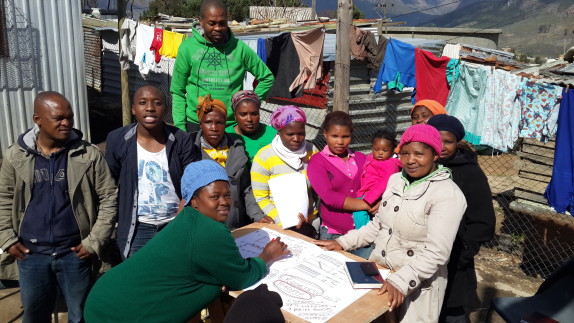
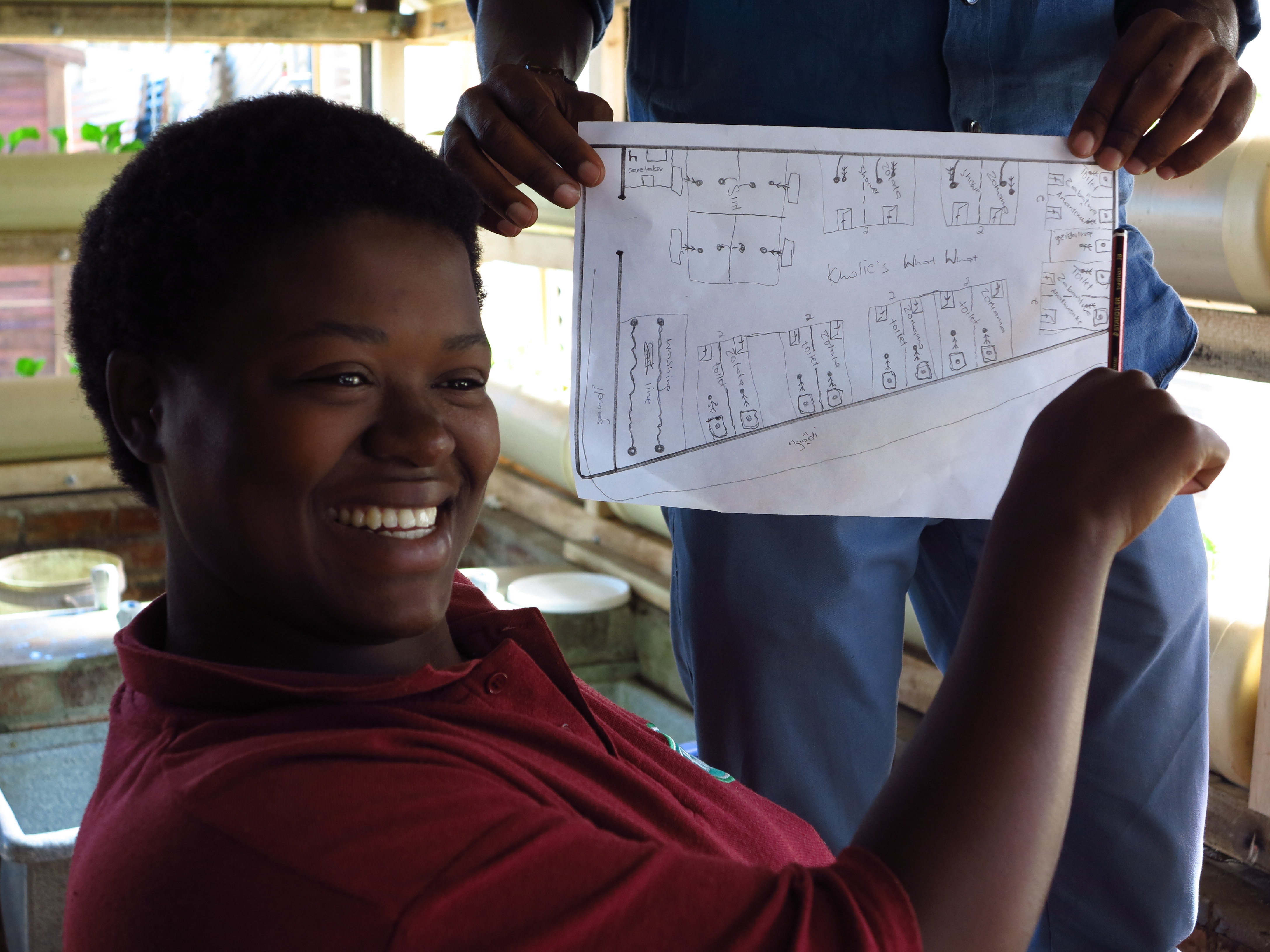
Zwelitsha community members developing plans for the Siphumelele WaSH facility

Zwelitsha community members developing plans for the Siphumelele WaSH facility

Yet this situation is about to change, as community members began work on the foundations of the Siphumelele WaSH Facility and Innovation Centre last week in partnership with the Informal Settlement Network (ISN), Federation of the Urban Poor (FEDUP), Community Organisation Resource Centre (CORC), Touching the Earth Lightly (TEL), Sculpt the Future Foundation, Stellenbosch Municipality, Worcester Polytechnic Institute (WPI) and Enviro Loo (a waterless sanitation provider).

Site of Siphumelele WaSH facility in Zwelitsha section of Langrug informal settlement

Site of Siphumelele WaSH facility in Zwelitsha section of Langrug informal settlement

Building on Experience: Learning from the Langrug WaSH facility

Based on the monitoring, evaluation and learning around the existing WaSH facility (read more here) in Langrug, Zwelitsha’s residents initiated a discussion about the possibility of a second WaSH facility. They approached ISN and CORC, WPI and Stellenbosch Municipality, all of whom had partnered with the community in building the existing WaSH facility in 2011.

Learning from the existing WaSH facility in Langrug

Learning from the existing WaSH facility in Langrug

The discussion related to the outcomes of a sample survey that was conducted over 12 days in July and August 2013. This survey looked at the benefits of data collection, the various uses of the existing WaSH facility (economic and small enterprise, health and food security, educational, organisational meeting point) and its upkeep and maintenance.

More specifically the outcomes of the survey of the Langrug WaSH facility included:

  • The collection of inception data for Siphumelele WaSH facility
  • Current data collection for usage at both WaSH facilities from July 2014
  • Increased use of the Langrug facility by crèches in Langrug. (An estimated 40 children served per day at the facility around issues related to basic hygiene)
  • A fully functioning post-office hosted in the Langrug WaSH facility, based on previously collected enumeration (socio-demographic) data
  • Support for HIV / AIDS awareness in Langrug WaSH facility
  • Potential for small businesses selling health and hygiene products in Langrug facility
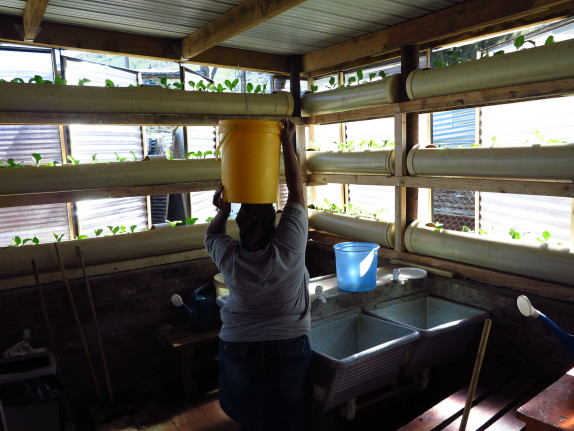
  • Increased food security through the greening of the existing facility in partnership with Touching the Earth Lightly
  • Langrug WaSH facility as a space for youth education, workshops and meetings
  • Dramatic increase in usage of Langrug facility due to consistent cleanliness and ancillary functions within the facility
  • Comparatively low maintenance and upkeep of Langrug facility
  • Success in preventing vandalism
  • Significantly, the community expressed a higher degree of ownership in relation to the Langrug WaSH facility as it was community designed, built and maintained

The challenges that emerged around the facility enhanced the monitoring, evaluation and learning around the delivery and maintenance of services, and assisted in conceptualising the Siphumelele WaSH facility.

Some of these challenges and learning points related to:

  • The low usage of communal showers
  • The slow inception of the hair salon

Building the Concept: Co-Designing the Siphumelele WaSH facility

Given the cost of maintenance and operations, the community and partners involved explored the idea of a livelihood-linked wash facility where a portion of the facility would generate revenue (through a kiosk, crèche, health and educational programme) to reduce the burden on municipal funds for maintenance. Given the community’s experience of struggling for a space of safety and dignity, the Zwelitsha design and construction team named the wash facility “Siphumelele” – “We have achieved it”.

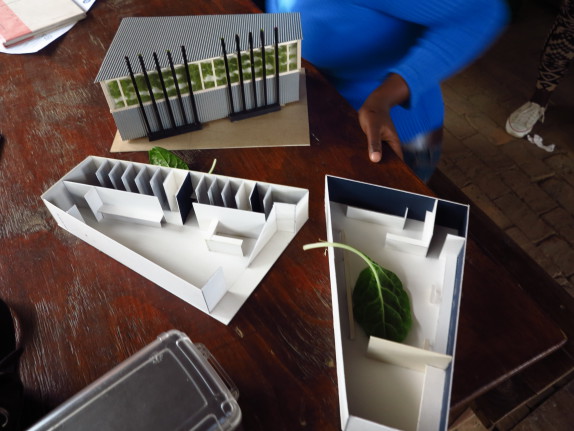
From March to April 2014 the community, together with TEL, began co-designing the facility. The designs include toilets for men and women, a wash area and a kiosk on the ground floor. The second floor will contain a crèche and soup kitchen that will be managed by the community. After conducting a survey with Zwelitsha’s families about amenities to be included in the facility, community leaders chose to exclude showers due to their infrequent use in the Langrug WaSH facility. The community also chose to make use of Enviro Loo toilets after they visited Enviro Loo in November 2013 and received detailed explanations on how the toilets are maintained and operated. The Enviro Loo is a waterless toilet system that provides a safe, non-polluting, cost-effective solution to sanitation.

Co-designing with Touching the Earth Lightly

Co-designing with Touching the Earth Lightly

IMG_6272

Co-designing the WaSH facility

Model of Siphumelele WaSH facility

Model of Siphumelele WaSH facility

Building the Team: Community-led Implementation

Apart from the partners already mentioned, the community has put together different teams to lead the implementation process. These include a leadership committee, a savings group and an Informal Settlement Upgrading Team (ISUT). This team is led by 8 women and includes a Community Liaison Officer, a storekeeper and a project manager who spearhead the construction process. After an exchange to a savings scheme linked to the Federation of the Urban Poor (FEDUP), the community set up their own savings group in July 2014 so as to manage finances to maintain and operate Siphumelele WaSH facility.

Building a voice of the urban poor in Langrug

The foundations for both WaSH facilities were laid when Stellenbosch Municipality signed a Memorandum of Understanding (MoU) with the community and ISN / CORC in 2011. Since this date Langrug’s community leaders have been developing a formal relationship with the Municipality and are making a strong case for how urban poor communities successfully organise themselves to lead their own upgrading processes, and how co-design and co-planning is a step towards a more tangible ‘inclusive city’.

(Photographs: Stephen Lamb, TEL)

Phase 1 of construction

Phase 1 of construction

The construction team

The construction team

FEDUP and ISN Leadership Retreat 2014

By CORC, FEDUP, ISN No Comments

By Yolande Hendler (on behalf of CORC)

Leadership Retreat in KZN, Durban

Leadership Retreat in KZN, Durban

From 20 – 25 June 2014 national leaders from both FEDUP and ISN met in Durban, Kwa-Zulu Natal, for a leadership retreat. The aim of the retreat was to open up a space for leaders to reflect and reassess the different methods and tools they have been using to mobilise their communities.

These tools – mobilization and savings, exchanges, enumerations, mapping, and community-led implementation – are a shared set of rituals that all federations affiliated to Shack / Sum Dwellers International (SDI) practice. The retreat was not only a time of reflection, reorientation and discussion. It was also one of practical learning, especially in mapping, enumeration and savings practices, in which leaders refocused on the strength of these tools to mobilise new informal settlements and savings schemes.

The retreat

At the beginning of the retreat, Rose Molokoane, national co-ordinator of FEDUP explained,

“The last time we were here in Durban was for the march [to eThewkini Municipality] on 24 March 2014. We realized then that we need to continue building our leadership to make our work and these kind of events successful because an organisation is not a project, but a process. This is when the idea developed to call most if not all our leaders to a retreat”

This went hand in hand with developing and discussing a joint focus for the retreat. In thinking about the nature of a retreat, the group responded that it viewed the retreat as a time of reflection, co-operation, re-affirming vision, working together and a reminder of the Alliance’s current position. The group also highlighted that it wanted to achieve this focus by better understanding the Alliance’s vision and background as well as getting practically involved in community activities.

Rose Molokoane facilitates a discussion at the Leadership Retreat

Rose Molokoane facilitates a discussion at the Leadership Retreat

While the first day of the retreat looked back at the history and foundation of the Alliance, the other days focused on building the capacity of Alliance leaders for current and future activities. On the first day therefore the group focused on the Alliance’s founding gathering at Broederstroom and reminded each other of five pillars: love, availability, transparency, trust and commitment.

On the remaining four days Alliance leaders split into teams to do enumeration and mapping exercises in Boxwood and Johanna Road settlements in Kenville and to collect savings in Kwa Bestar. This meant that FEDUP and ISN members, some for the first time, became actively involved in one another’s tools of enumeration and savings.

These days also included training with the CORC enumeration team and workshops on the organisational roles and structure of the SA Alliance (ISN, FEDUP, CORC & uTshani Fund).

Rose Molokoane (National Co-ordinator of FEDUP) and Charlton Ziervogel (CORC Programme Officer)

Rose Molokoane (National Co-ordinator of FEDUP) and Charlton Ziervogel (CORC Programme Officer)

Enumerations and mapping

The enumeration activities in Boxwood and Johanna Rd introduced FEDUP members to the practice of numbering, shack measuring, data collection and capturing, and settlement mapping. For Rose, it was clear that celebrating information is vital. This is why enumerations are so powerful – the socio-demographic questionnaires collect valuable information that communities can use to better organize themselves and lobby local government. Ma Mkhabela, from FEDUP KZN agreed that,

“It’s important that leaders are present at enumerations so that they can be in touch with community issues. Enumerations help to give people a space to relate to each other”

(Ma Mkhabela, FEDUP KZN)

Similarly, mapping and measuring give community members a further tool for planning and lobbying. By knowing the number of pathways in one’s settlement, or the incline of gradients, communities can contribute to developing a plan for their settlement.

Right: MaMkhabela (FEDUP KZN)

Right: MaMkhabela (FEDUP KZN)

Savings

During the savings collection in Durban’s Kwa Bestar, ISN members received a direct insight to the power of savings. They saw how savings can strongly connect communities through regular savings collection visits that also offer a personal opportunity to enquire about the welfare of a fellow savings scheme member.

Ndodeni Dengo ,Durban’s ISN co-ordinator, reflected,

“It was my first time collecting door-to-door savings. We need to take this back to our communities”

ISN National Co-ordinators Front: Ndodeni Dengo

ISN National Co-ordinators Front: Ndodeni Dengo

Looking back and moving forward

During the feedback session many groups expressed the value they saw in working together as a team and emphasized the need to continue sharing ideas and establishing a good working relationship between ISN & FEDUP.

“This retreat has revived me. I’m now able to remember things I had forgotten. I learned how things should be done in our organisation. Our pillars are there to grow the organisation. In our region, we now also know about the power or enumerations”

(Rosina Mufumadi, FEDUP Limpopo)

Rosina Mufamadi (FEDUP Limpopo)

Rosina Mufumadi (FEDUP Limpopo)

The Dept. of Human Settlements honours Patrick Hunsley & pledges R10 million to FEDUP

By CORC, FEDUP, ISN, SDI, uTshani Fund No Comments

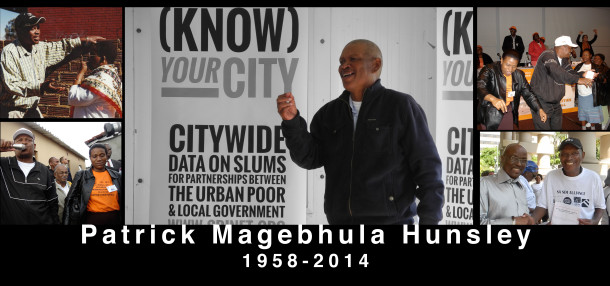
Patrick Magebhula Hunsley, founding member and stalwart of the South African Alliance and Shack Dwellers International (SDI), was awarded the Lifetime Achievement Award by Lindiwe Sisulu, Minister of Human Settlements on behalf of the Department of Human Settlements on Thursday 14 August 2014 at the annual Govan Mbeki Human Settlements Awards ceremony held in Johannesburg.

Patrick Magebhula Hunsley

Patrick Magebhula Hunsley

Patrick's son, Charles Hunsley, receives the Lifetime Achievement Award on behalf of his father from Minister of Human Settlements, Lindiwe Sisulu

Patrick’s son, Charles Hunsley, receives the Lifetime Achievement Award on behalf of his father from Minister of Human Settlements, Lindiwe Sisulu

This prestigious award ceremony (established in 2006) aims “to promote and inculcate a culture of excellence within the human settlement sector in the delivery of quality human settlements and dignity to South Africans” (Reference). The awards acknowledge excellent achievements on a Provincial and National level, in order to showcase and demonstrate the work done by the department at both tiers and to promote best practices in meeting the delivery mandate of the Presidency’s Outcome 8, which is aligned with the vision of building sustainable human settlements and meeting the Millennium Development Goals.

This year, however, the minister included an additional category of awards – the Lifetime Achievement Award – that was given to only two people in honour of excellent and noteworthy contributions. When attending Patrick’s funeral in Durban on 16 August at the KwaMashu Christian Centre in Durban, the minister shared

“For the first time this year, we honoured people with outstanding qualities and recognized them as life time achievers in this area. Of all the people who have been active in this field we chose two people. The first was Joe Slovo, the first minister of housing and the second was Patrick Magebhula”.

Lindiwe Sisulu, Minister of Human Settlements and Rose Molokoane, National Coordinator of FEDUP at Patrick Hunsley's funeral on 16 August 2014.

Lindiwe Sisulu, Minister of Human Settlements and Rose Molokoane, National Coordinator of FEDUP at Patrick Hunsley’s funeral on 16 August 2014.

Lindiwe Sisulu, Minister of Human Settlements pledges R10 000 000 to the Federation of the Urban Poor at Patrick's funeral

Lindiwe Sisulu, Minister of Human Settlements speaks at Patrick’s funeral

The Federation of the Urban Poor (FEDUP) has had a long-standing relationship with government. In the lead up to the 1994 elections, the federation of women’s savings collectives lobbied for an alternative approach to housing that focused on people-centred and controlled development – this model was appropriated by government in 1998 in the form of the People’s Housing Process (PHP). Read more here. Patrick was instrumental in these processes, negotiating with government and ‘un-blocking’ strategic regions in the country. In 2006 FEDUP secured a long term ‘subsidy pledge’ with the department of human settlements which was signed by FEDUP, uTshani Fund and then national minister of housing, Lindiwe Sisulu for 1000 housing subsidies per province in South Africa. In 2010 Patrick served as special advisor to then minister of human settlements, Tokyo Sexwale, on human settlements policy and practice. In 2011 Patrick was asked to serve on a Ministerial Task Team on Water and Sanitation, headed by Ms. Winnie Madikizela-Mandela, tasked with addressing the issues of open-air, incomplete and dilapidated toilets in poor communities across South Africa.

Having worked together closely with Patrick, current Minister of Human Settlements, Lindiwe Sisulu, recognised him at the award ceremony as

 “an outstanding, humble man who helped us shape our policies and understand how people who live in slum conditions are not victims, that they have the power, together with our support, to take themselves out of their poverty. His name is Patrick Magebhula and he passed away on Monday 4 August 2014. It is a sad loss for us. We will bury him on Saturday with all the dignity that he deserves. Today we honour him as an internationally recognised champion and pioneer of the empowerment of the poor and acknowledge his outstanding contribution. We and his broader family of the Federation of the Urban Poor and SDI will have to double our collective effort to further his work to ensure that his life passion was not in vain.” (Reference)

At Patrick’s funeral, which was attended by family, hundreds of fellow activists, friends and comrades the minister remembered how she and Patrick had first met in Barcelona (Cape Town) when she was a new minister together with FEDUP and Rose. As she got up to speak at one of the occasions she explained that Patrick had humorously asked her to explain who she was, who had sent her, who she was representing and what her promise would be to the Federation. After the minister had shared this anecdote, she pledged R 10 000 000 in housing subsidies to FEDUP. Kwa Mashu’s church – packed to the brim – erupted in song, cheers and ululations.

 “My only regret is that Patrick is not here today to hear me but I want him to know that the promise I made to him, today, I kept in his honour. The federation will not be in want while I am around, the federation will not want for anything while the DG, the deputy minister and the department is there. The partnership we have will live in honour of this man whose humility is amazing. As the Department of Human Settlements we count ourselves as the broader family of Patrick.”

She also honoured the work of Shack Dwellers International (SDI) and its nomination for the Nobel Peace Prize, which South Africa has decided to second.

“We as South Africa have pledged to second SDI’s nomination and lobby all African countries who are part of us to second the nomination so that we can celebrate with Patrick should we win the peace prize”.

The Minister then led the gathering in the song: “Lihambile iQhawe”, a famous freedom song that was also sung as Mandela was buried in December last year. The refrain goes: “Lihambile iQhawe lamaQhawa” – The Bravest of the Brave has departed.


Patrick Magebhula Hunsley | 1958 – 2014

By CORC, FEDUP, ISN, uTshani Fund No Comments

patrick hunsley-1

Patrick Magebhula Hunsley, our comrade, our brother and our very special friend passed away on Monday 4 August.

Patrick has been dodging bullets all his life – literally and figuratively. He survived being stabbed in the lung. He survived vicious assaults. He survived stints in reformatory and in prison. He survived being gang-pressed into an Ihkatha Impi. He survived a prolonged fight in the shacklands of Inanda to bring a progressive civic organisation into being in his settlement. He survived wave after wave of attacks from forces of reaction and crime to unseat him.

In the 1980s and 1990s we invaded land to create settlements that now house formal communities with services, legal tenure and housing development. We have worked with all levels of the government to give the urban poor a voice. Working with communities we have driven home the need to save money, collect information and upgrade. – Patrick Magebhula writes in an opinion piece in the Mail and Guardian

Since the early 1990s, Patrick has been instrumental in building community networks and local savings schemes. He negotiated with government departments, and even turned away offers when it jeopardised the needs of the community. From his home in Piesang River between the shacklands of Inanda, Durban, where the Federation built 1,431 houses between 1992 and 2000, Patrick mobilised communities across South Africa as a leader of the Federation of the Urban and Rural Poor. Since 2008/09 he served as the chairperson of the Informal Settlement Network. He built progressive partnerships with government agencies and as a special advisor to the previous minister of Human Settlements Mr. Tokyo Sexwale, served as a committee member of the Ministerial Sanitation Task Team, and presented at numerous international conferences such as World Urban Forum 7.

[vimeo width=”620″ height=”485″]http://vimeo.com/43888528[/vimeo]

Patrick has breathed his last. The accumulated batterings of poverty wore him down. It is hard to imagine a future without him – without his marvellous sense of humour, his poetic soul, his fiery oratory, his capacity to find common ground with one and all, his deep compassion for his fellow human being. A flawed genius has passed on. Our movement will be immeasurably more poor who share his dream for a just and equitable world in which poverty and exclusion, oppression and intolerance are consigned to the past.

Unknown

The sun shines for the chosen few.

The sun rises for the lucky ones.

The sun sets for the majority of the poor.

I end up counting the stars


For the next few weeks there will be mourning for Patrick in hundreds of informal settlements, backyard shacks, pavement dwellings in dozens of countries. There will be mourning for him in places of power where his sparkle and his candour, his determination and his unwavering commitment earned him enemies but won over many, many more.

Everyone is invited to share their stories, memories and moments with Patrick on a dedicated social media channel.


Invalid Displayed Gallery


A selection of Patrick’s poems are available for download:

How Community Construction Management Teams (CCMT) can lead upgrading projects

By CORC, FEDUP, ISN, uTshani Fund No Comments

By Yolande Hendler (on behalf of CORC)

20140722_141359

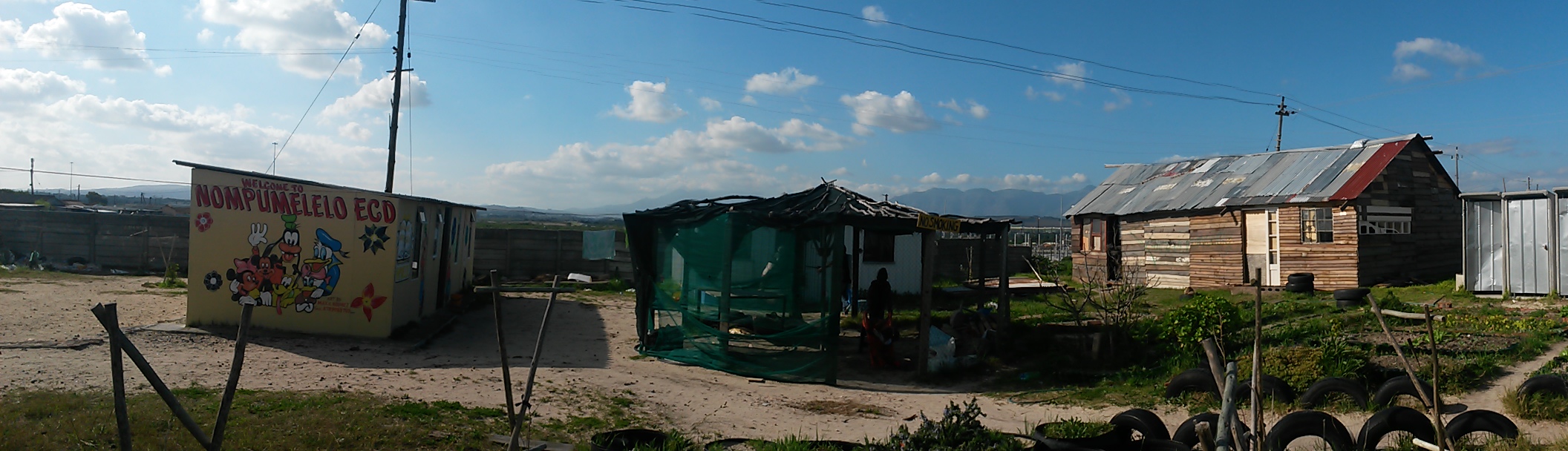
The venue : Makhaza Day Care Centre in Khayelitsha Cape Town

If designing and planning with communities are key aspects of people-led projects then people-led implementation and -construction are too. The SA Alliance – through the Federation of the Urban Poor (FEDUP) – has pioneered this people-led approach since 1994. By lobbying government, FEDUP strongly influenced low-income housing policy that came to be known as “the People’s Housing Process” (PHP), a special housing subsidy that allowed for much greater involvement of communities in the construction of their houses. Since then, FEDUP members have successfully implemented the construction of their houses through Community Construction Management Teams (CCMTs).

Although CCMTs have for the most part been linked to housing projects in the Alliance, setting them up is just as relevant to the Alliance’s more recent involvement in informal settlement upgrading. During this week’s three day CCMT workshop, experienced CCMT members introduced Cape Town community leaders to the CCMT model of community-led construction and explored how it could function in informal settlement upgrading.

The Exchange

Over three days Hasane Khoza (Abi) and Maureen Skepu from Gauteng shared their experiences in community construction with about 30 leaders from 6 settlements in Cape Town. With a background in construction management, Abi has helped to train and set up CCMTs and monitor housing projects. Maureen has a rich experience in CCMTs – she became a member of FEDUP in the early 2000s, accepted a volunteer position with a local CCMT five years later, and in 2011, moved into her own CCMT constructed house in Orange Farm, Gauteng. Read more about Maureen’s story here.

IMG_1730

Day 1 of exchange: background and formation of CCMTs

During the exchange, Abi and Maureen provided some background on the formation and strcuture of CCMTs, roles and responsibilities of each CCMT member and how to introduce the model of CCMTs to informal settlement upgrading.

The group also spent an afternoon in Flamingo informal settlement, which is currently upgrading and re-blocking. The visit offered an ideal opportunity for Flamingo’s steering committee to explain the way in which they have organised themselves so far and to explore the potential for them to form a CCMT to further streamline and ease the overall management of re-blocking. For the other communities present the site visit offered a first hand impression of what to consider for managing an upgrading project.

Terence Johnson, who has been involved in Flamingo from the outset on behalf of the Informal Settlement Network (ISN) explained,

“There are so many challenges and things you need to consider during upgrading. Some people don’t want to be moved, the rain causes flooding and leakages…. but we need to see these things not as a problem but as a challenge. And we can overcome challenges, especially if we work in a group like a CCMT. ”

Flamingo steering committee putting during on-site construction

Flamingo steering committee putting during on-site construction

How CCMTs work

On the first day Maureen explained,

 “The idea behind CCMTs is that communities oversee and implement projects themselves. In this way the community can make sure that the job is done properly. Because of this you need dedicated and thorough people on the team. The benefit of CCMTs compared to general steering committees are that each member has clear roles and responsibilities”

(Maureen Skepu, FEDUP housing project coordinator, Gauteng)

Within FEDUP, the CCMT process includes all the stages of house building: from drawing plans (which are formalised by qualified architects and engineers) to the construction process, which is contracted out to community members. The construction team consists of five members who each have a specific task: the technical officer requests specific items and provides quality control, the bookkeeper sources the best and cheapest materials, the storekeeper controls the inflow and outflow of stock, the loan and savings officer looks after the community’s finances, and the project manager oversees the whole process. And, unlike in the private and public building sector, most of the construction team’s members are women.

“The idea is to capacitate a community to move from being just employed in a project to driving the project themselves. Project management is a skill that can be learnt. Everyone can be taught and everything we know we have learnt. Managing a project leads to empowering a community.”

(Abi / Hasane Khoza, CCMT Construction Manager)

IMG_1731

Abi answering questions about CCMTs

Community Questions, Discussions and Insights

The workshop was a space of many questions and lively discussions. These were about how to break down the budget at community level so each person knows exact quantities and costs of materials to expect, at what stage in a project process a CCMT could be formed, or that women’s strength, resilience and thoroughness are good qualities for CCMT members. The communities present also liked the idea that CCMTs share the overall responsibility of an upgrading project – a shift from one person to a team of people.

In reflecting on the three days that passed, the community members expressed their value for exploring how the CCMT process can work in informal settings and upgrading projects. The suggested next steps are to establish guiding templates for establishing CCMTs as well as monitoring and documenting project processes on the ground, so that these can be shared with others as well.

“What we can learn from the CCMT workshop is that we need to continue learning, especially from the mistakes we make. Let’s not only make a habit of learning but actually do something with what we learn”

(Lindiwe Ralarala, Masilunge community leader)

Discussing the role of slopes and gradients on the upgrading site.

A discussion on the role of slopes and gradients on the upgrading site.

Grooming future leaders ‘ the youth federation on youth day’

By CORC, FEDUP, ISN, uTshani Fund No Comments

by Thandeka Tshabalala on behalf of FEDUP

About 70 youth federation members gathered at Kwamashu in Durban to discuss challenges that are facing the youth and how they can use the federation (FEDUP) rituals to influence change in their lives and communities.

Rose Molokwane enjoying her time with the youth.

Rose Molokwane enjoying her time with the youth.


To set the platform Rose Molokwane, the national federation coordinator shared her story about her experience when she joined the federation and the importance of grooming a youth federation in South Africa.

“I was 31 years of age when I joined the federation in 1991 and today I am happy to share my experience with the youth, the purpose of the meeting is to prepare the youth and help in changing their mindsets to influence change in their communities, like we have” she said.

She further stated that her aspiration as the national coordinator of the movement is to build a sustainable and successful organization and it is vital that the youth are at the forefront of bringing change in their communities.

“ We need an organized youth that will be able to create an agenda of change in their lives, our children grew up seeing their mothers creating an impact and opportunities for the poor in their communities. It is now time that we pull you (youth) next to us so that you can learn from us. There are so many service delivery protests in South Africa and it is heartbreaking to see the youth leading them thus we need to groom new youth leaders that want to learn about new avenues to negotiate with the state” said Rose.

Rose further challenged the youth to think about the ‘youth’ rights, how they can achieve them and who was responsible for making sure that their rights were protected.

re- thinking the youth rights

Bunita Kohler, the managing director of CORC (Community Organisation Resource Center) additionally challenged the youth to think about

“ the brave youth of 1976, the youth that had very little resources but persevered for what they believed to be right for them. As activist we felt that we could do something in our communities, we had a vision, thus it is important that the youth of today has a vision, what is it that you want to see in your life? What are we striving for and how do we want to achieve it? Which Values will we embrace in order to achieve these goals?”

In acknowledgement that the youth is experiencing a lot of challenges in their communities she urged the youth to use knowledge from the ‘old’ experienced federation members to advance themselves.

20140615_125617


The Youth reports  on challenges and ways to overcome them 

The youth presented their regional challenges such as unemployment, poverty, drug abuse, unplanned pregnancies, derelict living conditions, lack of education and support to establish youth activities. They all discussed a way forward in overcoming some of these challenges such as:

Creating platforms for Partnerships

  • The youth discussed using partnerships as a platform to bring positive change in their communities. From their main big challenge – unemployment, they all agreed to partner with government departments and NGO’s that assist in skills development and creating job opportunities.
  • Partnerships with the local councilor were seen to be important in unlocking local resources and using them to get more community involvement in youth projects.

Pule shared his story about  the benefits of creating partnerships 

  Savings has enabled the youth to negotiate with government. We belong to a savings group called yona yethu a savings scheme with 120 members. Some of the members have formed a co-operative which will enable us to gain more support from the government and also allow us to bring more income for our households.   At the mean time the group  washes dirty dustbins after the municipal trucks have collected the gabbage  , we clean them using chemicals and take them back to the owners at a certain fee.   We have further engaged with the solid waste management  department and city parks about the vacant land in our settlement that is used as dumping sites. We have proposed to clean them and then change them to parks for the children in the settlement to use. In order to stop people from dumping again we further engaged with the local councilor to speak with the community and appoint certain community members to be responsible for keeping an eye on anyone dumping. We meet weekly to discuss new views and challenges.

An organized youth-for- change

  • The youth realized that they needed to be organized in order to make an impact in their communities. An organized youth would be able to fight against poverty, landless issues, and lack of housing, unemployment and dealing with drug abuse. The youth was tasked to mobilize more youth members and form youth activities that will assist in influencing change in their communities.
  • The youth also asked experienced federation members to help them to create a youth federation organisation structure.

Adopting the federation rituals

  • Because savings is the backbone of the federation, the youth was urged to start forming savings groups in order to leverage more resources from the state and other partners. In the past the federation has used savings to leverage resources from the state through the people housing process (PHP). The savings helps the federation members to contribute in the building costs of their houses , increasing their subsidies to build bigger houses that can accommodate their family needs.
  •  They requested that they have more regional Exchanges to see what other youth members are doing in their communities so that they can exchange knowledge.

In order to spark more youth involvement in creating partnerships Harambee and the NYDE  (National Youth development Agency) presented about their programs.Most of the youth were excited in seeing that they can influence change in communities by ‘just’ giving information to the youth. Rose further reminded them that information was vital to bring about change thus she urged the youth to collect data from the enumeration reports that would be relevant to them such as regional youth challenges, number of unemployed youth.

A group photo during the historical site visit.

A group photo during the historical site visit.


Celebrating being the youth

The youth was taken on a cultural tour to enhance their knowledge on the South African history. The two sites at Inanda route Mahatma Gandhi and John Libalele Dube historical sites were chosen to inspire the youth about leadership that instigates change in communities despite facing challenges. They further celebrated youth day with cultural activities – some highlighting the challenges they are faced with in their communities.

IMG_2196

“We Build Ourselves” – FEDUP Permaculture Exchange 2014

By CORC, FEDUP, uTshani Fund No Comments

By Nozuko Fulani (on behalf of FEDUP)*

We are Siyazakha Savings Group. We are a group of 26 members and first started to meet in 2010 in Siyahlala informal settlement in Philippi, Cape Town, where I live. We decided to form the savings group when we got introduced to the Federation of the Urban Poor (FEDUP). It was during a time that we were stuck on private land and did not know how to start organising ourselves. The savings group was a good way for us to improve conditions for ourselves and for our settlement. We chose the name ‘Siyazakha’ because it means ‘to build ourselves’. The name was my idea – it reminds us that we are the only ones who can build our families and ourselves. This is why we save.

P1020034

Visiting permaculture gardens at Makhaza Day Care Centre

DSCN6618

Nozuko Fulani

Over the years we have been saving towards different things. Some savings are long term and others are short term. This winter, for example, we are saving for paraffin heaters. Every member is going to save R150 from which we want to buy 3 heaters every month. We use long-term savings for things like school uniforms and groceries. This is a strong support because we don’t have to worry about taking loans. At the moment we have 15 active members and many new members joining, especially older mamas who are the most energetic.

As a savings group we also have a permaculture garden in my yard. I helped to develop this garden after I became a permaculture trainer in 2013 through uTshani Fund and FEDUP. At this time FEDUP and uTshani Fund introduced Project Permaculture as a new income generation and skills programme into the Alliance. Project Permaculture taught us the skills we need to grow fruit and vegetables. By growing our own food and reselling it, the permaculture gardens help us to make sure that we have enough food and can even make an income.  Many gardens are in crèches and day care centres. (Read this blog for more background on Project Permaculture.)

P1020056

Mama Darkie from Makhaza hosts the first day of the exchange

P1020048

Clearing the Grass

P1020018

Preparing the Soil

Three of us from Siyazakha savings group decided to do a permaculture exchange at Masizame savings group in Makhaza (Cape Town) from 24-26 May 2014. We chose Masizame savings group because we heard that many members were no longer active.  Mama Jim, Thembiso and I went around door-to-door and managed to collect 5 women from Masizame savings group for the exchange.

On the first day we explained that permaculture is about using all available materials and that there is no need to use chemicals or to buy anything. Permaculture believes that before you start with the garden you must design it and check up on things like rainfall and wind direction. Permaculture also uses the idea of mixing the vegetables we plant. This means that we plant onions and garlic next to spinach – because these plants chase away insects. It is also important to alternate the seeds between plants that grow above and below the ground.

On day two we went straight to the vegetable gardens at Makhaza Day Care Centre. As we were gardening I showed the women how to prepare the soil by using old grass called mulch and layering it with water and old food. This makes the soil fertile. We also cleaned some vegetable beds and replanted seedlings. We learnt by using what we can see and touch.

On the last day the women said that they were very excited because permaculture gardening is a method that they know from home. Through the permaculture exchange they could see how alive a savings group can be. If you see that something is happening and that a group is active, it is very motivating. The ladies were so excited that they collected some money to buy spinach, cabbage and herb seedlings for their own garden. They decided that now they wanted to meet as a savings group every Tuesday to catch up on the meetings they had missed.

*Photos taken by Nozuko Fulani, blog compiled by Yolande Hendler (on behalf of CORC)

P1020020

Day Care Centre in Makhaza