Category

FEDUP

SA SDI Alliance 2013 in Review

By CORC, FEDUP, ISN, News, uTshani Fund No Comments

Ayanda 20120209 212

Its that time of the year when we, the SA SDI Alliance, reflect on our achievements and work in progress. 2013 was a year of growth, maturation, and sharing knowledge and experiences. On the housing front, FEDUP was awarded with the Gauteng Provincial Goven Mbeki awards (runner up in North West), when the re-blocking of Mtshini Wam earned ISN and the community a Gold Impumelelo social innovation award.

The City of Cape Town’s adoption of the re-blocking policy has surpassed recognition and honor of the alliances work to realizing one of its main goals, which is creating precedent setting projects that have the ability to change policy and influence resource flows. Although the importance of upgrading of informal settlements has been recognised in the National Development Plan and actioned by the National Upgrading Support Programme (Department of Human Settlements), more needs to be done to promote community participation.

Creating partnerships with Government is one of the alliance’s aims of increasing the reach and impact of participatory development, and in this year we have spread our wings through sharing of knowledge and experiences by partnering with a number of stakeholders. These include the Santa Fe Institute, Habitat for Humanity, Touching the Earth Lightly and local and international universities (Worcester Polytechnic Institute, University of Cape Town and the University of Melbourne).

This year also marked a much closer working relationship between FEDUP and ISN, resulting in the signing of a joint charter. Such a review happens once in four years, and this year at the national forum the ISN/FEDUP charter was launched to strengthen and clarify the roles of each network. In 2014 we are looking forward to showcasing four of the Alliances projects that have been acknowledged by the World Design Capital 2014 committee and we will continue working with different stakeholders to make the voices of the poor heard.

We look back on the year past, and in anticipation, look forward to the coming year.

1: Policy transformation at the local government level

On the 5th of November 2013, Thandeka Gqada, Mayoral Committee Member for Human Settlements, City of Cape Town announced the adoption of the reblocking policy by The City of Cape Town. This policy has been influenced by the Mtshini Wam reblocking project, which is one of 22 pilot projects scheduled for re-blocking in the 2014.

Mtshini Wam before and after

Blocking-out” and “re-blocking” are interchangeable terms the South African SDI Alliance uses to refer to the reconfiguration and repositioning of shacks in very dense informal settlements in accordance to a community-drafted spatial framework. The aim is to better utilize the spaces in informal settlements to allow for better service provision. Moreover, re-blocking is done in “clusters” identified by the community, and after implementation, “courtyard” are created to ensure a safer environment for woman and children via neighborhood watches (all shacks face the courtyard), productive places (such as washing lines, food gardens), and generally provides space for local government to install better services. Read more on the City of Cape Town Adopts Reblocking policy.

2: Innovative projects nationally recognised

Dududza Project Wins Govan Mbeki award

On the 11th of April, FEDUP was nominated in the Gauteng Provincial Govan Mbeki awards. The award ceremony aims to showcase and demonstrate the partnerships with the department at both tiers and promotes best practices in meeting the delivery mandate of the Presidency’s Outcome 8, which is aligned with the vision of building sustainable human settlements and meeting the Millennium Development Goals. The Federation of the Urban and Rural Poor (FEDUP) has been transforming the housing policy from the bottom up for the past two decades. Premised on the notions of social and political change through community savings. The Federation has built more than 12,000 houses since 1994, and continues to set a precedent in women’s led leadership and collaboration with government. The MEC of Human Settlements at the Provincial tier nominated projects in four specified categories 1) which displays exceptional quality 2) promotes best practice 3) collaboration of stakeholders 4) improving the quality of life for the beneficiary-partners. Read more: Duduza Wins Gauteng Govan Mbeki Award for ePHP and Mafikeng in the North West with the runner up prize

Mtshini Wam Reblocking Project Wins Impumelelo Award

Mtshni Wam was one of the 33 finalists that have been selected out of the 80 shortlisted projects. The finalist are from all over South Africa in a wide range of sectors such as Health, HIV/AIDS, ECD, Education, Skills Training, Environment, Agriculture, Infrastructure, Social Welfare, Community Development, Food Security, Job Creation, and Animal Welfare.  This project showcases community led planning and design, the use of innovative material and layout design to decrease the level of disasters such as fires, flooding and food security, and the collaboration of stakeholders.  Read more  on Mtshini Wam Reblocking Project wins a Gold Impumelelo award.

20131201_205542_LLS_resized

3:  Collaboration and Partnerships

SDI- Santa Fe Institute Partnership

SDI has collaboratively partnered with the Santa Fe Institute in testing new techniques in profiling informal settlements with the quest of improving data capture processes. The importance of this collaboration is to develop theoretical insights about cities that can inform quantitative analyses of their long-term sustainability in terms of the interplay between innovation and resource appropriation. At the grassroots level, the data helps communities understand their settlements better and use it as an engagement tool with government. Read more on the profiling of UT Section, Khayelitsha, Cape Town

Habitat for Humanity South Africa

The partnership between CORC/ISN and Habitat for Humanity South Africa centrally recognises that if a vision of change is not community centred, it will most likely yield less impact. Moreover, development, which is conceptualised and implemented by an external agency, will most likely not be able to scale up and reach a citywide impact. For this reason, the Alliance signed a partnership agreement with Habitat for Humanity South Africa around two key around: 1) collaboration around a to-be-determined schedule of projects, and 2) setting up a city-fund. Read more about this collaboration on: Alliance Signs MOU with Habitat for Humanity.

DSCN4071Touching the Earth Lightly

The partnership with Stephen Lamb and Andrew Lord of Touching the Earth Lightly resulted in a first pilot of the Green Shack, which drew a lot of attention at Design Indaba 2o13. This showcase of innovative and cost effective solutions for shack upgrading addressing the problems of fire, flooding and food security was well received.

The aim of growing food vertically is to use the limited spaces that communities have to decrease poverty and hunger in informal settlements. Due to the shift of poverty from rural areas to urban areas, food gardening is an alternative to providing food security in informal settlements, with the high unemployment rate in informal settlements it is difficult for households to provide nutritious meals for their families because food security in urban areas is tied to purchasing power.

The initiative to start a food gardening projects in communities in realizing food provision at a cheaper price in order to decrease household spending on food, increasing food security for poor households and creating livelihood opportunities. The broader idea is to have most of the community members growing gardens either for consumption at a household level or selling to the community to increase the household’s income. Touching the Earth lightly provides innovative ways of growing food in limited spaces such as the creation of vertical gardens, using crates and tyres.

4. SA SDI collaboration with Universities

University of Cape Town (Europe Community Studio)

Tanja Winkler, senior lecturer in Urban and Regional Planning, University of Cape Town, joined CORC staff and the Europe informal settlement leadership on a planning session at Europe, an informal settlement located in Gugulethu, just of the N2 national highway in Cape Town.  The purpose of the planning meeting was to align the 2014 UCT Urban Planning practical learnership with that of the Europe community leaderships’s agendas in a “planning studio”. This studio will form part of the Master Students in Urban and Regional Planning curriculum, and have direct interactions with the community.  The aim of the studio is to expose the students to alternative planning approaches when considering one of the most pressing challenges of our post-apartheid cities: urban informality in its various expressions. Moreover, the nature of the studio also means that technical support is given to the community’s plans for upgrading the settlements, and hence a two-way beneficial relationship is established from where new tools of engagement with the state can be created.  Read more on Community Studio|2014 UCT-Europe Studio’The Planning Session’ . 

IMG00285-20131129-1144

Worcester Polytechnic Institute, USA (Langrug WASH facility)

The construction of the WASH facility is a precedent setting partnership outlining that the provision of water and sanitation services in communities should be executed in a manner that does not simply add-up to the statistics of facilities, or a mere provision of basic utility services as a basic constitutional right. The government is currently the primary entity responsible for sanitation facilities provision in South Africa. However, too often, its top-down and subsidized approach has not been successful in meeting the imperatives of socio-economic sustainability. The facilities are typically undignified and mostly located in the peripherals where residents often find inconvenient to access and more so the facilities are poorly maintained. In addition, residents regularly vandalize them. The dilemma of how, where and which type of service level to provide in informal settlements is far off a challenge too great for the government to solve alone. In that regard, multi stakeholder approaches, with urban poor communities at the core, are needed. This is to enhance dignity-associated with the use of a communal toilet, contribute towards place making in communities, and create job opportunities in asset management, as well as impact policy and practice towards meaningful participatory urban development.

This innovative design, implementation and management of the WASH facility in Langrug is a ‘precedent’ setting for a multi-stakeholder co-production of infrastructure services, which triggered meaningful community engagement and consequently creating a sense of entitlement and redefining government-community relations. Read More on  The Langrug Wash Facility A new Common Space for the Community.

University of Melbourne (Planning studios in Mtshini Wam, Shuku Shukuma and Ruo Emoh)

In February a planning studio was organised between the communities of Mtshini Wam, Shuku Shukuma and Ruo Emoh and architecture and planning students from the University of Melbourne to investigate new solutions for informal settlement upgrading and housing development. In Shuku Shukuma, 80sqm plot size placeholders were cut to scale and laid out on an aerial photograph. The location of visible infrastrcuture was mapped, such as electricity poles, toilet blocks and water taps. The Mtshini Wam group looked at alternative typologies for densification and formalisation after re-blocking projects. A visual fly through model was created, building on the new layout of re-blocked settlement.

We also hosted Tim Budge, a PhD student at Deakin University in Melbourne, Australia. The PhD is focused on the topic of “The Legacy of Paulo Freire and Saul Alinsky for communities seeking change in sub-Saharan Africa”. As part of his studies, he is doing field research in Zambia and South Africa. The research is deliberatively focused on case studies, narratives of change and an appreciation of local context and of the way local people learn and act in their own worlds. In August he gave three communities (Siyahlala, Busasa and Langrug) cameras and diaries where they can record community stories /activities that relate to change.

5: Projects

CORC and Alliance partners was proud to present the publication Masikhase: The Community Upgrading Finance Facility. This publication articulates the spaces created by communities and local government to make decisions and work together towards the incremental improvement of informal settlements.  These new participatory spaces often create conditions for informal settlement upgrading to be more effective and sustainable. The Community Upgrading Finance Facility (CUFF) aims to enhance the agencies and practices of the organized poor by providing a platform and institutional support for communities to engage government more effectively around collaborative upgrading and livelihood projects. Please download the booklet here: CUFF Booklet.

6: World Capital Design Projects

World Design Capital Yellow Logo

The prestigious accolade of World Design Capital is awarded by the International Council of Societies of Industrial Design every two years. It recognises that “the future success of each city is therefore largely reliant on those who plan, design and manage the shared spaces and functions of their city”.

The Alliance of community organisations and social networks Informal Settlement Network (ISN) andFederation of the Urban and Rural Poor (FEDUP) and support organisations CORC, uTshani Fund and iKhayalami saw this as an opportunity to display, on a global stage, how communities go about designing, inhabiting and reproducing spaces that increase accessibility and productivity of poor people in the city. The WCD committee selected four of the Alliances projects namely Mtshini wam reblocking project, Langrug informal settlement upgrading project, Solid Waste management and Community led spatial design and reconfiguration of informal settlements both pre and post disaster. Read More on: Four Alliance Projects Recognised by World Design Capital 2014 Committee.

7: SA SDI Alliance national forum

This year national forum started from the 11th-14th November 2013, more than 200 members of the ISN and FEDUP regional facilitators from all the provinces of South Africa were present. They discussed and shared experiences on income generation programs, savings, enumeration, profiling, informal settlement upgrading, land ownership and partnerships.   The forum is an event where the alliance reports on its past achievements and challenges while the supporting NGO CORC (Community Organization Resource Center) uses this platform to understand the challenges faced by all regions on the ground.  The event also included the launch of the ISN/FEDUP charter. Read More on SA SDI National Forum and Charter Launch. 

IMG_6034

Conclusion:
2013 was a year marked by local and national recognition of the power and possibilities of collaboratively partnering with communities organisations. By building local community capacity, communities have built a bridge to local government officials. Partnerships are pending with the Nelson Mandela Bay Metropolitan Municipality after the profiling and mapping of Midrand informal settlement and also in Moeggesukkel informal settlement. The power of exchanges were visible, considering the role of Gauteng ISN played in strenthening the emerging Eastern Cape ISN . In Midrand municipality, the community of Sicelo showcased alternative options when they demonstrated the effectiveness of community based enumeration. There are also a pending partnership in this local government.

These loose threads will be pursued next year, while implementation in the mature partnerships with City of Cape Town and Stellenbosch Municipality will be stepped up. We want to thank our partners, especially international donors Bill and Melinda Gates Foundation, Comic Relief, Ford Foundation, Charles Stewart Mott Foundation, and Misereor for funding these operations. Early next year our 2013/14 annual report will be ready, expounding on these experiences.

Mtshini Wam’ reblocking project wins a ‘GOLD’ Impumelelo award

By CORC, FEDUP, ISN, News No Comments

20131201_205542_LLS_resized

“The projects awarded have been selected according to the country’s needs” Rhoda Kadalie

Mtshini Wam Reblocking project was one of the 33 finalists that have been selected out of the 80 shortlisted projects. The finalist are from all over South Africa in a wide range of sectors such as Health, HIV/AIDS, ECD, Education, Skills Training, Environment, Agriculture, Infrastructure, Social Welfare, Community Development, Food Security, Job Creation, and Animal Welfare.

“The awards are seen as a break away from prevalent bad stories in our country (South Africa) to sharing positive inspiring stories.  The social innovators are people that have realized that the government cannot act alone but needs a strong civil society to achieve resilient communities and innovation is core. They have changed someone’s reality through innovative ideas and technical solutions, models that have impacted positively on people’s lives to achieve better livelihood results”  Derek Hanekom,  Minister of Science and Technology.

20131201_203612_resized

The Mshini Wam project is an action-orientated partnership between the community of Mtshini Wam, Informal Settlement Network (ISN), Ikhayalami, Community Organisation Resource Centre (CORC) and the City of Cape Town, which resulted in the incremental and in-situ upgrading of Mtshini Wam informal settlement. This project illustrates active and capacitated citizenship, innovative bottom-up community based planning, an improved governance relationship between the community and the City of Cape Town and a new model for delivering services in informal settlements.

With support from CORC and ISN, the community is networked to groups of informal settlements in the city, and has been sharing their lessons and methodologies with other groups. Mtshini Wam has become a “learning center” for a rich dialogue on possibilities for upgrading in South African informal settlements.

Impact of the project:

The project has been hailed as a success by multiple stakeholders such as the National Department of Human Settlements (Ms. Zoe Kota-Fredericks’ visit in March 2012), delegates at the Isandla Institute’s National Dialogue on Informal Settlement Upgrading (attended by the National Upgrading Support Programme), the Mayor of Cape Town Ms. Patricia de Lille, a visit by five African cities via the Shack / Slum Dwellers International (SDI) in March 2013, and other influential figures in the City of Cape Town, such as Mayco members and executive directors.

Based on the work of ISN and CORC, the  City of Cape Town adopted the re-blocking policy on 5 November 2013 after an announcement by Councillor Thandeka Gqada, Mayoral Committee Member for Human Settlements, City of Cape Town. Reblocking is now in the public sphere. The policy space now exists and the City can, after more than three years of lobbying and demonstrating innovative alternatives, commit resources to the projects and ensure departmental alignment.

 [vimeo]http://vimeo.com/52466961[/vimeo] Gold Sponsorship

The Gold Prize from the Impumelelo innovation center will assists to further build the case of a people-centred approach in informal settlement upgrading. Such recognition will go a long way in supporting the case for such an empowering approach to informal settlement upgrading and improved governance.

Professor Jonathan Jansen said that the award winners are seen as givers to the nation and people give because:

a) There are many takers in the country – stealing in the country has manifested from the highest level of leadership to ordinary people, they steal what belongs to the poor b) others give because they have been given gifts and usually people who give are not rich but they are ordinary people c) some are consequential who believe that there is a true blessing in giving.

The Impumelelo Social Innovation Center is a body of knowledge that assist in celebrating ‘good things that have happen and continue to happen’, it unearths innovative projects that 1) assist in service delivery 2) influence government and private sector mindset 3) assist in raising funds for award winners to continue pushing the developmental agenda.

photo 3

Community Studio | 2014 UCT- Europe Studio ‘The Planning Session’

By CORC, FEDUP, ISN, uTshani Fund No Comments

slider-image2Today Tanja Winkler, senior lecturer in Urban and Regional Planning, University of Cape Town, joined CORC staff and the Europe informal settlement leadership on a planning session at Europe, an informal settlement located in Gugulethu, just of the N2 national highway in Cape Town.  The purpose of the planning meeting was to align the 2014 UCT Urban Planning practical learnership with that of the Europe community leaderships’s agendas in a “planning studio”. This studio will form part of the Master Students in Urban and Regional Planning curriculum, and have direct interactions with the community.  The aim of the studio is to expose the students to alternative planning approaches when considering one of the most pressing challenges of our post-apartheid cities: urban informality in its various expressions. Moreover, the nature of the studio also means that technical support is given to the community’s plans for upgrading the settlements, and hence a two way beneficial relationship is established from where new tools of engagement with the state can be created.

IMG00285-20131129-1144

The discussion included drawing experiences from the last studio, which was in 2011. Since that time, many dynamics in the settlement has changed. Read more about the interactions with the Europe community in 2011. Observations on a new planning practice from the 2011 experience included:

  • Involvement of the government from commencement and the community can use the platform to engage with the municipality to solve the water and sanitation issues.
  • Language barrier – this could cause communication breakdown between the students and the community.
  • Sensitivity, the community and the leaders need to be aware that some of the students have never been to an informal settlement in their lives.
  • The community needs to take charge of the project and they need to set their vision for the project from the beginning.
  • Political climate- the leadership made it clear that the unstable political climate which caused disruptions in the past studio still exists but assured CORC and Tanya that the community now has a unified vision for the settlement.
  • Commitment of the ISN and community leadership in leading the process, facilitating engagements between other stakeholders in the community with the students.
  • Clarity on results expected after the studio, Tanya clarified that the students are town planning students and not engineers.  Thus the expectations from the community must not be aligned to projects rather on the production of maps that can be used as engagement tools with the state.

This collaborative approach supports community initiatives by pairing technical support with social innovation through an engaging and co-productive process to create a shared vision. Community Studios are therefore spaces of collaboration, and some of the outcomes have included best practice case study research, graphic and drawing skills, conceptual designs, site analysis workshops, and facilitation of multi–stakeholder engagement.  The collaboration works with community groups, local government and local non-profit organizations. Projects are accepted on the basis that there is a community involvement whilst matching the learning interests of students.

CORC and ISN will continue to share experiences on the 2014 Community Studios in the new year.

SA SDI National Forum and Charter Launch

By CORC, FEDUP, ISN, Press, uTshani Fund No Comments

mayor 2

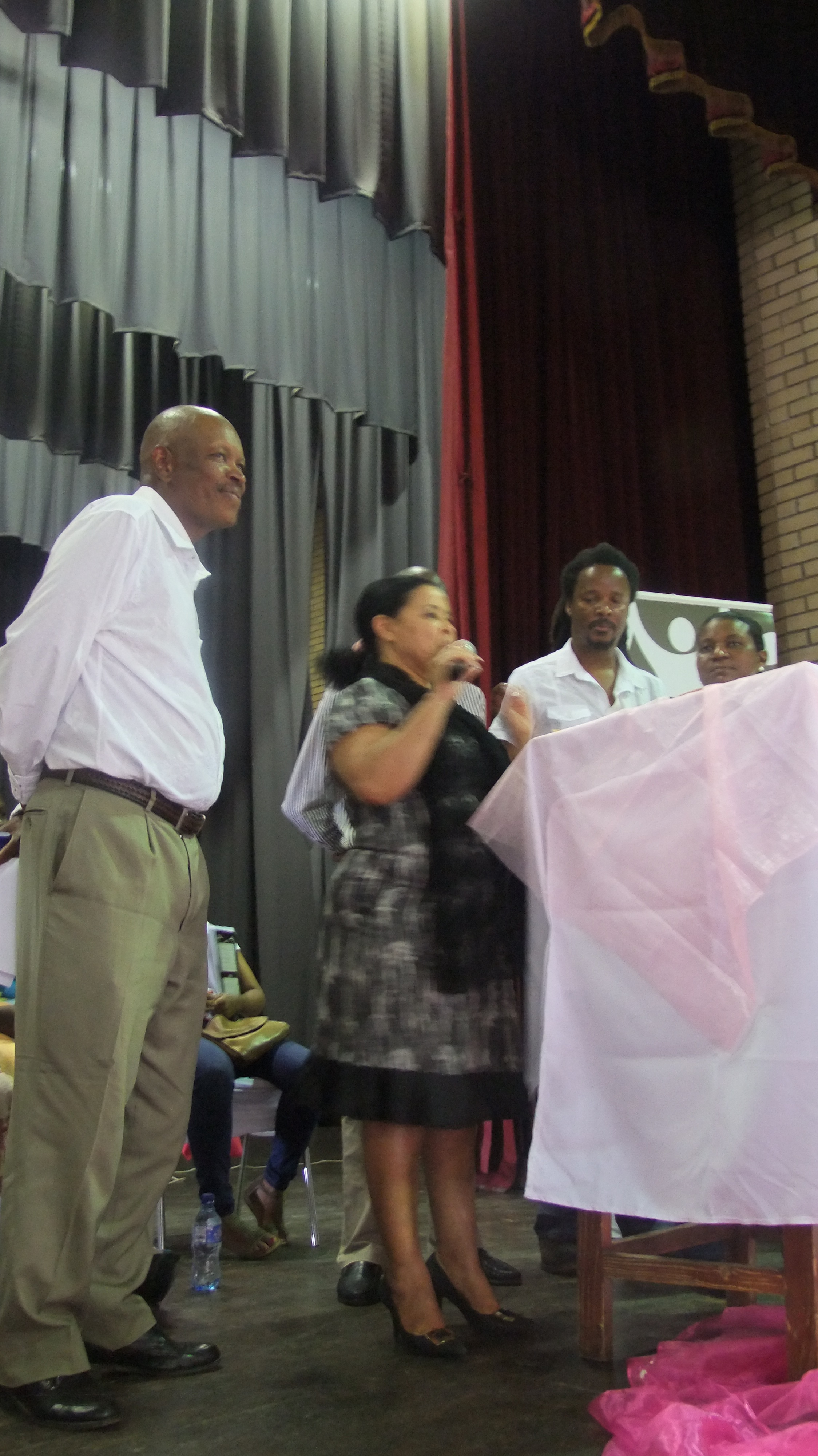
The Executive Mayor, Honorable Poppy Mpho Magongwa delivering her speech during the launch of the charter. 

By Thandeka Tshabalala (on behalf of CORC)

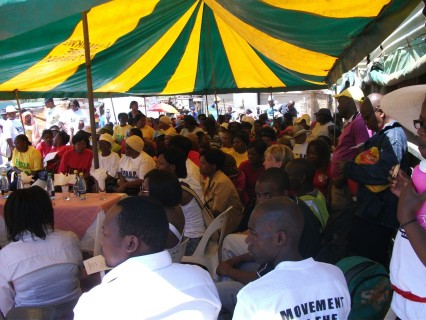
Once in 4 years the South African SDI Alliance holds a national forum, this year’s forum started from the 11th-14th November 2013, where more than 200 members of the ISN and FEDUP regional facilitators from all the provinces of South Africa were present. They discussed and shared experiences on income generation programs, savings, enumeration, profiling, informal settlement upgrading, land ownership and partnerships.   The forum is an event where the alliance reports on its past achievements and challenges while the supporting NGO CORC (Community Organization Resource Center) uses this platform to understand the challenges faced by all regions on the ground.

At the opening of the event Bunita Kohler the Managing Director of CORC emphasized accountability. She noted that both the ISN and FEDUP needed to be accountable to the communities and the NGO to the donors that assist in helping communities to ‘do it for themselves’. She further mentioned that projects such as sanitation facilities, houses, income generation loans and community savings are important to the movements to show other communities the possibilities of community driven projects.

Patrick Magebhula the national leader of the ISN reiterated the position of ISN in relation to the difficulty faced by informal settlement residents in accessing basic services, houses and land. He mentioned that ownership of land in South Africa still needs to be addressed and hopes that the national forum will assist in exchanging lessons from other regions that have been able to fight evictions and access land.  Communities without land will always remain in the cycle of poverty. They cannot plan for the future, as they do not know where they will be tomorrow. ISN and FEDUP have committed to a far-reaching agenda of working with communities in planning for their own development. This entails communities collecting information about themselves through profiling and enumeration, using the information to influence their plans, and asking for government assistance in supplying services.

“ During the dawn of democracy a lot of civil organizations like SANCO fought to change the living conditions of poor people. When we started the Federation of Urban Poor called FEDUP we also wanted to contribute to the change. We realized that communities already had community committees, thus the ISN is made of leaders who are sensitive and have a vision to community development.   The Federation knows that people do not have money to build houses but the question should be, how do we support people to do it themselves. The federation must continuously seek at making partnerships with government to open up doors for developments in poor communities.

ISN and FEDUP are working with all levels of the government to give the urban poor a voice. The intention of organizing poor people is to be able to attract resources. The government has a responsibility and a house alone will not alleviate poverty. Through savings communities can build houses and pay for their household expenses.  Regions such as the KwaZulu Natal network presented that they had 11271 members and have saved R716553.40 and Gauteng Network has 4993 members with R2664554.51 savings.

During the launch of the ISN/ FEDUP charter Patrick requested the Executive mayor, honorable Poppy Mpho Magongwa and the Ward Councilor, Jack Sefudi of Madibeng Municipality to understand the value of community savings and community involvement in the planning process. This is to avoid community dissatisfaction.

“Savings is a ritual to show the government and other communities that people want to be practically involved in changing their lives and are not just waiting for handouts.  Partnership starts at home, they start at home and extend to cities and would like people to use these partnerships to discuss matter that community development such as service delivery, land ownership and education.  These partnerships can help government on engaging communities in community development policies such as participating in the IDP.”

Facilitators at the forum shared challenges in terms of implementing projects and mobilizing communities due to the lack of government support. Even after clarifying to communities and municipalities that ISN/FEDUP is not politically affiliated but part of a movement that assists people plan their communities.  They do this by setting a precedent and attracting resources from the government.   Some of the challenges include:

  • Lack of support from ward councilors because they think the alliance is politically aligned.
  • Project approval by municipalities takes long thus affecting implementation
  • Difficulty of implementing projects after enumeration when councilors are not involved from the onset.
  • How to get the youth involved in saving and changing their lives at an early stage
  • Lack of trust in savings schemes as some members disappear with groups money

Joyce a representative from the Zambian SDI federation responded to the challenges in her speech directed to both community leaders and the municipality. She stressed the benefits of community-municipality partnerships noting how leaders should make use of the partnerships and not just feel triumphant in signing MoU’s. She stated,

“Without councilors support the work of the federation will not move forward and this is because their work goes hand in hand with municipalities to open doors for communities. Communities do not want to sign MOU’s (Memorandum of Understanding) without a purpose, MOU’s should not be put under the table and not be of benefit to the community. MOU’s are meant to open doors for development in communities”

IMG_6034

The Executive Mayor accepted the ISN/FEDUP charter and welcomed the alliance on behalf of the Madibeng municipality. She said that it was rare to be amongst community based organizations that do not ‘pay lip service’ to issues of community development, but ensure that they make it their concern to improve the well being of their fellow community members. She quoted the words of Archbishop Ndungane “ poverty does not wait for time or convenience, it strikes anytime, all the time and with full force for most households, and therefore, our response must be charged with a sense of urgency and determination.” She said that the municipality too has adopted methods of alleviating poverty such as applying labor-intensive approaches in project implementation to create employment opportunities.

The mayor acknowledged the work of the federation by saying that the three pillars that FEDUP was based on (PEOPLE, MONEY, and INFORMATION) were vital for negotiating and lobbying for change. The municipality was aware of the different programs that FEDUP was involved in especially around Oukasie and surrounding areas such as Jericho and Maboloka. Programs that bring people together, teaching them to save money and improve their livelihoods.

She confessed that the municipality too is facing barriers in the effort to fight poverty such as:

  • Lack of services
  • Lack of land
  • Lack of access to markets
  • Lack of access to health facilities
  • Lack of education
  • Lack of power to influence decisions

Such barriers would be difficult for the government to overcome if it did not work together with civil society and the sooner everyone understood that poverty is not ‘my problem or your problem but our problem’ it will be easy to win the fight and we have to be united.

The mayor further regarded both education and land ownership as long-term strategies in fighting poverty. She urged the people to take education seriously because an educated nation automatically becomes enlightened and exposed to more opportunities. The government of South Africa has taken issues of land reform very seriously as there are policies in place to address this. In conclusion she said that the municipality of Madibeng is committed to poverty alleviation and will support FEDUP/ISN   because the municipality wants to see real change in its communities.


IMG_6061


City of Cape Town adopts reblocking policy

By CORC, FEDUP, ISN, uTshani Fund No Comments

The City of Cape Town adopted the re-blocking policy on 5 November after an announcement by Councillor Thandeka Gqada, Mayoral Committee Member for Human Settlements, City of Cape Town. In a City of Cape Town media statement, Cllr. Gqada reported

We view this as a turning point in our commitment to redress and a new model of shared responsibility that can change the face of our informal settlements

The informal settlements of Flamingo Crescent in Lansdowne, Kuku Town in Kensington and Mtshini Wam in Milnerton are mentioned as pilot projects the City seeks to push forward in the next financial year. But how did these settlements come on the City’s radar? Perhaps more importantly, what does this mean for the City’s renewed commitment to providing better located services in the 204 informal settlements in the City? For these answers to be answered, context is needed.

Mashlungi Aerial 1 in 1200

What is re-blocking all about?

“Blocking-out” and “re-blocking” are interchangeable terms the South African SDI Alliance uses to refer to the reconfiguration and repositioning of shacks in very dense informal settlements in accordance to a community-drafted spatial framework. The aim is to better utilize the spaces in informal settlements to allow for better service provision. Moreover, re-blocking is done in “clusters” identified by the community, and after implementation, “courtyard” are created to ensure a safer environment for woman and children via neighborhood watches (all shacks face the courtyard), productive places (such as washing lines, food gardens), and generally provides space for local government to install better services.

Read more about reblocking in Chapter 2 of our Project Report Masekhase: The Community Upgrading Finance Facility.

Blocking out is actually a mobilization tool more than anything else. We are saying that we are an informal settlement network. So we need to be preaching informal settlement upgrading.

Rose Molokoane, national coordinator of FEDUP, and regional coordinator with SDI

Mshini Wam profile

The successful re-blocking of Mtshini Wam

Through the process of “re-blocking”—an incremental in-situ re-arrangement of shacks in accordance to a community design framework which open up safer and more dignified public spaces (called “courtyards”)—45 short term employment opportunities have been created through the Extended Public Works Programme (EPWP). The special characteristic of this EPWP contract is that the community has taken full ownership of the development project. The EPWP initiative therefore builds on the community’s initiatives to save towards their own development, to conduct a self-census, to establish community project committees, and to design their future settlement layout. See this report on Mtshini Wam’s inclusion in the World Design Capital 2014 official programme.

[vimeo]http://vimeo.com/52466961[/vimeo]

The community of Mtshini Wam has also worked with Touching The Earth Lightly (a Cape Town-based design NGO) and Worcester Polytechnic Institute (WPI) from Massachusetts, USA around growing vertical vegetable gardens and have installed “the litre of light”, which amplifies natural light through a chemical-based dispenser installed in the roof of the shack. This was called the “green shack” and drew a lot of media attention at the Design Indaba 2013.

Mtshini Wam has also become a regional learning centre for communities local and international to share experience around engaging government agencies around more inclusive measures of improving living conditions in informal settlements.  Read about the SDI Five Cities conference hosted in Mtshini Wam in February 2013.

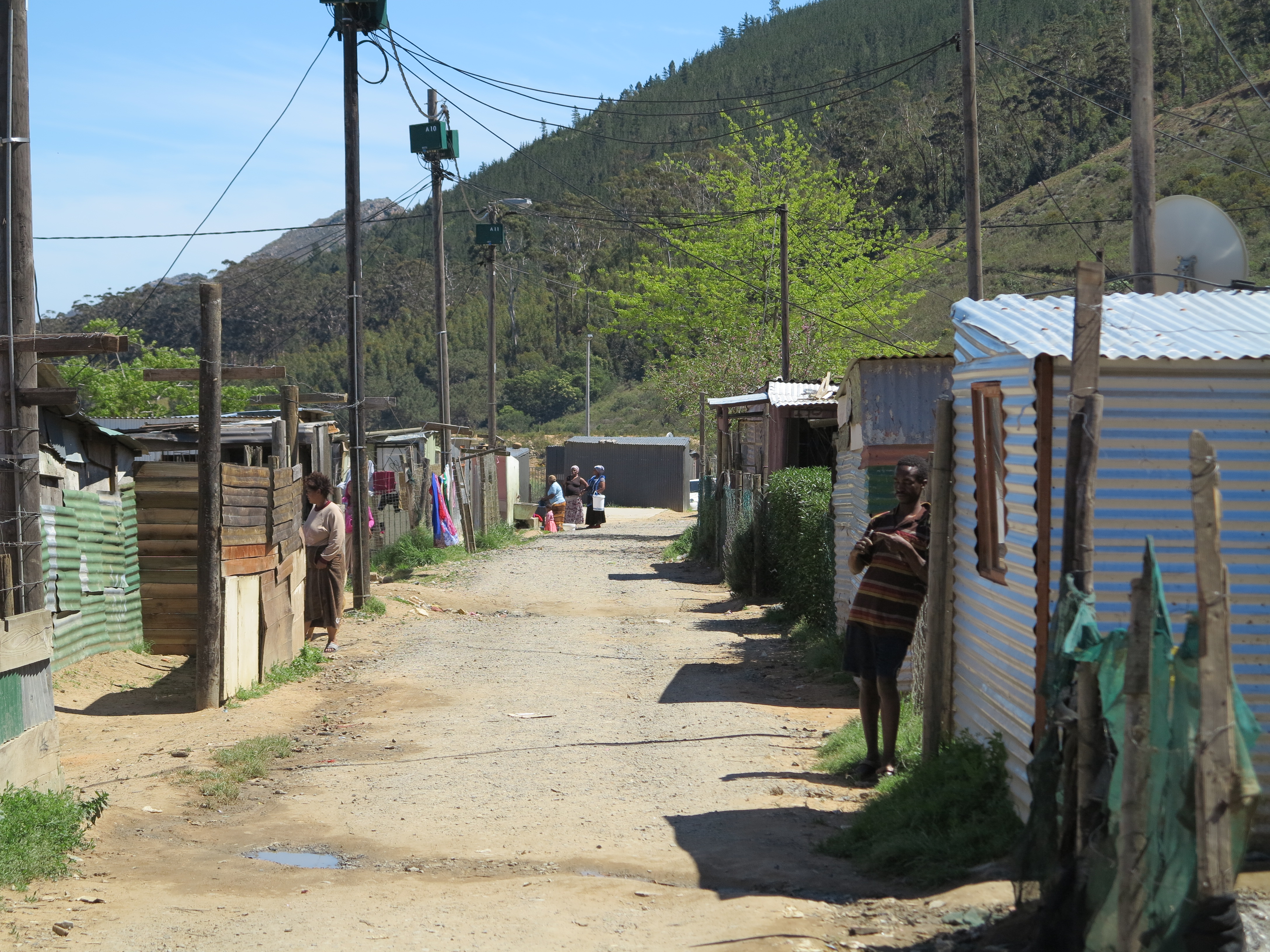
“Prior to re-blocking, the settlement was very dense,” said community leader Nokwezi Klaas, “There were no passageways and when there were fires it was virtually impossible to get into the settlement. All the toilets were on the outskirts and there were only three water taps for over 200 households in the settlement.”

8452094253_377671d9c0_z

Background to the partnership between the City and communities

CORC reported on the initial partnership formation with the City of Cape Town in August 2011 where the new Mayor Alderman Patricia de Lille made an in-principle commitment to furthering the evolving partnership. Initially 23 projects were identified for pilots to experiment in the new people-centered development approaches the ISN presents. Monthly partnership meetings were held in each of the four City regions: South/Central; Strand/Khayalitsha; Eastern; and Blauwberg.

MW cluster 27

In April 2012, 22 new pilot partnership projects were agreed to and Mayor Patricia De Lille signed partnership accord Memorandum of Understanding with ISN and CORC at a mass gathering held in Vygieskraal – a settlement of 300 households located behind the formal housing development with the same name in Athlone – the Mayor was introduced to the programmes of the ISN. The geographical spread of these projects were true to the need of the City, with eleven projects in the South / Central area, and six in the Khayelitsha / Strand area. Some of the projects (20%) included consolidation and relocation of settlements (those settlements less than 15 households where development is not feasible), some included (40%) formalization and subdivision, and some include (40%) blocking out.

So what does the City of Cape Town’s reblocking policy mean to practice?

The City of Cape Town, after sustained engagement with the ISN/FEDUP and CORC/iKhayalami through innovative learning-by-doing approach to upgrading informal settlements, put out the draft policy in July 2013. After all comments were received, including those of the Alliance, the City officially adopted the policy. The policy is aligned with the City’s The five strategic focus areas of the City’s Integrated Development Plan, The National Development Plan 2030, OneCape2040 and the City Development Strategy, and the City’s five-year Integrated Human Settlements Plan. This means there is a long term commitment to making meaningful interventions in informal settlements.

You can download the entire policy document here

The policy document outlines the criteria for viable reblocking projects, the preventative measures to be installed in the reblocking project, alignment with different government departments, and very importantly, the governance interface between the City, communities and supportive NGOs.

Mtshini Wam before and after

In lieu of conclusion: Moving forward

Reblocking is now in the public sphere. The policy space now exists and the City can, after more than three years of lobbying and demonstrating innovative alternatives, commit resources to the projects and ensure departmental alignment.

The Alliance supports this policy innovation. Communities’ vast experience in making dignified and livable spaces, supported by innovative partners and agencies that we have worked alongside, point to the following core lessons learnt:


  • No internal displacement has occurred even though spaces have been opened for community courtyards, water and sanitation service delivery, electrification, and creating primary and secondary road hierarchies;
  • Scarce spaces in informal settlements are consolidated and productivity is maximized for communal purposes (safety and security, daily domestic chores) and delivering better services
  • The process of negotiating floor sizes builds social cohesion and solidarity. Governance support is part of ISN’s mobilisation and capacity building support in communities.
  • Top-structures are improved by using high-quality Inverted Box Rib (“IBR”) galvanised steel sheets with high fire resistance ratings.
  • Social mobilization through woman’s savings schemes, enumeration, spatial mapping and design, and eventual collaboration in the implementation of this settlement-wide upgrading strategy generates internal learning (which is shared through the ISN and FEDUP), and builds stronger partnerships with the local government.

Four Alliance projects recognised by World Design Capital 2014 committee

By CORC, FEDUP, ISN, uTshani Fund No Comments

There is a buzz in Cape Town on the possibilities of design thinking, doing and living leading a transformation role in the city. But what does Cape Town, with its legacy of spatial segregation through the Group Areas Act of 1950, massive movement restrictions and a burgeoning post-apartheid divide between the rich and the poor, know about design? How can we claim to be a city displaying transformation through design if we lived such divided lives? And what does Cape Town have in common with world class cities and previous World Design Capital winners Turin/Torino, Italy (2008 winner), Seoul, Korea (2010 winner) and Helsinki, Finland (2012 winner)?

Cape-Town-World-Design-Capital-422x342

The core proposal driving the bid seems to be simple but powerful. According to the World Design Capital 2014 website,

Cape Town’s bid was not about the city claiming that it is already an established ‘design capital’, but instead it was a bid to acknowledge that we are using design thinking as a tool for transformation…

Contemporary Cape Town is a tale of two cities: one a postcard narrative of wild beauty and sophisticated cosmopolitanism, the other a story of poverty and urban degradation….

In the past we were divided by design – by the social engineering of the apartheid era. It is by design, and a reshaping of the cityscape, that a safer, more efficient and inclusive home for all our residents is being forged…

… It is also a chance for Cape Town to help articulate design-based solutions to challenges faced by the 90% of the world’s populations that live in the developing world.

The prestigious accolade of World Design Capital is awarded by the International Council of Societies of Industrial Design every two years. It recognises that “the future success of each city is therefore largely reliant on those who plan, design and manage the shared spaces and functions of their city”.

The Alliance of community organisations and social networks Informal Settlement Network (ISN) and Federation of the Urban and Rural Poor (FEDUP) and support organisations CORC, uTshani Fund and iKhayalami saw this as an opportunity to display, on a global stage, how communities go about designing, inhabiting and reproducing spaces that increase accessibility and productivity of poor people in the city. Informal settlements present the lived spaces of more than 30% of City’s population. 20130405_125752

Cape Town Design NPC, the implementation agency for World Design Capital Cape Town 2014 (WDC 2014), announced the official list of programmes on 31 October 2013. 1,253 projects were submitted over a 10-month window consisting of two calls for public submissions. After rigorous curating and evaluation, the official list of 450 projects was announced.

In the first window of submission, different Alliance organisations  submitted four project proposals to the WDC2014 committee. We are excited to report that all four projects have been officially acknowledged by the World Design Capital 2014 committee and these will form part of the official programme.

Project Title

Project partners

Project Description

Twitter shortcode

Re-blocking of Mtshini Wam CORC and ISN/FEDUP and the City of Cape Town Re-blocking Mtshini Wam showcases the co-production value in upgrading informal settlements. Once threatened through evictions, the community initiated a self-design process that re-organised shacks into “clusters” with safer and more dignified public spaces, making  way for the City install basic services. #WDC238
Langrug informal settlement upgrading CORC and ISN/FEDUP and Stellenbosch Municipality Langrug is located on the picturesque hills of Mont Rochelle nature reserve, Franschhoek home to a very poor community. Langrug in-situ upgrading has drawn local and international attention. A path towards regularisation and development now exists due to the community design interventions. #WDC542
Solid Waste Network Solid Waste Network, CORC and ISN/FEDUP The Solid Waste Network, a collective of 350 informal waste pickers, creates an interface between communities and industry. It removes 40 – 60 tonnes of solid waste from the stream each month and provides a steady income stream for poor people. The unique design of the programme puts people first. #WDC615
Community led spatial design and reconfiguration of informal settlements both pre and post disaster iKhayalami and ISN/FEDUP The spatial reconfiguration of informal settlements to those that are more rationalized leads to social cohesion, shelter upgrade and infrastructural improvements . It builds community, acknowledges the positive aspects of informality & helps bridge the urban divide including not removing the poor. #WDC236

Note: Use the shortcodes to search where the projects are positioned in the Programme Calendar

According to the Programme Calendar, Mtshini Wam (#238) and iKhayalami (#236) proposals are year long programmes. The projects have already received news coverage in popular newspapers such as the Cape Argus. At the same time, communities in informal settlements continue to showcase their design potential. In many ways, here lies the potential to rethink and redesign our cities: starting from a bottom-up approach. When the international community considers Cape Town’s design culture, informal settlements will be central to the global spotlight.

OPINION: Opportunities in Urban Informality, Development and Climate Resilience in African cities

By CORC, FEDUP, ISN, Press, Resources No Comments

Article from (Climate and Development Knowledge Network)

CDKN

Blaise Dobson and Jean-Pierre Roux (SouthSouthNorth) argue that African urbanisation and burgeoning informal settlements present an opportunity to build truly adaptive cities.

African cities are characterised by high levels of slums and informal settlements, largely informal economies, high levels of unemployment, majority youthful populations, and low levels of industrialisation. They have the highest growth rates in the world despite the fact that sub-Saharan Africa is still only approximately 40% urbanised. The urban poor, who largely reside in informal settlements and slums, are vulnerable to a range of global change effects, including global economic and climate change impacts. These can combine to have devastating effects on the poor, who generally survive on less than US$ 2 per day, but also on the ‘floating middle class’, who are defined as living on between US$ 2 – 4 per day, and constitute 60% of the African middle class.[1]

The African Centre for Cities (ACC) and Climate and Development Knowledge Network (CDKN) hosted a three-day workshop in Cape Town in July aimed at developing a framework for understanding the intersection between climate resilience and urban informality, and promoting integrated urban development and management within African cities. ‘Champion groups’ from Accra (Ghana), Kampala (Uganda) and Addis Ababa (Ethiopia), which included local authorities, academia and civil society attended.

The African city: Four future scenarios

Prof Edgar Pieterse from the ACC opened the discussion by outlining four future scenarios for African cities:

  • The status quo: Small middle-class gated enclaves and neglected slums
  • The green status quo: Gated enclaves, new towns, pockets of greening and slum upgrading
  • The smart African city: Smart grids, mobility, improvement of spatial form (compaction) and slum upgrading
  • The adaptive city: Smart grids, full access, low-tech, localised renewal of slum economies and ecosystems

Pieterse’s four pathways challenged a few of our preconceptions about what an ideal African city should look like. First, it highlighted the real possibility that selective greening (e.g. promotion of a ‘green economy,’ improved building standards and more efficient infrastructure) can fail to address deeper structural issues contributing to informality and vulnerability of marginal communities. This greening is likely to reinforce the status quo of small, gated enclaves and underinvestment in slums while not addressing the spatial issues that exacerbate informality and vulnerability. Second, it highlighted the ideal of an Adaptive City, which is not necessarily high-tech. A preoccupation with high-tech solutions for African problems may ignore the most accessible and affordable solutions to urban challenges.

Cities are critical to addressing the threat of climate change in Africa 

The late Nobel laureate Elinor Ostrom’s parting appeal was that we should not pin our hopes on a single international agreement to manage common resources like the earth’s climate system. Instead we need “evolutionary policy” that can adapt quickly to uncertain futures. According to her, these adaptive policies critically depend on sub-national actors, in particular cities. While the US failed to ratify the Kyoto protocol, more than 1000 US cities have now signed the US Climate Protection Agreement to strive to meet the Kyoto protocol targets in their own communities.

While nation states struggle to negotiate a high-level climate change agreement and national governments interpret how best to integrate climate compatible development into their particular contexts, it is often up to sub-national entities, like cities, to implement these plans.

Ostrom’s work also shows the importance of playing to the strengths of a myriad of institutions to cooperate across multiple scales. On our workshop fieldtrip to Langrug informal settlement an hour outside of Cape Town we saw how her insights rang true. The improvements that have made Langrug a more resilient settlement despite its informality were due to collaborations between a network of different institutions, communities, and individuals cooperating across multiple scales. Block committees in the settlement, Slum Dwellers International (SDI), the Informal Settlements Network (ISN),Stellenbosch Municipality, the University of Cape Town and Worcester Polytechnic collaborated to mobilise financing, gain political legitimacy, map out the settlement with a Geographic Information System (GIS), and embark on various upgrading projects.

There is another reason why cities should be in the forefront of the fight against climate change: They are responsible for 70% of global greenhouse gas emissions. In rapidly emerging African economies, environmental concerns take a backseat to development priorities. To the extent that African governments are concerned about climate change at all, they are predominantly looking at adaptation rather than mitigation.  However, whilst a ‘development first’ approach is understandable from an equity point of view, many ‘leapfrog’ technologies exist that are both pro-poor and GHG mitigating. Researchers within the MAPS collaboration have developed a typology to classify poverty-alleviating mitigation actions that may be helpful for African leaders as they prioritise their efforts to build adaptive cities. African cities have cost effective options like bus rapid transport systems, small plot intense agriculture, participative waste management, household biogas, improved energy efficiency building designs, cooking and lighting technologies. Development and mitigation do not have to be mutually exclusive; there are low emissions development pathways that are both viable and optimal.

lang 2

Moving forward

At the workshop, presentations by the city teams from Accra, Kampala and Addis Ababa all confirmed and elaborated on Pieterse’s characterisation of the challenges facing African cities. However, the presentations also highlighted the geographic and cultural specificities that make each city unique and generic cookie-cutter solutions a bad idea. On the second day, delegates attempted to develop a framework to approach informality and resilience across African cities in a systematic way; an ambitious and laudable experiment. We believe the potential energy unleashed in the sharing of comparative stories from different cities is a good starting point for further work on a stylised framework to address issues of urban informality and resilience in the African context. It was exciting to be part of a south-south exchange where African solutions were sought by Africans, for African cities.

In our opinion, cities (urban governments and their constituents) have a critical role to play in addressing the threat of climate change. The theme of African urbanisation in the 21st century cannot be ignored. Socio-technological solutions exist that can harness the latent energy of informality. Growing urban informality can be an opportunity to leverage innovative ways to make the Adaptive City a reality.

We occasionally invite bloggers from around the world to provide their experiences and views. The views expressed here are those of the author, and not necessarily those of CDKN.

For more information about this CDKN project, please visit the project page.


CUFF Project Report 2013

By Archive, CORC, FEDUP, ISN, News, Publications, uTshani Fund No Comments

By Thandeka Tshabalala (on behalf of CORC)

We live in the urban age where, for the first time the majority of the world population lives in cities.  Despite the overwhelming challenges encountered by the urban poor, the aspiration towards altering state-civil society relations, inclusive and integrated pro poor cities lies on the roles of networks organizations and agencies of the poor in bringing about social and political change. The national department of Human settlements aims to upgrade 400,000 well located households in-situ by 2014 and the National Development Plan “vision 2030” calls on government to stop building houses on poorly located land and shift more resources to upgrading informal settlements, provided that the areas are in great proximity to jobs.

 This publication articulates the spaces created by communities and local government to make decisions and work together towards the incremental improvement of informal settlements.  These new participatory spaces often create conditions for informal settlement upgrading to be more effective and sustainable.The Community Upgrading Finance Facility (CUFF) –Masikase- aims to enhance the agencies and practices of the organized poor by providing a platform and institutional support for communities to engage government more effectively around collaborative upgrading and livelihood projects.

https://sasdialliance.org.za/wp-content/uploads/2013/10/CUFF-Project-Report_Masikhase_Web-Version-2013.pdf

Alliance learning space: if I was the mayor…

By CORC, FEDUP, ISN, uTshani Fund No Comments

If you were appointed as mayor of the City of Cape Town, how would you structure policies, financial management and technical capacity to ensure a participatory approach to upgrading informal settlements?

With this far-reaching question, the South African Alliance introduced the third learning space (read more about the first and the second learning spaces). Essentially we wanted to create a space where we could reflect on policy and practice.

Mashlungi Aerial 1 in 1200

Nkokeli, an ISN coordinator, spoke first, and reflected on the disconnected nature of aligning line departments to informal settlement communities’ agendas. He said that if he were appointed as mayor, he would reconfigure line departments to first report upwards, towards a centrally coordinating body with executive powers (similar to the Urbanisation department, but with more power). Secondly, multi-departmental teams will be assigned to housing districts where monthly fora are facilitated to identify, implement and monitor services which are informed by community action plans. For this, he would allocate budgets to ensure central participation and capacity development. We will need to build strong local organisations. This will also mean greater decentralisation of core municipal functions, and break down the “silo” mentality.

Andy, manger of iKhayalami, echoed Nkokeli’s ideas, and reflected on the massive gains the East Asian countries have made in ensuring that a funding facility, such as the Community Organisation Development Institute (CODI) of the Thai government and the Urban Poor Development Fund (UPDF) in Cambodia. Such instruments have in common shared values of central participation of communities.

Focusing on the such a decentralised approach will have a greater scope to focus on area-based interventions, not the catch-all approach of the current spatial planning aspects, reflected Marlene, a FEDUP coordinator. As a mayor, Marlene said that she will spatial planning will happen at the neighbourhood/area scale, which will then be integrated with other areas to develop a city spatial development plan.

DSC01712

The platform was set, and the group agreed with the current positions being put forward. Other group members reflected on how the political representivity of councillors is fraught with error, and that we need to bind councillors to deliverables. People who voted councillors into power also needs to have the power to revoke their power when they are not delivering on their mandate. Politicians need to be accountable to their mandates. This will enhance the community’s oversight and monitoring capacities.  But we need to ensure that protocols are in place, otherwise government will be destabilised all the time.

The themes that were picked up in this learning space were:

  • greater decentralisation with teams delegated to the regions;
  • investment in the creation and sustainability of poor people’s organisations, and the legitimacy and representivity in planning fora;
  • greater power to monitor and hold politicians to account;
  • enhancement of the roles of interim organisations, such as public benefit organisations and non-governmental organisations supporting the cause of poor people; and
  • budgetary reform to facilitate a bottom-up process of delivering services.

Till next time then!

Emergency relief in Midvaal on Mandela Day

By CORC, FEDUP, ISN, uTshani Fund No Comments

By Kwanele Sibanda (on behalf of CORC)

IMG_1839

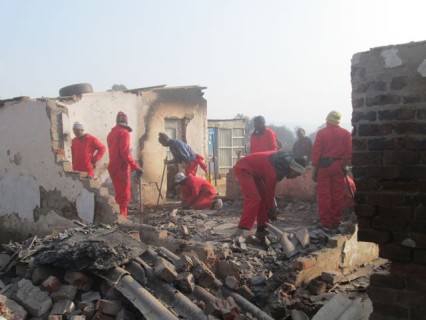
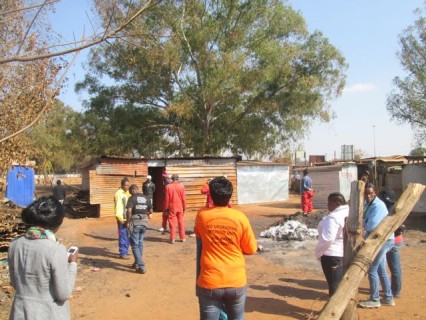
The process of formalizing a working relationship in form of an MOU between the Midvaal Municipality and ISN has not hindered the undertaking of projects in a joint effort between the two entities. Read more about the partnership in progress when enumerating Sicelo informal settlement and formal recognition of the ISN’d contribution. On Mandela Day, the 18th of July 2013, the ISN, Midvaal Municipality and the Red Ants joined hands in supporting seven households whose shacks burnt down in three different settlements. The causes of the fire were due to candle accidents in two settlements and ‘fire-wood heater’ in the third settlement. The names of the settlements are Komdraai, Pillis Farm and Sicelo.

IMG_1756

The Municipality of Midvaal and their contractor Red Ants joined the ISN’s assistance to afflicted families when they donated building material for the reconstruction of the burnt shacks and also provided each household with a food parcel. To support the ISN teams in respective communities, the Red Ants had a team of ten members. In the handing over of the food parcel to Samuel of Pillis Farm, Roy Ponsonby, manager of the regional Red Ants team, said

We fully understand what you went through and what you are going through. The effort we have put today is only an attempt to help you start afresh your life in the community.

Sipho Vanga, community leader from Ramaphosa informal settlement in Ekurhuleni and coordinator of ISN Gauteng, supported and encouraged the participating residents to remain united and committed to finding solutions to their challenges. The affected settlements are communities that the ISN in partnership with the Municipality and the Red Ants recently enumerated. The data gathered and numbering of all structures assisted a great deal in confirming the certainty of the existence of the structures and the information of the occupants prior to the predicament. For the ISN, Midvaal Municipality and the Red Ants, the Mandela Day formed part of an on-going process of demonstrating commitment to love and unity for one another in building a better South Africa for all.

–     Representing the ISN in Midvaal was Oupa and his team was supported by Sipho Vanga from Ekurhuleni.

–     CORC was represented by Kwanele Sibanda

–     The Red Ants team of ten was led by Roy Ponsoby (Red Ants Manager) and Shane John (Red Ant Scout).

–     The Midvaal Municipality was represented by:

  • MMC Development Planning and Housing – Mr Bongani Baloyi
  • Executive Director: Development Planning and Housing – Mr Henry Human
  • Deputy Director: Housing – Ms Sylvia Nkrumah

–     Councillor – Mike Ndebele

The first settlement we visited was Komdraai.

no images were found

The original structures before the fire breakout where two shacks that were built on a foundation within a block of dilapidated old farm houses.

The second settlement we visited was Pillis Farm.

IMG_1817

Shack number 26 belonging to Samuel Moalosi burnt down on the 30th of June when he fell asleep. During the incident, he was lucky to sustained only minor injuries, but the trauma of the event was evident. After the incident, Samuel was forced by circumstances to share a shack with his sister that lives with her husband and children.

The third settlement we supported was Sicelo informal settlement.

no images were found

On the 17th of June four shacks were engulfed by a fire. In response to the incident, the disaster management of the Municipality provided the affected families with tents.