Category

CORC

Sharing experiences on building City Funds

By CORC, FEDUP, ISN, News, uTshani Fund No Comments

20140902_103814

By Walter Fieuw (on behalf of CORC)

African cities are characterised by informality, as the rapid urbanisation from rural areas are transforming cities. Within informal settlements, residents are investing incrementally in their households, despite the lack of tenure security in many cases. A large gap exists between household investment and government spending on infrastructure and social support. Government expenditure is often times locked into medium term budgets which might or might not be adjusted on an annual basis, and procurement of goods and services follow time consuming processes. There are also various interests competing for government spending, and low income groups’ influence over the direction of spending is often times weak. Slum dwellers often times do not have access to loans from financial institutions, even considering the popular held belief of an emerging African middle class, which is still highly speculative. Hence new instruments are needed to build on and support the incremental upgrading of informal settlements and support for livelihoods and small income generating loans.

Shack / Slum Dwellers International supports the notion of creating local “city funds” which acts as a mechanism for building city-wide agglomerations and networks of the poor, creates partnerships between organisations of the poor and city governments, and gives voice and power to the urban poor. Following a meeting of country Federations on various experiences in building city funds in January 2014, SDI reported that,

Flexible citywide urban poor funds need to change existing systems of exclusionary finance.  Local government is a change vector that cannot be dismissed and their inclusion in these funds has the potential to create citywide political impact. Organized communities, who can clearly articulate their demands and the rationale for their financial decisions, can negotiate this space ensuring that funds remain relevant to the poor.

Between 1 and 3 September 2014, the Slum Dwellers Federation of Uganda (NSDFU) and support organisation Actogether hosted a meeting on city funds bringing together three African cities: Kampala (Uganda), Lusaka (Zambia) and Cape Town (South Africa). These cities have in common grant funding agreements with British donor Comic Relief, part of the “People Living in Urban Slums Programme”, which is also supported by the DFiD AidMatch initiative. Freetown (Sierra Leone) is forth city in the Comic Relief initiative, but were unable to travel due to the Ebola epidemic.

Comic Relief’s funding strategy of bringing together organisations and communities in city-wide partnerships have been lauded by participating grantees. In this way, according to Triple Line Consulting, who has been supporting Comic Relief in developing responsive city-level Monitoring and Evaluation (M&E) frameworks, the impact of the grants could possible achieve: a) a deeper understanding of the context than it might normally have b) a complementary portfolio of grants across the city c) improved collaboration between the grantees within a city d) a city level monitoring and evaluation framework and e) identified areas of learning across the 4 cities that can be shared with the broader sector.
20140902_101323

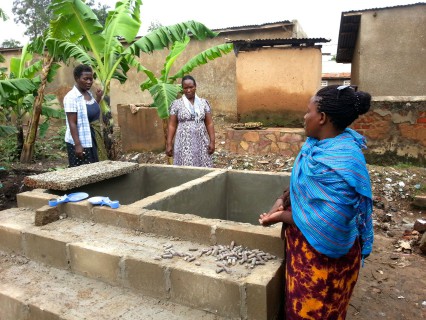
Katana Goretti, a Federation leader, demonstrates the construction phases of the eco-san toilet being constructed in Kampala

Reporting on country experiences to date:

Kampala, Uganda

The joint work to which NSDFU and Actogether are a part of is called KASTI, Kampala Slum Transformation Initiative. The Ugandan Federation will be actively engaging local government counterparts in five districts of Kampala, with dedicated settlement forums which feed into municipal forums, and ultimately city forums, to which the guests were exposed to on 3 September (more on this later). Such forums have proved tremendously useful in the past, as this blog article indicates. The Federation’s primary data collection of “settlement profiles”, which are captured on Geographic Information Systems (GIS), will be used to collaborative design a slum upgrading strategy. Comparisons with existing data from Kampala Capital City Authority and the National Water Department has revealed many informal settlements that were not on government’s databases. This is where the city fund becomes important, and seed finances both capital projects, especially innovations in sanitation, and livelihoods projects.
20140903_105337

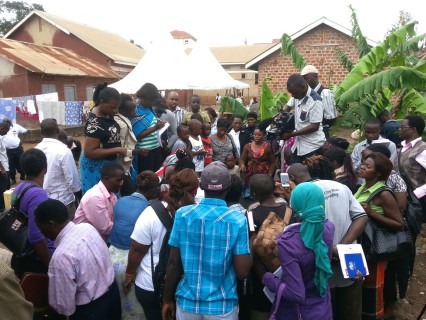
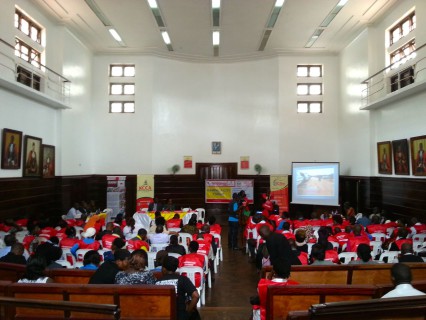
On 3 September, NSDFU and Actogether hosted the first City Forum with Kampala Capital City Authority, which was lauded as a success

Lusaka, Zambia

In Lusaka there are 30 slums known as Improvement Areas, home to about 70% of the population. In 1996 the Government’s Housing Code allows for participatory approaches to slum upgrading, and the Housing Statutory Bill gives the minister power to declare and upgrade slums. However, there is a policy disjuncture in the sense that the Urban and Regional Planning Act does not have the right policies and instruments to recognise and upgrade slums. Tiyende Pamodzi, which means “working together” in local vanacular Nyanja, is the working title of the Comic Relief funded initiative in Lusaka, of which the Zambian Homeless People’s Federation and support organisation People’s Process on Housing and Poverty in Zambia are a part of. According to PPHPZ, Tiyende Pamodzi’s

main aim of the project is to gather accurate and reliable information of all the slums in Lusaka in order to inform participatory slum upgrading strategies which will see the regularization of slums and improved service delivery. Lusaka City Council (LCC) as the responsible authority for slum upgrading in the city cannot go it alone and as such will bank on the strength of the federation to mobilize their fellow slum dwellers to enumerate and map their settlements and use this as a basis for planning for the upgrading.

The Federation and PPHPZ has a strong working partnership with the University of Zambia, and in the programme will develop GIS courses to improve spatial mapping and profiling data as a basis. The city fund has not yet been defined, and the Federation and PPHPZ with the University as partner is still looking for the appropriate partners to serve on the board and advisory committee.

Cape Town, South Africa

In Cape Town, CORC secured a donor funding arrangement with Comic Relief, with community partners ISN and FEDUP. At the heart of the proposal is the setting up of a city fund, which is currently still being developed and constituted. The initiative is called Khayalethu, and joins the Alliance with Isandla Institute and Violence Prevention through Urban Upgrading (VPUU). At the Kampala meeting, community leaders Thozama, Tamara and Nozuko reflected on the current work in Khayelitsha, where Khayalethu is focused. In the first year, communities have profiled 47 settlements, enumerated 7 settlements, and developed community capacity to plan projects. However, challenges have been experienced in getting project approvals for community-identified settlement upgrading projects from the City of Cape Town. Livelihoods is also a primary focus, and experiences were shared around issuing short term loans for livelihoods development.

The South African delegation to Uganda (left to right): Thozama, Tamara, Walter Fieuw (CORC), Nozuko, Michael Krause (VPUU - Comic Relief partner)

The South African delegation to Uganda (left to right): Thozama Nomnga, Tamara Hela (both FEDUP/ISN), Walter Fieuw (CORC), Nozuko Fulani (FEDUP/ISN), Michael Krause (VPUU – Comic Relief partner)

The common experiences, opportunities and challenges experienced by the three cities in the first year of the Comic Relief funded initiative is instructive in developing locally responsive and appropriate city funds, which can enable and support communities in united networks to design, manage and upgrade their settlements. Moreover, building financial partnerships between city government, organisations of the urban poor and other stakeholders can lead demonstrating that people-centred urban planning and development, based on flexible finance, is vital to the creation of inclusive, pro-poor cities.

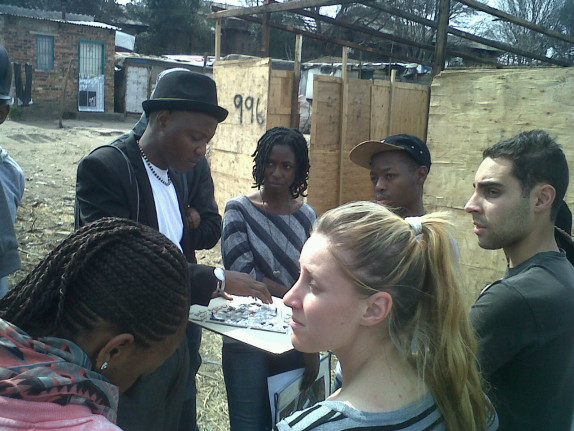
Co-producing Ideas: Denver community and University of Johannesburg Studio

By CORC, ISN No Comments

By Motebang Matsela and Yolande Hendler (on behalf of CORC)

Over the years, the SA SDI Alliance has been involved in several architecture and planning studios in which university students and community members co-produce ideas and scenarios around housing and upgrading. The most recent of these studios took place from July to August 2014 in Johannesburg’s Denver informal settlement together with community members, students from the University of Johannesburg’s (UJ) Department of Architecture, the Informal Settlement Network (ISN) and Community Organisation Resource Centre (CORC) who offered technical and social support and facilitation.

UJ students and community members in Denver informal settlement

UJ students and community members in Denver informal settlement

IMG-20140820-WA0007

Motebang Matsela (CORC technical support and CORC studio facilitator) (centre), with community members and students

Denver informal settlement

Denver informal settlement is situated in a light industrial zone that spans the southern section of Johannesburg’s central business district. It was formed in response to Denver hostel, an inner city accommodation, established around 1946 by the government of the time to house rural labour migrants. As the hostel operated for men-only, Denver informal settlement sprang up as an accommodation option for the wives of men living in the hostel. Over the years the settlement has continued to grow along with an increasing demand for housing by its residents.

IMG-20140820-WA0059

Aerial view of Denver

The studio: co-producing training for students and communities

The studio developed out of a longer engagement between UJ’s Department of Architecture, CORC and ISN, who had already collaborated on past studios in Ruimsig (2011) and Marlboro South (2012) informal settlements in Gauteng. The Denver Studio, however, differed from past studios because it introduced the first of a series of project management modules.

For the SA SDI Alliance, studios lay a foundation for productive discussions with local government that voice communities’ views, opinions and requirements. They also introduce students to the necessity and value of planning with communities, which contributes to a focus that shifts away from traditional ‘top down’ product and ‘delivery’ approaches towards ‘responsive’, community-orientated approaches.

While these outcomes are valuable aspects of collaborative work, Gauteng’s ISN leaders highlighted a current gap: community members need to gain tangible skills through the studio and upgrading process, just as the students do. Each module therefore couples practical participation in the studio with project management skills. Upon completion of every module, community residents will receive a certificate of participation. The vision is that these modules will run as an ongoing series throughout future studios and that they will incrementally build on the content of past studios, creating continuity and ongoing engagement between past and future studios.

Community members receive certificates of participation

Community members receive certificates of participation


DSCF9550

The Studio: co-producing ideas

The course engaged eighty 3rd and 5th year students in a site-specific situation that used joint mapping and data to generate community action plans (CAPs). These investigated short, medium and long term planning scenarios that would encourage short-term community initiatives and support further productive discussion with local government around incremental upgrading

The students were divided into ten groups, each of which partnered with two or more residents from Denver settlement who took the lead as designated community planners and explained the community’s various concerns to the students. One of the community leaders, Chief Mbata shared his views on the studio as a platform to commence a dialogue about the urban poor and their conditions of living. He went on to speak about the over crowdedness and the illegal electrical connections that have claimed a lot of shacks and their contents in and around Denver.

“I wish to see these dangerously exposed cables go, and better connections made by the municipality, but when shall that happen?”

(Chief Mbata, Community leader at Denver informal settlement)

Students and community members then investigated the following key themes for ten areas in the settlement:

  • Spatial Justice
  • Humane Environments
  • Scenario Planning
  • Context
  • Spatial / Physical / Social
  • Systems / Networks
  • Interfaces / Thresholds
  • Undercurrents / Threats
  • Aspirations / Perceptions
Students and community members in Denver informal settlement

Students and community members in Denver informal settlement

Final Student Presentations in August 2014

Final Student Presentations in August 2014

While they engaged with these themes, the community, supported by ISN and CORC, also undertook an enumeration of its settlement with the support of iSN – in a combined effort to collect comprehensive information.

As a community member, Daphne Ntombenhle Mabuso used her in-depth knowledge of the community and its history to compile the studio’s data in a collective documentation of Denver that represents the settlement as accurately as possible. Some of the studio’s content includes figure-ground drawings, actual land-use maps and various other maps that identify needs, constraints, observations and possibilities within Denver. This documentation can serve as the basis for continuing discussions between the community of Denver and the City of Johannesburg. (Click here to access the students’ documentation of the studio).

In the last week of August, the students presented their socio-spatial analyses of courtyards, pathways, open spaces,permanent vs. temporary structures and rental vs. owned units to Denver community. These open up a space to begin small-scale projects and a discussion with the local authorities. During this time community members also received their certificates signalling their participation in the studio and the project management skills they acquired. In this way community residents are becoming formally skilled participants and drivers of their own development in a collaborative, co-productive training space.

(Photos: Motebang Matsela, CORC)

DSCF9444


Building the Siphumelele WaSH facility / Innovation Centre in Langrug, Stellenbosch

By CORC, FEDUP, ISN No Comments

By Aditya Kumar and Yolande Hendler (on behalf of CORC)

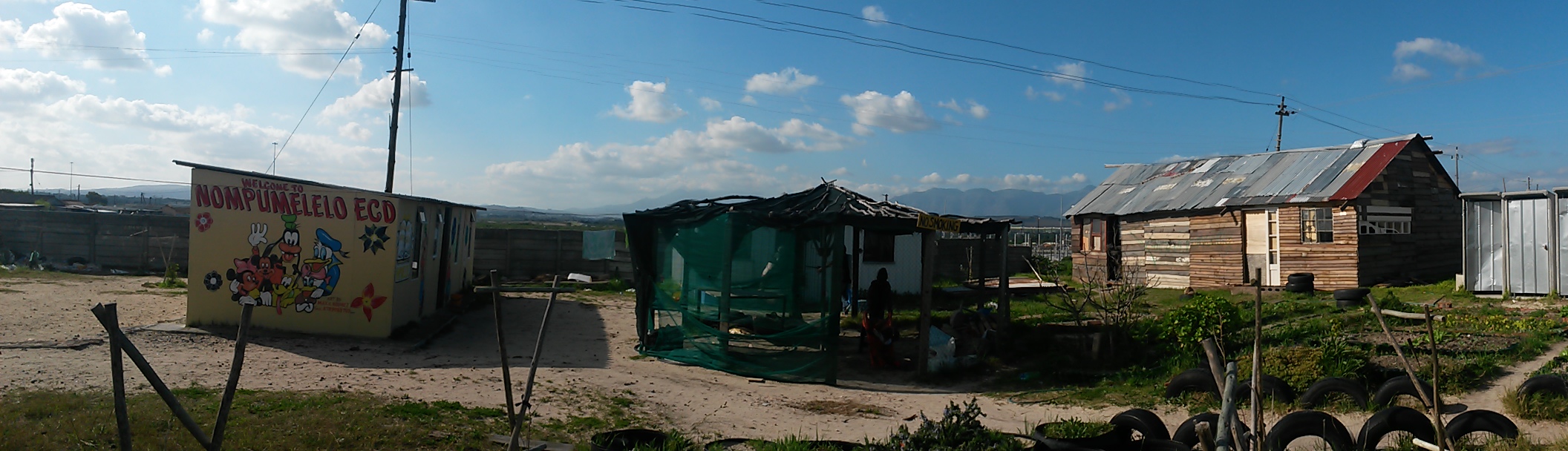
Zwelitsha is a section of Langrug informal settlement, located on the rocky ground of a mountain slope that overlooks the lush valleys and nearby town of Franschoek in Stellenbosch Municipality. Zwelitsha’s residents make up 604 people who reside in 318 structures. Langrug as a whole is home to 4700 people who live in 2118 structures. While Langrug’s other sections have access to water and sanitation facilities – including the Langrug Water Sanitation and Hygiene (WaSH) facility – Zwelitsha’s steep incline and rocky terrain have made it extremely difficult to build water and sanitation points. To this end, Zwelitsha currently has only one tap and no toilets.

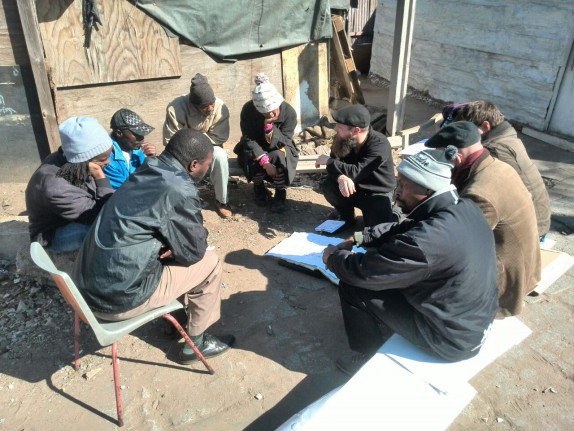
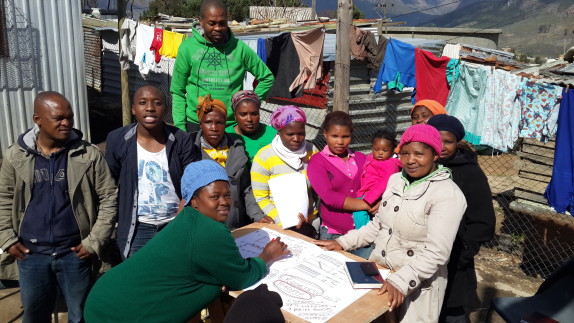
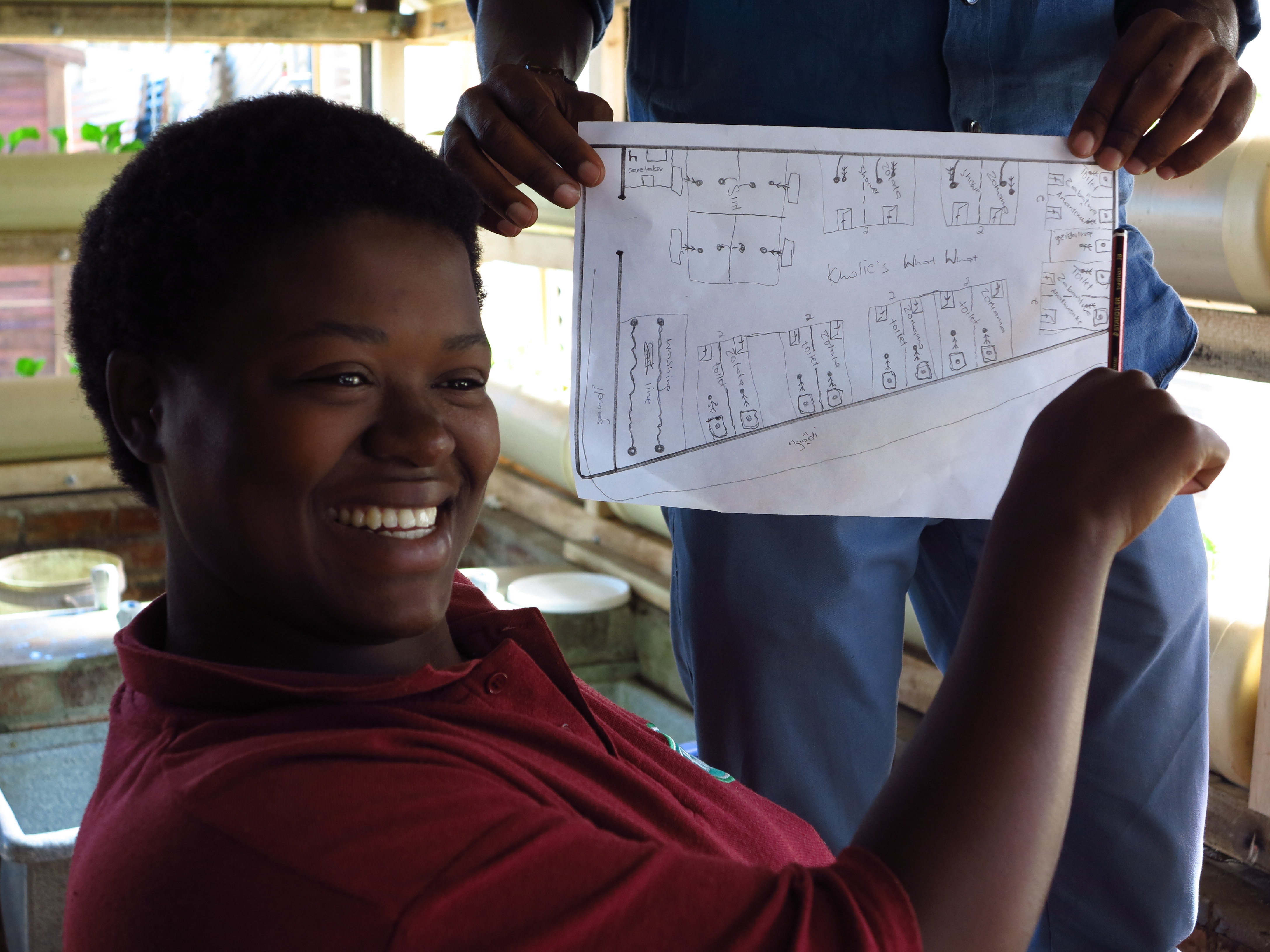
Zwelitsha community members developing plans for the Siphumelele WaSH facility

Zwelitsha community members developing plans for the Siphumelele WaSH facility

Yet this situation is about to change, as community members began work on the foundations of the Siphumelele WaSH Facility and Innovation Centre last week in partnership with the Informal Settlement Network (ISN), Federation of the Urban Poor (FEDUP), Community Organisation Resource Centre (CORC), Touching the Earth Lightly (TEL), Sculpt the Future Foundation, Stellenbosch Municipality, Worcester Polytechnic Institute (WPI) and Enviro Loo (a waterless sanitation provider).

Site of Siphumelele WaSH facility in Zwelitsha section of Langrug informal settlement

Site of Siphumelele WaSH facility in Zwelitsha section of Langrug informal settlement

Building on Experience: Learning from the Langrug WaSH facility

Based on the monitoring, evaluation and learning around the existing WaSH facility (read more here) in Langrug, Zwelitsha’s residents initiated a discussion about the possibility of a second WaSH facility. They approached ISN and CORC, WPI and Stellenbosch Municipality, all of whom had partnered with the community in building the existing WaSH facility in 2011.

Learning from the existing WaSH facility in Langrug

Learning from the existing WaSH facility in Langrug

The discussion related to the outcomes of a sample survey that was conducted over 12 days in July and August 2013. This survey looked at the benefits of data collection, the various uses of the existing WaSH facility (economic and small enterprise, health and food security, educational, organisational meeting point) and its upkeep and maintenance.

More specifically the outcomes of the survey of the Langrug WaSH facility included:

  • The collection of inception data for Siphumelele WaSH facility
  • Current data collection for usage at both WaSH facilities from July 2014
  • Increased use of the Langrug facility by crèches in Langrug. (An estimated 40 children served per day at the facility around issues related to basic hygiene)
  • A fully functioning post-office hosted in the Langrug WaSH facility, based on previously collected enumeration (socio-demographic) data
  • Support for HIV / AIDS awareness in Langrug WaSH facility
  • Potential for small businesses selling health and hygiene products in Langrug facility
  • Increased food security through the greening of the existing facility in partnership with Touching the Earth Lightly
  • Langrug WaSH facility as a space for youth education, workshops and meetings
  • Dramatic increase in usage of Langrug facility due to consistent cleanliness and ancillary functions within the facility
  • Comparatively low maintenance and upkeep of Langrug facility
  • Success in preventing vandalism
  • Significantly, the community expressed a higher degree of ownership in relation to the Langrug WaSH facility as it was community designed, built and maintained

The challenges that emerged around the facility enhanced the monitoring, evaluation and learning around the delivery and maintenance of services, and assisted in conceptualising the Siphumelele WaSH facility.

Some of these challenges and learning points related to:

  • The low usage of communal showers
  • The slow inception of the hair salon

Building the Concept: Co-Designing the Siphumelele WaSH facility

Given the cost of maintenance and operations, the community and partners involved explored the idea of a livelihood-linked wash facility where a portion of the facility would generate revenue (through a kiosk, crèche, health and educational programme) to reduce the burden on municipal funds for maintenance. Given the community’s experience of struggling for a space of safety and dignity, the Zwelitsha design and construction team named the wash facility “Siphumelele” – “We have achieved it”.

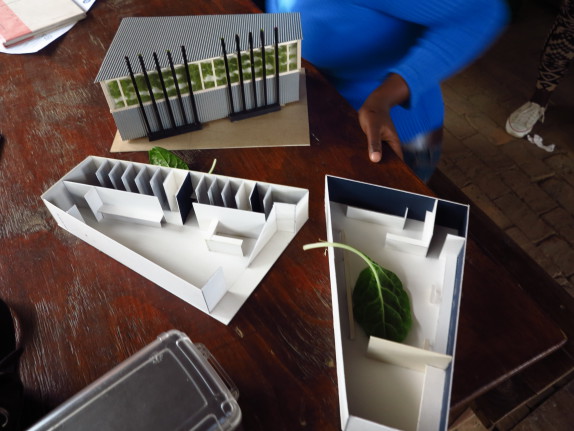
From March to April 2014 the community, together with TEL, began co-designing the facility. The designs include toilets for men and women, a wash area and a kiosk on the ground floor. The second floor will contain a crèche and soup kitchen that will be managed by the community. After conducting a survey with Zwelitsha’s families about amenities to be included in the facility, community leaders chose to exclude showers due to their infrequent use in the Langrug WaSH facility. The community also chose to make use of Enviro Loo toilets after they visited Enviro Loo in November 2013 and received detailed explanations on how the toilets are maintained and operated. The Enviro Loo is a waterless toilet system that provides a safe, non-polluting, cost-effective solution to sanitation.

Co-designing with Touching the Earth Lightly

Co-designing with Touching the Earth Lightly

IMG_6272

Co-designing the WaSH facility

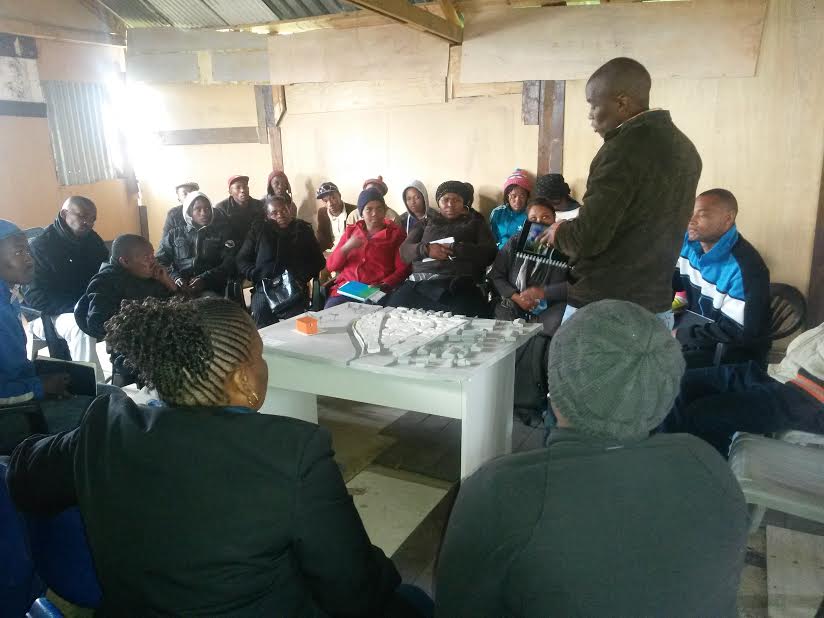
Model of Siphumelele WaSH facility

Model of Siphumelele WaSH facility

Building the Team: Community-led Implementation

Apart from the partners already mentioned, the community has put together different teams to lead the implementation process. These include a leadership committee, a savings group and an Informal Settlement Upgrading Team (ISUT). This team is led by 8 women and includes a Community Liaison Officer, a storekeeper and a project manager who spearhead the construction process. After an exchange to a savings scheme linked to the Federation of the Urban Poor (FEDUP), the community set up their own savings group in July 2014 so as to manage finances to maintain and operate Siphumelele WaSH facility.

Building a voice of the urban poor in Langrug

The foundations for both WaSH facilities were laid when Stellenbosch Municipality signed a Memorandum of Understanding (MoU) with the community and ISN / CORC in 2011. Since this date Langrug’s community leaders have been developing a formal relationship with the Municipality and are making a strong case for how urban poor communities successfully organise themselves to lead their own upgrading processes, and how co-design and co-planning is a step towards a more tangible ‘inclusive city’.

(Photographs: Stephen Lamb, TEL)

Phase 1 of construction

Phase 1 of construction

The construction team

The construction team

FEDUP and ISN Leadership Retreat 2014

By CORC, FEDUP, ISN No Comments

By Yolande Hendler (on behalf of CORC)

Leadership Retreat in KZN, Durban

Leadership Retreat in KZN, Durban

From 20 – 25 June 2014 national leaders from both FEDUP and ISN met in Durban, Kwa-Zulu Natal, for a leadership retreat. The aim of the retreat was to open up a space for leaders to reflect and reassess the different methods and tools they have been using to mobilise their communities.

These tools – mobilization and savings, exchanges, enumerations, mapping, and community-led implementation – are a shared set of rituals that all federations affiliated to Shack / Sum Dwellers International (SDI) practice. The retreat was not only a time of reflection, reorientation and discussion. It was also one of practical learning, especially in mapping, enumeration and savings practices, in which leaders refocused on the strength of these tools to mobilise new informal settlements and savings schemes.

The retreat

At the beginning of the retreat, Rose Molokoane, national co-ordinator of FEDUP explained,

“The last time we were here in Durban was for the march [to eThewkini Municipality] on 24 March 2014. We realized then that we need to continue building our leadership to make our work and these kind of events successful because an organisation is not a project, but a process. This is when the idea developed to call most if not all our leaders to a retreat”

This went hand in hand with developing and discussing a joint focus for the retreat. In thinking about the nature of a retreat, the group responded that it viewed the retreat as a time of reflection, co-operation, re-affirming vision, working together and a reminder of the Alliance’s current position. The group also highlighted that it wanted to achieve this focus by better understanding the Alliance’s vision and background as well as getting practically involved in community activities.
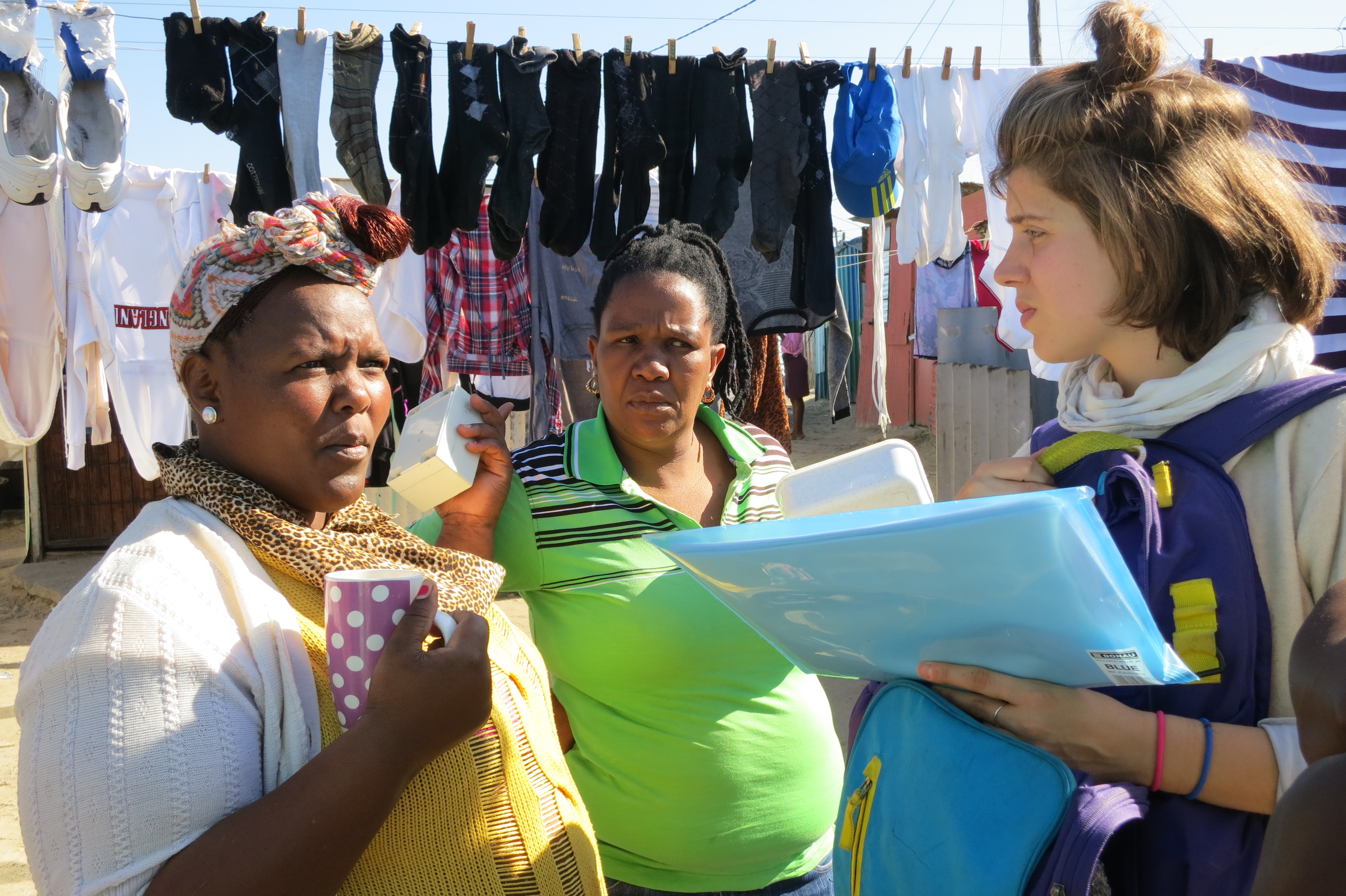
Rose Molokoane facilitates a discussion at the Leadership Retreat

Rose Molokoane facilitates a discussion at the Leadership Retreat

While the first day of the retreat looked back at the history and foundation of the Alliance, the other days focused on building the capacity of Alliance leaders for current and future activities. On the first day therefore the group focused on the Alliance’s founding gathering at Broederstroom and reminded each other of five pillars: love, availability, transparency, trust and commitment.

On the remaining four days Alliance leaders split into teams to do enumeration and mapping exercises in Boxwood and Johanna Road settlements in Kenville and to collect savings in Kwa Bestar. This meant that FEDUP and ISN members, some for the first time, became actively involved in one another’s tools of enumeration and savings.

These days also included training with the CORC enumeration team and workshops on the organisational roles and structure of the SA Alliance (ISN, FEDUP, CORC & uTshani Fund).

Rose Molokoane (National Co-ordinator of FEDUP) and Charlton Ziervogel (CORC Programme Officer)

Rose Molokoane (National Co-ordinator of FEDUP) and Charlton Ziervogel (CORC Programme Officer)

Enumerations and mapping

The enumeration activities in Boxwood and Johanna Rd introduced FEDUP members to the practice of numbering, shack measuring, data collection and capturing, and settlement mapping. For Rose, it was clear that celebrating information is vital. This is why enumerations are so powerful – the socio-demographic questionnaires collect valuable information that communities can use to better organize themselves and lobby local government. Ma Mkhabela, from FEDUP KZN agreed that,

“It’s important that leaders are present at enumerations so that they can be in touch with community issues. Enumerations help to give people a space to relate to each other”

(Ma Mkhabela, FEDUP KZN)

Similarly, mapping and measuring give community members a further tool for planning and lobbying. By knowing the number of pathways in one’s settlement, or the incline of gradients, communities can contribute to developing a plan for their settlement.

Right: MaMkhabela (FEDUP KZN)

Right: MaMkhabela (FEDUP KZN)

Savings

During the savings collection in Durban’s Kwa Bestar, ISN members received a direct insight to the power of savings. They saw how savings can strongly connect communities through regular savings collection visits that also offer a personal opportunity to enquire about the welfare of a fellow savings scheme member.

Ndodeni Dengo ,Durban’s ISN co-ordinator, reflected,

“It was my first time collecting door-to-door savings. We need to take this back to our communities”

ISN National Co-ordinators Front: Ndodeni Dengo

ISN National Co-ordinators Front: Ndodeni Dengo

Looking back and moving forward

During the feedback session many groups expressed the value they saw in working together as a team and emphasized the need to continue sharing ideas and establishing a good working relationship between ISN & FEDUP.

“This retreat has revived me. I’m now able to remember things I had forgotten. I learned how things should be done in our organisation. Our pillars are there to grow the organisation. In our region, we now also know about the power or enumerations”

(Rosina Mufumadi, FEDUP Limpopo)

Rosina Mufamadi (FEDUP Limpopo)

Rosina Mufumadi (FEDUP Limpopo)

The Dept. of Human Settlements honours Patrick Hunsley & pledges R10 million to FEDUP

By CORC, FEDUP, ISN, SDI, uTshani Fund No Comments

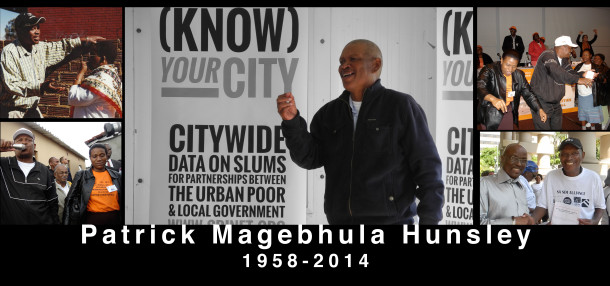
Patrick Magebhula Hunsley, founding member and stalwart of the South African Alliance and Shack Dwellers International (SDI), was awarded the Lifetime Achievement Award by Lindiwe Sisulu, Minister of Human Settlements on behalf of the Department of Human Settlements on Thursday 14 August 2014 at the annual Govan Mbeki Human Settlements Awards ceremony held in Johannesburg.

Patrick Magebhula Hunsley

Patrick Magebhula Hunsley

Patrick's son, Charles Hunsley, receives the Lifetime Achievement Award on behalf of his father from Minister of Human Settlements, Lindiwe Sisulu

Patrick’s son, Charles Hunsley, receives the Lifetime Achievement Award on behalf of his father from Minister of Human Settlements, Lindiwe Sisulu

This prestigious award ceremony (established in 2006) aims “to promote and inculcate a culture of excellence within the human settlement sector in the delivery of quality human settlements and dignity to South Africans” (Reference). The awards acknowledge excellent achievements on a Provincial and National level, in order to showcase and demonstrate the work done by the department at both tiers and to promote best practices in meeting the delivery mandate of the Presidency’s Outcome 8, which is aligned with the vision of building sustainable human settlements and meeting the Millennium Development Goals.

This year, however, the minister included an additional category of awards – the Lifetime Achievement Award – that was given to only two people in honour of excellent and noteworthy contributions. When attending Patrick’s funeral in Durban on 16 August at the KwaMashu Christian Centre in Durban, the minister shared

“For the first time this year, we honoured people with outstanding qualities and recognized them as life time achievers in this area. Of all the people who have been active in this field we chose two people. The first was Joe Slovo, the first minister of housing and the second was Patrick Magebhula”.

Lindiwe Sisulu, Minister of Human Settlements and Rose Molokoane, National Coordinator of FEDUP at Patrick Hunsley's funeral on 16 August 2014.

Lindiwe Sisulu, Minister of Human Settlements and Rose Molokoane, National Coordinator of FEDUP at Patrick Hunsley’s funeral on 16 August 2014.

Lindiwe Sisulu, Minister of Human Settlements pledges R10 000 000 to the Federation of the Urban Poor at Patrick's funeral

Lindiwe Sisulu, Minister of Human Settlements speaks at Patrick’s funeral

The Federation of the Urban Poor (FEDUP) has had a long-standing relationship with government. In the lead up to the 1994 elections, the federation of women’s savings collectives lobbied for an alternative approach to housing that focused on people-centred and controlled development – this model was appropriated by government in 1998 in the form of the People’s Housing Process (PHP). Read more here. Patrick was instrumental in these processes, negotiating with government and ‘un-blocking’ strategic regions in the country. In 2006 FEDUP secured a long term ‘subsidy pledge’ with the department of human settlements which was signed by FEDUP, uTshani Fund and then national minister of housing, Lindiwe Sisulu for 1000 housing subsidies per province in South Africa. In 2010 Patrick served as special advisor to then minister of human settlements, Tokyo Sexwale, on human settlements policy and practice. In 2011 Patrick was asked to serve on a Ministerial Task Team on Water and Sanitation, headed by Ms. Winnie Madikizela-Mandela, tasked with addressing the issues of open-air, incomplete and dilapidated toilets in poor communities across South Africa.

Having worked together closely with Patrick, current Minister of Human Settlements, Lindiwe Sisulu, recognised him at the award ceremony as

 “an outstanding, humble man who helped us shape our policies and understand how people who live in slum conditions are not victims, that they have the power, together with our support, to take themselves out of their poverty. His name is Patrick Magebhula and he passed away on Monday 4 August 2014. It is a sad loss for us. We will bury him on Saturday with all the dignity that he deserves. Today we honour him as an internationally recognised champion and pioneer of the empowerment of the poor and acknowledge his outstanding contribution. We and his broader family of the Federation of the Urban Poor and SDI will have to double our collective effort to further his work to ensure that his life passion was not in vain.” (Reference)

At Patrick’s funeral, which was attended by family, hundreds of fellow activists, friends and comrades the minister remembered how she and Patrick had first met in Barcelona (Cape Town) when she was a new minister together with FEDUP and Rose. As she got up to speak at one of the occasions she explained that Patrick had humorously asked her to explain who she was, who had sent her, who she was representing and what her promise would be to the Federation. After the minister had shared this anecdote, she pledged R 10 000 000 in housing subsidies to FEDUP. Kwa Mashu’s church – packed to the brim – erupted in song, cheers and ululations.

 “My only regret is that Patrick is not here today to hear me but I want him to know that the promise I made to him, today, I kept in his honour. The federation will not be in want while I am around, the federation will not want for anything while the DG, the deputy minister and the department is there. The partnership we have will live in honour of this man whose humility is amazing. As the Department of Human Settlements we count ourselves as the broader family of Patrick.”

She also honoured the work of Shack Dwellers International (SDI) and its nomination for the Nobel Peace Prize, which South Africa has decided to second.

“We as South Africa have pledged to second SDI’s nomination and lobby all African countries who are part of us to second the nomination so that we can celebrate with Patrick should we win the peace prize”.

The Minister then led the gathering in the song: “Lihambile iQhawe”, a famous freedom song that was also sung as Mandela was buried in December last year. The refrain goes: “Lihambile iQhawe lamaQhawa” – The Bravest of the Brave has departed.


Patrick Magebhula Hunsley | 1958 – 2014

By CORC, FEDUP, ISN, uTshani Fund No Comments

patrick hunsley-1

Patrick Magebhula Hunsley, our comrade, our brother and our very special friend passed away on Monday 4 August.

Patrick has been dodging bullets all his life – literally and figuratively. He survived being stabbed in the lung. He survived vicious assaults. He survived stints in reformatory and in prison. He survived being gang-pressed into an Ihkatha Impi. He survived a prolonged fight in the shacklands of Inanda to bring a progressive civic organisation into being in his settlement. He survived wave after wave of attacks from forces of reaction and crime to unseat him.

In the 1980s and 1990s we invaded land to create settlements that now house formal communities with services, legal tenure and housing development. We have worked with all levels of the government to give the urban poor a voice. Working with communities we have driven home the need to save money, collect information and upgrade. – Patrick Magebhula writes in an opinion piece in the Mail and Guardian

Since the early 1990s, Patrick has been instrumental in building community networks and local savings schemes. He negotiated with government departments, and even turned away offers when it jeopardised the needs of the community. From his home in Piesang River between the shacklands of Inanda, Durban, where the Federation built 1,431 houses between 1992 and 2000, Patrick mobilised communities across South Africa as a leader of the Federation of the Urban and Rural Poor. Since 2008/09 he served as the chairperson of the Informal Settlement Network. He built progressive partnerships with government agencies and as a special advisor to the previous minister of Human Settlements Mr. Tokyo Sexwale, served as a committee member of the Ministerial Sanitation Task Team, and presented at numerous international conferences such as World Urban Forum 7.

[vimeo width=”620″ height=”485″]http://vimeo.com/43888528[/vimeo]

Patrick has breathed his last. The accumulated batterings of poverty wore him down. It is hard to imagine a future without him – without his marvellous sense of humour, his poetic soul, his fiery oratory, his capacity to find common ground with one and all, his deep compassion for his fellow human being. A flawed genius has passed on. Our movement will be immeasurably more poor who share his dream for a just and equitable world in which poverty and exclusion, oppression and intolerance are consigned to the past.

Unknown

The sun shines for the chosen few.

The sun rises for the lucky ones.

The sun sets for the majority of the poor.

I end up counting the stars


For the next few weeks there will be mourning for Patrick in hundreds of informal settlements, backyard shacks, pavement dwellings in dozens of countries. There will be mourning for him in places of power where his sparkle and his candour, his determination and his unwavering commitment earned him enemies but won over many, many more.

Everyone is invited to share their stories, memories and moments with Patrick on a dedicated social media channel.


Invalid Displayed Gallery


A selection of Patrick’s poems are available for download:

How Community Construction Management Teams (CCMT) can lead upgrading projects

By CORC, FEDUP, ISN, uTshani Fund No Comments

By Yolande Hendler (on behalf of CORC)

20140722_141359

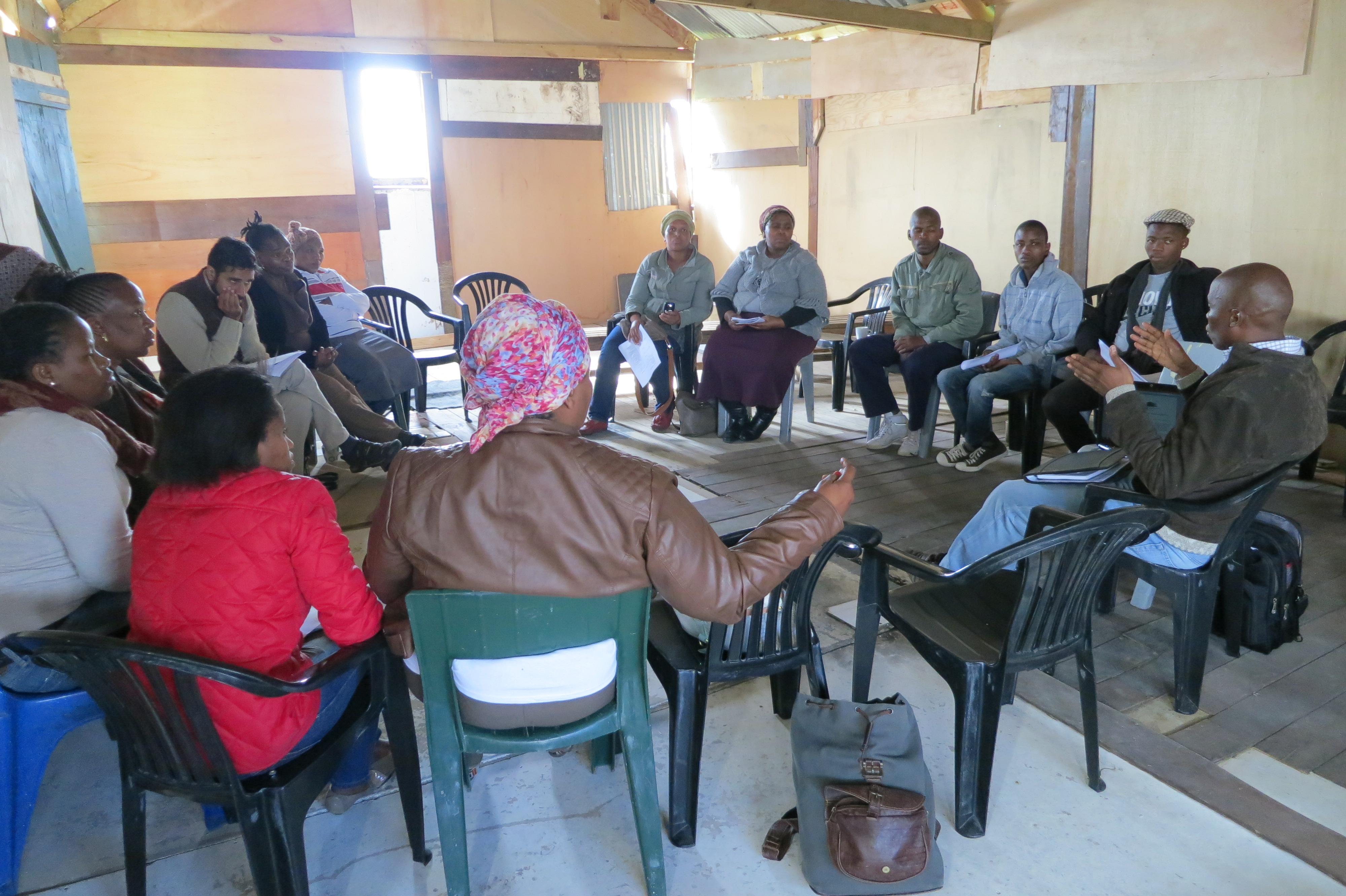
The venue : Makhaza Day Care Centre in Khayelitsha Cape Town

If designing and planning with communities are key aspects of people-led projects then people-led implementation and -construction are too. The SA Alliance – through the Federation of the Urban Poor (FEDUP) – has pioneered this people-led approach since 1994. By lobbying government, FEDUP strongly influenced low-income housing policy that came to be known as “the People’s Housing Process” (PHP), a special housing subsidy that allowed for much greater involvement of communities in the construction of their houses. Since then, FEDUP members have successfully implemented the construction of their houses through Community Construction Management Teams (CCMTs).

Although CCMTs have for the most part been linked to housing projects in the Alliance, setting them up is just as relevant to the Alliance’s more recent involvement in informal settlement upgrading. During this week’s three day CCMT workshop, experienced CCMT members introduced Cape Town community leaders to the CCMT model of community-led construction and explored how it could function in informal settlement upgrading.

The Exchange

Over three days Hasane Khoza (Abi) and Maureen Skepu from Gauteng shared their experiences in community construction with about 30 leaders from 6 settlements in Cape Town. With a background in construction management, Abi has helped to train and set up CCMTs and monitor housing projects. Maureen has a rich experience in CCMTs – she became a member of FEDUP in the early 2000s, accepted a volunteer position with a local CCMT five years later, and in 2011, moved into her own CCMT constructed house in Orange Farm, Gauteng. Read more about Maureen’s story here.

IMG_1730

Day 1 of exchange: background and formation of CCMTs

During the exchange, Abi and Maureen provided some background on the formation and strcuture of CCMTs, roles and responsibilities of each CCMT member and how to introduce the model of CCMTs to informal settlement upgrading.

The group also spent an afternoon in Flamingo informal settlement, which is currently upgrading and re-blocking. The visit offered an ideal opportunity for Flamingo’s steering committee to explain the way in which they have organised themselves so far and to explore the potential for them to form a CCMT to further streamline and ease the overall management of re-blocking. For the other communities present the site visit offered a first hand impression of what to consider for managing an upgrading project.

Terence Johnson, who has been involved in Flamingo from the outset on behalf of the Informal Settlement Network (ISN) explained,

“There are so many challenges and things you need to consider during upgrading. Some people don’t want to be moved, the rain causes flooding and leakages…. but we need to see these things not as a problem but as a challenge. And we can overcome challenges, especially if we work in a group like a CCMT. ”

Flamingo steering committee putting during on-site construction

Flamingo steering committee putting during on-site construction

How CCMTs work

On the first day Maureen explained,

 “The idea behind CCMTs is that communities oversee and implement projects themselves. In this way the community can make sure that the job is done properly. Because of this you need dedicated and thorough people on the team. The benefit of CCMTs compared to general steering committees are that each member has clear roles and responsibilities”

(Maureen Skepu, FEDUP housing project coordinator, Gauteng)

Within FEDUP, the CCMT process includes all the stages of house building: from drawing plans (which are formalised by qualified architects and engineers) to the construction process, which is contracted out to community members. The construction team consists of five members who each have a specific task: the technical officer requests specific items and provides quality control, the bookkeeper sources the best and cheapest materials, the storekeeper controls the inflow and outflow of stock, the loan and savings officer looks after the community’s finances, and the project manager oversees the whole process. And, unlike in the private and public building sector, most of the construction team’s members are women.

“The idea is to capacitate a community to move from being just employed in a project to driving the project themselves. Project management is a skill that can be learnt. Everyone can be taught and everything we know we have learnt. Managing a project leads to empowering a community.”

(Abi / Hasane Khoza, CCMT Construction Manager)

IMG_1731

Abi answering questions about CCMTs

Community Questions, Discussions and Insights

The workshop was a space of many questions and lively discussions. These were about how to break down the budget at community level so each person knows exact quantities and costs of materials to expect, at what stage in a project process a CCMT could be formed, or that women’s strength, resilience and thoroughness are good qualities for CCMT members. The communities present also liked the idea that CCMTs share the overall responsibility of an upgrading project – a shift from one person to a team of people.

In reflecting on the three days that passed, the community members expressed their value for exploring how the CCMT process can work in informal settings and upgrading projects. The suggested next steps are to establish guiding templates for establishing CCMTs as well as monitoring and documenting project processes on the ground, so that these can be shared with others as well.

“What we can learn from the CCMT workshop is that we need to continue learning, especially from the mistakes we make. Let’s not only make a habit of learning but actually do something with what we learn”

(Lindiwe Ralarala, Masilunge community leader)

Discussing the role of slopes and gradients on the upgrading site.

A discussion on the role of slopes and gradients on the upgrading site.

Preventing Shack Fires in UT Gardens with Lumkani Fire Detector

By CORC, ISN No Comments

By Yolande Hendler (on behalf of CORC)

Vuyani Ntontela and Thamara Hela are community leaders in UT Gardens, an informal settlement of about 400 structures in Khayelitsha, Cape Town. UT Gardens forms part of UT section in Khayelitsha’s Site B. Since the community was introduced to the Informal Settlement Network (ISN) in 2013, Thamara explains that UT Gardens has been organising itself for upgrading. Yet she also speaks of one of the biggest challenges the community faces: on-going fires that ravage homes and livelihoods, the most recent of which occurred last month.

UT Gardens Community leaders with Lumkani. From left to right: Phatiswa Nzima, Thamara Hela, Emily Vining, Ntombentle Qinga

UT Gardens Community leaders with Lumkani. From left to right: Phatiswa Nzima, Thamara Hela, Emily Vining, Ntombentle Qinga

Since March 2014 Vuyani (chairperson of UT Gardens), Thamara and the rest of UT Gardens’ leadership committee (15 in total) have been building a relationship with ‘Lumkani’, a social enterprise that is focussed on overcoming the challenge of shack fires in urban informal settlements. Lumkani has been developing a device that acts as an early-warning alert against shack fires.

The Lumkani device

The Lumkani device uses heat detection technology instead of smoke detection (not suited for the shack environment given the heating, lighting and cooking methods that take place in homes) to sense for fires. As a heat detector it accurately measures the incidence of harmful fires, alerting the family inside the shack of the danger. Each device is networked to surrounding devices within a 100m radius. In the event of a fire, the detecting device will send a signal to surrounding devices within this range. A solid beep means that the device has detected a fire in your own home whereas a broken beep indicates that the fire is in the nearby surrounding. A wave of sound creates a community-wide alert and response to danger. This buys time for the community to become proactive in rapidly spreading fire risk situations. Emily Vining, who facilitates Lumkani’s community interaction, explains that

“The networked functionality of the device is a way to confront the challenge of density and the rapid spread of fire. The devices are networked because it is not enough for one person to be alerted – everyone needs to be alerted. As a device Lumkani intends to stop the spread of fire through a community-wide response. It is most effective in communities with a strong leadership who can create strategies to respond to fire”

The Lumkani device

The Lumkani device

Building the relationship between UT Gardens and Lumkani

Thamara remembers how UT Gardens first heard about Lumkani through ISN and the Community Organisation Resource Centre (CORC).

 “When I heard about Lumkani I liked it. Because I am a mobiliser I proposed it to the other leaders. When we first met with Lumkani, they explained the fire detection device to us and asked if the community wants to be one of their pilot communities. As leaders we also liked the project. But we first called a general meeting to check with the community. They accepted the idea because we have a problem with fires. We meet with Lumkani every week to share our plans with each other. ”

(Thamara Hela, UT Gardens community leader)

Emily explains how Lumkani first met Thamara and the UT Gardens leadership in December 2013. From February/ March 2014 Lumkani met with UT Gardens leadership weekly to grow a relationship. David Gluckman, Lumkani’s financial director, explains that

“from the earliest phase of the project we met with community leaders and sought out their input – which had direct implications on the design of the device and its functionality – after all nobody knows the fire situation in informal settlements better than the people living there”

Emily elaborates that Lumkani was interested in developing the device through a deep-participatory approach that values horizontal learning. This means: inclusive design solutions and continuous innovation driven by testing and feedback. Both Emily and David emphasise how the community’s guidance was key, especially during on-site meetings with Max Basler, Lumkani’s industrial designer and Samuel Ginsberg, Lumkani’s technical director. It was during the first meetings with the community that the Lumkani team became aware of the need for a community wide and –networked device that could share information as fast as possible. Apart from on-site meetings, Lumkani formalised its community research in a short 12 question survey distributed to about 70 households in order to better understand how the community is affected by and responds to shack fires.

IMG_1610

Making plans to install 10 test devices last week

IMG_1616

Measuring out the distance between structures for installing the test devices

Looking forward

At the moment the device is in a general testing phase – which includes technology tests and a sound test that took place last week, for which the first ten devices were installed. The pilot is set to begin in October 2014 and will seek to test 2000 devices in four high fire risk communities in Cape Town, one of which is UT Gardens.

Thinking back of the past months of working together with Lumkani, Thamara shares,

“Since we started our relationship with Lumkani I would like to say that they are doing a good job. What I like about Lumkani is that after we have a meeting, we see things happening on the ground. Even when people from other settlements in Site B visit me and see the fire detector they like what Lumkani is doing”

(Thamara Hela, UT Gardens community leader)

Durban and Port Elizabeth Leaders on Sanitation Exchange

By CORC, iKhayalami, ISN, SDI No Comments

By Stefanie Holzwarth and Yolande Hendler (on behalf of CORC)

Over the past years, the communities of Midrand in Port Elizabeth and Havelock in Durban have been upgrading their settlements, step by step. Last week’s exchange (8-11 July 2014) – in which community leaders visited Cape Town settlements – formed the next step in activating solutions to their specific needs for water and sanitation upgrading.

Site visit in Kuku Town

Site visit in Kuku Town


Midrand and Havelock

Midrand is located on municipal land but is not yet listed on the municipality’s database and therefore experiences great difficulty in accessing services. The community consistently experiences severe flooding. Havelock, on the other hand, is built on privately owned land and has been earmarked for “interim services” by eThekwini Municipality, indicating a willingness to deliver basic services in the short term and habitation in the long term. It is built against a hill with high shack densities that have led to shack fires, flooding and torrents of water flushes in the rainy seasons. Read more background on Havelock and Midrand.

The exchange

During the four-day exchange about ten community leaders visited five settlements in and around Cape Town. The exchange was linked to the SHARE Program (Sanitation and Hygiene Applied Research for Equity) linked to Shack Dwellers International (SDI). Read more about SHARE here. It was facilitated by the Informal Settlement Network (ISN), Community Organisation Resource Centre (CORC) and iKhayalami. It centrally focussed on how communities can use sanitation as a tool for upgrading and mobilisation, particularly in response to ever present and severe flooding.

Midrand community leaders, for example, spent time investigating the most suitable and relevant options for sanitation upgrading in their settlement:

  • Communal toilets and wash facility at the edge of the settlement (ablution blocks) without re-blocking
  • Sanitation and wash facility in the centre of the settlement with partial re-blocking
  • Individual sanitation facilities in courtyard (one-on-one sanitation) with settlement wide re-blocking

These would all require engagement with local government institutions.

Havelock’s central challenge is drainage. The settlement has already engaged with local government about constructing a sanitation unit as well as providing more sanitation units in the centre of the settlement. This would coincide with the communities’ already existing plans to re-block its settlement. Midrand and Havelock’s leaders therefore visited upgrading sites that provided an example of different options available to them.

DSCN7284

Example of sanitation in a community-run Water, Sanitation and Hygiene (WaSH) facility

One-on-One Sanitation in Kuku Town

The visitors spent the first day in Kuku Town where the community recently completed re-blocking with individual sanitation per upgraded structure. They were particularly interested in how Kuku Town managed to re-block without having to relocate people to other areas. Other questions focused on why the community chose individual toilets. Kuku Town’s leaders explained that

“single toilets are manageable because the owner is responsible for their own toilet and because there are no conflicts within the community with regards to hygiene.”

The leaders also reflected on Kuku Town’s successes and challenges throughout planning and implementation. The visitors learned how Kuku Town approached the municipality for support in terms of infrastructure services. Both Midrand and Havelock were impressed by the Council´s successful involvement in providing water and sanitation.

6. After reblocking 3

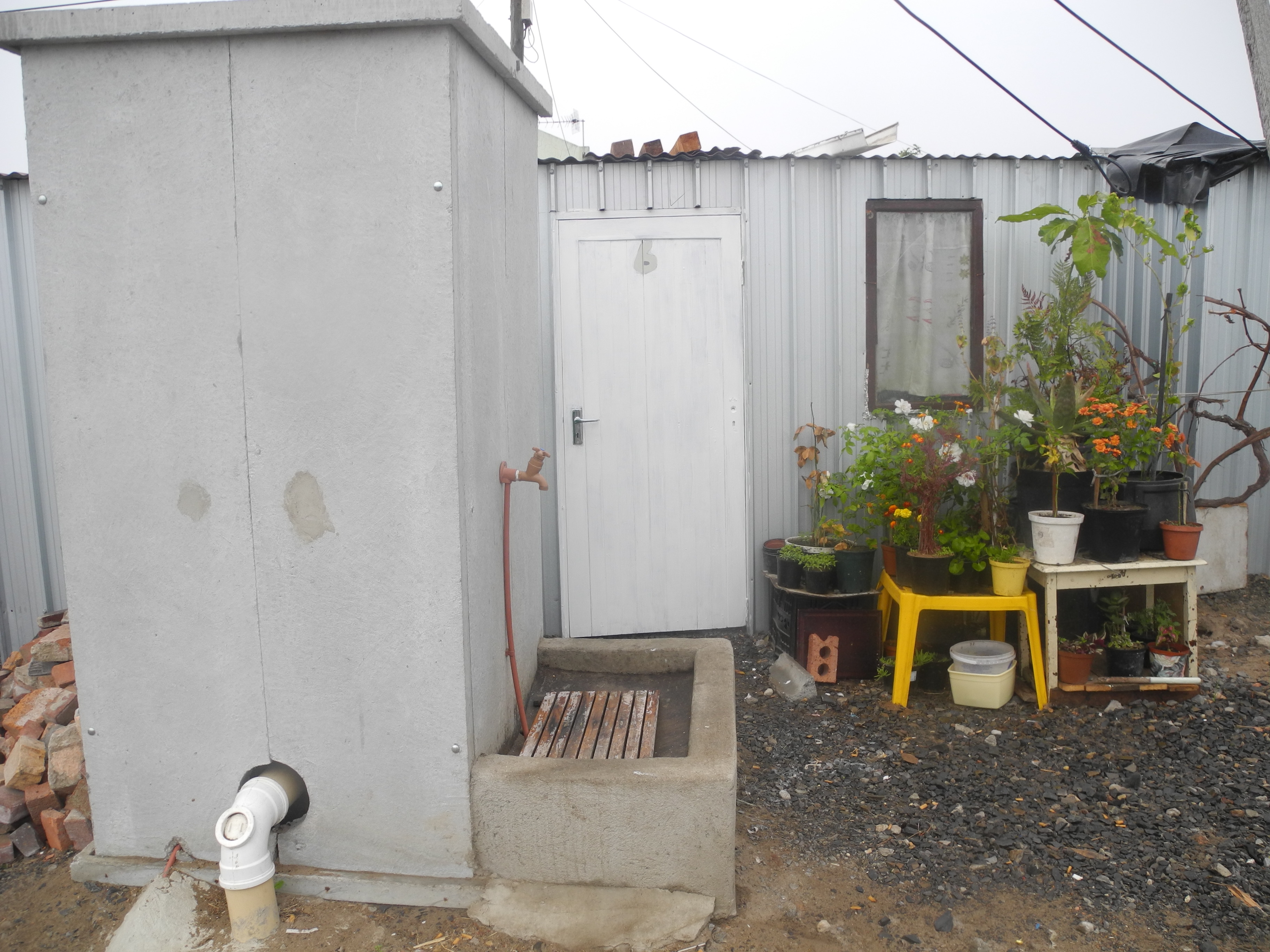
Sanitation and water services per upgraded structure in Kuku Town

Sanitation facility in Langrug, Stellenbosch & BM Section, Khayelitsha

In Langrug, Franschoek. the visitors saw an example of upgrading that included relocating 16 families, the construction of a second access road and grey-water and drainage channels, and a community designed, multi-purpose Water, Sanitation and Hygiene (WaSH) Facility. The visit offered insight into the WaSH facility, the drainage project and the local playground. The subsequent discussion facilitated an exciting learning environment with questions about the maintenance of the WaSH facility and funding. They also discovered the opportunity of hot water provision via solar heating systems in summer. The afternoon centred on projects in BM section, Khayelitsha. Its similarity (due to an uneven slope) to Havelock made it an ideal site for the exchange and delivered an essential input for its visitors.

DSCN7392

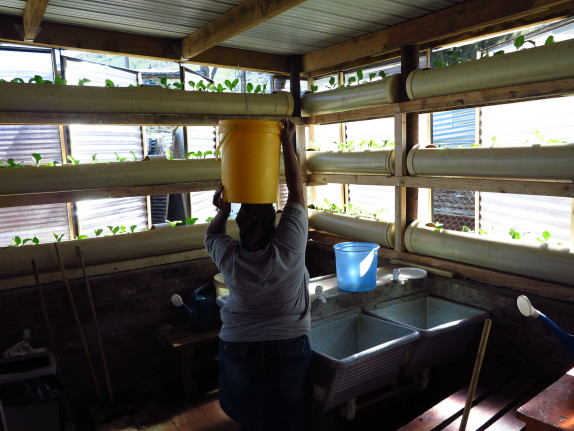
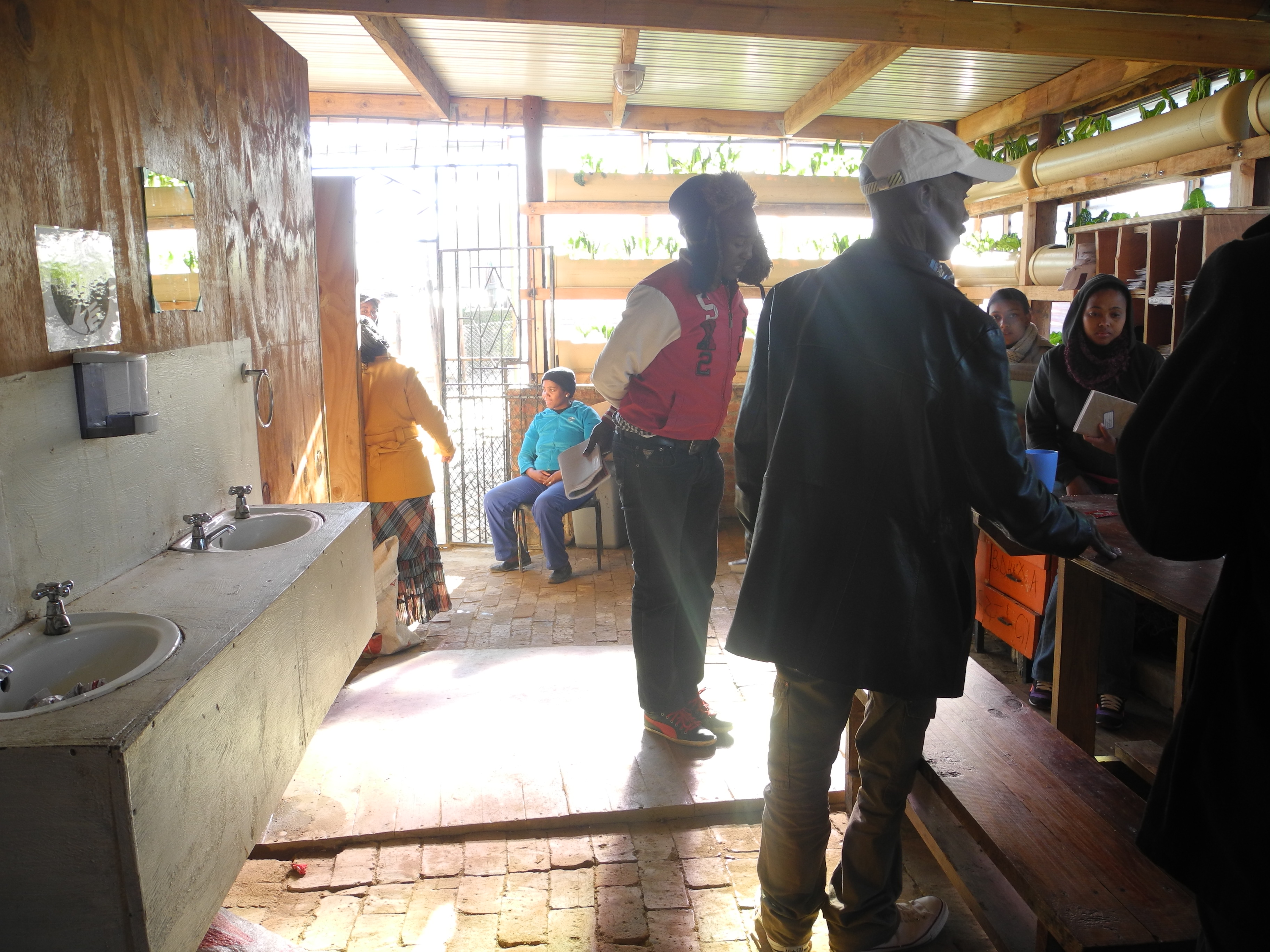
Interior view of Langrug’s WaSH facility


DSCN7455

Courtyard in BM section

Shared Sanitation in Mtshini Wam & ongoing re-blocking in Flamingo

The visit to Mshini Wam provided valuable lessons for the visitors – particularly in the field of funding and engaging the local authority. The visitors took special interest in understanding how Mtshini Wam managed to convince some residents to share toilets on a cluster basis while others had single toilets. The challenges relating to communal toilets were thoroughly discussed.

“The main idea was to have single toilets but due to the number of shacks and the limited space, the plan was diverted in order to accommodate communal toilets. The maintenance and cleaning of the toilets depends on the cluster groups.”

The visitors concluded their site visits in Flamingo Crescent, an ongoing re-blocking project. During a walkabout the visitors observed how shacks were broken down, how ground works were installed and how the new structures were erected.

Site visit in Flamingo during re-blocking

Site visit in Flamingo during re-blocking

Midrand community discusses the way forward

On the last day, Midrand leaders and iKhayalami discussed the sanitation options available to the community and the future steps each would imply. Community leaders agreed that re-blocking with one-on-one services would be the most realistic and feasible option.

“The ablution block won´t work for us because there is lots of friction. No one wants to wait for a long time when using the facility. Community blocks won´t work because some of the people are not responsible. They leave it without taking care.” (Community Leader, Midrand)

Midrand’s leaders agreed to start saving to upgrade their structures instead of solely blocking out. They hoped to convince the municipality to come on board. Re-blocking would be conducted in phases – identifying clusters for incremental re-blocking.

One major challenge in Midrand is the lack of space. Part of the settlement land is still in private hands – which causes major tenure insecurity. Together with iKhayalami the leaders discussed various solutions. While the community leaders resolved their questions, the next step is to share these with the rest of their communities when they return.

The exchange not only offered a learning space but also enabled leaders to grow their ability in community-driven upgrading,

“I have learned a lot by being a community leader and by being part of this exchange. It has built up my confidence and my professional experience. I was a very shy person before – now I can stand up and work for our development goals.” (Midrand community leader)

Midrand Consultation

Andy Bolnick (iKhayalami) discusses sanitation options with Midrand community leaders

Grooming future leaders ‘ the youth federation on youth day’

By CORC, FEDUP, ISN, uTshani Fund No Comments

by Thandeka Tshabalala on behalf of FEDUP

About 70 youth federation members gathered at Kwamashu in Durban to discuss challenges that are facing the youth and how they can use the federation (FEDUP) rituals to influence change in their lives and communities.

Rose Molokwane enjoying her time with the youth.

Rose Molokwane enjoying her time with the youth.


To set the platform Rose Molokwane, the national federation coordinator shared her story about her experience when she joined the federation and the importance of grooming a youth federation in South Africa.

“I was 31 years of age when I joined the federation in 1991 and today I am happy to share my experience with the youth, the purpose of the meeting is to prepare the youth and help in changing their mindsets to influence change in their communities, like we have” she said.

She further stated that her aspiration as the national coordinator of the movement is to build a sustainable and successful organization and it is vital that the youth are at the forefront of bringing change in their communities.

“ We need an organized youth that will be able to create an agenda of change in their lives, our children grew up seeing their mothers creating an impact and opportunities for the poor in their communities. It is now time that we pull you (youth) next to us so that you can learn from us. There are so many service delivery protests in South Africa and it is heartbreaking to see the youth leading them thus we need to groom new youth leaders that want to learn about new avenues to negotiate with the state” said Rose.

Rose further challenged the youth to think about the ‘youth’ rights, how they can achieve them and who was responsible for making sure that their rights were protected.

re- thinking the youth rights

Bunita Kohler, the managing director of CORC (Community Organisation Resource Center) additionally challenged the youth to think about

“ the brave youth of 1976, the youth that had very little resources but persevered for what they believed to be right for them. As activist we felt that we could do something in our communities, we had a vision, thus it is important that the youth of today has a vision, what is it that you want to see in your life? What are we striving for and how do we want to achieve it? Which Values will we embrace in order to achieve these goals?”

In acknowledgement that the youth is experiencing a lot of challenges in their communities she urged the youth to use knowledge from the ‘old’ experienced federation members to advance themselves.

20140615_125617


The Youth reports  on challenges and ways to overcome them 

The youth presented their regional challenges such as unemployment, poverty, drug abuse, unplanned pregnancies, derelict living conditions, lack of education and support to establish youth activities. They all discussed a way forward in overcoming some of these challenges such as:

Creating platforms for Partnerships

  • The youth discussed using partnerships as a platform to bring positive change in their communities. From their main big challenge – unemployment, they all agreed to partner with government departments and NGO’s that assist in skills development and creating job opportunities.
  • Partnerships with the local councilor were seen to be important in unlocking local resources and using them to get more community involvement in youth projects.

Pule shared his story about  the benefits of creating partnerships 

  Savings has enabled the youth to negotiate with government. We belong to a savings group called yona yethu a savings scheme with 120 members. Some of the members have formed a co-operative which will enable us to gain more support from the government and also allow us to bring more income for our households.   At the mean time the group  washes dirty dustbins after the municipal trucks have collected the gabbage  , we clean them using chemicals and take them back to the owners at a certain fee.   We have further engaged with the solid waste management  department and city parks about the vacant land in our settlement that is used as dumping sites. We have proposed to clean them and then change them to parks for the children in the settlement to use. In order to stop people from dumping again we further engaged with the local councilor to speak with the community and appoint certain community members to be responsible for keeping an eye on anyone dumping. We meet weekly to discuss new views and challenges.

An organized youth-for- change

  • The youth realized that they needed to be organized in order to make an impact in their communities. An organized youth would be able to fight against poverty, landless issues, and lack of housing, unemployment and dealing with drug abuse. The youth was tasked to mobilize more youth members and form youth activities that will assist in influencing change in their communities.
  • The youth also asked experienced federation members to help them to create a youth federation organisation structure.

Adopting the federation rituals

  • Because savings is the backbone of the federation, the youth was urged to start forming savings groups in order to leverage more resources from the state and other partners. In the past the federation has used savings to leverage resources from the state through the people housing process (PHP). The savings helps the federation members to contribute in the building costs of their houses , increasing their subsidies to build bigger houses that can accommodate their family needs.
  •  They requested that they have more regional Exchanges to see what other youth members are doing in their communities so that they can exchange knowledge.

In order to spark more youth involvement in creating partnerships Harambee and the NYDE  (National Youth development Agency) presented about their programs.Most of the youth were excited in seeing that they can influence change in communities by ‘just’ giving information to the youth. Rose further reminded them that information was vital to bring about change thus she urged the youth to collect data from the enumeration reports that would be relevant to them such as regional youth challenges, number of unemployed youth.

A group photo during the historical site visit.

A group photo during the historical site visit.


Celebrating being the youth

The youth was taken on a cultural tour to enhance their knowledge on the South African history. The two sites at Inanda route Mahatma Gandhi and John Libalele Dube historical sites were chosen to inspire the youth about leadership that instigates change in communities despite facing challenges. They further celebrated youth day with cultural activities – some highlighting the challenges they are faced with in their communities.

IMG_2196