Category

CORC

MORE FIRE! Deputy Minister visits Mshini Wam and Siyahlala settlements in Joe Slovo Park

By CORC, FEDUP, ISN, News No Comments

By Walter Fieuw, CORC

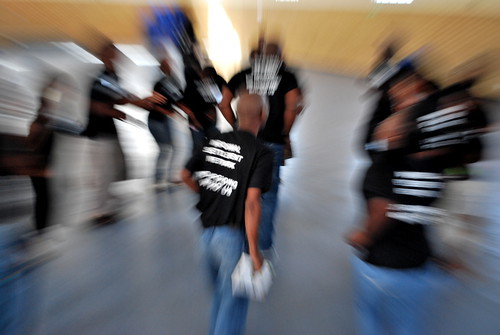
On Thursday 23 February 2012, while South Africa were debating the implications of Finance Minister Pravin Gordhan’s budget speech, another group was preparing to put action to words. Community leaders from across the country and associated with the Informal Settlement Network (ISN) were gathering in a community hall in Joe Slovo Park, Milnerton, Cape Town. This group attended a workshop during the week on enumerations, mapping and blocking out of their settlements. The energy was bouncing off the walls, and detonated into a joyous singing-dancing affair along Freedom Way.
DSC_0014-1
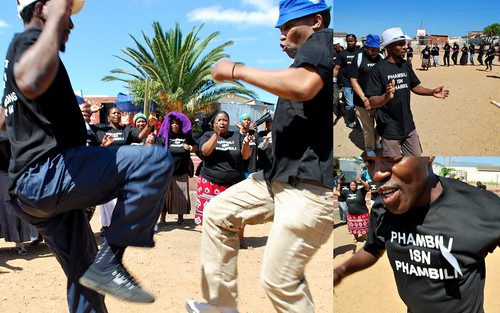
The group danced and sang their way to the next stop: an open field in Mshini Wam settlement where a gazebo was set up to receive the Deputy Minister of Human Settlements, Ms. Zou Kota-Fredericks. The group sang affectionate songs to the on-lookers, urging them to unite and prepare their communities for improving their living conditions.

Ndikunile isandla [I give my hand]

Ndakunika ingalo [I give my arm]

Ndakunika amabele [I give you my chest / breasts]

Andiyazi byifunayo [I don’t know what else you want]

Yona soze uyifumane [and you wont get it!] Deputy Minister visits Mshini Wam
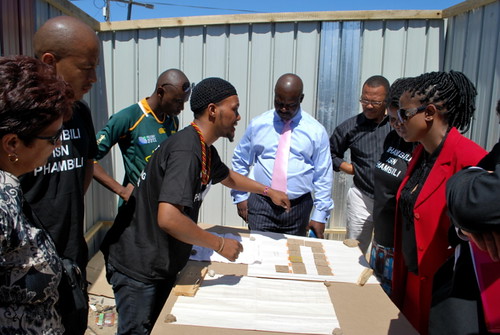
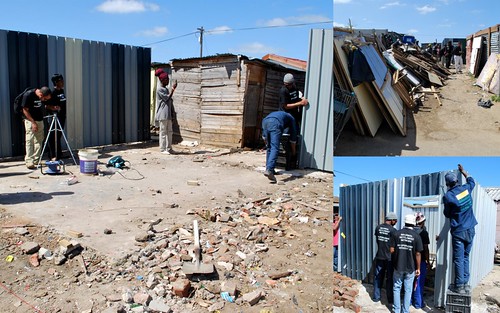
Blocking-out is a term the South African SDI Alliance uses to refer to the community based planning and design processes that lead to the re-organisation of shacks to utilise space much better. The need for blocking out could be anything from opening space to ensure better penetration of emergency services, finding solutions to flooding and fire, security and safety of children in court yards under neighborhood supervision, or better located water and sanitation services. In the case of Mshini Wam – a settlement that has been plagued with fires that not only destroy their belongings, but also have claimed residents’ lives – the community intends to open space to develop roads for emergency services, amongst others. Ms. Kota-Fredericks was led through a narrow alley way littered with the debris of shacks pulled down. However, in the place of the old: the new! Ngcambo, a leader from Mshini Wam, introduced the community designs to the minister in a practical way. He presented the previous layout of shacks with cardboard cut-outs, and rearranged them to show her what the new layout will look like. The iKhayalami team was supporting the affected households on that very same stage, and the minister could see the new synergy of professional builders working alongside unskilled communities. The skills transfer that occurs in this space is notable.
Deputy Minister visits Mshini Wam1
DSC_0095-1

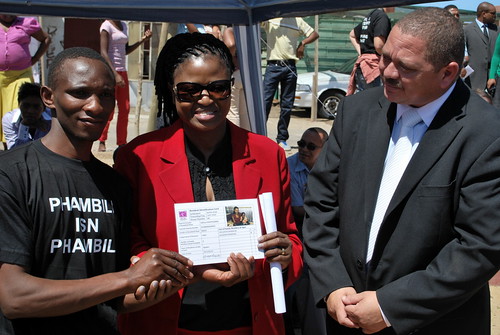
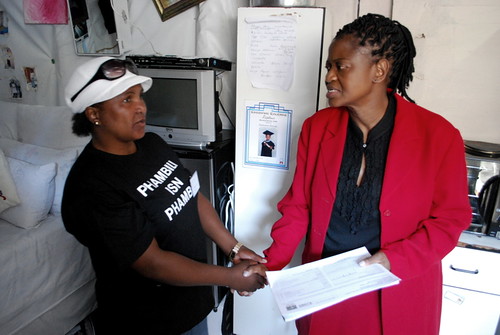
The delegation moved on to another aspect of the enumeration process that is linked to securing people’s tenure and creates a sense of belonging. This time, the minister handed over identity cards to Mshini Wam residents. The identity card contains the following household information:

  • Name and national ID number of household head, with a picture of him / her next to his / her numbered shack
  • Names and identity numbers of household dependents
  • Shack and block / cluster number
  • Number of years lived in the shack

This small gesture goes a long way. When the City’s anti-land invasion unit peruses settlements, and allegedly threatens with eviction, residents in enumerated settlements can easily produce tangible evidence to the contrary.
DSC_0118-1
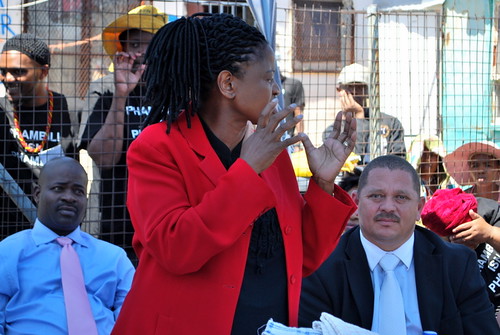
The party then moved on the next venue: Siyahlala settlement across the road from Mshini Wam. “It’s an honor to again have you here amongst the shacks, Minister” said Patrick Magebhula, chair of ISN and advisor to Tokyo Sexwale. “This is where it really matters”. Turning to the buzzing crowd he said, “You need to be a leader with a purpose. A leader that represents solutions to real problems. A leader of the elderly, of the unemployed, of the disabled, of the children. And you will only know your people and your settlement if you have enumerated and discussed the data”. Magebhula also ensured the Minister and officials from the City of Cape Town that ISN, with support of CORC, are preparing a master database of data collected in settlements over the past years.

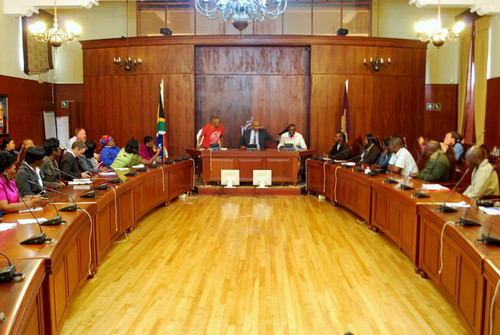
Member of Mayoral Committee for Human Settlements, Councilor Sonnenberg, also affirmed the City of Cape Town’s commitment to working alongside communities associated with the Informal Settlement Network – in particular the communities of Mshini Wam, BT Section, Burundi, and Vygieskraal. Six objectives in the partnership between the ISN and City of Cape Town were also presented:

  1. Create a shared community vision of the future, especially with regard to informal settlements upgrading and backyard rehabilitation;
  2. Identify and prioritise key issues, thereby facilitating immediate measures to alleviate urgent problems;
  3. Support community-based analysis of local issues, including the comprehensive review of long-term, systemic problems that confront particular service systems and the need to integrate different service strategies so that they are mutually supportive;
  4. Develop action plans for addressing key issues, drawing from the experiences and innovations of diverse local groups;
  5. Mobilise community-wide resources to meet service needs, including the joint implementation of sustainable development projects; and
  6. Increase public support for municipal activities and local understanding of municipal development needs and constraints.

DSC_0132-1

DSC_0141-1

Minister Kota-Fredericks reminded the delegation of minister, councillors and officials that these are the people we serve. She further remarked that the Department is in the process of finalising its budget and at the budget speech, she will report back on the collaborative upgrading initiatives she witnessed in Cape Town.

In closing, minister Kota-Fredericks talked about the “multiplier effect” that small City-wide projects have on national policy deliberations. This starts through organised communities taking the initiative to build horizontal networks of accountability and transparency. Only by building partnerships with all tiers of government, starting at the local level, meaningful engagement will be achieved. The minister walked the talk, and conducted a household level enumeration by completing the CORC questionnaire with a local resident. And in doing so, she also launched the enumeration of Siyahlala settlement.
DSC_0159-1

National leaders of the Alliance congregate in Cape Town

By CORC, FEDUP, ISN, News, uTshani Fund No Comments

By  Walter Fieuw, CORC

Leaders of the South African SDI Alliance congregated between 16 – 18 January 2012 at the Lutheran Youth Centre in Athlone to follow up on progress made since the strategic meeting held at Kolping House in January 2011. At last year’s meeting, the Alliance agreed to a shift of focus towards upgrading of informal settlements. Despite one of the world’s largest housing delivery programmes, the South African government has failed to curb the demand for housing and the improvement of basic living conditions for milllions of poor people. The Alliance has pledged ‘to strengthen the voice of the urban and rural poor in order to improve quality of life in informal settlements and backyard dwellings’. This we will accomplish by supporting communities who are willing and able to help themselves.

At Kolping House strategic meeting, the following four broad strategies would define the work of the network:

1. Building communities through FEDUP and ISN using SDI social tools;

2. Building partnerships with government at all tiers;

3. Implementing partnerships through projects; and

4. Keeping record of learning, monitoring and evaluation.

Upgrading informal settlements is an inherently complex endeavour considering the various socio-political realities connect to harsh living conditions and illegality. However, across South Africa the urban poor are mobilising and building institutional capacity to engage local governments around community-initiated upgrading agendas. As the Alliance’s saying goes, “Nothing for us without us”. Dialogues and outcomes of this year’s strategic meeting focused on meeting the development indicators which the Alliance set for itself at Kolping House. This year will see a renewed focus on the following:

  • Capacitating regional leadership structures, and the creation of a national ISN coordinating team
  • Recommitment to the spirit of daily savings, daily mobilisation and daily exchanges of learning
  • Deepening the quality of selected settlement upgrading, while growing the ISN network
  • Developing relevant and sensitive indicators, guidelines and protocols for the Alliance’s core activities to spur self-monitoring and evaluation.
  • Resourcing the Alliance through effective partnerships with local governments, universities and other development agencies such as the National Upgrading Support Programme (NUSP, Dept of Human Settlements) and the promotion of establishing Urban Poor Funds, similar to the Stellenbosch experience (hyperlink: http://www.sasdialliance.org.za/blog/Memorandum/)

Building coalitions of the urban poor able to capture the imaginations of city builders, both from the top-down and the bottom-up, is not often highly regarded or understood when upgrading strategies are devised. The Alliance is committed to strengthening the voices of the urban poor through building effective, pro-poor partnerships and platforms with local government, and implementing these partnerships at project level. As the process to understand the discrepancies and commonalities between the agendas of communities and the municipality gets underway, work must begin. Communities and the municipality develop, in partnership, a mix of “quick wins” that can build trust and show real change for communities. At the same time, the Alliance is also geared towards challenging many of the assumptions that lie behind planning for the urban poor throughout cities in South Africa. Other projects that get chosen for implementation are difficult cases designed to influence the way the municipality operates so that its methods come closer to the planning priorities of communities. All the project types also influence communities. At these interfaces of bottom-up agency and top-down city management, new ways of seeing, grappling with and finding solutions for informality emerge, and shack dwellers are no longer passive by-standers to the development enterprise, but active partners and innovators of finding workable, affordable and scalable solutions to urban poverty.

Partnerships for change: New approaches to financing informal settlement upgrading

By CORC, ISN, News No Comments

By Walter Fieuw, CORC, and Vernon Bowers, Stellenbosch Municipality

DSC_0559

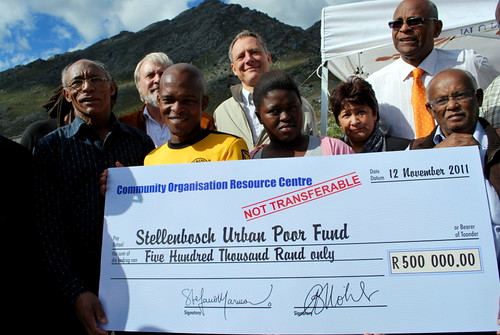
The creation of a new Urban Poor Fund was the highlight of the event: The community contributed R12,000 in savings

The enduring nature and extent of homelessness and landlessness in post-apartheid South Africa has compelled new approaches to housing the urban poor. Informal settlement upgrading – an incremental approach to securing tenure and improving basic service delivery – has gained recognition at local and national levels. The central participation of shack dwellers in the planning and implementation of settlement upgrading is integral to the creation of sustainable human settlements and inclusive cities. The anticipation for ‘deepening democracy’ through governance reform and extensive participation is arguably precursory to the prospects of ameliorating the depressing living conditions of slum dwellers. There has possibly never been a greater need for establishing effective partnerships between civil society and the state capable to navigate the turmoil currents of the urban crisis.

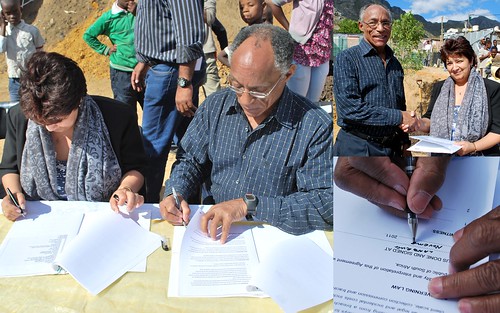
international delegation, sign sbos </p> <p>New political actors have emerged that are influencing the national upgrading agenda. Among these are the Informal Settlement Network (ISN), a bottom-up agglomeration of local-level and national-level organisations of urban poor in Cape Town, Ekurhuleni, eThekwini (Durban), Johannesburg, Nelson Mandela Bay (Port Elizabeth), and Stellenbosch. ISN, together with the Federation of the Urban Poor (FEDUP) – a woman-led federation of slum dwellers practicing savings, enumerations and partnerships with the state – and support NGOs Community Organisation Resource Centre (CORC), iKayalami, and uTshani Fund, promote pro-poor and inclusive cities through people-centred development. These organisations are linked to Shack/Slum Dwellers International (SDI), a global network of similar organisations of the urban poor in 33 countries across Asia, Africa and Latin America. SDI builds partnerships with government that put shack dwellers at the centre of upgrading their built environment. As the South African SDI Alliance saying goes: “Nothing for us without us”.</p> <p>The Alliance promotes the establishment of citywide “Urban Poor Funds” which are community-driven development funding facilities that support community-initiated projects. Urban Poor Funds are financed by contributions from the local municipality combined with the savings of the poor, and are often strengthened by international donor funding. These funds are co-managed between organised communities and the municipality, and tend to by-pass the red tape and costly bureaucracy of state delivery mechanisms. These precedent-setting funds build on the collective capacity of local savings groups and link local upgrading efforts to wider policy change. This form of development-finance has particularly gained currency in South East Asian countries where institutional innovation, transparency and accountability resulted in empowered communities and significant poverty alleviation. In South Africa, the Community Upgrading Finance Facility (CUFF), located in uTshani Fund, has provided seed capital for more than 50 pilot upgrading projects. Communities are expected to contribute ten percent to the total project cost, a significant contribution considering the depth of poverty in many settlements.</p> <p>Stellenbosch Municipality has been a trend-setter in pledging support and partnership toward such ends. The sheer scale of the housing need – a backlog of 19,701 housing subsidy applications paired with roughly 9,000 backyarder households and 9,000 informal settlement households – compared to the meagre 300 housing subsidy allocations per year, illustrates the extent of the urban crisis Stellenbosch Municipality is facing. The partnership-in-the-making has evolved over two years and key city officials, such as Mr. David Carolissen (manager of the informal settlements department) and Mr. Johru Robyn (town planner in the housing department), were exposed to upgrading projects in Uganda through the SDI learning exchange programme. “We were investigating alternative solutions to the problems being faced by shack dwellers and approached SDI about two years ago in the hope that we could not only investigate potential partnerships but also note key lessons learned in managing informal settlements. The involvement of community members is crucial in achieving any form of success and partnering with SDI cements this involvement,

The South African SDI Alliance and Stellenbosch Municipality signed an important Memorandum of Understanding

DSC_0575

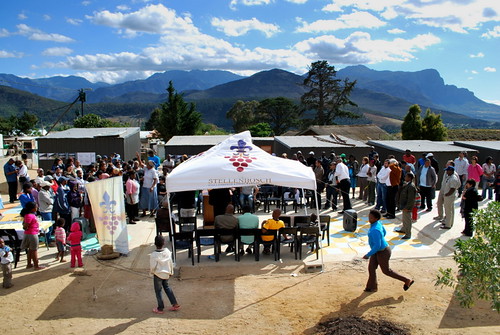
At a spirited event on 12th November in the informal settlement of Langrug on the outskirts of Franschhoek, the Executive Mayor, H.E. Mr. Conrad Sidego, said: “The benefits of this partnership are far-reaching and should be viewed as a paradigm shift in municipal governance.” This historical event was centred on the signing of a Memorandum of Understanding between the South African Alliance aligned to SDI and the Stellenbosch Municipality. The establishment of an Urban Poor Fund servicing informal settlements in the borders of the Stellenbosch Municipality concretised this pledge of partnership and renewal to “municipal governance”. Delegates from the Bill and Melinda Gates Foundation, the Swedish International Development Agency, the Governments of Norway and Uganda, and representatives from poor people’s federations in India, Namibia and Malawi were present. The Urban Poor Fund was financed by contributions by the Alliance and the municipality to the value of R3.5 million. Perhaps most significantly, R12,000 of hard-earned savings by the poor of the Stellenbosch region were also pledged.

In the first financial year, in addition to the capital and operational expenditure of community-initiated projects, the Fund will aim to “build an urban poor platform through a network of informal settlements and informal backyarders” by surveying, mapping and profiling settlements with the view of up-scaling upgrading across the municipality. Provisions are also made to invest in the social institutions of the poor in order to manage the partnership projects (e.g. setting up mini offices in five strategic clusters). Tiers of government and other interested parties to participate, especially role players in urban development, will also be engaged with the view of researching and designing “financial facility that incentivises community participation in informal settlement upgrading”.

Jockin Arputham, the president of SDI and of the National Slum Dwellers Federation of India, addressed the residents of informal settlements across the municipality: “If everyone depends on the waiting list, it might be 25 – 40 years. And then you won’t even get water or a toilet. I think that the Municipality of Stellenbosch has taken a lead, and they have come forward with a very, very big blessing that where ever you live, that is your land of ownership. If you have your land, you can improve your housing and living condition, which is designed by you. It is our pleasure to set up the urban development community fund where people will have access to the money and the work has to be done by you, the way you want it. Your frustration list is the waiting list.”

The Mayor added: “Today is about changing mindsets in providing housing … Just days ago we contemplated that we now have seven billion people on the planet and the challenges going with that … For us as the local government, we also need to understand and face the reality of what we need to do. If we continue with our old thinking, there is no way that we are going to change this.”

DSC_0510

International delegates from SDI were present to support the new partnership with Stellenbosch Municipality

“We want to do, what we can, with what we have, WHERE WE ARE.”

By CORC, FEDUP, News No Comments

By Charlton Ziervogel, CORC/SDI

These are the words that epitomize the approach the Western Cape Backyarders Network (WCBN) has towards solving the problems that exist within backyarder communities in Cape Town. But how do you build momentum in a community that has had a history of fragmented approaches to solving its numerous problems?  The answer for Manenberg has been both simple in its execution and complex in the processes followed to get to where it is today.  Various community organisations at work in Manenberg met recently at the People’s Centre at a gathering organized by the WCBN in conjunction with the Informal Settlement Network (ISN) to review the work being done to improve the lives of backyarders in the area.

Manenberg1

Seth Maqetuka, Director for Strategic Urbanisation in the City’s housing directorate, looks on as Melanie Manual of WCBN explains the shack upgrading process

Organizing the Community

Patsy Daniels, chairperson of the Manenberg Development Coordinating Structure (MDCS) explained the history of community organization within Manenberg.  She described how organisations within Manenberg have been competing for funds, resources and exposure, which has seen a very disjointed approach to solving the area’s problems. The role of the MDCS was to provide a coordinated structure for organisations to work together and has provided the platform for the WCBN to start making a real impact on the lives of the backyard dwellers of Manenberg.

Melanie Manuel of the WCBN highlighted the plight of people living in backyard shacks across Cape Town and brought into sharp contrast the unique set of problems faced by slum dwellers who are effectively hidden from the public eye. She explained that with the help of the Community Organisation Resource Centre (CORC) and its links to Slum Dwellers International (SDI), the rituals of enumeration and savings were being utilized to begin an upgrading initiative with Manenberg backyarders as well as some of the most overcrowded rental stock houses in the area.  The plan of action did not end here, however, and the approach being followed by the organisations tasked with looking after the housing sector in Manenberg included a multi-facetted method, which would seek to draw in various other sections of the community.

Yulene Waldeck, a member of the WCBN and Manenberg Community Management Services (COMS), then took the gathering through the proposals for a multi-purpose centre, which would be located on a vacant piece of land.  The centre would provide accommodation for the elderly, drug abuse counseling facilities as well as skills training and support to young mothers who often lived in overcrowded conditions and had no place to go when facing the pressures of motherhood.  In addition, the centre would serve as offices for the organisations working with backyard dwellers and give the community a first port of call in addressing the complex issues around backyard living and informality.

Savings and Enumerations

Savings served as the entry point for the work of the Federation of the Urban Poor (FEDUP) in Manenberg.  Naeema Swartz of the Manenberg Slum Dwellers explained that even in a community like Manenberg where people are very poor, the need to save is very important.  She emphasized that the discipline of savings was key to help many backyard dwellers in the area upgrade and improve their current living conditions.  The principle here was to develop the ethos of self-reliance in addressing the concerns of their own community.  Gail Julius of the WCBN took the opportunity to highlight another of SDI’s key rituals, that being enumerations and explained how this tool served as an excellent mobilizing and learning tool for the community of Manenberg.  The enumeration helped the various role-players understand that overcrowding was one of the biggest concerns facing residents.  In one instance the enumeration team had encountered a home where 22 people were sharing a one-bedroom house.  The enumerations highlighted the difficulty backyarders had with regards to accessing basic services like sanitation, electricity and water.  They would often have to pay for access to these services from the tenants of the rental housing stock. This meant that if there were issues with the tenants the backyarders had no grounds for legal recourse as the City had agreements with the tenants and not with the backyarders, effectively leaving them in limbo.

Henrietta and Lezhaun, members of a family of ten living in an overcrowded one-bedroom house in Manenberg, explained that they have been on the waiting list since 1987.  Compounding their overcrowded circumstances was the additional fact that they are both blind.  This family in particular raised awareness around the plight of many families where 2nd to 3rd generation members, having no place to move to, simply stayed in overcrowded conditions.  In many cases, situations like these have led to the establishment of backyard accommodation which has been the only viable option for people who did not want to move out of Manenberg or lose the social security net that familial networks in the area provided.

Washiela Baker of the Caring Organization, who has been active in community work in Manenberg for over 25 years, stated that she was shocked at the findings of the enumeration.  Being able to go into the backyards and witness for herself the conditions people were living under galvanized her to focus more effort towards these people who were hidden from the public gaze.

Providing realistic solutions

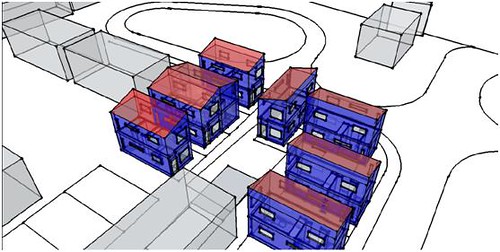
The enumeration thus guided the community organisations in the housing sector of the MDCS towards an approach that would seek to upgrade the living conditions of backyard dwellers by improving the dilapidated make shift structures, which thousands of residents in Manenberg find themselves living in today.  A secondary proposal looked at the opportunities that existed in demolishing old rental stock houses and building structures that used the space more efficiently to house more people.  Melanie Manual explained how the space currently occupied by a five-unit structure could be utilized to build units for eight families and include a courtyard space for children to play in safety.

Manenberg4

Manenberg6

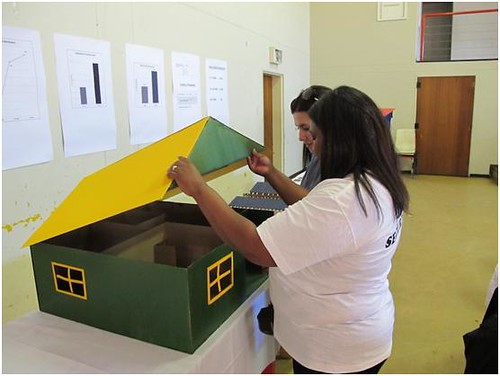
A model showing the proposed new housing units for Manenberg that utilizes space more efficiently

Unveiling the Upgraded Shack

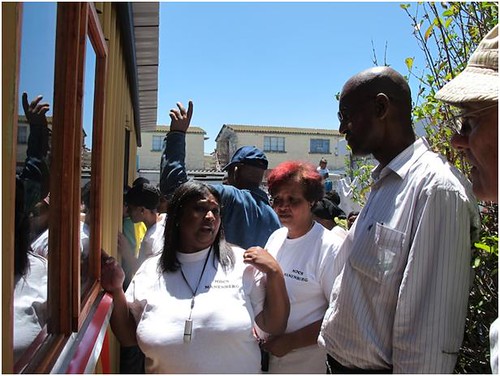
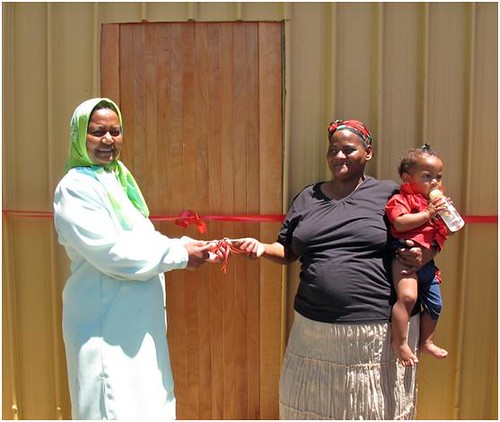
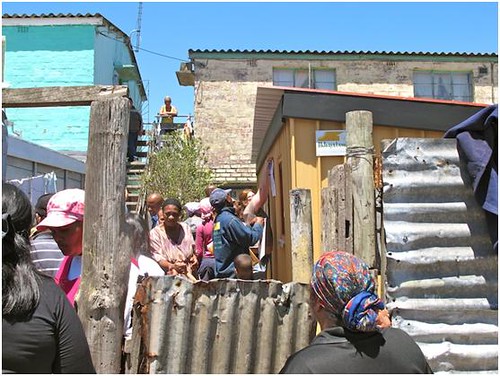
The main thrust of the gathering was to draw people’s attention to the dire conditions the backyarders found themselves in but at the same time highlight solutions which the community themselves could be involved in.  The gathering was invited to take a walk to the site of an upgraded shack in the Manenberg area.  Melanie explained that an agreement had been reached with the local government to allow for the upgrading of current structures as long as correct procedures were followed. Backyard shacks housing family of the tenants of council houses could be upgraded provided the tenants were in agreement.  This simple step towards an upgrading agenda will mean that thousands of backyarders in Manenberg will finally have the opportunity to live in structures that provide shelter from the harsh Cape Town elements.  The upgraded shack was built by an NGO called iKhayalami who specialize in affordable homes and alternative technologies for the urban poor.  As people gathered round the new structure a discernable buzz could be felt sweeping through the crowd.  Shouts of encouragement and praise rang out as Ms. Sandra Joubert was presented with the key to her new home.  To outsiders it would not seem like much, but for this resident of Manenberg who had spent many a winter battling flooding, a leaking roof and the bitter cold, it meant a home that gave her not only shelter but dignity.  As the guests who had been invited to view the shack dispersed, a crowd of local residents remained.  Their interest had been sparked and inquiries were being made as to how they could access this new kind of shack.

Manenberg3

Ms. Sandra Joubert receives the keys to her upgraded shack

Since the unveiling, Ms. Joubert has had numerous visitors to her upgraded shack all wanting to know how they could get their own shacks upgraded.  The WCBN with the help of CORC, FEDUP, ISN and Ikhayalami had clearly struck a chord with the community and upgrading appears to be the more realistic and viable alternative to the never ending waiting list which seemed to offer no hope for the backyarders.

Manenberg2

Community members were very interested in the upgraded shack

Solar pilot project brings power to the people in informal settlements

By CORC, ISN, News No Comments

By Laura Carvalho, CORC

SolarEnergy1

CORC has partnered with the University of Stellenbosch’s Sustainability Institute (SI) and Specialized Solar Systems (SSS) in a pilot project that will test an incremental and innovative approach to introducing solar energy into poor urban communities whilst creating income-generation and economic opportunities via sustainable energy business hubs.

The pilot project is currently underway in two informal settlements, Ekanini (Stellenbosch) and Siyahlala (Phillipi) and seeks to conduct a field trial of an innovative starter solar energy kit that not only has been customized for poor shack households but that also entails the training of barefoot solar engineers and energy spaza. The purpose is to provide a business-based service for the ongoing maintenance and repair and upgrade of the starter solar systems.

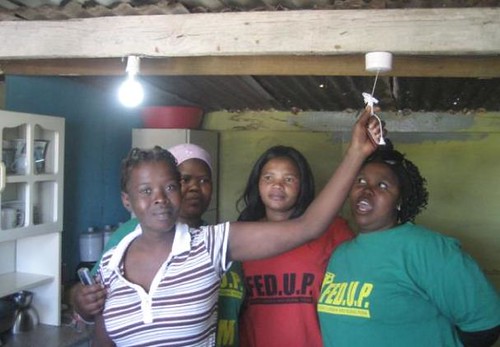
Last week the theoretical part of the training was completed, and community trainees got the opportunity to roll up their sleeves and install a few solar units. What a moment it was for all present on the day – when the lights literally went on in each of these shacks!

Through this partnership, the newly trained barefoot solar engineers and households identified to form part of the field trial have an opportunity to test the DC micro-grid system developed by SSS, as a solution to providing clean and renewable energy services to improve their quality of life, while also creating the space for entrepreneurial and community development.

Solar2

Community members were trained by the Stellenbosch Sustainability Institute as barefoot engineers

Challenges, opportunities and lessons learnt from building partnerships between the urban poor and city councils

By CORC, ISN, News No Comments

By Walter Fieuw, CORC

DSC_0384

“This is a dream come true in bringing City Councils and communities around a table to talk about possibilities of city-wide informal settlement upgrading,” said Jerry Adlard, the facilitator of the 9th November learning event organised by South African, Namibian and Malawian poor people’s movements aligned to Shack/Slum Dwellers International. Paired with these words, was the call for honest reflection on the objective, structure, achievements, lessons learnt and challenges of unfolding partnerships in the cities of Cape Town, Stellenbosch, Ethekwini, Ekurhuleni, Johannesburg, Windhoek and Lilongwe. The learning event was preceded by two days of site visits to re-blocking, sanitation and relocation projects in the City of Cape Town and Stellenbosch Municipality.

How do various actors implicated in urban development build partnerships to ensure pro-poor and inclusive cities? Contemporary African cities are juxtaposed with multiple layers of social, political, economic and environmental realities, which in many ways are aggravated by its colonial past. On the one hand, cities are the spaces of aspiration, innovation and drivers of social change, and on the other, social polarisation, poverty, conflict and environmental degradation narrate the conditions of large portions of city dwellers. In an age that is characterised by urbanisation, said to transform the cities of Africa, Asia and Latin America, there is arguably never been a time where effective partnerships are more needed.

In many cases, slum dwellers are taking the lead in building partnerships with local authorities with the view to significantly influence the way slum upgrading is conceptualised and operationalised. The full participation of slum dwellers in upgrading programmes is central to meeting the outcomes of sustainable human settlements, tending towards social (and political) change. For instance, slum dwellers of the Homeless People’s Federation of Malawi influenced the Lilongwe City Council’s bureaucracy through its large scale enumeration project which involved churches, tribal chieftaincies and other community based organisations (Lilongwe slums span municipal boundaries and averages in sizes of 50,000 residents). This inclusive project resulted in a shift on the part of the City Council from treating urban development as homogeneous to rural development. The establishment of the Informal Settlement Unit, a department which reports directly to the Mayor, was the result of effective lobbying on the part of the urban poor. This partnership illustrates the limitations of technocrats and the possibilities of communities initiating their own developmental priorities.

In Windhoek, the partnership between the Shack Dwellers Federation of Namibia (SDFN), City of Windhoek and the Polytech is challenging the limitations to transformation implicated in the inherited colonial land use management norms. Space for policy innovation is opening where the contribution and full participation of informal settlements are at the plinth.

Partnerships unfolding in South Africa through the Informal Settlement Network (ISN) and Federation of the Urban Poor (FEDUP) were also discussed at length. Some of the overarching achievements to date have included pilot projects in Cape Town, Durban, Johannesburg and the mining belt in Ekurhuleni whereby communities successfully re-blocked (e.g. Ruimsig (CoJ) and Sheffield Road (CoCT)), installed drainage (Masilunghe (CoCT)), and resettled (Langrug (Stellenbosch) and Lwazi Park (CoCT)). Innovation through upgrading is challenging the enduring (mis)conceptions associated to the subsidised housing paradigm which only looked after the interests of the nucleus family. The SA Alliance’s aspirations for establishing city-wide Urban Poor Funds – funding facilities that support the initiatives of poor communities – have also partially realised when communities successfully leveraged funds from the Stellenbosch Municipality in financing the relocation project and associated service provision.

The institutionalisation of partnerships for city-wide upgrading initiatives is underway. Reports were heard from city officials and community leaders of respective cities. As communities penetrate the seemingly perceived ‘iron towers’ of city bureaucracy and build effective partnerships that influence budgetary allocation and prioritisation, the emphases are shifting from ‘control’ to ‘participation’.

Delegates argued that if the partnership cannot affect political will, for instance to transform the ward councillor structure (in the SA case), then there is no real power to promote the upgrading agenda. One of the Namibian delegates remarked:

“There is a problem to talk about the poor’s ‘self-reliance’ when the issue actually lies with the state’s orientation. Political space is opened to engage around delivery priorities and this is a two-way process; both the state needs to be held accountable, and citizens, demanding basic human rights, need to be proud and organised. One of the main reasons why the partnerships fail to deliver is that the departments don’t understand the difference between upgrading and housing delivery”.

“We are those people…”: Deepening democracy in meeting sanitation challenges

By CORC, FEDUP, ISN, News No Comments

By Walter Fieuw, CORC

Service delivery in the Eastern Cape faces dire challenges. While the nature of the crisis is still poorly understood, poor communities are mobilising toward preparing to implement people-driven development initiatives. From 1-5 November, Winnie Madikizela-Mandela’s Ministerial Sanitation Task Team visited delegations of the Eastern Cape’s informal settlements to listen to the extent of the sanitation-related challenges they face. This roadshow formed part of Madikizela-Mandela’s effort to understand the scale and nature of the problem, its geographical spread and to identify irregularities and malpractices.

Amandla! Imali no lwazi!

With these words, Mzwanele Zulu and Blessing Mancitshana, both Informal Settlement Network (ISN) activists, greeted the delegations of Port Elizabeth’s informal settlements and township residents, congregating in the George Botha Community Centre in the KwaNoxolo township. What is power? And how is power shifted to us, the poor? An old lady answered by saying that Amadla! means power, but a young man responded saying that we don’t have power so we can not participate. Still another person was calling attention to the inherent potential of all to exert power to change for the good.

DSC_0336

Port Elizabeth delegations musing on the meaning of Amandla!

Amandla! Imali no lwazi!

Nevertheless, with no money (imali) and knowledge/ information (lwazi), power can not translate in meeting the most pressing livelihood challenges, such as access to clean drinking water, sanitation, electricity, transport and adequate housing. “We are those people who sleep among the grasses and next to pavements, but we are proud people” said Blessing. Mzwanele explained that solidarity of the urban poor in generating pro-poor and situationally responsive programmes and agendas is the key to success. In a current political dispensation where councillors ayilumi ma ihlafuna (can not bite whilst chewing;  a term to denote inaction after election), the poor should fill the void and form effective partnerships to leverage state resources. This encourages communities to mobilise around savings, enumerations and settlement profiling and mapping, which become powerful negotiation tools in the hands of the poor.

DSC_0310

Greeting Madikizela-Mandela with singing and dancing

On Madikizela-Mandela and her task team’s arrival, the delegation met them with singing and dancing. “We have spoken to your Council and Mayor and received a report on what they have done for you… but this time, you are the ones to tell us what you want” said Madikizela-Mandela. Of the 18 settlements represented – some affiliated to the ISN – the hard-pressed settlements of Missionvale, Seaview, Midrand, Kleinskool, and Zweledinga, to mention a few, shared stories of major negligence and abondonement, which is familiar to the geopolitical state of Eastern Cape service delivery. Backyarders, shackdwellers and tenants of overcrowded and delapidated rental housing raised concerns around: unaccountable councillors; non-participation in service delivery; lack of maintenance of sanitation blocks; and ratio of services (in the worst case, Moeggesukkel, the community reported that 417 people share one water tap). Evelyn, a Joe Slovo resident and ISN activist, facilitated some heated debates between the residents, the Ministerial Task Team and the Mayoral Committee

Collage

Delegations from Port Elizabeth’s informal settlements live in indignified spaces due to lack of sanition-related service delivery

The need for institutional innovation in meeting housing and housing related developmental maladies is crucial, and has been recognised both nationally and internationally. The central and full participation of communities in the delivery of essential services, and the forging of effective partnerships between active citizenry and developmental government, are some of the institutional imperatives to empowered communities. Less recognised is the imaginations and innovations of the poor who cope with the livelihood challenges on a daily basis. These groups of active and informed urban poor continue to provide alternatives to state-driven service delivery.

The step-by-step process of Blocking-out for safer settlements

By CORC, ISN, News No Comments

By Andrea Bolnick, CORC/iKhayalami

Given that estimates suggest a government house may only be delivered 30 years after being on the roll, blocking-out with improved shelters and basic service provision is a significant way in which communities and the State can improve the lives of the poorest members of our society, today.

vcm_s_kf_representative_320x240

Blocking-out is a term that is used by the South African Shack Dwellers International Alliance for the reconfiguration of shacks located in Informal Settlements into a more rationalised layout, to enable a safer environment, far better living conditions and easier access for the provision of basic services.

The Informal Settlement Network (ISN) as advocates of Informal Settlement upgrading and as organised leaders and communities who are at the helm of engaging the State around such upgrades play a key role in enabling city wide and country wide roll-outs of blocking-out.

For the Blocking-out of an informal settlement, households must agree to change the position of their shacks to comply with community-led design processes, with upgraded shacks, taking topographical realities into consideration, addressing drainage issues and finding ways to better incorporate sanitation solutions into communities. All of this vastly improves peoples’ daily lives. Through the process of blocking-out the community has to deal with many challenging issues and difficult individuals who try to stop the process but through dealing with these matters and finding ways to move ahead with the process, the result is a much stronger and cohesive community who take pride in what they have achieved.

The central most important component of blocking-out is that it needs to be predicated on the central participation of shack dwellers residing in the settlements linking them to wider networks of shack dweller leaders who assist the local leadership in dealing with the numerous challenging situations that arise. In order for these challenges to be addressed effectively it is imperative that the local shack dwellers lead the process with assistance not only from other shack dweller networks but with the support of local authorities and the State.

Governments’ role in blocking-out is imperative. It  is only with State sanction that many of the positive aspects of blocking-out can be realised. The State needs to play a central role in the blocking-out processes based on an ethos of partnering communities, where necessary assisting communities in dealing with challenging situations and most critically with regard to the realignment, upgrade and or provision of basic services such as water, shack improvement (as most of the worn out materials are damaged during the process), sanitation, waste removal and electricity. It is also envisaged that additional resources might be required to support the social processes of blocking-out.

The following steps are involved in implementing blocking-out:

1. ISN through its existing partnership with local government draws allied Informal Settlements into the partnership at settlement level.

2.  Enumerations that include shack counting, numbering and mapping are conducted in the various settlements.

3.  Once enumerated each settlement then identifies their needs and priorities.

4.  If blocking-out is identifed as a priority then an initial assessment is conducted with the leadership of the settlement and ISN (with technical support from CORC) as to the viability of a blocking-out in the settlement.

5.  If the assessment is that blocking-out is possible then engagements with the City partnership are augmented. This would include site visits and discussions on the viability of conducting a blocking-out.

6.  If all parties are in agreement then processes related to blocking-out can begin.

7.  Additional social and technical support will be provided to the settlement by ISN and CORC.

8.  The financing of blocking-out is a key element. Blocking-out may or may not be accompanied with a shelter upgrade. Shelter upgrade is much more capital intensive, but is necessitated by the poor quality of existing shacks that cannot be rebuilt in another stand. In practice, CORC has used community savings contributions as triggers to blocking out. These contributions then become the backbone of the process and has the potential for raising enough capital for shelter upgrade in the future.  This is also an indicator of a community-driven process.

9.  Families in the settlement would start saving towards the upgrade of their shelters as they will be required to make contributions towards these costs. (Currently the network is requesting a 20% contribution towards the cost of each shelter upgrade.)

10. An in-depth mapping of the settlement would be required. This would be done with the NGO support and in conjunction with google imaging.

11. On site and in relation to the created map there needs to be clear identification of spatial boundaries that have evolved over time. Such boundaries indicate a strong spatial language of how people choose to interact or not to interact with one another. These aspects need to inform future layout and design.

12. In identifying these boundaries, households are organised into clusters. The settlement leadership and ISN then start to work at cluster level with regard to solving problems, answering questions and concerns and starting to think through the principles of design.

13. Exchange programmes are arranged to settlements who are either in the process of blocking-out or have completed a successful blocking-out.

14. Support around the design process will be anchored by ISN and CORC and will be provided either from within or from partnerships created with Planning schools and academic institutions.

15. Together with ISN, the community and professional input for an overall framework would need to be designed with key principles to be adhered to – such as the location of water and sanitation outlets, roads and drainage pathways.

16. Then at cluster level detailed aspects of the layout would be worked on by community leaders and ISN, and where needed by professional support. This would be viewed as a guideline layout.

17. Community contributions should be scaling up in line with the general interest and excitement in the community. Prior to the commencement of the physical aspect of blocking-out matters related to contribution need to be in place as per the agreements reached with the community. In most cases contributions towards the shelter upgrade would accumulate gradually in keeping with pro-poor approach.

18. Once the physical aspect of blocking-out begins, many aspects of the theoretical design at cluster level have to be altered to accommodate the complexities of people in relation to limited space and moving people in-situ. The real challenge during the implementation is ensuring that the families can be blocked-out within the same day, without impacting the life in the cluster.

19. All through the above, the community and ISN have to keep the overall guiding principles and framework in place to ensure that when basic services need to be installed or relocated this can be done in conjunction (with previous agreements) with the City.

20. The improvement and or provision of water and sanitation should come in phases as per the sequence of blocking out in-situ as pipes will need to be laid as shacks are dismantled and repositioned in their cluster.

21. Improvement of paths and roads can happen during or after the improved layout depending on what is more practical.

22. Other aspects of improved service provision will take place after the new layout has been completed such as the provision of electricity.

There is no secret formula to Blocking-out. It requires preparedness to work relentlessly with community members and leaders in improving the quality of life in the informal settlements. All in all the process of blocking-out from choosing which settlement to start with or which cluster to begin with depends on the preparedness and interests of that community. Thus community leaders have to come forward and say we would want to block-out our community and at the community level the cluster that is ready will say we are ready to block out and the whole community is then blocked out cluster by cluster. That way community ownership is guaranteed, and even the most reluctant cluster will eventually come on board as they note that everyone around them has improved space.