Tag

partnerships Archives - Page 2 of 5 - SASDI Alliance

Alliance mobilises street dwellers & teaches students in Manchester, UK

By CORC, FEDUP, ISN 2 Comments

By Ava Rose Hoffman (on behalf of CORC)

From 8-12 March 2016, the South African SDI Alliance participated in a learning exchange in the United Kingdom with students at the University of Manchester and community organisations in the Greater Manchester area.

Left to right: Charlton Ziervogel (CORC), Alina Mofokeng (FEDUP), Nkokheli Ncambele (ISN) in Manchester

Left to right: Charlton Ziervogel (CORC), Alina Mofokeng (FEDUP), Nkokheli Ncambele (ISN)

Members of the of the South African SDI Alliance, community leaders Nkokheli Ncambele (ISN), Alina Mofokeng (FEDUP) and support professional Charlton Ziervogel (CORC) engaged with postgraduate students at the University of Manchester’s School of Environment, Education and Development participating in a course on Citizen-Led Development. In the course, students study inclusive, pro-poor, participatory community development approaches. The course highlighted methodologies practiced by SDI and collaborating organisations including developing savings schemes, federation building, community mobilisation, enumerations, engaging with the state, and building partnerships with NGOs, academic institutions and governments.

Arriving in Manchester as Community Lecturers

During the week of lectures at the University of Manchester, Nkokheli and Alina taught students about the ways in which the urban poor in South Africa are uniting, mobilising, organising themselves around savings contributions and building partnerships with local governments and institutions.

Reflecting on the experience of teaching students in the course, Nkokheli described the importance of public participation when professionals engage with communities:

“The professional likes to ‘do’ for poor people. That’s the first challenge. It’s a challenge on both sides because communities don’t want someone to decide on their behalf, and the government doesn’t want to listen to poor people because they say that they’re uneducated. That’s why we always try to change that mindset… It’s important to come to the people and listen to what they want. You use your professionalism to help them to achieve what they want.”
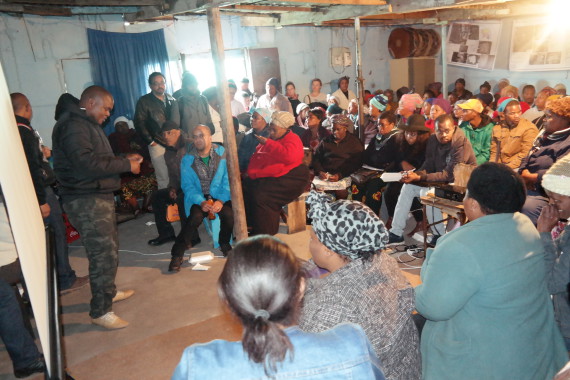
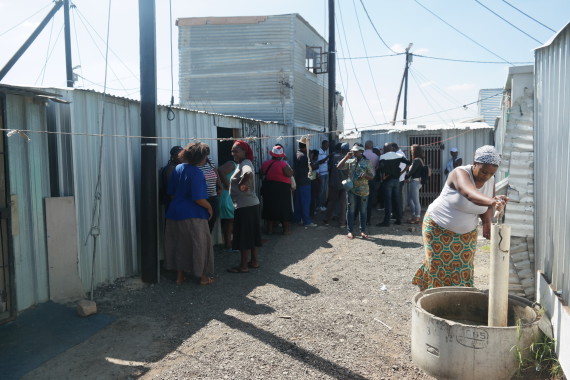
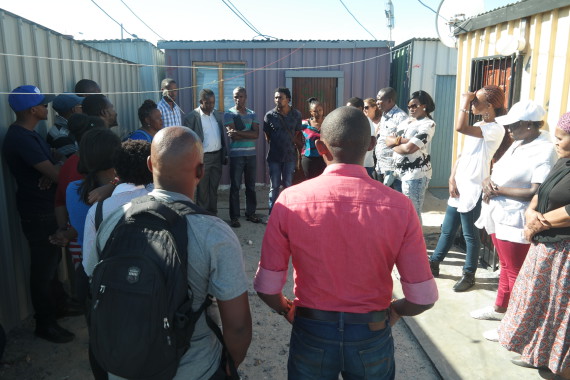
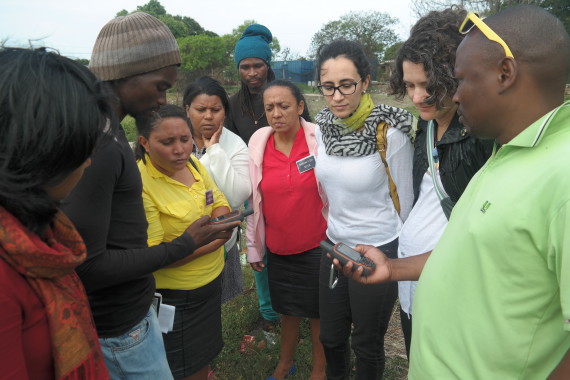
Nkokheli facilitates a community gathering with informal settlement leaders in Khayelitsha's Site B

Nkokheli facilitates a community gathering with informal settlement leaders in Khayelitsha’s Site B

Mobilising Manchester Street Dwellers & Community Movements

In addition to lecturing the students, Nkokheli, Alina and Charlton visited community groups each day, ranging from homeless support organizations to squatters occupying empty buildings to women’s income generation groups. Additionally, they participated in a half-day workshop with local community groups on 8 March 2016.
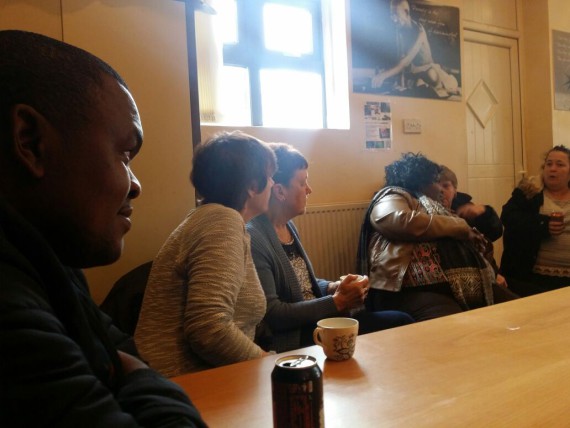
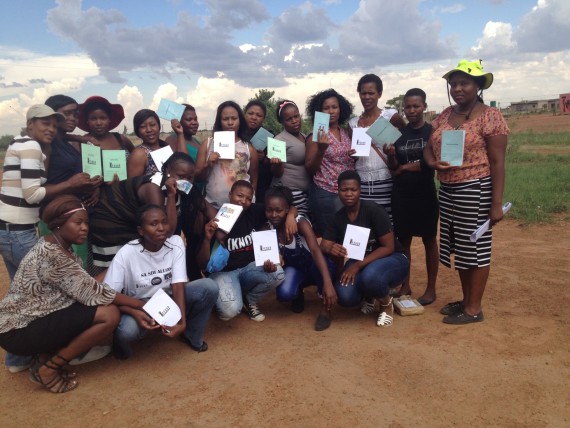
Meeting with community group Moms Mart in Wythenshawe

Meeting with community group Mums Mart in Wythenshawe

During the visits, Nkokheli and Alina described how they personally came to be involved in their respective movements, ISN and FEDUP, and then proceeded to discuss how to self-organise and start savings contribution programmes. Upon learning about how savings schemes operate in South Africa, some community organisations were receptive to the idea of starting similar savings groups of their own.

While many of the challenges that organisations and movements face in the UK are different from those encountered in the South African context, Charlton described that “what these groups needed was people to inspire them to get organised.” Referring to a past exchange with SDI back in the 1990s, Frances, a leader from one participating group, the Teeside Homeless Action Group (THAG), articulated:

“Our contact with groups from South Africa, Zimbabwe, India, etc. helped THAG to develop ways of working that matched our ethos of self-help and user involvement.  One person I spoke to on a number of occasions was Sheela Patel (SPARC, India) who liked the way THAG was working but she warned that unless we were careful we would attract large scale funding, end up with offices full of technology and lots of staff but would lose touch with our reason for existence – helping homeless people. Her warning went unheeded and it was not until 2010 that I saw what THAG had become – offices, technology, lots of staff but I had no contact with the homeless.  Since that time THAG has offloaded staff got rid of electronic gadgetry and went back to the things we did best – work with the homeless and help them to help themselves.”

This example, Charlton described, captures the richness of the network’s knowledge.

Nkokheli with fellow ISN coordinators and Provincial Minister for Human Settlements in Cape Town

Nkokheli with fellow ISN coordinators and Provincial Minister for Human Settlements in Cape Town

Furthermore, Nkokheli highlighted the importance of building solidarity, not only by creating networks among the poor but also by forming partnerships with local governments and institutions (including universities). Nkokheli described,

“By forming partnerships with other institutions, it makes government listen to the people.”

In particular, Nkokheli saw a great deal of potential for low-income communities to build partnerships with the government in Manchester given that the government issues small grants to the unemployed, which could serve as the foundation for a savings contribution programme. Nonetheless, Charlton observed that funding is limited and many people are falling into poverty in Manchester, thus to to “get ahead” it’s critical for people to organise themselves.

Reflections on Teaching and Mobilising

Charlton described that it was very significant to expose students to a different type of urban planning process given that “the opportunity to influence future urban planning has always been something that we try to achieve through CORC.”

Alina speaks to fellow FEDUP members during savings mobilisation

Alina speaks to fellow FEDUP members during savings mobilisation

Nkokheli emphasized the key message that ISN and FEDUP sought to bring to community groups in Manchester:

“The people need to network, to discuss the issues, to make sure that they’re initiating projects and also forming partnerships with the government. This was the message that we wanted to send to the people in Manchester.”

The two primary points of action that Nkokheli sought to reinforce were

  1. community organising in order to project the voices of the urban poor, and
  2. developing savings schemes.

Nkokheli described:

“What we tried to convey in Manchester is that poor people mustn’t tell themselves that they are poor and they can’t do anything. So, they need to start collecting information and organising people, making sure that they are saving so that when they go to the government, they go with something. We are trying to change the system of ‘taking’ to a system of ‘supporting.’”

From Nairobi to Cape Town: Learning about Upgrading and Partnerships with Local Government

By CORC, FEDUP, ISN, Learning Exchanges, SDI No Comments

By Yolande Hendler (on behalf of CORC)

From Ghetto informal settlement in Nairobi, the Kenyan SDI Alliance together with an official from the nearby Kiambu County Government visited the South African SDI Alliance on a learning exchange in Cape Town from 22 – 25 February 2016. Community leaders and an official from Ekurhuleni Municipality, near Johannesburg, also joined the group.

The purpose of the exchange was to share experiences regarding informal settlement upgrading, partnership formation between community movements and local governments, project planning, preparation and mobilisation processes. Kenya’s Federation, Muungano wa Wanavijiji has been supporting Ghetto community in obtaining tenure security and identifying housing beneficiaries. Currently the settlement is set for the final phase in a government-upgrading project that requires re-planning its public spaces and houses, a familiar process that the South African Federation of the Urban Poor (FEDUP) and Informal Settlement Network (ISN) call “reblocking”.

SAMSUNG CSC

Priscilla, community leader in Sheffield Road speaks about reblocking

With introductions and an overview of the SA SDI Alliance on the first day, the visitors shared their key learning interests as relating to

  • Partnership Formation between communities themselves and between communities and local governments
  • Upgrading Processes – how communities organise themselves during upgrading, how technicalities in construction and implementation are dealt with, the role of project funding and community saving

Savings and Income Generation

With savings as the core practice of the SDI network, the afternoon visit took place at a FEDUP savings and income generation group in Samora Machel, Philippi. The group explained how its FEDUP membership enabled individuals to access small loans from the Federation Income Generation Program (FIGP). With a particular set of criteria for loan access, repayments and additional loan cycles, the group had established a number of small businesses such as beading, second hand clothing, fried chicken or locally tailored clothing.

The meeting sparked an animated discussion on how savers could maintain their momentum and interest in savings, especially after receiving a house or an informal settlement upgrade upgrading can be seen as fulfilling the “immediate savings purpose”. A loan group member explained that she viewed saving as valuable backup to draw on when problems arose. In Kenya, members became tired of “saving for nothing” – they therefore began using their savings in smaller projects while waiting for larger projects to occur. The Kenyan visitors further noted the value building trust between members through administering loans to small groups of five savers.

SAMSUNG CSC

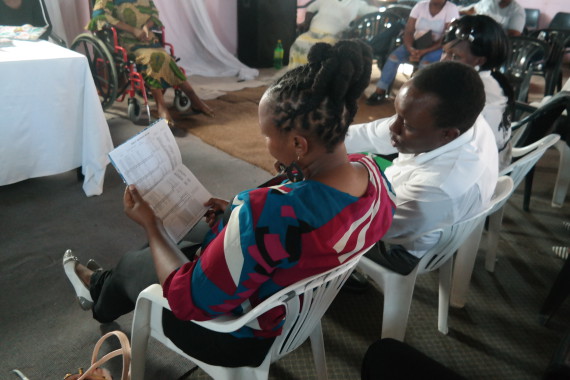
Mary Wambui (Kenya SDI Alliance) and John Mulia (Kenya Official) look at FEDUP savings book

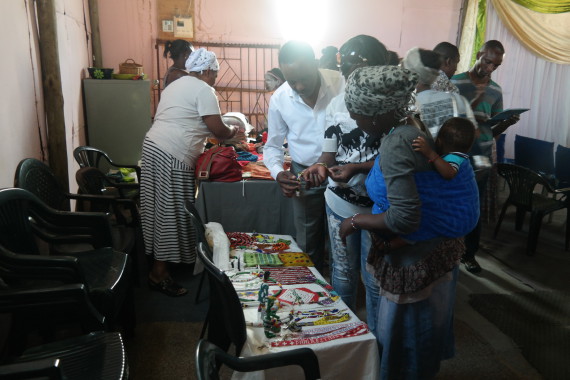
FEDUP Income Generation businesses in Samora Machel

FEDUP Income Generation businesses in Samora Machel

Reblocking in the City of Cape Town

Over the next two days the group traced re-blocking projects and informal settlement upgrading projects in the municipalities of Cape Town and Stellenbosch.

In Cape Town the SA SDI Alliance used its first re-blocking projects in Joe Slovo and Sheffield Road settlements to build a partnership with the City of Cape Town to jointly pursue future upgrading and reblocking projects. As a result the City adopted reblocking as a policy, an indicator of increased intent to engage with community-led processes. In Sheffield Road the group saw how reblocking establishes access routes, courtyards, increased space for communal water and sanitation installation as well as safer public open spaces. Since reblocking, the community has successfully negotiated for electricity installation.

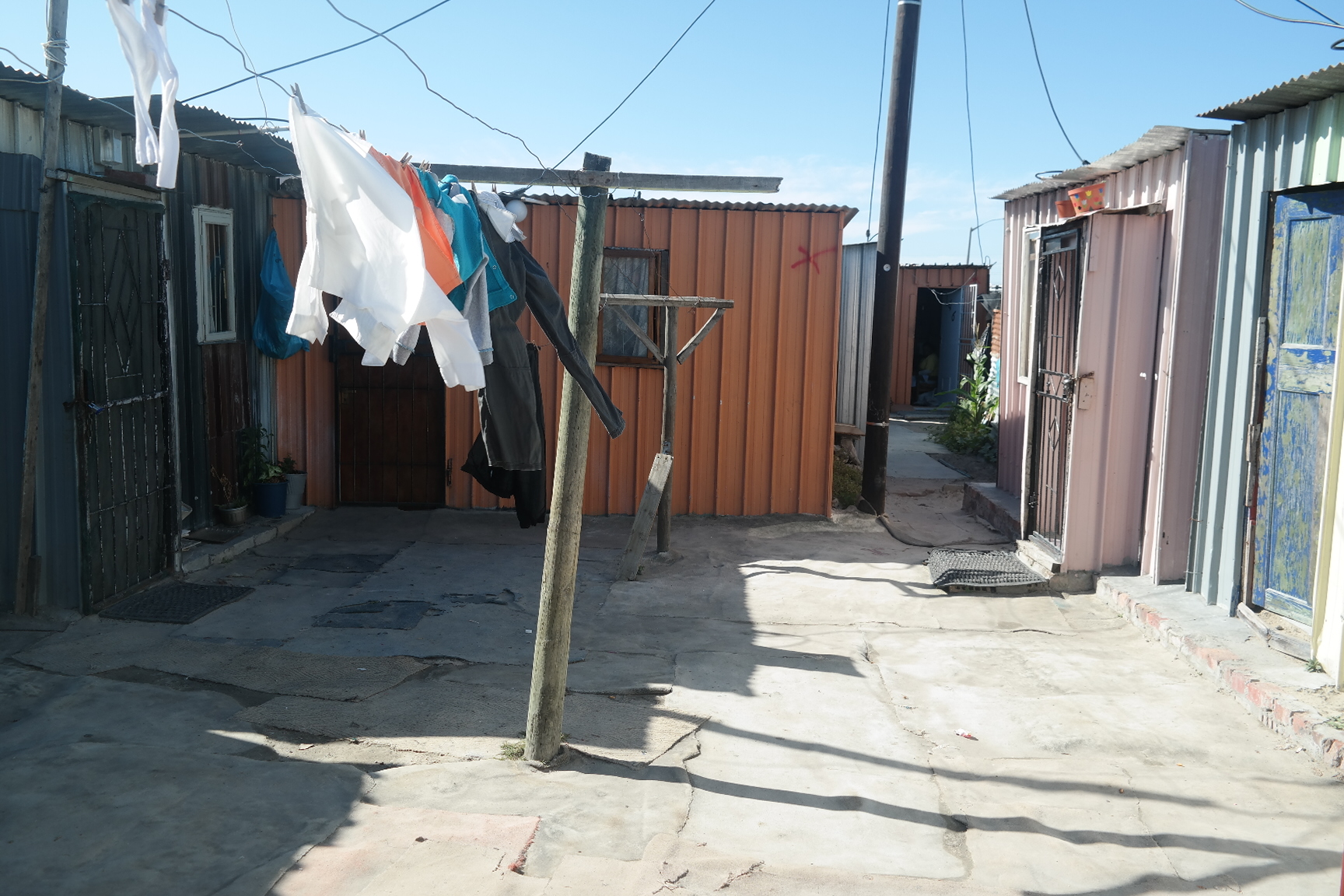
Courtyard in Sheffield Road after reblocking

Courtyard in Sheffield Road after reblocking

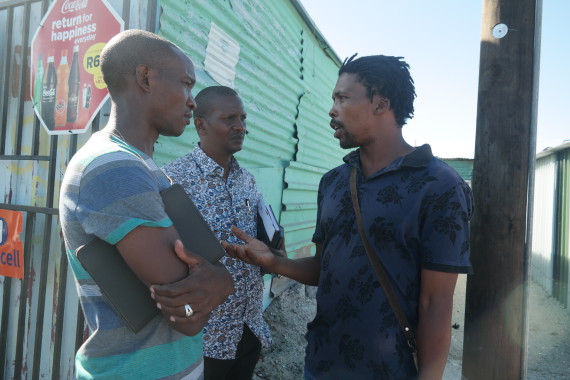
In Sheffield Road: Rashid and Samuel (Kenyan Federation) in discussion with Lulama (ISN leader for Philippi region)

In Sheffield Road: Rashid and Samuel (Kenyan Federation) in discussion with Lulama (ISN leader for Philippi region)

Mtshini Wam was the first settlement that was reblocked in partnership with the City of Cape Town in 2013. While walking through the settlement the group noticed the improved differences between the projects: the layout of Mtshini Wam enabled 2 households to share water and sanitation facilities. Noticeably, a number of residents had self-built a second storey on to their structure after having participated in a community design process for double storey units as further development after upgrading. Through persistent negotiations after reblocking, the community received municipal electricity and ground levelling to mitigate flooding. ISN National Coordinator, Mzwanele Zulu, explained that such incremental upgrading contributed to incremental tenure security.

Double storey structures in Mtshini Wam

Double storey structures in Mtshini Wam

In Flamingo Crescent, the most recently upgraded settlement (2014), community leader Maria Matthews introduced the group to the settlement’s reblocking experience: engaging fellow community members to save, planning meetings with the City and community participation during reconstruction. Due to its enumeration figures and the reblocked layout, the community succeeded in negotiating for individual service installation and electricity per re-blocked household (1:1 services). Flamingo’s site was levelled with all access roads paved and named before erecting the reblocked structures. The visitors saw that for the SA Alliance, upgrading / reblocking is a cumulative experience, with consistent improvements in new projects based on past project learning.

“Reblocking made a big difference, but upgrading is far from over,” Maria Matthews explained. “We have many social and health problems remaining here.”

(Maria Matthews, Flamingo Crescent Community Leader)

Arrival in Flamingo Crescent

Arrival in Flamingo Crescent

After reblocking in Flamingo. 1:1 Services per household.

After reblocking in Flamingo. 1:1 Services per household.

Upgrading in Stellenbosch Municipality

In Langrug the group encountered an example of partial reblocking in a settlement about ten times the population size of those in Cape Town, with about 4000 residents. Community leader, Trevor Masiy, traced the settlement’s partnership with the SA SDI Alliance and the joint partnership agreement with Stellenbosch Municipality, which informed the settlement’s upgrading initiatives in drainage and storm water projects and two Water, Sanitation and Hygiene Facilities. Trevor also highlighted the challenges experienced by disrepair of past upgrading projects. He therefore emphasised the value of community involvement not only in project planning and implementation but also in maintenance.

Walking through partially reblocked section of Langrug.

Walking through partially reblocked section of Langrug.

View on to Langrug

View on to Langrug

Water and Sanitation Facility in Zwelitsha section, Langrug

Water and Sanitation Facility in Zwelitsha section, Langrug

Partnership Meetings

Two separate partnership meetings with Stellenbosch Municipality and the City of Cape Town allowed the visitors and two visiting officials an insight into the practical workings of partnership building and project negotiations. The partnership meetings in Cape Town and Stellenbosch focussed on updating all gathered on current project progress and discussions on renewing and continuing the partnership relationships. Discussion highlights included:

Cape Town

  • Alliance emphasises that its partnership focus with the City is not only reblocking but also informal settlement and area-wide upgrading

Stellenbosch

  • The muincipality explained that reblocking is not just about structure upgrades but about enabling basic service provision
  • The municipality spoke about its partnership with Langrug and SA Alliance as fluid, moving towards different ways and means of reaching a common goal
Partnership Meeting with Stellenbosch Municipality in Franschoek

Partnership Meeting with Stellenbosch Municipality in Franschoek

Alliance begins Cape Town partnership meeting in song in Bosasa Community Hall, Mfuleni

Alliance begins Cape Town partnership meeting in song in Bosasa Community Hall, Mfuleni

Reflections and Learnings

On Upgrading:

  • “We have been focussing on permanent houses. This can become strenuous for communities because it demands resources and scaling up. But our thinking has changed when we saw how reblocking has attracted government attention. (Rashid Muka, Kenyan Federation Leader)
  • “In Kenya we always thought that upgrading means erecting permanent structures. I am learning about incremental upgrading – something I’d like to take home” (John Mulia, Kiambu County Government, Kenya)
  • “The value of an incremental approach is that you don’t start with the end product (a house) and impose it on a community. Upgrading is not only housing. You can be in a temporary shack and as long as you have opened up spaces to basic services, then that is upgrading.” (Mary Wambui, Kenyan SDI Alliance )

On Building Parternerships

  • “What is key in achieving a relationship with a municipality? Involving the community, drafting good plans and implementing precedent setting projects that can influence policy, especially if there is no policy yet” (Sizwe Mxobo, CORC Technical Support)
  • Strong social movements that know what they want are important in building partnerships. They can remind municipalities about their commitments” (Nkokheli Ncambele, ISN Coordinator Western Cape)
  • “We want to pull stakeholders together and understand how to journey together. We want to be able to say this exchange gave birth to some of the lessons we learnt. What has come out clearly is the value of learning by doing.” (Rashid Muka, Kenyan Federation Leader)
Group gathers in a courtyard in Sheffield Road

Group gathers in a courtyard in Sheffield Road

On Community-Led Engagement

  • In this exchange I understood a lot about talking with communities. Government needs to understand the value of partners coming on board. The government of Kenya has made many plans but the community needs to point out what they want and need, not us the government. A project becomes sustainable when it is community driven.” (John Mulia, Kiambu County Government, Kenya)

Urban Sector NGOs comment on Human Settlements Draft White Paper

By CORC, Press No Comments

By Community Organisation Resource Centre (CORC), Development Action Group (DAG), Habitat for Humanity South Africa, Isandla Institute, People’s Environmental Planning (PEP), Violence Prevention through Urban Upgrading (VPUU)

Screen Shot 2016-03-08 at 12.20.43 PM

The National Department of Human Settlements is currently in the process of developing a new White Paper on Human Settlements. This process offers a unique opportunity to address the shortcomings of existing policy and to influence the future of human settlement development in South Africa.

We – a collective of six urban sector NGOs – have a vested interest in the outcomes of this process. We are thus committed to engaging critically with the discussion document developed by the National Department of Human Settlements, and to advocating for the adoption of a more progressive version that recognises the role of communities, and informal settlement upgrading in human settlements development.

On 4 February 2016, we shared an initial commentary on the discussion document at an engagement hosted by the Western Cape Department of Human Settlements. It summarises our collective position and is intended to serve as the foundation for a more in-depth submission:

Commentary on the discussion document ‘Towards a policy foundation for the development of human settlements legislation’

1. The document ‘Towards a policy foundation for the development of human settlements legislation’ seeks to provide a comprehensive approach to the complexities of human settlement development and planning, based on a detailed analysis of the achievements and limitations of current HS programmes.

Positive features of the document are, amongst others, the acknowledgement that by and large, communities and civil society organisations haven’t been meaningfully involved in processes of human settlement development to date. This admission brings attention to the need for well-designed participatory processes and partnership approaches. The explicit reference made to spatial planning, and its roles in the creation of sustainable and integrated human settlements, is also appreciated. The recognition of the importance of monitoring and evaluation as a strategy for tracking government’s progression towards the realisation of its goals is also considered to be a positive step towards a more grounded and accountable practice.

SAMSUNG CSC

2. However, in our considered view, the proposed solutions to address the shortcomings identified are not dynamic enough and are insufficiently rooted in local practice around human settlement development. The document also does not reflect the depth of inequality or the seriousness of the current fiscal realities, and what these factors are likely to mean for the human settlement sector. Instead of the ‘business as usual’ approach, we expect the new policy to reflect more deeply what a ‘business unusual’ scenario means for human settlements policy and practice.

3. Our main concern is with the state-centric orientation of the document and the centralising tendencies that the document reflects (implicitly and explicitly). While we appreciate that a public policy document will be inherently biased towards the roles and responsibilities of the state, other stakeholders (including local communities, NGOs and the private sector) are an integral part of human settlement development processes. The document fails to adequately reflect what a partnership approach entails for human settlements policy and practice.

Even in its state-centric orientation, the document reflects a predisposition towards national government (and particularly the department of human settlements) as the critical actor in transforming human settlement realities. National government undoubtedly has an important role to play in determining human settlement outcomes, providing policy guidance, developing coherent programmes, providing effective fiscal instruments, addressing institutional blockages, and monitoring progress, amongst others. However, it is primarily at the local sphere where the complexities of human settlement development need to be navigated.

4. We believe that the primary objective of a policy on human settlements needs to be local enablement – enabling local actors (municipalities, communities, civil society organisations, private sector, etc.) to choose the institutional arrangements and programmatic responses that best suit local conditions, and enabling other spheres of government to offer the necessary oversight and support in this regard. Municipalities are not merely implementation agents of national human settlements programmes; they need to assemble the requisite partnerships and processes to effectively manage the challenges, trade-offs and contestation inherent to human settlement development, and to do this in an accountable and transparent manner.

Co-planning and preparing for informal settlement upgrading plans

Co-planning and preparing for informal settlement upgrading plans

5. The role of communities in determining the development agenda, implementing development strategies, and monitoring development interventions must be reflected in the policy vision and intent. The document is disproportionately concerned with the ‘culture of entitlement’, implying that (poor) citizens lack a sense of responsibility about their own development. This individualised notion of citizens as ‘responsible consumers/end-users of public services is problematic, particularly as it is not complemented with a recognition of the agency of civic actors and local communities in human settlements processes (including planning, implementation, maintenance, co-financing and self-help options, and monitoring and evaluation).

Instead, the new policy should work towards enabling communities to participate as active citizens, and to co-create – in partnership with government and other stakeholders – sustainable, integrated and resilient human settlements.

6. As organisations with a particular interest in informal settlement upgrading, we are especially concerned with the weak articulation of informal settlement upgrading as a core human settlements strategy. The suggestion that only those settlements located close to job opportunities will be considered  for upgrading is both exclusionary and short sighted. Economic opportunities are not static and over time may show movement across a city or town. Moreover, instead of focusing exclusively on job opportunities it would be more helpful to develop proactive approaches in support of local livelihood strategies.

Informal Settlement Upgrading

Informal Settlement Upgrading

7. Signatories to this commentary will make a collective effort to develop a more robust submission that deals with the following issues:

  • Deeper understanding of the role of communities and institutional arrangements required to support meaningful community participation and co-creation approaches to human settlement planning and development
  • Financing mechanisms, such as community savings schemes, and self-build approaches that enable communities to participate in the housing market
  • Strategies for releasing and managing well-located public land for human settlements development
  • Partnership modalities for human settlement development, including the roles and responsibilities of government and other stakeholders
  • Outcome-driven monitoring and evaluation strategies that shift emphasis from compliance to the achievement of progressive goals

8. In the meantime, we call on the national department of human settlements to publicise what its ‘extensive consultative process’ (as noted in the preamble) entails, to commit to further and deeper engagement with all relevant stakeholders (including civil society organisations and community groups) in the finalisation of policy and legislation on human settlements, and to be transparent and accountable in how it deals with comments received during the course of the policy development process.

How Mpumalanga Youth Create Change, Acquire Land and Income

By FEDUP No Comments

By Yolande Hendler (on behalf of CORC)

FEDUP's KwaNdebele youth group in Mpumalanga

FEDUP’s KwaNdebele youth group in Mpumalanga

For Sylvia Mduli South Africa’s Youth Day on 16 June 2014 was energising and inspiring. She recounts how the Federation of the Urban and Rural Poor (FEDUP) gathered seventy FEDUP youth coordinators from across the country for a workshop in Durban. Discussions focussed on the youth’s experiences on the ground, their challenges and how they could use FEDUP’s mobilisation tools to organise themselves, build partnerships and influence change in their lives and communities.

“When I went to the youth exchange in Durban I saw how active other youth groups were and how they ran their youth activities. So I wanted to start my own youth group. Since then we have grown a lot and our members are doing many activities including income generation. Our challenge is that we need land for a youth office so we can do our work. We asked the FEDUP mamas to help us organise a partnership meeting with the local chiefs and councillor so we could share our work and negotiate for land”.

(Sylvia Mduli, Mpumalanga Youth Coordinator)

Sylvia Mduli (far left) with fellow FEDUP youth coordinators

Sylvia Mduli (far left) with fellow FEDUP youth coordinators

The meeting took place in early December 2015 in KwaMhlangu and was supported by long-standing FEDUP coordinators Nomvula Mahlangu (Mpumalanga) and Rose Molokoane (National). The group introduced itself to the listeners present, speaking about membership, its momentum of gathering savings and their income generation initiatives. Sylvia explained that the group’s struggle for land was based on the aim of building their own houses. Their immediate priority, however, was acquiring land for a youth office that would be a space for gatherings and income generation activities such as beading or storing recyclables.

“In 2015 our group had 62 members – 40 women and 22 men. We saved a total of R 15 970. As a group we do daily savings and collect them from each member during door-to-door visits. We also do stokvel and birthday party savings. We meet every fortnight and exchange ideas. This is how we started recycling cans, bottles and boxes and selling them to the depot. We used our recycling income to organise an end-of-year party We also use our earnings for more income generation – some members have a hairsalon, utshisa nyama [street barbecue] or do beading.   We also have a small catering business with 22 chairs that we rent out. We bought them for R40 each and rent them out for R7 each. You know we are always fighting for the money. Its not easy but we are trying!”

(Sylvia Mduli, Mpumalanga Youth Coordinator)

Mpumalanga youth collect door to door savings

Mpumalanga youth collect door to door savings

Rose Molokoane (Left), Nomovula Mahlangu (Right)

Rose Molokoane (Left), Nomovula Mahlangu (Right)

Together with the chiefs and councillor the group inspected a large piece of land, a portion of which was promised to the youth in a prior meeting. Sylvia emphasised the success of the youth group’s meeting with the elders who agreed to sell a portion of land to them. They also supported a FEDUP by joining the FEDUP funeral scheme and requested that the youth group present their work to youth in the chiefs’ area. The councillor indicated his interest in engaging with the youth as a group that could mobilise the entire community.

“We now need to make a proposal to the chief and continue to save. It will be local elections soon so there will be a new councillor. This can be difficult but we will continue to talk to the new councillor. I have learnt that there are some organisations that you join and at the end you get nothing out of them. But with FEDUP it is “work for work”. “

(Sylvia Mduli, Mpumalanga Youth Coordinator)

Regional chief addresses the group.

Regional chief addresses the group.

In a country that has an “urbanising and youthful population” the priority of building South Africa’s youth is evident (see the National Development Plan (NDP)). While the youth-oriented lens of the NDP focuses on improvements in critical educational, social and economic indicators, the building of self-reliant youth movements is essential, especially in urban and rural poor contexts. FEDUP coordinator, Rose Molokoane underscores the point:

“We need an organised youth that is able to create an agenda of change in their lives. Our children grew up seeing their mothers create impact and opportunities for the poor in their communities. We are pulling the youth next to us to learn from us. To draw in the youth is to create the next level of leadership. There are so many service delivery protests in South Africa and it is heartbreaking to see the youth leading them. We need to groom new youth leaders that want to learn about new avenues to negotiate with the state. Because of unemployment we advise them not to sit down and wait for the work to come to them.”

How to sustain and scale up fire sensor technologies in Kenya and South Africa?

By CORC, FEDUP, ISN No Comments

By Thandeka Tshabalala (on behalf of CORC)

A multi-stakeholder discussion kicked off in early January in Nairobi, Kenya to deliberate on the lessons learnt from the fire sensor installation pilot project. In July 2015, The American Red Cross initiated a fire sensor technology pilot in Mukuru, Kenya and Khayelitsha, South Africa. About 2000 fire sensors were installed in both informal settlements. The discussion dwelled on the lessons learnt during the implementation of the project. It also explored options and possibilities of scaling up the project to other vulnerable communities throughout the world.

CORC (Thandeka Tshabalala) and Red Cross in conversation on fire sensor technologies

CORC (Thandeka Tshabalala) and Red Cross in conversation on fire sensor technologies

A human centered design approach

How can the early warning sensor best address urban fires? Urban fires are amongst the highest occurring disasters affecting urban poor communities. The project intended at strengthening and equipping the communities to best respond to the fires. Community engagement, learning, education and empowerment were seen as the underlying principle for an effective fire sensor. Community feedback (more specially vulnerable groups) on the design and technology formed the conversation around community ownership and perception of the sensor. All in all, an early warning fire sensor alone is not a definitive solution but building community capacity such as community based fire fighters and stations (a small community station is proposed for Mukuru settlement) – is truly building community resilience in fire response mechanisms. The sustainability of the project is thus far dependent on the community contributing towards the purchase of the device taking responsibility in maintenance when necessary. However, in the long run the project aim is for the community to be involved in the formation of governance structures to eliminate any risks of fires and independently sustaining the community based firefighters and/or stations. Moreover, the project aims at linking the fire sensor distribution to address unemployment.

20160202130838

20160205012136

Are there possibilities of scaling up the fire sensor project?

Scaling up the project would positively impact more people and address fire vulnerabilities at a global scale. However, context, urban mobility and sustainability are to be significantly considered. A fire sensor well suited to the context is important i.e. building material, sources of fires (wild or household fires) and local capital. For example, when comparing the two fire sensor models, one device had an added element of a smoke detector, which also slightly increased the cost of the device. Yet the Lumkani device, used in South Africa, focused on measuring the rate of rising temperatures in small structures is best used in this context, e.g. zinc structures or small tents such as in refugee camps.  Most urban populations are constantly in transit and in search for better economic opportunities. The residents in Mukuru are mostly tenants while in Khayelitsha they are ‘owners’ of the shacks. Due to flood threats, soon after the installation of the devices some of the tenants in Mukuru had already relocated to other parts of the city taking the device along. The relocation posed a difficulty in engaging the community around coordinated response mechanisms. In South Africa, a community response to fires is dependent on networked devices giving an alert. Shacks with no devices pose a threat to the rest of the community should the fire start in them.

The Lumkani device

The Lumkani device

When discussing long-term effectiveness of the sensor project for the wider vulnerable communities three words arise: scaling-up, sustainability and transferability. What role do donors play in the funding process? Upscaling the project requires multilateral partnerships and synergies with other projects to pool resources together. This calls for global advocacy to governments, especially to focus on fire prevention mechanisms instead of a responsive reaction to fire. This means building partnerships for infrastructure investment in the communities. Opening up access routes, disaster resistant material and water points should be a priority. In some instances the community and/ or fire services respond to fires before they create a lot of damage. However, in other instances this is not the case due to lack of access routes and dangerously hanging electrical wires which restrict fire engines who are unable to respond effectively.

Visit to Mukuru, Nairobi

Visit to Mukuru, Nairobi

Team site visit in Mukuru

Team site visit in Mukuru

From project to program: what still needs to be done?

There is still a need for data collection as a strategic tool to provide mechanisms for generating basic data on fire hazards, vulnerabilities and losses. Even though the fire department collects data on every fire occurrence the data is still not used to influence investment in fire prevention, preparedness and mitigation infrastructure. The hope to increase awareness at both community and institutional levels through data collection tools, improves risk identification and the use of knowledge, innovation & education to build a culture of safety. User friendly data can be used to target certain age groups so as to make fire awareness attractive and also strengthen disaster preparedness for effective response. This will enable the move from risk management through emergency relief and response towards a partner based early warning risk management. After each fire disaster in Khayelitsha, disaster management organizations respond with relief material that the community uses immediately to start rebuilding. This project aims to showcase that this approach needs to end and instead encourages the approach of preparing communities to better deal with urban fires.

Expanding Informal Settlement Upgrading through Khayalethu Livelihood Initiatives

By FEDUP, ISN One Comment

By Thandeka Tshabalala (on behalf of CORC)

As the last quarter of the year comes to an end, we take time to give an overview of the Alliance’s Khayalethu livelihoods initiatives that have been supported by the Alliance’s City Fund.

The Khayalethu Initiative supported by UK funder Comic Relief is a collaborative platform between three urban sector NGOs including CORC, on behalf of the SA SDI Alliance. CORC’s work centers on the creation of a City Fund that would act as a citywide finance facility for community identified upgrading and livelihood projects in Cape Town. The aim is to leverage partnership and financial contributions by municipal counterparts. (Read more here.)

IMG-20150418-WA0003 (1)

The Khayalethu livelihoods initiatives aim to demonstrate the linkage between informal settlement upgrading and sustainable livelihoods. The SA SDI Alliance has recognized that there is critical need to move beyond informal settlement upgrading, with a focus on infrastructure and basic services provision to improved livelihoods and income generating initiatives within informal settlement communities. In-situ upgrading with minimum relocations adds value to strengthening livelihood opportunities because community governance is strengthened and community vulnerabilities such as basic infrastructural services (e.g. water, sanitation, electricity), shelter, social services (e.g. education, health care, Early Childhood Development) and skills development is dealt with during these upgrades.

Consequently, community socio-economic vulnerabilities such as crime, unemployment and access to education or health care are usually identified during the profiling and enumeration exercise. With all the challenges facing low-income households in informal settlements the Alliance, together with communities, aims to find strategies to strengthen and enhance livelihoods in informal settlements. The focus on improving people’s livelihoods is about improving their living conditions, quality of life and prospects for the future. The emphasis is on creating sustainability and resilience within the community with little reliance on external sources. This is reflected in a phrase often used by Alliance members: we use what we have, where we are. The Khayalethu livelihoods programs highlighted here, respond to unemployment, food security, lack of access to early childhood development and strengthening livelihood through skills development.

Community Bakeries

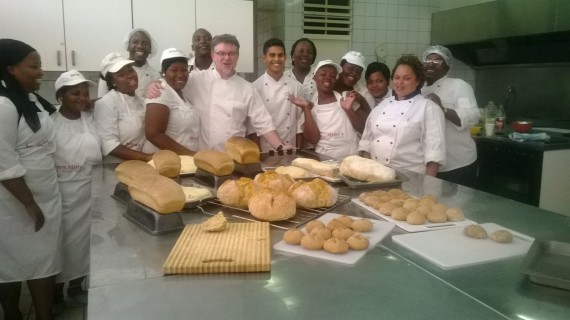
The project was initiated in October 2014 as a social enterprise and livelihood opportunity for the ISN and FEDUP members. Ten groups consisting of 5 members were selected from several communities within Cape Town namely Khayelitsha, Mfuleni, Gugulethu and Philipi. The members’ trust among each other and eagerness to start the business was the driver for the project. Members were selected from the existing savings schemes and community members who had the will to start a business. Saving was emphasized as the main driver of a successful collective based business. Savings as the backbone of the alliance brought several benefits to the groups such as building trust among members and providing resources for the business. A baker-to-baker exchange was used to strengthen and transfer knowledge among members. The exchange assisted the groups’ improvement in product quality and solidarity among group members. Bakers from well performing groups visited bakers from non-performing groups and visa versa. They all spent the day baking and marketing the product.

The challenges of setting up the community bakeries were building solidarity among members through a well-kept financial record and constitution. Due to the lack of basic numeracy and business management skills setting up a collective enterprise takes up a lot of mentorship. However, participants with existing or previously owned businesses proved to be successful because they understood the basic principles of operating a business. Other challenges such as crime and lack of access to trading spaces take a toll in the growth of such small businesses. As spaces in informal settlements are highly regulated by the local municipality, community members needed to get permission from the local municipality to put up trading stalls. They were therefore forced to bake from their homes.

Training and skills development

In partnership with The Business Place and The Tourism Business Institute of South Africa (TTBISA), community members with existing businesses were given skills development training. TTBISA with the support from Food and Beverage Seta offered a baking and hospitality learnership for 14 youth members from the community bakeries. The learnership equipped the bakers with business management and baking skills. With the stipends received from the learnership the students contributed towards the growth of their businesses. They were placed in various retail shops in the city so that they can learn more about customer relations and management of their businesses.

The Business Place offered short training courses on market research, business banking, costing and pricing of products to small business owners in the communities. The courses were offered to people who wanted to start, improve or expand their business. This opportunity was expanded to members of the Federation Income Generation Program (FIGP), who, after accessing loans they were mentored on how to start a small sustainable business.

20141128_102532 (1)

Food security and nutrition through Gardening

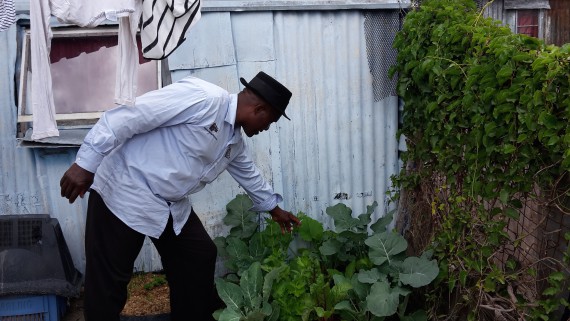
Due to high unemployment rates and distant location of certain settlements from economic opportunities, food gardens become an important vehicle to address food security and nutrition among low-income groups and informal settlements. In partnership with Soil for Life the Alliance trained community members in organic farming. For three months the community-farming group is trained in building the soil (most of the soil in Khayelitsha is sandy and becomes difficult to grow food), transplanting and developing the vegetables. Sustainability of the gardens is vital hence the groups are taught how to build their own compost and harvest seeds for the next crop. Due to lack of space in informal settlements, Soil for Life places emphasis on growing vegetables in limited spaces, containers and bags.


Livelihoods through recycling

The Solid Waste Network (SWN) is a network of approximately 1500 informal waste pickers in informal settlements. The recycling program is a social enterprise program with the aim of delivering a unique and value adding collection and payment service to informal waste pickers across Cape Town. The goal of this initiative is to create access to livelihoods and income generating opportunities for informal settlement residents through the recycling of glass, plastic and paper waste.

Despite being targeted by criminals during collections and experiencing product pricing fluctuations, the SWN managed to sustain its operations. In order to strengthen the network cluster meetings, recycling workshops were used to create awareness about recycling. Therefore, the strength of the program lies in the collective: collectively waste pickers removed 50 tons of waste.

20151112_114603 (1)

Early Childhood Development

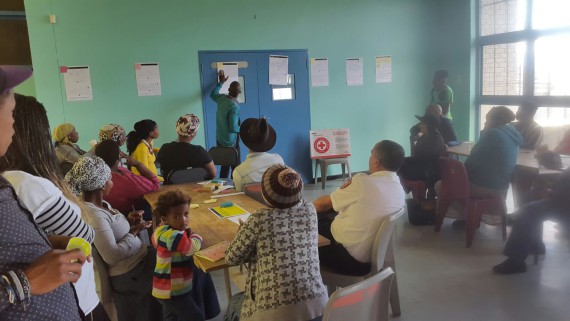
Early childhood development is important for the growth and education of all children. While planning a multi-purpose centre, the community of K2 in Site B, Khayelitsha decided to start an informal space-based crèche. The analysis of the enumeration showed that there was a high number of children not attending crèche. This was partly due to the high unemployment rate in the settlement and the parents’ inability to afford crèche fees. The residents used the results from the enumeration to improve access to early childhood development for their children. In partnership with Sikhula Sonke, the community has started an informal learning space, which will be integrated into the multi-purpose centre once completed.

SA SDI Alliance and Red Cross Society explore Fire Prevention Tools

By CORC, FEDUP No Comments

By Thandeka Tshabalala (on behalf of CORC).

September-April  marks  the Western Cape Fire season.  The eight months period has the highest record  of fire disasters due to a number of reasons but mainly negligence and lack of fire prevention  education. Throughout these times, informal settlement dwellers sit in panic and uncertainty of when a devastating fire may strike their settlement costing them their  belongings and in worst cases their lives. Urban fires are  amongst the highest disaster occurrences in informal settlements,and need to be addressed.

When  fires break out in informal settlement they spread fast and the community takes longer to be alerted . Evacuations are often dangerous and depending on  the density in these settlements  emergency responders often are unable to access homes in time. In July 2015  the South African SDI Alliance,  South African Red Cross Society (SACRS) and American Red Cross Society formed partnership with Lumkani to roll out early detection fire sensor devices targeting 1000 households in 4 informal settlements (UT, TT, TB section and WB) located in site B, Khayelitsha. The purpose of the project is to reduce fire risks by increasing community resilience against shack fires.  The introduction of early warning devices in  communities contributes to alerting  communities early  to avoid fire from spreading .  Another  benefit of the project is  formulating of fire response plans and capacitation of disaster response teams within the community.

IMG-20151026-WA0004

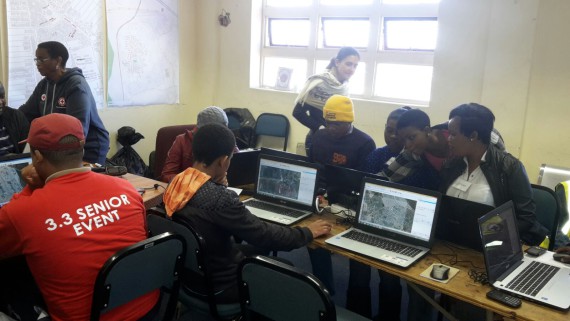
A baseline study and GIS mapping exercise formed part of the first crucial steps of information gathering of the project. 30 community volunteers were trained in conducting community surveys and GIS mapping. The community surveys aimed at gathering first hand information on previous instances of fires.  With questions ranging from fuel used for cooking, heating,lighting to how the community responded to fires. This included identifying nearest fire hydrants and emergency exists in the informal settlement. Key informants and focus group interviews gave an in-depth understanding of the existing fire response mechanisms taken by community leaders and disaster relief organizations.

The GIS map marking access points in the settlements and hierarchy of routes classifies movement within the settlements starting  from vehicle access to footpaths forms part of the analysis. Once the community has verified the map it will then be used  as a tool to better understand the community access points that could be of use during emergencies. After analysis and feedback from community members the baseline study will be used to inform future plans for fire response and mitigation.

IMG-20151026-WA0007 (1)

Imbizos (i.e. community gatherings) were platforms used by  communities to participate and give feedback on the project. Councilors of ward 90 and 91 Luvuyo Hebe and Monde Mabandla together with emergency respondents such as the police and fire departments came in high numbers to support this initiative.During the launch of the project on the 26th August 2015 Detective Mandlana  showed appreciation  to the  South African Red cross and Informal Settlement Network (ISN) for the project  and urged the community to use the Lumkani devices.

 “Safety starts by individuals taking precautions all the time”.

Detective Mandlana from the Police department.

To strengthen the existing disaster response  mechanisms in the community, 40 community members were trained in first aid (I, II &III) and fire fighting. The community response team is equipped to assess possible disasters and also be prepared to respond to any disaster occurring in their community.The community response teams have a lifetime commitment to the community because they can help improve the safety of their communities.

“ In the middle of a disaster, these are the people who will be able to say they are here to help, give critical support and assist victims before the arrival of emergency services.”

IMG-20151026-WA0005

This project forms part of a long-term objective  which includes decreasing urban fires and strengthening the impact of the Lumkani early warning device. The device acts as an early warning system in the community, decreasing the time taken by the community to be alerted in cases of fires, with addition of the response team the community is well positioned to deal with shack fires while waiting for emergency services. This intervention was informed by the profiling and enumeration data captured by the communities to understand the community priority needs.  The long term upgrading strategy would be the addition of planned preventative measures such as opening up streets and open spaces for emergency evacuations and access of emergency services.

From Joburg to Manila City: A Photo Story of Community Architects

By CORC, FEDUP, ISN, SDI No Comments

By Jhono Bennett (on behalf of SA SDI Alliance)

This story covers the 2015 exchange trip between South African delegates from the SDI Network and the CAN Network in the Philippines.

Figure 1: Manila City

Figure 1: Manila City


THE EXCHANGE

In 2015, a small delegation from the South African Shack Dwellers International Alliance (SA SDI) attended the  3rd Regional Community Architecture (CAN) Meeting & Workshop. The aim was for the South African delegates to gain first hand experience and learn from the work that CAN practices.

This delegation consisted of 3 professionals and three community members from  SA SDI and were chosen by the alliance for strategic leadership and capacity development to bring back home:

Jhono Bennett 1to1 – Agency of Engagement
Motebang Daniel Matsela CORC
Thembelihle Ngcuka CORC
Phaello Philder Mmole FEDUP
Ofentse Phefu FEDUP
Emmanuel Malinga FEDUP/ISN

As a team, we were expected to try and understand how the CAN works, its practices and tools as well as its members . All this was to be performed  during the series of workshops,meetings and dialogues that the we were exposed to.  We also learned from similar practitioners and community groups who are working on similar problems around the development of disadvantaged communities, such as in South Africa. Ideally we would learn valuable lessons from  CAN in regard to practices of community design and bring these home.

Workshop Background:

The 3rd Regional CAN Meeting & Workshop was held in Manila, Philippines this year between June 16 – June 23 and conducted with the theme:

Together we CAN! People planning for future inclusive cities

Figure 3: CAN workshop Day 1

Figure 3: CAN workshop Day 1


The workshop aimed to:

  • Bring together local and international participants working in different countries in Asia and beyond to exchange and share experiences through community workshops.
  • Provide concrete technical support to actual community initiatives through fieldwork in people centred heritage planning in Intramuros, Manila and city-wide development approach (CDA) in Muntinlupa City.
  • Link with local universities
  • Plan new collaborative future activities with multiple stakeholders to ensure long term change,ultimately the workshop aimed to support the larger mission of the CAN Network which is to:

“..Create a platform to link architects, engineers, planners, universities and community artisans in Asia, who work with communities and believe that poor communities should play a central role in planning their communities, and in finding solutions to build better settlements and more inclusive cities.”

Figure 4: CAN Network diagram

Figure 4: CAN Network diagram

The Workshop:

The delegation arrived on the 15th, and was welcomed by the well organised and energetic CAN management team.

Figure 6: Bangladesh CAN delegates presenting.

Figure 6: Bangladesh CAN delegates presenting.

After an initial series of presentations on CAN and  various organisations that make up the network, individual organisations of the workshop were invited to present themselves and their work.

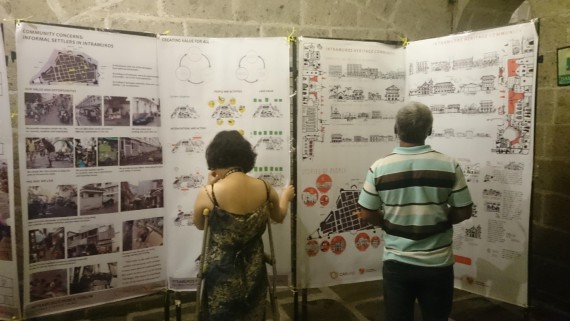
Figure 6: Intramuros site visit.

Figure 6: Intramuros site visit.


Figure 7: Intramuros site visit workshop.

Figure 7: Intramuros site visit workshop.


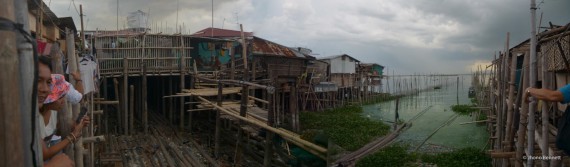
Figure 8: Site visit to Banana City, Intramuros.

Figure 8: Site visit to Banana City, Intramuros.


From here the next 2 days were spent taking the conference on site visits of where the workshop delegates would be working in Allabang and Intramuros.

Figure 9: Allabang site visit

Figure 9: Allabang site visit


Figure 10: Allabang site visit-Fisherman houses.

Figure 10: Allabang site visit-Fisherman houses.


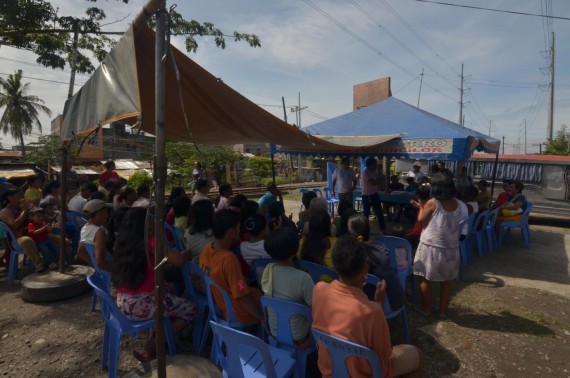
Figure 11: Allabang sitevisit-Savings group welcome

Figure 11: Allabang site visit-Savings group welcome


Figure 12: Allabang site visit-savings group welcome.

Figure 12: Allabang site visit-savings group welcome.


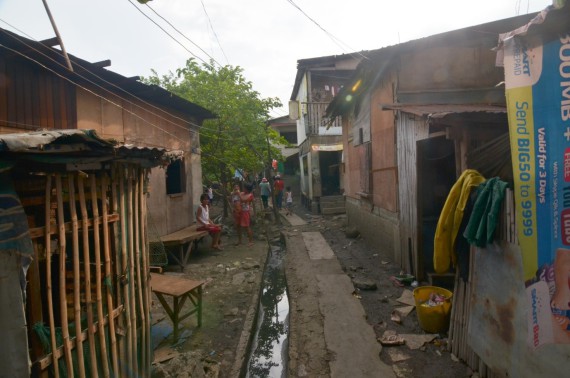
The participants were then broken into smaller groups of practitioners and community members and sent to stay in separate neighborhoods (or Barangays) where each group would focus on a specific set of issues faced by the various community groups supported by the local CAN organisation, Tampei.

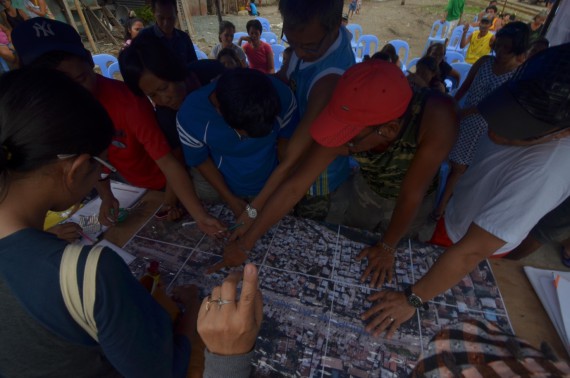
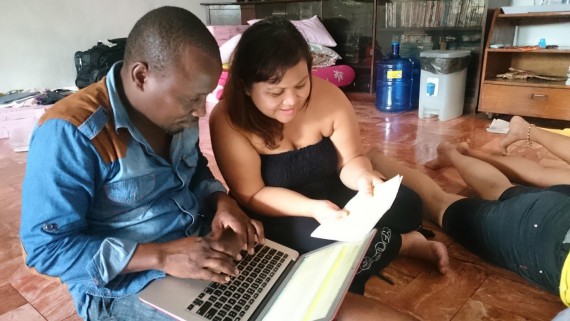
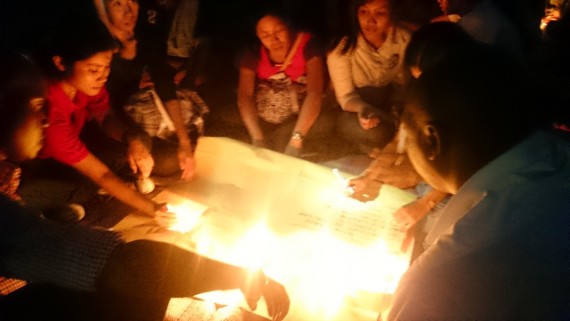
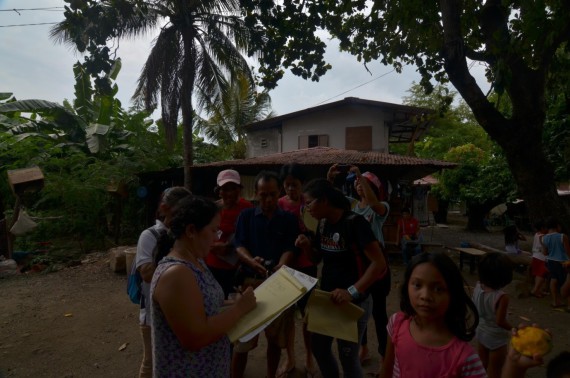
Figure 13: Group focus work in Allabang -Enumeration and Mapping.

Figure 13: Group focus work in Allabang -Enumeration and Mapping.


Figure 14: Group focus work in Allabang- Enumerations and Mapping.

Figure 14: Group focus work in Allabang- Enumerations and Mapping.


Figure 15: Delegates learning CAN practices.

Figure 15: Delegates learning CAN practices.


Figure 16: Group based work in Allabang- Confirming Mapping.

Figure 16: Group based work in Allabang- Confirming Mapping.


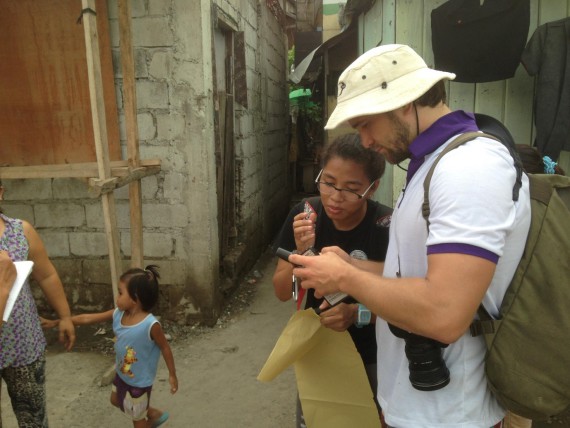
Each group spent the week intensively working on enumeration, mapping, and design with and for local groups aiming to initiate development energy supporting community initiatives.

Figure 16: GPS mapping in dense settlements of Allabang.

Figure 16: GPS mapping in dense settlements of Allabang.


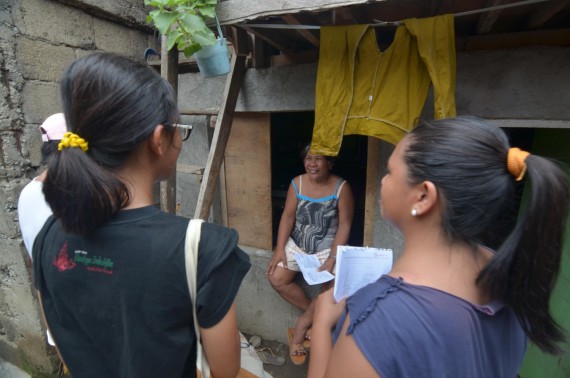
Figure 18: : Group Focus Work in Allabang - Story collection from residents

Figure 18: : Group Focus Work in Allabang – Story collection from residents


Figure 19: : Group Focus Work in Allabang - Community Mapping with residents

Figure 19: : Group Focus Work in Allabang – Community Mapping with residents


Figure 20: Allabang in context.

Figure 20: Allabang in context.


Figure 21: Group Focus Work in Allabang - Enumeration & Mapping with residents.

Figure 21: Group Focus Work in Allabang – Enumeration & Mapping with residents.


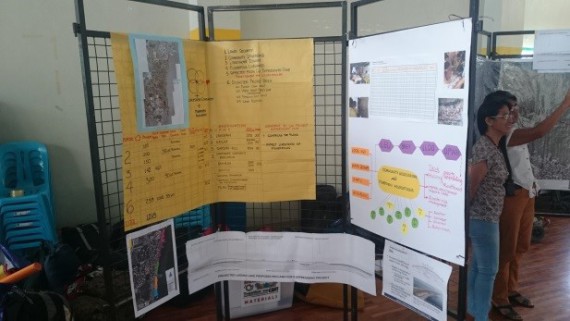
Figure 22: Group Focus Work in Allabang - Consolidating Mapping work for presentation

Figure 22: Group Focus Work in Allabang – Consolidating Mapping work for presentation


Figure 23:: Sharing valuable skills from participants.

Figure 23:: Sharing valuable skills from participants.


This was done while strategically developing a body of work that would be shown to local government stakeholders at a final seminar in both Allabang and Intramuros.

Consolidated Group work for strategic presentation with government stakeholders.


24b

24c

24d

Figure 25: Allabang - Strategic presentation with invited stakeholders

Figure 25: Allabang – Strategic presentation with invited stakeholders


Figure 26: : South African delegate presenting work on behalf of focus group

Figure 26: : South African delegate presenting work on behalf of focus group


Figure 27: Intramuros - Strategic Presentation

Figure 27: Intramuros – Strategic Presentation


The workshop culminated in a social event on the 24th, celebrating the workshop’s success.

Key Observations:

The workshop was highly successful in bringing together community architects from across the world to share experience and knowledge through the mixture of workshop tasks, social events and working activities.

Figure 28: CAN Practice: intensive workshops

Figure 28: CAN Practice: intensive workshops

The strategic use of these professionals to hyper-activate local community processes was exemplary and not have the visited communities as passive beneficiaries, while using the work developed in the short time to engage local governance bodies to support local community processes was a highly impactful strategy employed by the workshop organisers.

Figure 29: CAN Practice Capacitation through training

Figure 29: CAN Practice Capacitation through training

In particular it was impressive to see how ingrained the practices were conducted by both local community support and technical support. There seems to be something in the way the Philippines alliance work that goes beyond technical support and enters into new cultural and social dimensions of such work.

Figure 30: : CAN Practice - Strategic grass roots work

Figure 30: : CAN Practice – Strategic grass roots work

Personally, it was amazing to be in the presence of so many like-minded professionals who shared the values of community driven processes and were skilled in facilitative design processes.

Figure 31: CAN Practice in action

Figure 31: CAN Practice in action

This experience further cemented my personal motivation in developing critical co-productive design skills for me and other South African socio-technical spatial designers through community driven development projects.

SDI, WIEGO & Avina: Growing a Global Coalition of the Urban Poor

By CORC, FEDUP, ISN, SDI No Comments

By Yolande Hendler (on behalf of CORC)

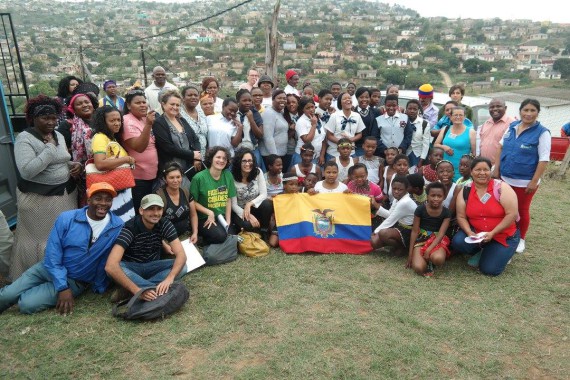
Piesang River – the home of the South African Federation of the Urban Poor (FEDUP), a meeting place filled with sounds of Portuguese, isiZulu, Spanish and English,  a place filled with expectations of what a four-day learning exchange might hold for its participants – representatives of urban poor networks from across Ecuador, Colombia, Brazil and South Africa. Are there joint mobilisation strategies? How does each movement build partnerships? And what does advocacy from the perspective of community leaders look like? These questions shaped the purpose of the four-day learning exchange from 21-24 September in South Africa’s east coast port city, Durban.

WEIGO EXCHANGE

The participants included community leaders and supporting organisations from

  • the Brazilian Alliance of Shack/Slum Dwellers International (SDI)
  • the Ecuadorian Waste Picker Network
  • the Ecuadorian Network for Fair, Democratic & Sustainable Cities
  • the Association of Recyclers in Bogota, Colombia (Asociación de Recicladores de Bogota)
  • Fundacion Avina in Peru & Ecuador
  • Women In Informal Employment : Globalising & Organising (WIEGO)
  • Asiye eTafuleni in Durban (AeT, network of informal workers)
  • The South African SDI Alliance as hosts: Federation of the Urban Poor (FEDUP), Informal Settlement Network (ISN) and Community Organisation Resource Centre (CORC)

What brought together representatives from such different locations? Their affiliation to SDI (Brazil & South Africa), WIEGO (Colombia & Asiye eTafuleni, South Africa) and Fundacion Avina (Ecuador). All three are global movements of the urban poor. Although their approaches may differ, SDI, WIEGO and Avina share the vision of building equitable, just and inclusive cities. The learning exchange was convened by Cities Alliance, of which WIEGO and SDI are both members. Envisioned as a two-part exchange, the first was hosted by SDI in South Africa, while the second will be hosted by WIEGO in Colombia.

The exchange focussed on exposing the visitors to the South African Alliance’s approaches to- and outcomes of community organising. This included a visit to housing and informal settlement upgrading projects, a savings scheme, conducting practical data collection, a partnership meeting with government and getting to know the context of informal workers.

A People’s Approach to Housing and Upgrading

Visiting a people driven housing project at Namibia

Visiting a people driven housing project at Namibia Stop 8 settlements

While each movement shared its main focal areas and organisational approaches in presentations on the first day, a real sense of getting to know each other occurred through questions and anecdotes that opened windows into personal and collective experiences:

“In Colombia waste-pickers have been organising for more than 30 years – recycling is an option for poor people who are old or don’t have access to jobs. I was displaced during the war. My husband was killed by guerrilla fighters. Through recycling I was able to support my family” (Ana Elizabeth Cuervo Alba, Colombia)

“As waste pickers in Ecuador we lobbied the government to a point where we now have a national agreement that pays waste pickers for recycling” (Elvia Pisuña, Ecuador)

“Urban informal workers usually face extreme challenges with people resisting their presence in public spaces .We called ourselves, Asiye eTafuleni because it means – come to the table. Let us negotiate for the inclusive future of the working urban poor. “ (Richard Dobson, Asiye eTafuleni, Durban)

Incidentally, Piesang River also displays the fruits of FEDUP’s militant negotiation with national government around housing delivery. FEDUP leaders explained that the vast housing settlements in Piesang River and Namibia Stop 8 (a further area visited that afternoon) are a result of their success in convincing government to grant members direct access to their housing subsidy. This enabled them to self-build larger houses, culminating in the adoption of the People’s Housing Process (PHP) policy. Although it has not been without its challenges, PHP represents a breakthrough in altered approach from “delivery” to “collaboration”.

Recycling Exchange

Informal Settlement Upgrading Plans at Mathambo


In contrast, community leaders of the Informal Settlement Network (ISN) elaborated on their difficulty in achieving breakthrough in municipal support for informal settlement upgrading. With over 2700 informal settlements in the country and an increasing housing backlog, the ISN supports communities with tools and plans for negotiating with local government around service delivery through incremental upgrading. During a visit to Mathambo settlement, community leader and regional ISN coordinator, Ndodeni Dengo explained that despite the settlement’s relatively small size, existing structures were located in high density to each other, with most not larger than 9m2 – and a deficit of water, sanitation and electricity services. The community had collected data about its settlement through a detailed household level enumeration that helped them negotiate upgrading plans with the local municipality. By using wooden boxes for planning a new layout that would enable service installation, the community established their ideal design for the upgraded settlement.

How do urban poor communities organise?

Over the next two days the visitors were introduced to the driving force behind FEDUP and ISN’s housing and upgrading projects: the practice of daily savings and data collection as tools for community organisation.

Explaining savings Kwa Bester

Explaining savings Kwa Bester

At Kwa Bestar savings group, the visitors saw that saving is not primarily about collecting money, but about collecting people. Savings groups are a space where trust is nurtured through daily saving, sharing needs and identifying common solutions. At present, the group of 39 active members has saved US$ 2800. It is also engaged in forming smaller saving units to access loans by generating income through small businesses. The keen involvement of young people aged 8 – 25 in the savings process was a special highlight. Once more it became evident that savings is about growing and enabling people, showcased by the rich dance, drama and music performances by the youth.

Youth savings group shares dance performance

Youth savings group shares dance performance

Where savings builds self reliance, data collection builds knowledge: upon arrival at Zikhali, a small, rural settlement in the northern sugar cane fields of Durban, Rose Molokoane, National Coordinator of FEDUP and SDI deputy president, explained:

“When a community knows clearly who they are, which are their problems, it is much easier to negotiate with municipal officials”

This is how data collection through settlement profiles (of a settlement’s history, infrastructure, conditions) and enumerations (detailed household level surveys) enables partnership with local government officials. When walking around the area, the group mapped the settlement boundaries and landmarks such as water and sanitation points on GPS devices while others spoke to residents, collecting household data by using the Alliance’s enumeration form.

GIS mapping in Zikhali settlement

GIS mapping in Zikhali settlement


Household Enumeration in Zikhali

Household Enumeration in Zikhali

Approaches to building partnerships with government

It is through savings and data-collection that SDI’s urban poor federations leverage partnerships: saving contributions show self-reliance and community will; settlement-wide data powers a community’s negotiation capacity. On day three the visitors accompanied the Durban Alliance to a meeting with the local municipality, province and a representative from national government, discussing the progress of housing and upgrading projects.

The South Americans perceived

  • A strong relationship with government officials
  • A measure of trust and flexibility in receiving visitors at the meeting
  • Political willingness to listen and debate

Insights from the South African participants

  • The perceived trust and partnership with Municipal Government was “built by doing”, demonstrating results and inviting the municipality to be part of the social process
  • Despite the working group and formally conducted meetings, the municipality often does not give prompt answers to the most urgent needs of communities

The visit to Asiye eTafuleni (AeT) added rich insight to the experience of informal workers and an added dimension to partnership building with local authorities. The group was introduced to AeT’s work in developing inclusive spaces that support sustainable livelihoods for informal workers. The shared realities of informal settlement dwellers and informal workers became particularly evident on a walk-about through the bustling Warwick market in Durban’s inner-city. For AeT and the SA SDI Alliance the encounter highlighted similarities and differences in approach but most of all established a platform for increased collaboration in the future.

Government Partnership Meeting

Government Partnership Meeting

View on to a section of Warwick market

View on to a section of Warwick market


Walkabout in Warwick Junction

Walkabout in Warwick Junction


Reflecting, Learning and Joint Advocacy

With a rich collection of experiences and impressions, the group gathered on the last morning to reflect and share on the ….

  • Non-monetary value of savings. Savings are about collecting money and people (building social capital, trust, self-reliance)
  • Power of information: data collection is crucial for building self-reliance, identifying common goals and establishing negotiating power
  • Key role of women as cultivating transparency and accountability
  • Cultural factors present in South Africa: welcoming, joyful people, ability to join efforts and to coordinate
  • Youth work: value of young people generating and managing their own savings to use in initiatives of their choice (e.g. creative arts)
  • Global similarities in poor people’s struggles
  • Recycling as Income Generation: value in using opportunities around you (e.g. waste = recycling opportunity = income generation)
  • Increased awareness of interface between shack dwellers and informal workers

… and on strategies for the road ahead:

  • Mobilisation Strategies: Gain understanding of waste picker movements in South America
  • Building Partnerships: Plan further exchanges with local (i.e. national) counterparts of global movements
  • Prepare for Joint Lobbying at Global Events such as Habitat III.

As the global development community gears up for Habitat III, global movements of the urban poor are establishing a firm coalition. This learning exchange forms an integral part of that process, “allowing networks organised around livelihood and habitat to come together, share their experiences and strengthen their capacity to organise and advocate in favour of the urban poor” (Cities Alliance, Exchange convener). When speaking with a united voice, advocacy has the potential to influence policy discussions on increased collaboration between communities and governments.

“By referring to our connection with one another, WIEGO, SDI & Avina can make a strong case for a pro-poor agenda. Only if we come together as poor people we can show our governments that we are influencing their policies to meet the needs of the people. “ (Rose Molokoane, FEDUP Coordinator & SDI vice president)

Growing Partnerships with Local Government: Bulawayo visits Cape Town Learning Centre

By CORC, FEDUP, ISN, SDI No Comments

By Andiswa Meke (on behalf of CORC)

Recently, the Zimbabwe SDI Alliance spent four days on a learning exchange to the South African SDI Alliance in Cape Town (14-17 September). In the SDI network, Cape Town is one of four global learning centres for urban poor communities due to the capacity of FEDUP and ISN to operate at city scale and demonstrate productive partnerships with government. The team from Bulawayo included community, city and university representatives (from the National University of Science & Technology (NUST)) who are exploring the possibility of building a partnership between the Zimbabwean urban poor Federation and the City of Bulawayo. The Alliance introduced the group to a variety of its activities, foregrounding the value and approach of partnerships that place poor people at the centre of their own development.

SAMSUNG CSC

Introduction to policy Questions

After a warm welcoming of the group by FEDUP members on the first day, the first presentation started by the Informal settlement Network (ISN) with the context of the SA SDI alliance and the work of Informal Settlement Network (ISN) from 2009 until 2015. The presentation showed delegates the work of ISN in In-situ upgrading, water and sanitation, area-wide upgrading, multipurpose centres and other activities that they have done so far. After the presentation the delegates from Zimbabwe were given an opportunity to ask questions:

“At what stage does the city get involved in re-blocking? What is the planning process and who does it? What is the participation between communities and the city?”

(George Masimbanyana, support NGO to Zimbabwe Federation of the Homeless and Poor)

After clarification by members of ISN and support NGO, Community Organisation Resource Centre (CORC) the Zimbabweans had an understanding of the particulars of re-blocking (including its adoption as policy by the City of Cape Town in 2012) and indicated they would consider adopting it as a process that they can also try. The Bulawayo group then gave a presentation about the work they have done to date. The presentation gave an insight into the Zimbabwean Federation’s total savings, income and expenditures, total number of houses they have built and what their projects look like. The Zimbabwean Federation has also signed two Memoranda of Understanding (MoUs) with the City of Bulawayo. The group expressed the challenge of a lack of implementation and practical partnership, despite the presence of a formal agreement. The next days allowed the visitors to explore this topic further. They experienced how FEDUP and ISN formed practical partnerships and implemented projects with two municipalities.

Partnership around Upgrading: Stellenbosch Municipality

On day two, the group travelled to Langrug informal settlement near Franschoek to meet with the local Municipality of Stellenbosch. Langrug community leader and regional ISN coordinator, Trevor Masiy shared the successes and challenges the community faced with regards to being recognized as an informal settlement in that area. Lester van Schalkwyk, a municipality official, spoke of the difficulty the Municipality experienced in engaging with informal settlement communities. This is when officials realized the value of social and technical intermediaries like ISN & CORC to support and speed-up implementation of community – government partnerships. In Langrug this partnership translated into the first ever MoU between a local government and community, which enabled direct access to municipal funds for upgrading and implementation of re-blocking, drainage and a water & sanitation facility.

SAMSUNG CSC

Municipality  official sharing challenges they encountered  with Langrug Informal settlement

Partnerships around Upgrading: City of Cape Town

The third day was an upgrading site visit to Flamingo Heights in Lansdowne, Cape Town, a settlement that was recently re-blocked through a partnership between the community, SA SDI Alliance, City of Cape Town, and other actors such as the Cape Peninsula University of Technology (CPUT). Maria Matthews, community leader in Flamingo welcomed the guests and gave a brief history about the settlement and how they partnered with the city of Cape Town and the Alliance. She also gave insight about the challenges that they faced before upgrading where she noted that the community faced a high rate of crime because of the densification of their structures before re-blocking. She also cited that through the project the community managed to minimise the crime and now are safe. During an opportunity to ask questions, a Bulawayo official asked who owned the land that is now Flamingo Heights. ISN facilitator, Melanie Manuel, explained that the land belonged to an industrial company whom the City of Cape Town bought the land from. Maria Matthews, concluded,

“[Community] savings [contributions] are the core reason why we are here [in an upgraded settlement] today. We took the little we had and placed towards better living conditions.”

Community Savings as Negotiation Tool

The group then commenced to the FEDUP linked income generation group in Samora Machel. The visitors were welcomed with great hospitality and were given an overview of FEDUP`s income generation program. The visit highlighted the connection between regular saving and the ability to repay loans. This in turn enables access to further loan installments to expand a small business. In this sense, the power of individual and community saving became evident. In response to a question by the NUST representative on failed loan repayments, the loan facilitator explained:

“Saving group members are not given money that they don’t have in their savings balance, so if they fail to pay back the loan the money it is then subtracted from their saving balance.”

community leader sharing Flamingo Heights History

community leader sharing Flamingo Heights History

Area-Wide Upgrading as a result of negotiation

At UT Gardens settlement in Khayelitsha, the community came all out to support their leadership committee to welcome the visitors from Bulawayo. The Alliance shared the challenges and breakthroughs around upgrading the nearby wetland as a communal space. After giving a project overview, ISN & CORC members explained how they convinced the City to give them approval to use the land. A community leader, Thamara Hela, gave an overview of the recreational activities they envision for the upgraded wetland-park: a football ground, a gym facility and a park for the children to play where they could be safe. Read more here.

Meeting the Partners: City of Cape Town & Cape Peninsula University of Technology

Having visited a number of upgrading projects in Cape Town, the visitors met with the City of Cape Town to gain more insight into the process of partnership formation from a City perspective. The city explained how their department fits in the broader Human Settlements Sector, shared an overview of their partnership with the SA SDI Alliance, their role as service provider for ground works, engineering, topographical surveys and the Alliance’s role as technical and social support facilitator. The City shared the importance of an inter-departmental approach, which increases effective communication between various actors involved in ISU: the departments of solid waste, human settlements, water & sanitation. There was also an opportunity to observe direct engagement between communities and officials. Masilunge informal settlement leader, Lindiwe Ralarala presented the current ISU project process in her settlement, in particular the challenges of flooding, water & sanitation that the community would like to see the City address.

During lunch time the exchange moved to the architecture building at CPUT, where the group was briefed about the partnership the Alliance has with the university. It enables students to engage with the reality of planning with ‘informality’, and results in alternative practice and conceptual approaches in town planning and architecture. The lecturers explained how they want to see town-planning link with urbanization:

“Urbanization is not about building houses, it’s about human beings. We want our students to understand that they are not just planning houses but planning better living condition for the people who they work with.”

Through project modules or internships with the SA SDI Alliance students support the alliance with their technical skills in town planning or architecture. The meeting showed the visitors that strong partnerships with multiple actors can achieve more. Read more about academic partnerships here.

City of Cape Town partnership meeting

City of Cape Town partnership meeting

Ideas for Partnership Formation in Bulawayo

The exchange concluded on a high note. The support between community members from Bulawayo and Cape Town was clearly evident in their common desire to see a practical and community centered-partnership emerge in Bulawayo. As the details need to be fleshed out and implemented in Bulawayo, the South African and Zimbabwe SDI Alliance leaders will keep supporting and holding each other accountable on the path of establishing inclusive partnerships that are key to community-centered solutions. We conclude by sharing reflection points of exchange participants:

 City Reponses

  • There is great value of strategic community organisation: “We need partnerships to really engage & resolve community problems in a manner that satisfies the community adequately. “ (Bulawayo City Official)
  • Value of Reblocking & Forward Planning: “the way to tackle the problem of regrouping people is beautiful: the communities are involved and they have a say in the way forward” (Bulawayo City Official)

Zimbabwe Federation Responses

  • Community Data Collection: “I realise we need to review our settlement profiles & use our data in a useful [strategic] way.”
  • Implement MoUs: “This exchange provided us with a way to figure out how to operationalize the MoU’s”
  • Joint funding for ISU: “We need to sit with the City and establish how we can use reblocking to deal with the issues in our country. Joint funding for ISU provides huge opportunities for countries like ours which are economically challenged”
  • Accountability: “ Let’s keep each other accountable on our progress with reports, and share our knowledge and skills”

 SA SDI Alliance Responses:

  • Learning Centre: We find that as a learning centre we end up learning from you too”
  • Exchanges as Mobilisation: Exchanges are a mobilizing tool: wherever we take visitors, we gain trust from the communities. While the visitors learn, our communities learn as well.”

Group photo during the exchange