Tag

Inclusive Cities Archives - Page 2 of 4 - SASDI Alliance

How Lesotho is building an organised, urban poor movement

By FEDUP No Comments

“Saving is our heartbeat”, any member of South Africa’s Federation of the Urban Poor (FEDUP) will tell you. “This is how we organise, how we build trust, open spaces to talk and share, find ways to support each other and change our lives. We don’t collect money, we collect people.” Over the last twenty five years the South African federation has grown from a handful of savings groups in the North West and Kwa Zulu Natal Provinces to 626 savings groups in eight provinces with 43 999 members.

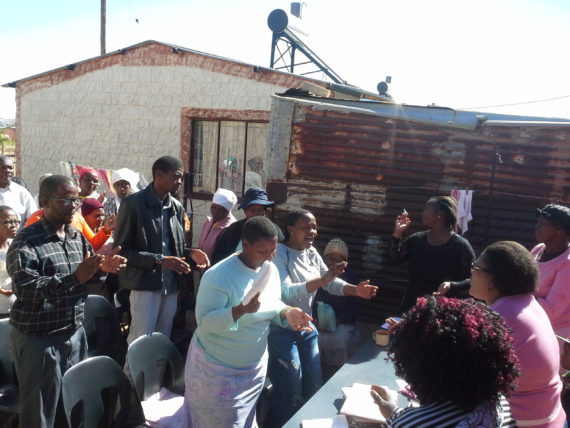
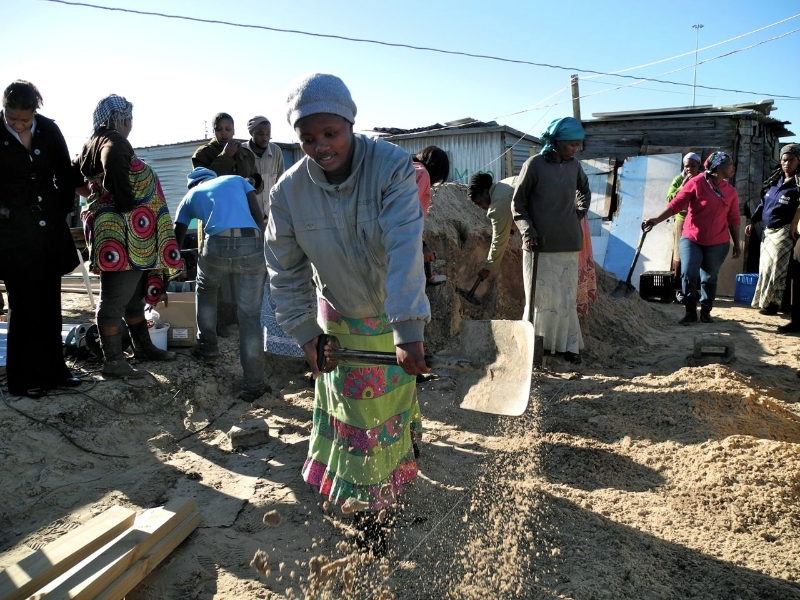
Lesotho federation and Tshwarellang saving scheme members (Free State) after mobilising new savers

Lesotho federation and Tshwarellang saving scheme members (Free State) after mobilising new savers

What does it look like when savings groups multiply, and federate within their cities – how does an urban poor, country-wide federation emerge? Through horizontal learning exchanges, South Africa’s FEDUP has been supporting emerging savings groups in Lesotho to do just that. Within the SDI network, the definition of an “emerging” federation is a group that has started building savings collectives but has not yet federated nor achieved citywide scale and is yet to develop a critical engagement with state institutions and other development actors.

As a tool for building strong and organised movements of the urban poor, exchange visits between federations, enable savers to “learn by doing”. In particular, the exchange visits from Lesotho to South Africa have focused on strengthening the foundational aspects of a saving scheme. These included opening a new savings scheme and mobilising members, how to collect and record daily savings, how to engage local government authorities and how to facilitate a network meeting, in which several savings scheme in a region come together to report, organise and support each other.

Manana (left) and Nthabiseng (right) display their bedding (income generation) project for Tshwarellang saving scheme in Free State during the exchange.

Manana (left) and Nthabiseng (right) display their bedding (income generation) project for Tshwarellang saving scheme in Free State during the exchange.

Some of the challenges experienced by Lesotho Federation members included poor recording of savings books, complications with opening bank accounts, and challenges with compiling savings and project information from all districts. These were the focus of Lesotho’s last exchange to Free State province in South Africa in September 2016.

During a door-to-door, daily savings collection, Lesotho federation members shared:

“I realised that the daily collection was not just about collecting money from the members but also checking on their well-being. Some savers didn’t attend meetings because Elizabeth’s husband was seriously ill, Ntswaki just delivered a baby, Sero is not well in health and Dweni’s husband is in hospital. The groups then decided to make financial contributions other than daily savings to help with transport to hospital or medication.”

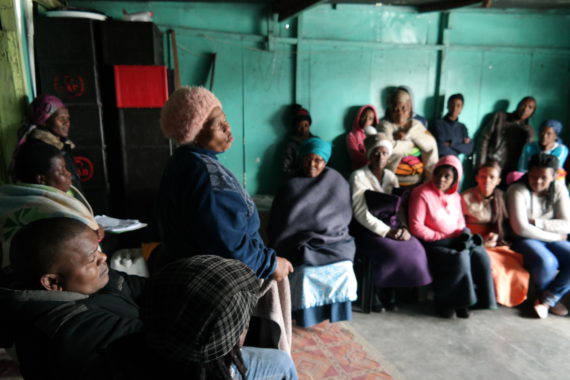
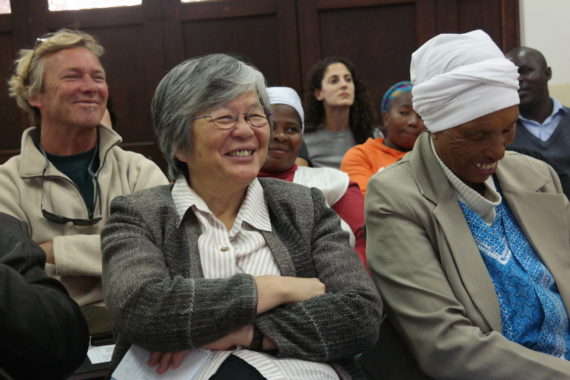
Federation members singing during the evaluation meeting of the exchange

Federation members singing during the evaluation meeting of the exchange

So how do savings groups multiply and federate? Through “learning by doing” as reflected in comments by Lesotho federation members at the end of the exchange:

The mobilisation experience taught us that we can approach totally random communities for saving scheme establishment.

We learnt about saving networks and their importance and that is something we do not have in Lesotho.

We saw that feedback to members on activities such as collection of money is crucial as it enhances transparency.

We realised your love for the organisation because some of you have even reached the stage of getting houses, but you are still active members and that shows us that you were not chasing after houses.

Jemina Nkoni (left) and Malefu Semonye (right) received a certificate and trophy for the third best performing saving network in the Free State

Jemina Nkoni (left) and Malefu Semonye (right) received a certificate and trophy for the third best performing saving network in the Free State

Community Voices: “In GxaGxa people know you. And mosquitoes bite your children”

By CORC, FEDUP, ISN No Comments

*By GxaGxa Community Members, Compiled by Shelby Lyons (on behalf of CORC)

This blog contributes to a series called Community Voices; a blog space that shares the words of community members themselves. These stories— diverse yet unified – highlight aspects of the history, challenges and daily experiences associated with life in informal settlements.

This blog draws its content from a storytelling workshop in GxaGxa informal settlement in Cape Town. In the post are the voices of: Nobuwe Biyane, Elizabeth Merane, Thembisa Magqaza, Nokwandisa Mhlandi, Peter Somina, Tlotliso Moses, Siphamandla Ntusi, Somila Shumi and Witness Qoqela

SAMSUNG CSC

In GxaGxa children play on the street

GxaGxa is a settlement located off the N2 highway in Gugulethu, Cape Town. Recently, community members here organised to complete household level enumerations of their settlement as part of gathering settlement wide data and identifying community priorities. Besides quantitative data gathered during the enumeration, qualitative accounts from settlement residents are crucial for understanding both the character of the settlement and social dynamics within it. Therefore on a chilly Tuesday, situated in a bright, turquoise room, a group of GxaGxa community members gathered together to tell their stories of life in the settlement.

Community members were first addressed by Akhona Malangeni, an engaging and passionate leader of the Informal Settlement Network (ISN), who explained to them the importance of storytelling in gaining a community-based account of life in GxaGxa. Below Akhona addresses the community.

SAMSUNG CSC

The first part of the dialogue focused on settlement history:

“The name GxaGxa stems from the birth name of the first man who settled there. As a lone settler, GxaGxa lived in this area for a few years until circumstance caused him to move back to the Eastern Cape”.

Community members seem to speak fondly of the late GxaGxa, who in 1987 was replaced by Mama Thembisa. Pictured below, Mama Thembisa now serves as a clear leader in the GxaGxa community.

SAMSUNG CSC

After a large group discussion, community members organised in smaller groups. In one conversation circle people were asked: What is the best part about living in GxaGxa?

“The best part of being in GxaGxa is that we are a family. A lot of young people [that] live in this place do things in unity. Everyone knows each other—if you arrive here, people know you before they see you. We live in spirit. Young people respect old people. Old people respect young people. People are also not worried about crime”.

The emphasis on community was echoed in many of the accounts coming out of GxaGxa. Correspondingly, people were asked: What is the difficult about living in GxaGxa?

“The rain is serious. When it get’s colder the children—everyone—get sick. The water comes into the houses. Dirty water causes rashes that later become sores. There is no electricity. Those who are unemployed are especially vulnerable during this time because they cannot afford heat”. –Siphamandla Ntusi

The conversation about life in GxaGxa continued, including stories about the more trying aspects of daily life such as challenges in access to adequate services, the lack of employment opportunities and the relationship with the municipality.

Some of these challenges regarding services are found below:

The section comes from: Peter Somina, Tlotliso Moses, Siphamandla Ntusi, Somila Shumi and Witness Qoqela

Toilets –“Services [in GxaGxa] are poor and we are struggling because it is hard to get into toilets here. Many people who have their own toilets lock them. It is common for people to have to ask others for the key to the toilet”.

Tap- “Sometimes the water is completely dry in the tap and there is no water all day. These days we don’t eat. So we have to travel very far for water. This can happen 2-4 times a month. It depends. It just happens”.

Electricity- “We don’t have electricity. People share electricity. It becomes a problem when people don’t have money for paraffin. The streetlights are also off, which means it’s completely dark”.

Management- “If it’s hot the sewage smells. There is also a pond in the middle of the settlement [behind Mama Thembisa’s house] that floods and brings in a lot of mosquitos. Drains are also blocked”.

Indeed, references surrounding the danger of the pond were a common theme in settlement accounts.

SAMSUNG CSC

Above is a photo of the pond in the middle of GxaGxa. Showing the proximity of the pond to her room, Nosipho Magqaza says, “It’s not healthy to live here”.

 After sharing about their daily experiences, GxaGxa community members shared what they would like to see happen in their settlement. Community leader Nobuwe Biyane shared her wishes for GxaGxa.

“I have two children ages 15 and 16. There is a lot of suffering in GxaGxa. There is no work. There is too little taps and they must fill the pond because mosquitoes bite our children. [We] want a house with electricity”. –Nobuwe Biyane

Another opinion came from Peter Somina, who shared his wishes for the community.

SAMSUNG CSC

Peter Somina as he addresses other community members.

“In my mind we must organise something that must be big… we must organise a big something for people to get jobs…maybe we open big things like construction that open doors for opportunity”. – Peter Somina


Reflections on re-blocking: Why community participation is key

By CORC, ISN No Comments

By Ava Rose Hoffman (on behalf of CORC)

In this blog, the SA SDI Alliance speaks with Nkokheli Ncambele—ISN Coordinator of the Western Cape—to learn about how the participation process functions on the ground during informal settlement upgrading, and in particular, reblocking initiatives . Reflecting upon the Alliance’s early experiences with re-blocking in Sheffield Road (2010-2011) and Mtshini Wam (2012-2013), Nkokheli highlights the value of building partnerships between informal settlements, support NGOs, and local governments.

How has the re-blocking process enabled residents to better engage with city officials or service providers in the long run? Has the re-blocking process enabled citizens to become more knowledgeable about how to interact with the state?

In our project called Sheffield Road, the government was saying [to community members] that they can’t do anything in the road reserve. But when the community started engaging with the municipality, the community learned how to negotiate with the city, [using] their tools—starting from profiling and enumerations. The enumeration is what helped them identify their problem, and then they start engaging [with the City]. Through the engagement they decided to start reblocking cluster one. When they finished Cluster One, everyone in the community was saying, ‘This thing is working, we want this thing [reblocking.’ Then they started rolling it out in the community. While they were in Cluster 3, the government saw the value of re-blocking, and then they came and installed 15 toilets that were not there before. So, that exercise [served to] teach a lesson to the government, and teach a lesson to the community.

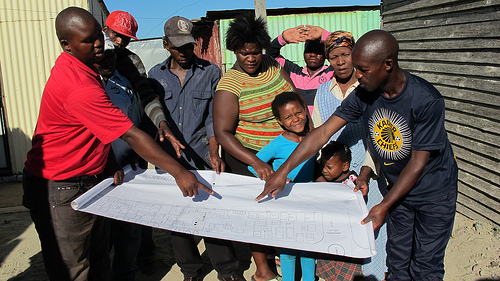
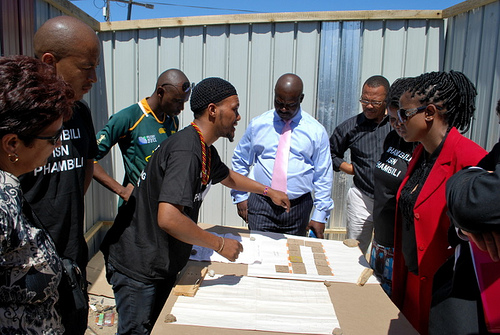
Community members discuss the re-blocked design in Sheffield Road

Community members discuss the re-blocked design in Sheffield Road


In Mtshini Wam, each and every winter they [the community] experienced flooding. And when they went to government, government was saying they can’t do anything [improvements] there because there is no space. And the community started organizing their general meetings, and trying to find a solution. Because, remember, they are the ones living in those conditions, so they had to come [up] with the solutions, and their solution was re-blocking. They went on an exchange to Sheffield Road to see what other communities were doing. When they came back, they started engaging with the people [in their community], and the technical teams of CORC and ISN went to Mtshini Wam and started helping them [with] how to design their community [reblocked layout]. At the end of the day, even if you can go today to Mtshini Wam, they will tell you that this re-blocking, it helped us a lot because, they were living in bad conditions. They were affected by their health because of the gray water that was smelling.

How did that engagement or negotiation with the state play out after the re-blocking was complete? Was there any continued engagement between the community and the state after the process was complete?

There is always a question of, ‘What else after this? What are we going to do?’ Obviously engagement is still happening between the community and the municipality, because, remember, these people, they don’t have a title deed. So they have to negotiate for the title deed. So now, their engagement is on another level. It’s not on the level of shelter; it’s on another level of getting houses, adequate houses. I remember they finished their design, where they said what they want: double stories where everyone can fit. And they even went to Joe Slovo in Langa to see how the design of Joe Slovo looked like, because it’s what they want to implement in their community.

Do you think the re-blocking projects have helped to change power dynamics within communities or empower more vulnerable members of communities?

I think firstly, what re-blocking brings to the community is security. It brings the trust between the community itself, because where they were residing before, no one would know their neighbours. But after the re-blocking, now, everyone is known in the community. It’s a community, its not an informal settlement anymore, it’s a community where the people of that community have pride in what they did. It also brings trust to the leadership—the leaders are the ones who will take us to the house.

Who would you define as vulnerable members of a community? Do you think that re-blocking has helped those vulnerable members get more of a voice in their communities?

I’m not going to answer your question directly, but I will always come out with an explanation.

If you go to Mtshini Wam, there were people that were not having income, not even a cent—so they were vulnerable in the sense that they don’t receive anything— [while] other community members were working, and received income. When we started, there were people that were vulnerable, and you can see that their situation is very bad, but once we brought the re-blocking concept, where we manage to employ 45 people, those that were vulnerable earn something. It’s where they change their lives, you know. And now, there is no one—I can guarantee to you today—that is very vulnerable. Everyone is in the same level because of re-blocking. That’s why I’m saying, re-blocking, it brings a lot of things. It brings job opportunities, it brings basic services, it’s not only about changing the structure, it’s about what government can play in your community when you say, ‘I want re-blocking.’

A community where no one is working, and no one is receiving a grant—that is what I call a vulnerable community, because there is no income.

Community members at work in Mtshini Wam re-blocking

Community members at work in Mtshini Wam’s re-blocking process

How did communities and the City change through the process of re-blocking? What was that mutual learning process like?

What I can say is that, the city has changed through the system that the people brought… The government at that time would tell the community: ‘We are going to put the toilet here.’ But the challenge of that community is not a toilet. The community wants electricity. So, once we start engaging with the government, in 2010, it’s when the government started listening, now that the people know what they want. We are not fighting with their ideas, but we want them to listen to us. Because we are the ones who are residing in those conditions. We are the ones who are walking in the dark at night.

It shows that people learn a lot and the city learned, because the city put a lot of basic services in different communities. The communities that started before 1994, they’ve got basic services now. It shows that the city learned how to listen to the people. And the people know how to engage with the city now. Because the leadership—you will find different leadership going to see the mayor, you will find that the mayor is going to the communities—there is that engagement now. Re-blocking and engagement—having the ISN involved—changed a lot of people.

Deputy Minister of Human Settlements, Ms. Kota-Fredericks, visits the newly re-blocked Mtshini Wam in 2012

Deputy Minister of Human Settlements, Ms. Kota-Fredericks, visits the newly re-blocked Mtshini Wam in 2012

Scaling Up Informal Settlement Upgrading: The CODI Model Thailand

By CORC, FEDUP, ISN, SDI No Comments

By Yolande Hendler (on behalf of CORC)

While the value of in-situ informal settlement upgrading is increasingly recognised by national and global actors, its implementation as a co-productive approach rooted in meaningful community participation is inadequate. An exception, however, is the Community Organisations Development Institute (CODI), a finance facility of the Thai government that has facilitated community-led informal settlement upgrading in more than 250 cities and towns in Thailand, demonstrating how a national government not only engaged with ‘pro-poor’ development but also managed to institutionalise an approach and implement at scale.

Somsook Boonyabancha, Former Director of CODI

Somsook Boonyabancha, Former Director of CODI

In early May, the South African SDI Alliance together with Shack / Slum Dwellers International (SDI) had the pleasure of hosting Somsook Boonyabancha, the founder and former director of CODI for a seminar in Johannesburg and Cape Town on ‘Scaling up informal settlement upgrading: The CODI model, Thailand’. ISN and FEDUP coordinators additionally used this opportunity to share current partnership and project implementation challenges with Somsook during a visit to Khayelitsha. Her visit to the Alliance occurred in the context of a broader meeting* with representatives of the South African National Treasury concerning CODI’s approach and its value for the South African context.

Jubilant welcome by FEDUP and ISN

Jubilant welcome by FEDUP and ISN

CORC director Bunita Kohler offers a warm welcome

CORC director Bunita Kohler offers a warm welcome

Informal Settlement Upgrading in South Africa

The upgrading context in South Africa is marked by a tension between policy and practice. Part three of the National Housing Code states that the Upgrading of Informal Settlements Program (the national policy and finance instrument for upgrading) set out to “facilitate the structured in situ upgrading of informal settlements as opposed to relocation(s)”. The aim: to achieve tenure security, deliver basic services and build ‘social capital’ in communities through participatory processes.

In practice, however, municipal application of UISP has been weak, especially in terms of community participation or alternative approaches to tenure security beyond freehold (See NUSP). Even after the National Upgrading Support Programme (NUSP) was introduced in 2010 to support municipalities in addressing these shortfalls, the lack of meaningful community engagement or in-situ upgrading of informal settlements persisted. This is largely due to inadequate municipal capacity for meaningful participation, a recurring preference of relocating shack dwellers to greenfields sites (the Joe Slovo judgement is a case in point) or repackaging reports on greenfield relocations as UISP projects (see State of Local Governance, p.64-65).

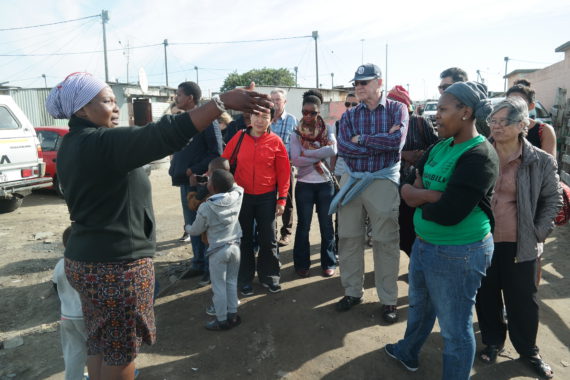
Community leader of TT Section, Site B Khayelitsha welcomes Somsook to her settlement

Community leader of TT Section, Site B Khayelitsha welcomes Somsook to her settlement

Where the SA SDI Alliance has implemented participatory upgrading projects in partnership with a local municipality (such as the City of Cape Town), these instances remain limited to a handful of settlements. Avenues for scaling up meaningful participatory practice in South Africa are rare, if not non-existent. In the experience of the Alliance, key challenges to scaling up relate to the disjuncture between lengthy bureaucratic processes and the pace of community preparation in informal settlements. For example, party political frictions may extend the time required to mobilise a community while lengthy municipal procurement processes regularly stretch project timeframes beyond the designated one year budget allocation period. When budget allocations are annulled or project dates postpoined, it is twice as difficult to restart and remobilise the community. Tools that intend to support community-led action (such as the UISP), can therefore have the opposite effect: they are often not flexible enough to adapt to project preparation and social facilitation processes in informal settlement communities.

How CODI Works

As an alternative, the CODI model offers relevant insights for the South African context. Formed in 2000 through the merging of the Urban Community Development Office and the Rural Development Fund, CODI is an independent public organisation under the Ministry of Social Development and Human Security. CODI functions as a revolving loan fund that enables direct access to grants for upgrading and loans for housing. As a national implementing agent, CODI manages the Thai government’s Community Development Fund that engages urban poor communities and networks who are organised in housing co-operatives and informally recognised community based savings schemes. CODI supports the building of community cooperatives, through sub-group clusters that manage community grants and wholesale loans. Such subgroups bring about collective action through group guarantee, helping eachother, and collective repayment. Read more about CODI here.

Somsook speaks about the CODI model in Thailand.

Somsook speaks about the CODI model in Thailand.

Thailand’s Upgrading Initiative: Baan Mankong

The Baan Mankong City-Wide Upgrading initiative is one of CODI’s most notable programs. Introduced in 2004, it focuses on poverty alleviation, community welfare, technical support and tenure security through promoting savings, credit, loans and planning support. Baan Mankong (which means “Secure Housing” in Thai) facilitates capital transactions through an infrastructure/upgrading grant from central government and a housing loan lent to borrowers organised in housing cooperatives. Since 2004, Baan Mankong has approved a total of 850 projects in 1660 communities and benefitted about 90 000 families. Geographically, its reach covers 286 cities in 71 of 77 provinces. The average housing loan per family amounts to US$ 5000 while the average upgrading subsidy grant averages about US$ 2500 per family. The total loans granted by CODI’s revolving fund (at 3% interest) amount to about US$ 185m with a repayment rate of 97.5% (Figures drawn from Somsook’s presentation).

In her presentation, Somsook highlighted the following as significant requirements for a city-wide, scaleable approach:

  • Active communities: support for urban poor communities as owners of projects
  • City-wide approach: changes at the real scale of the problem (i.e. that affect all poor communities in the city) will link scattered communities and their priorities to each other, contributing to a more systematised and sustainable approach
  • Building strong communities: through secure housing and integrated development that includes:
    • collective land ownership or lease
    • community savings and fund (acting as a community bank)
    • welfare activities
    • activating the link between community networks and city organisations in regular meetings
    • collective management
  • Building partnerships: between community networks, local authorities and other development actors that enable deliberation and negotiation
  • New finance system: active community savings and credit, City Development Funds
FEDUP and ISN engage with Somsook around CODI's approach

FEDUP and ISN engage with Somsook around CODI’s approach

Scaling Up in South Africa?

With more than eighty representatives from NGOs, media platforms and think tanks in the sector, academic partners in planning and architecture and the Head of Department of Human Settlements in the Western Cape, the closing session of the seminar offered an opportunity for discussion. How does CODI straddle the tension between private and collective land ownership? Is collective land ownership/lease possible in South Africa? Is there government appetite for alternative finance mechanisms? While engaging with these points, Somsook continually pointed to the value of collective action:

“The key thing is to bring all actors to work together. Community is important to support each individual for a certain period of time. And land is an important factor [so we need] collective land as a project. Poor people will be weak otherwise. Its insufficient to just do one or two projects here and there… Let poor people at a big scale be the key actors to make a big change”

SAMSUNG CSC

Thando Mguli, HoD of Human Settlements in the Western Cape

Similarly to CODI, a co-finance facility in South Africa has the potential to locate poor people at the heart of upgrading interventions. Where urban poor communities shift from beneficiaries to activated citizens that identify, plan and implement development priorities, informal settlement upgrading can become more nuanced, responsive and participatory. For a co-finance approach, community saving is a valuable mobilising tool, an enabler for meaningful participation and an indicator of household buy-in at settlement level. A co-finance mechanism that is institutionalised in local government but not subject to its bureaucratic process can enable flexible time frames for project budget allocations that are not constrained by annual provincial or municipal allocations. In this sense, innovation and meaningful participation occur only when community members become significant actors in the upgrading process.

*The visit was supported by the World Bank

From left to right: Representatives from the World Bank, Cities Support Programme (Treasury), CORC, Somsook, Western Cape Human Settlements HoD and ISN Coordinator

From left to right: Representatives from the World Bank, Cities Support Programme (Treasury), CORC, Somsook, Western Cape Human Settlements HoD and ISN Coordinator

Seeing from the South: an international exchange with South African shelter activists

By CORC, FEDUP, ISN, Learning Exchanges, SDI No Comments

By Dan Silver, Diana Mitlin and Sophie King (crossposted from the Global Development Institute at the University of Manchester)

“We are poor, but we are not hopeless. We know what we are doing”.

This is Alinah Mofokeng, one of three activists from the South African alliance of community organizations and support NGOs affiliated to Shack / Slum Dwellers International (SDI) who came to visit Manchester last month. The three came to explain their approaches and to exchange knowledge with local organisations through a combination of visits around Manchester and Salford, and a half-day workshop drawing together activists from around the country.

While South Africa and the UK might initially appear to be worlds apart, previous discussions between low-income communities in the global North and South had identified commonalities in their disadvantage. Potentially there are approaches that can be drawn upon and adapted in order to resist marginalisation and improve local communities, which can work across different places and contexts. This was the basis for Sophie King (UPRISE Research Fellow) and Professor Diana Mitlin (Global Development Institute, University of Manchester) inviting the South African Alliance to meet with UK community groups in March, drawing on a long history of community exchanges. This coincided with the Alliance participating in the Global Development Institute’s teaching programme with community leaders lecturing on their experiences and methods.

Alinah Mofokeng (Federation of the Urban and Rural Poor), Nkokheli Ncambele (Informal Settlements Network) and Charlton Ziervogel (CORC) all talked about their experiences of being part of the South African Alliance of SDI. This alliance has pioneered people-centered development initiatives by and of people in poverty since 1991. Their foundations are established in the grassroots, working on issues that emerge from the daily experiences of poverty, landlessness, and homelessness to bring immediate improvements and long-term inclusive citizenship within cities.

SDI’s approach to organizing is grounded in women’s led savings schemes, in which each member saves small amounts and does so with the support of their own collective savings group, so they are able to improve their own lives, and that of the wider community also. Solidarity is central to their approach and savings schemes are encouraged to federate to have stronger influence on city and state government. In the process of coming together they learn about their respective needs and challenges and respond collectively. If one member’s family does not have enough to eat, the group may decide that week’s savings will be spent on putting bread on their table. Once one savings scheme is formed, they share their learning with other marginalised people around them and support others to form schemes of their own that can join the network.

This extends beyond initial collectives to direct community-to-community learning exchange at city, national, and international levels. From here, they are able to show that they are together and are capable, which means they can influence the government from a more powerful basis – as Nkokheli said, they have been able to say to the politicians: “you are eating our money and not doing what we want. We say, enough is enough!” Nkokheli said that once the community shows that they are capable, for example through building their own toilets in the informal settlements and developing savings, politicians are more likely to listen.

The exchange of different ways of doing things between the South African Alliance and UK organisations certainly had an impact – showing us that the exchange of ideas about solidarity, a self-reliant ethos, and having a long-term vision for more inclusive cities is powerful enough to make sense across continents. One of the participants in the meeting was Ann from a group called Five Mummies Make, which is a self-help group in Scotland who have come together to sell handmade crafts, put on events and contribute to local charities; through meeting every week, the women have improved their own well-being in the process.

After the workshop, Ann was inspired to make a bigger difference than they were already achieving, saying that:

“If we bring together a bigger group, a federation, we can make such a bigger difference within the community, so not just small differences for individuals…I want to go back now and make the changes in the community, without having to go cap in hand asking for help constantly, but saying – this is what we want…”

Alinah, Nkokheli, and Charlton visited the United Estates of Wythenshawe for an extended lunch to meet people involved in Mums’ Mart. Mums’ Mart was started by a group of parents who came together after speaking to each other in the playground at their children’s school in Wythenshawe. Through chatting, they realised that they shared experiences of feeling isolated, and that their kids weren’t getting to take part in everyday activities. To address these problems the mums now meet every other week to have a meal while their children play, and they organise ‘market days’ to bring people from the estate together and raise money to take their families away somewhere fun for a day or a week.

After the exchange, members of Mum’s Mart have begun to emulate the SDI savings model and are holding weekly savings meetings, alongside their income-generating activities and monthly committee meetings to review progress; they also have ambitions about how over the long-term they can bring practical social change beyond their immediate group.  Sharon Davies, the group’s treasurer, told us that since the visit Mums’ Mart have set up their own savings scheme and it is going well, and that they “have loads of really good ideas as to where we are going to go with Mums’ Mart from now on”.

This was certainly not just a one-way street of learning from the SDI approach. Nkokheli, who was initially surprised that poverty existed in the UK after visiting a homeless group in Manchester, told us that: “The exchanges are very important to us, because it mobilises the community…and also [helps] to train communities to do things, [to see] what other people are doing for themselves. Here in Manchester, I learnt a lot…The systems are not the same, but the look of things are the same – there are things we can learn from Manchester, and there are things Manchester can learn from us”.

Through this exchange then, there have been concrete changes that have already taken place. It also shows the value of bringing together groups who might be marginalised from politics and from economic opportunities, to share ideas, tactics and strategies. There is most certainly scope in the UK to build on the approach that SDI take: developing a more self-reliant social action approach; coming together, initially in close supportive relationships between neighbours, but with a view to wider solidarity across groups and between areas; and showing the government through practical activities the capabilities of people living in low-income areas and the direction that poverty reduction strategies should take.

As Alinah said, “we are not hopeless. We know what we are doing”.

[vimeo]https://vimeo.com/164289875[/vimeo]

Learning Space: Lessons from the ISN on building a strong social movement

By CORC, ISN No Comments

by Ava Rose Hoffman (on behalf of CORC)

In 2016, the SA SDI Alliance began a new series of participatory learning spaces intended for FEDUP and ISN community leaders and CORC staff to collaboratively strengthen understandings of government structures, processes, laws, and principles. These sessions serve to equip professionals and community leaders alike with information applicable to government partnership meetings. Furthermore, the sessions prepare community leaders to better report back on project preparation processes to their respective communities.

How do learning spaces function?

Each session is facilitated by an individual, but the sessions are guided with the intention for SA SDI Alliance professionals and community leaders to learn from one another, particularly through the experiential lens that community leaders bring to the table.

The first learning space of the year took place on 22 January 2016 and focused on “how government works.” This session worked through the roles and responsibilities of government, the structure of government on national, provincial, and local levels, and the division of powers between legislative, executive, and judicial branches. The second learning space took place on 29 January 2016 and explored “how laws and policies are made.” During this session, participants examined the difference between laws and policies, Green Papers, White Papers, Bills, and Acts, in addition to becoming familiar with the Draft White Paper on Human Settlements—which was the primary topic of the third session, held on 5 February 2016.

The fourth learning space of the 2016 series, held on 15 April 2016 at the community hall in Khayelitsha Site B, focused on the key principles of building a strong social movement composed of informal settlement dwellers.

SAMSUNG CSC

Learning Space in Khayelitsha Site B on 22 April 2016

Facilitated by Nkokhleli Ncambele, Informal Settlement Network (ISN) Coordinator of the Western Cape, the session focused on the organisational structure of the ISN, ensuring that the community leaders present grasp a clear understanding of their responsibilities as participants and leaders in the ISN as a social movement.

Nkokheli Ncambele, ISN Coordinator of the Western Cape, facilitating the learning space

Guiding Principles of the ISN
 
The most recent session kicked off with Nkokheli’s description of the fundamental pillars of the ISN:

  • Accountability & Transparency

To enhance efficiency and transparency, the organisational structure of the ISN is divided into community, subregional, regional, provincial, and national levels. As Nkokheli stated:

“The community leadership is accountable to their community because wherever they go—like when they go to meet with the City of Cape Town—they have to come back and report to the community. If you don’t do that, you’re not accountable. Every leader has to go back and report to his community.”
Furthermore, to ensure transparency and accountability, community leaders are driven by what Nkokheli calls a “community mandate”—the specific needs, goals, and interests that the community leader advances on behalf of the community:
“If you don’t have a community mandate that is going to drive you, when someone doesn’t have a mandate, who is going to hold you accountable? But if you have a mandate, this is very important to you.”
  • Availability and Commitment
When projects are initiated, Nkokheli recounted that communities often first ask:
“‘When is this project going to start? The second question: how many people are going to be employed? Then the community says, ‘Please, leadership, make sure that our people are benefiting from the project.’”

When communities ask questions of their leaders, leaders must ensure that their actions align with the collective interest of the community.

  • Love 

Nkokheli emphasised the necessity of love and compassion in the ISN: “Whatever we do, we do it with love. Without love, you can’t build an organization.”

  • Trust

Finally, Nkokheli spoke of the trust that communities vest in their leaders to advocate on their behalf: “We trust you [leaders] that you’re going to deliver.”

Understanding the Roles and Responsibilities of ISN Leaders

Next, Nkokheli proceeded to delve into the organisational structure of the ISN, detailing the roles and responsibilities of leaders on each of the five levels composing the movement.

  • Community level

On a community level, a minimum of fifteen leaders are elected to represent the community. If a community is large, it will be divided into a number of sections. The participation of community leaders is indispensable for the planning and implementation of a project in a community.

  • Subregional level

Nkokheli described:

“The subregion is where all the community mandates go. From there, the community mandates go to the regions. For example, here in Khayelitsha we’ve got 5 subregions: Site C, Site B, Enkanini, Endloveni and Strand. When they come together they form a region. If you are leading on a regional level or a subregional level, you’re not only focusing on your community, you’re focusing on Site B—you are a leader of Site B, not a leader of your community.”

When a community seeks to advocate its needs, it must first express them to local community leaders, who then conveys the community’s interests to the subregional leaders. In turn, subregional leaders “have the duty to go and put pressure on the regional leadership.”

  • Regional level
Similarly, on a regional level, Nkokheli emphasised that leaders must be accountable not only to their own communities but to the entire region:
“I want us to think about our communities, but once you are serving on the subregional or regional level, you are not thinking about your community alone… On a regional level, your focus is on all of Khayelitsha.”

Regional leaders, in turn, report to the provincial leadership.

  • Provincial level
Currently, the Western Cape provincial leadership is composed of eight active members (including Nkokheli himself). When provincial leaders are elected, representatives from all regions must be present. Once again, Nkokheli emphasised the misperception that an individual from a certain community serving in the provincial leadership represents their respective community—which is not the case. While a leader might be inclined to serve the interests of their own community, like subregional and regional leaders, provincial leaders mustn’t focus on the needs of their home community alone:
“Look at me: my community has many problems. But my focus is not on my own community, but on the Western Cape at large.”
  • National level

While a national leadership structure does exist, the ISN largely operates more locally, spearheaded by the provincial leadership. Nkokheli articulated: “You have to have a strategy to be in or lead this movement.” Integral to this strategy, according to Nkokheli, is understanding the dynamics between community movements (like the ISN) and politics. Nkokheli stated:

“It’s important for us as a social movement to be just a social movement, not to be a political movement. You don’t talk politics, you talk community development.”

Project Development Step-by-Step: From community mandate to project realisation

1. “You can’t do anything in any particular community without consulting its leaders”.The active engagement and participation of community leaders is the cornerstone of initiating and implementing an upgrading project. Furthermore, communities must demonstrate readiness and commitment by developing savings schemes. Nkokheli emphasised: “You can’t just want a project without community savings. How can we approve that project without community savings?”

2. Next, on a subregional level, decision making must involve representation from each affected community. The subregional level is highly important, as the subregional leaders are responsible for reporting back to their communities. In turn, the communities must articulate their needs and interests:

“The community has the responsibility of giving a mandate to these people. If a community says, we want a project, they tell the leadership, ‘We want re-blocking,’ and then the leadership should come here in the subregion and say ‘Our community wants a project.’”
3. Next, the subregional coordinator is responsible for approaching the regional leadership. For example, the subregional coordinator might say:
“‘In our subregion, we’ve got 6 communities that are requesting a project. They’ve done profiling, enumerations, and they’ve started their community savings.’ The duty of regional leaders is to come to the provincial level and say, ‘In our region, we’ve got 15 community that want projects.’”
At this point, a decision must be made: how many settlements can be supported. Based on that evaluation of community preparedness, technical feasibility and local government engagement, CORC becomes involved in the project planning process, advancing towards the next steps of project implementation. After Nkokheli explained these steps, he opened up the forum for questions, conversation and debate. Concluding the session, Nkokheli remarked on the power of collaboration in leadership structures: “When you bring different leaders together, you find something and you learn something.”

Implemented project: re-blocking in a section of Khayelitsha Site B

Project in action: Khayelitsha Site B’s nearly complete new community hall

Community leaders in Khayelitsha Site B at the learning space


Reflections on H3 Pretoria: Can we Implement Progressive Outcomes?

By CORC, ISN, SDI No Comments

by Ava Rose Hoffman, Yolande Hendler and Skye Dobson (on behalf of CORC)

From 7-8 April 2016, the SA SDI Alliance together with Shack/Slum Dwellers International (SDI) participated in the United Nations Habitat III Thematic Conference on Informal Settlements in Pretoria, advocating for the inclusion of  the voices of the urban poor in crafting the “New Urban Agenda” (NUA).

SDI Team

SDI Team

The Problem of Mass Housing, The Potential of Informal Settlements

In his opening address, Dr. Joan Clos, emphasised that informal settlements and housing should be “put at the centre” politically and physically. Mass housing projects on the periphery of cities would need to be diminished because without economic activity and mixed (land) use they become dormitory neighbourhoods for the poor. Clos suggested that urbanisation needed to be used as a tool for socio-economic development through well-planned and managed cities, proposing that the following three dimensions of urbanisation need to be considered:

  • The Legal Dimension (requiring new rules and regulations)
  • The Physical Dimension (spatial planning and land use)
  • The Financial Dimension (enabling economic design and finance)

While Clos noted that each dimension requires strategic instruments to address the “proliferation of slum dwellers”, we wonder where the “Social Dimension” featured in this discussion. The absence of shack dwellers as central agents and decision makers in planning, implementation and access to finance produces limited and brittle results. The South African Minister of Human Settlements, Lindiwe Sisulu, alluded to this effect: “We [the Department of Human Settlements] experienced challenges from time to time because we did not always understand the environment we were going in to. We are looking to adjust this legislation.” Whereas adjusted legislation carries some impact, the underlying value lies within the experience that informs strategic contributions of slum dwellers themselves.

Opening address by Joan Clos, Executive Director of UN Habitat

Opening address by Joan Clos, Executive Director of UN Habitat

Where Planning Falls Short…

However, what purpose do master plans render if they are not implemented? And, how do we rethink the relationship between living spaces and workplaces? In a panel on the role of urban planning and land use, Julian Baskin (Head of Program Unit at Cities Alliance) emphasised that the urban agenda was not only about housing but how we access cities and livelihoods. Slum dwellers are no longer waiting for government, Baskin explained, but are organising themselves, forming their own plans and collecting their own data.

Slum dwellers are arriving at local governments around secondary cities saying, ‘We have our own information, partner with us’. When you have people in communities who understand plans and how to control their own development, you suddenly gain multiple planners….National governments need to build enabling legislation for cities, between local governments and communities, so that planning can be transferred to slum dwellers themselves.

Informal Settlements: Productive Centres for Resident Organising and Livelihoods

In two side events, community leaders affiliated to SDI spoke of the connection between informal settlements, livelihoods and mobilisation strategies through savings and data collection. The conversation was grounded by the very personal account of Catherine, a young mother from Johannesburg who spoke of her experience as a waste picker and recycler. In a soft, and, at moments, shaky voice, she recounted,

“I am a waste picker because this is how I support my children. This is how my mother supported us. I mainly work with cardboard and scale it every day. For 1Kg I am paid 90c.”

Catherine

Catherine

Based on Catherine’s account and a further presentation by SDI partner movement, Women in Informal Employment: Globalising and Organising (WIEGO), it was evident that daily life in informal settlements significantly co-exists and intersects with livelihood activities such as waste picking, street vending and home based work. Therefore,

  • Informal settlements are spaces of productivity and economic activity: homes are productive assets that contribute to economic livelihoods.
  • Basic services are inputs for informal workers’ productivity and function as a direct link to livelihoods.
  • Informal settlements are intricately connected to economic migrants and livelihood opportunities.

Rose Molokoane, Coordinator of FEDUP and Deputy President of SDI spoke about the broader involvement and mobilisation of shack dwellers in global discussions on development:

“As informal settlers we ask ourselves, what was achieved by the MDGs discussed twenty years ago ? Will the SDGs really attend to the needs of poor people in informal settlements? People who are planning for us without us are making a mistake. Informal settlements keep growing because most of the time we are taken as the subject of discussion without including us in the discussion… We use the power of savings and information about our informal settlements to organise ourselves, to reach out to our communities, to do something and to allow government to meet us half way” (Rose Molokoane, SDI & SA SDI Alliance)

Victoria Okoye (WIEGO) and Rose Molokoane on the left,

Victoria Okoye (WIEGO) and Rose Molokoane on the left,

As a collective of global movements, WIEGO, SDI and the Huairou Commission seek to ensure that the NUA promotes inclusion and produces equitable social and economic outcomes. Some of these include:

  • Recognition of all forms of work, both informal and formal
  • Greater access to affordable financial services, training new technologies and decent and secure workplaces for all women and men
  • Adequate, safe and affordable housing and basic services
  • Security of tenure for the urban poor and a stop to all forced evictions

Know Your City: Community Collected Data for Collaborative City Planning

With panelists clad in Know Your City T-shirts and the presentation of a KnowYourCity explanatory video set to an upbeat soundtrack, the mood was set for a different kind of panel. Thus far, the voices of informal settlement dwellers had been sparse in the conference. That was, until the Know Your City side event.

SDI’s Know Your City (KYC) campaign emphasises that the “data revolution” is central to the New Urban Agenda (NUA). It constitutes a true data revolution as shack dwellers are organised across the Global South not only to gather invaluable data on informal settlements, but to use it as the foundation for partnerships and collaborative urban planning. While “partnerships” between communities and government are widely accepted as critical to the success of the NUA, the mechanisms for actually realising productive partnerships are poorly understood. The KYC campaign has proven a highly effective strategy for catalysing such partnership and sustained dialogue between communities and government.

Mzwanele Zulu and Joyce Lungu, community leaders of urban poor federations in South Africa and Zambia, spoke of their experience profiling, enumerating and mapping their cities. Joyce spoke of the Zambian federation’s work to profile Lusaka through the strong organisational capacity in slum dweller communities. While the challenge for non-residents concerned entering and gathering reliable data, the power this information constituted for residents was evident when it was shared with government partners in the city council to identify incremental upgrading of settlements through prioritising needs and projects.

Mzwanele Zulu appreciated the large audience at the event, but gave an impassioned plea for more government officials to make the effort to attend the panels of informal dwellers. He highlighted the critical role of household level enumerations in organising his community in Joe Slovo, Cape Town.  Initially, the government claimed there were too many shack dwellers to accommodate in the planned upgrade and advised on relocations to the outskirts of the city. The enumeration revealed the actual population to be far smaller and negotiations with government resulted in an agreement to undertake an in situ development. The enumeration data was also vital to the beneficiary registration process – something often mismanaged in upgrading projects, often at the expense of the poorest residents.

SAMSUNG CSC

Joyce Lungu, Zambian Federation Leader

Julian Baskin (of Cities Alliance) reminded the audience that a tremendous change is required to create an environment that catalyses the efforts of the urban poor to improve their communities instead of simply “controlling” urban poor communities. He applauded the efforts of organised slum dweller communities in SDI to gather critical data, plan for settlement improvements and seek partnerships with government. To meet the demand of informal settlement upgrading in the Global South, partnerships that bring the efforts of a billion slum dwellers to the service of city development will be essential.

CORC Deputy Director, Charlton Ziervogel, wrapped up the discussion by explaining the process undertaken by the SDI network to standardise profiling data. Such standardisation makes it possible to aggregate data at the regional and global level which is currently hosted on SDI’s Know Your City online platform. In South Africa, FEDUP and the Informal Settlement Network (ISN) are working on two government tenders to gather data on hundreds of informal settlements in the Western Cape. Affiliates in Uganda and Kenya are making similar progress. These cases serve as powerful examples of authentic government partnership and a data revolution that chooses communities over consultants to gather data and serve as the foundation for inclusive, collaborative planning.
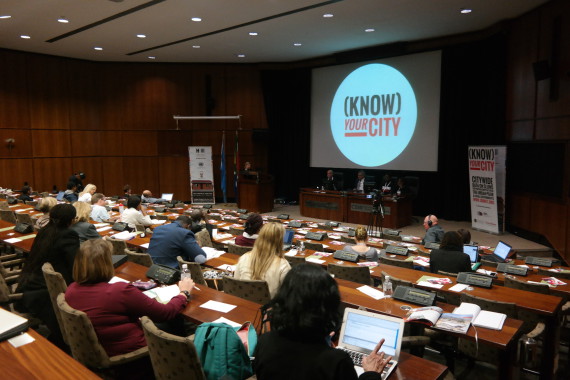
SAMSUNG CSC

Know Your City Side Event

How Can we Implement Progressive Outcomes? 

The two day thematic meeting ended with the adoption of the Pretoria Declaration on Informal Settlements, which is considered as official input on informal settlements to the New Urban Agenda. UN Habitat also launched its “Up for Slum Dwellers – Transforming a Billion Lives’ campaign, hosted by UN Habitat’s Participatory Slum Upgrading Program (PSUP) and the World Urban Campaign with the aim to bring about a new paradigm regarding global responses to slum upgrading.

In its current version, the Pretoria Declaration presents progressive and people-centred recommendations that relate to embracing the importance of in-situ participatory slum upgrading approaches, pursuing a focus on people-centred partnerships as suggested by “People-Public-Private Partnerships”, using participatory and inclusive approaches to developing policy, strengthening the role of local government and recognising civil society as a key actor in participatory processes. The Declaration also emphasises that the NUA should be action-oriented and implementable.

Although the declaration indicates that action should be concentrated at the local government level and that UN Habitat support to states occurs through tools such as the PSUP (See Point 9 in the Declaration), “the how” remains a strong concern for members of the South African SDI Alliance, and SDI network. While the SDI network and “Know Your City” approach was characterised by a strong presence and the message of “plan with us, not for us” was well received the mechanisms for implementation remain unclear:

“We have this beautiful constitution, but how will South African municipalities act? Politicians and officials talk very nicely – I hope that they will open doors for us when we engage them. Since I joined ISN in 2009 we are battling to sign Memoranda of Understanding (MoUs) with municipalities for upgrading. We only have the MoU with the City of Cape Town and eight provincial agreements with national government, but those are for the People’s Housing Process and not for upgrading. Do we know what is really happening on the ground or are we just becoming advocates of theory?” (Mzwanele Zulu, SA SDI Alliance)

“The highlight for me was making sure that our voices and messages were heard. Part of my concern was when I looked at the expenses of this event. There are a lot of people who don’t have and here is our government spending so much money on this event. But when you go and ask them to assist poor people you don’t get that response” (Melanie Manuel, SA SDI Alliance)

Watch Rose Molokoane’s input to the NUA on behalf of SDI here.

The Pretoria Declaration on Informal Settlements: Perspectives from the urban poor

By News, SDI No Comments

On 8 April 2016, SDI leader Rose Molokoane delivered an address on the New Urban Agenda at the final plenary session of the UN Habitat III Thematic Meeting on Informal Settlements in Pretoria. The thematic meeting took place in preparation for the upcoming UN Habitat III Conference on Housing and Sustainable Development, to be held in Quito, Ecuador in October 2016.

The plenary session in which Rose spoke was entitled: “Together transforming a billion lives: Participatory approaches in planning, implementing, and monitoring informal settlement/slum upgrading.”

Watch the speech here:

[vimeo]https://vimeo.com/163418761[/vimeo]

As a founding leader of the Shack Dwellers International (SDI), a network of slum dweller federations spanning 38 countries, I understand the critical need for increased focus on informal settlements in the urban agenda as this is where close to a billion of our brothers and sisters live. We’re not the subjects of this discussion. We are part of this discussion.

As chair of the Grassroots Constituency Group of the General Assembly of Partners, representing slum dwellers, informal workers, organised youth and marginalised women in our cities, I am very pleased to take part in this Thematic Meeting on Informal Settlements towards Habitat III and the New Urban Agenda. This is OUR agenda. I only wish this whole venue was full of slum dwellers.

We call for specific mention in the New Urban Agenda of the urgent need to combat the spatial, social and economic exclusion of informal settlements and the informal sector in cities and to mobilise the requisite resources to address this.

This will require a New Urban Agenda that commits itself to support the process of organizing communities to partner effectively with governments and other urban actors. We must find ways of institutionalising these partnerships in the decision making and planning process. Do you Know Your City? This should be the question we ask our communities, our politicians and our technocrats.

We urge partners to recognise the role informal settlement dwellers must play in the implementation of scalable efforts to build urban resilience and promote climate change mitigation and adaptation at the local level.

Effective implementation of the New Urban Agenda demands robust partnerships between local governments and organised communities of the urban poor. These must be at the core of policy making and development planning and implementation in cities and stress the need to strengthen existing cooperation mechanisms, platforms, and partnership arrangements.

Community-collected slum data should form the basis of collaborative informal settlement policy making and development planning, and is a critical tool to implement, monitor and evaluate the SDGs in cities across the globe. When organised informal settlement dwellers gather these data, they become active and organised citizens with the capacity to engage in action-oriented partnerships.

We are going to change this world by hook or by crook.

In solidarity,

Rose Molokoane, SDI
Chair
Grassroots Constituency Group
General Assembly of Partners


Know Your City: Why we need community collected data on informal settlements

By Community-led Data Collection, CORC, FEDUP, ISN One Comment

By Charlton Ziervogel (on behalf of CORC)

Urbanization and the growth of informal settlements

Urbanization in South Africa has not followed the usual patterns as witnessed in many other developing countries from the 1980’s through to present day. This was in large part due to government interventions in the process up to the 1990’s, which saw to a very controlled restriction of movement of people from rural to urban centres (Turok, 2012) that effectively slowed the process. With the fall of the Apartheid government and the abolishment of the laws of controlled movement into urban areas the post 1994 period in South Africa saw massive increases in urbanization. Looking at the period 1980, in which 42,5% of the population lived in urban areas (Giraut & Vacchiani-Marcuzzo, 2005), in which 60% of the population lived in urban areas (United Nations, 2011), we witness a jump in the urban population of 17,5%.

It is no coincidence that during the period 1994 to 2011 informal settlements in South Africa increased in number from approximately 300 [1] to around 2700 in 2011 (SACN, 2011) due to the inability of government to keep up with housing demand. This growth in informality has been focused in urban areas with Western Cape municipalities experiencing influx due to a number of factors, including better employment opportunities, access to services and perceived increases in quality of life. This growth has resulted in shacks in backyards and shacks not in backyards accommodating almost 20% of all households in the province (HDA Western Cape, 2013).

Khayelitsha

What we lack in current data on informal settlements

Engaging with the Western Cape Province, and the City of Cape Town in particular, the scale of informality as described by 2011 census statistics is thus apparent (almost 1 in every 5 households live in informal structures). Yet, this information is already 4 years old and the continued rapid influx of people and changing spatial configurations and distribution of informal settlements over relatively short periods of time, places the province and the City of Cape Town in the very vulnerable position of trying to address problems of informality with information that is no longer reliable and in need of updating.

To effectively implement any successful upgrading plan or strategy as posited in National Upgrade Support Programme (NUSP) and the Upgrading of Informal Settlements Programme (UISP), municipalities need far more nuanced information to inform upgrading strategies. Census data is not aggregated at settlement level (HDA RSA, 2013) further compounding the ability to take into account settlement specific needs and context. The National Development Plan (NDP) also emphasizes the general lack of adequate information about the nature and conditions of each of the informal settlements, further hampering the strategic use of resources or the development of settlement specific solutions (NDP, 2012).

The value of community data and how it is collected

It is within this data deficiency, that community led housing enumeration and GIS mapping projects need to be positioned to better equip municipalities and provinces with updated information on informal settlements, placing actors in municipalities and provinces in a position to adequately plan for future upgrading developments in these settlements.

Amongst the methodologies employed for information gathering is the tool of informal settlement enumerations and the detailed mapping of settlements using GIS technology.

Shack numbering in Nyanga

Shack numbering in Nyanga

Mapping shack numbers in Nyanga

These tools derive their origins from the Shack/Slum Dwellers International (SDI) network, where for more than 30 years the SDI network recognized the importance of accurate and reliable data on informal settlements to help urban poor communities engage their local authorities in building effective partnerships towards a city-wide approach to in-situ informal settlement upgrading strategies (Arputham, 2012). The key difference in the SDI approach is that critical focus is placed on a community driven process, which allows for greater scale of activities and interventions as well as higher success rates in terms of the implementation of upgrading projects.

Profiling in UT Gardens, Khayelitsha

Profiling in UT Gardens, Khayelitsha

Within the context of informal settlement enumerations and mapping, this participatory approach is even more valuable as it has proven time and time again in various developing countries that when a mobilized community understands the importance of accurate data and maps and participates in the collection of this data around their own settlement, far higher degrees of accuracy are achieved than any census or survey that might utilize “outsiders” as the sole enumerators (Baptist & Bolnick, 2012, Livengood & Kunte, 2012).

Community Based Data Collection in Cape Town: Joe Slovo, Mtshini Wam, Kuku Town, and Flamingo Crescent

As urban poor people’s networks, FEDUP and ISN, together with CORC, have gathered experience in gearing communities towards self-enumeration and mapping.

Community members capture enumeration data

Community members capture enumeration data

For example, information available to the City of Cape Town had estimated the population of Joe Slovo along the N2 (N2 Gateway project) to be way larger than reality with the proposal of only a percentage of the residents being part of the housing project causing real concerns amongst the community. An enumeration conducted in 2009 spearheaded by the SA SDI Alliance was able to ascertain a more accurate population size based on a participatory approach, which paved the way for the possibility of the housing development moving ahead with all the current residents at the time included.

Other examples in Cape Town include the re-blocking of Mtshini Wam, Kuku Town and Flamingo Crescent informal settlements which all utilized the community driven enumeration and mapping approach to set up accurate beneficiary lists. These enumeration and GIS databases developed by CORC, ISN and FEDUP have been utilized by the City of Cape Town in the provision of electricity connections, contract work through the Expanded Public Works Program (EPWP) as well as assisting in detailed layout plans for the re-configuration of the settlements.

The necessity of working relationships with government

All this is only achievable through the establishment of practical working relationships and partnerships with government. In addressing the data deficiency described above this approach is not merely to gather information but to create the added benefit of a very practical community and local authority partnership.

Participatory data collection is an approach built upon the successes and lessons learnt in over 2 decades of informal settlement enumerations by the SA SDI Alliance. The Alliance’s experience in the implementation of 144 informal settlement enumerations in South Africa over the past 6 years, covering approximately 65,400 households has shown that the approach of deep community participation, even at the level of the data gathering exercise, leads to stronger community networks with the ability to assist local governments in prioritizing upgrading initiatives within a broader strategic framework. Furthermore, this deep participatory approach mobilizes communities towards determining their own development agendas.

Community generated data informs community planning

Community generated data informs community planning

References 

  • Arputham, 2012. How community-based enumerations started and developed in India, Environment and Urbanization 2012 24:27, Sage, IIED
  • Baptist, C and Bolnick, B. 2012. Participatory enumerations, in situ upgrading and mega events: The 2009 survey in Joe Slovo, Cape Town, Environment and Urbanization 2012 24:59, Sage, IIED
  • Giraut, F. and Vacchiani-Marcuzzo, C. 2009. Territories and Urbanisation in South Africa: Atlas and geo-historical information system. Institut de Recherche Pour le Developpement, Paris.
  • Housing Development Agency (HDA), Western Cape: Informal Settlements Status 2013. Research Report, HDA
  • Housing Development Agency (HDA), South Africa: Informal Settlements Status 2013. Research Report, HDA
  • Livengood, A and Kunte, K. 2012. Enabling participatory planning with GIS: a case study of settlement mapping in Cuttack, India, Environment and Urbanization 2012 24:77, Sage, IIED
  • SACN (South African Cities Network) 2011. 2011 State of SA Cities Report. SACN, Johannesburg.
  • South African Government Information. 2012. Our Future – make it work: National Development Plan 2030. 14 November 2012. http://www.gov.za/documents/national-development-plan-vision-2030
  • Turok 2012. Urbanisation and Development in South Africa: Economic Imperatives, Spatial Distortions and Strategic Responses. Urbanization and Emerging Population Issues Working Paper 8, International Institute for Environment and Development United Nations Population Fund
  • United Nations, Department of Economic and Social Affairs, Population Division. 2012. World
  • Urbanization Prospects: The 2011 Revision

[1] Presentation made by NUSP at the Policy Consultative Workshop held on 5 September 2014 at the Town House Hotel (Cape Town)

Urban Sector NGOs comment on Human Settlements Draft White Paper

By CORC, Press No Comments

By Community Organisation Resource Centre (CORC), Development Action Group (DAG), Habitat for Humanity South Africa, Isandla Institute, People’s Environmental Planning (PEP), Violence Prevention through Urban Upgrading (VPUU)

Screen Shot 2016-03-08 at 12.20.43 PM

The National Department of Human Settlements is currently in the process of developing a new White Paper on Human Settlements. This process offers a unique opportunity to address the shortcomings of existing policy and to influence the future of human settlement development in South Africa.

We – a collective of six urban sector NGOs – have a vested interest in the outcomes of this process. We are thus committed to engaging critically with the discussion document developed by the National Department of Human Settlements, and to advocating for the adoption of a more progressive version that recognises the role of communities, and informal settlement upgrading in human settlements development.

On 4 February 2016, we shared an initial commentary on the discussion document at an engagement hosted by the Western Cape Department of Human Settlements. It summarises our collective position and is intended to serve as the foundation for a more in-depth submission:

Commentary on the discussion document ‘Towards a policy foundation for the development of human settlements legislation’

1. The document ‘Towards a policy foundation for the development of human settlements legislation’ seeks to provide a comprehensive approach to the complexities of human settlement development and planning, based on a detailed analysis of the achievements and limitations of current HS programmes.

Positive features of the document are, amongst others, the acknowledgement that by and large, communities and civil society organisations haven’t been meaningfully involved in processes of human settlement development to date. This admission brings attention to the need for well-designed participatory processes and partnership approaches. The explicit reference made to spatial planning, and its roles in the creation of sustainable and integrated human settlements, is also appreciated. The recognition of the importance of monitoring and evaluation as a strategy for tracking government’s progression towards the realisation of its goals is also considered to be a positive step towards a more grounded and accountable practice.

SAMSUNG CSC

2. However, in our considered view, the proposed solutions to address the shortcomings identified are not dynamic enough and are insufficiently rooted in local practice around human settlement development. The document also does not reflect the depth of inequality or the seriousness of the current fiscal realities, and what these factors are likely to mean for the human settlement sector. Instead of the ‘business as usual’ approach, we expect the new policy to reflect more deeply what a ‘business unusual’ scenario means for human settlements policy and practice.

3. Our main concern is with the state-centric orientation of the document and the centralising tendencies that the document reflects (implicitly and explicitly). While we appreciate that a public policy document will be inherently biased towards the roles and responsibilities of the state, other stakeholders (including local communities, NGOs and the private sector) are an integral part of human settlement development processes. The document fails to adequately reflect what a partnership approach entails for human settlements policy and practice.

Even in its state-centric orientation, the document reflects a predisposition towards national government (and particularly the department of human settlements) as the critical actor in transforming human settlement realities. National government undoubtedly has an important role to play in determining human settlement outcomes, providing policy guidance, developing coherent programmes, providing effective fiscal instruments, addressing institutional blockages, and monitoring progress, amongst others. However, it is primarily at the local sphere where the complexities of human settlement development need to be navigated.

4. We believe that the primary objective of a policy on human settlements needs to be local enablement – enabling local actors (municipalities, communities, civil society organisations, private sector, etc.) to choose the institutional arrangements and programmatic responses that best suit local conditions, and enabling other spheres of government to offer the necessary oversight and support in this regard. Municipalities are not merely implementation agents of national human settlements programmes; they need to assemble the requisite partnerships and processes to effectively manage the challenges, trade-offs and contestation inherent to human settlement development, and to do this in an accountable and transparent manner.

Co-planning and preparing for informal settlement upgrading plans

Co-planning and preparing for informal settlement upgrading plans

5. The role of communities in determining the development agenda, implementing development strategies, and monitoring development interventions must be reflected in the policy vision and intent. The document is disproportionately concerned with the ‘culture of entitlement’, implying that (poor) citizens lack a sense of responsibility about their own development. This individualised notion of citizens as ‘responsible consumers/end-users of public services is problematic, particularly as it is not complemented with a recognition of the agency of civic actors and local communities in human settlements processes (including planning, implementation, maintenance, co-financing and self-help options, and monitoring and evaluation).

Instead, the new policy should work towards enabling communities to participate as active citizens, and to co-create – in partnership with government and other stakeholders – sustainable, integrated and resilient human settlements.

6. As organisations with a particular interest in informal settlement upgrading, we are especially concerned with the weak articulation of informal settlement upgrading as a core human settlements strategy. The suggestion that only those settlements located close to job opportunities will be considered  for upgrading is both exclusionary and short sighted. Economic opportunities are not static and over time may show movement across a city or town. Moreover, instead of focusing exclusively on job opportunities it would be more helpful to develop proactive approaches in support of local livelihood strategies.

Informal Settlement Upgrading

Informal Settlement Upgrading

7. Signatories to this commentary will make a collective effort to develop a more robust submission that deals with the following issues:

  • Deeper understanding of the role of communities and institutional arrangements required to support meaningful community participation and co-creation approaches to human settlement planning and development
  • Financing mechanisms, such as community savings schemes, and self-build approaches that enable communities to participate in the housing market
  • Strategies for releasing and managing well-located public land for human settlements development
  • Partnership modalities for human settlement development, including the roles and responsibilities of government and other stakeholders
  • Outcome-driven monitoring and evaluation strategies that shift emphasis from compliance to the achievement of progressive goals

8. In the meantime, we call on the national department of human settlements to publicise what its ‘extensive consultative process’ (as noted in the preamble) entails, to commit to further and deeper engagement with all relevant stakeholders (including civil society organisations and community groups) in the finalisation of policy and legislation on human settlements, and to be transparent and accountable in how it deals with comments received during the course of the policy development process.