Tag

Government - Community Partnerships Archives - Page 3 of 6 - SASDI Alliance

Community Voices: “In Tambo Square, residents did not give up”

By CORC, FEDUP, ISN, News No Comments

By Tambo Square community members (on behalf of ISN)

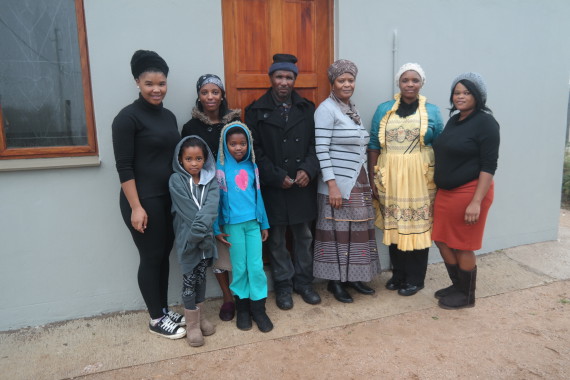
This blog was written by the community of Tambo Square in Mfuleni, Cape Town, namely: Babalwa Sabe, Nomaphelo Voyi, Nosikolise Swaphi,Asanda Kumbaca,Nokubonga Stefans,Lindiswa Lufefe,Ntandazo Mtshonono, Yoliswa Tsono,Tabisa Matiwane,Stutu Yamani,Nolusindiso Zakaza,Nomaphelo Zakaza,Ayanda Langa,Vangeliswa Sobamba,Phindile Faro and Nkosikhona Bangiso.

This is the third blog in the Alliance’s Community Voices series. Community Voices  shares community-narrated experiences that highlight the value of a people-led approach that is underpinned by an organised community structure. For the Alliance, a people-centred approach is crucial for building collaborative partnerships between local governments, informal settlement dwellers and other stakeholders. Through a series of workshops of collaborative documentation and story-telling, FEDUP and ISN members, with the support of CORC’s documentation team, produce community-generated documentation, as part of elevating the voice of the urban poor.

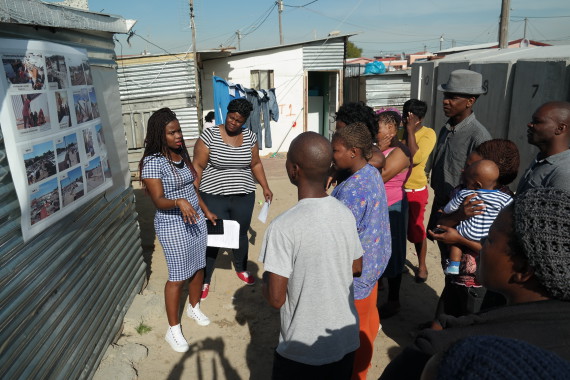
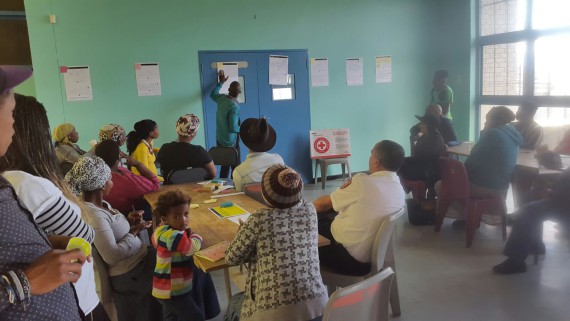
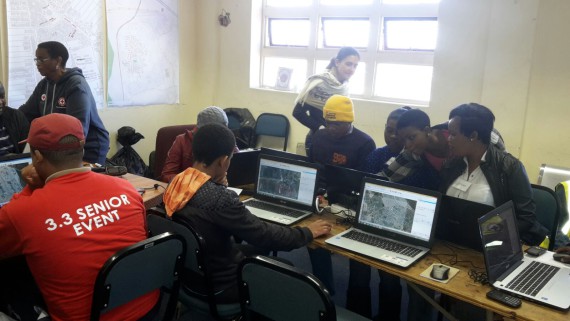
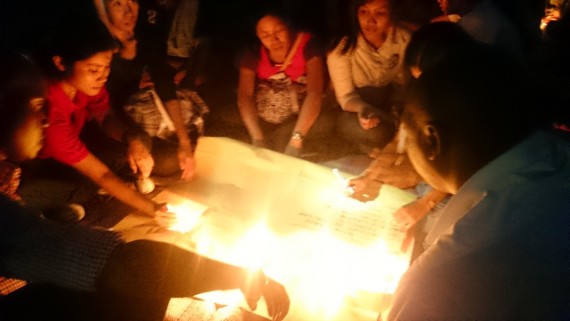
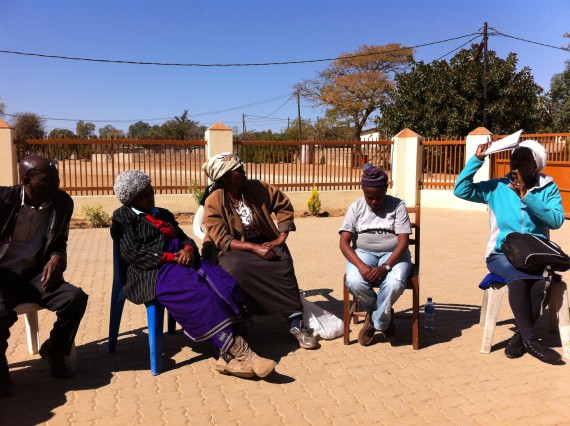
Documentation workshop at Tambo Square

Documentation workshop at Tambo Square

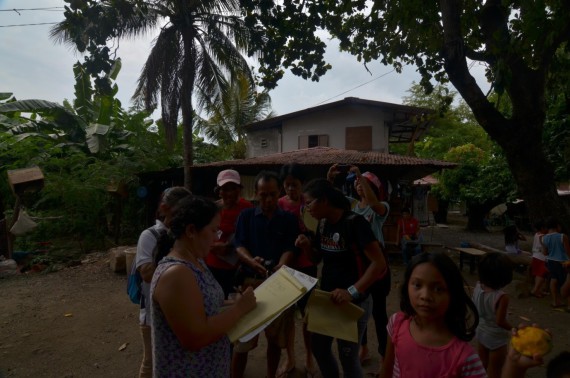
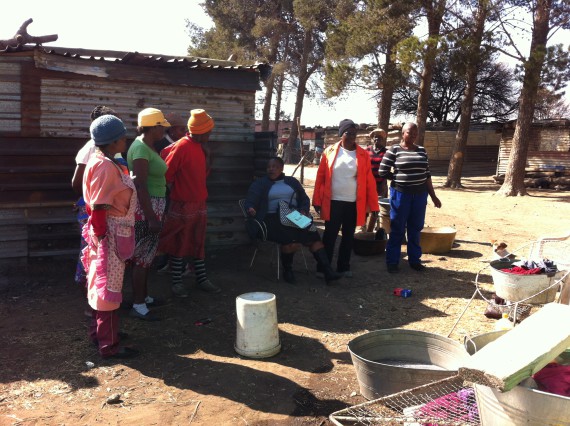
Community Documenting at Tambo Square

Community Documenting at Tambo Square

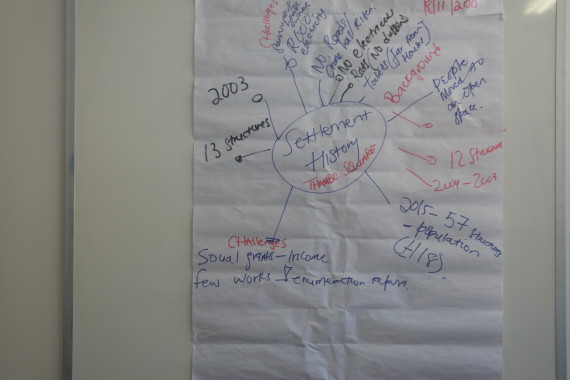
History of settlement

Tambo Square is situated in Tokwana Street and lies adjacent to the Sandra Child Centre in Extension 6 of Mfuleni. The 1846m² land size holds 60 households with a population of 119 people.

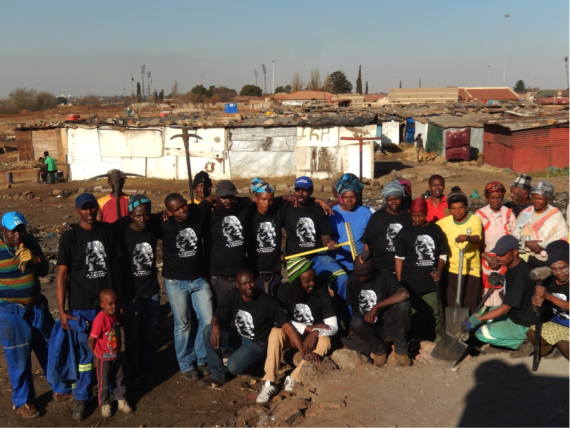
As residents of Tambo Square, we had different reasons for moving to the open space which is now called Tambo Square. Some of us were backyarders. When we saw an open space and decided to occupy it, some moved out from our surrounding family and saw a vacant land and occupied it. Others couldn’t afford renting anymore. When we saw people occupying the space, we then decided to join. In 2008 the City’s anti -land invasion unit demolished our structures, But residents didn’t give up and we decided to build our structures again.

“During winter season, this area gets flooded and our furniture gets ruined but the major issue is watching our children suffer because we can’t afford better homes for them.”

Nomaphelo Voyi, Community Leader of Tambo Square

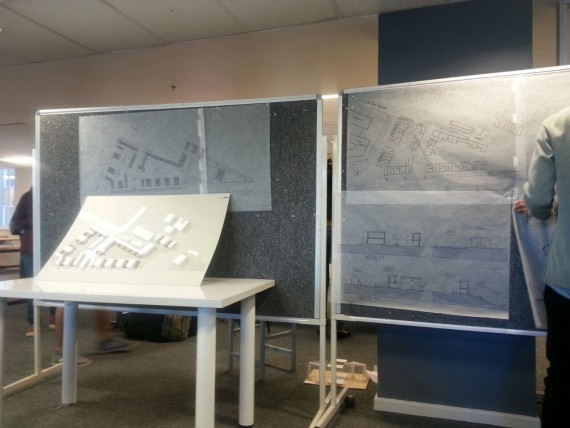
Community of Tambo square doing house designs with technical team

Community Leaders Nomaphelo Voyi and Nkosikhona Bangiso plan the layout of their settlement with support form CORC technical team

Challenges

  • Electricity

Our biggest challenge is not having electricity. We need to find money every month to be able to connect illegally from the surrounding formal houses.  We spend almost R500 just to get our tap connected.

  • Toilets

The toilets are far for some of the residents and we have to walk quite a distance to access it. During night time or winter season we fear using them because the crime rate in Mfuleni is quite high.

  • Dustbins

We feel that our settlement would be much neater if we had dust bins to throw our unwanted materials.  Since we don’t have bins we now have rats due to people throwing dirt wherever they see a space. This is a health hazard for us.

  • Proper roads

Our settlement is dense, this makes it harder for emergency vehicles to come and help during time of need. If we can catch fire all our shacks would burn in the blaze. Another problem is because of the density of the area, criminals find it easy to do robberies here because one will not know where they went.

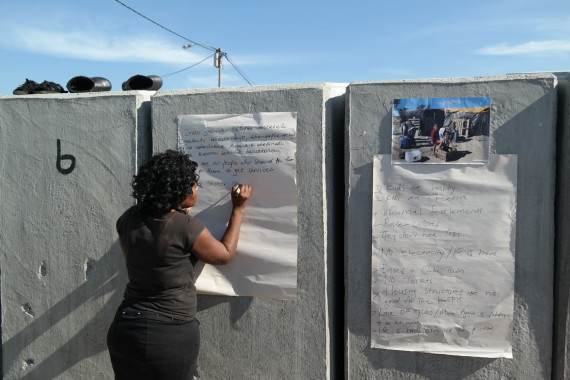
Tambo Square Writing and Story-Telling Workshop

Tambo Square Writing and Story-Telling Workshop

documentation workshop in Tambo Square

Documentation workshop in Tambo Square

How we met ISN

In October 2014, we decided to seek help in trying to better our living conditions since we didn’t have any basic services. This is when we met the Informal Settlement Network (ISN). The community approached Western Cape ISN Coordinator, Nkokheli Ncambele, who introduced the community to the SA SDI Alliance. ISN introduced us to the Alliance tools which meant we had to do community-led profiling and enumerations with the support of the CORC technical team. A group of us went on an exchange to Flamingo Crescent  to learn about informal settlement upgrading & reblocking. By June 2015 our community leaders had already partnered with ISN, the SA SDI Alliance and the City of Cape Town for 10 toilets and 5 water stands.This was a victory for us. At first the City said that Tambo Square is too dense for services. ISN suggested that we move a large container that was standing in front of our settlement to make space for services. When we presented this to the City their response changed and they agreed (read blog on water and sanitation here).

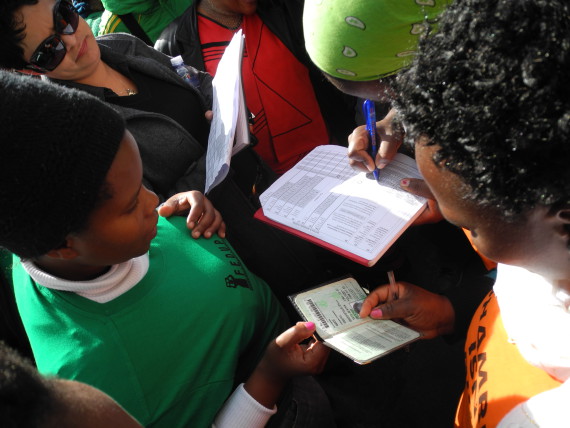
Documentation Workshop

Documentation Workshop

Through its partnership with ISN and the City of Cape Town, Tambo Square is set for upgrading and reblocking in February 2016, which will enable 1:1 service installation. The upgrading of Tambo Square is activating a more nuanced and community-led approach. The partnership between Tambo Square, the Alliance and the City draws on organised community (leadership) structures. These activate community- based savings, data collection and joint partnership meetings with City officials and the Alliance throughout project preparation and implementation.

*Blog compiled by Andiswa Meke and Yolande Hendler (on behalf of CORC)

An approach to community-led upgrading: TT Community Hall in Khayelitsha

By CORC, FEDUP, ISN No Comments

By Andiswa Meke (on behalf of CORC)

For years the government has been testing different solutions with regard to bringing basic services to poor people and engaging with rapid urbanisation in South African cities. At times, these approaches are characterised by technically driven solutions that do not consider social use of infrastructure by community members. At others, there is a lack of service delivery altogether due to an often expressed perception by local government that is impossible to  install services in dense and haphazardly structured informal settlements.

In response informal settlements affiliated to the Informal Settlement Network (ISN) organise themselves and explore innovative options that present alternative, community-led practice to local government and better their living conditions. TT is one of the oldest informal settlements in Khayelitsha, Cape Town. Yet they still have no basic services.

 Community Profiling and Enumerations.

Community Profiling and Enumerations.

The blog looks at the upgrading of TT community hall as an example of what communities are doing for themselves when supported with the tools to organise themselves and identify their own development priorities. Communities like TT have realised that they are the help they need to foster change and therefore need to be the ones gearing up their own upgrading processes.

Background of TT informal settlement

TT dates back to the late 80`s. According to a 2010 enumeration report by the Community Organisation Resource Centre (CORC), the settlement had a population of 995 people in 339 households. The City of Cape Town installed Toilets and taps, this is how the settlement have access to water and sanitation. TT section is located in Site B in Khayelitsha, it lies opposite Mangaliso Primary school, with 79% of the settlement depending on social grants as a form of income.

Initially the structure that is now a hall belonged to a particular lady. She then donated her shack to the community to use as a hall where they could hold meetings and church services. However, over the years the structure lost its value as the material it was built in became old and flooded during winter because it was not developed properly.

In the beginning of 2015 the community of TT approached ISN to assist them with upgrading their hall because it was old and the material allowed for bad conditions especially during the winter season.

Alliance Processes

In 2009, ISN first visited the settlement on a mobilisation trip. After intense engagements, the community was convinced of ISN’s approach and willing to engage with the tools of the SA SDI Alliance. It was after that, the community elected 15 members to enumerate the settlement. TT profiled the settlement with the technical support from CORC who also assisted the community with house modelling, planning and design. The community then identified their needs as a community which included partial reblocking and a community hall; but they wanted the hall to take first priority. There were two profiling and enumerations done, one was done 2009 and a new one is being done currently.

IMG-20150318-00016

Community doing planning

TT community planning with old structure

TT community planning with old structure

October 2015 marked the start of upgrading the hall  which  is expected to be completed within December. The steering committee is heading up the project with support from ISN and CORC.

Features of the upgraded hall

  • The main feature on the hall is that the material used is non -combustible which decreases the chances of the hall catching fire. The hall has been approved by the City of Cape Town fire department.
  • Another is that the hall has a front and a back exit which could be accessed by all the members depending which side is closest for them.
  • The floor is cemented and well paved which will prevent the flooding during winter season.
TT hall

TT  Community Hall during  upgrading process

Challenges & Learning Points

  • The challenge the community is experiencing is communication barriers with the suppliers of material and this has caused some delays.
  • The value of ISN support on the ground.
  • The value of regular site visits by all invovled actors during the projects to inspect the progress and address challenges that may arise during each stage of upgrading.
  • The community has learnt how to engage with different stakeholders regarding their needs and the importance of unity, communication and cooperation when a settlement wants to change their living conditions.

SA SDI Alliance and Red Cross Society explore Fire Prevention Tools

By CORC, FEDUP No Comments

By Thandeka Tshabalala (on behalf of CORC).

September-April  marks  the Western Cape Fire season.  The eight months period has the highest record  of fire disasters due to a number of reasons but mainly negligence and lack of fire prevention  education. Throughout these times, informal settlement dwellers sit in panic and uncertainty of when a devastating fire may strike their settlement costing them their  belongings and in worst cases their lives. Urban fires are  amongst the highest disaster occurrences in informal settlements,and need to be addressed.

When  fires break out in informal settlement they spread fast and the community takes longer to be alerted . Evacuations are often dangerous and depending on  the density in these settlements  emergency responders often are unable to access homes in time. In July 2015  the South African SDI Alliance,  South African Red Cross Society (SACRS) and American Red Cross Society formed partnership with Lumkani to roll out early detection fire sensor devices targeting 1000 households in 4 informal settlements (UT, TT, TB section and WB) located in site B, Khayelitsha. The purpose of the project is to reduce fire risks by increasing community resilience against shack fires.  The introduction of early warning devices in  communities contributes to alerting  communities early  to avoid fire from spreading .  Another  benefit of the project is  formulating of fire response plans and capacitation of disaster response teams within the community.

IMG-20151026-WA0004

A baseline study and GIS mapping exercise formed part of the first crucial steps of information gathering of the project. 30 community volunteers were trained in conducting community surveys and GIS mapping. The community surveys aimed at gathering first hand information on previous instances of fires.  With questions ranging from fuel used for cooking, heating,lighting to how the community responded to fires. This included identifying nearest fire hydrants and emergency exists in the informal settlement. Key informants and focus group interviews gave an in-depth understanding of the existing fire response mechanisms taken by community leaders and disaster relief organizations.

The GIS map marking access points in the settlements and hierarchy of routes classifies movement within the settlements starting  from vehicle access to footpaths forms part of the analysis. Once the community has verified the map it will then be used  as a tool to better understand the community access points that could be of use during emergencies. After analysis and feedback from community members the baseline study will be used to inform future plans for fire response and mitigation.

IMG-20151026-WA0007 (1)

Imbizos (i.e. community gatherings) were platforms used by  communities to participate and give feedback on the project. Councilors of ward 90 and 91 Luvuyo Hebe and Monde Mabandla together with emergency respondents such as the police and fire departments came in high numbers to support this initiative.During the launch of the project on the 26th August 2015 Detective Mandlana  showed appreciation  to the  South African Red cross and Informal Settlement Network (ISN) for the project  and urged the community to use the Lumkani devices.

 “Safety starts by individuals taking precautions all the time”.

Detective Mandlana from the Police department.

To strengthen the existing disaster response  mechanisms in the community, 40 community members were trained in first aid (I, II &III) and fire fighting. The community response team is equipped to assess possible disasters and also be prepared to respond to any disaster occurring in their community.The community response teams have a lifetime commitment to the community because they can help improve the safety of their communities.

“ In the middle of a disaster, these are the people who will be able to say they are here to help, give critical support and assist victims before the arrival of emergency services.”

IMG-20151026-WA0005

This project forms part of a long-term objective  which includes decreasing urban fires and strengthening the impact of the Lumkani early warning device. The device acts as an early warning system in the community, decreasing the time taken by the community to be alerted in cases of fires, with addition of the response team the community is well positioned to deal with shack fires while waiting for emergency services. This intervention was informed by the profiling and enumeration data captured by the communities to understand the community priority needs.  The long term upgrading strategy would be the addition of planned preventative measures such as opening up streets and open spaces for emergency evacuations and access of emergency services.

From Joburg to Manila City: A Photo Story of Community Architects

By CORC, FEDUP, ISN, SDI No Comments

By Jhono Bennett (on behalf of SA SDI Alliance)

This story covers the 2015 exchange trip between South African delegates from the SDI Network and the CAN Network in the Philippines.

Figure 1: Manila City

Figure 1: Manila City


THE EXCHANGE

In 2015, a small delegation from the South African Shack Dwellers International Alliance (SA SDI) attended the  3rd Regional Community Architecture (CAN) Meeting & Workshop. The aim was for the South African delegates to gain first hand experience and learn from the work that CAN practices.

This delegation consisted of 3 professionals and three community members from  SA SDI and were chosen by the alliance for strategic leadership and capacity development to bring back home:

Jhono Bennett 1to1 – Agency of Engagement
Motebang Daniel Matsela CORC
Thembelihle Ngcuka CORC
Phaello Philder Mmole FEDUP
Ofentse Phefu FEDUP
Emmanuel Malinga FEDUP/ISN

As a team, we were expected to try and understand how the CAN works, its practices and tools as well as its members . All this was to be performed  during the series of workshops,meetings and dialogues that the we were exposed to.  We also learned from similar practitioners and community groups who are working on similar problems around the development of disadvantaged communities, such as in South Africa. Ideally we would learn valuable lessons from  CAN in regard to practices of community design and bring these home.

Workshop Background:

The 3rd Regional CAN Meeting & Workshop was held in Manila, Philippines this year between June 16 – June 23 and conducted with the theme:

Together we CAN! People planning for future inclusive cities

Figure 3: CAN workshop Day 1

Figure 3: CAN workshop Day 1


The workshop aimed to:

  • Bring together local and international participants working in different countries in Asia and beyond to exchange and share experiences through community workshops.
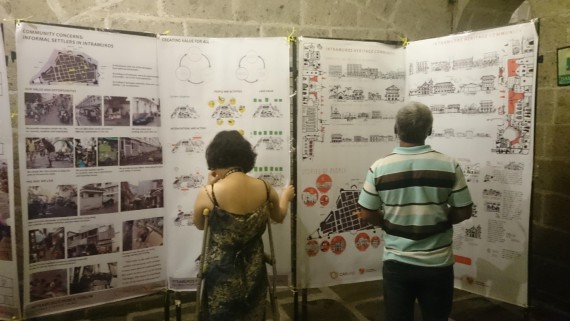
  • Provide concrete technical support to actual community initiatives through fieldwork in people centred heritage planning in Intramuros, Manila and city-wide development approach (CDA) in Muntinlupa City.
  • Link with local universities
  • Plan new collaborative future activities with multiple stakeholders to ensure long term change,ultimately the workshop aimed to support the larger mission of the CAN Network which is to:

“..Create a platform to link architects, engineers, planners, universities and community artisans in Asia, who work with communities and believe that poor communities should play a central role in planning their communities, and in finding solutions to build better settlements and more inclusive cities.”

Figure 4: CAN Network diagram

Figure 4: CAN Network diagram

The Workshop:

The delegation arrived on the 15th, and was welcomed by the well organised and energetic CAN management team.

Figure 6: Bangladesh CAN delegates presenting.

Figure 6: Bangladesh CAN delegates presenting.

After an initial series of presentations on CAN and  various organisations that make up the network, individual organisations of the workshop were invited to present themselves and their work.

Figure 6: Intramuros site visit.

Figure 6: Intramuros site visit.


Figure 7: Intramuros site visit workshop.

Figure 7: Intramuros site visit workshop.


Figure 8: Site visit to Banana City, Intramuros.

Figure 8: Site visit to Banana City, Intramuros.


From here the next 2 days were spent taking the conference on site visits of where the workshop delegates would be working in Allabang and Intramuros.

Figure 9: Allabang site visit

Figure 9: Allabang site visit


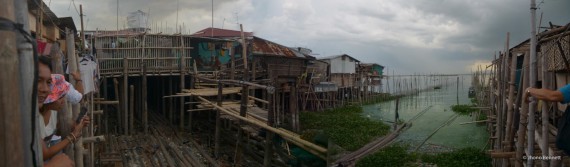
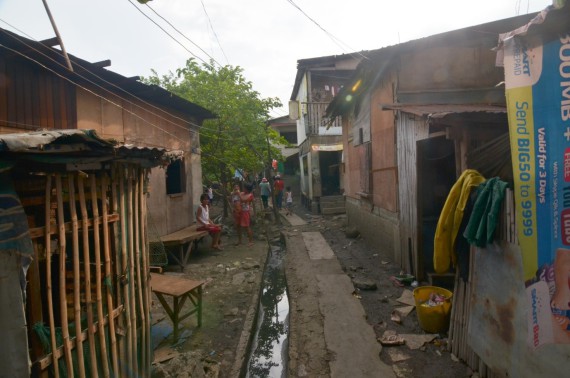
Figure 10: Allabang site visit-Fisherman houses.

Figure 10: Allabang site visit-Fisherman houses.


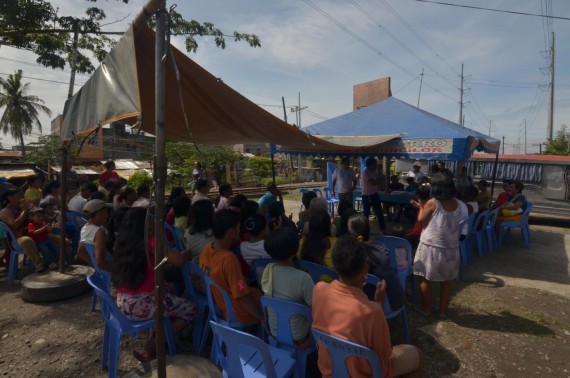
Figure 11: Allabang sitevisit-Savings group welcome

Figure 11: Allabang site visit-Savings group welcome


Figure 12: Allabang site visit-savings group welcome.

Figure 12: Allabang site visit-savings group welcome.


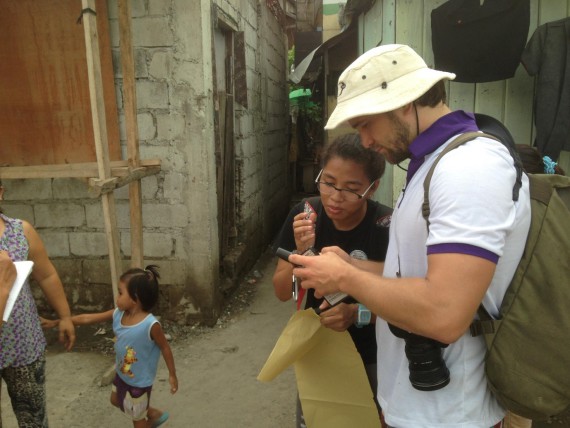
The participants were then broken into smaller groups of practitioners and community members and sent to stay in separate neighborhoods (or Barangays) where each group would focus on a specific set of issues faced by the various community groups supported by the local CAN organisation, Tampei.

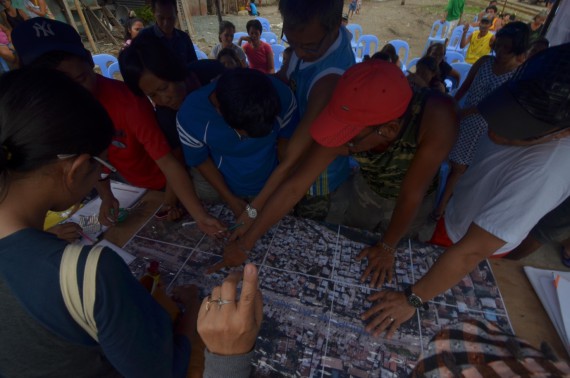
Figure 13: Group focus work in Allabang -Enumeration and Mapping.

Figure 13: Group focus work in Allabang -Enumeration and Mapping.


Figure 14: Group focus work in Allabang- Enumerations and Mapping.

Figure 14: Group focus work in Allabang- Enumerations and Mapping.


Figure 15: Delegates learning CAN practices.

Figure 15: Delegates learning CAN practices.


Figure 16: Group based work in Allabang- Confirming Mapping.

Figure 16: Group based work in Allabang- Confirming Mapping.


Each group spent the week intensively working on enumeration, mapping, and design with and for local groups aiming to initiate development energy supporting community initiatives.

Figure 16: GPS mapping in dense settlements of Allabang.

Figure 16: GPS mapping in dense settlements of Allabang.


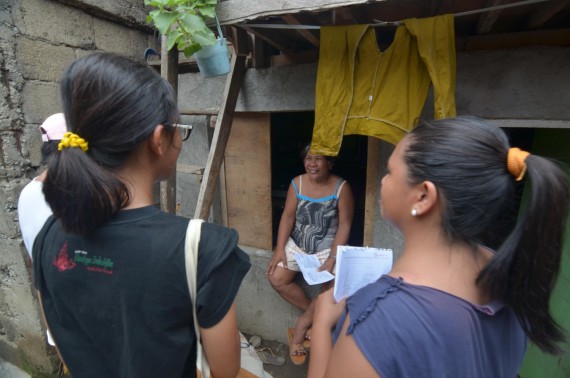
Figure 18: : Group Focus Work in Allabang - Story collection from residents

Figure 18: : Group Focus Work in Allabang – Story collection from residents


Figure 19: : Group Focus Work in Allabang - Community Mapping with residents

Figure 19: : Group Focus Work in Allabang – Community Mapping with residents


Figure 20: Allabang in context.

Figure 20: Allabang in context.


Figure 21: Group Focus Work in Allabang - Enumeration & Mapping with residents.

Figure 21: Group Focus Work in Allabang – Enumeration & Mapping with residents.


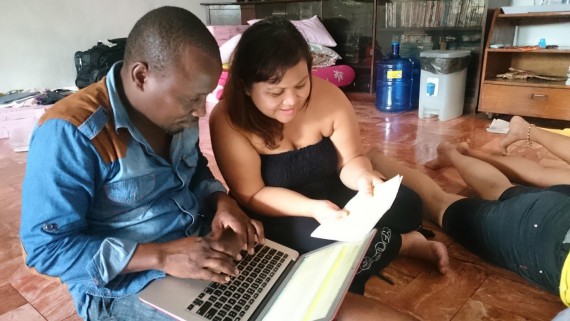
Figure 22: Group Focus Work in Allabang - Consolidating Mapping work for presentation

Figure 22: Group Focus Work in Allabang – Consolidating Mapping work for presentation


Figure 23:: Sharing valuable skills from participants.

Figure 23:: Sharing valuable skills from participants.


This was done while strategically developing a body of work that would be shown to local government stakeholders at a final seminar in both Allabang and Intramuros.

Consolidated Group work for strategic presentation with government stakeholders.


24b

24c

24d

Figure 25: Allabang - Strategic presentation with invited stakeholders

Figure 25: Allabang – Strategic presentation with invited stakeholders


Figure 26: : South African delegate presenting work on behalf of focus group

Figure 26: : South African delegate presenting work on behalf of focus group


Figure 27: Intramuros - Strategic Presentation

Figure 27: Intramuros – Strategic Presentation


The workshop culminated in a social event on the 24th, celebrating the workshop’s success.

Key Observations:

The workshop was highly successful in bringing together community architects from across the world to share experience and knowledge through the mixture of workshop tasks, social events and working activities.

Figure 28: CAN Practice: intensive workshops

Figure 28: CAN Practice: intensive workshops

The strategic use of these professionals to hyper-activate local community processes was exemplary and not have the visited communities as passive beneficiaries, while using the work developed in the short time to engage local governance bodies to support local community processes was a highly impactful strategy employed by the workshop organisers.

Figure 29: CAN Practice Capacitation through training

Figure 29: CAN Practice Capacitation through training

In particular it was impressive to see how ingrained the practices were conducted by both local community support and technical support. There seems to be something in the way the Philippines alliance work that goes beyond technical support and enters into new cultural and social dimensions of such work.

Figure 30: : CAN Practice - Strategic grass roots work

Figure 30: : CAN Practice – Strategic grass roots work

Personally, it was amazing to be in the presence of so many like-minded professionals who shared the values of community driven processes and were skilled in facilitative design processes.

Figure 31: CAN Practice in action

Figure 31: CAN Practice in action

This experience further cemented my personal motivation in developing critical co-productive design skills for me and other South African socio-technical spatial designers through community driven development projects.

Growing Partnerships with Local Government: Bulawayo visits Cape Town Learning Centre

By CORC, FEDUP, ISN, SDI No Comments

By Andiswa Meke (on behalf of CORC)

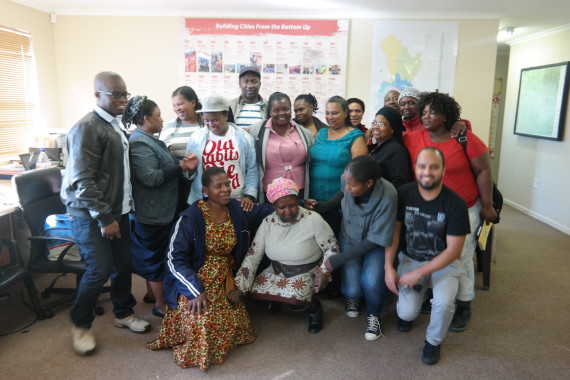
Recently, the Zimbabwe SDI Alliance spent four days on a learning exchange to the South African SDI Alliance in Cape Town (14-17 September). In the SDI network, Cape Town is one of four global learning centres for urban poor communities due to the capacity of FEDUP and ISN to operate at city scale and demonstrate productive partnerships with government. The team from Bulawayo included community, city and university representatives (from the National University of Science & Technology (NUST)) who are exploring the possibility of building a partnership between the Zimbabwean urban poor Federation and the City of Bulawayo. The Alliance introduced the group to a variety of its activities, foregrounding the value and approach of partnerships that place poor people at the centre of their own development.
SAMSUNG CSC

Introduction to policy Questions

After a warm welcoming of the group by FEDUP members on the first day, the first presentation started by the Informal settlement Network (ISN) with the context of the SA SDI alliance and the work of Informal Settlement Network (ISN) from 2009 until 2015. The presentation showed delegates the work of ISN in In-situ upgrading, water and sanitation, area-wide upgrading, multipurpose centres and other activities that they have done so far. After the presentation the delegates from Zimbabwe were given an opportunity to ask questions:

“At what stage does the city get involved in re-blocking? What is the planning process and who does it? What is the participation between communities and the city?”

(George Masimbanyana, support NGO to Zimbabwe Federation of the Homeless and Poor)

After clarification by members of ISN and support NGO, Community Organisation Resource Centre (CORC) the Zimbabweans had an understanding of the particulars of re-blocking (including its adoption as policy by the City of Cape Town in 2012) and indicated they would consider adopting it as a process that they can also try. The Bulawayo group then gave a presentation about the work they have done to date. The presentation gave an insight into the Zimbabwean Federation’s total savings, income and expenditures, total number of houses they have built and what their projects look like. The Zimbabwean Federation has also signed two Memoranda of Understanding (MoUs) with the City of Bulawayo. The group expressed the challenge of a lack of implementation and practical partnership, despite the presence of a formal agreement. The next days allowed the visitors to explore this topic further. They experienced how FEDUP and ISN formed practical partnerships and implemented projects with two municipalities.

Partnership around Upgrading: Stellenbosch Municipality

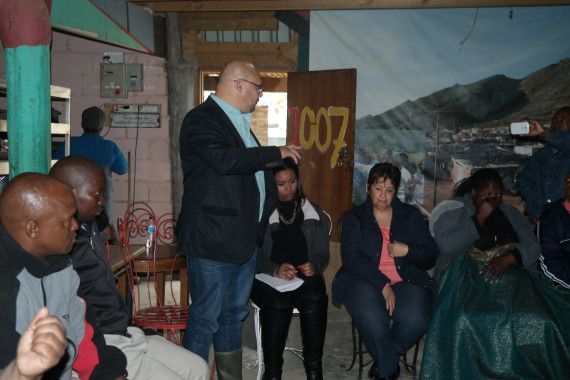
On day two, the group travelled to Langrug informal settlement near Franschoek to meet with the local Municipality of Stellenbosch. Langrug community leader and regional ISN coordinator, Trevor Masiy shared the successes and challenges the community faced with regards to being recognized as an informal settlement in that area. Lester van Schalkwyk, a municipality official, spoke of the difficulty the Municipality experienced in engaging with informal settlement communities. This is when officials realized the value of social and technical intermediaries like ISN & CORC to support and speed-up implementation of community – government partnerships. In Langrug this partnership translated into the first ever MoU between a local government and community, which enabled direct access to municipal funds for upgrading and implementation of re-blocking, drainage and a water & sanitation facility.
SAMSUNG CSC

Municipality  official sharing challenges they encountered  with Langrug Informal settlement

Partnerships around Upgrading: City of Cape Town

The third day was an upgrading site visit to Flamingo Heights in Lansdowne, Cape Town, a settlement that was recently re-blocked through a partnership between the community, SA SDI Alliance, City of Cape Town, and other actors such as the Cape Peninsula University of Technology (CPUT). Maria Matthews, community leader in Flamingo welcomed the guests and gave a brief history about the settlement and how they partnered with the city of Cape Town and the Alliance. She also gave insight about the challenges that they faced before upgrading where she noted that the community faced a high rate of crime because of the densification of their structures before re-blocking. She also cited that through the project the community managed to minimise the crime and now are safe. During an opportunity to ask questions, a Bulawayo official asked who owned the land that is now Flamingo Heights. ISN facilitator, Melanie Manuel, explained that the land belonged to an industrial company whom the City of Cape Town bought the land from. Maria Matthews, concluded,

“[Community] savings [contributions] are the core reason why we are here [in an upgraded settlement] today. We took the little we had and placed towards better living conditions.”

Community Savings as Negotiation Tool

The group then commenced to the FEDUP linked income generation group in Samora Machel. The visitors were welcomed with great hospitality and were given an overview of FEDUP`s income generation program. The visit highlighted the connection between regular saving and the ability to repay loans. This in turn enables access to further loan installments to expand a small business. In this sense, the power of individual and community saving became evident. In response to a question by the NUST representative on failed loan repayments, the loan facilitator explained:

“Saving group members are not given money that they don’t have in their savings balance, so if they fail to pay back the loan the money it is then subtracted from their saving balance.”

community leader sharing Flamingo Heights History

community leader sharing Flamingo Heights History

Area-Wide Upgrading as a result of negotiation

At UT Gardens settlement in Khayelitsha, the community came all out to support their leadership committee to welcome the visitors from Bulawayo. The Alliance shared the challenges and breakthroughs around upgrading the nearby wetland as a communal space. After giving a project overview, ISN & CORC members explained how they convinced the City to give them approval to use the land. A community leader, Thamara Hela, gave an overview of the recreational activities they envision for the upgraded wetland-park: a football ground, a gym facility and a park for the children to play where they could be safe. Read more here.

Meeting the Partners: City of Cape Town & Cape Peninsula University of Technology

Having visited a number of upgrading projects in Cape Town, the visitors met with the City of Cape Town to gain more insight into the process of partnership formation from a City perspective. The city explained how their department fits in the broader Human Settlements Sector, shared an overview of their partnership with the SA SDI Alliance, their role as service provider for ground works, engineering, topographical surveys and the Alliance’s role as technical and social support facilitator. The City shared the importance of an inter-departmental approach, which increases effective communication between various actors involved in ISU: the departments of solid waste, human settlements, water & sanitation. There was also an opportunity to observe direct engagement between communities and officials. Masilunge informal settlement leader, Lindiwe Ralarala presented the current ISU project process in her settlement, in particular the challenges of flooding, water & sanitation that the community would like to see the City address.

During lunch time the exchange moved to the architecture building at CPUT, where the group was briefed about the partnership the Alliance has with the university. It enables students to engage with the reality of planning with ‘informality’, and results in alternative practice and conceptual approaches in town planning and architecture. The lecturers explained how they want to see town-planning link with urbanization:

“Urbanization is not about building houses, it’s about human beings. We want our students to understand that they are not just planning houses but planning better living condition for the people who they work with.”

Through project modules or internships with the SA SDI Alliance students support the alliance with their technical skills in town planning or architecture. The meeting showed the visitors that strong partnerships with multiple actors can achieve more. Read more about academic partnerships here.

City of Cape Town partnership meeting

City of Cape Town partnership meeting

Ideas for Partnership Formation in Bulawayo

The exchange concluded on a high note. The support between community members from Bulawayo and Cape Town was clearly evident in their common desire to see a practical and community centered-partnership emerge in Bulawayo. As the details need to be fleshed out and implemented in Bulawayo, the South African and Zimbabwe SDI Alliance leaders will keep supporting and holding each other accountable on the path of establishing inclusive partnerships that are key to community-centered solutions. We conclude by sharing reflection points of exchange participants:

 City Reponses

  • There is great value of strategic community organisation: “We need partnerships to really engage & resolve community problems in a manner that satisfies the community adequately. “ (Bulawayo City Official)
  • Value of Reblocking & Forward Planning: “the way to tackle the problem of regrouping people is beautiful: the communities are involved and they have a say in the way forward” (Bulawayo City Official)

Zimbabwe Federation Responses

  • Community Data Collection: “I realise we need to review our settlement profiles & use our data in a useful [strategic] way.”
  • Implement MoUs: “This exchange provided us with a way to figure out how to operationalize the MoU’s”
  • Joint funding for ISU: “We need to sit with the City and establish how we can use reblocking to deal with the issues in our country. Joint funding for ISU provides huge opportunities for countries like ours which are economically challenged”
  • Accountability: “ Let’s keep each other accountable on our progress with reports, and share our knowledge and skills”

 SA SDI Alliance Responses:

  • Learning Centre: We find that as a learning centre we end up learning from you too”
  • Exchanges as Mobilisation: Exchanges are a mobilizing tool: wherever we take visitors, we gain trust from the communities. While the visitors learn, our communities learn as well.”
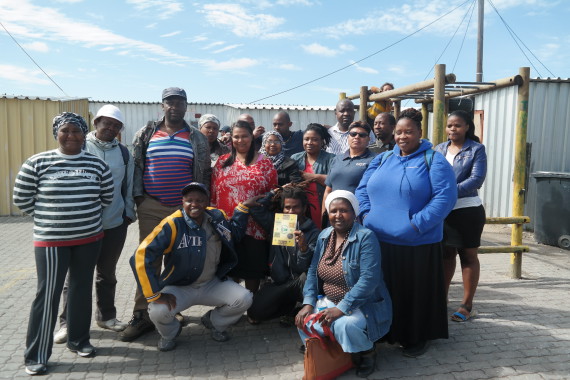
Group photo during the exchange

SA Alliance in Botswana: Building a strong urban poor Federation

By CORC, FEDUP, SDI No Comments

By Kwanele Sibanda (on behalf of CORC)

For the Shack / Slum Dwellers International (SDI) network, horizontal exchanges between savings groups and communities present an opportunity for bottom-up learning and mutual support. While each SDI affiliate shares the same tools and practices for community organisation and people-centred development, the use of these tools is shaped by local socio-economic and political contexts. Exchanges, therefore, also explore how new-found insights can be adapted to realities “back home”.

As an SDI learning centre, the SA SDI Alliance and FEDUP in particular have supported the growth of the Botswana SDI Alliance, the Botswana Homeless and Poor People’s Federation and support NGO. This blog reflects the workings of an international exchange, strategies for partnership building, and the necessities of rooting the strength of a Federation in daily saving, strong trust and cohesiveness on the ground.

Gointse (Trust for Community Initiatives) explains partnership with Stanbic

Gointse (Trust for Community Initiatives) explains partnership with Stanbic

Background of the Exchange

The SDI exchange to Botswana by the South African delegates was originally aimed at supporting the federation of Botswana in making a presentation to the new Minister of Local Government and Rural Affairs. In spite of efforts made by the Minister to meet the federation, the set meeting coincided with an emergency that he described as critical and could not be postponed.

From the previous visit of the South African delegates dated 16 – 19 October 2014, the Botswana federation has shown growth and determination to work with resources at their disposal. The federation of Francistown has been very influential in the growth of the federation, nationally. The Francistown Federation started off by influencing their local City Council especially the Town Clerk who in turn is now taking a lead in introducing the federation to officials in other cities as well as different government departments. The attempt to meet the Minister was through the efforts of the Francistown Town Clerk and the local supporting NGO (Trust for Community Initiatives).

As the meeting with the Minister was postponed at the 11th hour, the federation members from Francistown and the SA SDI Alliance used the opportunity to visit a fairly new local saving scheme (Boiteko Saving Scheme).

BOITEKO SAVING SCHEME MEETING.

Boiteko saving scheme meeting took place in Gaborone . A message of appreciation was given to the saving scheme members for attending the meeting even though it was scheduled within a short period of time. Amongst the issues discussed, the following was the most pressing for the saving scheme in Botswana as a whole.

  • Botswana has a law that disregards the nature/circumstances under which a group is established and wishes to have financial transactions that it be registered as a company. This act poses a challenge to the federation because of tax related burdens, registration process and other financial burdens that may be required by the law.
  • The groups have since resorted to opening bank accounts using one member of the group under conditions that include a letter to the bank stipulating that he is termed account holder and merely represents the group and can only undertake financial transactions authorised by two named signatories of the group’s choice. Boiteko Saving Scheme is no exception to the challenge.
Group photo after meeting with Boiteko Saving Scheme members

Group photo after meeting with Boiteko Saving Scheme members

  • The saving scheme was established in February 2015 with 27 members at its highest. Without seeking information internally, new members went to various government departments to find out if the poor people’s movement was registered. Upon realization of the other, word spread, dispute ensued, and sixteen members shunned the group leaving unity of the remaining on the canvas. The group currently stands at 11 members  and has a total of  P2 000 in savings up to date.
  •  In July 2015 the federation allegedly made a presentation at a Public Service Event where different Ministers were present. The presentation was broadcast on national television (BTV) and was seen by members that had forsaken the group. It is believed that the publication of the presentation somehow proved the authenticity of the organization as opposed to unfounded, simmering rumors.
  • The groups are being supported by the local NGO in opening bank accounts. The members of the new group expressed their need for support as they are not yet well versed of the other components in the alliance other than savings.
  • Savings Report
Total Number of saving schemes 55
Women 1 191
Men 122
Total Savings P276, 136.23
Total UPF P31, 473.94
Funds used to start income generating projects P260, 926.66
      Inputs made by the SA SDI alliance and Francistown delegates
  • Within groups, it is always ideal to have manageable numbers; however it is wise to be aware that numbers matter in influencing policies such as that currently affecting them on opening of bank accounts.
  • In making presentations, follow all levels of influential structures starting with the local chiefs so that your process is well understood and no one feels undermined.
  • Make daily collections a norm so as to bond as savings members and generally improve your savings.
  • Use the small projects  you are already doing to demonstrate to  government and other institutions your interest and how you wish to scale it up.Make use of  government resources like the ‘Poverty eradication programme’.
  • Start programmes for supporting other savings schemes because you tend to learn more when you share more.
  •  Choose honest people  to handle your finances to avoid jeopardizing the organisations name
  • Avoid making long meetings that will discourage attendance.
  • Members need to understand the power of working collectively.
  • Save with a goal and make good use of the savings . It is normally pointless to be endowed with savings that remain untapped when challenges prevail or opportunities present themselves.
Far Right - Sarah Mulaudzi (FEDUP) sharing her savings experience

Far Right – Sarah Mulaudzi (FEDUP) sharing her savings experience

WAY FORWARD

  • The federation of Botswana has to draft a programme were it will be supported in areas that include mobilization, savings recording system and explaining the different components in the alliance.
  • Once the meeting is confirmed with the Minister, leaders should prepare themselves for a presentation and should include in the agenda the policy requiring them to register in order to open bank accounts.
  • Each region has to start writing stories about the different projects and activities that they are doing.

How Sporong community negotiated service delivery in Gauteng

By ISN No Comments

By Kwanele Sibanda (on behalf of CORC)

According to how the Informal Settlment Network (ISN) demarcates Midvaal informal settlements; Sporong informal settlement falls under cluster 3. Sporong is a relatively small informal settlement with 17 households and holds a population of about 70 people. The settlement falls under Boltonwold that is about 10kms out of Meyerton. It is one amongst a number of Midvaal informal settlements located in secluded farm areas with residents living in abject poverty.

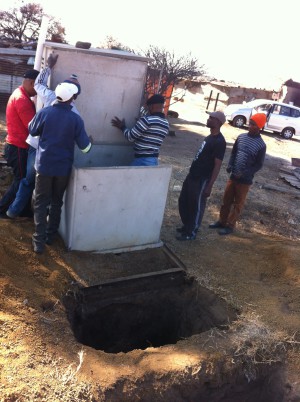
Many hands make light work - installing toilets in Sporong.

Many hands make light work – installing toilets in Sporong.


The first tenant of Sporong is Ntate Tladi Mokgobo. He has lived in the settlement for over 50years. He settled on the land when he was given permission by the owner to construct a shack and pay a monthly rental fee. The steady growth was experienced as more farm workers from nearby farms needed accommodation. Currently, all tenants pay R100 per month to the landlord, for the informal structures they reside in (shacks). The R100 per month rental fee might be viewed as affordable; however the recent eviction of one of the tenants suggests that affordability is not for all. The provision of informal structures by a private landlord to rent coupled with no basic services was insidious. The first settler expressed an in depth understanding of the alliance and its approach to ameliorating challenges in informal settlements. He furthermore asserted that any community’s failure to cooperate with such interventions makes a folly act.

From each one of the three clusters of Midvaal, one settlement was chosen for a pilot project. Out of the profiling exercise, prioritized projects were identified. The main objective of undertaking the pilots is that of demonstrating to the Municipality what is of interest to the communities and their efforts with the aim of negotiating and scaling up relevant service delivery.

Savings mobilization

Savings mobilization

In the context of Sporong, the prioritized project was that of toilets. The settlement of about 70 residents has been using a nearby bush as their toilet and they describe the situation as demeaning. The two pit toilets that were put up by the Municipality got filled up years back and have never been drained. The sanitation challenge is one that is mirrored in informal settlements across Midvaal.

ISN and FEDUP’s intervention was that of engaging the community leaders and community at large with the aim of motivating them to start working towards self-sustenance. Upon verifying with the leaders that the toilet project is a priority as indicated in the profile; the project was then scheduled. Community participation and resources in form of tools were put to good use and the top structures of the full pit latrines were repositioned. The toilet project ran concurrently with the savings mobilization. The savings team was led by Rosy and Nompi. With the women of Sporong, the two aforementioned; shared the history of the SDI alliance, savings and how they have personally benefitted from being members of savings groups. The FedUp leaders currently await a date for the savings implementation.

Full pit toilet dismantled

Full pit toilet dismantled

Repositioning and assembling the top structure

Repositioning and assembling the top structure

From Re-blocking to Housing: Lwazi Park – CPUT Studio 2015

By CORC, ISN No Comments

By Yolande Hendler & Andiswa Meke (on behalf of CORC)

In April 2015, the community of Lwazi Park embarked on a four-week design studio that investigated affordable solutions for incrementally improving dwelling structures in the settlement. Through its affiliation to the Informal Settlement Network (ISN) and Community Organisation Resource Centre (CORC), the community partnered with fourth year students of Architectural Technology from the Cape Peninsula University of Technology (CPUT) as well as a visiting group of students from the Reunion Island arm of the Ecolé National Superier d’Architecture Montpellier (ENSAM).

CPUT & Reunion Students visit Lwazi Park.

CPUT & Reunion Students visit Lwazi Park.

Lwazi Park Informal Settlement

Lwazi Park is situated in Gugulethu, near the N2 freeway in Cape Town. The settlement is now home to thirty-eight households and a primary school adjacent to the area. Its first inhabitants are alleged to have occupied the space in the mid- 1990s, when they built informal dwellings near the Lotus River. In 2001 the informal settlement stretched from Klipfontein Road up to the Eastern edge of Gugulethu. Lwazi Park is characterized by canals that were built fifty years ago, with the purpose of draining the flood plains for communities who were forcibly removed from the city centre during the apartheid era. Today, these canals are polluted and flood every rainy season.

View of Lwazi Park canal

View of Lwazi Park canal

Past Studios Paving the Way for Lwazi Park

The relationship between Lwazi Park community and the SA SDI Alliance dates to 2011, when the community, Alliance and City of Cape Town began to address a pending relocation of the informal settlement. Click here for more background. CPUT’s architectural technology students first participated in joint design studios with ISN & CORC in 2011 working on subsequent collaborative design in Vygieskraal and Manenberg.

The 2015 Lwazi Park studio was convened as a response to the community’s desire to explore options for further in situ upgrading after re-blocking in 2011. This is one of the first Alliance studios focused on incremental housing typologies for a settlement that has already undergone re-blocking. The studio thus reflects the incremental and cumulative nature of informal settlement upgrading. Perhaps even more significantly it speaks to a context-specific and community-centred approach.

Lwazi Park after reblocking in 2011

Lwazi Park after reblocking in 2011

Within the Alliance, studios play a significant role. On the one hand they support community negotiations with local authorities: through a collaborative approach studios bring about community-informed design typologies. On the other, they challenge and extend existing disciplinary norms in architectural thought and practice. CPUT Lecturer, Rudolf Perold, explains that such approaches are anomalies in

“the field of architecture, which often does not make provision for design in informal areas let alone consider the community’s lived context as informing appropriate and relevant design solutions*.”
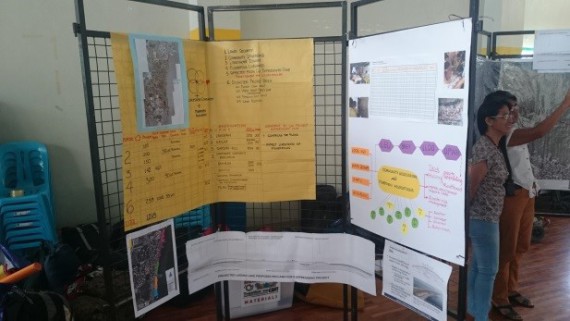
In this sense collaborative design studios generate ideas and debate on alternative housing design and delivery options that address residential environments within existing and challenging urban conditions.

Lwazi Park Studio Content: incremental housing typologies

In practice, the studio comprised a site visit to Lwazi Park and two collaborative design instances between community representatives, students and Alliance representatives (ISN & CORC) who provided social support and facilitation. The students were tasked to develop a spatial development/master plan for the settlement’s in-situ upgrading to two to three story residential buildings as well as housing typologies that would respond to the social needs and spatial context of Lwazi Park community.

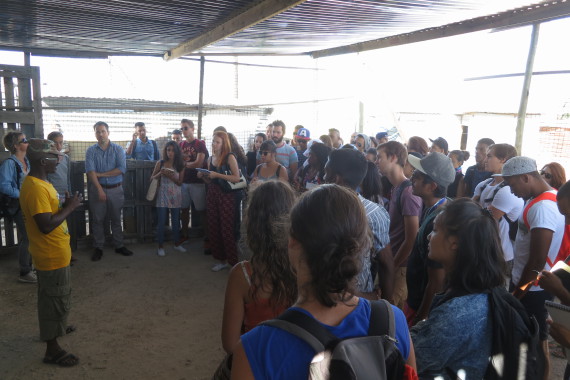
Lwazi Park community leader engages students around their questions.

Lwazi Park community leader engages students around their questions.

During the site visit community members introduced students to the physical layout and context of their settlement, lived realities, daily challenges and needs. These include the lack of a multipurpose / community hall or a nearby school. A central concern was the lack of funding provided by the city to help improve the standard of living. The community also expressed a desire for a safe place for their children to play in. A further concern related to drug abuse by the youth and the unsettling rate of crime.

Once the site visit had been completed and some preliminary insight gathered from community members, the design process began. CPUT lecturer Rudolf Perold explains,

“Their [the students’] point of departure was the community representatives’ assertion that they were set on obtaining tenure security and upgrading their settlement. Having had to adjust their approach based on the input received (albeit not representative of the entire community’s wishes) the complexity of balancing the community’s needs with your own design intent became clear”.

Challenges and Learning Points

In reflecting on the studio, CPUT lecturer Rudolf Perold highlights learning points for the students

  • The relationship between designer and occupant was crucial to the design process and triggered an empathy which contributed to the success of the design outcomes
  • The situated knowledge of community representatives and the Alliance proved integral to the development of the site layout and housing typologies
  • Students were sensitized to lived realities in informal settlements
  • “These experiences show that designers require a broadened skill set if they are to prove themselves useful in a context of mediation between poor urban communities and local government…- acting, as Stephen Lamb of Design-Change says, as interpreter of community needs rather than the holder of professional knowledge”
  • CPUT-based studio with input by community representatives, ISN & CORC.

CPUT-based studio with input by community representatives, ISN & CORC.

In addition a CPUT student added,

“Realising how people adapted to their living conditions in Lwazi Park and how these conditions push people to learn to survive, was a learning curve for me.”

For both the students and the Alliance a core challenge was experienced by the lacking attendance of enough community representatives in campus-based contact sessions. The students gained some community input during the site visit, which helped to contextualize and ground their work. The lack of community representation, however, speaks to a need for more social facilitation between the different actors involved so that the jointly designed plans can indeed be presented to the municipality.

  • CPUT quotations taken from “Perold.R., Devish, O., Verbeeck, G. 2015. Informal Capacities: Broadening Design Practice to Support Community –Driven Transitions to Sustainable Urbanism. Working Paper.
Presentations of master plans and housing typologies

Presentations of master plans and housing typologies

Final Student Presentations

Final Student Presentations

Partnership in Mossel Bay: FEDUP and Provincial Minister launch houses

By FEDUP, uTshani Fund No Comments

By Yolande Hendler (on behalf of CORC)

FEDUP savers, Norman Bless, Provincial Minister and Municipal representatives infront of Norman Bles' new house

FEDUP savers, Norman Bless, Provincial Minister and Municipal representatives infront of Norman Bles’ new house

It’s a rainy June afternoon in KwaNonqaba, an area of informal settlements and state-subsidised housing on the outskirts of Mossel Bay. Singing arises from a tent pitched nearby a newly finished house – FEDUP members awaiting the arrival of Western Cape MEC for Human Settlements, Bonginkosi Madikizela. Among the group is FEDUP saver, Norman Bles, homeowner of the newly finished house. The day marks the official opening of his house – as well as four additional FEDUP houses. It also marks a breakthrough in the relationship between Mossel Bay municipality and the local groups of FEDUP savers – the beginnings of a partnership after over a decade of negotiations.

FEDUP savers celebrating the house opening and new partnership formation

FEDUP savers celebrating the house opening and new partnership formation

Tracing FEDUP’s history in Mossel Bay

Thozama Nomnga, Western Cape coordinator for FEDUP, recounts how in the early 1990s the movement had built 33 houses in partnership with the municipality. After a period of disengagement, FEDUP returned to Mossel Bay in 2006, re-connected with old savings schemes and the municipality, particularly around the KwaNonqaba housing project, which, at the time, was pegged at 110 houses. Due to changes in leadership and member affiliation to savings schemes, the municipality eventually pledged 35 houses in 2013. On 2 June 2015, the completion of the first 5 houses was officially celebrated along with the formal opening of the new house of Norman Bles.

Tracing the story of FEDUP’s Norman Bles

FEDUP member, Norman Bles, with his family infront of the newly finished house.

FEDUP member, Norman Bles, with his family infront of the newly finished house.


As Norman Bles, reflects on his journey with FEDUP, he explains that he has been waiting for a house since 1993. Originally from Mandela Zone 5, he began saving with (what is now called) FEDUP in 1993. Over the years he left and re-joined the Federation several times – in the early 1990s due to a perceived lack of municipal support for housing and later due to uncertainties in the saving group leadership. During the constant changes in membership and saving participation, Norman speaks about his encounter with a fellow saver, who emphasised the importance of savings. This encouraged him to re-join the movement and eventually form his own savings scheme.

“Because we liked the Federation and understood the rituals of SDI [Shack/Slum Dwellers International], I went back to my house, talked to the people and said, ‘Let’s open a savings group in my house.” Other people joined us and we have been saving until now”

(Norman Bles, FEDUP homeowner, Mossel Bay)

He explains how together with FEDUP he continued negotiating with the municipality for housing.

“We kept negotiating because I wanted a bigger house [than] the small houses the municipality was building. The promise that we would get bigger houses with uTshani Fund [FEDUP] is what gave me hope to continue saving. I have a wife and kids who now have a place to sleep. It is no longer in a small shack. Today there is no rain that will get my children.”

(Norman Bles, FEDUP homeowner)

Launching a house, building a partnership


At the launch itself, Western Cape FEDUP leader, Thozama Nomnga, described the day as “the start of a partnership with Mossel Bay municipality.” Both the minister and Mossel Bay Head of Department (HoD) for Human Settlements echoed this sentiment. In particular, the minister emphasised that the government needed to acknowledge its setbacks and work harder at making [housing opportunities] happen:

“What you are doing [as an Alliance] is directly in line with our strategic objectives in the Western Cape. You have proven that you have the capacity to do this thing [build your own houses]! Why can’t we use the Alliance to do these things in a number of settlements so we can really become partners. It might only be 5 houses but there are more coming. We want to change the landscape.”

(Bonginkosi Madikizela, Western Cape MEC for Human Settlements)

Thozama Nomnga, Western Cape FEDUP coordinator

Thozama Nomnga, Western Cape FEDUP coordinator


Johan van Zyl, Mossel Bay HoD, speaks of the municipality’s mindset shift that enabled a more people-centred approach. While previous municipal programs and approaches were characterised by little coordination and cooperation between the municipality and communities, a meeting initiated by the provincial minister introduced an alternative view of community engagement. Coupled with a successful Govan Mbeki Award, a national reorientation toward more community support and continuous negotiation, the municipal mindset in Mossel Bay began to change:

“[We] have to have partnerships. Municipalities and government can’t do anything on their own….That is why the minister [indicated] that these initiatives will be supported by government to create more housing opportunities”

What underpins a partnership?

KZN FEDUP Coordinator, MaMKhabela

KZN FEDUP Coordinator, MaMKhabela


While FEDUP celebrated the completion of 5 houses, the road ahead is a long one. After over a decade of negotiations with Mossel Bay municipality and repeated submissions of project plans, the municipality seems receptive to a community-centred approach and to the People’s Housing Process (PHP). For Thozama, this certainly indicates the potential for partnership. Yet in order to build a strong partnership, the challenges need to be addressed – particularly in terms of delays in implementation. What underpins a people-centred partnership then?

“As FEDUP are are not saying people must grab land. People need to negotiate with government. We respect the government and our councillors. But the government also needs to respect us as communities. Because if we are not there, there will be no government”.

(KZN FEDUP leader, MamKhabela, at the Mossel Bay launch)

‘An eye for an eye makes the world blind’ – FEDUP/ ISN say NO to Xenophobia

By CORC, FEDUP, ISN, News, uTshani Fund No Comments

Authored by SA SDI Alliance

Following the outbreak of xenophobic violence in Gauteng in April 2015, the Federation of the Urban and Rural Poor (FEDUP) and the Informal Settlement Network (ISN) – both members of the SA SDI Alliance – hosted a dialogue on 24 – 25 April 2015 to say NO to Xenophobia.

“When Xenophobia broke out the Catholic Church approached ISN & FEDUP for support because people were fleeing their homes. We decided on a dialogue because we realised that there was a problem on the ground.“

(Sipho Vanga, ISN Coordinator in Gauteng)

ISN facilitators in Holomisa settlement, Gauteng (2014). Sipho Vanga (third from left)

ISN facilitators in Holomisa settlement, Gauteng (2014). Sipho Vanga (third from left)

The dialogue was titled, ‘Is it really xenophobia or violent protest?’ It brought together 32 informal settlement leaders from Johannesburg (COJ) and Ekurhuleni Municipalities (EMM) in Gauteng Province. Represented settlements included Sicelo, Slovo Park, Delport, Marathon, Makause, Ramaphosa, Holomisa (COJ), Holomisa (EMM), Mandela, Kanana Park, Meriting, Denver, Zacharia Park, Siphamandla, Tinasonke and Thembakhoza. In a press release statement, FEDUP & ISN explained,

“In order to try and avoid violent protest and xenophobic acts we will host a series of dialogues with the leadership of informal settlements AND those affected by xenophobia to discuss social ills with the aim to facilitate the integration of affected people back into our communities.

(ISN/FEDUP Press Release)

The program spread over two days and sought to find a common understanding of xenophobia and its causes in South Africa and to propose possible solutions to stop violence and discrimination. Topics of discussion included:

  • Xenophobia
  • Unemployment
  • Social Stereo Typing
  • Crime
  • Gender
  • Water & Sanitation
  • Upgrading
  • Land Tenure
  • Youth
  • Poverty

Day 1: Dialogue on Xenophobia’s Causes and Challenges

The first day engaged Gauteng’s informal settlement leaders who gave voice to their communities’ grievances, perceptions and concerns. Leaders shared first-hand experience of xenophobic violence, their respective perceptions of root causes and avenues of response.

IMG_20150513_105428[12]

As community leaders spoke about experiences and community perceptions in their settlements they highlighted some perceived frustrations relating to:

  • Crime

“Illegal immigrants commit crimes and cannot be identified because their finger prints are not in the system”

  • Lack of employment

“Capitalists employ foreigners over locals because foreigners are willing to work harder and earn below the minimum wage.”

“Foreigners operate … businesses without licences because they can afford to bribe… authorities that approach them.”

“South Africans cannot compete with foreigners who are in a position of purchasing bulk commodities that automatically reduce purchase prices.”

  • Drugs & Poverty

“Foreigner mostly bring in and deal drugs that make a huge contribution to the poverty cycle.”

  • Low service provision and development

“The government uses foreigners as an excuse to not develop a number of areas. Yet when foreigners are displaced from communities, it is the government that advocates for their re-integration.”

Dialogue participants explained that jealousy drives locals as they perceive themselves as unable to compete with skills, knowledge and experience brought into the country by foreigners. For leaders this easy influx was connected to poorly protected borders. As “government only listens when communities take extreme measures” leaders explained that xenophobia was a new discovery by South Africans to ensure that their voices are heard and to catalyse service delivery. Some leaders criticised government for using informal settlements as “refugee camps”. They attributed the lack of service delivery to government’s reluctance to undertake upgrading in settlements that are home to foreign nationals.

“It is crystal clear that informal settlement residents are ignored and side-lined by government at all levels. Government has failed us completely in all areas of service delivery. Yet, we are always trying our level best, no matter what, to meet, plan and partner with government AND we will never stop trying!”

(FEDUP-ISN Press Release)

As the discussion unfolded, leaders analysed the matter in terms of their own context and role within it, recognising that “maintaining peace should start with leaders themselves”. They acknowledged that foreigners did not invade their communities but mostly settled through negotiation with respective community leaders while others rented from South Africans. Despite initially expressed frustration, participants concluded that “an eye for an eye only makes the world blind” and adopted a stance of saying “NO TO XENOPHOBIA”.

Day 2: Supporting the Displaced

Day two’s discussions included members of the police, business forums, perpetrators and affected people. Those affected explained that they had come to South Africa to improve their lives and not to sell drugs. Participants agreed that community members would help each other to communicate openly about illegal activity.

IMG_20150513_105617[8]

Leaders furthermore agreed that no further violence should be experienced. They recommended that illegal immigrants try return to their home countries and apply for relevant travel documents. A further recommendation related to the need for consultative public engagements (between communities and relevant government officials) on integration plans for legal immigrants.

Dialogue participants had previously expressed a growing concern with government’s limited interest in engaging relevant community structures to identify the root causes of xenophobic violence in order to find ways of ameliorating it through community-led processes. Leaders decided that going forward, ISN & FEDUP should facilitate engagements with local authorities and jointly advocate for peace and integration in communities. Community leaders would draft a Memorandum detailing the grievances.

“We are apologetic for what happened in the country. That is why we held dialogues. ISN and FEDUP play an important role: we are not going to sit and watch xenophobia happen. Some foreigners – like our brothers and sisters in Zimbabwe – belong to SDI [Shack Dwellers International), just like us. The solution is to create space for leaders to engage in dialogue. ISN&FEDUP should pressure government to deliver and CORC should be the middle man between us.”

(Sipho Vanga, ISN Co-ordinator Gauteng)

Outlook: Negotiation not Violence

For ISN National Co-ordinator, Mzwanele Zulu,

“The root cause of xenophobia is apartheid. It is something we can’t run away from – discrimination and apartheid realities are still present: people live in conditions where there is no transformation. There has been human rights transformation and perhaps some psychological transformation but no change in living conditions. Political, social and economic issues – especially the high unemployment rate – affect people and cause high levels of frustration.”

Mzwanele Zulu, National ISN Coordinator

Mzwanele Zulu, National ISN Coordinator

When cities act as engines of economic growth based on neo-liberal policies and programs they result in more inequality and poverty. Access to serviced, well-located land becomes increasingly difficult, as urban land markets are exclusionary by nature. More people are forced to access land informally and experience diminished opportunities to access employment, health, education, basic services and housing. In addition people experience diminished levels of political and administrative accountability. It is in this particular political and economic context in which informal settlement communities are trying to make sense of the chaos, their inequality and poverty.

“To address issues relating to informal settlement upgrading, urban poverty and development, the state needs CBOs, social movements and NGOs to work with. The same applies to xenophobia. We need drastic contributions from the state in terms of human and financial support. But the state’s response needs to be exercised through partnership with local channels.”

(Mzwanele Zulu, ISN National Co-ordinator)