Category

ISN

Installing Water Taps in Holomisa Gauteng

By CORC, ISN, News, uTshani Fund No Comments

By Blanca Calvo (on behalf of CORC and uTshani)

Holomisa is an informal settlement located in Katlehong (Ekurhuleni, Gauteng). In May 2014, Pumelele Ntanjana, one of the leaders of Holomisa Informal Settlement, contacted the Informal Settlement Network (ISN) to request support for a possible re-location of a portion of his settlement. Today, Holomisa has been profiled and enumerated, new taps have been installed and it has become a learning centre for other ISN communities in Gauteng.

ISN Gauteng co-ordinators with Holomisa residents

ISN Gauteng co-ordinators with Holomisa residents

The Holomisa story tracks back to an ISN leadership meeting that took place in Germiston (Ekurhuleni, Gauteng) in 2008. In that meeting, leaders from all informal settlements in the area had been invited to attend, Holomisa amongst them.

When Holomisa leadership were told by their councillor that a portion of the settlement needed to be re-located because of the enlargement of a neighbouring school, they approached ISN for support. ISN was invited to visit the settlement, where they firstly met with Holomisa leadership and the ward committee members.

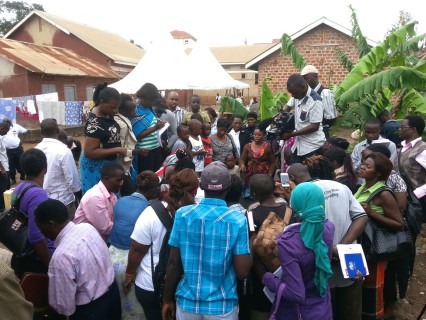
The community and ISN profiled the settlement in May 2014 and identified a need for more sources of water (only 2 functioning taps for about 500 households). This was confirmed in a public meeting, where residents requested support for an immediate improvement of their daily lives through implementing more taps, improving sanitation conditions and electrifying the settlement. The settlement’s improved service delivery would also be an additional step to ensuring land tenure.

Existing Water Taps in Holomisa

Existing Water Taps in Holomisa

Three parallel processes started from there. On one side, enumerations started on the ground, identifying 446 households. Since Holomisa had been identified as a learning centre for the region, leaders from 6 neighbouring informal settlements (Emalahleni, Thintwa, Vlakplaas, Mandela, Makalakaleni and Zola) were invited to join the enumeration process, ending up with capacitated leaders to undertake the process in their own settlements. A total of 10 local and 6 external leaders were capacitated. Besides, the figures highlighted again the need for more taps, with a backlog of 8 taps to meet official standards


Holomisa Textbox1

The mobilisation team engaged with the Ward Councillor, who was informed in a partnership meeting of the intention to install more taps in Holomisa with the support of the South African SDI Alliance. The ISN sent a letter to the ward councillor saying,

“We understand that we are poor humble people struggling to make our way in life. Like every South African citizen, what we expect is a fair and reasonable service delivery from Government in return for the taxes we pay”

Finally, the savings team organised community savings to save 10% of the budget for the project. The outstanding 90% of the budget was financed by the Community Upgrading Finance Facility (CUFF) housed in uTshani Fund.

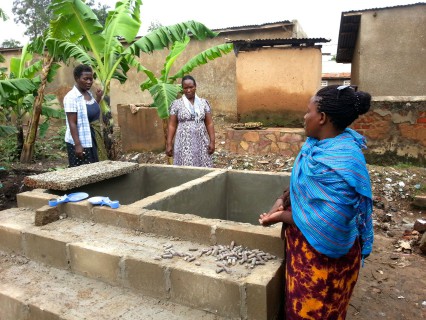
Mandela Day (18 July 2014) was finally the day for the project to start. In the space of 6 days, one tap was fixed and three more taps were installed. 25 local residents volunteered for the project, a technical team of 10 ISN members was on site and 6 leaders from neighbouring informal settlements were invited to participate and learn in the process, thus increasing their skills and building capacity.
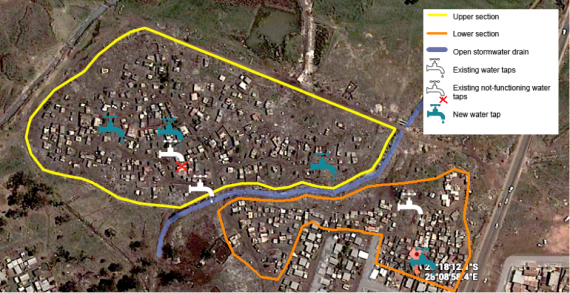
New Water Taps in Holomisa

New Water Taps in Holomisa

Holomisa Textbox2

The project was a success for the communities involved, not only because the installation of more taps improved the living conditions of Holomisa residents, but also because some valuable lessons were learnt.

  • Firstly, the will of the people has been proved to be the best tool to work with. The residents identified the need for more taps and lead the project from the first day.
  • Secondly, the power of residents taking ownership of the project. Residents did not wait for external people and institutions for their permissions or to come to the work, they pushed for their needs to be heard and did it themselves.
  • Finally, the learning centre has proved to be a success. 6 leaders from other informal settlements were capacitated using almost the same amount of resources.

However Holomisa’s story does not end here and the process is still on-going. Holomisa residents, are in discussion with their Ward Councillor for the re-location process of a section of the settlement. Continuous engagement with the ISN will ensure that the re-located residents will be allocated a new portion of land, which it is still to be identified.
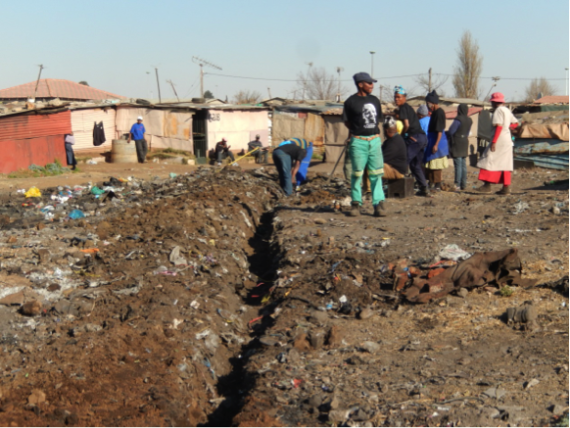
Holomisa2

Holomisa3

SA and Zim Federations reach out to Botswana

By CORC, FEDUP, ISN, uTshani Fund No Comments

By Kwanele Sibanda (on behalf of CORC)

The Republic of Botswana is a landlocked country located in Southern Africa. It is bordered by South Africa, Namibia and Zimbabwe. It is a mid-sized country of just over two million people. Environmentally, Botswana faces two major problems: drought and desertification. Despite its middle-income status, Botswana continues to grapple with significant social challenges including unequal distribution of wealth, high levels of poverty, unemployment and HIV/AIDS prevalence. On health issues, the prevalence of HIV/AIDS was estimated at 24% for adults in 2006. In the fight against the disease the government of Botswana solicited outside help in fighting HIV/AIDS and received early support from the Bill and Melinda Gates Foundation.

The Minister purchasing some of the federation's income generating productsBetween 16 – 19 October, South African and Zimbabwean federations associated to Shack / Slum Dwellers International (SDI) reached out to the young and emerging Botswana federation. The federation of Botswana was initially mobilized by the Zimbabwean federation and established in 2011 in Francistown as a community based organisation, which has since expanded to Gaborone, Selibe, Maun and Phikwe. The NGO called Trust for Community Initiatives (TFCI) was registered on the 31st of May 2012 as a non profit trust. The NGO is currently staffed 2 full time staff members and 3 board members oversee governance.
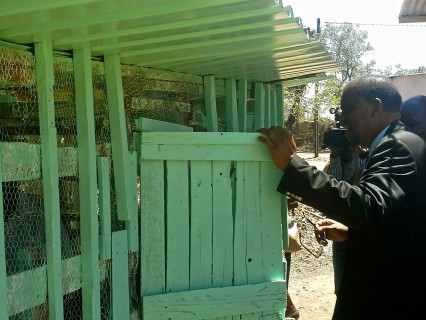
This exchange was in the making for a few months. Following the nomination in Francistown where the Botswana federation was mentioned for best practices in fighting poverty in June 2014, the Minister of Local Government and Rural Development (Peter L. Siele) requested a meeting with the federation in Francistown on 17 October 2014. Since the Botswana federation is still at its early stages of development, it requested the support of the Zimbabwean and the South African federations. The Minister witnessed three projects that the federation members do: traditional attires and baskets, poultry and a cool drink making business. The minister and his team were taken around while the project leaders explained how the businesses are conducted.


Minister visits poultry project

On the morning of the 17th, prior to the commencement of the meeting with the Honourable Minister, a brief planning session was held with the hosts to look into the program and also strategize on key objectives intended to be achieved from the exchange. During the planning session the Zimbabwean and South African delegates were encouraged to focus their presentation more on savings, partnerships and projects. The meeting on 17 October was attended by:

  • Botswana
    • Federation of Botswana – Francistown, Maun, Gaborone, Selibe and Phikwe
    • Trust for Community Initiatives – Goitsemang B. Maano and Mark
    • Officials: Minister of Local Government and Rural Development – Peter L. Siele, Town Clerk – L. Israel, Office of the District Commissioner – Opelo, Head of Community Development – Mrs Phama, Deputy Mayor of Francistown – Mrs Phama
  • Zimbabwa
    • Zimbabwe Homeless People’s Federation– Sekai Catherine Chiremba, Sazini Ndlovu, R. Ncube.
    • Dialogue on Shelter– Beth Chitekwe and Givemore Nyamaponda
  • South Africa
    • FEDUP– Maureen, Sophy and Sarah
    • CORC– Kwanele Sibanda

The federation welcomes the Minister

The Botswana Federation outlined the growth of the movement over the past three years, expanding their reach from Francistown to Selibe, Phikwe, Gaborone and Maun. 42 saving schemes have been established and the total number of active members is 1,126 (1036 females and 90 males). Their total daily savings to date is P (Botswana pula) 257 807.91 (ZAR310,000) and the balance of their Urban Poor Fund is P20 834.85 (ZAR 25,000). Public health is a major focus area for the Federation, and projects have included installation of water taps, electricity and flush toilets. They also have income generating projects such as poultry and catering.

The Zimbabwe federation followed and outlined the work of SDI in Southern Africa. They challenged the minister to meet the Botswana federation’s savings and enter into a partnership agreement. The South African federation spoke about their “pledge” agreement / MoU with the Department of Human Settlements as tool for long term engagement. they argued that to enhance their work so as to support more communities, the government- community partnerships different level to build more than 15 000 quality houses by ourselves for ourselves. In working with the government we always emphasize that the Batho Pele (People First) principle must be applied.

When the Minister of Local Government and Rural Development replied, he addressed the needs of the Botswana federation by outlining some of the programs that different government departments are offering in line with what the federation is doing. He furthermore encouraged them to take advantage of funds such as those offered by the Ministry of Labour and Home Affairs (MLHA). The Women’s Affairs Department is mandated to facilitate mainstreaming of Gender Issues in the development process. As a way of empowering women’s CBOs, the Government of Botswana allocates funds to the Women’s Affairs Department annually in order to assist the organisations.

On 18 October, the Zimbabwean, South African and Botswana Federations exchanged ideas on community-centred development.

  • We are savings for land, to build houses as well as other projects.
  • We are contributing UPF so that we can give each other loans
  • We had an incident were some group members contributed towards UPF, but the treasure did not deposit the money.
  • It is difficult for me to distinguish between daily savings and UPF
  • We started the UPF contributions after an exchange to Gwanda in Zimbabwe; however after report back and starting not many members understood the concept.

Botswana federation during the UPF group discussion

One member of the exchange reported that,

I am so grateful for the exchange has enlightened me on many federation issues especially the Urban Poor Fund.

Another said that

We feel motivated by the presentations made by the federations that have been doing the work for many years and we are inspired to grow our federation the same way.

Ongoing support to the Botswana Federation will be focused on getting the Urban Poor Fund up and running. In group sessions, discussions from delegates from Zimbabwe and South Africa were advising on writing key points that relate to UPF in their respective countries. Botswana was on the other hand listing what they have so far been using as principles around UPF. As a way forward it was agreed that a final decision of principles around UPF cannot be taken in the particular meeting because consultation first has to be made from a savings scheme level; however an agreement was reached on what the respective saving schemes have to input towards a final national UPF policy.

Khayelitsha groups fire up bread ovens

By CORC, FEDUP, ISN, uTshani Fund No Comments

By Walter Fieuw and Thandeka Tsabalala

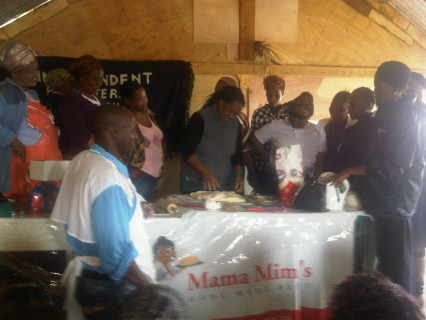
An emerging focus area for the SA SDI Alliance is sustainable social enterprises and creating more options to access livelihoods opportunities. Informal areas are characterized by a diversity of income generating activities. In Khayelitsha, Cape Town, FEDUP and ISN have opted to investigate the feasibility of baking breads with an innovative oven and pre-mix design a supplier called Mama Mimis. 10 ovens was pre-finances with the view on recovering the costs as baker groups start making profits on their goods.

IMG-20141008-WA0002

Between 7 and 8 October, ten groups from across Khayelitsha gathered at FEDUP member Mama Darkie’s crèche in Makazha. The groups were in high spirits as their assembled the components of the Mama Mimis oven, which is known for its robust design and heat retention. The oven is but a means towards a sustainable business in a group context. The group dynamic of the saving scheme is a particular intervention of FEDUP and ISN, to ensure that the value created stays in a group rather than accruing with one person. This requires fine planning to ensure that everyone receives benefit from the business, but also creates an opportunity to rotate the baking function, and to focus on the value chain of business activities: marketing, producing more products (sandwiches, pizzas, sweet treats, etc)

IMG-20141008-WA0009

IMG-20141008-WA0004

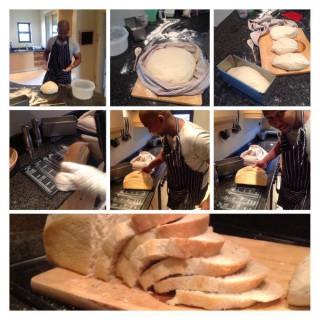
The groups each had a chance to make bread dough, prime it in the pre-heated oven, and then bake the breads. Various scenarios were presented and the groups had to come up with a solution to the problems. For instance, imagine a busy taxi rank where there are a number of traders. How will the group sell their bread among the competition? One group responded by saying that the key will be to have a consistent product at a good price. Their proposed product was a half-bread with polony and mayonnaise, which they could sell at R12, making almost 100% profit.

Image courtesy of Mama Mimis

Image courtesy of Mama Mimis

The groups have started their bakeries by now. Some groups are fairing better than others, due to careful considering of location, product offering, and consistency. FEDUP and ISN have created exchange programmes to help struggling groups learn from groups performing better. Going forward, this support will be continued until the groups are all realizing the potentials of the business opportunity.

Reflections on the Southern African HUB Meeting: Lusaka, Zambia

By CORC, FEDUP, ISN, SDI No Comments

**Cross-posted from the SDI blog**

By Noah Schermbrucker (on behalf of SDI Secretariat)

SDI Southern African Hub Countries

SDI Southern African Hub Countries

HUB meetings are gatherings that bring affiliates together to collectively set the agenda for the region. They are used as a mechanism to share collective learning, devise targeted support strategies (e.g. exchanges) for individual countries and concretize planning, on a regional scale, for the next period. The Southern African HUB recently took place in Lusaka, Zambia from 12-14 September 2014. Delegations from South Africa, Namibia, Zimbabwe, Swaziland, Botswana and Malawi attended the 3-day meeting. A team from Uganda, who had recently hosted the East African HUB, participated in order to promote continuity. Ghana was also invited as the West African HUB has been indefinitely postponed due to the Ebola outbreak.

Below find my reflections on the meeting. I hope that they provide some insights not only into SDI processes at a regional level but also the “nuts and bolts” of which this process is comprised. This is hence not an exhaustive description of the meeting but aims to give the reader a “practical flavor” of SDI’s work as it plays out in the interactions between slum dwellers, support professionals and government.

Day 1: Engagement with Ministry of Local Government, field visit to Garden Park community under threat of eviction (only some delegates) and meeting at Lusaka City Council (LCC).

The Zambians were clear that the first day’s agenda was about taking their process forward, especially in terms of achieving tangible outputs from government. South Africa, Namibia, Zimbabwe, Uganda, Malawi and Ghana all stressed the actual outputs of their relationship with government to both the Ministry of Local Government and LCC. As was noted, “ An M.o.U with government is just a piece of paper unless it has actual tangible outputs attached”.

Making the first day about taking the Zambian process really orientated us within local challenges and used the HUB as an instrument to open space with government for the Zambians (which they are now following up on). The Southern African HUB has previously been very “talk” orientated and not substantively relevant to the local process so this shift was refreshing to see. A trick that we missed out on was not inviting government officials from the countries attending as the Zambians felt that this would have deepened the impact in these engagements with government. As a federation member noted “governments like to talk to other governments”.

Through the site visit to Garden Park, evictions were placed on the table as a key issue with the HUB committing (on the final day) that each federation will draft guidelines on evictions sharing their experiences and strategies used (this emerged out of a separate federation only session)

Women from Garden Park meet to discuss eviction threat

Women from Garden Park meet to discuss eviction threat

Day 2: New Secretariat systems (L,M&E, New Secretariat structures)

Day 2 was spent at the Zambian federation’s resource center in George compound with significant participation from the Zambian federation. Mara (from the SDI Secretariat) and Muturi (from the Core Team) did a fantastic job in taking everyone through some of the new systems developed by The Secretariat including the L, M &E worksheet and call for support. There was a vibrant discussion about these new systems and some very important suggestions made as to how they could be refined (e.g. definitions of certain terms such as “secure tenure” need to be clarified). These issues were noted and will be shared with the secretariat team.

A very critical issue was raised around the learning center and its role within the HUB, a number of people felt that the HUB itself was serving as the learning center. We need to think carefully about how the learning center fits into the HUB-especially in the case of Southern Africa were conditions and experiences in Cape Town are quite different to the rest of the countries. People felt strongly that different countries had different strengths (e.g. Namibia and Zimbabwe around collection of their savings number & indicators).

"Carrying" water home in Chazanga, Lusaka

“Carrying” water home in Chazanga, Lusaka

Day 3: HUB Business

The day was focused on collecting country reports that were compiled previously by each country. These will be used to aggregate a set of Southern African HUB figures that can be taken to the Board & Council (B&C) meeting. Each country handed in their reports but then spoke about the “burning issues” and what support was needed. This led to suggestions for further exchanges that have been noted. The HUB also discussed progress made on exchanges decided at the B&C. In general this approach was well received as countries did not use up time providing long lists of figures but rather focused on the key issues that they wished to raise. The exact role and nature of the CORE team was also explained at length.

Throughout the meeting the participation of members from Kenya, Uganda and Ghana was extremely helpful. Their insights were valuable and contributed to the discussions with government. The continuity between the East African HUB and this HUB was definitely beneficial and something that we could take forward.

An issue that emerged from some was how we can include more “voices” in the HUB and encourage everyone to participate and speak more fully. It seemed that when we broke into country teams it allowed for more even discussion and participation as opposed to just a few people speaking in the bigger forum.

A HUB report is currently being drafted by Zambia and will be shared shortly.

Sharing experiences on building City Funds

By CORC, FEDUP, ISN, News, uTshani Fund No Comments

20140902_103814

By Walter Fieuw (on behalf of CORC)

African cities are characterised by informality, as the rapid urbanisation from rural areas are transforming cities. Within informal settlements, residents are investing incrementally in their households, despite the lack of tenure security in many cases. A large gap exists between household investment and government spending on infrastructure and social support. Government expenditure is often times locked into medium term budgets which might or might not be adjusted on an annual basis, and procurement of goods and services follow time consuming processes. There are also various interests competing for government spending, and low income groups’ influence over the direction of spending is often times weak. Slum dwellers often times do not have access to loans from financial institutions, even considering the popular held belief of an emerging African middle class, which is still highly speculative. Hence new instruments are needed to build on and support the incremental upgrading of informal settlements and support for livelihoods and small income generating loans.

Shack / Slum Dwellers International supports the notion of creating local “city funds” which acts as a mechanism for building city-wide agglomerations and networks of the poor, creates partnerships between organisations of the poor and city governments, and gives voice and power to the urban poor. Following a meeting of country Federations on various experiences in building city funds in January 2014, SDI reported that,

Flexible citywide urban poor funds need to change existing systems of exclusionary finance.  Local government is a change vector that cannot be dismissed and their inclusion in these funds has the potential to create citywide political impact. Organized communities, who can clearly articulate their demands and the rationale for their financial decisions, can negotiate this space ensuring that funds remain relevant to the poor.

Between 1 and 3 September 2014, the Slum Dwellers Federation of Uganda (NSDFU) and support organisation Actogether hosted a meeting on city funds bringing together three African cities: Kampala (Uganda), Lusaka (Zambia) and Cape Town (South Africa). These cities have in common grant funding agreements with British donor Comic Relief, part of the “People Living in Urban Slums Programme”, which is also supported by the DFiD AidMatch initiative. Freetown (Sierra Leone) is forth city in the Comic Relief initiative, but were unable to travel due to the Ebola epidemic.

Comic Relief’s funding strategy of bringing together organisations and communities in city-wide partnerships have been lauded by participating grantees. In this way, according to Triple Line Consulting, who has been supporting Comic Relief in developing responsive city-level Monitoring and Evaluation (M&E) frameworks, the impact of the grants could possible achieve: a) a deeper understanding of the context than it might normally have b) a complementary portfolio of grants across the city c) improved collaboration between the grantees within a city d) a city level monitoring and evaluation framework and e) identified areas of learning across the 4 cities that can be shared with the broader sector.

20140902_101323

Katana Goretti, a Federation leader, demonstrates the construction phases of the eco-san toilet being constructed in Kampala

Reporting on country experiences to date:

Kampala, Uganda

The joint work to which NSDFU and Actogether are a part of is called KASTI, Kampala Slum Transformation Initiative. The Ugandan Federation will be actively engaging local government counterparts in five districts of Kampala, with dedicated settlement forums which feed into municipal forums, and ultimately city forums, to which the guests were exposed to on 3 September (more on this later). Such forums have proved tremendously useful in the past, as this blog article indicates. The Federation’s primary data collection of “settlement profiles”, which are captured on Geographic Information Systems (GIS), will be used to collaborative design a slum upgrading strategy. Comparisons with existing data from Kampala Capital City Authority and the National Water Department has revealed many informal settlements that were not on government’s databases. This is where the city fund becomes important, and seed finances both capital projects, especially innovations in sanitation, and livelihoods projects.

20140903_105337

On 3 September, NSDFU and Actogether hosted the first City Forum with Kampala Capital City Authority, which was lauded as a success

Lusaka, Zambia

In Lusaka there are 30 slums known as Improvement Areas, home to about 70% of the population. In 1996 the Government’s Housing Code allows for participatory approaches to slum upgrading, and the Housing Statutory Bill gives the minister power to declare and upgrade slums. However, there is a policy disjuncture in the sense that the Urban and Regional Planning Act does not have the right policies and instruments to recognise and upgrade slums. Tiyende Pamodzi, which means “working together” in local vanacular Nyanja, is the working title of the Comic Relief funded initiative in Lusaka, of which the Zambian Homeless People’s Federation and support organisation People’s Process on Housing and Poverty in Zambia are a part of. According to PPHPZ, Tiyende Pamodzi’s

main aim of the project is to gather accurate and reliable information of all the slums in Lusaka in order to inform participatory slum upgrading strategies which will see the regularization of slums and improved service delivery. Lusaka City Council (LCC) as the responsible authority for slum upgrading in the city cannot go it alone and as such will bank on the strength of the federation to mobilize their fellow slum dwellers to enumerate and map their settlements and use this as a basis for planning for the upgrading.

The Federation and PPHPZ has a strong working partnership with the University of Zambia, and in the programme will develop GIS courses to improve spatial mapping and profiling data as a basis. The city fund has not yet been defined, and the Federation and PPHPZ with the University as partner is still looking for the appropriate partners to serve on the board and advisory committee.

Cape Town, South Africa

In Cape Town, CORC secured a donor funding arrangement with Comic Relief, with community partners ISN and FEDUP. At the heart of the proposal is the setting up of a city fund, which is currently still being developed and constituted. The initiative is called Khayalethu, and joins the Alliance with Isandla Institute and Violence Prevention through Urban Upgrading (VPUU). At the Kampala meeting, community leaders Thozama, Tamara and Nozuko reflected on the current work in Khayelitsha, where Khayalethu is focused. In the first year, communities have profiled 47 settlements, enumerated 7 settlements, and developed community capacity to plan projects. However, challenges have been experienced in getting project approvals for community-identified settlement upgrading projects from the City of Cape Town. Livelihoods is also a primary focus, and experiences were shared around issuing short term loans for livelihoods development.

The South African delegation to Uganda (left to right): Thozama, Tamara, Walter Fieuw (CORC), Nozuko, Michael Krause (VPUU - Comic Relief partner)

The South African delegation to Uganda (left to right): Thozama Nomnga, Tamara Hela (both FEDUP/ISN), Walter Fieuw (CORC), Nozuko Fulani (FEDUP/ISN), Michael Krause (VPUU – Comic Relief partner)

The common experiences, opportunities and challenges experienced by the three cities in the first year of the Comic Relief funded initiative is instructive in developing locally responsive and appropriate city funds, which can enable and support communities in united networks to design, manage and upgrade their settlements. Moreover, building financial partnerships between city government, organisations of the urban poor and other stakeholders can lead demonstrating that people-centred urban planning and development, based on flexible finance, is vital to the creation of inclusive, pro-poor cities.

Co-producing Ideas: Denver community and University of Johannesburg Studio

By CORC, ISN No Comments

By Motebang Matsela and Yolande Hendler (on behalf of CORC)

Over the years, the SA SDI Alliance has been involved in several architecture and planning studios in which university students and community members co-produce ideas and scenarios around housing and upgrading. The most recent of these studios took place from July to August 2014 in Johannesburg’s Denver informal settlement together with community members, students from the University of Johannesburg’s (UJ) Department of Architecture, the Informal Settlement Network (ISN) and Community Organisation Resource Centre (CORC) who offered technical and social support and facilitation.

UJ students and community members in Denver informal settlement

UJ students and community members in Denver informal settlement

IMG-20140820-WA0007

Motebang Matsela (CORC technical support and CORC studio facilitator) (centre), with community members and students

Denver informal settlement

Denver informal settlement is situated in a light industrial zone that spans the southern section of Johannesburg’s central business district. It was formed in response to Denver hostel, an inner city accommodation, established around 1946 by the government of the time to house rural labour migrants. As the hostel operated for men-only, Denver informal settlement sprang up as an accommodation option for the wives of men living in the hostel. Over the years the settlement has continued to grow along with an increasing demand for housing by its residents.

IMG-20140820-WA0059

Aerial view of Denver

The studio: co-producing training for students and communities

The studio developed out of a longer engagement between UJ’s Department of Architecture, CORC and ISN, who had already collaborated on past studios in Ruimsig (2011) and Marlboro South (2012) informal settlements in Gauteng. The Denver Studio, however, differed from past studios because it introduced the first of a series of project management modules.

For the SA SDI Alliance, studios lay a foundation for productive discussions with local government that voice communities’ views, opinions and requirements. They also introduce students to the necessity and value of planning with communities, which contributes to a focus that shifts away from traditional ‘top down’ product and ‘delivery’ approaches towards ‘responsive’, community-orientated approaches.

While these outcomes are valuable aspects of collaborative work, Gauteng’s ISN leaders highlighted a current gap: community members need to gain tangible skills through the studio and upgrading process, just as the students do. Each module therefore couples practical participation in the studio with project management skills. Upon completion of every module, community residents will receive a certificate of participation. The vision is that these modules will run as an ongoing series throughout future studios and that they will incrementally build on the content of past studios, creating continuity and ongoing engagement between past and future studios.

Community members receive certificates of participation

Community members receive certificates of participation


DSCF9550

The Studio: co-producing ideas

The course engaged eighty 3rd and 5th year students in a site-specific situation that used joint mapping and data to generate community action plans (CAPs). These investigated short, medium and long term planning scenarios that would encourage short-term community initiatives and support further productive discussion with local government around incremental upgrading

The students were divided into ten groups, each of which partnered with two or more residents from Denver settlement who took the lead as designated community planners and explained the community’s various concerns to the students. One of the community leaders, Chief Mbata shared his views on the studio as a platform to commence a dialogue about the urban poor and their conditions of living. He went on to speak about the over crowdedness and the illegal electrical connections that have claimed a lot of shacks and their contents in and around Denver.

“I wish to see these dangerously exposed cables go, and better connections made by the municipality, but when shall that happen?”

(Chief Mbata, Community leader at Denver informal settlement)

Students and community members then investigated the following key themes for ten areas in the settlement:

  • Spatial Justice
  • Humane Environments
  • Scenario Planning
  • Context
  • Spatial / Physical / Social
  • Systems / Networks
  • Interfaces / Thresholds
  • Undercurrents / Threats
  • Aspirations / Perceptions
Students and community members in Denver informal settlement

Students and community members in Denver informal settlement

Final Student Presentations in August 2014

Final Student Presentations in August 2014

While they engaged with these themes, the community, supported by ISN and CORC, also undertook an enumeration of its settlement with the support of iSN – in a combined effort to collect comprehensive information.

As a community member, Daphne Ntombenhle Mabuso used her in-depth knowledge of the community and its history to compile the studio’s data in a collective documentation of Denver that represents the settlement as accurately as possible. Some of the studio’s content includes figure-ground drawings, actual land-use maps and various other maps that identify needs, constraints, observations and possibilities within Denver. This documentation can serve as the basis for continuing discussions between the community of Denver and the City of Johannesburg. (Click here to access the students’ documentation of the studio).

In the last week of August, the students presented their socio-spatial analyses of courtyards, pathways, open spaces,permanent vs. temporary structures and rental vs. owned units to Denver community. These open up a space to begin small-scale projects and a discussion with the local authorities. During this time community members also received their certificates signalling their participation in the studio and the project management skills they acquired. In this way community residents are becoming formally skilled participants and drivers of their own development in a collaborative, co-productive training space.

(Photos: Motebang Matsela, CORC)

DSCF9444


Building the Siphumelele WaSH facility / Innovation Centre in Langrug, Stellenbosch

By CORC, FEDUP, ISN No Comments

By Aditya Kumar and Yolande Hendler (on behalf of CORC)

Zwelitsha is a section of Langrug informal settlement, located on the rocky ground of a mountain slope that overlooks the lush valleys and nearby town of Franschoek in Stellenbosch Municipality. Zwelitsha’s residents make up 604 people who reside in 318 structures. Langrug as a whole is home to 4700 people who live in 2118 structures. While Langrug’s other sections have access to water and sanitation facilities – including the Langrug Water Sanitation and Hygiene (WaSH) facility – Zwelitsha’s steep incline and rocky terrain have made it extremely difficult to build water and sanitation points. To this end, Zwelitsha currently has only one tap and no toilets.

Zwelitsha community members developing plans for the Siphumelele WaSH facility

Zwelitsha community members developing plans for the Siphumelele WaSH facility

Yet this situation is about to change, as community members began work on the foundations of the Siphumelele WaSH Facility and Innovation Centre last week in partnership with the Informal Settlement Network (ISN), Federation of the Urban Poor (FEDUP), Community Organisation Resource Centre (CORC), Touching the Earth Lightly (TEL), Sculpt the Future Foundation, Stellenbosch Municipality, Worcester Polytechnic Institute (WPI) and Enviro Loo (a waterless sanitation provider).

Site of Siphumelele WaSH facility in Zwelitsha section of Langrug informal settlement

Site of Siphumelele WaSH facility in Zwelitsha section of Langrug informal settlement

Building on Experience: Learning from the Langrug WaSH facility

Based on the monitoring, evaluation and learning around the existing WaSH facility (read more here) in Langrug, Zwelitsha’s residents initiated a discussion about the possibility of a second WaSH facility. They approached ISN and CORC, WPI and Stellenbosch Municipality, all of whom had partnered with the community in building the existing WaSH facility in 2011.

Learning from the existing WaSH facility in Langrug

Learning from the existing WaSH facility in Langrug

The discussion related to the outcomes of a sample survey that was conducted over 12 days in July and August 2013. This survey looked at the benefits of data collection, the various uses of the existing WaSH facility (economic and small enterprise, health and food security, educational, organisational meeting point) and its upkeep and maintenance.

More specifically the outcomes of the survey of the Langrug WaSH facility included:

  • The collection of inception data for Siphumelele WaSH facility
  • Current data collection for usage at both WaSH facilities from July 2014
  • Increased use of the Langrug facility by crèches in Langrug. (An estimated 40 children served per day at the facility around issues related to basic hygiene)
  • A fully functioning post-office hosted in the Langrug WaSH facility, based on previously collected enumeration (socio-demographic) data
  • Support for HIV / AIDS awareness in Langrug WaSH facility
  • Potential for small businesses selling health and hygiene products in Langrug facility
  • Increased food security through the greening of the existing facility in partnership with Touching the Earth Lightly
  • Langrug WaSH facility as a space for youth education, workshops and meetings
  • Dramatic increase in usage of Langrug facility due to consistent cleanliness and ancillary functions within the facility
  • Comparatively low maintenance and upkeep of Langrug facility
  • Success in preventing vandalism
  • Significantly, the community expressed a higher degree of ownership in relation to the Langrug WaSH facility as it was community designed, built and maintained

The challenges that emerged around the facility enhanced the monitoring, evaluation and learning around the delivery and maintenance of services, and assisted in conceptualising the Siphumelele WaSH facility.

Some of these challenges and learning points related to:

  • The low usage of communal showers
  • The slow inception of the hair salon

Building the Concept: Co-Designing the Siphumelele WaSH facility

Given the cost of maintenance and operations, the community and partners involved explored the idea of a livelihood-linked wash facility where a portion of the facility would generate revenue (through a kiosk, crèche, health and educational programme) to reduce the burden on municipal funds for maintenance. Given the community’s experience of struggling for a space of safety and dignity, the Zwelitsha design and construction team named the wash facility “Siphumelele” – “We have achieved it”.

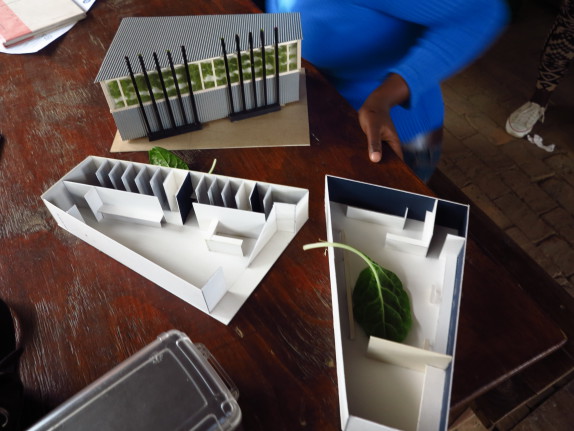
From March to April 2014 the community, together with TEL, began co-designing the facility. The designs include toilets for men and women, a wash area and a kiosk on the ground floor. The second floor will contain a crèche and soup kitchen that will be managed by the community. After conducting a survey with Zwelitsha’s families about amenities to be included in the facility, community leaders chose to exclude showers due to their infrequent use in the Langrug WaSH facility. The community also chose to make use of Enviro Loo toilets after they visited Enviro Loo in November 2013 and received detailed explanations on how the toilets are maintained and operated. The Enviro Loo is a waterless toilet system that provides a safe, non-polluting, cost-effective solution to sanitation.

Co-designing with Touching the Earth Lightly

Co-designing with Touching the Earth Lightly

IMG_6272

Co-designing the WaSH facility

Model of Siphumelele WaSH facility

Model of Siphumelele WaSH facility

Building the Team: Community-led Implementation

Apart from the partners already mentioned, the community has put together different teams to lead the implementation process. These include a leadership committee, a savings group and an Informal Settlement Upgrading Team (ISUT). This team is led by 8 women and includes a Community Liaison Officer, a storekeeper and a project manager who spearhead the construction process. After an exchange to a savings scheme linked to the Federation of the Urban Poor (FEDUP), the community set up their own savings group in July 2014 so as to manage finances to maintain and operate Siphumelele WaSH facility.

Building a voice of the urban poor in Langrug

The foundations for both WaSH facilities were laid when Stellenbosch Municipality signed a Memorandum of Understanding (MoU) with the community and ISN / CORC in 2011. Since this date Langrug’s community leaders have been developing a formal relationship with the Municipality and are making a strong case for how urban poor communities successfully organise themselves to lead their own upgrading processes, and how co-design and co-planning is a step towards a more tangible ‘inclusive city’.

(Photographs: Stephen Lamb, TEL)

Phase 1 of construction

Phase 1 of construction

The construction team

The construction team

FEDUP and ISN Leadership Retreat 2014

By CORC, FEDUP, ISN No Comments

By Yolande Hendler (on behalf of CORC)

Leadership Retreat in KZN, Durban

Leadership Retreat in KZN, Durban

From 20 – 25 June 2014 national leaders from both FEDUP and ISN met in Durban, Kwa-Zulu Natal, for a leadership retreat. The aim of the retreat was to open up a space for leaders to reflect and reassess the different methods and tools they have been using to mobilise their communities.

These tools – mobilization and savings, exchanges, enumerations, mapping, and community-led implementation – are a shared set of rituals that all federations affiliated to Shack / Sum Dwellers International (SDI) practice. The retreat was not only a time of reflection, reorientation and discussion. It was also one of practical learning, especially in mapping, enumeration and savings practices, in which leaders refocused on the strength of these tools to mobilise new informal settlements and savings schemes.

The retreat

At the beginning of the retreat, Rose Molokoane, national co-ordinator of FEDUP explained,

“The last time we were here in Durban was for the march [to eThewkini Municipality] on 24 March 2014. We realized then that we need to continue building our leadership to make our work and these kind of events successful because an organisation is not a project, but a process. This is when the idea developed to call most if not all our leaders to a retreat”

This went hand in hand with developing and discussing a joint focus for the retreat. In thinking about the nature of a retreat, the group responded that it viewed the retreat as a time of reflection, co-operation, re-affirming vision, working together and a reminder of the Alliance’s current position. The group also highlighted that it wanted to achieve this focus by better understanding the Alliance’s vision and background as well as getting practically involved in community activities.

Rose Molokoane facilitates a discussion at the Leadership Retreat

Rose Molokoane facilitates a discussion at the Leadership Retreat

While the first day of the retreat looked back at the history and foundation of the Alliance, the other days focused on building the capacity of Alliance leaders for current and future activities. On the first day therefore the group focused on the Alliance’s founding gathering at Broederstroom and reminded each other of five pillars: love, availability, transparency, trust and commitment.

On the remaining four days Alliance leaders split into teams to do enumeration and mapping exercises in Boxwood and Johanna Road settlements in Kenville and to collect savings in Kwa Bestar. This meant that FEDUP and ISN members, some for the first time, became actively involved in one another’s tools of enumeration and savings.

These days also included training with the CORC enumeration team and workshops on the organisational roles and structure of the SA Alliance (ISN, FEDUP, CORC & uTshani Fund).

Rose Molokoane (National Co-ordinator of FEDUP) and Charlton Ziervogel (CORC Programme Officer)

Rose Molokoane (National Co-ordinator of FEDUP) and Charlton Ziervogel (CORC Programme Officer)

Enumerations and mapping

The enumeration activities in Boxwood and Johanna Rd introduced FEDUP members to the practice of numbering, shack measuring, data collection and capturing, and settlement mapping. For Rose, it was clear that celebrating information is vital. This is why enumerations are so powerful – the socio-demographic questionnaires collect valuable information that communities can use to better organize themselves and lobby local government. Ma Mkhabela, from FEDUP KZN agreed that,

“It’s important that leaders are present at enumerations so that they can be in touch with community issues. Enumerations help to give people a space to relate to each other”

(Ma Mkhabela, FEDUP KZN)

Similarly, mapping and measuring give community members a further tool for planning and lobbying. By knowing the number of pathways in one’s settlement, or the incline of gradients, communities can contribute to developing a plan for their settlement.

Right: MaMkhabela (FEDUP KZN)

Right: MaMkhabela (FEDUP KZN)

Savings

During the savings collection in Durban’s Kwa Bestar, ISN members received a direct insight to the power of savings. They saw how savings can strongly connect communities through regular savings collection visits that also offer a personal opportunity to enquire about the welfare of a fellow savings scheme member.

Ndodeni Dengo ,Durban’s ISN co-ordinator, reflected,

“It was my first time collecting door-to-door savings. We need to take this back to our communities”

ISN National Co-ordinators Front: Ndodeni Dengo

ISN National Co-ordinators Front: Ndodeni Dengo

Looking back and moving forward

During the feedback session many groups expressed the value they saw in working together as a team and emphasized the need to continue sharing ideas and establishing a good working relationship between ISN & FEDUP.

“This retreat has revived me. I’m now able to remember things I had forgotten. I learned how things should be done in our organisation. Our pillars are there to grow the organisation. In our region, we now also know about the power or enumerations”

(Rosina Mufumadi, FEDUP Limpopo)

Rosina Mufamadi (FEDUP Limpopo)

Rosina Mufumadi (FEDUP Limpopo)

The Dept. of Human Settlements honours Patrick Hunsley & pledges R10 million to FEDUP

By CORC, FEDUP, ISN, SDI, uTshani Fund No Comments

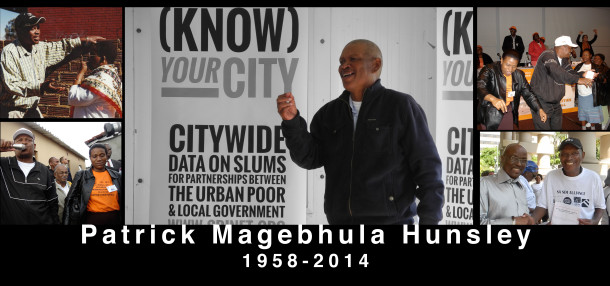
Patrick Magebhula Hunsley, founding member and stalwart of the South African Alliance and Shack Dwellers International (SDI), was awarded the Lifetime Achievement Award by Lindiwe Sisulu, Minister of Human Settlements on behalf of the Department of Human Settlements on Thursday 14 August 2014 at the annual Govan Mbeki Human Settlements Awards ceremony held in Johannesburg.

Patrick Magebhula Hunsley

Patrick Magebhula Hunsley

Patrick's son, Charles Hunsley, receives the Lifetime Achievement Award on behalf of his father from Minister of Human Settlements, Lindiwe Sisulu

Patrick’s son, Charles Hunsley, receives the Lifetime Achievement Award on behalf of his father from Minister of Human Settlements, Lindiwe Sisulu

This prestigious award ceremony (established in 2006) aims “to promote and inculcate a culture of excellence within the human settlement sector in the delivery of quality human settlements and dignity to South Africans” (Reference). The awards acknowledge excellent achievements on a Provincial and National level, in order to showcase and demonstrate the work done by the department at both tiers and to promote best practices in meeting the delivery mandate of the Presidency’s Outcome 8, which is aligned with the vision of building sustainable human settlements and meeting the Millennium Development Goals.

This year, however, the minister included an additional category of awards – the Lifetime Achievement Award – that was given to only two people in honour of excellent and noteworthy contributions. When attending Patrick’s funeral in Durban on 16 August at the KwaMashu Christian Centre in Durban, the minister shared

“For the first time this year, we honoured people with outstanding qualities and recognized them as life time achievers in this area. Of all the people who have been active in this field we chose two people. The first was Joe Slovo, the first minister of housing and the second was Patrick Magebhula”.

Lindiwe Sisulu, Minister of Human Settlements and Rose Molokoane, National Coordinator of FEDUP at Patrick Hunsley's funeral on 16 August 2014.

Lindiwe Sisulu, Minister of Human Settlements and Rose Molokoane, National Coordinator of FEDUP at Patrick Hunsley’s funeral on 16 August 2014.

Lindiwe Sisulu, Minister of Human Settlements pledges R10 000 000 to the Federation of the Urban Poor at Patrick's funeral

Lindiwe Sisulu, Minister of Human Settlements speaks at Patrick’s funeral

The Federation of the Urban Poor (FEDUP) has had a long-standing relationship with government. In the lead up to the 1994 elections, the federation of women’s savings collectives lobbied for an alternative approach to housing that focused on people-centred and controlled development – this model was appropriated by government in 1998 in the form of the People’s Housing Process (PHP). Read more here. Patrick was instrumental in these processes, negotiating with government and ‘un-blocking’ strategic regions in the country. In 2006 FEDUP secured a long term ‘subsidy pledge’ with the department of human settlements which was signed by FEDUP, uTshani Fund and then national minister of housing, Lindiwe Sisulu for 1000 housing subsidies per province in South Africa. In 2010 Patrick served as special advisor to then minister of human settlements, Tokyo Sexwale, on human settlements policy and practice. In 2011 Patrick was asked to serve on a Ministerial Task Team on Water and Sanitation, headed by Ms. Winnie Madikizela-Mandela, tasked with addressing the issues of open-air, incomplete and dilapidated toilets in poor communities across South Africa.

Having worked together closely with Patrick, current Minister of Human Settlements, Lindiwe Sisulu, recognised him at the award ceremony as

 “an outstanding, humble man who helped us shape our policies and understand how people who live in slum conditions are not victims, that they have the power, together with our support, to take themselves out of their poverty. His name is Patrick Magebhula and he passed away on Monday 4 August 2014. It is a sad loss for us. We will bury him on Saturday with all the dignity that he deserves. Today we honour him as an internationally recognised champion and pioneer of the empowerment of the poor and acknowledge his outstanding contribution. We and his broader family of the Federation of the Urban Poor and SDI will have to double our collective effort to further his work to ensure that his life passion was not in vain.” (Reference)

At Patrick’s funeral, which was attended by family, hundreds of fellow activists, friends and comrades the minister remembered how she and Patrick had first met in Barcelona (Cape Town) when she was a new minister together with FEDUP and Rose. As she got up to speak at one of the occasions she explained that Patrick had humorously asked her to explain who she was, who had sent her, who she was representing and what her promise would be to the Federation. After the minister had shared this anecdote, she pledged R 10 000 000 in housing subsidies to FEDUP. Kwa Mashu’s church – packed to the brim – erupted in song, cheers and ululations.

 “My only regret is that Patrick is not here today to hear me but I want him to know that the promise I made to him, today, I kept in his honour. The federation will not be in want while I am around, the federation will not want for anything while the DG, the deputy minister and the department is there. The partnership we have will live in honour of this man whose humility is amazing. As the Department of Human Settlements we count ourselves as the broader family of Patrick.”

She also honoured the work of Shack Dwellers International (SDI) and its nomination for the Nobel Peace Prize, which South Africa has decided to second.

“We as South Africa have pledged to second SDI’s nomination and lobby all African countries who are part of us to second the nomination so that we can celebrate with Patrick should we win the peace prize”.

The Minister then led the gathering in the song: “Lihambile iQhawe”, a famous freedom song that was also sung as Mandela was buried in December last year. The refrain goes: “Lihambile iQhawe lamaQhawa” – The Bravest of the Brave has departed.


Patrick Magebhula Hunsley | 1958 – 2014

By CORC, FEDUP, ISN, uTshani Fund No Comments

patrick hunsley-1

Patrick Magebhula Hunsley, our comrade, our brother and our very special friend passed away on Monday 4 August.

Patrick has been dodging bullets all his life – literally and figuratively. He survived being stabbed in the lung. He survived vicious assaults. He survived stints in reformatory and in prison. He survived being gang-pressed into an Ihkatha Impi. He survived a prolonged fight in the shacklands of Inanda to bring a progressive civic organisation into being in his settlement. He survived wave after wave of attacks from forces of reaction and crime to unseat him.

In the 1980s and 1990s we invaded land to create settlements that now house formal communities with services, legal tenure and housing development. We have worked with all levels of the government to give the urban poor a voice. Working with communities we have driven home the need to save money, collect information and upgrade. – Patrick Magebhula writes in an opinion piece in the Mail and Guardian

Since the early 1990s, Patrick has been instrumental in building community networks and local savings schemes. He negotiated with government departments, and even turned away offers when it jeopardised the needs of the community. From his home in Piesang River between the shacklands of Inanda, Durban, where the Federation built 1,431 houses between 1992 and 2000, Patrick mobilised communities across South Africa as a leader of the Federation of the Urban and Rural Poor. Since 2008/09 he served as the chairperson of the Informal Settlement Network. He built progressive partnerships with government agencies and as a special advisor to the previous minister of Human Settlements Mr. Tokyo Sexwale, served as a committee member of the Ministerial Sanitation Task Team, and presented at numerous international conferences such as World Urban Forum 7.

[vimeo width=”620″ height=”485″]http://vimeo.com/43888528[/vimeo]

Patrick has breathed his last. The accumulated batterings of poverty wore him down. It is hard to imagine a future without him – without his marvellous sense of humour, his poetic soul, his fiery oratory, his capacity to find common ground with one and all, his deep compassion for his fellow human being. A flawed genius has passed on. Our movement will be immeasurably more poor who share his dream for a just and equitable world in which poverty and exclusion, oppression and intolerance are consigned to the past.

Unknown

The sun shines for the chosen few.

The sun rises for the lucky ones.

The sun sets for the majority of the poor.

I end up counting the stars


For the next few weeks there will be mourning for Patrick in hundreds of informal settlements, backyard shacks, pavement dwellings in dozens of countries. There will be mourning for him in places of power where his sparkle and his candour, his determination and his unwavering commitment earned him enemies but won over many, many more.

Everyone is invited to share their stories, memories and moments with Patrick on a dedicated social media channel.


Invalid Displayed Gallery


A selection of Patrick’s poems are available for download: