Category

CORC

Community Voices: “Is BholoBholo a place we can call home?”

By CORC, FEDUP, ISN No Comments

By members of Bholobholo Informal Settlement (on behalf of ISN)*

For the SA SDI Alliance community-produced documentation is crucial. Engaging communities with such processes enables them to drive their own development interests and also positions them to share their experiences in community organization processes such as informal settlement upgrading. IN this way communities demonstrate the approach of the SA SDI Alliance: “Nothing for us without us”.

This blog was written by community members of Bholobholo, namely Nosipho Dzingwa,Masixole Siyaphi,Thabisa Kebe,Bulelwa Dunjwa, Thembela Spele,Nosiphathise Halile,Xolani Maqoko,Lulama Giyama,Zingiswa Tshwela and Mrs Duda.

SAMSUNG CSC

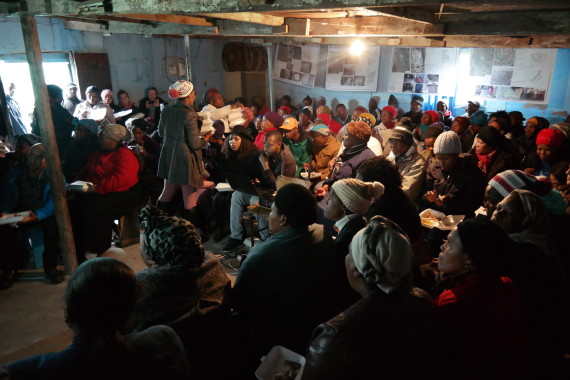
Community Documentation Workshop with BholoBholo

History of the settlement

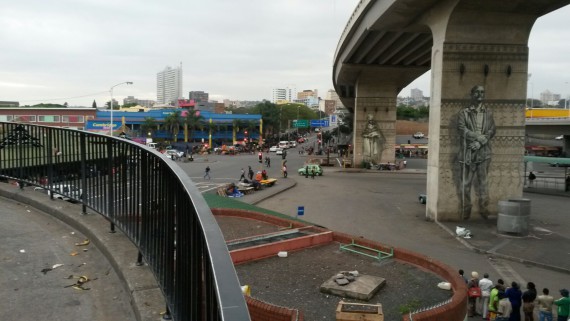
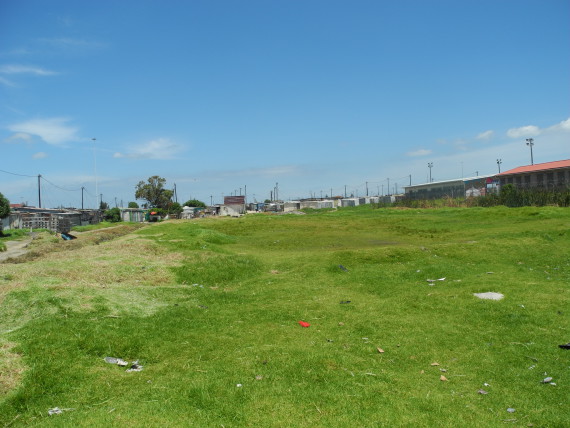
BholoBholo is located on a traffic circle intersection in Extension 6 in Mfuleni Cape Town. This is one of the smallest informal settlements in Cape Town with a land size of 912m².

We were backyarders in the surrounding formal houses. In 2006, we moved to an open space [which later became BholoBholo]. This was the time that plot owners were going to receive RDP houses. Since then we never moved back because the plot owners claimed that they did not have space for backyarders anymore. The church was built in 2007 and several more people joined as they saw an open space too. Some residents in BholoBholo bought shacks and joined the community in this way. To date we have 15 households with 33 people.

BholoBholo is an isiXhosa name for the intestine called ileum. The name came to the settlement because of the street vendors in front of the settlement that sell meat including intestines called uBholobholo. BholoBholo was an open space separating the meat vendors and the formal houses. This space was used for meetings and other activities such as a soccer field for kids.

This blog was written by the community of Bholobholo.

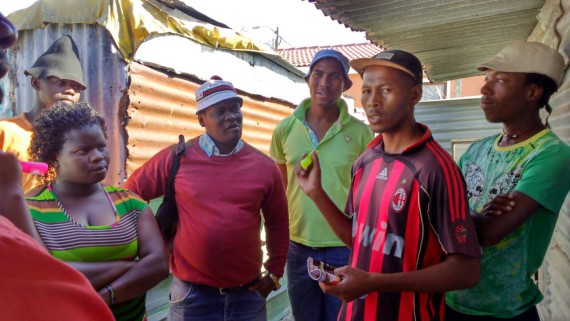
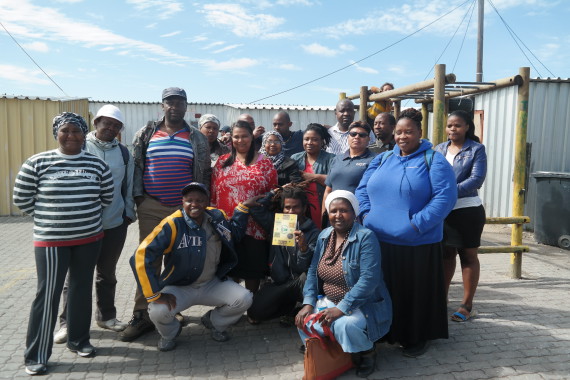
Bholobholo community leaders and community design team members

 Our reality now

Like any informal settlement, BholoBholo community is faced with a number of challenges which include:

  • Electricity

The community of BholoBholo have used illegal connections for electricity, they pay a high amount to the nearest houses just to get their tap connected. These illegal connections are a danger to the kids that play in the area hence they might touch the wires and be shocked or worse, killed.

  • Toilets and Taps

There are a total of four taps in BholoBholo of which two do not work properly. There is also a strong need for taps in the community because we share the ones we have with the meat vendors.We don’t have proper toilets, we make use of the bushes or ask to use the toilet in the formal houses.

  • Multipurpose Hall and Park

We also need a hall to hold meetings and community events and a park for children to play in and be safe.

  • Proper road access

“I wonder what would happen if our settlement could be in a fire? Who would we turn to?”

Masixole Siyaphi, Community leader in Bholobholo.

We need roads so that emergency vehicles can be able to assist us in time of need. Having roads/streets would make the place look neat and easy to find because now it takes longer to find a house number when needed.

Another major problem we are faced with is the dirt caused by the street vendors who use the dumping site to dump meat that they cannot sell. This causes an odor that can be a health hazard and attracts mosquitoes and rats that later bite the children.

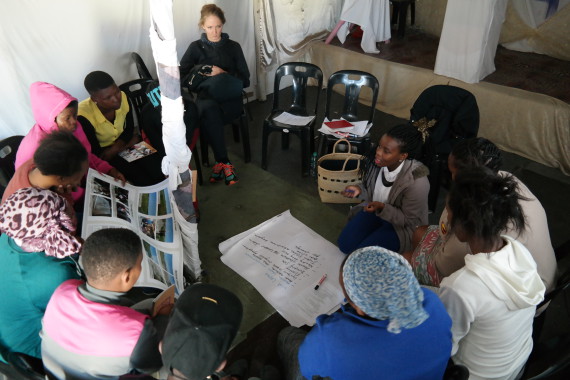
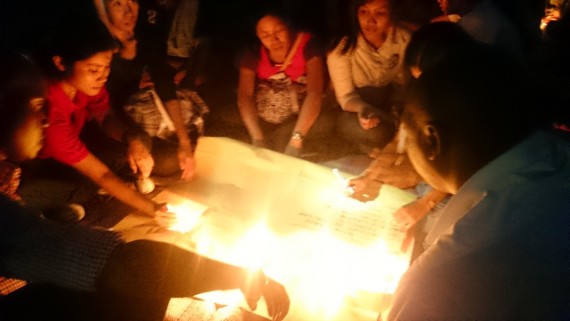
Writing Workshop with the community of Bholobholo.

Writing workshop with the community of Bholobholo.

How did we meet ISN?

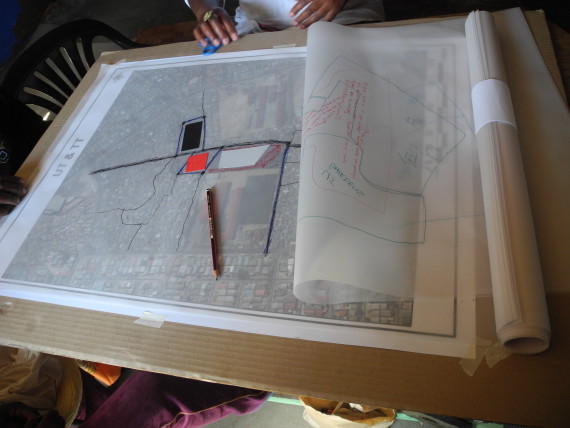
Nkokheli Ncambele is the one who introduced us to the Informal Settlement Network (ISN) when ISN came to mobilise our settlement. We then attended meetings and learnt the rituals of the alliance. After that we started with the community organisation processes. Our settlement was enumerated by 2 members of the community which we selected ourselves. We also profiled the settlement together as the community. To date we are waiting for reblocking because we have completed the designs together with the CORC technical team. These plans are important to us because

“we want our children to have a place to call home and be safe”

Nosipho Dzingwa, BholoBholo community leader

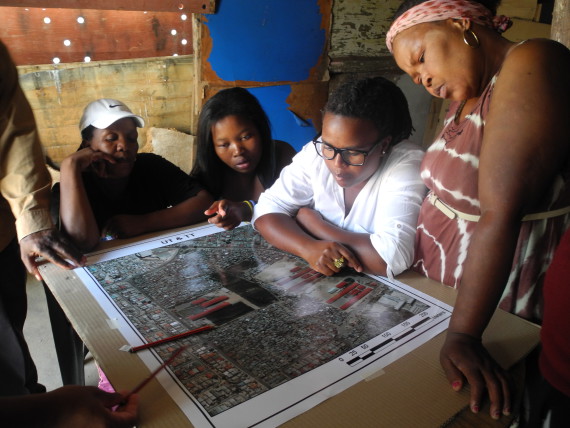
Community identifying their

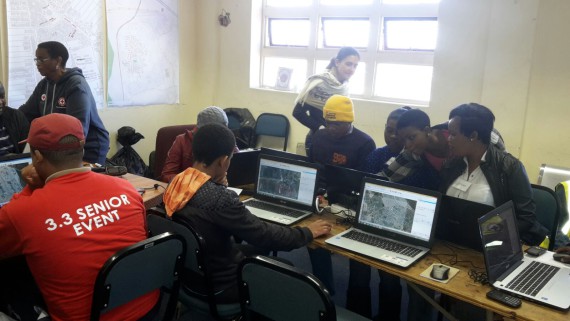
Community mapping supported by CORC technical team

*Blog compiled by Andiswa Meke (on behalf of CORC)

SA SDI Alliance and Red Cross Society explore Fire Prevention Tools

By CORC, FEDUP No Comments

By Thandeka Tshabalala (on behalf of CORC).

September-April  marks  the Western Cape Fire season.  The eight months period has the highest record  of fire disasters due to a number of reasons but mainly negligence and lack of fire prevention  education. Throughout these times, informal settlement dwellers sit in panic and uncertainty of when a devastating fire may strike their settlement costing them their  belongings and in worst cases their lives. Urban fires are  amongst the highest disaster occurrences in informal settlements,and need to be addressed.

When  fires break out in informal settlement they spread fast and the community takes longer to be alerted . Evacuations are often dangerous and depending on  the density in these settlements  emergency responders often are unable to access homes in time. In July 2015  the South African SDI Alliance,  South African Red Cross Society (SACRS) and American Red Cross Society formed partnership with Lumkani to roll out early detection fire sensor devices targeting 1000 households in 4 informal settlements (UT, TT, TB section and WB) located in site B, Khayelitsha. The purpose of the project is to reduce fire risks by increasing community resilience against shack fires.  The introduction of early warning devices in  communities contributes to alerting  communities early  to avoid fire from spreading .  Another  benefit of the project is  formulating of fire response plans and capacitation of disaster response teams within the community.

IMG-20151026-WA0004

A baseline study and GIS mapping exercise formed part of the first crucial steps of information gathering of the project. 30 community volunteers were trained in conducting community surveys and GIS mapping. The community surveys aimed at gathering first hand information on previous instances of fires.  With questions ranging from fuel used for cooking, heating,lighting to how the community responded to fires. This included identifying nearest fire hydrants and emergency exists in the informal settlement. Key informants and focus group interviews gave an in-depth understanding of the existing fire response mechanisms taken by community leaders and disaster relief organizations.

The GIS map marking access points in the settlements and hierarchy of routes classifies movement within the settlements starting  from vehicle access to footpaths forms part of the analysis. Once the community has verified the map it will then be used  as a tool to better understand the community access points that could be of use during emergencies. After analysis and feedback from community members the baseline study will be used to inform future plans for fire response and mitigation.

IMG-20151026-WA0007 (1)

Imbizos (i.e. community gatherings) were platforms used by  communities to participate and give feedback on the project. Councilors of ward 90 and 91 Luvuyo Hebe and Monde Mabandla together with emergency respondents such as the police and fire departments came in high numbers to support this initiative.During the launch of the project on the 26th August 2015 Detective Mandlana  showed appreciation  to the  South African Red cross and Informal Settlement Network (ISN) for the project  and urged the community to use the Lumkani devices.

 “Safety starts by individuals taking precautions all the time”.

Detective Mandlana from the Police department.

To strengthen the existing disaster response  mechanisms in the community, 40 community members were trained in first aid (I, II &III) and fire fighting. The community response team is equipped to assess possible disasters and also be prepared to respond to any disaster occurring in their community.The community response teams have a lifetime commitment to the community because they can help improve the safety of their communities.

“ In the middle of a disaster, these are the people who will be able to say they are here to help, give critical support and assist victims before the arrival of emergency services.”

IMG-20151026-WA0005

This project forms part of a long-term objective  which includes decreasing urban fires and strengthening the impact of the Lumkani early warning device. The device acts as an early warning system in the community, decreasing the time taken by the community to be alerted in cases of fires, with addition of the response team the community is well positioned to deal with shack fires while waiting for emergency services. This intervention was informed by the profiling and enumeration data captured by the communities to understand the community priority needs.  The long term upgrading strategy would be the addition of planned preventative measures such as opening up streets and open spaces for emergency evacuations and access of emergency services.

From Joburg to Manila City: A Photo Story of Community Architects

By CORC, FEDUP, ISN, SDI No Comments

By Jhono Bennett (on behalf of SA SDI Alliance)

This story covers the 2015 exchange trip between South African delegates from the SDI Network and the CAN Network in the Philippines.

Figure 1: Manila City

Figure 1: Manila City


THE EXCHANGE

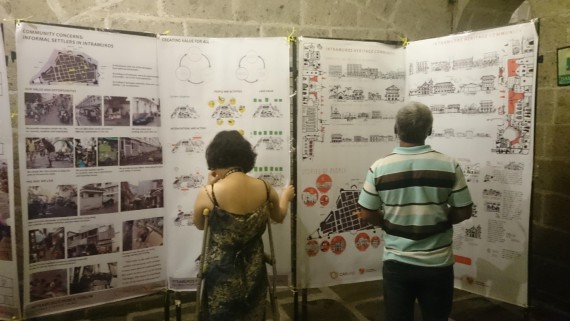
In 2015, a small delegation from the South African Shack Dwellers International Alliance (SA SDI) attended the  3rd Regional Community Architecture (CAN) Meeting & Workshop. The aim was for the South African delegates to gain first hand experience and learn from the work that CAN practices.

This delegation consisted of 3 professionals and three community members from  SA SDI and were chosen by the alliance for strategic leadership and capacity development to bring back home:

Jhono Bennett 1to1 – Agency of Engagement
Motebang Daniel Matsela CORC
Thembelihle Ngcuka CORC
Phaello Philder Mmole FEDUP
Ofentse Phefu FEDUP
Emmanuel Malinga FEDUP/ISN

As a team, we were expected to try and understand how the CAN works, its practices and tools as well as its members . All this was to be performed  during the series of workshops,meetings and dialogues that the we were exposed to.  We also learned from similar practitioners and community groups who are working on similar problems around the development of disadvantaged communities, such as in South Africa. Ideally we would learn valuable lessons from  CAN in regard to practices of community design and bring these home.

Workshop Background:

The 3rd Regional CAN Meeting & Workshop was held in Manila, Philippines this year between June 16 – June 23 and conducted with the theme:

Together we CAN! People planning for future inclusive cities

Figure 3: CAN workshop Day 1

Figure 3: CAN workshop Day 1


The workshop aimed to:

  • Bring together local and international participants working in different countries in Asia and beyond to exchange and share experiences through community workshops.
  • Provide concrete technical support to actual community initiatives through fieldwork in people centred heritage planning in Intramuros, Manila and city-wide development approach (CDA) in Muntinlupa City.
  • Link with local universities
  • Plan new collaborative future activities with multiple stakeholders to ensure long term change,ultimately the workshop aimed to support the larger mission of the CAN Network which is to:

“..Create a platform to link architects, engineers, planners, universities and community artisans in Asia, who work with communities and believe that poor communities should play a central role in planning their communities, and in finding solutions to build better settlements and more inclusive cities.”

Figure 4: CAN Network diagram

Figure 4: CAN Network diagram

The Workshop:

The delegation arrived on the 15th, and was welcomed by the well organised and energetic CAN management team.

Figure 6: Bangladesh CAN delegates presenting.

Figure 6: Bangladesh CAN delegates presenting.

After an initial series of presentations on CAN and  various organisations that make up the network, individual organisations of the workshop were invited to present themselves and their work.

Figure 6: Intramuros site visit.

Figure 6: Intramuros site visit.


Figure 7: Intramuros site visit workshop.

Figure 7: Intramuros site visit workshop.


Figure 8: Site visit to Banana City, Intramuros.

Figure 8: Site visit to Banana City, Intramuros.


From here the next 2 days were spent taking the conference on site visits of where the workshop delegates would be working in Allabang and Intramuros.

Figure 9: Allabang site visit

Figure 9: Allabang site visit


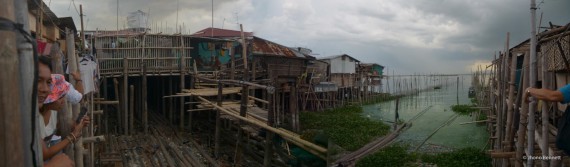
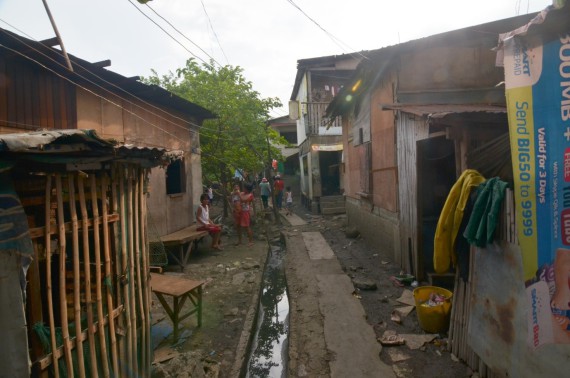
Figure 10: Allabang site visit-Fisherman houses.

Figure 10: Allabang site visit-Fisherman houses.


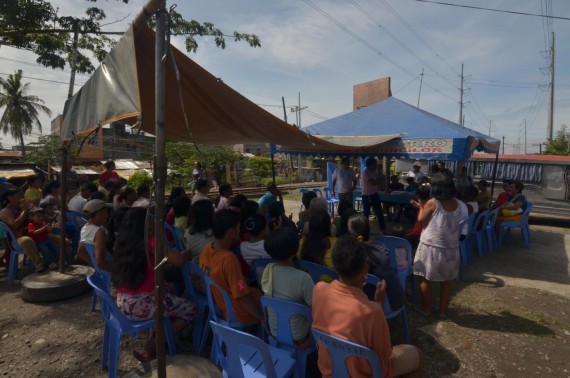
Figure 11: Allabang sitevisit-Savings group welcome

Figure 11: Allabang site visit-Savings group welcome


Figure 12: Allabang site visit-savings group welcome.

Figure 12: Allabang site visit-savings group welcome.


The participants were then broken into smaller groups of practitioners and community members and sent to stay in separate neighborhoods (or Barangays) where each group would focus on a specific set of issues faced by the various community groups supported by the local CAN organisation, Tampei.

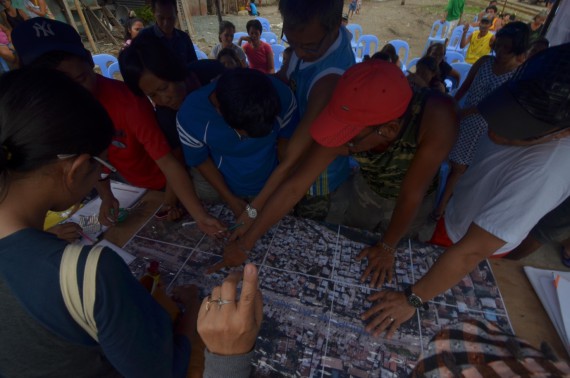
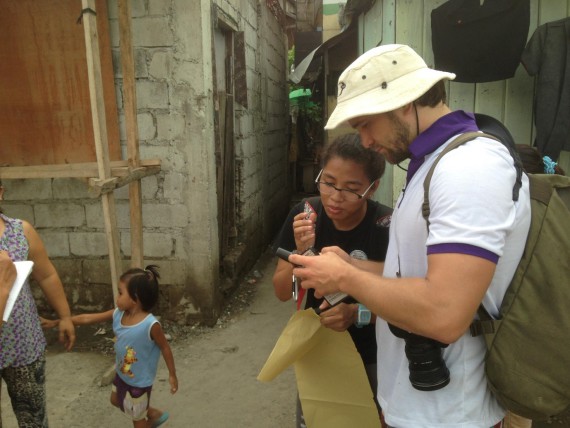
Figure 13: Group focus work in Allabang -Enumeration and Mapping.

Figure 13: Group focus work in Allabang -Enumeration and Mapping.


Figure 14: Group focus work in Allabang- Enumerations and Mapping.

Figure 14: Group focus work in Allabang- Enumerations and Mapping.


Figure 15: Delegates learning CAN practices.

Figure 15: Delegates learning CAN practices.


Figure 16: Group based work in Allabang- Confirming Mapping.

Figure 16: Group based work in Allabang- Confirming Mapping.


Each group spent the week intensively working on enumeration, mapping, and design with and for local groups aiming to initiate development energy supporting community initiatives.

Figure 16: GPS mapping in dense settlements of Allabang.

Figure 16: GPS mapping in dense settlements of Allabang.


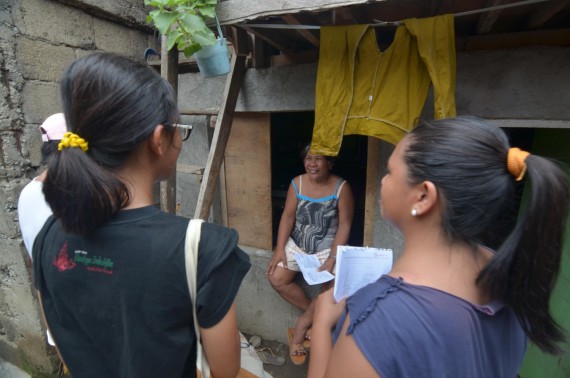
Figure 18: : Group Focus Work in Allabang - Story collection from residents

Figure 18: : Group Focus Work in Allabang – Story collection from residents


Figure 19: : Group Focus Work in Allabang - Community Mapping with residents

Figure 19: : Group Focus Work in Allabang – Community Mapping with residents


Figure 20: Allabang in context.

Figure 20: Allabang in context.


Figure 21: Group Focus Work in Allabang - Enumeration & Mapping with residents.

Figure 21: Group Focus Work in Allabang – Enumeration & Mapping with residents.


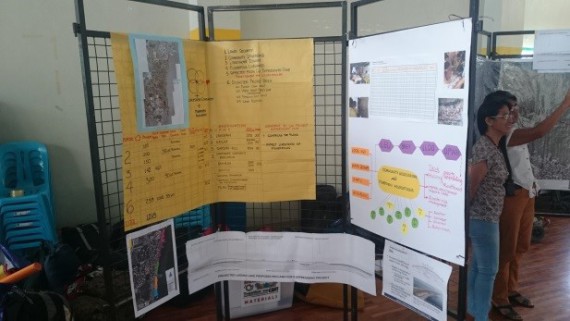
Figure 22: Group Focus Work in Allabang - Consolidating Mapping work for presentation

Figure 22: Group Focus Work in Allabang – Consolidating Mapping work for presentation


Figure 23:: Sharing valuable skills from participants.

Figure 23:: Sharing valuable skills from participants.


This was done while strategically developing a body of work that would be shown to local government stakeholders at a final seminar in both Allabang and Intramuros.

Consolidated Group work for strategic presentation with government stakeholders.


24b

24c

24d

Figure 25: Allabang - Strategic presentation with invited stakeholders

Figure 25: Allabang – Strategic presentation with invited stakeholders


Figure 26: : South African delegate presenting work on behalf of focus group

Figure 26: : South African delegate presenting work on behalf of focus group


Figure 27: Intramuros - Strategic Presentation

Figure 27: Intramuros – Strategic Presentation


The workshop culminated in a social event on the 24th, celebrating the workshop’s success.

Key Observations:

The workshop was highly successful in bringing together community architects from across the world to share experience and knowledge through the mixture of workshop tasks, social events and working activities.

Figure 28: CAN Practice: intensive workshops

Figure 28: CAN Practice: intensive workshops

The strategic use of these professionals to hyper-activate local community processes was exemplary and not have the visited communities as passive beneficiaries, while using the work developed in the short time to engage local governance bodies to support local community processes was a highly impactful strategy employed by the workshop organisers.

Figure 29: CAN Practice Capacitation through training

Figure 29: CAN Practice Capacitation through training

In particular it was impressive to see how ingrained the practices were conducted by both local community support and technical support. There seems to be something in the way the Philippines alliance work that goes beyond technical support and enters into new cultural and social dimensions of such work.

Figure 30: : CAN Practice - Strategic grass roots work

Figure 30: : CAN Practice – Strategic grass roots work

Personally, it was amazing to be in the presence of so many like-minded professionals who shared the values of community driven processes and were skilled in facilitative design processes.

Figure 31: CAN Practice in action

Figure 31: CAN Practice in action

This experience further cemented my personal motivation in developing critical co-productive design skills for me and other South African socio-technical spatial designers through community driven development projects.

SDI, WIEGO & Avina: Growing a Global Coalition of the Urban Poor

By CORC, FEDUP, ISN, SDI No Comments

By Yolande Hendler (on behalf of CORC)

Piesang River – the home of the South African Federation of the Urban Poor (FEDUP), a meeting place filled with sounds of Portuguese, isiZulu, Spanish and English,  a place filled with expectations of what a four-day learning exchange might hold for its participants – representatives of urban poor networks from across Ecuador, Colombia, Brazil and South Africa. Are there joint mobilisation strategies? How does each movement build partnerships? And what does advocacy from the perspective of community leaders look like? These questions shaped the purpose of the four-day learning exchange from 21-24 September in South Africa’s east coast port city, Durban.
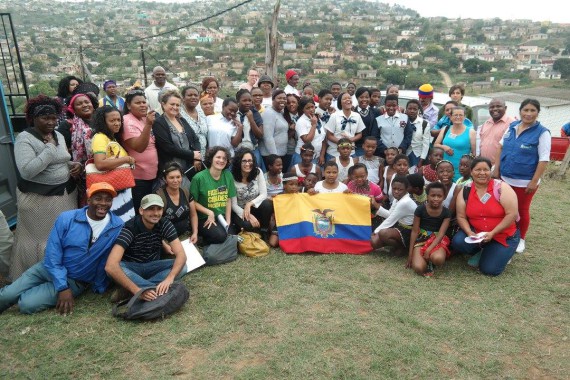
WEIGO EXCHANGE

The participants included community leaders and supporting organisations from

  • the Brazilian Alliance of Shack/Slum Dwellers International (SDI)
  • the Ecuadorian Waste Picker Network
  • the Ecuadorian Network for Fair, Democratic & Sustainable Cities
  • the Association of Recyclers in Bogota, Colombia (Asociación de Recicladores de Bogota)
  • Fundacion Avina in Peru & Ecuador
  • Women In Informal Employment : Globalising & Organising (WIEGO)
  • Asiye eTafuleni in Durban (AeT, network of informal workers)
  • The South African SDI Alliance as hosts: Federation of the Urban Poor (FEDUP), Informal Settlement Network (ISN) and Community Organisation Resource Centre (CORC)

What brought together representatives from such different locations? Their affiliation to SDI (Brazil & South Africa), WIEGO (Colombia & Asiye eTafuleni, South Africa) and Fundacion Avina (Ecuador). All three are global movements of the urban poor. Although their approaches may differ, SDI, WIEGO and Avina share the vision of building equitable, just and inclusive cities. The learning exchange was convened by Cities Alliance, of which WIEGO and SDI are both members. Envisioned as a two-part exchange, the first was hosted by SDI in South Africa, while the second will be hosted by WIEGO in Colombia.

The exchange focussed on exposing the visitors to the South African Alliance’s approaches to- and outcomes of community organising. This included a visit to housing and informal settlement upgrading projects, a savings scheme, conducting practical data collection, a partnership meeting with government and getting to know the context of informal workers.

A People’s Approach to Housing and Upgrading

Visiting a people driven housing project at Namibia

Visiting a people driven housing project at Namibia Stop 8 settlements

While each movement shared its main focal areas and organisational approaches in presentations on the first day, a real sense of getting to know each other occurred through questions and anecdotes that opened windows into personal and collective experiences:

“In Colombia waste-pickers have been organising for more than 30 years – recycling is an option for poor people who are old or don’t have access to jobs. I was displaced during the war. My husband was killed by guerrilla fighters. Through recycling I was able to support my family” (Ana Elizabeth Cuervo Alba, Colombia)

“As waste pickers in Ecuador we lobbied the government to a point where we now have a national agreement that pays waste pickers for recycling” (Elvia Pisuña, Ecuador)

“Urban informal workers usually face extreme challenges with people resisting their presence in public spaces .We called ourselves, Asiye eTafuleni because it means – come to the table. Let us negotiate for the inclusive future of the working urban poor. “ (Richard Dobson, Asiye eTafuleni, Durban)

Incidentally, Piesang River also displays the fruits of FEDUP’s militant negotiation with national government around housing delivery. FEDUP leaders explained that the vast housing settlements in Piesang River and Namibia Stop 8 (a further area visited that afternoon) are a result of their success in convincing government to grant members direct access to their housing subsidy. This enabled them to self-build larger houses, culminating in the adoption of the People’s Housing Process (PHP) policy. Although it has not been without its challenges, PHP represents a breakthrough in altered approach from “delivery” to “collaboration”.

Recycling Exchange

Informal Settlement Upgrading Plans at Mathambo


In contrast, community leaders of the Informal Settlement Network (ISN) elaborated on their difficulty in achieving breakthrough in municipal support for informal settlement upgrading. With over 2700 informal settlements in the country and an increasing housing backlog, the ISN supports communities with tools and plans for negotiating with local government around service delivery through incremental upgrading. During a visit to Mathambo settlement, community leader and regional ISN coordinator, Ndodeni Dengo explained that despite the settlement’s relatively small size, existing structures were located in high density to each other, with most not larger than 9m2 – and a deficit of water, sanitation and electricity services. The community had collected data about its settlement through a detailed household level enumeration that helped them negotiate upgrading plans with the local municipality. By using wooden boxes for planning a new layout that would enable service installation, the community established their ideal design for the upgraded settlement.

How do urban poor communities organise?

Over the next two days the visitors were introduced to the driving force behind FEDUP and ISN’s housing and upgrading projects: the practice of daily savings and data collection as tools for community organisation.

Explaining savings Kwa Bester

Explaining savings Kwa Bester

At Kwa Bestar savings group, the visitors saw that saving is not primarily about collecting money, but about collecting people. Savings groups are a space where trust is nurtured through daily saving, sharing needs and identifying common solutions. At present, the group of 39 active members has saved US$ 2800. It is also engaged in forming smaller saving units to access loans by generating income through small businesses. The keen involvement of young people aged 8 – 25 in the savings process was a special highlight. Once more it became evident that savings is about growing and enabling people, showcased by the rich dance, drama and music performances by the youth.

Youth savings group shares dance performance

Youth savings group shares dance performance

Where savings builds self reliance, data collection builds knowledge: upon arrival at Zikhali, a small, rural settlement in the northern sugar cane fields of Durban, Rose Molokoane, National Coordinator of FEDUP and SDI deputy president, explained:

“When a community knows clearly who they are, which are their problems, it is much easier to negotiate with municipal officials”

This is how data collection through settlement profiles (of a settlement’s history, infrastructure, conditions) and enumerations (detailed household level surveys) enables partnership with local government officials. When walking around the area, the group mapped the settlement boundaries and landmarks such as water and sanitation points on GPS devices while others spoke to residents, collecting household data by using the Alliance’s enumeration form.
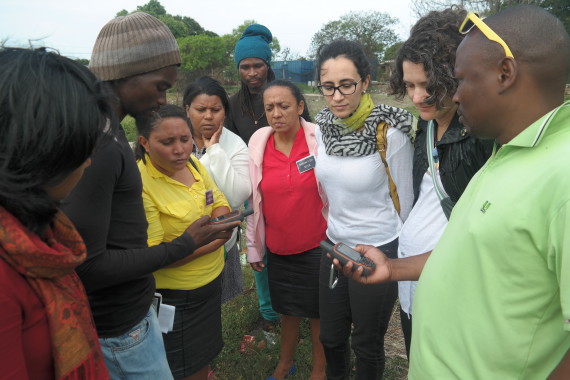
GIS mapping in Zikhali settlement

GIS mapping in Zikhali settlement


Household Enumeration in Zikhali

Household Enumeration in Zikhali

Approaches to building partnerships with government

It is through savings and data-collection that SDI’s urban poor federations leverage partnerships: saving contributions show self-reliance and community will; settlement-wide data powers a community’s negotiation capacity. On day three the visitors accompanied the Durban Alliance to a meeting with the local municipality, province and a representative from national government, discussing the progress of housing and upgrading projects.

The South Americans perceived

  • A strong relationship with government officials
  • A measure of trust and flexibility in receiving visitors at the meeting
  • Political willingness to listen and debate

Insights from the South African participants

  • The perceived trust and partnership with Municipal Government was “built by doing”, demonstrating results and inviting the municipality to be part of the social process
  • Despite the working group and formally conducted meetings, the municipality often does not give prompt answers to the most urgent needs of communities

The visit to Asiye eTafuleni (AeT) added rich insight to the experience of informal workers and an added dimension to partnership building with local authorities. The group was introduced to AeT’s work in developing inclusive spaces that support sustainable livelihoods for informal workers. The shared realities of informal settlement dwellers and informal workers became particularly evident on a walk-about through the bustling Warwick market in Durban’s inner-city. For AeT and the SA SDI Alliance the encounter highlighted similarities and differences in approach but most of all established a platform for increased collaboration in the future.

Government Partnership Meeting

Government Partnership Meeting

View on to a section of Warwick market
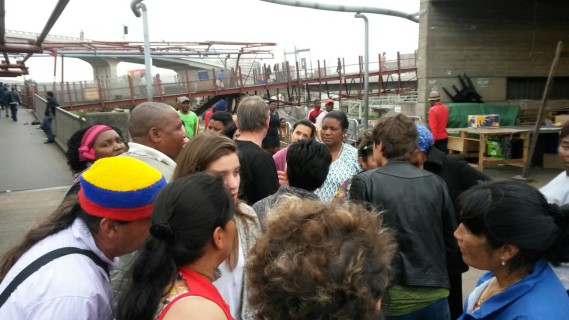
View on to a section of Warwick market


Walkabout in Warwick Junction

Walkabout in Warwick Junction


Reflecting, Learning and Joint Advocacy

With a rich collection of experiences and impressions, the group gathered on the last morning to reflect and share on the ….

  • Non-monetary value of savings. Savings are about collecting money and people (building social capital, trust, self-reliance)
  • Power of information: data collection is crucial for building self-reliance, identifying common goals and establishing negotiating power
  • Key role of women as cultivating transparency and accountability
  • Cultural factors present in South Africa: welcoming, joyful people, ability to join efforts and to coordinate
  • Youth work: value of young people generating and managing their own savings to use in initiatives of their choice (e.g. creative arts)
  • Global similarities in poor people’s struggles
  • Recycling as Income Generation: value in using opportunities around you (e.g. waste = recycling opportunity = income generation)
  • Increased awareness of interface between shack dwellers and informal workers

… and on strategies for the road ahead:

  • Mobilisation Strategies: Gain understanding of waste picker movements in South America
  • Building Partnerships: Plan further exchanges with local (i.e. national) counterparts of global movements
  • Prepare for Joint Lobbying at Global Events such as Habitat III.

As the global development community gears up for Habitat III, global movements of the urban poor are establishing a firm coalition. This learning exchange forms an integral part of that process, “allowing networks organised around livelihood and habitat to come together, share their experiences and strengthen their capacity to organise and advocate in favour of the urban poor” (Cities Alliance, Exchange convener). When speaking with a united voice, advocacy has the potential to influence policy discussions on increased collaboration between communities and governments.

“By referring to our connection with one another, WIEGO, SDI & Avina can make a strong case for a pro-poor agenda. Only if we come together as poor people we can show our governments that we are influencing their policies to meet the needs of the people. “ (Rose Molokoane, FEDUP Coordinator & SDI vice president)

Growing Partnerships with Local Government: Bulawayo visits Cape Town Learning Centre

By CORC, FEDUP, ISN, SDI No Comments

By Andiswa Meke (on behalf of CORC)

Recently, the Zimbabwe SDI Alliance spent four days on a learning exchange to the South African SDI Alliance in Cape Town (14-17 September). In the SDI network, Cape Town is one of four global learning centres for urban poor communities due to the capacity of FEDUP and ISN to operate at city scale and demonstrate productive partnerships with government. The team from Bulawayo included community, city and university representatives (from the National University of Science & Technology (NUST)) who are exploring the possibility of building a partnership between the Zimbabwean urban poor Federation and the City of Bulawayo. The Alliance introduced the group to a variety of its activities, foregrounding the value and approach of partnerships that place poor people at the centre of their own development.

SAMSUNG CSC

Introduction to policy Questions

After a warm welcoming of the group by FEDUP members on the first day, the first presentation started by the Informal settlement Network (ISN) with the context of the SA SDI alliance and the work of Informal Settlement Network (ISN) from 2009 until 2015. The presentation showed delegates the work of ISN in In-situ upgrading, water and sanitation, area-wide upgrading, multipurpose centres and other activities that they have done so far. After the presentation the delegates from Zimbabwe were given an opportunity to ask questions:

“At what stage does the city get involved in re-blocking? What is the planning process and who does it? What is the participation between communities and the city?”

(George Masimbanyana, support NGO to Zimbabwe Federation of the Homeless and Poor)

After clarification by members of ISN and support NGO, Community Organisation Resource Centre (CORC) the Zimbabweans had an understanding of the particulars of re-blocking (including its adoption as policy by the City of Cape Town in 2012) and indicated they would consider adopting it as a process that they can also try. The Bulawayo group then gave a presentation about the work they have done to date. The presentation gave an insight into the Zimbabwean Federation’s total savings, income and expenditures, total number of houses they have built and what their projects look like. The Zimbabwean Federation has also signed two Memoranda of Understanding (MoUs) with the City of Bulawayo. The group expressed the challenge of a lack of implementation and practical partnership, despite the presence of a formal agreement. The next days allowed the visitors to explore this topic further. They experienced how FEDUP and ISN formed practical partnerships and implemented projects with two municipalities.

Partnership around Upgrading: Stellenbosch Municipality

On day two, the group travelled to Langrug informal settlement near Franschoek to meet with the local Municipality of Stellenbosch. Langrug community leader and regional ISN coordinator, Trevor Masiy shared the successes and challenges the community faced with regards to being recognized as an informal settlement in that area. Lester van Schalkwyk, a municipality official, spoke of the difficulty the Municipality experienced in engaging with informal settlement communities. This is when officials realized the value of social and technical intermediaries like ISN & CORC to support and speed-up implementation of community – government partnerships. In Langrug this partnership translated into the first ever MoU between a local government and community, which enabled direct access to municipal funds for upgrading and implementation of re-blocking, drainage and a water & sanitation facility.

SAMSUNG CSC

Municipality  official sharing challenges they encountered  with Langrug Informal settlement

Partnerships around Upgrading: City of Cape Town

The third day was an upgrading site visit to Flamingo Heights in Lansdowne, Cape Town, a settlement that was recently re-blocked through a partnership between the community, SA SDI Alliance, City of Cape Town, and other actors such as the Cape Peninsula University of Technology (CPUT). Maria Matthews, community leader in Flamingo welcomed the guests and gave a brief history about the settlement and how they partnered with the city of Cape Town and the Alliance. She also gave insight about the challenges that they faced before upgrading where she noted that the community faced a high rate of crime because of the densification of their structures before re-blocking. She also cited that through the project the community managed to minimise the crime and now are safe. During an opportunity to ask questions, a Bulawayo official asked who owned the land that is now Flamingo Heights. ISN facilitator, Melanie Manuel, explained that the land belonged to an industrial company whom the City of Cape Town bought the land from. Maria Matthews, concluded,

“[Community] savings [contributions] are the core reason why we are here [in an upgraded settlement] today. We took the little we had and placed towards better living conditions.”

Community Savings as Negotiation Tool

The group then commenced to the FEDUP linked income generation group in Samora Machel. The visitors were welcomed with great hospitality and were given an overview of FEDUP`s income generation program. The visit highlighted the connection between regular saving and the ability to repay loans. This in turn enables access to further loan installments to expand a small business. In this sense, the power of individual and community saving became evident. In response to a question by the NUST representative on failed loan repayments, the loan facilitator explained:

“Saving group members are not given money that they don’t have in their savings balance, so if they fail to pay back the loan the money it is then subtracted from their saving balance.”

community leader sharing Flamingo Heights History

community leader sharing Flamingo Heights History

Area-Wide Upgrading as a result of negotiation

At UT Gardens settlement in Khayelitsha, the community came all out to support their leadership committee to welcome the visitors from Bulawayo. The Alliance shared the challenges and breakthroughs around upgrading the nearby wetland as a communal space. After giving a project overview, ISN & CORC members explained how they convinced the City to give them approval to use the land. A community leader, Thamara Hela, gave an overview of the recreational activities they envision for the upgraded wetland-park: a football ground, a gym facility and a park for the children to play where they could be safe. Read more here.

Meeting the Partners: City of Cape Town & Cape Peninsula University of Technology

Having visited a number of upgrading projects in Cape Town, the visitors met with the City of Cape Town to gain more insight into the process of partnership formation from a City perspective. The city explained how their department fits in the broader Human Settlements Sector, shared an overview of their partnership with the SA SDI Alliance, their role as service provider for ground works, engineering, topographical surveys and the Alliance’s role as technical and social support facilitator. The City shared the importance of an inter-departmental approach, which increases effective communication between various actors involved in ISU: the departments of solid waste, human settlements, water & sanitation. There was also an opportunity to observe direct engagement between communities and officials. Masilunge informal settlement leader, Lindiwe Ralarala presented the current ISU project process in her settlement, in particular the challenges of flooding, water & sanitation that the community would like to see the City address.

During lunch time the exchange moved to the architecture building at CPUT, where the group was briefed about the partnership the Alliance has with the university. It enables students to engage with the reality of planning with ‘informality’, and results in alternative practice and conceptual approaches in town planning and architecture. The lecturers explained how they want to see town-planning link with urbanization:

“Urbanization is not about building houses, it’s about human beings. We want our students to understand that they are not just planning houses but planning better living condition for the people who they work with.”

Through project modules or internships with the SA SDI Alliance students support the alliance with their technical skills in town planning or architecture. The meeting showed the visitors that strong partnerships with multiple actors can achieve more. Read more about academic partnerships here.

City of Cape Town partnership meeting

City of Cape Town partnership meeting

Ideas for Partnership Formation in Bulawayo

The exchange concluded on a high note. The support between community members from Bulawayo and Cape Town was clearly evident in their common desire to see a practical and community centered-partnership emerge in Bulawayo. As the details need to be fleshed out and implemented in Bulawayo, the South African and Zimbabwe SDI Alliance leaders will keep supporting and holding each other accountable on the path of establishing inclusive partnerships that are key to community-centered solutions. We conclude by sharing reflection points of exchange participants:

 City Reponses

  • There is great value of strategic community organisation: “We need partnerships to really engage & resolve community problems in a manner that satisfies the community adequately. “ (Bulawayo City Official)
  • Value of Reblocking & Forward Planning: “the way to tackle the problem of regrouping people is beautiful: the communities are involved and they have a say in the way forward” (Bulawayo City Official)

Zimbabwe Federation Responses

  • Community Data Collection: “I realise we need to review our settlement profiles & use our data in a useful [strategic] way.”
  • Implement MoUs: “This exchange provided us with a way to figure out how to operationalize the MoU’s”
  • Joint funding for ISU: “We need to sit with the City and establish how we can use reblocking to deal with the issues in our country. Joint funding for ISU provides huge opportunities for countries like ours which are economically challenged”
  • Accountability: “ Let’s keep each other accountable on our progress with reports, and share our knowledge and skills”

 SA SDI Alliance Responses:

  • Learning Centre: We find that as a learning centre we end up learning from you too”
  • Exchanges as Mobilisation: Exchanges are a mobilizing tool: wherever we take visitors, we gain trust from the communities. While the visitors learn, our communities learn as well.”

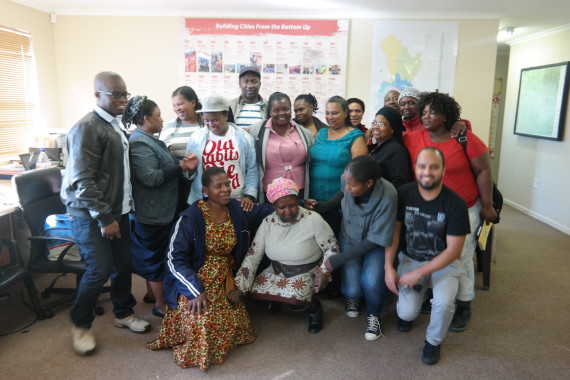
Group photo during the exchange

What is Area-Based Upgrading? A look at UT Wetland Area, Khayelitsha

By CORC, ISN No Comments

By Yolande Hendler & Moegsien Hendricks (on behalf of CORC)

Over the last ten years South Africa’s human settlement’s sector has seen significant shifts in government approach and policy toward rapid urbanisation and the resulting proliferation of informal settlements. Initially informal settlement policy concentrated on clearing housing backlogs through government subsidised houses in the Reconstruction and Development Program (RDP). With the introduction of “Breaking New Ground” (BNG), government’s Comprehensive Plan for the Development of Sustainable Human Settlements in 2004, the in-situ upgrading of informal settlements was introduced. BNG’s accompanying Upgrading Informal Settlement’s Program (UISP) “recognises the value of informal settlement upgrading as a viable strategy for addressing inequality” (Reference).

A view on to UT Wetland

A view on to UT Wetland

While the implementation of UISP is varied and not without its shortcomings (read more here), informal settlement upgrading is establishing an increasing mark on governmental approach. Notably, national policies related to upgrading are not geared towards area-based or city-wide upgrading programs. Given that previous blogs have shared much of the Alliance’s work on informal settlement upgrading, this blog turns to the question of area-wide upgrading. In so doing, it looks at the SA SDI Alliance’s experiences in the upgrading of UT Wetlands area in Site B, Khayelitsha.

What is Area-Wide Upgrading ?

Area based-upgrading of informal settlements is about understanding how the informal settlement functions within the broader local area, city wide and even national context.  The purpose of the area-based approach is to recognise informal settlements as part of the broader urban neighbourhood and not isolated islands which are spatially and socially disconnected.

The work that the SA SDI Alliance is doing through reblocking, includes projects with an area based approach such as the UT Wetland. This project focuses on upgrading the wetland to a park facility,  a community hall, landscaping and improved access pathways. It impacts four settlements that directly benefit from this intervention.  It also provides the foundation for the incremental upgrade of these settlements, building on the connectivity and integration provided by the shared facility.

Initial community site analysis and first phase planning for upgrading UT Wetlands (2014)

Initial community site analysis and first phase planning for upgrading UT Wetlands (2014)

A look at UT Wetland as area-wide upgrade

Four settlements surround the wetland in UT section: UT Gardens, UT Litha Park, TT Section and TB Section. Thamara Hela, a community leader of UT Gardens, explains the leadership structure: each settlement is organised by a steering committee of 15 members, a total of 60 community leaders for the area. Through engaging with the Informal Settlement Network (ISN), each settlement conducted an enumeration, enabling each community to gather accurate data that it can use for community organisation and development purposes.

UT TT SECTION

The wetland is not only integral to the landscape but also to community life: regularly used municipal toilets and taps surround its borders, as well as a network of main pedestrian paths.  Due to structure density in the surrounding settlements, the wetland is often used as a meeting area, particularly by UT Gardens community.

In its current usage, however, the wetland also poses a threat to residents. Thamara speaks about the danger it poses for school children who use its surrounding paths to walk to school. Due to high reeds, visibility is poor so that children and pedestrians become easy targets of crime. The wetland also poses a health hazard: with many mosquitoes and large rats in the near vicinity (if not in structures themselves) cause illnesses. Many residents suffer from eczema and skin irritations.

Poor drainage and municipal toilets on border of Wetland

Poor drainage and municipal toilets on border of Wetland

Due to inadequate meeting space, UT Gardens identified the need for a large community hall, potentially situated on the wetlands. Through its affiliation to ISN the community used the tools of the SA SDI Alliance to organise itself. Supported by CORC’s technical team the steering committee therefore developed a community-centred site analysis and plans for a potential hall in February 2014. Over the next months the steering committee shared these with its surrounding neighbours, Litha Park, TT and TB sections – sparking a discussion on community access and ownership of the land.

After a lengthy engagement with various municipal departments, the wetland was declared a Category Z, indicating that it could not be rehabilitated. With growing disillusionment among community members, the four leadership committees met in April 2015 and developed a joint plan for a “UT Wetlands Park”. This plan was developed with the technical support of the Alliance’s Community Organisation Resource Centre and conceptualised as an area wide development initiative. The plan incorporates reduced flooding in the area, ensuring a play area for children (including a soccer area), partial reblocking, and improved health and quality of life due to drainage and engineering services. All four settlements elected a UT Wetlands Steering Committee, consisting of 17 members, 4 representatives from each settlement and one member on behalf of ISN liaison and communication.

UT Gardens measures shack sizes in preparation.

UT Gardens community members measure shack sizes in preparation.

Profiling & Enumeration in UT Gardens Khayelitsha, June 2013

Profiling & Enumeration in UT Gardens Khayelitsha


With the go-ahead concerning zoning and land use, the Wetlands steering committee and Alliance engaged numerous stakeholders between April and August 2015. This included presenting the plan to UT’s four communities and assessing their willingness for participation. It also included engaging municipal actors, Councillors and relevant line departments such as City Parks and ensuring the source of funding.

Taking stock: Experiences, Challenges, Successes

At present a sizeable amount of groundwork has been covered: in August 2015 the wetland steering committee developed detailed plans with ISN, CORC, Jakupa architects and City Parks. Long consultation delays and uncertainty regarding required permits presented a core challenge in project preparation. Scale is a further factor: working in large informal settlements can be challenging. Through carefully considered social processes, these challenges can be dealt with effectively when communities in the settlements are actively part of the process. In this sense spatial integration afforded by the area-wide upgrading approach in UT wetlands is also facilitating social integration through the collaboration of all four settlements.

DSCN5067

In addition, partnerships with local municipalities are an important success factor. In the wetland project, the City of Cape Town (CoCT) and in particular the City Parks Department played a critical role: the land is owned by the CoCT and they will take responsibility in partnership with the community to manage this facility.  The Alliance Memorandum of Understanding with the CoCT provided the context for a successful partnership at a local level with the City Parks Department. The lesson is that partnerships with municipalities are required at both a strategic political level and official / project implementation level.

The next steps include appointing an environmental engineer, landscape architect and obtaining an official permit from City Parks for implementation.

Cape Town and Kampala Youth set up SDI’s Know Your City TV

By CORC, FEDUP, ISN, SDI, Youth No Comments

By Andiswa Meke and Yolande Hendler (on behalf of CORC)

Meet eight young storytellers, driven by their love for the arts and commitment to change in their communities. From 31 August – 5 September 2015 eight youth members of the National Slum Dwellers Federation of Uganda (NSDFU) and the South African Federation of the Urban and Rural Poor (FEDUP) came together in Cape Town to be trained in community-based videography and filmmaking. The youth members from Kampala’s NSDFU and Cape Town’s FEDUP are both affiliates of the Shack / Slum Dwellers International (SDI) network.

SAMSUNG CSC

Preparing equipment for filming in Khayelitsha, Cape Town.

Preparing equipment for filming in Khayelitsha, Cape Town.

The Know Your City Platform

The training formed part of SDI’s Know Your City (KYC) campaign on bottom-up and community generated data collection. As a global campaign, KYC seeks to collect and consolidate city-wide data in informal settlements as the basis for inclusive development between the urban poor and local governments. It draws its strength from data collected at the settlement level that is aggregated on a city-wide scale and used to make compelling arguments for more inclusive service delivery and informal settlement upgrading. Read more here.

Know Your City TV (KYC TV), on the other hand, seeks to ground this data in personal and everyday experiences, recorded by young people who live in informal settlements, with a sharp and localized understanding of their surroundings and communities, with a ‘direct’ link to the stories themselves. It is evident that data on informal settlements only becomes alive when voices, images and personal histories accompany it. The youth teams selected for the KYC TV training in Cape Town were drawn from two of SDI ‘s four learning centers: Cape Town and Kampala. KYC TV also grew from a previous Cape Town based youth exchange between SDI youth representatives from Uganda, Kenya, India and South Africa in February 2015. During this time youth members were exposed to community-generated video making, alongside James Tayler, filmmaker of the Bodaboda Thieves who facilitated the training during the recent KYC TV workshop week.

Group picture after filming in Cape Town's Company Gardens.

Group picture after filming in Cape Town’s Company Gardens.

A Glimpse Into a Videographer’s Training

On the first day of training, the group was tasked to find ideas that they could use for making a possible film – the first threads of weaving a story. Zandile Nomnga, from South Africa’a FEDUP, shared an idea of documenting her youth group’s use of art, drama and dance to build up young people in her informal settlement in Khayelitsha. When the rest of the group had pitched their ideas, some practical camera introduction began. For some it was a first-time engagement with hands-on camera experience. Day two was a fascinating excursion into all things technical: how a digital camera works, shot types and ratios, lighting tips, how to conduct interviews…. with the KYCTV ‘Pocket Film School’ booklet a constant reference point. A nearby park in Cape Town allowed for some first experimental footage.

With a wealth of background knowledge, the next two days were ones of exploring Cape Town, in its vastly different areas, looking to capture variety and the city’s characteristically stark social and political contrasts. The first was spent in Cape Town’s City Centre: arriving at the central station, the group made its way through a number of central locations in Cape Town – always with a keen focus on light, texture, shapes and colour, a practice in finding snippets and scenes that would make good film footage. They carefully chose the Golden Acre and Green Market Square, having encountered a group of street performers playing soulful music. The group took turns filming the performance, with James instructing and coaching them about what angles are suitable and how to capture imagery of moving people.

Filming street musicians in Cape Town's Green Market Square

Filming street musicians in Cape Town’s Green Market Square

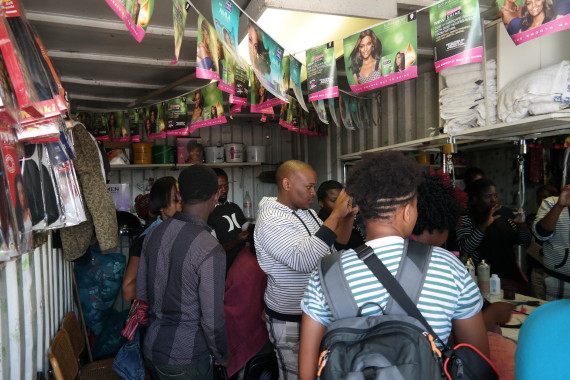
In the early hours of Thursday morning the group gathered its equipment and headed to Makhaza, located in Khayelitsha, on the outskirts of Cape Town’s inner city and suburbs, and, home to the South African youth members. Most of the morning was spent filming and interviewing the residents and business people (hair salon owners and minibus taxi drivers) about their daily activities within the area. In the afternoon the group moved to Site C, in Khayelitsha, documenting a crèche in the area, interviewing the owner about challenges and progress. The day ended at Future Champs, a youth boxing and life skills centre – in Philippi East. The afternoon was filled with fun filming the boxing coach and interviews with the younger children to get a sense of why they chose boxing as a sport preference.

Visiting a hair salon

Visiting a hair salon

Interviewing a minibus taxi driver

Interviewing a minibus taxi driver


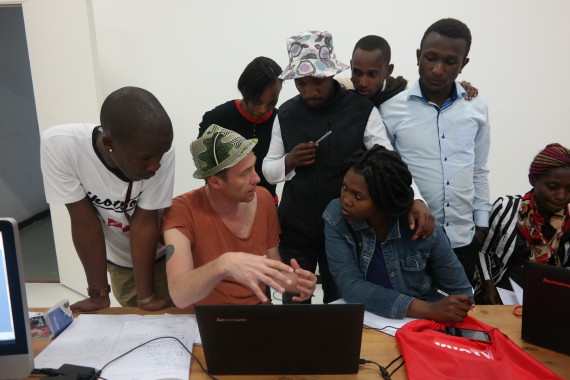
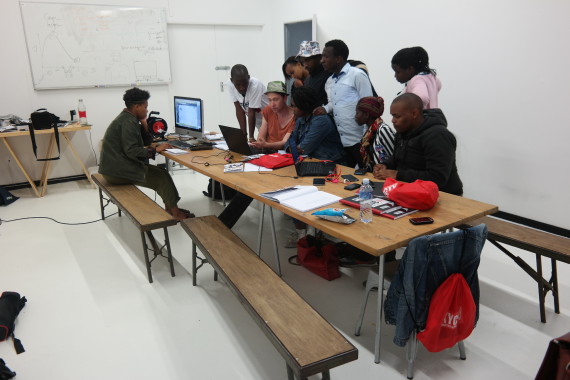
While the group had been focused on filming and gathering footage for the previous part of the week, little did it occur to them that their work was far from over. Friday therefore started off with uploading all video footage onto the computer systems and reviewing it. An in-depth introduction to software and editing programs followed, with detailed explanations on how to edit, crop, animate and create audio on the software to familiarise themselves with the program and produce edited videos.

Filming at Future Champs

Filming at Future Champs

SAMSUNG CSC

Learning how to edit


Looking Back and Looking Forward

The group spent the last day enjoying a burst of pre-summer heat at Cape Town’s sea-side – a time of reflection and realizing that their journey had only just begun. For Allan Mawejju from Uganda the trip to Khayelitsha was a highlight, especially learning how to deal with people during interviews. The highlight for Zandile Nomnga, who loves music and dance, was the opportunity to chance upon and film a soul music group at the busy Green Market Square.

“With the knowledge we gained we will show our members back home how to document their daily activities and who knows this could also be a form of job creation where they would film what is going on in our countries and sell to a news network”.

Mamfuka Joweria Kaluxigi, National Slum Dwellers Federation of Uganda

SAMSUNG CSC

It was clear that the group was leaving with an array of skills that will assist them in forming KYC TV teams together with the continued support from James and SDI, through the Ugandan and South African support organisations, ACTogether and CORC. Many expressed the desire to share their learning with friends and fellow youth members who did not have the opportunity to attend. Some want to produce mini documentaries about their informal settlement and the activities that the youth do. The following weeks will be dedicated to consolidating the skills learnt during the training and produce the first mini documentaries.

“We didn’t know how to make films but today we are able to shoot, edit our own videos and tell our stories, I thank God for the opportunity and Know Your City TV for the platform”

Muwanguzi Solomon, National Slum Dwellers Federation of Uganda

Sharing Knowledge from the Bottom-Up: SDI visits Cape Town Learning Center

By CORC, FEDUP, ISN, SDI No Comments

By Yolande Hendler (on behalf of CORC)

Horizontal learning exchanges form a significant pillar of bottom-up knowledge sharing and a mobilisation tool used by informal settlement dwellers across the Shack/ Slum Dwellers International network. Exchanges are a development tool, which

“help people deal with the root issues of poverty and homelessness and work out their own means to participate in decision-making which affects their lives, locally, nationally & globally. In exchange people are not being trained to do things. They decide themselves what to pick up and what to discard, by visiting others in the same boat. It’s learning without an agenda…on-site, direct from the source, unfiltered”

(Tom Kerr, SDI Secretariat)
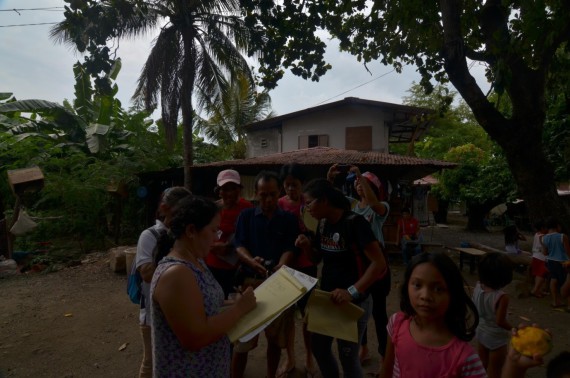
In recent years the SDI network has streamlined learning and experience sharing from open ended exchange interaction to a city-level focus in which learning, capacity-building and monitoring is concentrated on four city-level centers of learning. These (Cape Town and Kampala, Mumbai and Accra) were identified due to their capacity to operate at the city scale and demonstrate productive partnerships with government. This blog focuses on a recent visit by the SDI management committee to the Cape Town learning centre, and engages with questions raised by community members around the nature of learning and knowledge sharing in the SDI network.

SAMSUNG CSC

Joseph Muturi, from the Kenyan SDI Alliance poses a question to FEDUP / ISN leadership.

The first morning saw national community leaders from the SDI Alliances of Ghana, Uganda, Kenya, Tanzania, Zambia, and Zimbabwe join the South African Alliance , SDI President, Jockin Arputham, and deputy president, Rose Molokoane, in exploring the approach of community-driven process in South Africa. The South African community movements, FEDUP and ISN, spoke about their involvements in respective community projects relating to land access and negotiation, People’s Housing Process (PHP), security of tenure, ensuring access to basic services, informal settlement upgrading, and income generation projects.

When asked what FEDUP and ISN see as particular achievements, FEDUP’s regional leader in the Western Cape Province, Thozama Nomnga, spoke of the Federation’s Income Generation Program (FIGP), which is funded through a revolving loan fund established through FEDUP’s national savings. As much as the FIGP funds are drawn from savings, the program also grows FEDUP’s membership and strengthens savings practice as personal savings are a prerequisite to accessing a loan.

SAMSUNG CSC

Visiting a savings group and learning about FIGP in Samora Machel.

During the morning, the group visited a savings scheme in Samora Machel township in Cape Town as well as FEDUP’s Vusi Ntsuntsha group. After a warm welcome at Samora Machel, the savings group facilitator, treasurers and collectors spoke about the FIGP, how loan groups are formed, how loans are allocated and the respective finances are calculated. Savings group members showcased their small businesses – ranging from tailored shwe-shwe Dresses, to tuck-shop goods, beaded jewellery and crafts, fat-cakes and chicken. From Samora Machel the visitors travelled to Vusi Ntsuntsha group, hearing about the group’s successful negotiation for land, and the challenges ahead in terms of securing tenure and housing sites. Hassan Kiberu, from the National Slum Dwellers Federation of Uganda (NSDFU) motivated the group to keep unity and hope:

“By unity we win. When you give up you won’t win. We joined the Federation in Uganda because we have so many problems. Like you, there are many that we haven’t tackled yet. It is important that you are firm, don’t lose hope and keep on saving.”

Income Generation businesses by the Samora Macheal savings scheme

FIGP businesses in Samora Macheal.

The remainder of the day was spent in a packed community structure in Khayelitsha where representatives from more than 5 communities had gathered to share their experiences in informal settlement upgrading, community generated data collection, design, mapping, planning and negotiation with local government. The visitors were introduced to an area-wide upgrading approach around a wetland and the accompanying lengthy negotiations with local government. They also heard about a completed reblocking upgrade in Flamingo Crescent informal settlement and the process of planning for reblocking in three additional settlements.

In conversations and questions posed throughout the day – a recurring interest occurred among community participants concerning the nature of ‘learning’, the necessity for transparent sharing during  community exchanges and what it means to be an “SDI learning centre”. Joseph Muturi from the Kenyan Alliance’s Federation, Muungano Wa Wanavijiji, raised the value of sharing challenges as freely and as frequently as successes.

“How can we learn from each other if we don’t share our challenges? We know that we can learn from every SDI country. In learning centres there is something specific we can learn. But we don’t expect them to be perfect –there will always be challenges, and we need to learn from them.”

Community gathering in Khayelitsha on informal settlement upgrading.

Community gathering in Khayelitsha on informal settlement upgrading.

On this note, ISN shared the difficulties of navigating tensions between steering committees and communities, the rivalry between different civic organisations, varying levels of co-operation from Councillors and long delays by city councils that cause disillusionment in communities. Kenyan representatives spoke about their ability to secure tenure for 10 000 informal settlement dwellers through bio-metric data collection, using mobile phones – learnt from the interaction between Ugandan Federation members and their City officials. In reflecting on the exchange, Nkokheli Ncambele, provincial ISN coordinator, echoes the value of bottom-up knowledge generation in exchanges:

“It was very beneficial to be exposed to savings and the FIGP businesses – we managed to send a successful message to community leaders in Khayelitsha about upgrading and savings. We learnt how other countries use their profiling data to engage with the City. We need to do the same”.

SA Alliance in Botswana: Building a strong urban poor Federation

By CORC, FEDUP, SDI No Comments

By Kwanele Sibanda (on behalf of CORC)

For the Shack / Slum Dwellers International (SDI) network, horizontal exchanges between savings groups and communities present an opportunity for bottom-up learning and mutual support. While each SDI affiliate shares the same tools and practices for community organisation and people-centred development, the use of these tools is shaped by local socio-economic and political contexts. Exchanges, therefore, also explore how new-found insights can be adapted to realities “back home”.

As an SDI learning centre, the SA SDI Alliance and FEDUP in particular have supported the growth of the Botswana SDI Alliance, the Botswana Homeless and Poor People’s Federation and support NGO. This blog reflects the workings of an international exchange, strategies for partnership building, and the necessities of rooting the strength of a Federation in daily saving, strong trust and cohesiveness on the ground.

Gointse (Trust for Community Initiatives) explains partnership with Stanbic

Gointse (Trust for Community Initiatives) explains partnership with Stanbic

Background of the Exchange

The SDI exchange to Botswana by the South African delegates was originally aimed at supporting the federation of Botswana in making a presentation to the new Minister of Local Government and Rural Affairs. In spite of efforts made by the Minister to meet the federation, the set meeting coincided with an emergency that he described as critical and could not be postponed.

From the previous visit of the South African delegates dated 16 – 19 October 2014, the Botswana federation has shown growth and determination to work with resources at their disposal. The federation of Francistown has been very influential in the growth of the federation, nationally. The Francistown Federation started off by influencing their local City Council especially the Town Clerk who in turn is now taking a lead in introducing the federation to officials in other cities as well as different government departments. The attempt to meet the Minister was through the efforts of the Francistown Town Clerk and the local supporting NGO (Trust for Community Initiatives).

As the meeting with the Minister was postponed at the 11th hour, the federation members from Francistown and the SA SDI Alliance used the opportunity to visit a fairly new local saving scheme (Boiteko Saving Scheme).

BOITEKO SAVING SCHEME MEETING.

Boiteko saving scheme meeting took place in Gaborone . A message of appreciation was given to the saving scheme members for attending the meeting even though it was scheduled within a short period of time. Amongst the issues discussed, the following was the most pressing for the saving scheme in Botswana as a whole.

  • Botswana has a law that disregards the nature/circumstances under which a group is established and wishes to have financial transactions that it be registered as a company. This act poses a challenge to the federation because of tax related burdens, registration process and other financial burdens that may be required by the law.
  • The groups have since resorted to opening bank accounts using one member of the group under conditions that include a letter to the bank stipulating that he is termed account holder and merely represents the group and can only undertake financial transactions authorised by two named signatories of the group’s choice. Boiteko Saving Scheme is no exception to the challenge.
Group photo after meeting with Boiteko Saving Scheme members

Group photo after meeting with Boiteko Saving Scheme members

  • The saving scheme was established in February 2015 with 27 members at its highest. Without seeking information internally, new members went to various government departments to find out if the poor people’s movement was registered. Upon realization of the other, word spread, dispute ensued, and sixteen members shunned the group leaving unity of the remaining on the canvas. The group currently stands at 11 members  and has a total of  P2 000 in savings up to date.
  •  In July 2015 the federation allegedly made a presentation at a Public Service Event where different Ministers were present. The presentation was broadcast on national television (BTV) and was seen by members that had forsaken the group. It is believed that the publication of the presentation somehow proved the authenticity of the organization as opposed to unfounded, simmering rumors.
  • The groups are being supported by the local NGO in opening bank accounts. The members of the new group expressed their need for support as they are not yet well versed of the other components in the alliance other than savings.
  • Savings Report
Total Number of saving schemes 55
Women 1 191
Men 122
Total Savings P276, 136.23
Total UPF P31, 473.94
Funds used to start income generating projects P260, 926.66
      Inputs made by the SA SDI alliance and Francistown delegates
  • Within groups, it is always ideal to have manageable numbers; however it is wise to be aware that numbers matter in influencing policies such as that currently affecting them on opening of bank accounts.
  • In making presentations, follow all levels of influential structures starting with the local chiefs so that your process is well understood and no one feels undermined.
  • Make daily collections a norm so as to bond as savings members and generally improve your savings.
  • Use the small projects  you are already doing to demonstrate to  government and other institutions your interest and how you wish to scale it up.Make use of  government resources like the ‘Poverty eradication programme’.
  • Start programmes for supporting other savings schemes because you tend to learn more when you share more.
  •  Choose honest people  to handle your finances to avoid jeopardizing the organisations name
  • Avoid making long meetings that will discourage attendance.
  • Members need to understand the power of working collectively.
  • Save with a goal and make good use of the savings . It is normally pointless to be endowed with savings that remain untapped when challenges prevail or opportunities present themselves.
Far Right - Sarah Mulaudzi (FEDUP) sharing her savings experience

Far Right – Sarah Mulaudzi (FEDUP) sharing her savings experience

WAY FORWARD

  • The federation of Botswana has to draft a programme were it will be supported in areas that include mobilization, savings recording system and explaining the different components in the alliance.
  • Once the meeting is confirmed with the Minister, leaders should prepare themselves for a presentation and should include in the agenda the policy requiring them to register in order to open bank accounts.
  • Each region has to start writing stories about the different projects and activities that they are doing.

Shack dwellers ground global debate at Future of Places Forum Sweden

By CORC, FEDUP, ISN, SDI No Comments

By Adana Austin (on behalf of CORC)

As global cities continue to rapidly expand, how can we encourage equitable growth that would foster safe communities, sustainable development, and an increased standard of living for the world’s urban poor? The Future of Places forum (FoP) features three international conferences, national seminars, books, and reports in preparation for Habitat III. The forum serves as a collaborative platform and training opportunity for researchers, policy makers, advocates, and civil society focused on issues concerning public spaces.

The SA SDI Alliance  representatives joined the Ugandan and Zambian SDI Alliances in attending the third FoP conference in Sweden (29 June – 1 July 2015) that focused on ideas and desires for future urban spaces.

"Informal settlements are fastest growing areas in cities"

“Informal settlements are fastest growing areas in cities”

Why ‘Future of Places’?

The objective of FoP is to provide a platform for a multidisciplinary international discourse on the importance of public space and its potential impact on the New Urban Agenda for the 21st century in response to the Post 2015 Sustainable Development Goals (SDGs) and in preparation for the Third United Nations Conference on Housing and Sustainable Urban Development (Habitat III) in 2016. Habitat III presents an opportunity for innovative collaboration (or “international community”) to address contemporary challenge to urbanization.

FoP was organized and funded by the Axel and Margaret Ax:son Johnson Foundation. Its collaborative partners are UN Habitat and Project for Public Spaces. The forum serves a network of over 500 organizations and more than 1500 individuals. The first conference took place in Stockholm in 2013, discussing the importance of a “people centered” approach to urbanization. The seconded convened in Buenos Aires in 2014, examining “streets as public spaces and drivers of prosperity”.

Evelyn Benekane (FEDUP coordinator Eastern Cape) and Charlton Ziervogel (CORC Deputy Director) present Flamingo Crescent Upgrading.

Evelyn Benekane (FEDUP coordinator Eastern Cape) and Charlton Ziervogel (CORC Deputy Director) present Flamingo Crescent Upgrading.

Alliance Presence, Community Voices

The Alliance presence at the three-day conference offered a perspective of open spaces in informal settlements and highlighted the grounded experience of shack dwellers and the importance of their voice in global decision-making forums. The Ugandan community leaders gave a presentation on the potential growth within informal market places and market development. Community leaders from South Africa discussed the recent Flamingo Crescent upgrading project, which sparked the interest of urban planners, organizers, and policy makers from cities around the world. The presentation, and discussions that followed, also shed light on the reality that there is often an underrepresentation of shack dwellers in discourses and plans regarding space and inclusive cities. Such initiatives also tend to lack a strong presence in the Global South.

ISN community evaluates co-produced settlement design for community-led upgrading in Mfuleni, Cape Town.

ISN community evaluates co-produced settlement design for community-led upgrading in Mfuleni, Cape Town.

However, as Habitat III approaches, several questions need to be answered in practice if global planning for more inclusive cities is to be successful:

  • How can we ensure that shack dwellers play a foundational role in the articulation of threats, challenges, and potential solutions to urbanization? It is not enough for communities to simply be mentioned in the discussion. Instead they should mold language use to describe their realties.
  • How can we understand and consider the realities of the Global South during international discussions and planning?
  • How do we engage with shack dwellers to rethink concepts of space and access in growing cities globally?
  • How do we bridge gaps between academia, civil society, policy, and communities during the inception and conception of the new urban agenda?
  • How can communities of shack dwellers influence a global advocacy strategy?
  • What indicators should we employ when measuring the success of our efforts?

While the presence of shack dweller representation and community-based movements was lacking at Future of Places, the SA SDI Alliance intends to have a presence at Habitat III so that community leaders are in attendance to speak for themselves and their communities. Habitat III will set the agenda for urban concerns for the next 20 years. It is imperative that these platforms are used strategically and that shack dwellers are not forgotten in that agenda.

Community leaders of Tambo Sqaure informal settlement in Mfuleni , Cape Town present their plans to the local municipality.

Community leaders of Tambo Sqaure informal settlement in Mfuleni , Cape Town present their plans to the local municipality.