Tag

Water & Sanitation Archives - Page 2 of 2 - SASDI Alliance

Taps, Toilets & Beyond: ISN partners with Water & Sanitation Dept

By CORC, ISN No Comments

By Nkokheli Ncambele (on behalf of ISN)*

Nkokheli Ncambele is the regional co-ordinator of the Alliance’s Informal Settlement Network (ISN) in the Western Cape.

Emseleni Community leader, Nomfundo Lungisa

Emseleni Community leader, Nomfundo Lungisa

In Mfuleni, informal settlements have been without basic services for five years. People had to buy water from surrounding formal houses; at night it was difficult for them to get to a toilet. Last year, ISN started creating a partnership with the City of Cape Town’s Water & Sanitation Department. We kept reporting these problems to the City until we saw that there was a light: the Department came to us saying, “Yes we are going to do something in those communities”.

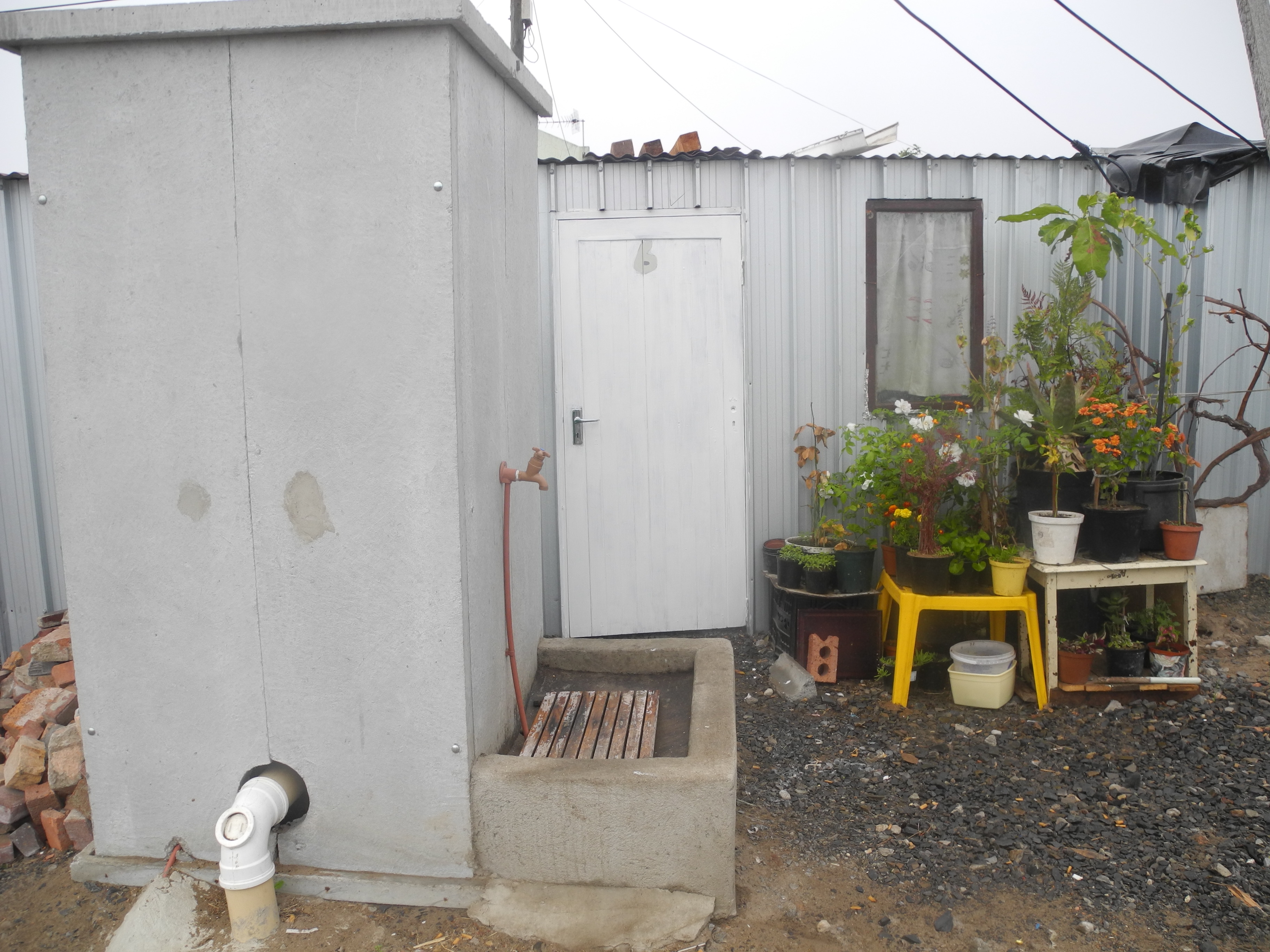
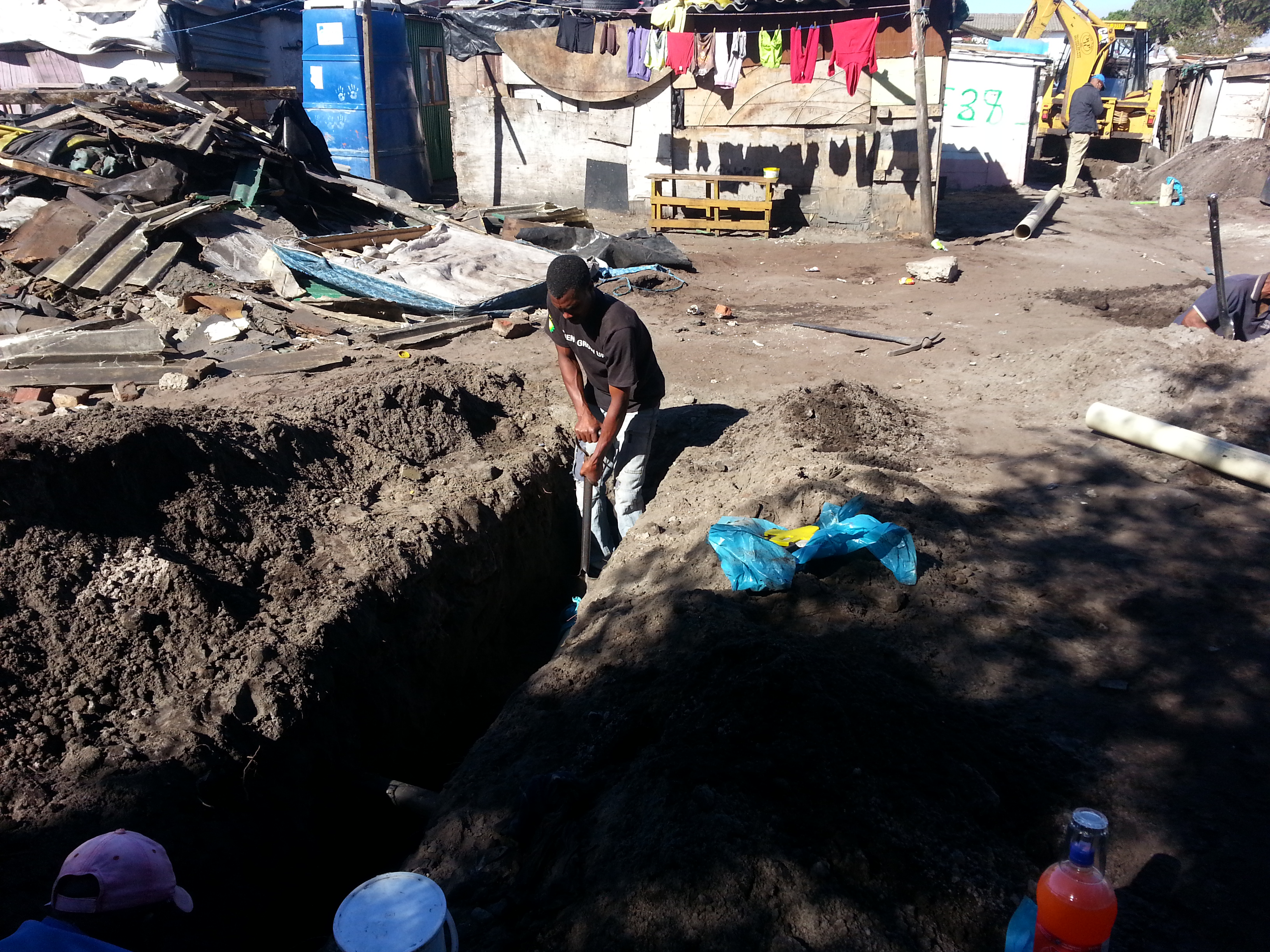
The City is very important as a partner because when they come on board we see results: in March 2015 they installed a total of 15 standpipes for taps and 57 flush toilets in five settlements (Tambo Square, California, Constantia, Strong Yard and Emseleni) in Mfuleni region which is one of four ISN sub-regions in Cape Town. Every settlement’s leadership sends two or more members to our weekly sub-regional meetings to discuss issues. After we collect all issues we decide where to start. This is how we chose these five settlements for Water & Sanitation installation.

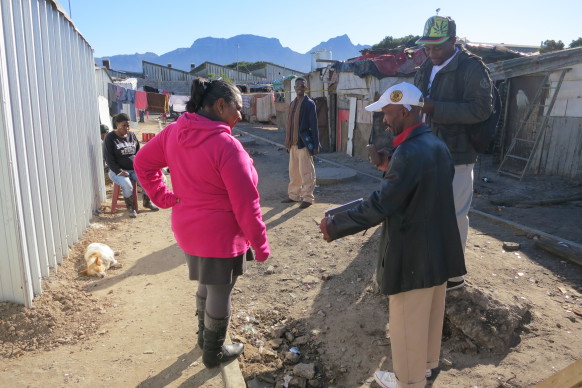
ISN co-ordinators Nkokheli Ncambele and Melanie Manuel with Kuku Town community leader, City of Cape Town councillor and officials

ISN co-ordinators Nkokheli Ncambele and Melanie Manuel with Kuku Town community leader, City of Cape Town councillor and officials


From backyards to informal settlements

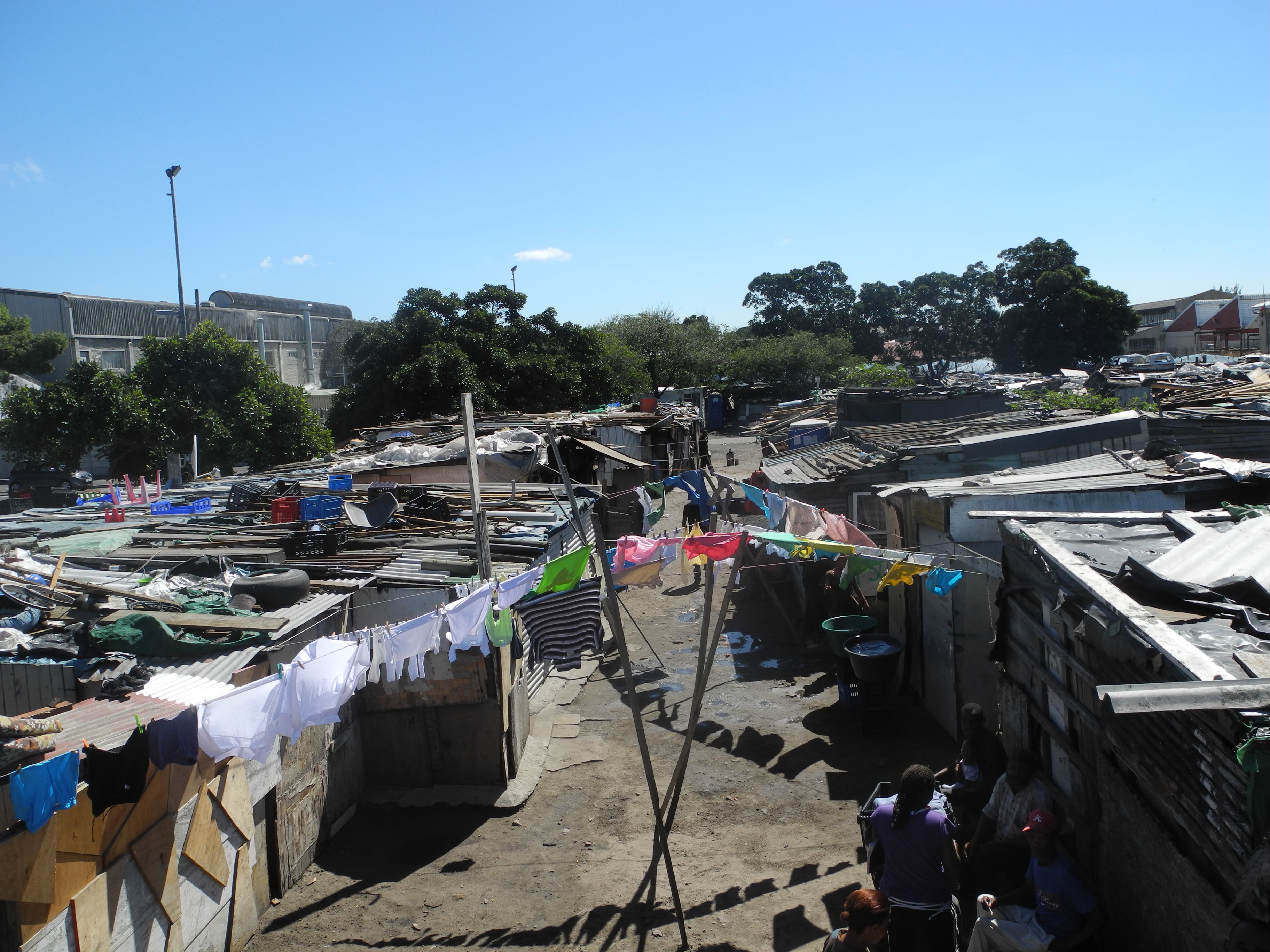
You will find that most settlements like Tambo Square, California, Constantia, Strong Yard and Emseleni were established when formal housing was introduced. When there is a big housing improvement project there are always people who move in as backyard dwellers. Why are there so many new settlements like these? Because backyarders are tired of paying rent and being mistreated by homeowners who cut off services without notice. That’s why backyarders move into nearby open spaces.

Constantia informal settlement is in close proximity to formal housing.

Constantia informal settlement is in close proximity to formal housing.

Constantia Steering Committee members, Nolusapho Thandela and Phindiswa Payiti

Constantia Steering Committee members, Nolusapho Thandela and
Phindiswa Payiti


The beginnings of ISN in Mfuleni

Before ISN, we as community leaders used to have a joint leaders forum in Mfuleni. When we heard about ISN, we decided to join because the movement was talking about what we were already doing for a long time.

“We realised that actually we are ISN – anyone who is staying in an informal settlement is ISN. Let’s take this forward”.

New sub regional leaders asked us to explain the ISN process to them. Other community movements, development forums and Councillors also know about us. I can say that 99% of informal settlements in Mfuleni have gone on exchanges to see what other ISN communities are doing. That’s why they want to be part of ISN and why Mfuleni is becoming an ISN base. Look at the people of Tambo Square – they want to be involved in their own project. When the ISN coordinators go to Emseleni, people just come out to greet us. We see that people are hungry to solve their problems.

“Tambo Square started in 2007 when backyarders moved here. We had no toilets or taps and used to get water from the formal houses. We took our problems to ISN who helped us go to the municipality. These changes came to us with ISN – they play a big role for us”.

(Nkosikhona Bangiso, Tambo Square Steering Committee Leader)

Tambo Square community leader, Nkosikhona Bangiso
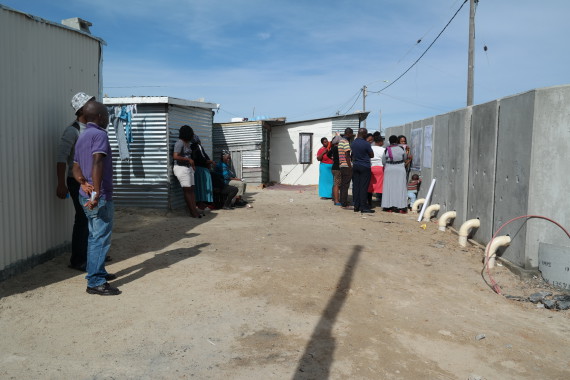
Tambo Square community use back of newly installed toilets for mapping workshop to plan further upgrading initiatives in their settlement.

Tambo Square community use back of newly installed toilets for mapping workshop to plan further upgrading initiatives in their settlement.


Building our partnership with the City

As ISN, we know that the Department of Water & Sanitation has an interest to deliver basic services to communities. The difficulty is that many settlements have little open space for services to be installed. When ISN started mobilising communities and speaking about the value of basic services, community members began thinking about how to create more space in their settlement. In Tambo Square, for example, it looked like there was no space. We suggested that the community remove a large container that stood at the entrance of the settlement. Now there are ten toilets in that space. In this way it was easy to convince Water & Sanitation to partner with us. I think I can say that they see us (ISN) as a solution. We told them,

“We’ve got the space, now you can come and install the toilets. Don’t say there is no space in our community”.

The role of ISN & CORC in partnership building

What is unique about our Alliance is that CORC created a space between ISN and the City. In 2009 there was opposition between communities and the City. Because of that CORC was there to neutralise the relationship. I can say that CORC was a bridge that connected us to the City. The City used to say, “We don’t want to go to meetings with the communities because they will swear at us and toyi-toyi (protest) and do all these things.” But CORC has a belief that communities won’t do that. Through the engagement with CORC we (ISN) understood that we need to go to the table, and not to the street. Then at the end of 2009, the City started saying, “This thing is working”. I think that is why they are happy to work with us.
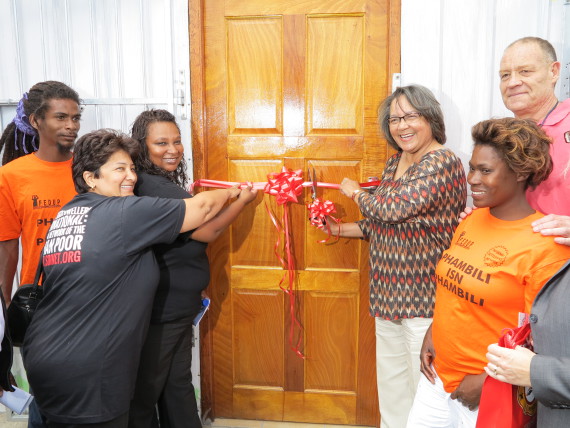
Flamingo Crescent informal settlement community members with ISN facilitator Melanie Manuel, CORC Director Bunita Kohler (left) and City of Cape Town Mayor Patricia de Lille

Flamingo Crescent informal settlement community members with ISN facilitator Melanie Manuel, CORC Director Bunita Kohler (left) and City of Cape Town Mayor Patricia de Lille

Nkokheli Ncambele (second from left) with fellow ISN co-ordinators Mzwanele Zulu and Melanie Manuel (far left and right), CORC technical support, Sizwe Mxobo (centre) and Western Cape MEC for Human Settlements.

Nkokheli Ncambele (second from left) with fellow ISN co-ordinators Mzwanele Zulu and Melanie Manuel (far left and right), CORC technical support, Sizwe Mxobo (centre) and Western Cape MEC for Human Settlements.


The bigger picture: taps, toilets & beyond

We recently met with an Mfuleni councillor and asked what he thought about Mfuleni as a whole. He said he has a bigger picture – that in the next 20 years he doesn’t want to see informal settlements. For that to be possible I see that he needs a movement like ISN that will make sure that his vision is pushed. What is our vision? That all settlements have basic services and that all people who are living in informal settlements have houses. Our vision and his vision are on the same page.

* Compiled by Yolande Hendler (on behalf of CORC)

Newly installed water & sanitation in Strong Yard settlement, Mfuleni

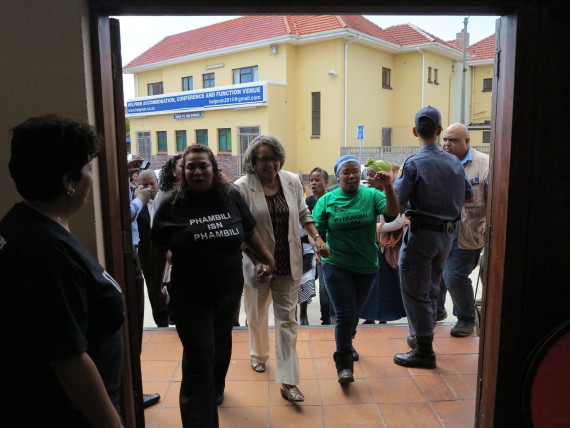
Newly installed water & sanitation in Strong Yard settlement, Mfuleni


Launch of Upgrading at Flamingo Crescent with Cape Town Mayor Patricia de Lille

By CORC, FEDUP, iKhayalami, ISN, Press No Comments

Authored by CORC

“People said Flamingo Crescent [Upgrading] will never happen. But today is here and this is the proof that it has happened – one cannot do it alone we need to work as a collective!”

Melanie Manuel, Informal Settlement Network (ISN) Co-ordinator

Mayor of Cape Town, Patricia de Lille, with Flamingo Crescent Community Members, SA SDI Alliance, PFO's and City Officials

Mayor of Cape Town, Patricia de Lille, with Flamingo Crescent Community Members, SA SDI Alliance, PFO’s and City Officials

Last week’s upgrading launch at Flamingo Crescent informal settlement celebrated the completion of re-blocking, installation of water, sanitation and electricity services for each of Flamingo’s 104 households, the unveiling of Flamingo’s first formal street names and opening of the settlement’s own crèche, Little Paradise. Moreover it marked a milestone in an ongoing upgrading process, showcasing what is possible when communities, intermediaries, governments and stakeholders form partnerships.

Delegates from community organisations and networks, the Mayor of the City of Cape Town, delegates from various government departments, ward and sub-council politicians, NGOs and support organisations gathered in the Lansdowne Civic Centre from 11:00 on Monday 10 February.

The re-blocking project is lauded as a successful demonstration of community-led, participatory planning, collaborative implementation and improvement of informal settlements. The uniqueness of the project was that despite the settlement’s density no one was displaced and grossly inconvenienced during the implementation of upgrading 104 structures.

ISN & FEDUP welcome the Mayor to the launch at Lansdowne Civic Centre

ISN & FEDUP welcome the Mayor to the launch at Lansdowne Civic Centre

First engagements around Flamingo Crescent 

First engagements began in 2012 after the City of Cape Town signed a Memorandum of Understanding with the SA SDI Alliance around joint community-led upgrading of 22 informal settlements, of which Flamingo Crescent is the third, having built on the experiences of Mtshini Wam and Kuku Town. It differs from the previous two in the severity of its socio-economic challenges – high levels of crime, unemployment, violence and poverty. Given these circumstances the Alliance’s Informal Settlement Network (ISN) facilitated implementation and engagement between the City and the community.

Melanie Manuel (Flamingo Crescent ISN facilitator) shared,

“When we started the partnership with the City of Cape Town in 2011 in Vygieskraal it was a day of celebration and no one knew the hardships that would lie ahead. As time went on we realised we fundamentally believe in community participation, a bottom up approach because we know communities understand their settlements best.”

Read more background here.

Flamingo Before Upgrading

Flamingo Before Upgrading

The Launch: Messages on Upgrading and Inclusion in Services

At the launch, the first speaker, Councillor Anthea Green shared,

“Since 2012 I have said that we need to upgrade Flamingo Crescent, despite resistance from the rate payers and residents’ groups. We were committed to work with the community, and now this is a transformed settlement”.

Informal settlements not only face substandard basic services like water, sanitation and electricity but are also cut off from functions of city administration such as receiving a residential address. The re-blocking project allowed the City and the Post Office to give Flamingo Crescent street names and addresses, after the community made this requirement upfront in their development plan.

Gerald Blankenberg, regional director of the Post Office, said that the Post Office Act and other regulations require the post office to expand addresses to underserviced communities.

“Informal communities are often times socially and economically disconnected from basic administrative functions, and therefore a residential address will give the Post Office an opportunity to serve the community with dignity”, he said.

In the keynote address, Mayor Patricia de Lille emphasised the significant role of Flamingo community’s steering committee, the Alliance’s ISN and Community Organisation Resource Centre (CORC) in the success of the project. She, however, expressed concern about the slow pace of project implementation, emphasizing the need to boost municipal and community capacity to ensure the roll out of more projects in the City’s 200 informal settlements.

“The aim of re-blocking is the improvement of informal settlements while people wait for a housing opportunity”, she observed.

In closing of the ceremony, the Mayor handed over certificates of tenure to community members, ensuring formal recognition of residence and tenure security.

Mayor, Patricia de Lille with Flamingo Community Leader, Maria Matthews

Mayor, Patricia de Lille with Flamingo Community Leader, Maria Matthews

The Impact of Upgrading : Before and After

Before re-blocking, the community of 405 residents had access to only 14 chemical toilets (of which 7 were serviced) and 2 water taps. There was no electricity so that contained fires in tin drums dotted the settlement’s dusty pathways. The community was especially concerned about the safety of its children playing in the busy street.

Re-blocking restructured space in the settlement, opening courtyard areas and clearly designated access roads, enabling the City of Cape Town to install individual water, sanitation and electricity services per household. What sets Flamingo apart from previous projects are its paved pathways, with official road names as well as the construction of a crèche.

The community contributed 20% to the cost of its structures through community-based daily savings. During the implementation phase, 20 jobs were created through the Expanded Public Works Programme.

Before upgrading

Before upgrading

After upgrading

After upgrading

Into the Future: Community voices on Partnership and City Fund

“Since 2010 we have been thinking about improvements in our settlement. This is when we got in touch with ISN, who introduced us to CORC, and we then made a partnership with the City [of Cape Town] We explained what we wanted from the city – our own taps, toilets and electricity. But we needed to come together and draft our own plans”.

(Maria Matthews, Flamingo Community Leader)

Through the SA SDI Alliance the community additionally partnered with several organisations. iKhayalami supported the community, ISN/FEDUP and CORC around training community members and top structure construction. The community established the re-blocked layout and community-based maps in partnership with students from Cape Peninsula University of Technology and support staff from CORC. With the support of Worcester Polytechnic Institute (WPI, USA) the community drew up plans for the crèche. Habitat for Humanity South Africa contributed to construction by supplying the roof sheets and windows. The Centre for Early Childhood Development (CECD) donated funds to build the crèche. CECD will also support around the training and registration of the crèche.

From Melanie’s speech it was clear,

“This project is successful because of the methodologies we use. We allow communities to do their own designs. The community also made a [financial] contribution [in a settlement] where 95% of community members were unemployed. How do we change the mind-sets of people who are still waiting for adequate housing? Let’s change the way we are living now while we are waiting for housing to come.”

(Melanie Manuel, ISN Facilitator)

Melanie Manuel, ISN Co-ordinator in Flamingo

Melanie Manuel, ISN Co-ordinator in Flamingo

As important as settlement improvement is in itself, the methodology is just as significant. Moreover, Flamingo Crescent serves as a precedent for informal settlement upgrading on a larger scale. The day ended with the community leading the Mayor through their settlement, unveiling Flamingo’s new street names and officially opening the Little Paradise crèche together. It is Melanie Manuel’s closing words that speak of the future:

 “We need to look at a holistic plan for the metro. Let’s look at how we can reach basic services much quicker and how we can scale up. The Alliance projects do not only focus on reblocking but on basic services in every form. The Alliance has designed a City Fund with which communities can directly access money for upgrading in Cape Town. In Flamingo the Aliance’s Community Upgrading Finance Facility (CUFF) helped us match the 20% that each community member contributed to their structure. This kind of facility on a city-level will go a long way – we challenge the City to continue partnering with us and match our contributions in the City Fund!”


Installing Water Taps in Holomisa Gauteng

By CORC, ISN, News, uTshani Fund No Comments

By Blanca Calvo (on behalf of CORC and uTshani)

Holomisa is an informal settlement located in Katlehong (Ekurhuleni, Gauteng). In May 2014, Pumelele Ntanjana, one of the leaders of Holomisa Informal Settlement, contacted the Informal Settlement Network (ISN) to request support for a possible re-location of a portion of his settlement. Today, Holomisa has been profiled and enumerated, new taps have been installed and it has become a learning centre for other ISN communities in Gauteng.

ISN Gauteng co-ordinators with Holomisa residents

ISN Gauteng co-ordinators with Holomisa residents

The Holomisa story tracks back to an ISN leadership meeting that took place in Germiston (Ekurhuleni, Gauteng) in 2008. In that meeting, leaders from all informal settlements in the area had been invited to attend, Holomisa amongst them.

When Holomisa leadership were told by their councillor that a portion of the settlement needed to be re-located because of the enlargement of a neighbouring school, they approached ISN for support. ISN was invited to visit the settlement, where they firstly met with Holomisa leadership and the ward committee members.

The community and ISN profiled the settlement in May 2014 and identified a need for more sources of water (only 2 functioning taps for about 500 households). This was confirmed in a public meeting, where residents requested support for an immediate improvement of their daily lives through implementing more taps, improving sanitation conditions and electrifying the settlement. The settlement’s improved service delivery would also be an additional step to ensuring land tenure.

Existing Water Taps in Holomisa

Existing Water Taps in Holomisa

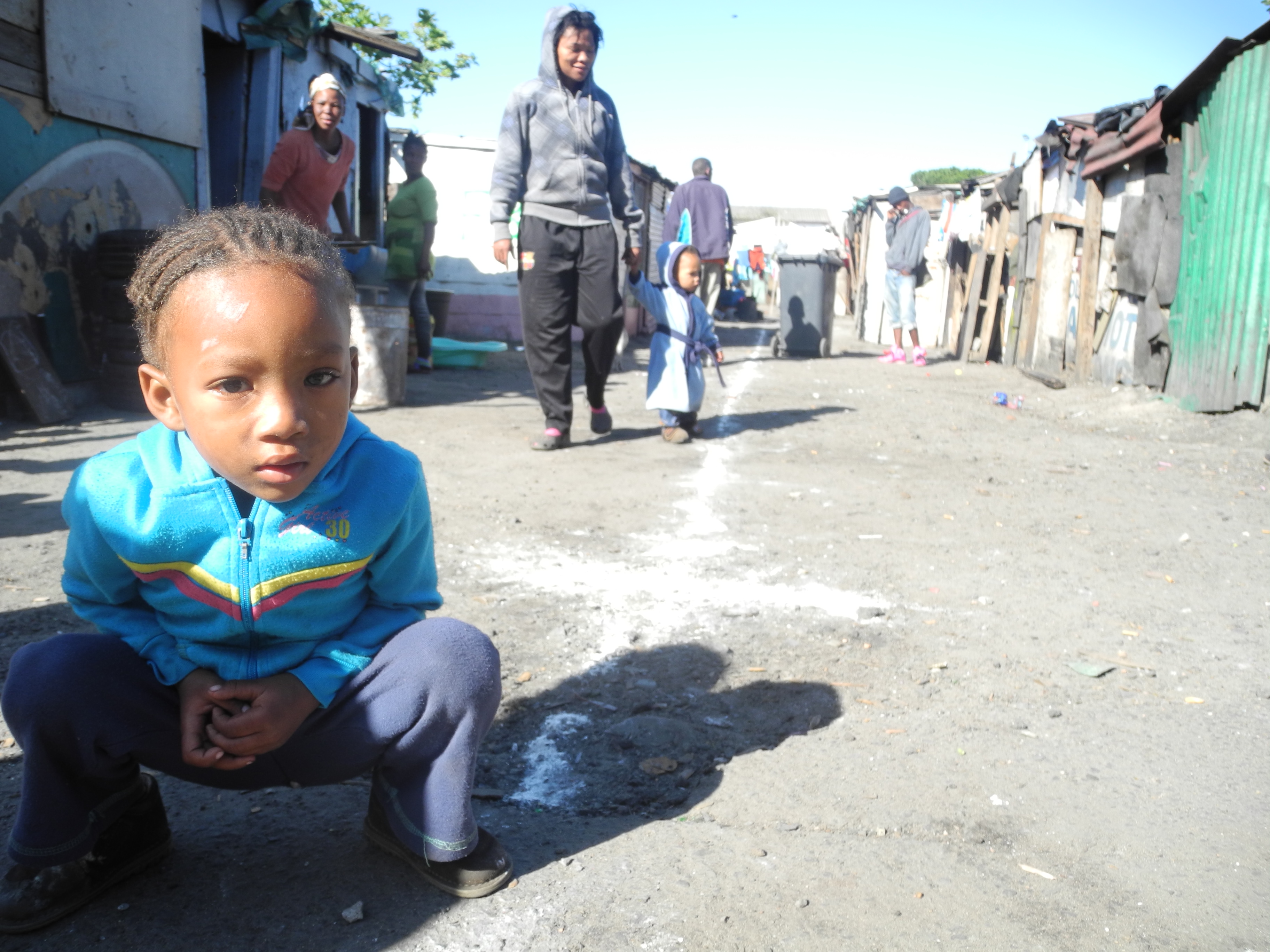
Three parallel processes started from there. On one side, enumerations started on the ground, identifying 446 households. Since Holomisa had been identified as a learning centre for the region, leaders from 6 neighbouring informal settlements (Emalahleni, Thintwa, Vlakplaas, Mandela, Makalakaleni and Zola) were invited to join the enumeration process, ending up with capacitated leaders to undertake the process in their own settlements. A total of 10 local and 6 external leaders were capacitated. Besides, the figures highlighted again the need for more taps, with a backlog of 8 taps to meet official standards
 

Holomisa Textbox1

The mobilisation team engaged with the Ward Councillor, who was informed in a partnership meeting of the intention to install more taps in Holomisa with the support of the South African SDI Alliance. The ISN sent a letter to the ward councillor saying,

“We understand that we are poor humble people struggling to make our way in life. Like every South African citizen, what we expect is a fair and reasonable service delivery from Government in return for the taxes we pay”

Finally, the savings team organised community savings to save 10% of the budget for the project. The outstanding 90% of the budget was financed by the Community Upgrading Finance Facility (CUFF) housed in uTshani Fund.

Mandela Day (18 July 2014) was finally the day for the project to start. In the space of 6 days, one tap was fixed and three more taps were installed. 25 local residents volunteered for the project, a technical team of 10 ISN members was on site and 6 leaders from neighbouring informal settlements were invited to participate and learn in the process, thus increasing their skills and building capacity.

New Water Taps in Holomisa

New Water Taps in Holomisa

Holomisa Textbox2

The project was a success for the communities involved, not only because the installation of more taps improved the living conditions of Holomisa residents, but also because some valuable lessons were learnt.

  • Firstly, the will of the people has been proved to be the best tool to work with. The residents identified the need for more taps and lead the project from the first day.
  • Secondly, the power of residents taking ownership of the project. Residents did not wait for external people and institutions for their permissions or to come to the work, they pushed for their needs to be heard and did it themselves.
  • Finally, the learning centre has proved to be a success. 6 leaders from other informal settlements were capacitated using almost the same amount of resources.

However Holomisa’s story does not end here and the process is still on-going. Holomisa residents, are in discussion with their Ward Councillor for the re-location process of a section of the settlement. Continuous engagement with the ISN will ensure that the re-located residents will be allocated a new portion of land, which it is still to be identified.

Holomisa2

Holomisa3

Building the Siphumelele WaSH facility / Innovation Centre in Langrug, Stellenbosch

By CORC, FEDUP, ISN No Comments

By Aditya Kumar and Yolande Hendler (on behalf of CORC)

Zwelitsha is a section of Langrug informal settlement, located on the rocky ground of a mountain slope that overlooks the lush valleys and nearby town of Franschoek in Stellenbosch Municipality. Zwelitsha’s residents make up 604 people who reside in 318 structures. Langrug as a whole is home to 4700 people who live in 2118 structures. While Langrug’s other sections have access to water and sanitation facilities – including the Langrug Water Sanitation and Hygiene (WaSH) facility – Zwelitsha’s steep incline and rocky terrain have made it extremely difficult to build water and sanitation points. To this end, Zwelitsha currently has only one tap and no toilets.

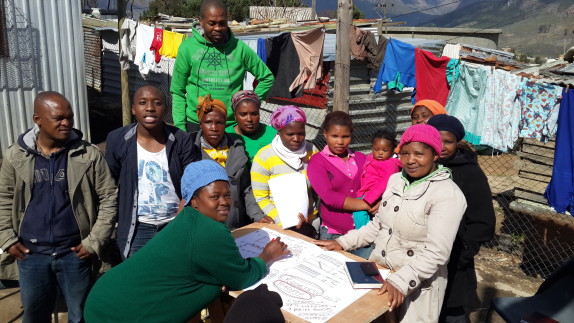
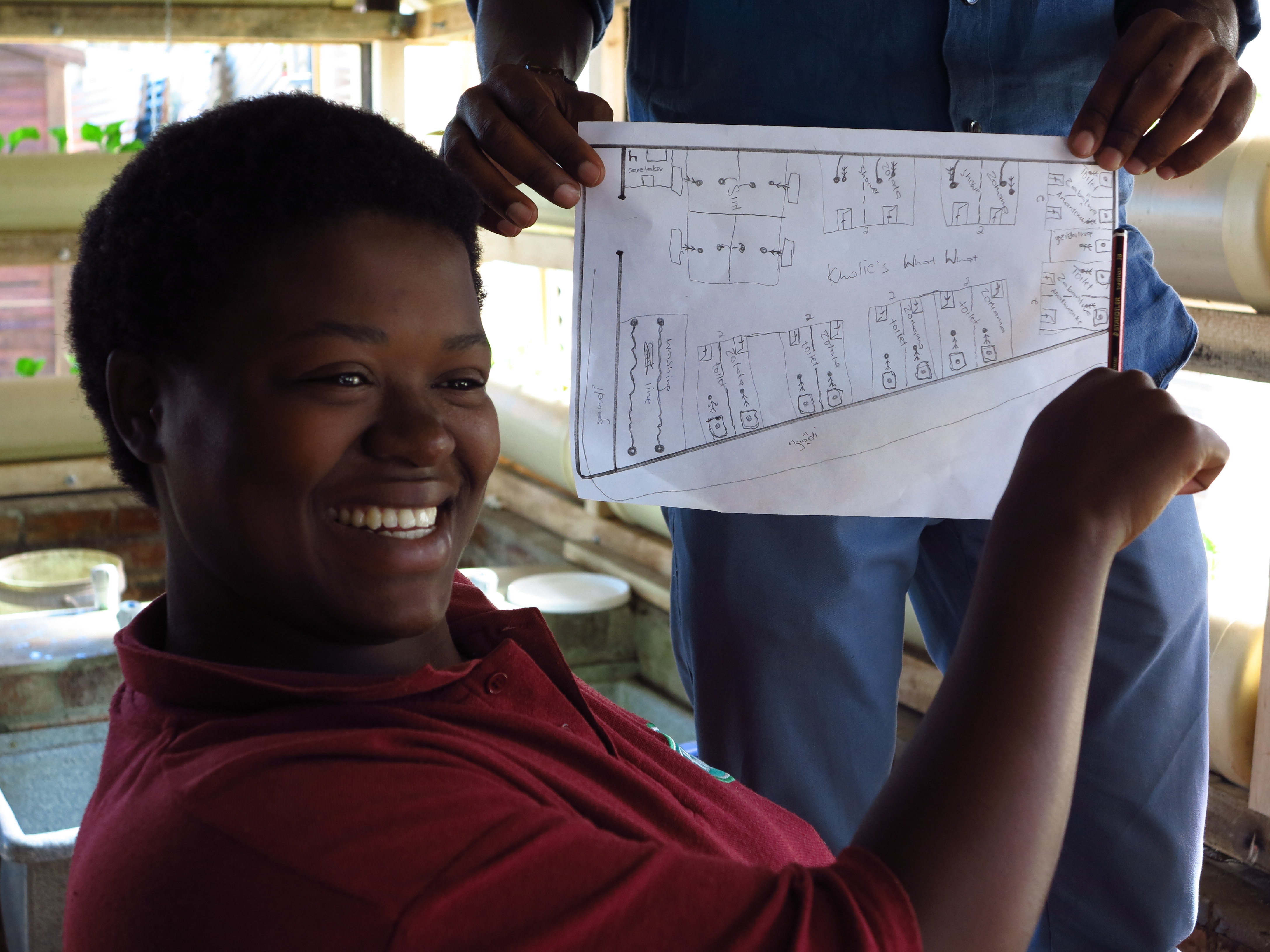
Zwelitsha community members developing plans for the Siphumelele WaSH facility

Zwelitsha community members developing plans for the Siphumelele WaSH facility

Yet this situation is about to change, as community members began work on the foundations of the Siphumelele WaSH Facility and Innovation Centre last week in partnership with the Informal Settlement Network (ISN), Federation of the Urban Poor (FEDUP), Community Organisation Resource Centre (CORC), Touching the Earth Lightly (TEL), Sculpt the Future Foundation, Stellenbosch Municipality, Worcester Polytechnic Institute (WPI) and Enviro Loo (a waterless sanitation provider).

Site of Siphumelele WaSH facility in Zwelitsha section of Langrug informal settlement

Site of Siphumelele WaSH facility in Zwelitsha section of Langrug informal settlement

Building on Experience: Learning from the Langrug WaSH facility

Based on the monitoring, evaluation and learning around the existing WaSH facility (read more here) in Langrug, Zwelitsha’s residents initiated a discussion about the possibility of a second WaSH facility. They approached ISN and CORC, WPI and Stellenbosch Municipality, all of whom had partnered with the community in building the existing WaSH facility in 2011.

Learning from the existing WaSH facility in Langrug

Learning from the existing WaSH facility in Langrug

The discussion related to the outcomes of a sample survey that was conducted over 12 days in July and August 2013. This survey looked at the benefits of data collection, the various uses of the existing WaSH facility (economic and small enterprise, health and food security, educational, organisational meeting point) and its upkeep and maintenance.

More specifically the outcomes of the survey of the Langrug WaSH facility included:

  • The collection of inception data for Siphumelele WaSH facility
  • Current data collection for usage at both WaSH facilities from July 2014
  • Increased use of the Langrug facility by crèches in Langrug. (An estimated 40 children served per day at the facility around issues related to basic hygiene)
  • A fully functioning post-office hosted in the Langrug WaSH facility, based on previously collected enumeration (socio-demographic) data
  • Support for HIV / AIDS awareness in Langrug WaSH facility
  • Potential for small businesses selling health and hygiene products in Langrug facility
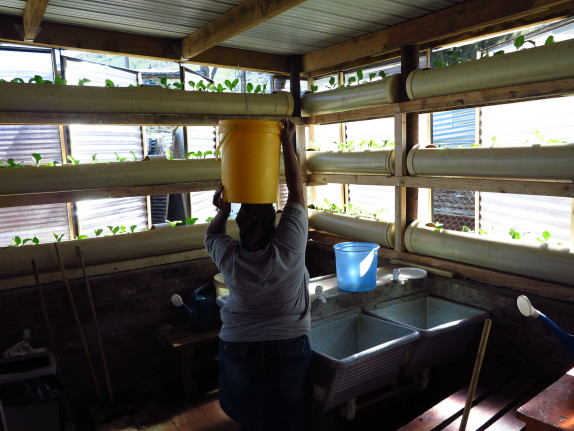
  • Increased food security through the greening of the existing facility in partnership with Touching the Earth Lightly
  • Langrug WaSH facility as a space for youth education, workshops and meetings
  • Dramatic increase in usage of Langrug facility due to consistent cleanliness and ancillary functions within the facility
  • Comparatively low maintenance and upkeep of Langrug facility
  • Success in preventing vandalism
  • Significantly, the community expressed a higher degree of ownership in relation to the Langrug WaSH facility as it was community designed, built and maintained

The challenges that emerged around the facility enhanced the monitoring, evaluation and learning around the delivery and maintenance of services, and assisted in conceptualising the Siphumelele WaSH facility.

Some of these challenges and learning points related to:

  • The low usage of communal showers
  • The slow inception of the hair salon

Building the Concept: Co-Designing the Siphumelele WaSH facility

Given the cost of maintenance and operations, the community and partners involved explored the idea of a livelihood-linked wash facility where a portion of the facility would generate revenue (through a kiosk, crèche, health and educational programme) to reduce the burden on municipal funds for maintenance. Given the community’s experience of struggling for a space of safety and dignity, the Zwelitsha design and construction team named the wash facility “Siphumelele” – “We have achieved it”.

From March to April 2014 the community, together with TEL, began co-designing the facility. The designs include toilets for men and women, a wash area and a kiosk on the ground floor. The second floor will contain a crèche and soup kitchen that will be managed by the community. After conducting a survey with Zwelitsha’s families about amenities to be included in the facility, community leaders chose to exclude showers due to their infrequent use in the Langrug WaSH facility. The community also chose to make use of Enviro Loo toilets after they visited Enviro Loo in November 2013 and received detailed explanations on how the toilets are maintained and operated. The Enviro Loo is a waterless toilet system that provides a safe, non-polluting, cost-effective solution to sanitation.

Co-designing with Touching the Earth Lightly

Co-designing with Touching the Earth Lightly

IMG_6272

Co-designing the WaSH facility

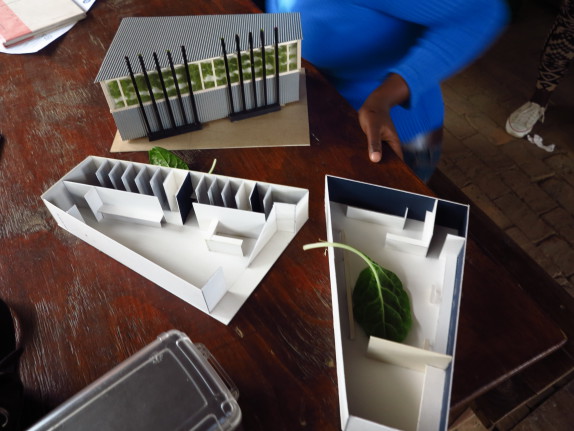
Model of Siphumelele WaSH facility

Model of Siphumelele WaSH facility

Building the Team: Community-led Implementation

Apart from the partners already mentioned, the community has put together different teams to lead the implementation process. These include a leadership committee, a savings group and an Informal Settlement Upgrading Team (ISUT). This team is led by 8 women and includes a Community Liaison Officer, a storekeeper and a project manager who spearhead the construction process. After an exchange to a savings scheme linked to the Federation of the Urban Poor (FEDUP), the community set up their own savings group in July 2014 so as to manage finances to maintain and operate Siphumelele WaSH facility.

Building a voice of the urban poor in Langrug

The foundations for both WaSH facilities were laid when Stellenbosch Municipality signed a Memorandum of Understanding (MoU) with the community and ISN / CORC in 2011. Since this date Langrug’s community leaders have been developing a formal relationship with the Municipality and are making a strong case for how urban poor communities successfully organise themselves to lead their own upgrading processes, and how co-design and co-planning is a step towards a more tangible ‘inclusive city’.

(Photographs: Stephen Lamb, TEL)

Phase 1 of construction

Phase 1 of construction

The construction team

The construction team

Durban and Port Elizabeth Leaders on Sanitation Exchange

By CORC, iKhayalami, ISN, SDI No Comments

By Stefanie Holzwarth and Yolande Hendler (on behalf of CORC)

Over the past years, the communities of Midrand in Port Elizabeth and Havelock in Durban have been upgrading their settlements, step by step. Last week’s exchange (8-11 July 2014) – in which community leaders visited Cape Town settlements – formed the next step in activating solutions to their specific needs for water and sanitation upgrading.

Site visit in Kuku Town

Site visit in Kuku Town


Midrand and Havelock

Midrand is located on municipal land but is not yet listed on the municipality’s database and therefore experiences great difficulty in accessing services. The community consistently experiences severe flooding. Havelock, on the other hand, is built on privately owned land and has been earmarked for “interim services” by eThekwini Municipality, indicating a willingness to deliver basic services in the short term and habitation in the long term. It is built against a hill with high shack densities that have led to shack fires, flooding and torrents of water flushes in the rainy seasons. Read more background on Havelock and Midrand.

The exchange

During the four-day exchange about ten community leaders visited five settlements in and around Cape Town. The exchange was linked to the SHARE Program (Sanitation and Hygiene Applied Research for Equity) linked to Shack Dwellers International (SDI). Read more about SHARE here. It was facilitated by the Informal Settlement Network (ISN), Community Organisation Resource Centre (CORC) and iKhayalami. It centrally focussed on how communities can use sanitation as a tool for upgrading and mobilisation, particularly in response to ever present and severe flooding.

Midrand community leaders, for example, spent time investigating the most suitable and relevant options for sanitation upgrading in their settlement:

  • Communal toilets and wash facility at the edge of the settlement (ablution blocks) without re-blocking
  • Sanitation and wash facility in the centre of the settlement with partial re-blocking
  • Individual sanitation facilities in courtyard (one-on-one sanitation) with settlement wide re-blocking

These would all require engagement with local government institutions.

Havelock’s central challenge is drainage. The settlement has already engaged with local government about constructing a sanitation unit as well as providing more sanitation units in the centre of the settlement. This would coincide with the communities’ already existing plans to re-block its settlement. Midrand and Havelock’s leaders therefore visited upgrading sites that provided an example of different options available to them.

DSCN7284

Example of sanitation in a community-run Water, Sanitation and Hygiene (WaSH) facility

One-on-One Sanitation in Kuku Town

The visitors spent the first day in Kuku Town where the community recently completed re-blocking with individual sanitation per upgraded structure. They were particularly interested in how Kuku Town managed to re-block without having to relocate people to other areas. Other questions focused on why the community chose individual toilets. Kuku Town’s leaders explained that

“single toilets are manageable because the owner is responsible for their own toilet and because there are no conflicts within the community with regards to hygiene.”

The leaders also reflected on Kuku Town’s successes and challenges throughout planning and implementation. The visitors learned how Kuku Town approached the municipality for support in terms of infrastructure services. Both Midrand and Havelock were impressed by the Council´s successful involvement in providing water and sanitation.

6. After reblocking 3

Sanitation and water services per upgraded structure in Kuku Town

Sanitation facility in Langrug, Stellenbosch & BM Section, Khayelitsha

In Langrug, Franschoek. the visitors saw an example of upgrading that included relocating 16 families, the construction of a second access road and grey-water and drainage channels, and a community designed, multi-purpose Water, Sanitation and Hygiene (WaSH) Facility. The visit offered insight into the WaSH facility, the drainage project and the local playground. The subsequent discussion facilitated an exciting learning environment with questions about the maintenance of the WaSH facility and funding. They also discovered the opportunity of hot water provision via solar heating systems in summer. The afternoon centred on projects in BM section, Khayelitsha. Its similarity (due to an uneven slope) to Havelock made it an ideal site for the exchange and delivered an essential input for its visitors.

DSCN7392

Interior view of Langrug’s WaSH facility


DSCN7455

Courtyard in BM section

Shared Sanitation in Mtshini Wam & ongoing re-blocking in Flamingo

The visit to Mshini Wam provided valuable lessons for the visitors – particularly in the field of funding and engaging the local authority. The visitors took special interest in understanding how Mtshini Wam managed to convince some residents to share toilets on a cluster basis while others had single toilets. The challenges relating to communal toilets were thoroughly discussed.

“The main idea was to have single toilets but due to the number of shacks and the limited space, the plan was diverted in order to accommodate communal toilets. The maintenance and cleaning of the toilets depends on the cluster groups.”

The visitors concluded their site visits in Flamingo Crescent, an ongoing re-blocking project. During a walkabout the visitors observed how shacks were broken down, how ground works were installed and how the new structures were erected.

Site visit in Flamingo during re-blocking

Site visit in Flamingo during re-blocking

Midrand community discusses the way forward

On the last day, Midrand leaders and iKhayalami discussed the sanitation options available to the community and the future steps each would imply. Community leaders agreed that re-blocking with one-on-one services would be the most realistic and feasible option.

“The ablution block won´t work for us because there is lots of friction. No one wants to wait for a long time when using the facility. Community blocks won´t work because some of the people are not responsible. They leave it without taking care.” (Community Leader, Midrand)

Midrand’s leaders agreed to start saving to upgrade their structures instead of solely blocking out. They hoped to convince the municipality to come on board. Re-blocking would be conducted in phases – identifying clusters for incremental re-blocking.

One major challenge in Midrand is the lack of space. Part of the settlement land is still in private hands – which causes major tenure insecurity. Together with iKhayalami the leaders discussed various solutions. While the community leaders resolved their questions, the next step is to share these with the rest of their communities when they return.

The exchange not only offered a learning space but also enabled leaders to grow their ability in community-driven upgrading,

“I have learned a lot by being a community leader and by being part of this exchange. It has built up my confidence and my professional experience. I was a very shy person before – now I can stand up and work for our development goals.” (Midrand community leader)

Midrand Consultation

Andy Bolnick (iKhayalami) discusses sanitation options with Midrand community leaders

Upgrading Flamingo Informal Settlement

By CORC, ISN, News No Comments

By Yolande Hendler (on behalf of CORC)

Tucked between Lansdowne’s industrial warehouses and timber depots lies Flamingo Crescent, an informal settlement situated on a street by the same name. On a walkabout through its smoke and dust-filled pathways, community leaders would tell you that Flamingo is home to about 450 people who reside in 104 structures. The entire settlement makes use of only 2 taps and 14 chemical toilets that are emptied three times a week. You would come across contained fires in tin-drums – because the absence of electricity means that fire is a central source for cooking and warmth.  Most structures – consisting of old cardboard, zinc, timber and plastic pieces – are roughly situated around a broad u-shaped pathway that is intersected by smaller, narrow footpaths.

This picture is about to change as Flamingo community goes about upgrading its settlement. Since its first engagement with the Informal Settlement Network (ISN) in 2012, the community has been preparing for re-blocking and – in partnership with the City of Cape Town – is set to receive one-on-one water, sanitation and electricity services.

1. Overview 2

Aerial view of Flamingo


Fire used for cooking

Fire is used for warmth and cooking

Mobilising the community

The community steering committee recounts how the first people arrived in Flamingo in 1992. Many had previously resided around the M5 motorway in Cape Town. Others had been living under Lansdowne Bridge. During the first meetings with the community, ISN introduced the ideas of informal settlement upgrading and re-blocking. It explained how communities could drive their own development processes through making savings contributions, joint planning and implementation. ISN representative, Terence Johnson, emphasises the importance of the community-led process, particularly in Flamingo, where “people had given up hope”.

“When we met with ISN it was the first time we got a partner to help us change our circumstances. After we linked up with ISN and CORC the community decided to elect a new steering committee so we could get better organised and get a better life for ourselves”

(Mark Solomons and Chirne Arnold, Steering Committee Members)

General Community Meeting in Flamingo

General community meeting in Flamingo

Savings, Exchanges

During a general community meeting the steering committee shared the ideas of upgrading and re-blocking with the community and explained that every community member needed to make a 20% contribution to their own re-blocked and upgraded structure.  The community’s response was initially skeptical because they had expected to receive government-subsidized housing.

“But through going on exchanges the community slowly changed its mind. We saw examples of a re-blocked settlement with upgraded zinc aluminum structures in Sheffield Road and Mtshini Wam as well as the one-on-one services for every upgraded structure in Kuku Town”

(Chirne Arnold, Flamingo Steering Committee Member)

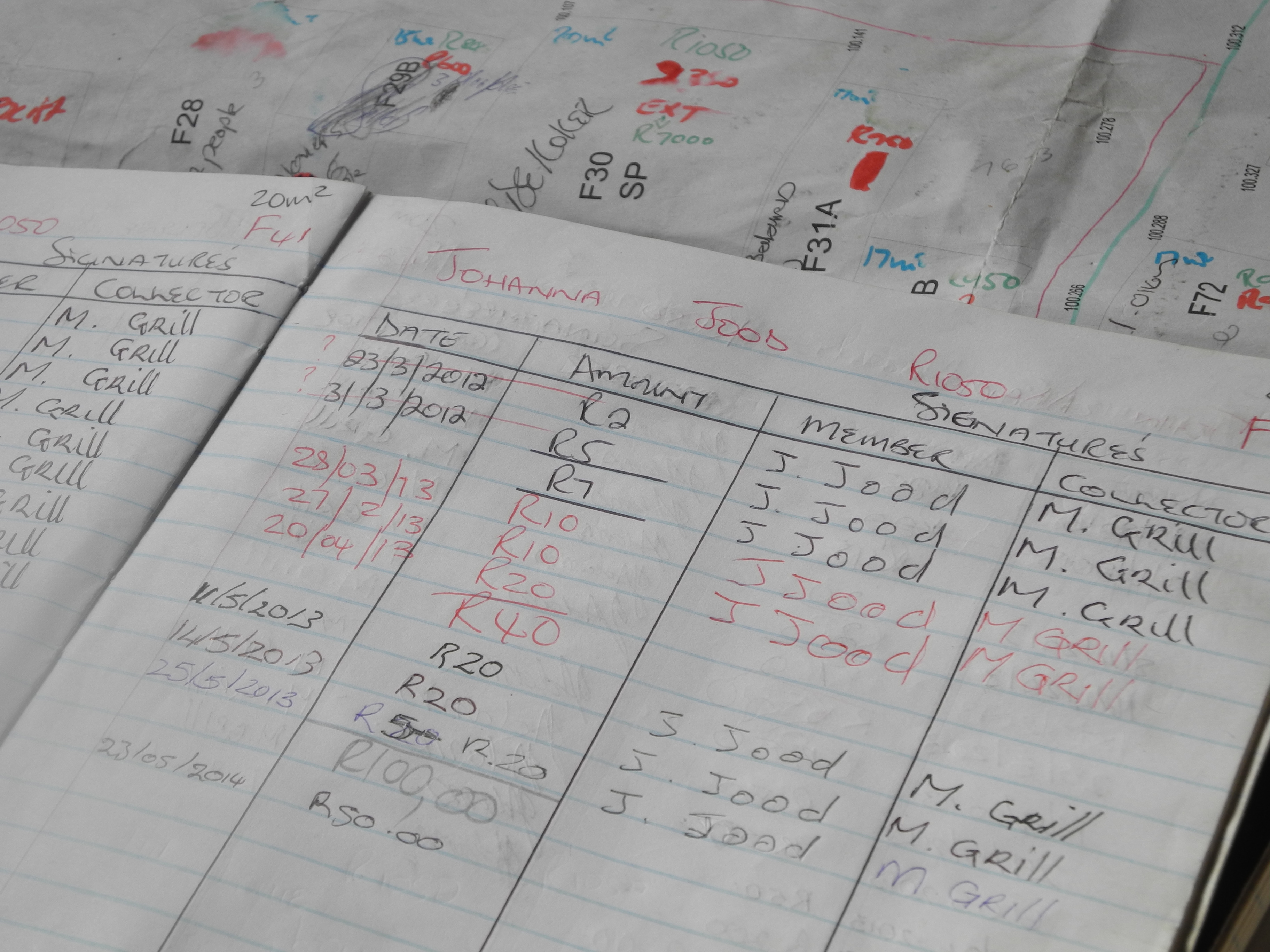
The community began saving in 2012 and to date has saved about R42 000. Each payment was made to the treasurer of the steering committee who recorded each transaction in the community savings book and counter signed the community member’s personal savings book.  As the majority of Flamingo’s population is old and unemployed (50%) the collection of daily savings proved to be a challenge. Nevertheless,

“Some community members like Ouma Sarie have almost managed to save the entire amount. She started with one packet of cigarettes and sold each cigarette one by one. She has saved R860 to date and only has another R200 to go.”

(Elizabeth Rantoetse, Flamingo Steering Committee)

Other community members saved some money through working. Those that were not able to save anything are set to receive short-term employment during the construction process through the City’s Expanded Public Works Programme (EPWP).

DSCN5756

Flamingo Steering Committee and ISN Representatives. From front left to right: Melanie Manuel (ISN), Elizabeth Rantoetse, Jasmine Louw, Lenrika de Koker, Chirne Arnold, Terence Johnson (ISN), Mark Solomons

DSCN7127

Community documented savings

Enumeration, Planning and Partnership

Flamingo’s enumeration took place in April 2012. Over a period of one week, community members, supported by the Alliance, gathered social and demographic data about their settlement. This enabled the community to gather information about Flamingo’s population, the number of structures and the exact extent of water and sanitation amenities. The enumeration also gathered details on the extent and spread of employment as well as the reasons for moving to Flamingo. During a planning studio with students from the Cape Peninsula University of Technology (CPUT) and CORC technical staff in 2013 the community surveyed the site, designed its re-blocked layout and verified its enumeration results. Later that year the community was joined by students from Worcester Polytechnic Institute (USA) who assisted in conceptualising plans for a crèche and a play park.

Flamingo is one of several pilot projects supported by the City as part of a broader commitment the City made in 2012 to support the upgrading of 22 partnership projects. For more background click here. Following the 2012 agreement, the City, Alliance and Flamingo community met in a number of partnership meetings. The enumeration acted as a powerful entry point to negotiating an improved layout and one-on-one service provision. So far, the main sewer lines have been laid and two clusters of structures have been cleared and are ready to be re-blocked. As implementation continues, Flamingo community continues on-site meetings with City officials to discuss details and project developments.

Auntie Marie, Flamingo community leader, reflects on the road thus far:

 “If it wasn’t for ISN, I don’t know where we would be. Through ISN we were introduced to the City and we got a partnership. We started thinking, ‘Now something is going to happen’. Flamingo is going to be re-blocked!”

CORC will continue to document project developments in future posts.

DSCN6554

City of Cape Town site meeting with steering committee

DSCN6124

Ground markings for laying pipes

2014-04-24 10.53.58

Earth works begin

DSCN7079

First clusters are cleared. Preparation for paving central pathways.

DSCN6143

First upgraded structure

DSCN6546

Auntie Marie (Flamingo Community Leader) and Nkokheli Ncambele (ISN Regional Leader)