Tag

People's Housing Process Archives - Page 2 of 2 - SASDI Alliance

Tinasonke Community: Our show houses help us negotiate with Gauteng Province

By FEDUP, uTshani Fund No Comments

By Cynthia Ntombekhaya Yalezo and Philda Mmole * (on behalf of FEDUP)

This piece of land – where we now live – was not always called Tinasonke**. When we still stayed across the road – there in Tokoza township – as backyarders, it was called Caravan Park. There were only labour tenants living on this land because it was used to farm apple and apricot trees and mielies (maize).

**(Tinasonke township is located in Ekurhuleni Metropolitan Municipality, near Alberton in Gauteng. It was formally established in 2009).
IMG_2759

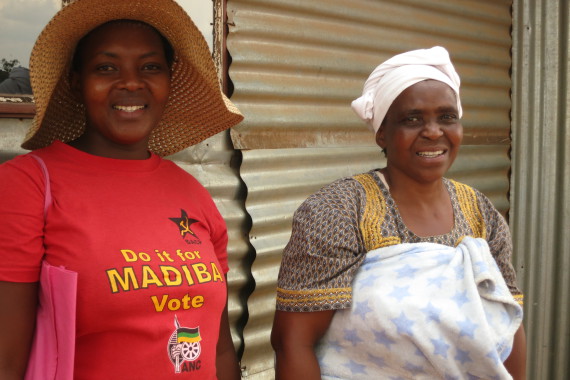
Tinasonke community leaders, Philda Mmole and Cynthia Ntombekhaya Yalezo
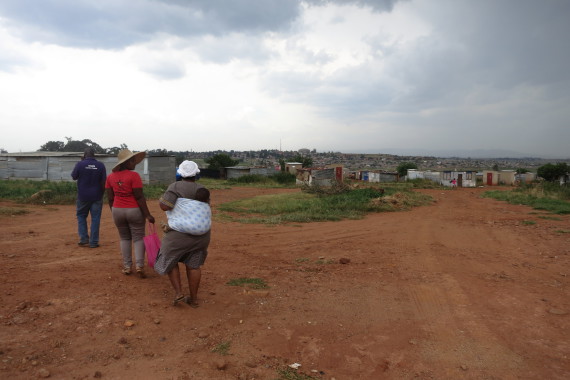
Walking through Tinasonke

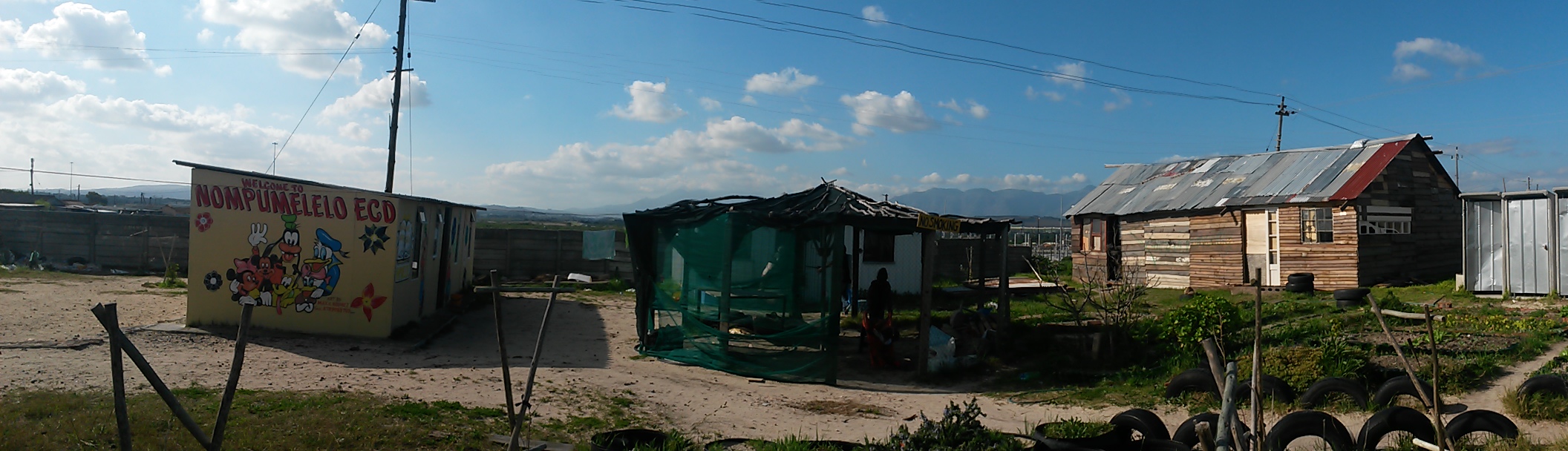
View of Tinasonke

From Tokoza to Tinasonke

When we lived in Tokoza, about 1500 of us backyarders came together in 1997 to form the Zenzeleni Housing Savings Scheme as part of what we now call the Federation of the Urban and Rural Poor (FEDUP). We wanted to improve our conditions by living on our own land and in our own houses. This is when we identified Caravan Park and negotiated with the owner of the land, who sold it to uTshani Fund on behalf of FEDUP in 1998 for R1.2 million. As a savings scheme we contributed R 260 000 of the cost which we used as a deposit for the land.

Each member of our savings scheme had to contribute R600 to cover the cost of the deposit. Some of us were working, others not. But we tried to help people. We lent money to Mama Msani to buy and resell bananas to earn the R600. There was a split and not everyone contributed to the cost of the deposit but we all moved away from Tokoza in 2003.
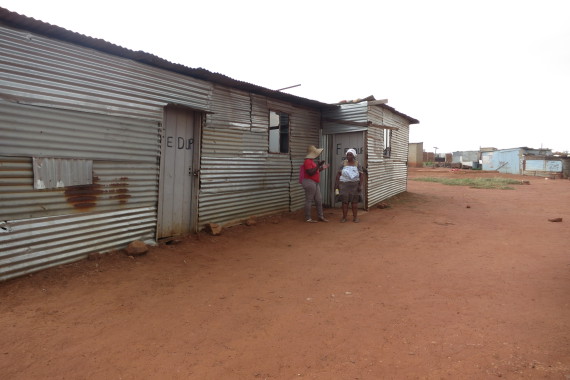
Philda and Cynthia outside FEDUP office in Tinasonke

Philda and Cynthia outside FEDUP office in Tinasonke

The beginning: our plans for houses

At this time we submitted our housing subsidy applications to the provincial government. Once they were approved we planned the site layout with the support of consultants who drew the layout professionally and submitted it for approval. We are now about 1200 people in Tinasonke, living on 514 sites. When we drew the layout plan – the municipality asked us to name our land.

We chose “Tinasonke” which means “all together”. We want everyone in FEDUP to get access to land together.

Since we moved here our savings group separated. Some members wanted RDP houses while the rest of us wanted FEDUP houses (Through the People’s Housing Process FEDUP members can directly access housing subsidies and construct larger houses through Community Construction Management Teams. FEDUP houses are generally 50m2 or larger, depending on the extent of additional savings. RDP houses are 40m2 in size.)

RDP house (left) , FEDUP show house (right)

RDP house (left) , FEDUP show house (right)

Far left: Lucky Khwidzili (uTshani Fund), Elias Matodzi (Owner of show house) Far Right: Philda Mmole, Cynthia Yalezo, Emily Mfundisi Mofokeng (Tinasonke Steering Committee members)

Far left: Lucky Khwidzili (uTshani Fund), Elias Matodzi (Owner of show house)
Far Right: Philda Mmole, Cynthia Yalezo, Emily Mfundisi Mofokeng (Tinasonke Steering Committee members)

Plan of Action: Building our show houses

Some community members have RDP houses. As FEDUP members our subsidies have been approved but we haven’t received them yet. We don’t want to fold our arms and wait for government to deliver houses. We want to do something ourselves – because when you wait for government you can wait 100 years. We try practice freedom, democracy.

We decided to build two show houses in Tinasonke to show government that we can do it ourselves. We used our own savings money from our Urban Poor Fund to pre-finance the two houses. In Tinasonke we have three savings schemes that meet every Saturday. Two are made up of FEDUP members in Tinasonke, and one is a savings scheme of landless people.

For the show houses we selected FEDUP members according to their age and participation. One of the show houses belongs to Nthathe Elias Matodzi. He has been a member of FEDUP since we moved to Tinasonke. FEDUP is in his blood. We like FEDUP because being part of this organisation gives us knowledge.

We want to negotiate with our show houses. We want government to see that we are doing things for our selves. We want government to match us with money so it can meet us half way and give our subsidies to us. Even now the rest of the community want FEDUP houses because they have seen our show houses. We want provincial government to see that we can do it for ourselves.

* Compiled by Yolande Hendler (on behalf of CORC) 

Elias Matodzi's 'two' homes, (showhouse on right)

Elias Matodzi’s ‘two’ homes, (showhouse on right)
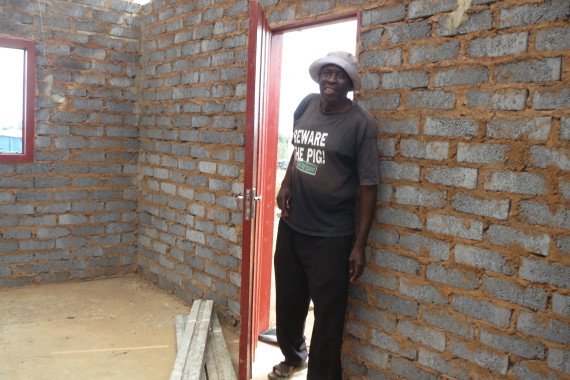
Elias in his soon-to-be-completed house.
Elias in his soon-to-be-completed house.

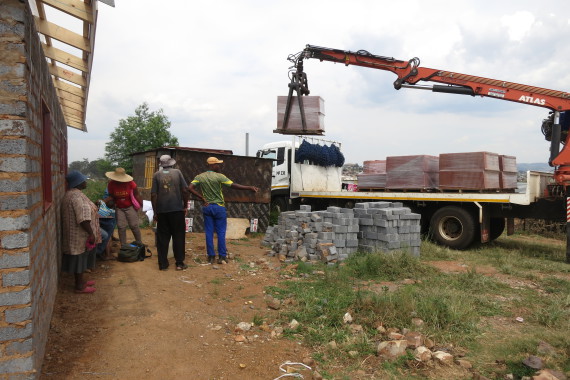
Roof tiles delivered to Elias' showhouse.

Roof tiles delivered to Elias’ showhouse.
Moegsien

SA Alliance at National Human Settlements Indaba 2014

By CORC, FEDUP, ISN, News, Press, SDI, uTshani Fund No Comments

By Yolande Hendler (on behalf of CORC)

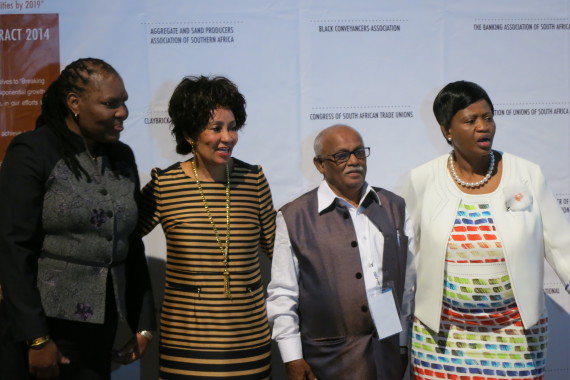
FEDUP members welcome Minister Lindiwe Sisulu and Deputy Minister Zoe Kota-Fredericks at the SDI Exhibition booth

FEDUP members welcome Minister Lindiwe Sisulu and Deputy Minister Zoe Kota-Fredericks at the SDI Exhibition booth

Twenty years after Joe Slovo’s historic Botshabelo Housing Accord, Lindiwe Sisulu, incumbent minister of Human Settlements, invited stakeholders in the human settlements sector to the National Human Settlements Indaba and Exhibition, which was held at the Sandton Convention Centre in Johannesburg from 16-17 October 2014. This included the Federation of the Urban Poor (FEDUP) on behalf of the SA SDI Alliance and Shack/Slum Dwellers International (SDI),

Aims of the Indaba

The Indaba not only marked twenty years of South African democracy but also ten years after the first social contract was signed in 2004 during Sisulu’s first term as Minister of Housing from 2004-2009. The first social contract, similarly, brought together a number of stakeholders in the housing field to discuss and sign an agreement regarding co-operative and collaborative housing practice which would pursue the aims of the then newly launched housing policy: Breaking New Ground (BNG): A framework for Sustainable Housing Development. BNG largely focuses on “promoting the achievement of a non-racial, integrated society through the development of sustainable human settlements and quality housing”. Click here for more on BNG policy. Ten years later, however, the implementation of BNG has been only partially successful.

Against this backdrop, the 2014 Indaba aimed to:

  • Review progress in the implementation of BNG
  • Review the impact of the Social Contract for Rapid Housing signed in 2005
  • Commit stakeholders to a second social contract towards 1.5million housing opportunities by 2019.
Rose Molokoane and SDI delegates from Uganda, Tanzania and Zimbabwe

Rose Molokoane and SDI delegates from Uganda, Tanzania and Zimbabwe

South African and International SDI delegates at Exhibition booth

South African and International SDI delegates at Exhibition booth

Day 1: Pledges towards a second social contract

Amidst actors such as the South African Banking Association, the Chamber of Mines, construction companies and trade union representatives (to mention but a few), SDI and the SA Alliance voiced the interests of the urban poor and advocated for an inclusion of the urban poor in planning, decision-making and implementation.

During the first day’s introductions, Jockin Arputham, SDI President and Nobel Peace Prize Nominee, shared a message of support ahead of the minister’s keynote address which is outlined here. In the afternoon contributors pledged their commitments to the second social contract.

SDI President Jockin Arputham with Minister Lindiwe Sisulu and Deputy Minister Zoe Kota-Fredericks

SDI President Jockin Arputham with Minister Lindiwe Sisulu and Deputy Minister Zoe Kota-Fredericks

Jockin Arputham speaks at Press Briefing

Jockin Arputham speaks at Press Briefing with Minister Sisulu and Director General Zulu

The SA SDI Alliance Pledge

In response to the Department’s larger orientation, Rose Molokoane, national co-ordinator of FEDUP, powerfully shared the pledge of the SA SDI Alliance:

FEDUP pledges to work with national, provincial and local government to deliver 1000 housing actions every month, improving the life of 1000 households. These actions will include

1)   Organising communities through savings

2)   Upgrading services such as water, sanitation, drainage, energy and roads

3)   Building bigger and better houses

4)   Advising the ministry on how to work with communities and organise them to be full stakeholders

We also commit to draw other organisations of the urban poor into the pledge as equal partners. We cannot do this alone. You cannot do this alone. You need our help. “We know the minister is serious about supporting us. What about the MEC’s? What about the local authorities? Are you?

View Rose Molokoane’s speech here:

[vimeo]https://vimeo.com/110123793[/vimeo]

Day 2: Reviewing BNG projects & the second social contract

The second day of the Indaba concluded with presentations by several MECs on the successes and challenges of implementing BNG projects in four provinces, followed by the reading and signing of the second social contract. The specifc commitments of the second social contract are documented here.

Rose & Jockin sign the second social contract on behalf of SA SDI Alliance and SDI

Rose & Jockin sign the second social contract on behalf of SA SDI Alliance and SDI

IMG_0949

Throughout the Indaba the minister repeatedly referred to the value and experience of SDI and the South African Alliance’s work in forming an inclusive atmosphere that engages the urban poor around their own housing development.

Over the last twenty years the SA SDI Alliance has developed an ongoing partnership with the Department which spans from the signing of the Botshabelo accord in 1994, participating in the 2005 national housing accord, the signing of the first social contract in 2005, the 2006 MoU pledge with the Department for subsidies of R285million with which FEDUP has built over 2000 houses to the Department’s most recent pledge of R10million in August 2014.

Throughout FEDUP’s partnership with the Department its core vision has always been: “Nothing for us without Us”. This message is also at the heart of FEDUP’s pledge. As the second social contract is implemented in the next five years, it is the collective vision, experience and practice of the urban poor that is crucial to a truly inclusive implementation not only of housing but also of incremental, in-situ informal settlement upgrading as a vital step towards attaining housing and tenure security.

“We cannot do this alone. You cannot do this alone. You need our help.”

(Rose Molokoane)

The Dept. of Human Settlements honours Patrick Hunsley & pledges R10 million to FEDUP

By CORC, FEDUP, ISN, SDI, uTshani Fund No Comments

Patrick Magebhula Hunsley, founding member and stalwart of the South African Alliance and Shack Dwellers International (SDI), was awarded the Lifetime Achievement Award by Lindiwe Sisulu, Minister of Human Settlements on behalf of the Department of Human Settlements on Thursday 14 August 2014 at the annual Govan Mbeki Human Settlements Awards ceremony held in Johannesburg.

Patrick Magebhula Hunsley

Patrick Magebhula Hunsley

Patrick's son, Charles Hunsley, receives the Lifetime Achievement Award on behalf of his father from Minister of Human Settlements, Lindiwe Sisulu

Patrick’s son, Charles Hunsley, receives the Lifetime Achievement Award on behalf of his father from Minister of Human Settlements, Lindiwe Sisulu

This prestigious award ceremony (established in 2006) aims “to promote and inculcate a culture of excellence within the human settlement sector in the delivery of quality human settlements and dignity to South Africans” (Reference). The awards acknowledge excellent achievements on a Provincial and National level, in order to showcase and demonstrate the work done by the department at both tiers and to promote best practices in meeting the delivery mandate of the Presidency’s Outcome 8, which is aligned with the vision of building sustainable human settlements and meeting the Millennium Development Goals.

This year, however, the minister included an additional category of awards – the Lifetime Achievement Award – that was given to only two people in honour of excellent and noteworthy contributions. When attending Patrick’s funeral in Durban on 16 August at the KwaMashu Christian Centre in Durban, the minister shared

“For the first time this year, we honoured people with outstanding qualities and recognized them as life time achievers in this area. Of all the people who have been active in this field we chose two people. The first was Joe Slovo, the first minister of housing and the second was Patrick Magebhula”.

Lindiwe Sisulu, Minister of Human Settlements and Rose Molokoane, National Coordinator of FEDUP at Patrick Hunsley's funeral on 16 August 2014.

Lindiwe Sisulu, Minister of Human Settlements and Rose Molokoane, National Coordinator of FEDUP at Patrick Hunsley’s funeral on 16 August 2014.

Lindiwe Sisulu, Minister of Human Settlements pledges R10 000 000 to the Federation of the Urban Poor at Patrick's funeral

Lindiwe Sisulu, Minister of Human Settlements speaks at Patrick’s funeral

The Federation of the Urban Poor (FEDUP) has had a long-standing relationship with government. In the lead up to the 1994 elections, the federation of women’s savings collectives lobbied for an alternative approach to housing that focused on people-centred and controlled development – this model was appropriated by government in 1998 in the form of the People’s Housing Process (PHP). Read more here. Patrick was instrumental in these processes, negotiating with government and ‘un-blocking’ strategic regions in the country. In 2006 FEDUP secured a long term ‘subsidy pledge’ with the department of human settlements which was signed by FEDUP, uTshani Fund and then national minister of housing, Lindiwe Sisulu for 1000 housing subsidies per province in South Africa. In 2010 Patrick served as special advisor to then minister of human settlements, Tokyo Sexwale, on human settlements policy and practice. In 2011 Patrick was asked to serve on a Ministerial Task Team on Water and Sanitation, headed by Ms. Winnie Madikizela-Mandela, tasked with addressing the issues of open-air, incomplete and dilapidated toilets in poor communities across South Africa.

Having worked together closely with Patrick, current Minister of Human Settlements, Lindiwe Sisulu, recognised him at the award ceremony as

 “an outstanding, humble man who helped us shape our policies and understand how people who live in slum conditions are not victims, that they have the power, together with our support, to take themselves out of their poverty. His name is Patrick Magebhula and he passed away on Monday 4 August 2014. It is a sad loss for us. We will bury him on Saturday with all the dignity that he deserves. Today we honour him as an internationally recognised champion and pioneer of the empowerment of the poor and acknowledge his outstanding contribution. We and his broader family of the Federation of the Urban Poor and SDI will have to double our collective effort to further his work to ensure that his life passion was not in vain.” (Reference)

At Patrick’s funeral, which was attended by family, hundreds of fellow activists, friends and comrades the minister remembered how she and Patrick had first met in Barcelona (Cape Town) when she was a new minister together with FEDUP and Rose. As she got up to speak at one of the occasions she explained that Patrick had humorously asked her to explain who she was, who had sent her, who she was representing and what her promise would be to the Federation. After the minister had shared this anecdote, she pledged R 10 000 000 in housing subsidies to FEDUP. Kwa Mashu’s church – packed to the brim – erupted in song, cheers and ululations.

 “My only regret is that Patrick is not here today to hear me but I want him to know that the promise I made to him, today, I kept in his honour. The federation will not be in want while I am around, the federation will not want for anything while the DG, the deputy minister and the department is there. The partnership we have will live in honour of this man whose humility is amazing. As the Department of Human Settlements we count ourselves as the broader family of Patrick.”

She also honoured the work of Shack Dwellers International (SDI) and its nomination for the Nobel Peace Prize, which South Africa has decided to second.

“We as South Africa have pledged to second SDI’s nomination and lobby all African countries who are part of us to second the nomination so that we can celebrate with Patrick should we win the peace prize”.

The Minister then led the gathering in the song: “Lihambile iQhawe”, a famous freedom song that was also sung as Mandela was buried in December last year. The refrain goes: “Lihambile iQhawe lamaQhawa” – The Bravest of the Brave has departed.


How Community Construction Management Teams (CCMT) can lead upgrading projects

By CORC, FEDUP, ISN, uTshani Fund No Comments

By Yolande Hendler (on behalf of CORC)

20140722_141359

The venue : Makhaza Day Care Centre in Khayelitsha Cape Town

If designing and planning with communities are key aspects of people-led projects then people-led implementation and -construction are too. The SA Alliance – through the Federation of the Urban Poor (FEDUP) – has pioneered this people-led approach since 1994. By lobbying government, FEDUP strongly influenced low-income housing policy that came to be known as “the People’s Housing Process” (PHP), a special housing subsidy that allowed for much greater involvement of communities in the construction of their houses. Since then, FEDUP members have successfully implemented the construction of their houses through Community Construction Management Teams (CCMTs).

Although CCMTs have for the most part been linked to housing projects in the Alliance, setting them up is just as relevant to the Alliance’s more recent involvement in informal settlement upgrading. During this week’s three day CCMT workshop, experienced CCMT members introduced Cape Town community leaders to the CCMT model of community-led construction and explored how it could function in informal settlement upgrading.

The Exchange

Over three days Hasane Khoza (Abi) and Maureen Skepu from Gauteng shared their experiences in community construction with about 30 leaders from 6 settlements in Cape Town. With a background in construction management, Abi has helped to train and set up CCMTs and monitor housing projects. Maureen has a rich experience in CCMTs – she became a member of FEDUP in the early 2000s, accepted a volunteer position with a local CCMT five years later, and in 2011, moved into her own CCMT constructed house in Orange Farm, Gauteng. Read more about Maureen’s story here.

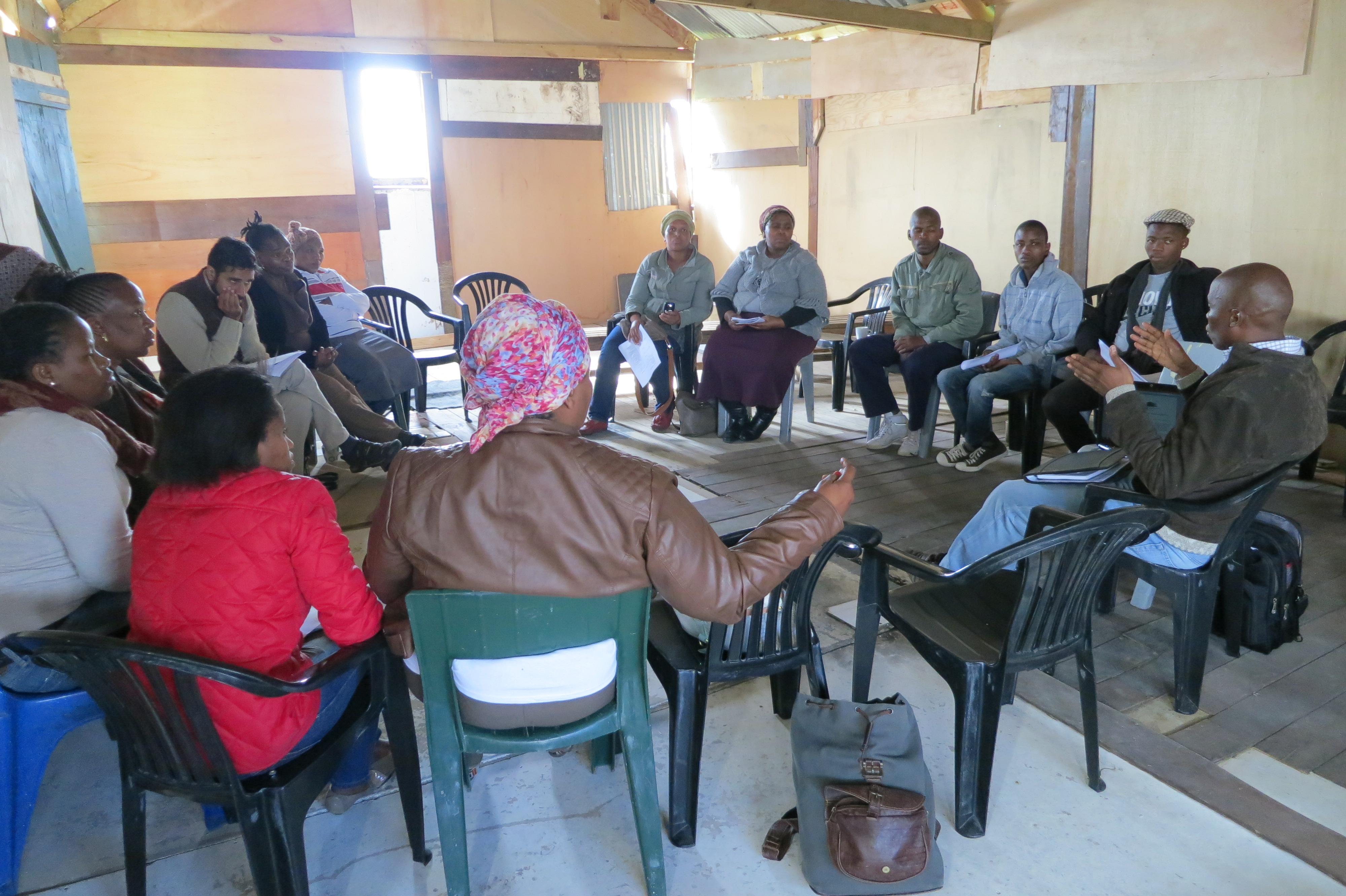
IMG_1730

Day 1 of exchange: background and formation of CCMTs

During the exchange, Abi and Maureen provided some background on the formation and strcuture of CCMTs, roles and responsibilities of each CCMT member and how to introduce the model of CCMTs to informal settlement upgrading.

The group also spent an afternoon in Flamingo informal settlement, which is currently upgrading and re-blocking. The visit offered an ideal opportunity for Flamingo’s steering committee to explain the way in which they have organised themselves so far and to explore the potential for them to form a CCMT to further streamline and ease the overall management of re-blocking. For the other communities present the site visit offered a first hand impression of what to consider for managing an upgrading project.

Terence Johnson, who has been involved in Flamingo from the outset on behalf of the Informal Settlement Network (ISN) explained,

“There are so many challenges and things you need to consider during upgrading. Some people don’t want to be moved, the rain causes flooding and leakages…. but we need to see these things not as a problem but as a challenge. And we can overcome challenges, especially if we work in a group like a CCMT. ”

Flamingo steering committee putting during on-site construction

Flamingo steering committee putting during on-site construction

How CCMTs work

On the first day Maureen explained,

 “The idea behind CCMTs is that communities oversee and implement projects themselves. In this way the community can make sure that the job is done properly. Because of this you need dedicated and thorough people on the team. The benefit of CCMTs compared to general steering committees are that each member has clear roles and responsibilities”

(Maureen Skepu, FEDUP housing project coordinator, Gauteng)

Within FEDUP, the CCMT process includes all the stages of house building: from drawing plans (which are formalised by qualified architects and engineers) to the construction process, which is contracted out to community members. The construction team consists of five members who each have a specific task: the technical officer requests specific items and provides quality control, the bookkeeper sources the best and cheapest materials, the storekeeper controls the inflow and outflow of stock, the loan and savings officer looks after the community’s finances, and the project manager oversees the whole process. And, unlike in the private and public building sector, most of the construction team’s members are women.

“The idea is to capacitate a community to move from being just employed in a project to driving the project themselves. Project management is a skill that can be learnt. Everyone can be taught and everything we know we have learnt. Managing a project leads to empowering a community.”

(Abi / Hasane Khoza, CCMT Construction Manager)

IMG_1731

Abi answering questions about CCMTs

Community Questions, Discussions and Insights

The workshop was a space of many questions and lively discussions. These were about how to break down the budget at community level so each person knows exact quantities and costs of materials to expect, at what stage in a project process a CCMT could be formed, or that women’s strength, resilience and thoroughness are good qualities for CCMT members. The communities present also liked the idea that CCMTs share the overall responsibility of an upgrading project – a shift from one person to a team of people.

In reflecting on the three days that passed, the community members expressed their value for exploring how the CCMT process can work in informal settings and upgrading projects. The suggested next steps are to establish guiding templates for establishing CCMTs as well as monitoring and documenting project processes on the ground, so that these can be shared with others as well.

“What we can learn from the CCMT workshop is that we need to continue learning, especially from the mistakes we make. Let’s not only make a habit of learning but actually do something with what we learn”

(Lindiwe Ralarala, Masilunge community leader)

Discussing the role of slopes and gradients on the upgrading site.

A discussion on the role of slopes and gradients on the upgrading site.