Tag

community participation Archives - Page 3 of 7 - SASDI Alliance

Community Voices: “Why We Chose to Live in K2 Informal Settlement”

By CORC, ISN No Comments

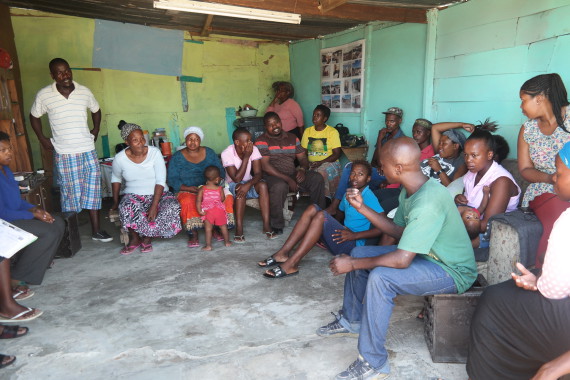
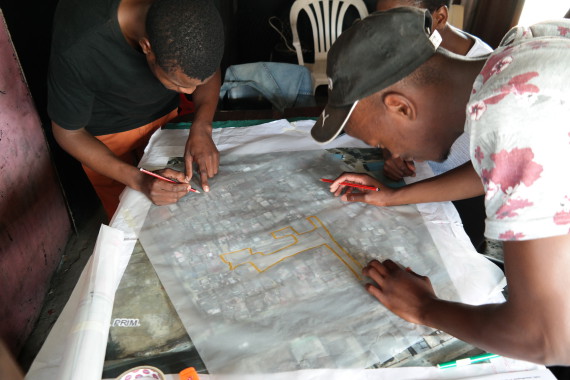
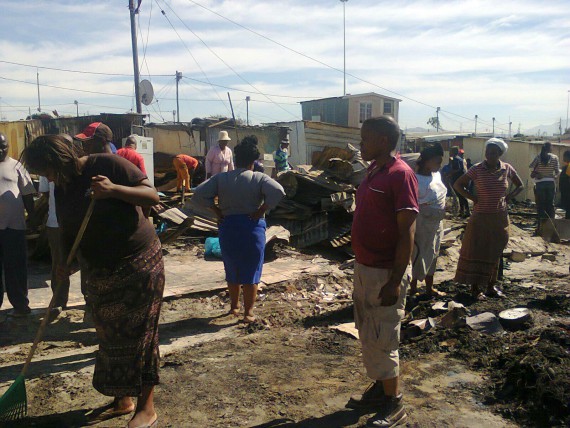
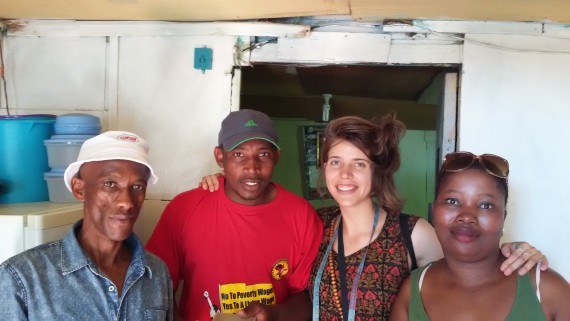
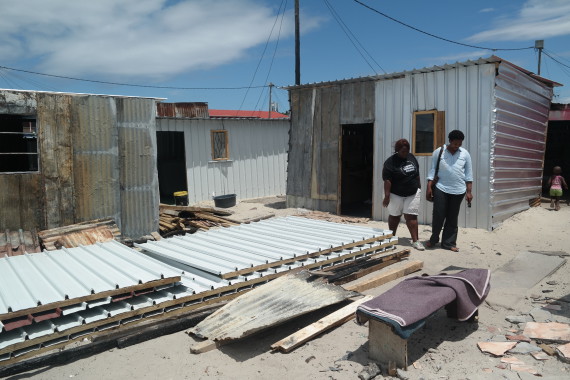
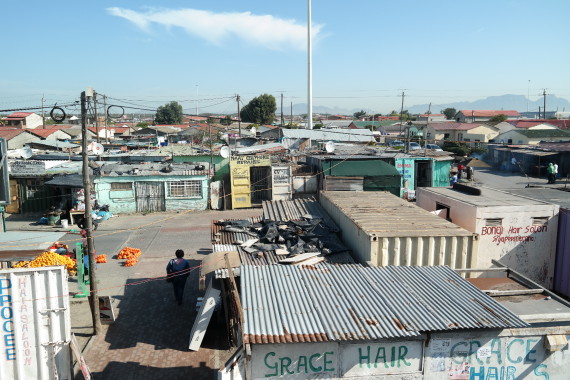
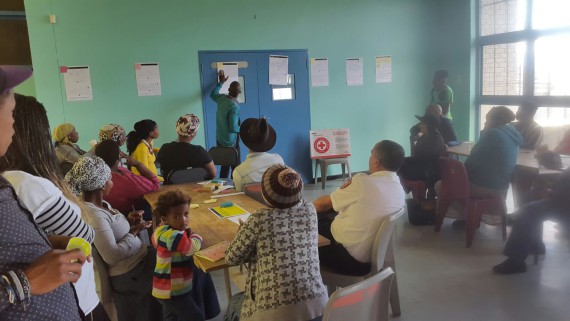
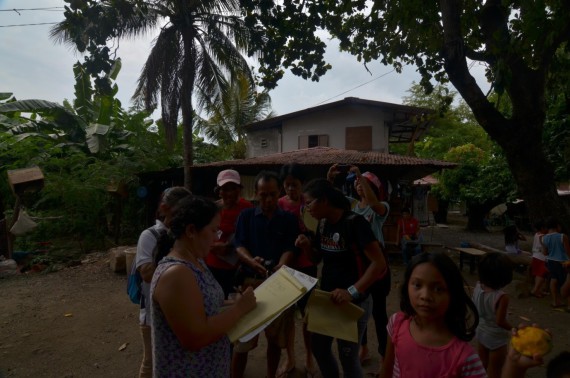
As community members gathered in a neighbour’s large living area in the centre of K2 informal settlement in Khayelitsha, the room continued filling up with more people who had been called to join a “documentation workshop” about the settlement. As some members began to discuss the possible purposes of documentation, they began to link the value of the workshop to the value of establishing a record and copy of their experiences of life lived in K2. This blog reflects the experiences of K2 informal settlement as told and written down by K2 residents themselves.

SAMSUNG CSC

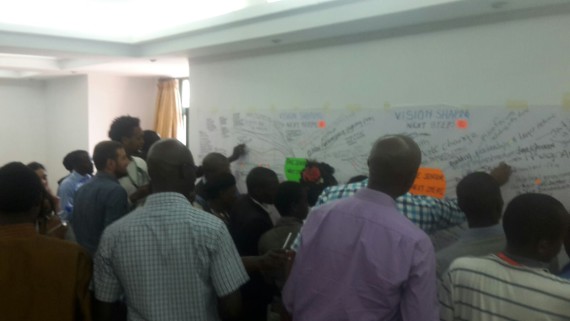
First Documentation Workshop in K2


Anecdotes: When We First Arrived in K2

By: Nolutho Vava, Mrs Maxhegwana, Neliswa Ngqiyi, Nomzi Xhalanga, Thobeka Mnyuko, Ndileka Matiwane, Nonyameko Ganelo, Sibongiseni Cokile, Nthmbekhaya Mathamba

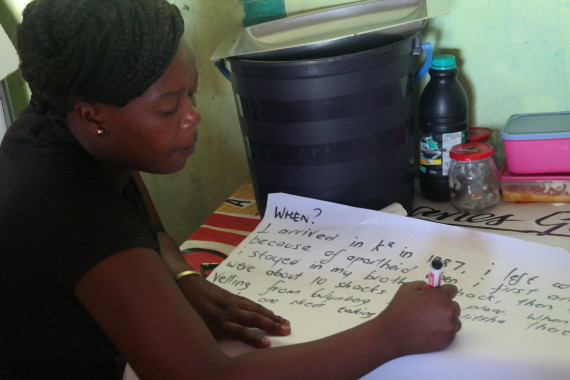
“I arrived in K2 in 1987. I left Constantia because of apartheid. When I first arrived [in K2] I stayed in my brother’s shack. [At the time] there were about ten shacks in this place. Because I had children of my own I had to build my own shack but only a number of people had the right to stay here. In 1989 people protested to get the right to build their own shack. They then managed to [convince] their leaders (who were the decision makers) and [we] were charged money in order to get space to build. The leaders [at the time] were not chosen by the people so they did not have the people’s interest at heart.”

“When travelling from Wynberg to Khayelitsha there was only one street taking you to the bus stop. When it was windy you wouldn’t go anywhere or even open the doors. There was too much sand.”

SAMSUNG CSC

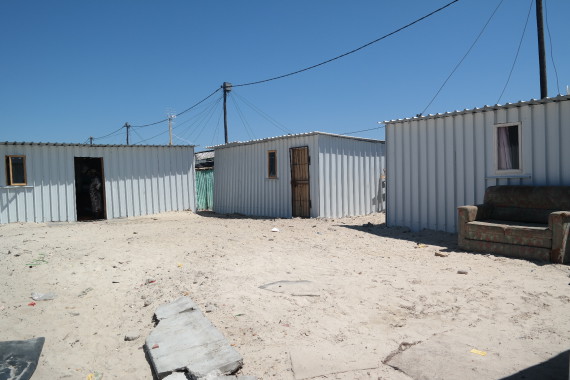
“I arrived in K2 in the year 2000. It was a very dirty place then with reeds growing and dirty water flowing. The houses and shacks were surrounded by reeds. There was no fresh air. We breathed in the smelly air – people were throwing poo between the houses. Some people were throwing pee-buckets. It was so unhealthy. There were no toilets, no water, and no electricity. Some brave people would go to green point bushes to relieve themselves.”

“In 2001 more people were moving into our settlement. We (as people) removed the reeds and made space for more people to come. Even after removing the reeds the water was still flowing underneath our shacks especially when it was raining. But it got better when the municipality built the toilets in 2007. But some shacks are still in damp areas.” 

Authors of this Blog, K2 Community Khayelitsha

Authors of this Blog, K2 Community Khayelitsha

Why we chose to live in K2

By Nolubabalo Mkonto, Zanele Ngqeyi, Tina Gqamane, Busisiwe Koko, JJ, Nopinky

  • We moved to K2 from the Eastern Cape because we were looking for a job and most of us didn’t have a place to stay. K2 was the only area that had space to build in.
  • We are close to police stations, shopping malls, taxis, trains, busses and schools
  • We can walk to these places and don’t have to pay anything
  • We are happy about electricity. In 2011 our leadership negotiated with the City of Cape Town
  • We have a [outdoor] crèche for our children
  • Some of us are employed as cleaners with the City’s Expanded Public Works Program (EPWP), 4 days a week
  • The residents appreciate the cleanliness of K2 – we have containers to keep rubbish and rubbish cars can come in and out
Community writers collect challenges of living in K2

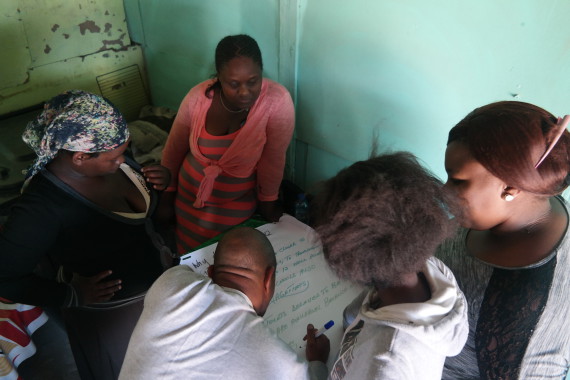
Community writers collect challenges of living in K2

Challenges of living in K2

By: all members in workshop

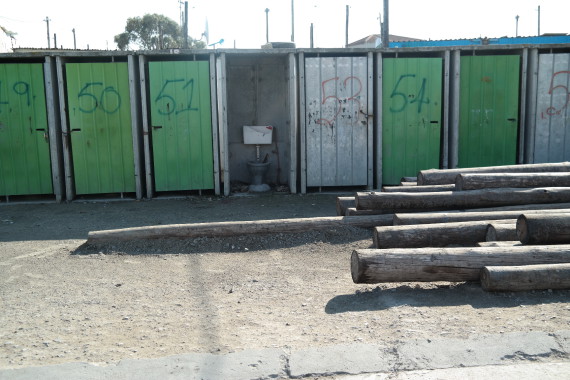
  • Toilets are far from some shacks, some have no doors, some are blocked / broken and there is a delay in repairing them
  • Drains get blocked and the municipality turns a blind eye. We’d stay for more than four months with those smelly drains
  • When toilets and drains are blocked the water causes little dams that have green water which can cause a lot of diseases
  • Too many rats – the rats can infect us
  • Taps are few and they are far from other shacks
  • Robbers are available because of light failures, especially at night
  • No parks for children
  • Shacks are too close to each other, e.g. when there is fire a lot of houses get destroyed. Some of our children (who are already over 24) still stay with their parents –but there is not enough space for them to have their own place.
Communal toilet block in K2

Communal toilet block in K2

Where we are now 

“When we think about our situation now we would be happy to have a larger place to stay with our own yard, own toilets and taps, and to be safe from fire. The question of space is important to us because even when we have problems (e.g. funerals) we cannot do them here because we don’t have enough space.

We met the Informal Settlement Network at a community meeting in Andile Msizi Hall in Khayelitsha where the regional ISN leader invited us.”

Since the community’s engagement with ISN and FEDUP, K2 has collected data about its settlement in full enumeration and profiling exercises. These have formed the foundation for community-based plans for upgrading and reblocking.

Co-Planning for the Upgrading of K2

Co-Planning for the Upgrading of K2

SAMSUNG CSC

“As I am new here today I know how they struggled as K2. By hearing this story now I have hope that one day things here will be much better because so far K2 is improving. I can now tell the story to the others” (Reflection by K2 community member on community-generated documentation)

Umlilo! How a Mobilised Community Contained Fire Outbreak in Khayelitsha

By CORC, FEDUP, ISN No Comments

By Yolande Hendler (on behalf of CORC)

 “It was about ten to one. We were asleep and suddenly we just heard the ringing of the Lumkani fire detection device. Everyone was shouting ‘umlilo, umlilo!’ which means ‘fire, fire!’ When we woke up and went outside, it was easy to locate the fire because petrol makes high flames. We saw that the fire was burning an entire shack.” (Thamara Hela, Community Leader, UT Gardens)

ISN Community Leader Thamara Hela points to a structure that largely withstood the fire

ISN Community Leader Thamara Hela points to a structure that largely withstood the fire

The community of UT Gardens in Site B Khayelitsha partnered with the Informal Settlement Network (ISN) in early 2014 to install the Lumkani fire detection device in 250 of its 400 households as part of a broader approach to informal settlement upgrading. Since then, at least one fire broke out in the settlement due to an outdoor cooking fire. The incident occurred soon after the Lumkani device was installed in November 2014 and burnt only one shack as the community was alerted through the settlement-wide ringing of the Lumkani device. The fire on January 16, 2016 however, was different.

“It was very difficult to control the fire because of the wind. It spread quickly. Altogether 13 structures burnt down and 2 were damaged. In UT Gardens we have a total of 400 structures with 1402 people living in them. When I saw where the fire was, I called the fire brigade immediately. The owner and his girlfriend were still inside the burning structure. The fire brigade arrived quickly but it took long for them to get inside our settlement because it is so dense. We later found out from the owner of the structure that the fire was started on purpose because there was petrol poured around the structure by a woman in the community.” (Thamara Hela, Community Leader, UT Gardens)

Debris after the fire

Debris after the fire

20160304051416

Clearing debris the morning after the fire

Given the high density of structures the fire quickly spread to surrounding structures and burnt them down, including the home of ISN leader Lumka Khawuta.

“That night I slept at my friend’s place two structures away from my shack. My neighbour was screaming. She has asthma and knew that there was smoke. Before the device rang, she told us there was fire. When I checked, the fire had already reached my shack because it was very windy at that time. I tried calling my brother (we share a structure) and the fire station. There were 3 fire trucks. At first the water was not enough to combat the fire. Many neighbours woke up because the Lumkani device was ringing. As a team we tried to throw water on the flames. It was difficult to stop the fire from spreading because it was started by petrol and reached gas stoves in the other structures. It burnt down everything I have.” (Lumka Khawuta, UT Gardens)

Lumka Khawuta (far right) with installed Lumkani device in background

Lumka Khawuta (far right) with installed Lumkani device in background

The community drew on the City of Cape Town’s advanced disaster kit, which provides 10m2 panels to each affected household. Due to its active membership in ISN and the community’s investment in the cost of the Lumkani device, the community engaged the SA SDI Alliance (including ISN) for assistance. The Alliance agreed to support the affected households with a further 10m2 of material. This enabled the community to rebuild structures at 20m2. Thamara and Lumka, both ISN leaders, pushed for the new structures to be erected in a reblocked layout which would facilitate easier emergency vehicle access and wider pathways between structures. This would enable a more long-term approach to mitigating fires in the future.

Reblocked layout co-designed by community members and CORC

Reblocked layout co-designed by community members and CORC

Thamara Hela and Thembi Ngcuka (CORC) during reconstruction

Thamara Hela and Thembi Ngcuka (CORC) during reconstruction

View on to partially reblocked and reconstructed area with courtyard area in centre

View on to partially reblocked and reconstructed area with courtyard area in centre

The value of a community-wide response

“I am certain that if there was no wind that night less structures would have burnt. When you hear the ringing of the Lumkani device you always wake up because you know something is happening. First your device rings, then it spreads to the neighbours’ devices, then to the mother device. Then all devices in the community start ringing. We know that the devices cannot stop a fire. But if you are alerted you can at least do something about the fire.” (Thamara Hela, UT Gardens)

“The Lumkani device helped because it was making a lot of noise and woke everyone up. All my neighbours have Lumkani, so they got up to help other people.” (Lumka Khawuta, ISN Leader, UT Gardens)

“Seeing that the fire was a case of arson and involved petrol, the Lumkani system worked well; those in the line of the fire were able to wake up. 13 shacks were destroyed but we believe these would have been more without the device and perhaps there would have been lives lost.” (David Gluckman, Director of Lumkani)

“At first the community did not want to contribute to the device. But the reason ISN members believe in contributions is so that the community can help themselves. When we make contributions, we create order in our community. It makes people take responsibility” (Thamara Hela, UT Gardens)

In the reflections of Thamara, Lumka and David (Lumkani Director), the power of a community-wide response is evident. The value of a community-wide response is rooted in an approach where communities take the lead in their own development initiatives: from identifying the value of a technology to co-developing, co-financing co-implementing and co-assessing it.

How to sustain and scale up fire sensor technologies in Kenya and South Africa?

By CORC, FEDUP, ISN No Comments

By Thandeka Tshabalala (on behalf of CORC)

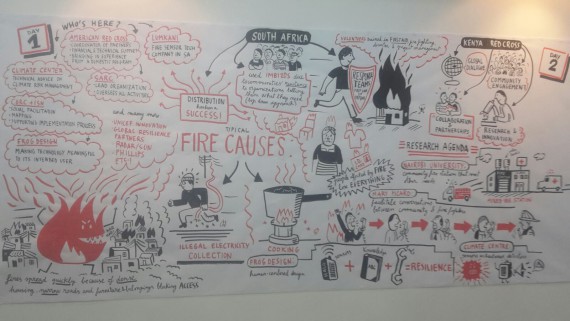
A multi-stakeholder discussion kicked off in early January in Nairobi, Kenya to deliberate on the lessons learnt from the fire sensor installation pilot project. In July 2015, The American Red Cross initiated a fire sensor technology pilot in Mukuru, Kenya and Khayelitsha, South Africa. About 2000 fire sensors were installed in both informal settlements. The discussion dwelled on the lessons learnt during the implementation of the project. It also explored options and possibilities of scaling up the project to other vulnerable communities throughout the world.

CORC (Thandeka Tshabalala) and Red Cross in conversation on fire sensor technologies

CORC (Thandeka Tshabalala) and Red Cross in conversation on fire sensor technologies

A human centered design approach

How can the early warning sensor best address urban fires? Urban fires are amongst the highest occurring disasters affecting urban poor communities. The project intended at strengthening and equipping the communities to best respond to the fires. Community engagement, learning, education and empowerment were seen as the underlying principle for an effective fire sensor. Community feedback (more specially vulnerable groups) on the design and technology formed the conversation around community ownership and perception of the sensor. All in all, an early warning fire sensor alone is not a definitive solution but building community capacity such as community based fire fighters and stations (a small community station is proposed for Mukuru settlement) – is truly building community resilience in fire response mechanisms. The sustainability of the project is thus far dependent on the community contributing towards the purchase of the device taking responsibility in maintenance when necessary. However, in the long run the project aim is for the community to be involved in the formation of governance structures to eliminate any risks of fires and independently sustaining the community based firefighters and/or stations. Moreover, the project aims at linking the fire sensor distribution to address unemployment.

20160202130838

20160205012136

Are there possibilities of scaling up the fire sensor project?

Scaling up the project would positively impact more people and address fire vulnerabilities at a global scale. However, context, urban mobility and sustainability are to be significantly considered. A fire sensor well suited to the context is important i.e. building material, sources of fires (wild or household fires) and local capital. For example, when comparing the two fire sensor models, one device had an added element of a smoke detector, which also slightly increased the cost of the device. Yet the Lumkani device, used in South Africa, focused on measuring the rate of rising temperatures in small structures is best used in this context, e.g. zinc structures or small tents such as in refugee camps.  Most urban populations are constantly in transit and in search for better economic opportunities. The residents in Mukuru are mostly tenants while in Khayelitsha they are ‘owners’ of the shacks. Due to flood threats, soon after the installation of the devices some of the tenants in Mukuru had already relocated to other parts of the city taking the device along. The relocation posed a difficulty in engaging the community around coordinated response mechanisms. In South Africa, a community response to fires is dependent on networked devices giving an alert. Shacks with no devices pose a threat to the rest of the community should the fire start in them.

The Lumkani device

The Lumkani device

When discussing long-term effectiveness of the sensor project for the wider vulnerable communities three words arise: scaling-up, sustainability and transferability. What role do donors play in the funding process? Upscaling the project requires multilateral partnerships and synergies with other projects to pool resources together. This calls for global advocacy to governments, especially to focus on fire prevention mechanisms instead of a responsive reaction to fire. This means building partnerships for infrastructure investment in the communities. Opening up access routes, disaster resistant material and water points should be a priority. In some instances the community and/ or fire services respond to fires before they create a lot of damage. However, in other instances this is not the case due to lack of access routes and dangerously hanging electrical wires which restrict fire engines who are unable to respond effectively.

Visit to Mukuru, Nairobi

Visit to Mukuru, Nairobi

Team site visit in Mukuru

Team site visit in Mukuru

From project to program: what still needs to be done?

There is still a need for data collection as a strategic tool to provide mechanisms for generating basic data on fire hazards, vulnerabilities and losses. Even though the fire department collects data on every fire occurrence the data is still not used to influence investment in fire prevention, preparedness and mitigation infrastructure. The hope to increase awareness at both community and institutional levels through data collection tools, improves risk identification and the use of knowledge, innovation & education to build a culture of safety. User friendly data can be used to target certain age groups so as to make fire awareness attractive and also strengthen disaster preparedness for effective response. This will enable the move from risk management through emergency relief and response towards a partner based early warning risk management. After each fire disaster in Khayelitsha, disaster management organizations respond with relief material that the community uses immediately to start rebuilding. This project aims to showcase that this approach needs to end and instead encourages the approach of preparing communities to better deal with urban fires.

Where to from here? Reflections on the Global and Local Urban Landscape

By CORC, FEDUP, ISN, uTshani Fund No Comments

As 2015 draws to a close, we reflect on global and localised responses to rapid urbanisation, the mushrooming of informal settlements and the position and potential of the urban and rural poor within these realities. In particular we examine the response and strategy of the South African SDI Alliance as it builds community capacity and advocates for the building of inclusive cities with inclusionary decision-making structures.

SAMSUNG CSC

The Global Landscape

The year 2015 marked a significant transition in the global development agenda. The adoption of the Sustainable Development Goals (SDGs) set new and ambitious targets for global development practice. While the Millennium Development Goals (MDGs) introduced socially responsible goals in national and institutional budgets and resource allocation, they did little to affect institutional decision-making.

FEDUP Saver, Sophie Mofokeng at Savings Gathering in Mahikeng, North West Province

FEDUP Saver, Sophie Mofokeng at Savings Gathering in Mahikeng, North West Province

For the urban poor, therefore, a post-2015 framework that foregrounds the influential inclusion of the poor is crucial. The challenge is for governments to rethink development institutions so that poor people are included in decision-making on finance, program conception and project implementation.

SDI start a session at World Urban Forum 7 with Alliance anthem

SDI start a session at World Urban Forum 7 with Alliance anthem

The SDGs also need to be clear about what we actually mean by “inclusion” and “participation”. For the SDI network, the key is not to dictate specific policies and interventions for every country but to articulate specific principles of institutional inclusion and material outcomes:

  • Inclusive institution building. State institutions to be created to embed partnerships with community organisations, especially at the city level to drive decision-making about programs and financial allocations for development of urban infrastructure.
  • Inclusive land management. Well-located land made available to the urban poor. This should ensure zero forced evictions, and grant security of tenure so as to make investment in infrastructure viable for both local government and slum dweller communities.
  • Inclusive urban infrastructure. Water, sanitation, electricity, and transport infrastructure that services the poor so as to achieve zero-open defecation cities globally within 10 years, electricity for all, and 100% improvement in life-affirming job opportunities over 10 years.
  • Inclusive community development. Programmatic investment by national and local authorities in capacity building of community organisations so as to continue deepening the inclusive development agenda highlighted in the first three elements.

Urban Poverty and South Africa 

Queuing for social grants in Bethal Mpumalanga

Queuing for social grants in Bethal Mpumalanga

South Africa’s National Development Plan 2030 (NDP, Chapter 8) emphasises the need to address spatial divides that have been perpetuated by post-1994 policies, placing low-income housing on the periphery of cities. Recommendation include the upgrading of all informal settlements on suitable, well located land by 2030, ensuring better quality public transport, ensuring that people live closer to their places of work and more jobs in or close to dense, urban townships. 

Government’s Medium Term Strategic Framework (MTSF) for the electoral period 2014-2019 sets out to implement the NDPs vision with a focus on radical economic transformation and improved service delivery. Outcome 8 outlines the situation for human settlements: despite the delivery of 3.8million subsidised houses since 1994, 2700 informal settlements accommodate a further 1.2million households with 713 000 more households living in backyard shacks. The Department’s broad vision is to see “adequate housing and improved quality living environments with 1.5 million more households living in new or improved housing conditions by 2019” (MTSF Outcome 8, p.26). A prominent aspect includes the upgrading of 750 000 households and ensuring basic services and infrastructure in 2200 informal settlements through the Upgrading of Informal Settlements Programme (UISP).

FEDUP income generation initiative in Limpopo

FEDUP income generation initiative in Limpopo

However, the Department’s rapid appraisal of Outcome 8 (Oct. 2014) notes that UISP has not been applied as easily as was intended: the UISP grant has been used to fund alternative housing programs and has been characterised by a lack of deep community engagement. Similarly, the People’s Housing Process (PHP) was not generally “considered a programme for delivering at scale because of the community engagement element and the manner in which people are involved in building their own shelters” (Rapid Appraisal Outcome 8, p. 27). In response, a core recommendation relates to “an attitudinal shift amongst provinces and local government staff in terms of how they approach informality. A positive attitude is desirable “ (p.39).

Joint Planning in Khayelitsha Cape Town

Joint Planning in Khayelitsha Cape Town

The capacity and the will for building inclusive cities with inclusionary decision-making, project preparation and project implementation structures is low. The role of urban poor participation in building “integrated” human settlements seems to be marginal. The strategy of the SA SDI Alliance in response? Supporting shack dwellers with tools that enable them to know their communities and their cities in order to implement precedent-setting projects that leverage participatory and inclusive partnerships with government. Amandla Imali Nolwazi. Power is Money and Knowledge. Know Your Community, Know Your City to build inclusive cities.

An approach to community-led upgrading: TT Community Hall in Khayelitsha

By CORC, FEDUP, ISN No Comments

By Andiswa Meke (on behalf of CORC)

For years the government has been testing different solutions with regard to bringing basic services to poor people and engaging with rapid urbanisation in South African cities. At times, these approaches are characterised by technically driven solutions that do not consider social use of infrastructure by community members. At others, there is a lack of service delivery altogether due to an often expressed perception by local government that is impossible to  install services in dense and haphazardly structured informal settlements.

In response informal settlements affiliated to the Informal Settlement Network (ISN) organise themselves and explore innovative options that present alternative, community-led practice to local government and better their living conditions. TT is one of the oldest informal settlements in Khayelitsha, Cape Town. Yet they still have no basic services.

 Community Profiling and Enumerations.

Community Profiling and Enumerations.

The blog looks at the upgrading of TT community hall as an example of what communities are doing for themselves when supported with the tools to organise themselves and identify their own development priorities. Communities like TT have realised that they are the help they need to foster change and therefore need to be the ones gearing up their own upgrading processes.

Background of TT informal settlement

TT dates back to the late 80`s. According to a 2010 enumeration report by the Community Organisation Resource Centre (CORC), the settlement had a population of 995 people in 339 households. The City of Cape Town installed Toilets and taps, this is how the settlement have access to water and sanitation. TT section is located in Site B in Khayelitsha, it lies opposite Mangaliso Primary school, with 79% of the settlement depending on social grants as a form of income.

Initially the structure that is now a hall belonged to a particular lady. She then donated her shack to the community to use as a hall where they could hold meetings and church services. However, over the years the structure lost its value as the material it was built in became old and flooded during winter because it was not developed properly.

In the beginning of 2015 the community of TT approached ISN to assist them with upgrading their hall because it was old and the material allowed for bad conditions especially during the winter season.

Alliance Processes

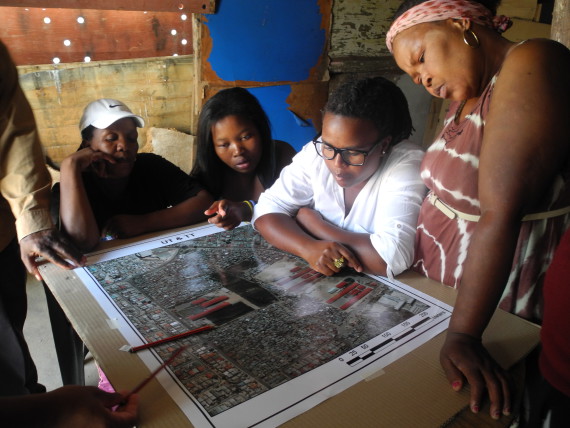
In 2009, ISN first visited the settlement on a mobilisation trip. After intense engagements, the community was convinced of ISN’s approach and willing to engage with the tools of the SA SDI Alliance. It was after that, the community elected 15 members to enumerate the settlement. TT profiled the settlement with the technical support from CORC who also assisted the community with house modelling, planning and design. The community then identified their needs as a community which included partial reblocking and a community hall; but they wanted the hall to take first priority. There were two profiling and enumerations done, one was done 2009 and a new one is being done currently.

IMG-20150318-00016

Community doing planning

TT community planning with old structure

TT community planning with old structure

October 2015 marked the start of upgrading the hall  which  is expected to be completed within December. The steering committee is heading up the project with support from ISN and CORC.

Features of the upgraded hall

  • The main feature on the hall is that the material used is non -combustible which decreases the chances of the hall catching fire. The hall has been approved by the City of Cape Town fire department.
  • Another is that the hall has a front and a back exit which could be accessed by all the members depending which side is closest for them.
  • The floor is cemented and well paved which will prevent the flooding during winter season.
TT hall

TT  Community Hall during  upgrading process

Challenges & Learning Points

  • The challenge the community is experiencing is communication barriers with the suppliers of material and this has caused some delays.
  • The value of ISN support on the ground.
  • The value of regular site visits by all invovled actors during the projects to inspect the progress and address challenges that may arise during each stage of upgrading.
  • The community has learnt how to engage with different stakeholders regarding their needs and the importance of unity, communication and cooperation when a settlement wants to change their living conditions.

Community Voices: “Is BholoBholo a place we can call home?”

By CORC, FEDUP, ISN No Comments

By members of Bholobholo Informal Settlement (on behalf of ISN)*

For the SA SDI Alliance community-produced documentation is crucial. Engaging communities with such processes enables them to drive their own development interests and also positions them to share their experiences in community organization processes such as informal settlement upgrading. IN this way communities demonstrate the approach of the SA SDI Alliance: “Nothing for us without us”.

This blog was written by community members of Bholobholo, namely Nosipho Dzingwa,Masixole Siyaphi,Thabisa Kebe,Bulelwa Dunjwa, Thembela Spele,Nosiphathise Halile,Xolani Maqoko,Lulama Giyama,Zingiswa Tshwela and Mrs Duda.

SAMSUNG CSC

Community Documentation Workshop with BholoBholo

History of the settlement

BholoBholo is located on a traffic circle intersection in Extension 6 in Mfuleni Cape Town. This is one of the smallest informal settlements in Cape Town with a land size of 912m².

We were backyarders in the surrounding formal houses. In 2006, we moved to an open space [which later became BholoBholo]. This was the time that plot owners were going to receive RDP houses. Since then we never moved back because the plot owners claimed that they did not have space for backyarders anymore. The church was built in 2007 and several more people joined as they saw an open space too. Some residents in BholoBholo bought shacks and joined the community in this way. To date we have 15 households with 33 people.

BholoBholo is an isiXhosa name for the intestine called ileum. The name came to the settlement because of the street vendors in front of the settlement that sell meat including intestines called uBholobholo. BholoBholo was an open space separating the meat vendors and the formal houses. This space was used for meetings and other activities such as a soccer field for kids.

This blog was written by the community of Bholobholo.

Bholobholo community leaders and community design team members

 Our reality now

Like any informal settlement, BholoBholo community is faced with a number of challenges which include:

  • Electricity

The community of BholoBholo have used illegal connections for electricity, they pay a high amount to the nearest houses just to get their tap connected. These illegal connections are a danger to the kids that play in the area hence they might touch the wires and be shocked or worse, killed.

  • Toilets and Taps

There are a total of four taps in BholoBholo of which two do not work properly. There is also a strong need for taps in the community because we share the ones we have with the meat vendors.We don’t have proper toilets, we make use of the bushes or ask to use the toilet in the formal houses.

  • Multipurpose Hall and Park

We also need a hall to hold meetings and community events and a park for children to play in and be safe.

  • Proper road access

“I wonder what would happen if our settlement could be in a fire? Who would we turn to?”

Masixole Siyaphi, Community leader in Bholobholo.

We need roads so that emergency vehicles can be able to assist us in time of need. Having roads/streets would make the place look neat and easy to find because now it takes longer to find a house number when needed.

Another major problem we are faced with is the dirt caused by the street vendors who use the dumping site to dump meat that they cannot sell. This causes an odor that can be a health hazard and attracts mosquitoes and rats that later bite the children.

Writing Workshop with the community of Bholobholo.

Writing workshop with the community of Bholobholo.

How did we meet ISN?

Nkokheli Ncambele is the one who introduced us to the Informal Settlement Network (ISN) when ISN came to mobilise our settlement. We then attended meetings and learnt the rituals of the alliance. After that we started with the community organisation processes. Our settlement was enumerated by 2 members of the community which we selected ourselves. We also profiled the settlement together as the community. To date we are waiting for reblocking because we have completed the designs together with the CORC technical team. These plans are important to us because

“we want our children to have a place to call home and be safe”

Nosipho Dzingwa, BholoBholo community leader

Community identifying their

Community mapping supported by CORC technical team

*Blog compiled by Andiswa Meke (on behalf of CORC)

SA SDI Alliance and Red Cross Society explore Fire Prevention Tools

By CORC, FEDUP No Comments

By Thandeka Tshabalala (on behalf of CORC).

September-April  marks  the Western Cape Fire season.  The eight months period has the highest record  of fire disasters due to a number of reasons but mainly negligence and lack of fire prevention  education. Throughout these times, informal settlement dwellers sit in panic and uncertainty of when a devastating fire may strike their settlement costing them their  belongings and in worst cases their lives. Urban fires are  amongst the highest disaster occurrences in informal settlements,and need to be addressed.

When  fires break out in informal settlement they spread fast and the community takes longer to be alerted . Evacuations are often dangerous and depending on  the density in these settlements  emergency responders often are unable to access homes in time. In July 2015  the South African SDI Alliance,  South African Red Cross Society (SACRS) and American Red Cross Society formed partnership with Lumkani to roll out early detection fire sensor devices targeting 1000 households in 4 informal settlements (UT, TT, TB section and WB) located in site B, Khayelitsha. The purpose of the project is to reduce fire risks by increasing community resilience against shack fires.  The introduction of early warning devices in  communities contributes to alerting  communities early  to avoid fire from spreading .  Another  benefit of the project is  formulating of fire response plans and capacitation of disaster response teams within the community.

IMG-20151026-WA0004

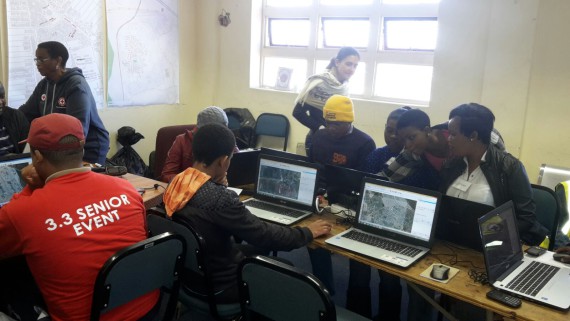
A baseline study and GIS mapping exercise formed part of the first crucial steps of information gathering of the project. 30 community volunteers were trained in conducting community surveys and GIS mapping. The community surveys aimed at gathering first hand information on previous instances of fires.  With questions ranging from fuel used for cooking, heating,lighting to how the community responded to fires. This included identifying nearest fire hydrants and emergency exists in the informal settlement. Key informants and focus group interviews gave an in-depth understanding of the existing fire response mechanisms taken by community leaders and disaster relief organizations.

The GIS map marking access points in the settlements and hierarchy of routes classifies movement within the settlements starting  from vehicle access to footpaths forms part of the analysis. Once the community has verified the map it will then be used  as a tool to better understand the community access points that could be of use during emergencies. After analysis and feedback from community members the baseline study will be used to inform future plans for fire response and mitigation.

IMG-20151026-WA0007 (1)

Imbizos (i.e. community gatherings) were platforms used by  communities to participate and give feedback on the project. Councilors of ward 90 and 91 Luvuyo Hebe and Monde Mabandla together with emergency respondents such as the police and fire departments came in high numbers to support this initiative.During the launch of the project on the 26th August 2015 Detective Mandlana  showed appreciation  to the  South African Red cross and Informal Settlement Network (ISN) for the project  and urged the community to use the Lumkani devices.

 “Safety starts by individuals taking precautions all the time”.

Detective Mandlana from the Police department.

To strengthen the existing disaster response  mechanisms in the community, 40 community members were trained in first aid (I, II &III) and fire fighting. The community response team is equipped to assess possible disasters and also be prepared to respond to any disaster occurring in their community.The community response teams have a lifetime commitment to the community because they can help improve the safety of their communities.

“ In the middle of a disaster, these are the people who will be able to say they are here to help, give critical support and assist victims before the arrival of emergency services.”

IMG-20151026-WA0005

This project forms part of a long-term objective  which includes decreasing urban fires and strengthening the impact of the Lumkani early warning device. The device acts as an early warning system in the community, decreasing the time taken by the community to be alerted in cases of fires, with addition of the response team the community is well positioned to deal with shack fires while waiting for emergency services. This intervention was informed by the profiling and enumeration data captured by the communities to understand the community priority needs.  The long term upgrading strategy would be the addition of planned preventative measures such as opening up streets and open spaces for emergency evacuations and access of emergency services.

From Joburg to Manila City: A Photo Story of Community Architects

By CORC, FEDUP, ISN, SDI No Comments

By Jhono Bennett (on behalf of SA SDI Alliance)

This story covers the 2015 exchange trip between South African delegates from the SDI Network and the CAN Network in the Philippines.

Figure 1: Manila City

Figure 1: Manila City


THE EXCHANGE

In 2015, a small delegation from the South African Shack Dwellers International Alliance (SA SDI) attended the  3rd Regional Community Architecture (CAN) Meeting & Workshop. The aim was for the South African delegates to gain first hand experience and learn from the work that CAN practices.

This delegation consisted of 3 professionals and three community members from  SA SDI and were chosen by the alliance for strategic leadership and capacity development to bring back home:

Jhono Bennett 1to1 – Agency of Engagement
Motebang Daniel Matsela CORC
Thembelihle Ngcuka CORC
Phaello Philder Mmole FEDUP
Ofentse Phefu FEDUP
Emmanuel Malinga FEDUP/ISN

As a team, we were expected to try and understand how the CAN works, its practices and tools as well as its members . All this was to be performed  during the series of workshops,meetings and dialogues that the we were exposed to.  We also learned from similar practitioners and community groups who are working on similar problems around the development of disadvantaged communities, such as in South Africa. Ideally we would learn valuable lessons from  CAN in regard to practices of community design and bring these home.

Workshop Background:

The 3rd Regional CAN Meeting & Workshop was held in Manila, Philippines this year between June 16 – June 23 and conducted with the theme:

Together we CAN! People planning for future inclusive cities

Figure 3: CAN workshop Day 1

Figure 3: CAN workshop Day 1


The workshop aimed to:

  • Bring together local and international participants working in different countries in Asia and beyond to exchange and share experiences through community workshops.
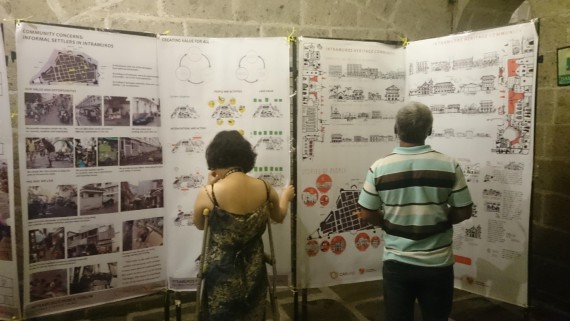
  • Provide concrete technical support to actual community initiatives through fieldwork in people centred heritage planning in Intramuros, Manila and city-wide development approach (CDA) in Muntinlupa City.
  • Link with local universities
  • Plan new collaborative future activities with multiple stakeholders to ensure long term change,ultimately the workshop aimed to support the larger mission of the CAN Network which is to:

“..Create a platform to link architects, engineers, planners, universities and community artisans in Asia, who work with communities and believe that poor communities should play a central role in planning their communities, and in finding solutions to build better settlements and more inclusive cities.”

Figure 4: CAN Network diagram

Figure 4: CAN Network diagram

The Workshop:

The delegation arrived on the 15th, and was welcomed by the well organised and energetic CAN management team.

Figure 6: Bangladesh CAN delegates presenting.

Figure 6: Bangladesh CAN delegates presenting.

After an initial series of presentations on CAN and  various organisations that make up the network, individual organisations of the workshop were invited to present themselves and their work.

Figure 6: Intramuros site visit.

Figure 6: Intramuros site visit.


Figure 7: Intramuros site visit workshop.

Figure 7: Intramuros site visit workshop.


Figure 8: Site visit to Banana City, Intramuros.

Figure 8: Site visit to Banana City, Intramuros.


From here the next 2 days were spent taking the conference on site visits of where the workshop delegates would be working in Allabang and Intramuros.

Figure 9: Allabang site visit

Figure 9: Allabang site visit


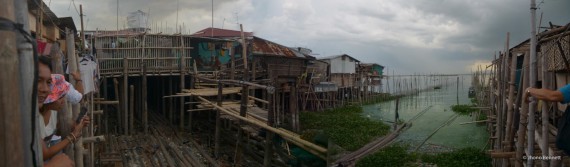
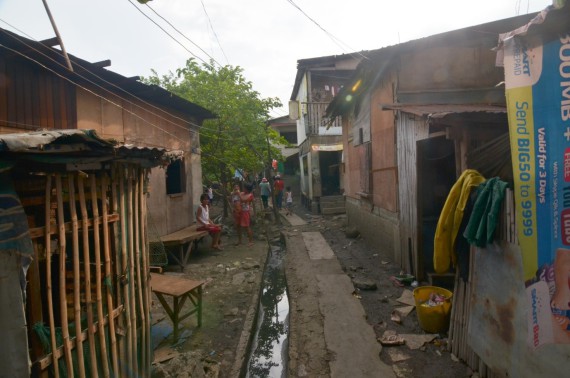
Figure 10: Allabang site visit-Fisherman houses.

Figure 10: Allabang site visit-Fisherman houses.


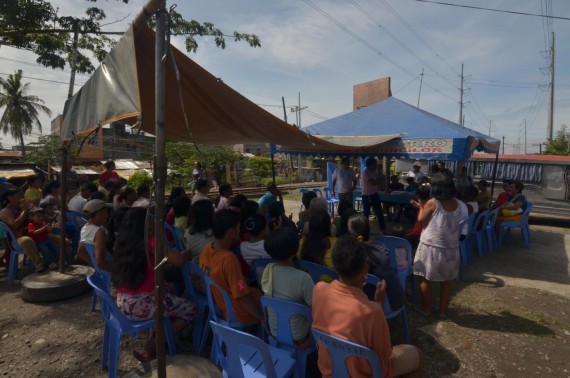
Figure 11: Allabang sitevisit-Savings group welcome

Figure 11: Allabang site visit-Savings group welcome


Figure 12: Allabang site visit-savings group welcome.

Figure 12: Allabang site visit-savings group welcome.


The participants were then broken into smaller groups of practitioners and community members and sent to stay in separate neighborhoods (or Barangays) where each group would focus on a specific set of issues faced by the various community groups supported by the local CAN organisation, Tampei.

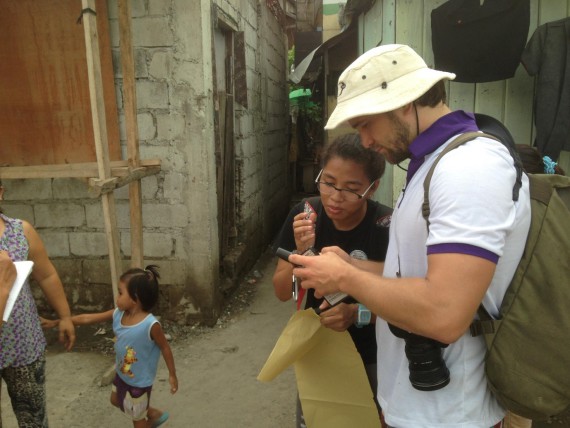
Figure 13: Group focus work in Allabang -Enumeration and Mapping.

Figure 13: Group focus work in Allabang -Enumeration and Mapping.


Figure 14: Group focus work in Allabang- Enumerations and Mapping.

Figure 14: Group focus work in Allabang- Enumerations and Mapping.


Figure 15: Delegates learning CAN practices.

Figure 15: Delegates learning CAN practices.


Figure 16: Group based work in Allabang- Confirming Mapping.

Figure 16: Group based work in Allabang- Confirming Mapping.


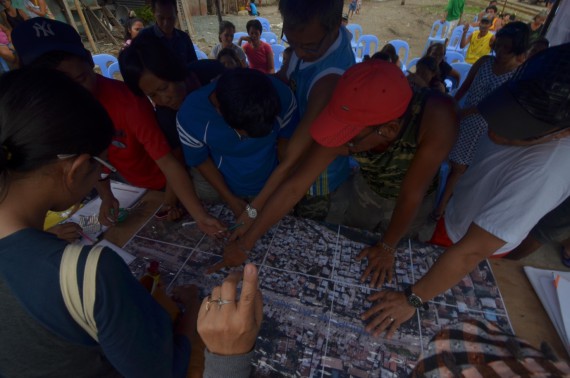
Each group spent the week intensively working on enumeration, mapping, and design with and for local groups aiming to initiate development energy supporting community initiatives.

Figure 16: GPS mapping in dense settlements of Allabang.

Figure 16: GPS mapping in dense settlements of Allabang.


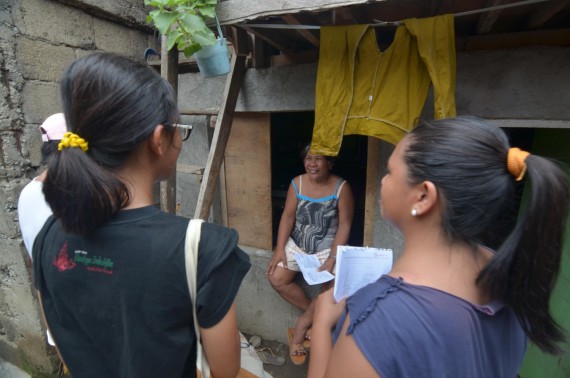
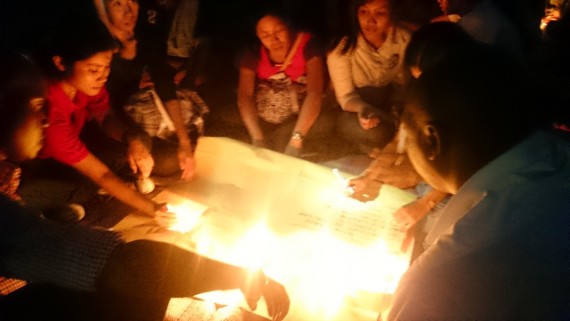
Figure 18: : Group Focus Work in Allabang - Story collection from residents

Figure 18: : Group Focus Work in Allabang – Story collection from residents


Figure 19: : Group Focus Work in Allabang - Community Mapping with residents

Figure 19: : Group Focus Work in Allabang – Community Mapping with residents


Figure 20: Allabang in context.

Figure 20: Allabang in context.


Figure 21: Group Focus Work in Allabang - Enumeration & Mapping with residents.

Figure 21: Group Focus Work in Allabang – Enumeration & Mapping with residents.


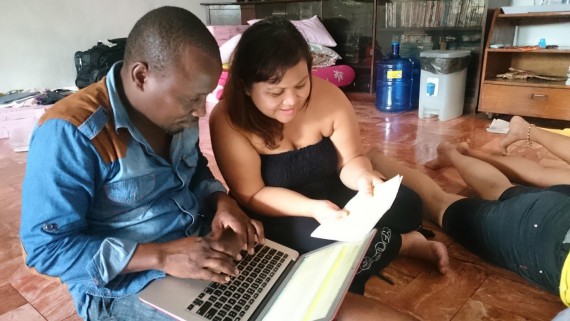
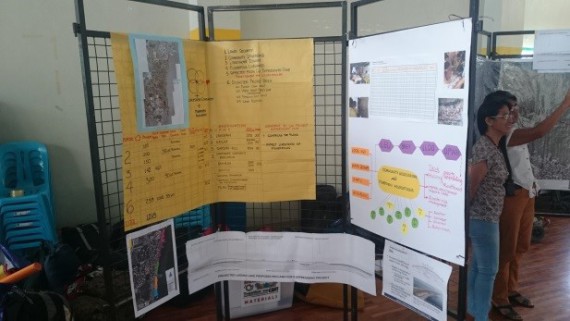
Figure 22: Group Focus Work in Allabang - Consolidating Mapping work for presentation

Figure 22: Group Focus Work in Allabang – Consolidating Mapping work for presentation


Figure 23:: Sharing valuable skills from participants.

Figure 23:: Sharing valuable skills from participants.


This was done while strategically developing a body of work that would be shown to local government stakeholders at a final seminar in both Allabang and Intramuros.

Consolidated Group work for strategic presentation with government stakeholders.


24b

24c

24d

Figure 25: Allabang - Strategic presentation with invited stakeholders

Figure 25: Allabang – Strategic presentation with invited stakeholders


Figure 26: : South African delegate presenting work on behalf of focus group

Figure 26: : South African delegate presenting work on behalf of focus group


Figure 27: Intramuros - Strategic Presentation

Figure 27: Intramuros – Strategic Presentation


The workshop culminated in a social event on the 24th, celebrating the workshop’s success.

Key Observations:

The workshop was highly successful in bringing together community architects from across the world to share experience and knowledge through the mixture of workshop tasks, social events and working activities.

Figure 28: CAN Practice: intensive workshops

Figure 28: CAN Practice: intensive workshops

The strategic use of these professionals to hyper-activate local community processes was exemplary and not have the visited communities as passive beneficiaries, while using the work developed in the short time to engage local governance bodies to support local community processes was a highly impactful strategy employed by the workshop organisers.

Figure 29: CAN Practice Capacitation through training

Figure 29: CAN Practice Capacitation through training

In particular it was impressive to see how ingrained the practices were conducted by both local community support and technical support. There seems to be something in the way the Philippines alliance work that goes beyond technical support and enters into new cultural and social dimensions of such work.

Figure 30: : CAN Practice - Strategic grass roots work

Figure 30: : CAN Practice – Strategic grass roots work

Personally, it was amazing to be in the presence of so many like-minded professionals who shared the values of community driven processes and were skilled in facilitative design processes.

Figure 31: CAN Practice in action

Figure 31: CAN Practice in action

This experience further cemented my personal motivation in developing critical co-productive design skills for me and other South African socio-technical spatial designers through community driven development projects.

SDI, WIEGO & Avina: Growing a Global Coalition of the Urban Poor

By CORC, FEDUP, ISN, SDI No Comments

By Yolande Hendler (on behalf of CORC)

Piesang River – the home of the South African Federation of the Urban Poor (FEDUP), a meeting place filled with sounds of Portuguese, isiZulu, Spanish and English,  a place filled with expectations of what a four-day learning exchange might hold for its participants – representatives of urban poor networks from across Ecuador, Colombia, Brazil and South Africa. Are there joint mobilisation strategies? How does each movement build partnerships? And what does advocacy from the perspective of community leaders look like? These questions shaped the purpose of the four-day learning exchange from 21-24 September in South Africa’s east coast port city, Durban.
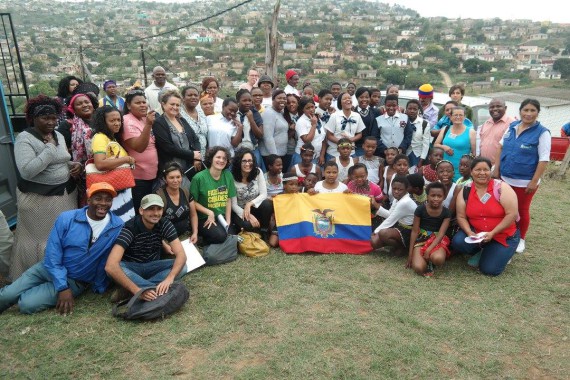
WEIGO EXCHANGE

The participants included community leaders and supporting organisations from

  • the Brazilian Alliance of Shack/Slum Dwellers International (SDI)
  • the Ecuadorian Waste Picker Network
  • the Ecuadorian Network for Fair, Democratic & Sustainable Cities
  • the Association of Recyclers in Bogota, Colombia (Asociación de Recicladores de Bogota)
  • Fundacion Avina in Peru & Ecuador
  • Women In Informal Employment : Globalising & Organising (WIEGO)
  • Asiye eTafuleni in Durban (AeT, network of informal workers)
  • The South African SDI Alliance as hosts: Federation of the Urban Poor (FEDUP), Informal Settlement Network (ISN) and Community Organisation Resource Centre (CORC)

What brought together representatives from such different locations? Their affiliation to SDI (Brazil & South Africa), WIEGO (Colombia & Asiye eTafuleni, South Africa) and Fundacion Avina (Ecuador). All three are global movements of the urban poor. Although their approaches may differ, SDI, WIEGO and Avina share the vision of building equitable, just and inclusive cities. The learning exchange was convened by Cities Alliance, of which WIEGO and SDI are both members. Envisioned as a two-part exchange, the first was hosted by SDI in South Africa, while the second will be hosted by WIEGO in Colombia.

The exchange focussed on exposing the visitors to the South African Alliance’s approaches to- and outcomes of community organising. This included a visit to housing and informal settlement upgrading projects, a savings scheme, conducting practical data collection, a partnership meeting with government and getting to know the context of informal workers.

A People’s Approach to Housing and Upgrading

Visiting a people driven housing project at Namibia

Visiting a people driven housing project at Namibia Stop 8 settlements

While each movement shared its main focal areas and organisational approaches in presentations on the first day, a real sense of getting to know each other occurred through questions and anecdotes that opened windows into personal and collective experiences:

“In Colombia waste-pickers have been organising for more than 30 years – recycling is an option for poor people who are old or don’t have access to jobs. I was displaced during the war. My husband was killed by guerrilla fighters. Through recycling I was able to support my family” (Ana Elizabeth Cuervo Alba, Colombia)

“As waste pickers in Ecuador we lobbied the government to a point where we now have a national agreement that pays waste pickers for recycling” (Elvia Pisuña, Ecuador)

“Urban informal workers usually face extreme challenges with people resisting their presence in public spaces .We called ourselves, Asiye eTafuleni because it means – come to the table. Let us negotiate for the inclusive future of the working urban poor. “ (Richard Dobson, Asiye eTafuleni, Durban)

Incidentally, Piesang River also displays the fruits of FEDUP’s militant negotiation with national government around housing delivery. FEDUP leaders explained that the vast housing settlements in Piesang River and Namibia Stop 8 (a further area visited that afternoon) are a result of their success in convincing government to grant members direct access to their housing subsidy. This enabled them to self-build larger houses, culminating in the adoption of the People’s Housing Process (PHP) policy. Although it has not been without its challenges, PHP represents a breakthrough in altered approach from “delivery” to “collaboration”.

Recycling Exchange

Informal Settlement Upgrading Plans at Mathambo


In contrast, community leaders of the Informal Settlement Network (ISN) elaborated on their difficulty in achieving breakthrough in municipal support for informal settlement upgrading. With over 2700 informal settlements in the country and an increasing housing backlog, the ISN supports communities with tools and plans for negotiating with local government around service delivery through incremental upgrading. During a visit to Mathambo settlement, community leader and regional ISN coordinator, Ndodeni Dengo explained that despite the settlement’s relatively small size, existing structures were located in high density to each other, with most not larger than 9m2 – and a deficit of water, sanitation and electricity services. The community had collected data about its settlement through a detailed household level enumeration that helped them negotiate upgrading plans with the local municipality. By using wooden boxes for planning a new layout that would enable service installation, the community established their ideal design for the upgraded settlement.

How do urban poor communities organise?

Over the next two days the visitors were introduced to the driving force behind FEDUP and ISN’s housing and upgrading projects: the practice of daily savings and data collection as tools for community organisation.

Explaining savings Kwa Bester

Explaining savings Kwa Bester

At Kwa Bestar savings group, the visitors saw that saving is not primarily about collecting money, but about collecting people. Savings groups are a space where trust is nurtured through daily saving, sharing needs and identifying common solutions. At present, the group of 39 active members has saved US$ 2800. It is also engaged in forming smaller saving units to access loans by generating income through small businesses. The keen involvement of young people aged 8 – 25 in the savings process was a special highlight. Once more it became evident that savings is about growing and enabling people, showcased by the rich dance, drama and music performances by the youth.

Youth savings group shares dance performance

Youth savings group shares dance performance

Where savings builds self reliance, data collection builds knowledge: upon arrival at Zikhali, a small, rural settlement in the northern sugar cane fields of Durban, Rose Molokoane, National Coordinator of FEDUP and SDI deputy president, explained:

“When a community knows clearly who they are, which are their problems, it is much easier to negotiate with municipal officials”

This is how data collection through settlement profiles (of a settlement’s history, infrastructure, conditions) and enumerations (detailed household level surveys) enables partnership with local government officials. When walking around the area, the group mapped the settlement boundaries and landmarks such as water and sanitation points on GPS devices while others spoke to residents, collecting household data by using the Alliance’s enumeration form.
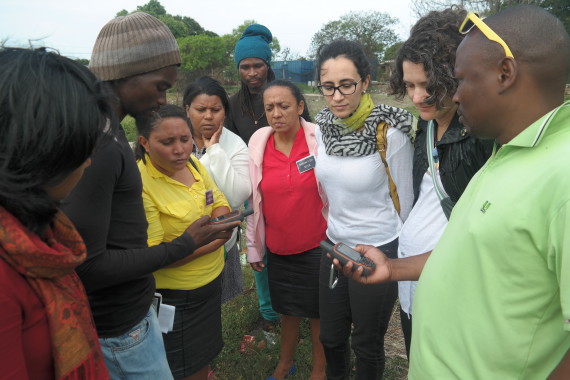
GIS mapping in Zikhali settlement

GIS mapping in Zikhali settlement


Household Enumeration in Zikhali

Household Enumeration in Zikhali

Approaches to building partnerships with government

It is through savings and data-collection that SDI’s urban poor federations leverage partnerships: saving contributions show self-reliance and community will; settlement-wide data powers a community’s negotiation capacity. On day three the visitors accompanied the Durban Alliance to a meeting with the local municipality, province and a representative from national government, discussing the progress of housing and upgrading projects.

The South Americans perceived

  • A strong relationship with government officials
  • A measure of trust and flexibility in receiving visitors at the meeting
  • Political willingness to listen and debate

Insights from the South African participants

  • The perceived trust and partnership with Municipal Government was “built by doing”, demonstrating results and inviting the municipality to be part of the social process
  • Despite the working group and formally conducted meetings, the municipality often does not give prompt answers to the most urgent needs of communities

The visit to Asiye eTafuleni (AeT) added rich insight to the experience of informal workers and an added dimension to partnership building with local authorities. The group was introduced to AeT’s work in developing inclusive spaces that support sustainable livelihoods for informal workers. The shared realities of informal settlement dwellers and informal workers became particularly evident on a walk-about through the bustling Warwick market in Durban’s inner-city. For AeT and the SA SDI Alliance the encounter highlighted similarities and differences in approach but most of all established a platform for increased collaboration in the future.

Government Partnership Meeting

Government Partnership Meeting

View on to a section of Warwick market
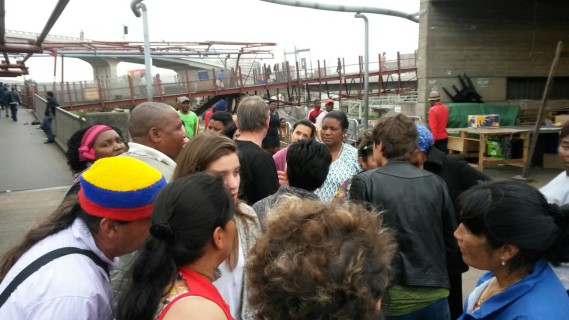
View on to a section of Warwick market


Walkabout in Warwick Junction

Walkabout in Warwick Junction


Reflecting, Learning and Joint Advocacy

With a rich collection of experiences and impressions, the group gathered on the last morning to reflect and share on the ….

  • Non-monetary value of savings. Savings are about collecting money and people (building social capital, trust, self-reliance)
  • Power of information: data collection is crucial for building self-reliance, identifying common goals and establishing negotiating power
  • Key role of women as cultivating transparency and accountability
  • Cultural factors present in South Africa: welcoming, joyful people, ability to join efforts and to coordinate
  • Youth work: value of young people generating and managing their own savings to use in initiatives of their choice (e.g. creative arts)
  • Global similarities in poor people’s struggles
  • Recycling as Income Generation: value in using opportunities around you (e.g. waste = recycling opportunity = income generation)
  • Increased awareness of interface between shack dwellers and informal workers

… and on strategies for the road ahead:

  • Mobilisation Strategies: Gain understanding of waste picker movements in South America
  • Building Partnerships: Plan further exchanges with local (i.e. national) counterparts of global movements
  • Prepare for Joint Lobbying at Global Events such as Habitat III.

As the global development community gears up for Habitat III, global movements of the urban poor are establishing a firm coalition. This learning exchange forms an integral part of that process, “allowing networks organised around livelihood and habitat to come together, share their experiences and strengthen their capacity to organise and advocate in favour of the urban poor” (Cities Alliance, Exchange convener). When speaking with a united voice, advocacy has the potential to influence policy discussions on increased collaboration between communities and governments.

“By referring to our connection with one another, WIEGO, SDI & Avina can make a strong case for a pro-poor agenda. Only if we come together as poor people we can show our governments that we are influencing their policies to meet the needs of the people. “ (Rose Molokoane, FEDUP Coordinator & SDI vice president)

What is Area-Based Upgrading? A look at UT Wetland Area, Khayelitsha

By CORC, ISN No Comments

By Yolande Hendler & Moegsien Hendricks (on behalf of CORC)

Over the last ten years South Africa’s human settlement’s sector has seen significant shifts in government approach and policy toward rapid urbanisation and the resulting proliferation of informal settlements. Initially informal settlement policy concentrated on clearing housing backlogs through government subsidised houses in the Reconstruction and Development Program (RDP). With the introduction of “Breaking New Ground” (BNG), government’s Comprehensive Plan for the Development of Sustainable Human Settlements in 2004, the in-situ upgrading of informal settlements was introduced. BNG’s accompanying Upgrading Informal Settlement’s Program (UISP) “recognises the value of informal settlement upgrading as a viable strategy for addressing inequality” (Reference).

A view on to UT Wetland

A view on to UT Wetland

While the implementation of UISP is varied and not without its shortcomings (read more here), informal settlement upgrading is establishing an increasing mark on governmental approach. Notably, national policies related to upgrading are not geared towards area-based or city-wide upgrading programs. Given that previous blogs have shared much of the Alliance’s work on informal settlement upgrading, this blog turns to the question of area-wide upgrading. In so doing, it looks at the SA SDI Alliance’s experiences in the upgrading of UT Wetlands area in Site B, Khayelitsha.

What is Area-Wide Upgrading ?

Area based-upgrading of informal settlements is about understanding how the informal settlement functions within the broader local area, city wide and even national context.  The purpose of the area-based approach is to recognise informal settlements as part of the broader urban neighbourhood and not isolated islands which are spatially and socially disconnected.

The work that the SA SDI Alliance is doing through reblocking, includes projects with an area based approach such as the UT Wetland. This project focuses on upgrading the wetland to a park facility,  a community hall, landscaping and improved access pathways. It impacts four settlements that directly benefit from this intervention.  It also provides the foundation for the incremental upgrade of these settlements, building on the connectivity and integration provided by the shared facility.

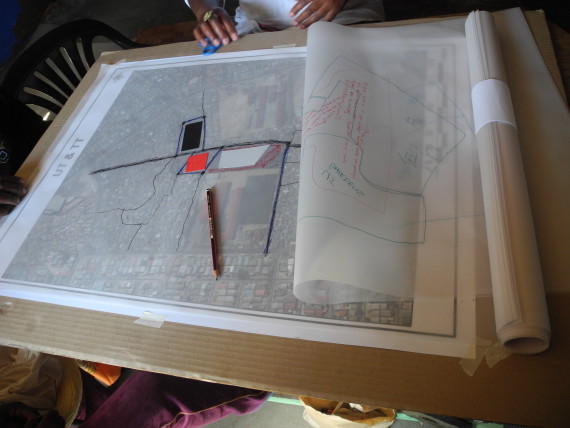
Initial community site analysis and first phase planning for upgrading UT Wetlands (2014)

Initial community site analysis and first phase planning for upgrading UT Wetlands (2014)

A look at UT Wetland as area-wide upgrade

Four settlements surround the wetland in UT section: UT Gardens, UT Litha Park, TT Section and TB Section. Thamara Hela, a community leader of UT Gardens, explains the leadership structure: each settlement is organised by a steering committee of 15 members, a total of 60 community leaders for the area. Through engaging with the Informal Settlement Network (ISN), each settlement conducted an enumeration, enabling each community to gather accurate data that it can use for community organisation and development purposes.

UT TT SECTION

The wetland is not only integral to the landscape but also to community life: regularly used municipal toilets and taps surround its borders, as well as a network of main pedestrian paths.  Due to structure density in the surrounding settlements, the wetland is often used as a meeting area, particularly by UT Gardens community.

In its current usage, however, the wetland also poses a threat to residents. Thamara speaks about the danger it poses for school children who use its surrounding paths to walk to school. Due to high reeds, visibility is poor so that children and pedestrians become easy targets of crime. The wetland also poses a health hazard: with many mosquitoes and large rats in the near vicinity (if not in structures themselves) cause illnesses. Many residents suffer from eczema and skin irritations.

Poor drainage and municipal toilets on border of Wetland

Poor drainage and municipal toilets on border of Wetland

Due to inadequate meeting space, UT Gardens identified the need for a large community hall, potentially situated on the wetlands. Through its affiliation to ISN the community used the tools of the SA SDI Alliance to organise itself. Supported by CORC’s technical team the steering committee therefore developed a community-centred site analysis and plans for a potential hall in February 2014. Over the next months the steering committee shared these with its surrounding neighbours, Litha Park, TT and TB sections – sparking a discussion on community access and ownership of the land.

After a lengthy engagement with various municipal departments, the wetland was declared a Category Z, indicating that it could not be rehabilitated. With growing disillusionment among community members, the four leadership committees met in April 2015 and developed a joint plan for a “UT Wetlands Park”. This plan was developed with the technical support of the Alliance’s Community Organisation Resource Centre and conceptualised as an area wide development initiative. The plan incorporates reduced flooding in the area, ensuring a play area for children (including a soccer area), partial reblocking, and improved health and quality of life due to drainage and engineering services. All four settlements elected a UT Wetlands Steering Committee, consisting of 17 members, 4 representatives from each settlement and one member on behalf of ISN liaison and communication.

UT Gardens measures shack sizes in preparation.

UT Gardens community members measure shack sizes in preparation.

Profiling & Enumeration in UT Gardens Khayelitsha, June 2013

Profiling & Enumeration in UT Gardens Khayelitsha


With the go-ahead concerning zoning and land use, the Wetlands steering committee and Alliance engaged numerous stakeholders between April and August 2015. This included presenting the plan to UT’s four communities and assessing their willingness for participation. It also included engaging municipal actors, Councillors and relevant line departments such as City Parks and ensuring the source of funding.

Taking stock: Experiences, Challenges, Successes

At present a sizeable amount of groundwork has been covered: in August 2015 the wetland steering committee developed detailed plans with ISN, CORC, Jakupa architects and City Parks. Long consultation delays and uncertainty regarding required permits presented a core challenge in project preparation. Scale is a further factor: working in large informal settlements can be challenging. Through carefully considered social processes, these challenges can be dealt with effectively when communities in the settlements are actively part of the process. In this sense spatial integration afforded by the area-wide upgrading approach in UT wetlands is also facilitating social integration through the collaboration of all four settlements.

DSCN5067

In addition, partnerships with local municipalities are an important success factor. In the wetland project, the City of Cape Town (CoCT) and in particular the City Parks Department played a critical role: the land is owned by the CoCT and they will take responsibility in partnership with the community to manage this facility.  The Alliance Memorandum of Understanding with the CoCT provided the context for a successful partnership at a local level with the City Parks Department. The lesson is that partnerships with municipalities are required at both a strategic political level and official / project implementation level.

The next steps include appointing an environmental engineer, landscape architect and obtaining an official permit from City Parks for implementation.