Tag

basic services Archives - Page 2 of 2 - SASDI Alliance

Community Voices: “Why We Chose to Live in K2 Informal Settlement”

By CORC, ISN No Comments

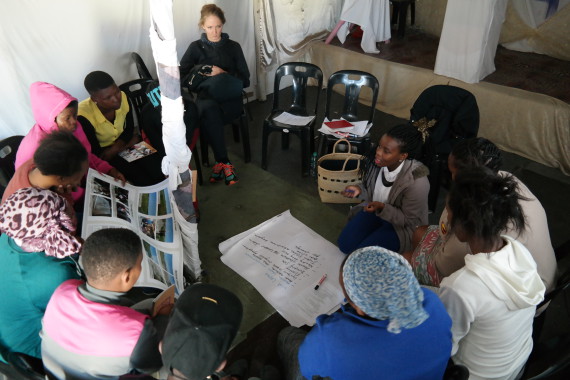
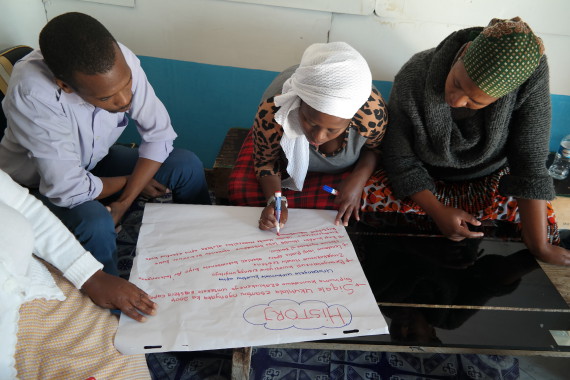
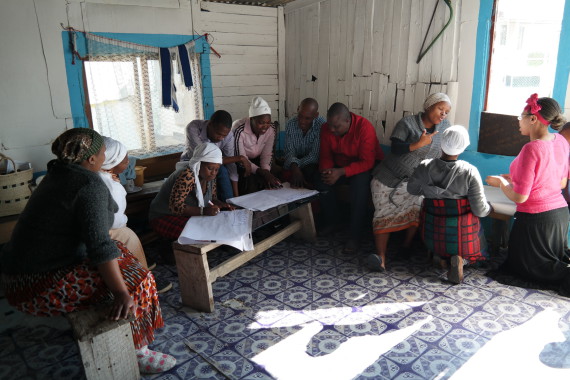
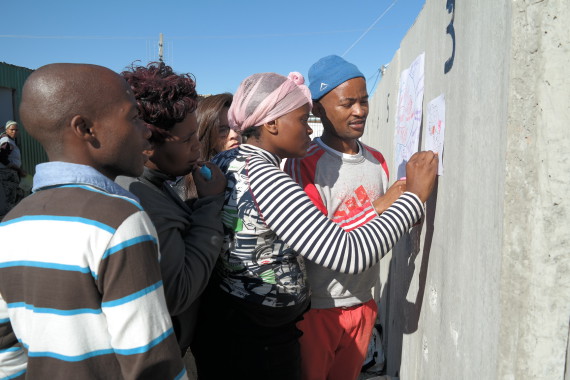
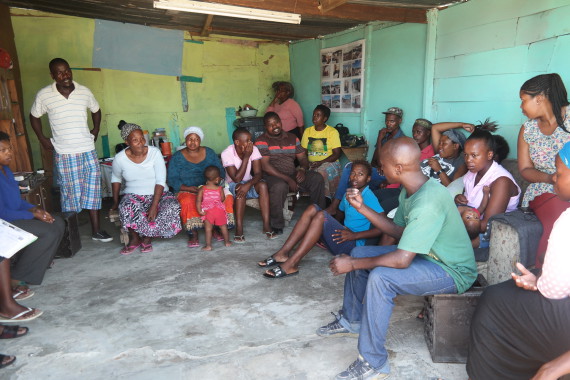
As community members gathered in a neighbour’s large living area in the centre of K2 informal settlement in Khayelitsha, the room continued filling up with more people who had been called to join a “documentation workshop” about the settlement. As some members began to discuss the possible purposes of documentation, they began to link the value of the workshop to the value of establishing a record and copy of their experiences of life lived in K2. This blog reflects the experiences of K2 informal settlement as told and written down by K2 residents themselves.
SAMSUNG CSC

First Documentation Workshop in K2


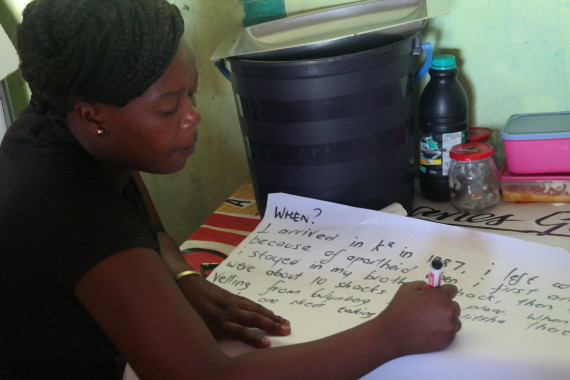
Anecdotes: When We First Arrived in K2

By: Nolutho Vava, Mrs Maxhegwana, Neliswa Ngqiyi, Nomzi Xhalanga, Thobeka Mnyuko, Ndileka Matiwane, Nonyameko Ganelo, Sibongiseni Cokile, Nthmbekhaya Mathamba

“I arrived in K2 in 1987. I left Constantia because of apartheid. When I first arrived [in K2] I stayed in my brother’s shack. [At the time] there were about ten shacks in this place. Because I had children of my own I had to build my own shack but only a number of people had the right to stay here. In 1989 people protested to get the right to build their own shack. They then managed to [convince] their leaders (who were the decision makers) and [we] were charged money in order to get space to build. The leaders [at the time] were not chosen by the people so they did not have the people’s interest at heart.”

“When travelling from Wynberg to Khayelitsha there was only one street taking you to the bus stop. When it was windy you wouldn’t go anywhere or even open the doors. There was too much sand.”
SAMSUNG CSC

“I arrived in K2 in the year 2000. It was a very dirty place then with reeds growing and dirty water flowing. The houses and shacks were surrounded by reeds. There was no fresh air. We breathed in the smelly air – people were throwing poo between the houses. Some people were throwing pee-buckets. It was so unhealthy. There were no toilets, no water, and no electricity. Some brave people would go to green point bushes to relieve themselves.”

“In 2001 more people were moving into our settlement. We (as people) removed the reeds and made space for more people to come. Even after removing the reeds the water was still flowing underneath our shacks especially when it was raining. But it got better when the municipality built the toilets in 2007. But some shacks are still in damp areas.” 

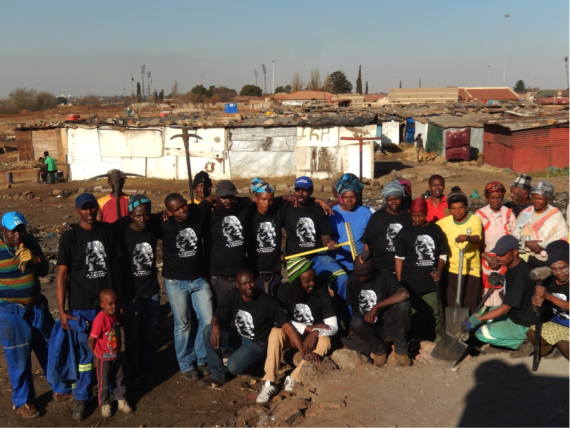
Authors of this Blog, K2 Community Khayelitsha

Authors of this Blog, K2 Community Khayelitsha

Why we chose to live in K2

By Nolubabalo Mkonto, Zanele Ngqeyi, Tina Gqamane, Busisiwe Koko, JJ, Nopinky

  • We moved to K2 from the Eastern Cape because we were looking for a job and most of us didn’t have a place to stay. K2 was the only area that had space to build in.
  • We are close to police stations, shopping malls, taxis, trains, busses and schools
  • We can walk to these places and don’t have to pay anything
  • We are happy about electricity. In 2011 our leadership negotiated with the City of Cape Town
  • We have a [outdoor] crèche for our children
  • Some of us are employed as cleaners with the City’s Expanded Public Works Program (EPWP), 4 days a week
  • The residents appreciate the cleanliness of K2 – we have containers to keep rubbish and rubbish cars can come in and out
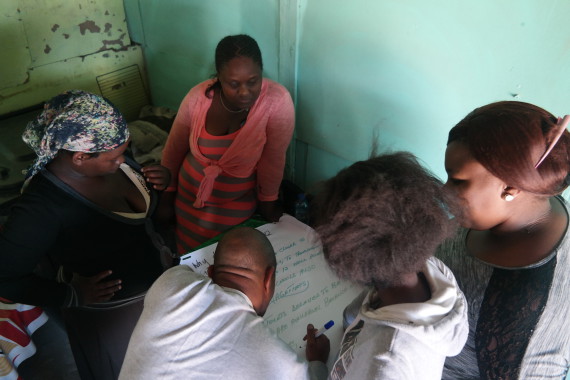
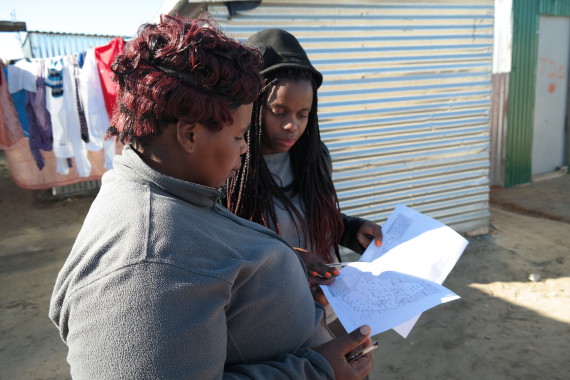
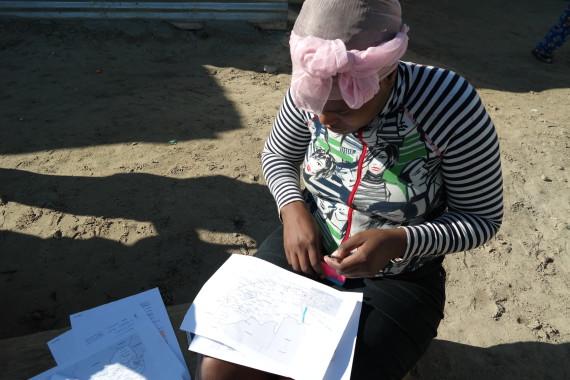
Community writers collect challenges of living in K2

Community writers collect challenges of living in K2

Challenges of living in K2

By: all members in workshop

  • Toilets are far from some shacks, some have no doors, some are blocked / broken and there is a delay in repairing them
  • Drains get blocked and the municipality turns a blind eye. We’d stay for more than four months with those smelly drains
  • When toilets and drains are blocked the water causes little dams that have green water which can cause a lot of diseases
  • Too many rats – the rats can infect us
  • Taps are few and they are far from other shacks
  • Robbers are available because of light failures, especially at night
  • No parks for children
  • Shacks are too close to each other, e.g. when there is fire a lot of houses get destroyed. Some of our children (who are already over 24) still stay with their parents –but there is not enough space for them to have their own place.
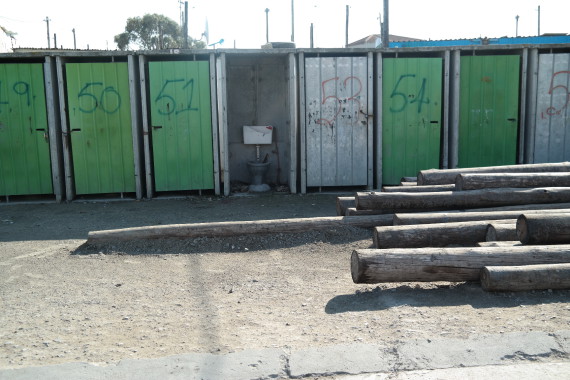
Communal toilet block in K2

Communal toilet block in K2

Where we are now 

“When we think about our situation now we would be happy to have a larger place to stay with our own yard, own toilets and taps, and to be safe from fire. The question of space is important to us because even when we have problems (e.g. funerals) we cannot do them here because we don’t have enough space.

We met the Informal Settlement Network at a community meeting in Andile Msizi Hall in Khayelitsha where the regional ISN leader invited us.”

Since the community’s engagement with ISN and FEDUP, K2 has collected data about its settlement in full enumeration and profiling exercises. These have formed the foundation for community-based plans for upgrading and reblocking.
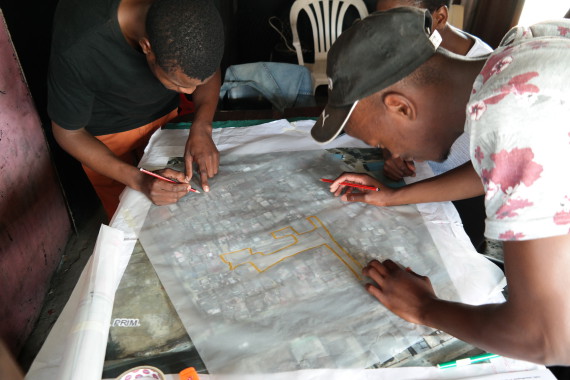
Co-Planning for the Upgrading of K2

Co-Planning for the Upgrading of K2

SAMSUNG CSC

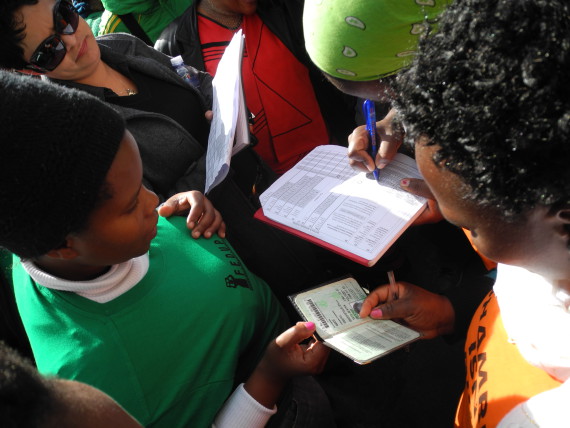
“As I am new here today I know how they struggled as K2. By hearing this story now I have hope that one day things here will be much better because so far K2 is improving. I can now tell the story to the others” (Reflection by K2 community member on community-generated documentation)
An approach to community-led upgrading: TT Community Hall in Khayelitsha

By CORC, FEDUP, ISN No Comments

By Andiswa Meke (on behalf of CORC)

For years the government has been testing different solutions with regard to bringing basic services to poor people and engaging with rapid urbanisation in South African cities. At times, these approaches are characterised by technically driven solutions that do not consider social use of infrastructure by community members. At others, there is a lack of service delivery altogether due to an often expressed perception by local government that is impossible to  install services in dense and haphazardly structured informal settlements.

In response informal settlements affiliated to the Informal Settlement Network (ISN) organise themselves and explore innovative options that present alternative, community-led practice to local government and better their living conditions. TT is one of the oldest informal settlements in Khayelitsha, Cape Town. Yet they still have no basic services.

 Community Profiling and Enumerations.

Community Profiling and Enumerations.

The blog looks at the upgrading of TT community hall as an example of what communities are doing for themselves when supported with the tools to organise themselves and identify their own development priorities. Communities like TT have realised that they are the help they need to foster change and therefore need to be the ones gearing up their own upgrading processes.

Background of TT informal settlement

TT dates back to the late 80`s. According to a 2010 enumeration report by the Community Organisation Resource Centre (CORC), the settlement had a population of 995 people in 339 households. The City of Cape Town installed Toilets and taps, this is how the settlement have access to water and sanitation. TT section is located in Site B in Khayelitsha, it lies opposite Mangaliso Primary school, with 79% of the settlement depending on social grants as a form of income.

Initially the structure that is now a hall belonged to a particular lady. She then donated her shack to the community to use as a hall where they could hold meetings and church services. However, over the years the structure lost its value as the material it was built in became old and flooded during winter because it was not developed properly.

In the beginning of 2015 the community of TT approached ISN to assist them with upgrading their hall because it was old and the material allowed for bad conditions especially during the winter season.

Alliance Processes

In 2009, ISN first visited the settlement on a mobilisation trip. After intense engagements, the community was convinced of ISN’s approach and willing to engage with the tools of the SA SDI Alliance. It was after that, the community elected 15 members to enumerate the settlement. TT profiled the settlement with the technical support from CORC who also assisted the community with house modelling, planning and design. The community then identified their needs as a community which included partial reblocking and a community hall; but they wanted the hall to take first priority. There were two profiling and enumerations done, one was done 2009 and a new one is being done currently.

IMG-20150318-00016

Community doing planning

TT community planning with old structure

TT community planning with old structure

October 2015 marked the start of upgrading the hall  which  is expected to be completed within December. The steering committee is heading up the project with support from ISN and CORC.

Features of the upgraded hall

  • The main feature on the hall is that the material used is non -combustible which decreases the chances of the hall catching fire. The hall has been approved by the City of Cape Town fire department.
  • Another is that the hall has a front and a back exit which could be accessed by all the members depending which side is closest for them.
  • The floor is cemented and well paved which will prevent the flooding during winter season.
TT hall

TT  Community Hall during  upgrading process

Challenges & Learning Points

  • The challenge the community is experiencing is communication barriers with the suppliers of material and this has caused some delays.
  • The value of ISN support on the ground.
  • The value of regular site visits by all invovled actors during the projects to inspect the progress and address challenges that may arise during each stage of upgrading.
  • The community has learnt how to engage with different stakeholders regarding their needs and the importance of unity, communication and cooperation when a settlement wants to change their living conditions.

Community Voices: “Is BholoBholo a place we can call home?”

By CORC, FEDUP, ISN No Comments

By members of Bholobholo Informal Settlement (on behalf of ISN)*

For the SA SDI Alliance community-produced documentation is crucial. Engaging communities with such processes enables them to drive their own development interests and also positions them to share their experiences in community organization processes such as informal settlement upgrading. IN this way communities demonstrate the approach of the SA SDI Alliance: “Nothing for us without us”.

This blog was written by community members of Bholobholo, namely Nosipho Dzingwa,Masixole Siyaphi,Thabisa Kebe,Bulelwa Dunjwa, Thembela Spele,Nosiphathise Halile,Xolani Maqoko,Lulama Giyama,Zingiswa Tshwela and Mrs Duda.

SAMSUNG CSC

Community Documentation Workshop with BholoBholo

History of the settlement

BholoBholo is located on a traffic circle intersection in Extension 6 in Mfuleni Cape Town. This is one of the smallest informal settlements in Cape Town with a land size of 912m².

We were backyarders in the surrounding formal houses. In 2006, we moved to an open space [which later became BholoBholo]. This was the time that plot owners were going to receive RDP houses. Since then we never moved back because the plot owners claimed that they did not have space for backyarders anymore. The church was built in 2007 and several more people joined as they saw an open space too. Some residents in BholoBholo bought shacks and joined the community in this way. To date we have 15 households with 33 people.

BholoBholo is an isiXhosa name for the intestine called ileum. The name came to the settlement because of the street vendors in front of the settlement that sell meat including intestines called uBholobholo. BholoBholo was an open space separating the meat vendors and the formal houses. This space was used for meetings and other activities such as a soccer field for kids.

This blog was written by the community of Bholobholo.

Bholobholo community leaders and community design team members

 Our reality now

Like any informal settlement, BholoBholo community is faced with a number of challenges which include:

  • Electricity

The community of BholoBholo have used illegal connections for electricity, they pay a high amount to the nearest houses just to get their tap connected. These illegal connections are a danger to the kids that play in the area hence they might touch the wires and be shocked or worse, killed.

  • Toilets and Taps

There are a total of four taps in BholoBholo of which two do not work properly. There is also a strong need for taps in the community because we share the ones we have with the meat vendors.We don’t have proper toilets, we make use of the bushes or ask to use the toilet in the formal houses.

  • Multipurpose Hall and Park

We also need a hall to hold meetings and community events and a park for children to play in and be safe.

  • Proper road access

“I wonder what would happen if our settlement could be in a fire? Who would we turn to?”

Masixole Siyaphi, Community leader in Bholobholo.

We need roads so that emergency vehicles can be able to assist us in time of need. Having roads/streets would make the place look neat and easy to find because now it takes longer to find a house number when needed.

Another major problem we are faced with is the dirt caused by the street vendors who use the dumping site to dump meat that they cannot sell. This causes an odor that can be a health hazard and attracts mosquitoes and rats that later bite the children.

Writing Workshop with the community of Bholobholo.

Writing workshop with the community of Bholobholo.

How did we meet ISN?

Nkokheli Ncambele is the one who introduced us to the Informal Settlement Network (ISN) when ISN came to mobilise our settlement. We then attended meetings and learnt the rituals of the alliance. After that we started with the community organisation processes. Our settlement was enumerated by 2 members of the community which we selected ourselves. We also profiled the settlement together as the community. To date we are waiting for reblocking because we have completed the designs together with the CORC technical team. These plans are important to us because

“we want our children to have a place to call home and be safe”

Nosipho Dzingwa, BholoBholo community leader

Community identifying their

Community mapping supported by CORC technical team

*Blog compiled by Andiswa Meke (on behalf of CORC)

Community Voices – “Welcome to Santini informal settlement”

By FEDUP, ISN No Comments

By Santini Community Members (on behalf of ISN)

This blog was written by Santini's community documenters depicted in this picture: Veronica Lebakeng, Nwabisa Ndzendze, Bathandwa Yengeni, Loniswa Dumbela. Grace Lebakeng, Thobela Nqophiso, Thulie Lebakeng, Thanduxolo Bayibile, Melikhaya Nqopiso, Likuwe Bayibile

This blog was written by Santini’s community documenters depicted in this picture: Veronica Lebakeng, Nwabisa Ndzendze, Bathandwa Yengeni, Loniswa Dumbela. Grace Lebakeng, Thobela Nqophiso, Thulie Lebakeng, Thanduxolo Bayibile, Melikhaya Nqopiso, Likuwe Bayibile

For the SA SDI Alliance community-generated documentation is an integral aspect of community-driven process. This means that communities are not only best positioned to take a central role in driving their own development interests but also to speak about and document their experiences in community organisation processes such as informal settlement upgrading . For communities it is evident that

“No one can tell our story better than we can”

In Mfuleni, Cape Town, community leaders in Santini informal settlement have been involved in pioneering a community-centred documentation approach in the Alliance. Through a series of workshops they have used ‘story-telling and writing’ to record and document their story. This includes Santini’s experience of community mobilisation and preparation for upgrading as well as personal accounts of realities, challenges and desired alternatives.By documenting their own experiences, community members are building a voice of the urban poor from the bottom up.

This is the first in a series of blogs entitled “Community Voices”, written by community residents, who introduce their settlement and share their story.

SAMSUNG CSC

SAMSUNG CSC

History of Santini

Santini is called Santini because it was once an open space with a lot of sand [in isiXhosa “isanti” means “sand”]. We started living in Santini in 2004 with most people coming from the Eastern Cape. We were living as backyarders in the surrounding formal houses before they [plot owners] got RDP houses.

There came a time when the plot owners [formal homeowners] had to move to an open space (which was already called Santini) because their RDP houses were going to be built. The backyarders moved to Santini as well. We [backyarders] weren’t allowed back into their plots when the houses were done, some claimed that they didn’t have space anymore.

In 2004 there were 8 shacks in Santini, but today there are 43 shacks including the ones brought in by the South African National Civic Organisation (SANCO). We don’t feel safe because people in [the formal houses] claim the land [Santini] belongs to their children and not to us [as former backyarders].  Apparently their children are in need of a place to reside, so the people in the formal houses approached SANCO to resolve the matter. It was agreed via SANCO that the residents’ children can reside in Santini too.

Thanduxolo, Santini community leaders with steering committee members record their memory of Santini's history

Thanduxolo, Santini community leaders with steering committee members record their memory of Santini’s history

Our Reality Now

These are the things we need:

Electricity

We don’t have proper electricity. We rely on connections from the formal houses, and we pay R150 monthly. If the electricity ends before the month ends, we are required to pay more. If we do not pay more money, our tap will be unplugged. The connections are dangerous. When a big truck passes by the wires break, and they can shock the children when they are playing.

Taps

In Santini we have only one tap and there are many people living here so we hold a long queue when we need water. We cannot get water at night because of safety.

Toilets

We have a total of 7 toilets, but only 4 are working and are far from us. We fear to use the toilets at night. We fear to be mugged because of the darkness.

Roads

We don’t have proper roads, so emergency services are unable to assist the community in times of need like when someone is sick or there is a fire.

SAMSUNG CSC

Proper Houses

We don’t have proper housing, and the structures that we are living in is old. We can’t even extend because we have no land of our own. Some people have extended families, and it’s hard to live in a one-room house with everyone.

Streetlights

Since we have no street lights we fear going outside during the night because it’s dark. It’s risky to go because we fear being mugged.

Dust Bins

Our place is filthy because we don’t have a place or dust bins to drop unwanted materials.

Drains

We don’t have drains so people use toilets as an alternative and that results in the blockage of the toilets.

Solutions

We need electricity, water, toilets, and proper houses. The ideal solution is to get more toilets or each household to get their own toilet to avoid waiting for people when one wants to use the toilet.

SAMSUNG CSC

Tracking and documenting Santini’s solutions thus far

We, as a community of Santini, decided to seek help from the Informal Settlement Network (ISN). We told them about our living conditions and challenges as a community.Nkokheli Ncambele [Western Cape coordinator of ISN] is the one who introduced us to ISN. After the introduction to the [SA SDI] Alliance, we attended their meetings [and understood the processes] . [After some negotiation] toilets were installed by the municipality. We then began [Alliance] processes like enumerating our settlements. ISN also introduced us to the tools of profiling, community designing and learning exchanges. During profiling, we measured the existing structures. We used the enumeration to record the number of people living in Santini and their activities. A group of us went on a visit to see Flamingo Crescent and to be educated about the re-blocking of Flamingo Crescent.

Tracing Migration Histories in Tambo Square, Cape Town

By SDI No Comments

By Sarah Cooper-Tognoli

This piece traces the individual migration stories of four informal settlement dwellers in Tambo Square, a settlement affiliated to the Informal Settlement Network (ISN). It is a product of creative initiative taken by an intern of  Shack/ Slum Dwellers International (SDI) who worked with the South African SDI Alliance. Drawing on the difference between the Xhosa terms for ‘where are you staying/living now’ (Uhlala phi?) and  ‘where are you from’ (Uvela phi?), the migration map sheds light on personal experiences of  migration and documents the broader history and challenges that affect the residents of a particular informal settlement.

Bangiso, Patricia, Nomaphelo, Tebogo

Bangiso, Patricia, Nomaphelo, Tebogo

My map describes information gleaned from key informant interviews conducted in July 2015.  The interviews revealed the movement histories of Norma, Nkosikhona, Tebaho, and Patricia (Phumela) — four residents aged 27-30 living in Tambo Square, an informal settlement in the township of Mfuleni, Cape Town.  The interviews were conducted as part of my work researching migration for Shack Dwellers International (SDI).  The interviewees were identified in the process of conducting a Focus Group Discussion (FGD) with the Tambo Square community.  I chose Norma, Nkosikhona, Tebaho, and Patricia (Phumela) not only because their stories were incredibly moving, but they showed me such warmth, openness, and kindness that I felt compelled to understand more and document their stories in a map.

Screen Shot 2015-07-28 at 9.42.55 PM

As the title of my map suggests, “Uhlala phi (Where are you staying/living now)? Uvela phi (Where are you from)?” my work explores the movement histories of informal settlement residents and centers upon understanding where they were born, where they have lived, and where they are living now.  Critically, it also delves into the underlying reasons for their movement, lived experiences throughout, challenges faced, what they define as their needs, as well as a timeline in years to ground this information.

During the FGD, produced and conducted in conjunction with representatives of the SA SDI Alliance, I gave Norma, Nkosikhona, Tebaho, and Patricia (Phumela) a map of South Africa and asked each of them to mark their birthplace/year and their movement history ending in Cape Town.  The sheer act of sitting side by side and drawing on a map and the interaction this allowed created a rapport, or rather a connection that transcended the activity — I say this in truth at that cost of sounding cliche.  In general, the map exercise and the follow-up questions involved were guided by both my conversation with Dr. Owen Crankshaw (Sociology Department, UCT) and Dr. Borel-Saladin (post-doctoral fellow at the African Centre for Cities, UCT) at the University of Cape Town, as well as Dr. Owen Crankshaw’s ”A Simple Questionnaire Survey Method for Studying Migration and Residential Displacement in Informal Settlements in South Africa” (SA Sociological Review, 1993).  This research revealed gaps in the information produced by migration surveys of informal settlements, which my work attempts to bridge.

Migration Workshop and Focus Group Discussion with Tambo Square residents, Sarah Cooper-Tognoli and CORC support staff

IMG_3815

Nomaphelo, Bangiso, Tebgo and Patricia collect ideas and associations related to the idea of “movement” (migration)


According to Dr. Crankshaw and Dr. Borel-Saladin there is a paucity of data when it comes to where people originated (their ‘home home,’ — a term I have encountered in South Africa) and that residents of informal settlements often live in a nearby informal settlements before settling in their current place of residence.  Thus, asking these residents where they lived before their current residence does not provide accurate information as to their origin (‘from from’).  Therefore, one aspect of my focus was on birthplace (and year), movements from birthplace to current residence, and a timeline of these movements in years in order to chronologically contextualize them.

The movement histories of Norma, Nkosikhona, Tebaho, and Patricia corroborate this movement pattern with each having lived in another informal settlement in Mfuleni before moving to Tambo Square. My interviews with all four residents reveal that three out of four originate from the Eastern Cape.  This trend in internal migration (by far the dominant form of migration in South Africa) from the Eastern Cape to the Western Cape was also supported by my interview with Nkokheli Ncambele — the Informal Settlement Network* (ISN) Coordinator for the Western Cape.  As both a resident of Mfuleni, and whose job entails constant interaction with communities in Mfuleni, he holds considerable authority on the topic of urban migration histories.  “The Informal Settlement Network (ISN) is a bottom-up agglomeration of settlement-level organisations of the poor at the city-wide scale in six South African municipalities, including Cape Town. ISN mobilises communities to engage government around security of tenure and better service delivery” (“Building Inclusive Cities” 2013/2014 Annual Report, 2014).

Tracing Tebogo's movement history on a map of South Africa

Tracing Tebogo’s movement history on a map of South Africa


Overall, my map outlines the spatial, temporal and experiential trajectories of Norma, Nkosikhona, Tebaho and Patricia (Phumela).  The map is displayed in the form of a layered circle broken into quadrants; at the center lies Tambo Square — each person’s current place of residence, and the current year.  Corresponding colored lines represent each resident’s movement trajectory.  For instance, if one follows Tebaho’s movement history, one starts at Tambo Square, and moves along the blue line encountering four dots (with a corresponding blue box informing the location, year, and reasons for his movement), and lastly arrives at Tebaho’s birthplace, and year.  Thus, my interview questions (referred to above) — Where were you born?  What year were you born?  What year did you leave your birthplace?  How old were you when you left?  Why did you leave?  Why did you come to Cape Town? — are answered.  Nestled amongst this information (within Tebaho’s quadrant) is text that provides answers to further questions: Was your first urban residence in Cape Town?  If not, where?  Do you have a job?  How do you feel about where you are living? Who do you live with/are you living with family? Do you have links to family in Cape Town, or larger South Africa? If so, do you visit, and how often? What are the needs you need met in terms of infrastructure and livelihood?  Thus, one is able to read graphically the movement history of Tebaho, and the other three informal residents of Tambo Square.  In general, as a timeline, the information closer to the circle center represents its relevance to the current year.

It should be noted that much of the information from Patricia (Phumela) is missing.  Her interview was translated from Xhosa (unlike the others) and her information was less detailed.  Regrettably, she was not available for a follow-up interview when I returned to Tambo Square.  Nevertheless, I thought it was important to include Patricia (Phumela) for two reasons: firstly, the lack of information is both representative of the nature and time constraints of short-term field work — one does not always get the full story; secondly, many movement histories, and thus, stories of informal settlers, remain unknown, and Patricia is emblematic of that.  In reality, Patricia’s movement history is surely as rich as Tebaho, and yet, it is unknown in this context.

Patricia and Andiswa

Patricia and Andiswa

In addition, I would have liked to have further explored the concept of ‘home’ in a more metaphorical sense by probing the issue of whether Tambo Square “feels like home.”  In a follow-up interview with Tebaho his answer spoke volumes: ‘Do not think this is my home; think of this as a hiding so long as looking for economic sources.  Hiding; not a home.’  As a colleague at CORC, a South African and native Xhosa speaker, points out “home” in Xhosa is where you were originally born; if you were born in the Eastern Cape and if your parents are from the Eastern Cape, that is your home.  The implications for this sense of “home” for South Africa’s cities is both upsetting and intriguing.

In conclusion, my intention for this map is to display data in a way that does not detach it from the people it seeks to portray, but brings to light Norma, Nkosikhona, Tebaho, and Patricia’s journeys, (and more precisely, a bit of their lives) as well as the rich influences of migration on residents of informal settlements.  I hope that the way I have portrayed their stories conveys the great respect I have for their courage amidst immense struggle and their willingness to share their stories with me.

Sarah Cooper-Tognoli is an MA candidate for International Affairs at The New School, New York. 

SAMSUNG CSC

Nomaphelo traces her migration history

‘An eye for an eye makes the world blind’ – FEDUP/ ISN say NO to Xenophobia

By CORC, FEDUP, ISN, News, uTshani Fund No Comments

Authored by SA SDI Alliance

Following the outbreak of xenophobic violence in Gauteng in April 2015, the Federation of the Urban and Rural Poor (FEDUP) and the Informal Settlement Network (ISN) – both members of the SA SDI Alliance – hosted a dialogue on 24 – 25 April 2015 to say NO to Xenophobia.

“When Xenophobia broke out the Catholic Church approached ISN & FEDUP for support because people were fleeing their homes. We decided on a dialogue because we realised that there was a problem on the ground.“

(Sipho Vanga, ISN Coordinator in Gauteng)

ISN facilitators in Holomisa settlement, Gauteng (2014). Sipho Vanga (third from left)

ISN facilitators in Holomisa settlement, Gauteng (2014). Sipho Vanga (third from left)

The dialogue was titled, ‘Is it really xenophobia or violent protest?’ It brought together 32 informal settlement leaders from Johannesburg (COJ) and Ekurhuleni Municipalities (EMM) in Gauteng Province. Represented settlements included Sicelo, Slovo Park, Delport, Marathon, Makause, Ramaphosa, Holomisa (COJ), Holomisa (EMM), Mandela, Kanana Park, Meriting, Denver, Zacharia Park, Siphamandla, Tinasonke and Thembakhoza. In a press release statement, FEDUP & ISN explained,

“In order to try and avoid violent protest and xenophobic acts we will host a series of dialogues with the leadership of informal settlements AND those affected by xenophobia to discuss social ills with the aim to facilitate the integration of affected people back into our communities.

(ISN/FEDUP Press Release)

The program spread over two days and sought to find a common understanding of xenophobia and its causes in South Africa and to propose possible solutions to stop violence and discrimination. Topics of discussion included:

  • Xenophobia
  • Unemployment
  • Social Stereo Typing
  • Crime
  • Gender
  • Water & Sanitation
  • Upgrading
  • Land Tenure
  • Youth
  • Poverty

Day 1: Dialogue on Xenophobia’s Causes and Challenges

The first day engaged Gauteng’s informal settlement leaders who gave voice to their communities’ grievances, perceptions and concerns. Leaders shared first-hand experience of xenophobic violence, their respective perceptions of root causes and avenues of response.

IMG_20150513_105428[12]

As community leaders spoke about experiences and community perceptions in their settlements they highlighted some perceived frustrations relating to:

  • Crime

“Illegal immigrants commit crimes and cannot be identified because their finger prints are not in the system”

  • Lack of employment

“Capitalists employ foreigners over locals because foreigners are willing to work harder and earn below the minimum wage.”

“Foreigners operate … businesses without licences because they can afford to bribe… authorities that approach them.”

“South Africans cannot compete with foreigners who are in a position of purchasing bulk commodities that automatically reduce purchase prices.”

  • Drugs & Poverty

“Foreigner mostly bring in and deal drugs that make a huge contribution to the poverty cycle.”

  • Low service provision and development

“The government uses foreigners as an excuse to not develop a number of areas. Yet when foreigners are displaced from communities, it is the government that advocates for their re-integration.”

Dialogue participants explained that jealousy drives locals as they perceive themselves as unable to compete with skills, knowledge and experience brought into the country by foreigners. For leaders this easy influx was connected to poorly protected borders. As “government only listens when communities take extreme measures” leaders explained that xenophobia was a new discovery by South Africans to ensure that their voices are heard and to catalyse service delivery. Some leaders criticised government for using informal settlements as “refugee camps”. They attributed the lack of service delivery to government’s reluctance to undertake upgrading in settlements that are home to foreign nationals.

“It is crystal clear that informal settlement residents are ignored and side-lined by government at all levels. Government has failed us completely in all areas of service delivery. Yet, we are always trying our level best, no matter what, to meet, plan and partner with government AND we will never stop trying!”

(FEDUP-ISN Press Release)

As the discussion unfolded, leaders analysed the matter in terms of their own context and role within it, recognising that “maintaining peace should start with leaders themselves”. They acknowledged that foreigners did not invade their communities but mostly settled through negotiation with respective community leaders while others rented from South Africans. Despite initially expressed frustration, participants concluded that “an eye for an eye only makes the world blind” and adopted a stance of saying “NO TO XENOPHOBIA”.

Day 2: Supporting the Displaced

Day two’s discussions included members of the police, business forums, perpetrators and affected people. Those affected explained that they had come to South Africa to improve their lives and not to sell drugs. Participants agreed that community members would help each other to communicate openly about illegal activity.

IMG_20150513_105617[8]

Leaders furthermore agreed that no further violence should be experienced. They recommended that illegal immigrants try return to their home countries and apply for relevant travel documents. A further recommendation related to the need for consultative public engagements (between communities and relevant government officials) on integration plans for legal immigrants.

Dialogue participants had previously expressed a growing concern with government’s limited interest in engaging relevant community structures to identify the root causes of xenophobic violence in order to find ways of ameliorating it through community-led processes. Leaders decided that going forward, ISN & FEDUP should facilitate engagements with local authorities and jointly advocate for peace and integration in communities. Community leaders would draft a Memorandum detailing the grievances.

“We are apologetic for what happened in the country. That is why we held dialogues. ISN and FEDUP play an important role: we are not going to sit and watch xenophobia happen. Some foreigners – like our brothers and sisters in Zimbabwe – belong to SDI [Shack Dwellers International), just like us. The solution is to create space for leaders to engage in dialogue. ISN&FEDUP should pressure government to deliver and CORC should be the middle man between us.”

(Sipho Vanga, ISN Co-ordinator Gauteng)

Outlook: Negotiation not Violence

For ISN National Co-ordinator, Mzwanele Zulu,

“The root cause of xenophobia is apartheid. It is something we can’t run away from – discrimination and apartheid realities are still present: people live in conditions where there is no transformation. There has been human rights transformation and perhaps some psychological transformation but no change in living conditions. Political, social and economic issues – especially the high unemployment rate – affect people and cause high levels of frustration.”

Mzwanele Zulu, National ISN Coordinator

Mzwanele Zulu, National ISN Coordinator

When cities act as engines of economic growth based on neo-liberal policies and programs they result in more inequality and poverty. Access to serviced, well-located land becomes increasingly difficult, as urban land markets are exclusionary by nature. More people are forced to access land informally and experience diminished opportunities to access employment, health, education, basic services and housing. In addition people experience diminished levels of political and administrative accountability. It is in this particular political and economic context in which informal settlement communities are trying to make sense of the chaos, their inequality and poverty.

“To address issues relating to informal settlement upgrading, urban poverty and development, the state needs CBOs, social movements and NGOs to work with. The same applies to xenophobia. We need drastic contributions from the state in terms of human and financial support. But the state’s response needs to be exercised through partnership with local channels.”

(Mzwanele Zulu, ISN National Co-ordinator)